
Baijiu at a Glance
| Field | Detail |
|---|---|
| Chinese | 白酒 (báijiǔ) |
| Category | Distilled grain-spirit family |
| Typical raw materials | Sorghum is common; recipes may include other grains |
| Fermentation | Often solid-state fermentation with qu |
| Distillation | Distilled after fermentation |
| Appearance | Usually clear (naming is traditional, not "white wine") |
| Major aroma-style examples | Sauce aroma, strong aroma, light aroma (and other recognized styles) |
| Typical traveler context | Banquets, toasts, gift packaging |
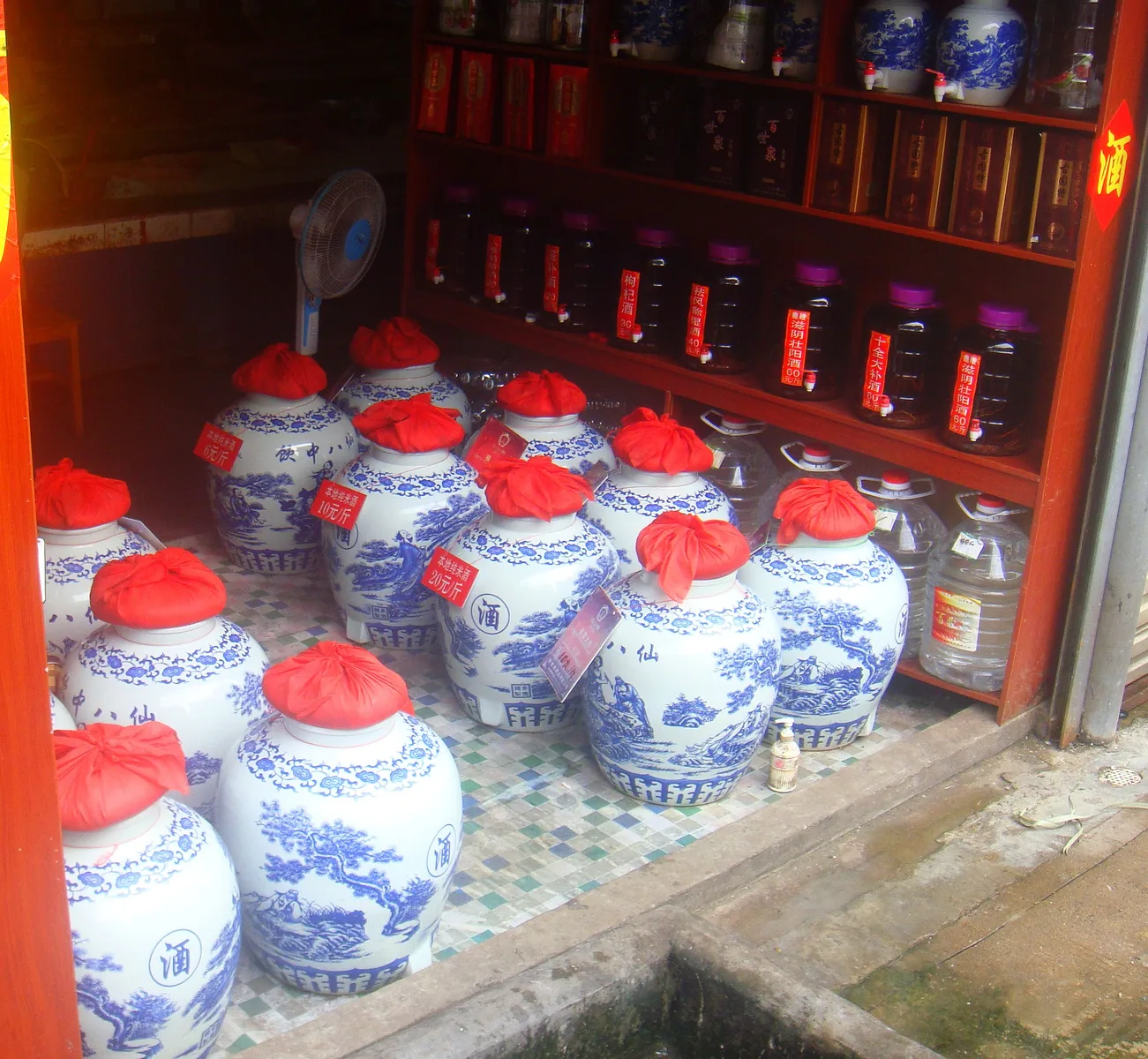
*Workers process fermented grain as part of traditional baijiu production.*
What Is Baijiu?
Baijiu is best understood as a family of spirits, not one recipe. Producers ferment grains with qu-based cultures, then distill and often age the spirit. Sensory profiles range from light and floral to intensely savory depending on style and producer.
Why "White Liquor" and "White Wine" Can Be Misleading
Literal translations of 白酒 sometimes become "white liquor" or, worse, "white wine." In English wine language, white wine means grape wine without extended skin contact. Baijiu is a distilled spirit. Prefer "baijiu" (or "Chinese grain spirit") over "white wine."
Grains, Qu and Solid-State Fermentation
Sorghum is widely associated with many baijiu traditions, but grain bills vary. Qu (曲 / 麴) provides microbial communities that drive fermentation; qu types and processes differ across regions and aroma styles. "Solid-state fermentation" is a common high-level description for many traditional systems; it is not a claim that every modern plant uses only one method.
How Baijiu Is Fermented, Distilled and Aged
High-level sequence many travelers only need at overview level:
- Prepare grains and qu.
- Ferment (often in solid-state systems).
- Distill.
- Age / blend according to producer practice.
Details differ by factory and style—treat factory tours and brand stories as producer-specific, not universal national rules.
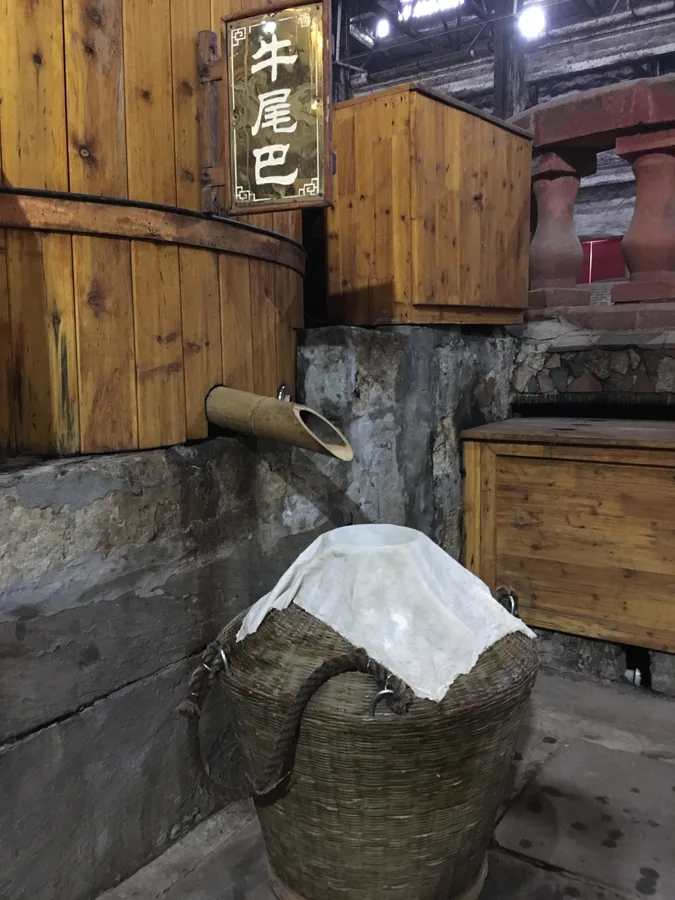
*Fermented grain being handled during traditional baijiu production.*
Baijiu Aroma Styles
English introductions often start with three widely discussed aroma-style families:
- Sauce aroma (酱香) — often associated with intense, savory complexity
- Strong aroma (浓香) — a large commercial family; "strong" is a style label, not simply "higher alcohol"
- Light aroma (清香) — typically lighter sensory profiles
These are not the only recognized baijiu styles. Treat them as orientation labels for reading menus and bottles, not a complete taxonomy.
Moutai, Luzhou Laojiao, Fenjiu and Other Names Travelers May See
Travelers often encounter brand or place names before style language:
- Moutai — a famous sauce-aroma-associated example; not a synonym for all baijiu
- Luzhou Laojiao — strongly associated with strong-aroma traditions
- Fenjiu — often cited in light-aroma discussions
These are examples for recognition, not rankings or endorsements.
What Does Baijiu Taste Like?
There is no single baijiu taste. First-time drinkers sometimes find aromas unfamiliar compared with grape brandy or whisky. Style, age, serving temperature and glass size all change perception. Guided tasting language from hosts is more useful than memorizing one universal flavor note.
How Baijiu Is Served
In banquet settings, baijiu may appear in small glasses, poured for shared toasts during a multi-dish meal. Practices vary. For toasting language and how to decline, see Chinese Drinking Culture & Etiquette.
Do Travelers Have to Drink Baijiu?
No. Context varies by host, region and occasion. Visitors can decline or use a non-alcoholic drink for a symbolic toast where appropriate. Do not treat social pressure as a requirement to overdrink.
Common Misconceptions
- Baijiu is not grape wine.
- Baijiu is not one single recipe.
- Moutai is not all baijiu.
- "Strong aroma" does not simply mean "higher alcohol."
FAQ
What is baijiu?
A family of Chinese distilled grain spirits, commonly fermented with qu and then distilled and aged. Styles and recipes vary by region and producer.
Is baijiu wine or liquor?
In English terms it is a liquor/spirit, not grape wine—though it can still fall under the broad Chinese word 酒.
What is baijiu made from?
Grains—sorghum is common—and fermentation cultures (qu). Exact grain recipes vary.
Is baijiu the same as Moutai?
No. Moutai is a famous example within the baijiu world, not a synonym for the whole category.
What does baijiu taste like?
It depends on aroma style and producer. There is no single national flavor profile.
Do I have to drink baijiu at a Chinese banquet?
No. Customs vary; declining alcohol is possible.
What is the difference between baijiu and huangjiu?
Baijiu is distilled; huangjiu is a fermented grain-beverage family. See also Huangjiu.
Continue with Chinese Alcohol & Wine
Sources & Review
- PMC9245514 — Chinese Baijiu overview
- PMC5900010 — strong-flavor baijiu ecosystem
- PMC8004889 — solid-state fermentation
- Author: DragonTrail editorial
- Last updated: 29 August 2026