
Huangjiu at a Glance
| Field | Detail |
|---|---|
| Chinese | 黄酒 (huángjiǔ) |
| English gloss | Often "yellow wine" (imperfect) |
| Category | Fermented grain-beverage family |
| Distilled? | No (unlike baijiu) |
| Typical grains | Rice, glutinous rice, millet and other regional grains |
| Famous tradition | Shaoxing wine (a subset, not the whole category) |
| Traveler contexts | Dining, regional bottles, cooking products |
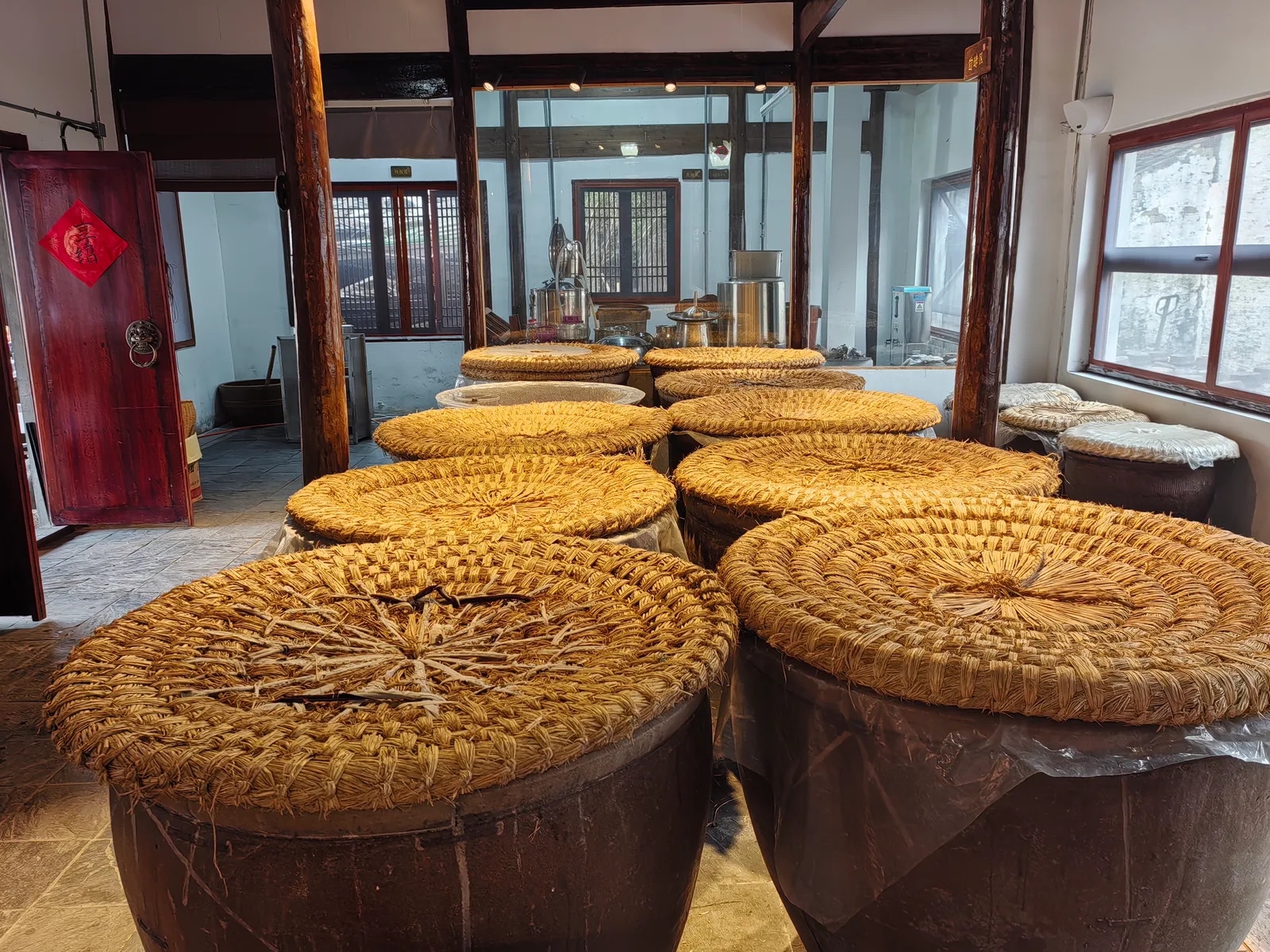
*Traditional ceramic jars stored in a Chinese wine cellar.*
What Does Huangjiu Mean?
"Yellow wine" is a conventional English gloss for 黄酒. Color can vary by style and aging; not every bottle looks brightly yellow. Think category name, not a paint-chip guarantee.
How Huangjiu Is Made
At a high level: prepare grain; use fermentation starters (including qu traditions relevant to the style); ferment; then age or finish according to local practice. Do not collapse every regional method into one Shaoxing flowchart. Process literacy helps travelers read labels; factory chemistry is beyond this guide's scope.
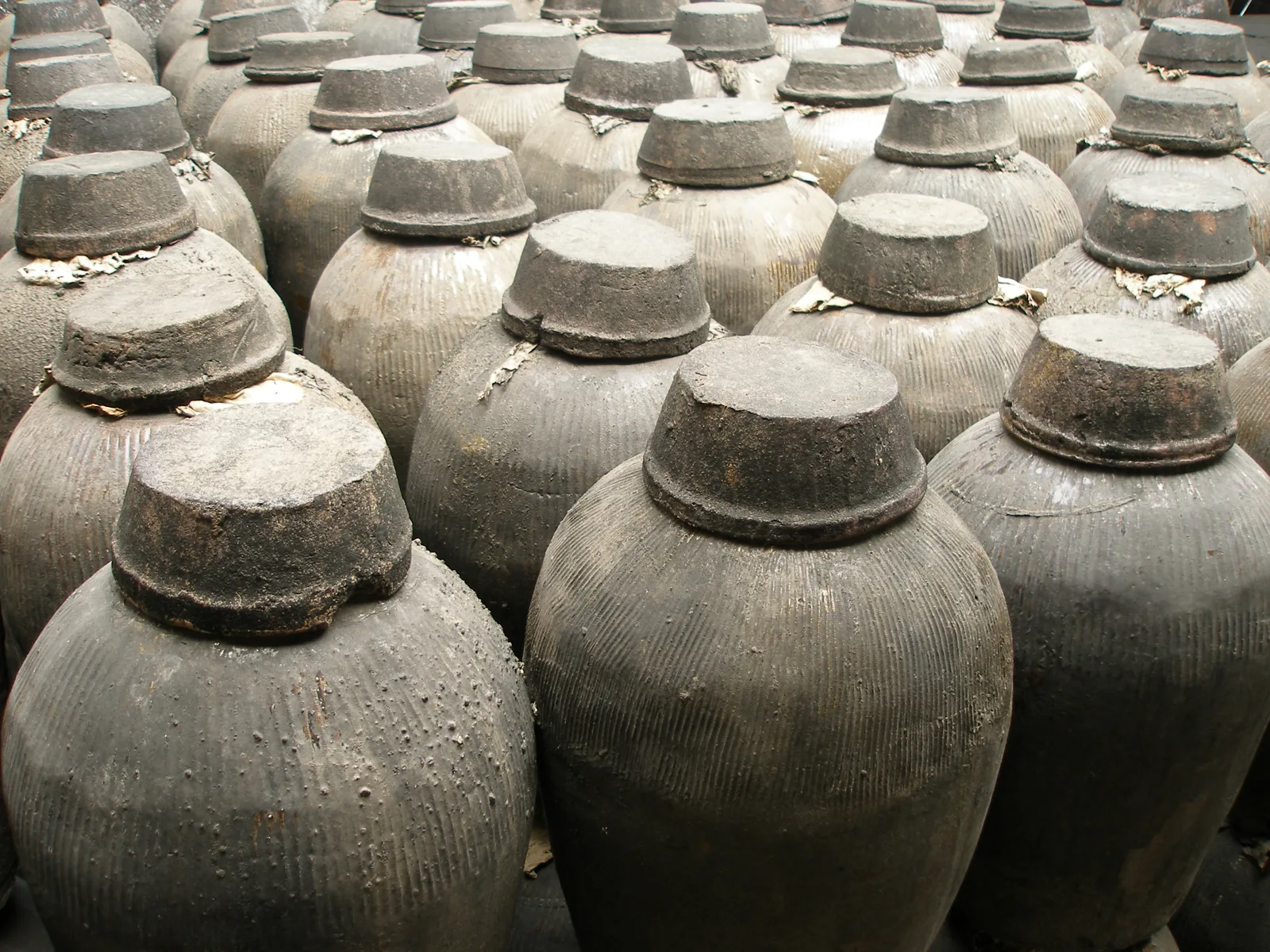
*Grains used as raw ingredients in Chinese fermented drinks.*
Huangjiu vs Baijiu
| Huangjiu | Baijiu | |
|---|---|---|
| Core process | Fermented grain beverage | Fermented then distilled spirit |
| Typical role | Dining / regional specialty | Banquet spirit / toasts |
| Guide | This page | Baijiu |
Huangjiu vs Chinese Rice Wine
Overlap is real: many huangjiu styles use rice or glutinous rice. But huangjiu is not defined as "rice-only," and "Chinese rice wine" is an English umbrella that may also mean mijiu or sweet fermented-rice drinks. See Chinese Rice Wine for terminology.
Shaoxing Wine and Regional Huangjiu Traditions
Shaoxing wine is a major, place-associated huangjiu tradition—not a synonym for every huangjiu. Other regional fermented grain wines exist with different names and practices. Deep dive: Shaoxing Wine.
Color, Sweetness, Aging and Style
Huangjiu styles vary in color, sweetness and aging. Labels and host descriptions matter more than assuming one national taste profile.
How Huangjiu Is Served and Used
Separate three contexts:
- Drinking — warmed or room-temperature service depending on style and host
- Dining — paired with regional cuisine
- Cooking — supermarket "cooking wine" products may differ from bottles intended for drinking bottles (especially visible in Shaoxing-labeled goods)
Cooking use also connects to Chinese Food culture without turning this page into a recipe guide.
What Travelers May Encounter
Regional restaurants, Zhejiang-focused menus, bottled gifts, and supermarket shelves. Availability is not uniform nationwide.
Common Misconceptions
- Huangjiu is not distilled like baijiu.
- "Yellow wine" does not guarantee a bright yellow look.
- Shaoxing wine ≠ all huangjiu.
- Huangjiu ≠ exact synonym of "rice wine."
FAQ
What is huangjiu?
A family of fermented Chinese grain beverages, often translated "yellow wine," with regional grain and style variation.
Is huangjiu rice wine?
Sometimes rice-based styles overlap with what English speakers call rice wine, but huangjiu is not strictly rice-only and the English umbrella is broader/looser.
Is huangjiu the same as Shaoxing wine?
No. Shaoxing wine is a major huangjiu tradition, not the entire category.
Is huangjiu distilled?
No. Distillation is characteristic of spirits such as baijiu.
How is huangjiu different from baijiu?
Huangjiu is fermented; baijiu is distilled after fermentation.
Is huangjiu always yellow?
No. Color varies by style and aging; "yellow wine" is a conventional gloss.
Continue with Chinese Alcohol & Wine
Sources & Review
- PMC7691429 — Huangjiu flavor and fermentation
- PMC8844729 — Huangjiu microbiome
- Author: DragonTrail editorial
- Last updated: 29 August 2026