
Chinese drinking etiquette is contextual, not a single national rulebook. Toasting can signal hospitality or respect at banquets and business meals, but customs differ by region, generation and occasion. Ganbei (干杯, gānbēi) traditionally implies emptying the cup, yet real-world expectations vary. Travelers should not treat alcohol consumption as compulsory and can decline or use a non-alcoholic drink when appropriate.
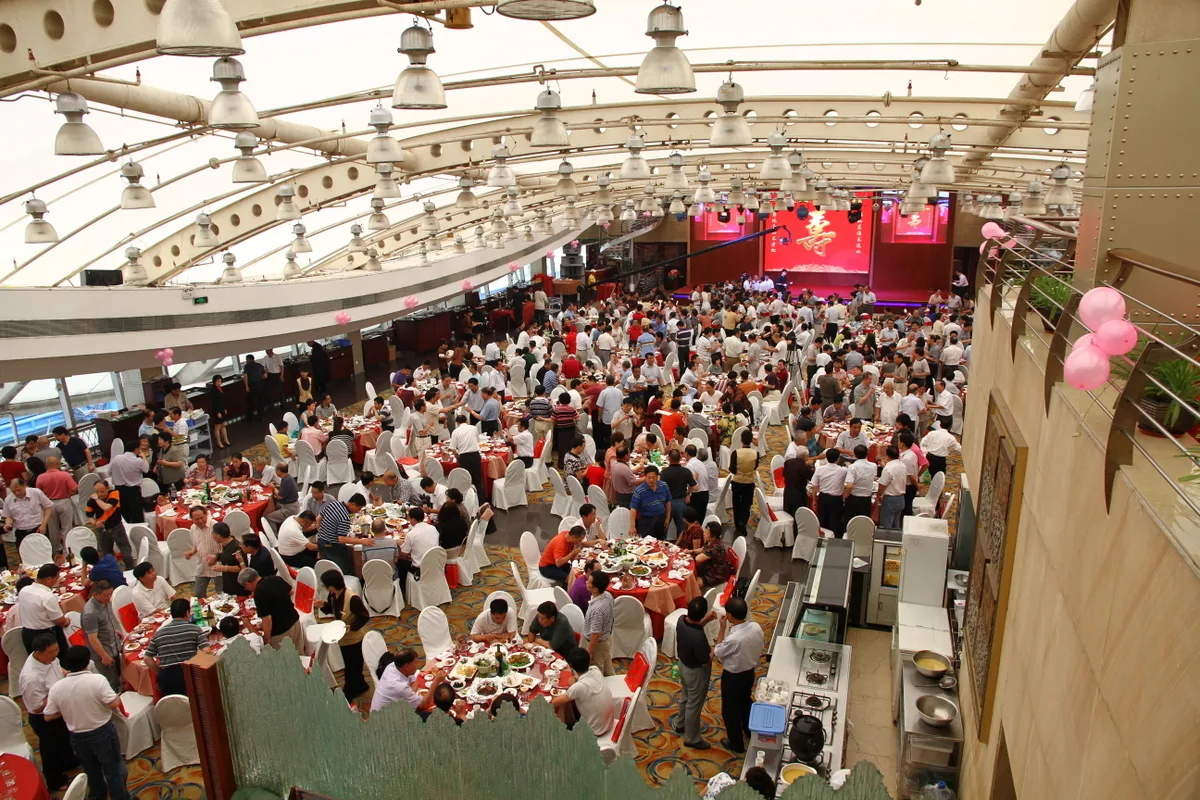
*A Chinese banquet hall prepared for a group event.*
Chinese drinking culture in one answer
There is no single national drinking rulebook. Some meals involve no alcohol at all. Others—especially formal banquets or business dinners—may include rounds of toasts with baijiu, beer, grape wine or other drinks. Practices vary by region, generation, industry and how close the hosts and guests already are.
Treat descriptions below as patterns you may see, not obligations you must perform.
Everyday drinking vs banquet drinking
Casual restaurant meals may include beer, soft drinks or tea with little ceremony. Formal banquets often layer speech-making, sequential toasts and host-led pacing. Business dinners can blend both. Do not assume banquet customs apply to every family meal or every city night out.
Jingjiu and ganbei
Jingjiu (敬酒, jìngjiǔ) means offering a toast—often to show respect or hospitality toward a particular person or table.
Ganbei (干杯, gānbēi) literally points toward “dry cup.” In many toasting contexts it signals finishing the glass or taking a substantial sip. How strictly that is enforced depends on the table, the drink strength and the relationship between people.
How toasting works in practice
Hosts or senior guests may initiate early toasts. Later rounds can circulate among seats. People may toast the whole table or individuals. Speeches can be short. Timing and intensity vary widely—some dinners are light; others move quickly through many rounds.
Standing, two hands and glass height
In some formal settings, guests may stand for important toasts, hold glasses with two hands, or keep their glass slightly lower than a senior person’s glass as a gesture of respect. These habits are not universal laws. Younger groups, informal meals and different regions may ignore them entirely.
Does ganbei always mean finishing the entire glass?
Not always. Some tables treat ganbei as a full finish; others accept a sip, especially with high-ABV baijiu or when someone has already had several rounds. Do not feel obliged to match every pour volume. Consume only what you are comfortable consuming.
How to decline alcohol politely
Declining is possible. Clear, early statements such as “I do not drink alcohol” or “I’ll toast with tea/water” are usually understood. You can keep a soft drink or tea in hand for symbolic toasts. You do not need a medical story. If hosts insist, a calm repeat of your preference is enough—do not treat social pressure as a requirement to overdrink.
Business dinners, family meals and celebrations
Expectations differ. A first business dinner may involve more toasting than a family lunch. Wedding banquets and celebrations can be lively without mirroring every corporate toasting pattern. Ask local colleagues or hosts what to expect when you are unsure.
Baijiu, beer and grape wine at modern Chinese meals
Baijiu appears at many formal tables but is not mandatory everywhere. Beer is common in casual dining. Grape wine (葡萄酒) appears more often in hotels, restaurants with wine lists and wine-producing regions. Match the drink to the occasion rather than assuming one national default.
Traveler safety
Do not drive after drinking. Do not assume social pressure means you must consent to more alcohol. Stay within what you are comfortable consuming. This page does not give medical advice.
Common misconceptions
- Not every Chinese meal includes alcohol.
- Not every toast requires finishing a full glass.
- Refusing alcohol is possible.
- Baijiu is not mandatory at every dinner.
- Etiquette varies by region, generation and occasion.
FAQ
What does ganbei mean?
Ganbei (干杯) is a toasting phrase traditionally associated with emptying or substantially finishing the cup. Practical expectations vary by table and drink.
Do I have to finish my glass when someone says ganbei?
Not necessarily. Some contexts expect a full finish; others accept a sip. You can set a personal limit and decline further rounds.
Is it rude to refuse alcohol in China?
Polite refusal is common and usually accepted, especially when stated early and clearly. Customs vary, but travelers are not required to drink to show respect.
How should I toast at a Chinese banquet?
Follow the host’s lead when possible, keep gestures simple, and stay within your comfort. There is no single correct national script.
Why do people sometimes hold one glass lower than another?
In some formal settings, a slightly lower glass can signal respect toward a senior person. It is a contextual habit, not a nationwide rule.
Is baijiu always served at business dinners?
No. Baijiu is common in some business and banquet settings, but beer, grape wine or no alcohol also appear depending on hosts and context.
Can I toast with tea or a soft drink?
Often yes. Many tables accept non-alcoholic substitutes for symbolic toasts when someone does not drink alcohol.
Continue with Chinese Alcohol & Wine
- Baijiu
- Chinese Wine & Alcohol hub
- Chinese Food and Dining Etiquette for meal context
Sources & Review
- Shanghai government — Chinese drinking culture overview
- Research on hospitality and Chinese toasting practices (SAGE)
- PMC8744588 — toasting, hospitality and social context
- Author: DragonTrail editorial
- Last updated: 29 August 2026