
Subjects at a Glance
| Subject | Common associations (contextual) | Warning |
|---|---|---|
| Dragon | Power, transformation, weather/imperial links in some contexts | Not every dragon is imperial |
| Horse | Strength, status, Tang figure traditions | Subject ≠ one motto |
| Tiger | Force, protection themes in some decorative programs | Period matters |
| Crane | Longevity / elevated status associations in many later decorative arts | Check inscription |
| Fish | Abundance wordplay in some contexts | Not universal |
| Bamboo | Integrity / resilience in scholar culture | Also a pure brush subject |
| Plum | Renewal / winter blossom ideals | Part of Four Gentlemen set |
| Orchid | Cultivated refinement tropes | Context dependent |
| Chrysanthemum | Autumn / retreat associations | Context dependent |
| Lotus | Purity metaphors in Buddhist and later decorative settings | Multi-tradition |
| Peony | Wealth / flowering splendor tropes | Court decorative contexts vary |

*Detail cropped from Chen Rong, Nine Dragons, dated 1244. . Detail cropped and resized from the long handscroll; .*
Dragons
Dragon painting ranges from ink handscroll dramas to decorative schemes. Later imperial associations should not be automatically projected onto every earlier dragon image. Sculpture comparison: Chinese Dragon Sculpture. Mythic context: Chinese Mythology.
Horses
Horses are major Tang and later pictorial subjects, including famous attributed horse specialists. They can signal military readiness, tribute culture or painterly anatomy study depending on work.
Tigers
Tiger images appear in painting and decorative arts with protective or forceful associations in some later reading traditions. Treat museum labels and inscriptions as primary guides.
Cranes
Cranes often appear in longevity and elevated-status visual programs, especially in later decorative painting. Pairings with pines or rocks can reinforce those readings—when the whole program supports them.
Fish
Fish can participate in auspicious wordplay in Chinese, but not every fish painting is a rebus. Look for accompanying text before asserting a single meaning.
Bamboo
Bamboo is both a brush-training subject and a scholar virtue emblem in many literati discussions. It can be painted for structure and ink skill without delivering a slogan.
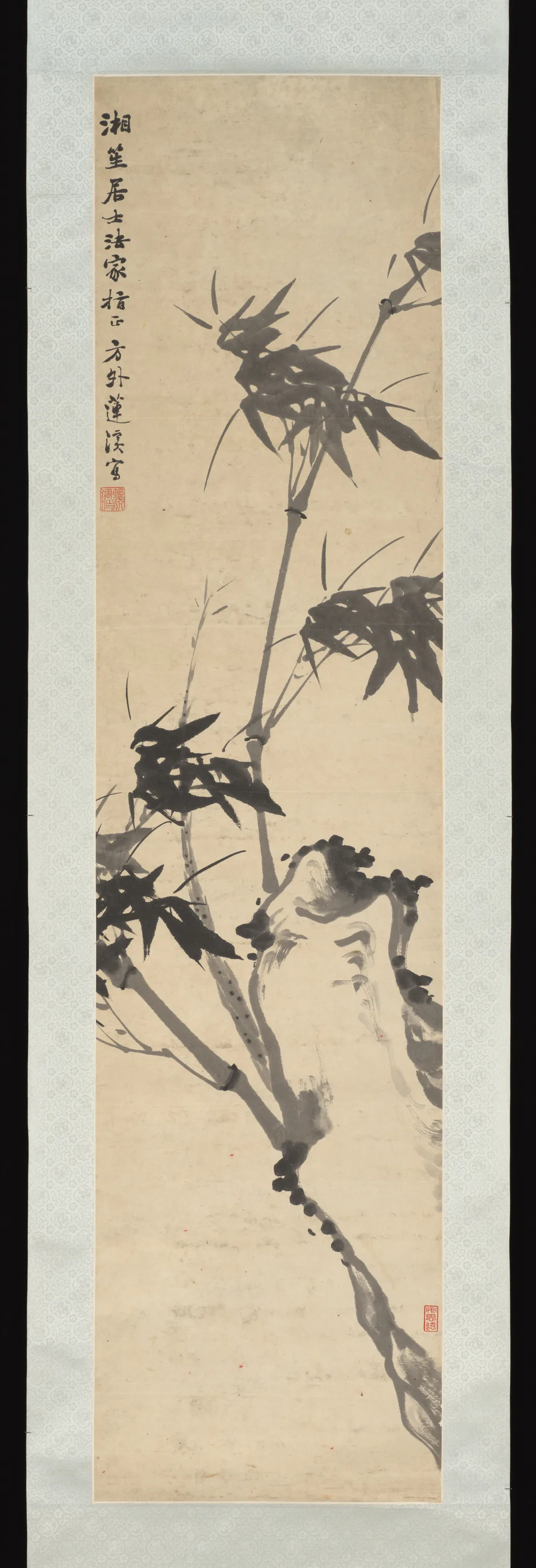
*Bamboo, Chen Ran. The Metropolitan Museum of Art — . Resized; .*
Plum Blossom
Plum blossoms often mark winter blooming and renewal themes in poetry-painting culture. They are also formal studies of branch structure and blossom clusters.
Orchid
Orchids appear in scholar plant subjects and “Four Gentlemen” sets. Meanings track literary taste more than a fixed dictionary entry.
Chrysanthemum
Chrysanthemums connect to autumn and retreat poetry in many later cultural readings. Again, inscription and set context matter.
The Four Gentlemen
The Four Gentlemen (四君子) conventionally group plum, orchid, bamboo and chrysanthemum as a scholar plant set. The grouping is a later educational/cultural package as much as a single ancient painting rule.
Lotus
Lotus imagery crosses Buddhist purity metaphors and broader decorative flowering subjects. Do not collapse every lotus into one religious reading.
Peony
Peonies frequently appear in wealth and flourishing tropes in later decorative painting and crafts. Court flower-and-bird programs are a common museum setting.
Flowers-and-Birds Painting
Flowers-and-birds (花鸟) is a major subject genre, not merely decoration. It can be gongbi-finished on silk or ink-abbreviated on paper. See Styles. Embroidery comparisons: Embroidery Motifs & Symbolism.
Subject vs Symbol
A bamboo painting is first a pictorial subject. Symbolic reading is secondary and conditional. Modern internet symbolism lists oversimplify historical use.
Painting and Literary Allusion
Poems and classical references can lock a reading that the image alone leaves open. That is why inscriptions matter.
How Inscriptions Change Meaning
An inscription may dedicate a painting, date it, or point to a literary source. Guide: Seals, Signatures & Colophons.
Common Misconceptions
- Symbols do not have one fixed meaning.
- Not every dragon is imperial.
- Bamboo is a subject as well as a symbol.
- Flowers-and-birds are not merely decorative.
- Modern internet symbolism lists oversimplify historical use.
FAQ
What do Chinese painting symbols mean?
Associations exist, but they depend on period, inscription and context—not a universal chart.
What does bamboo mean in Chinese painting?
Often linked with scholar ideals of integrity, and also painted as a pure brush subject.
What does a dragon mean?
Powerful, transformative imagery with varied political and mythic readings by context.
What does a crane symbolize?
Frequently longevity or elevated status in later decorative programs; verify with the whole work.
What does a peony mean?
Often wealth/flourishing tropes in later decorative contexts.
What are the Four Gentlemen?
Plum, orchid, bamboo and chrysanthemum as a conventional scholar plant set.
What is flowers-and-birds painting?
A major subject genre focused on plants, birds and related natural motifs.
Why do inscriptions matter when interpreting a painting?
They can specify dedication, date, poem and intended reading.
Sources & Review
- The Met Chinese Painting essay on symbolism and subjects.
- Chen Rong *Nine Dragons* *Bamboo* Met object.
- Traveler synthesis; symbolism kept contextual; no feng-shui marketing sources.