
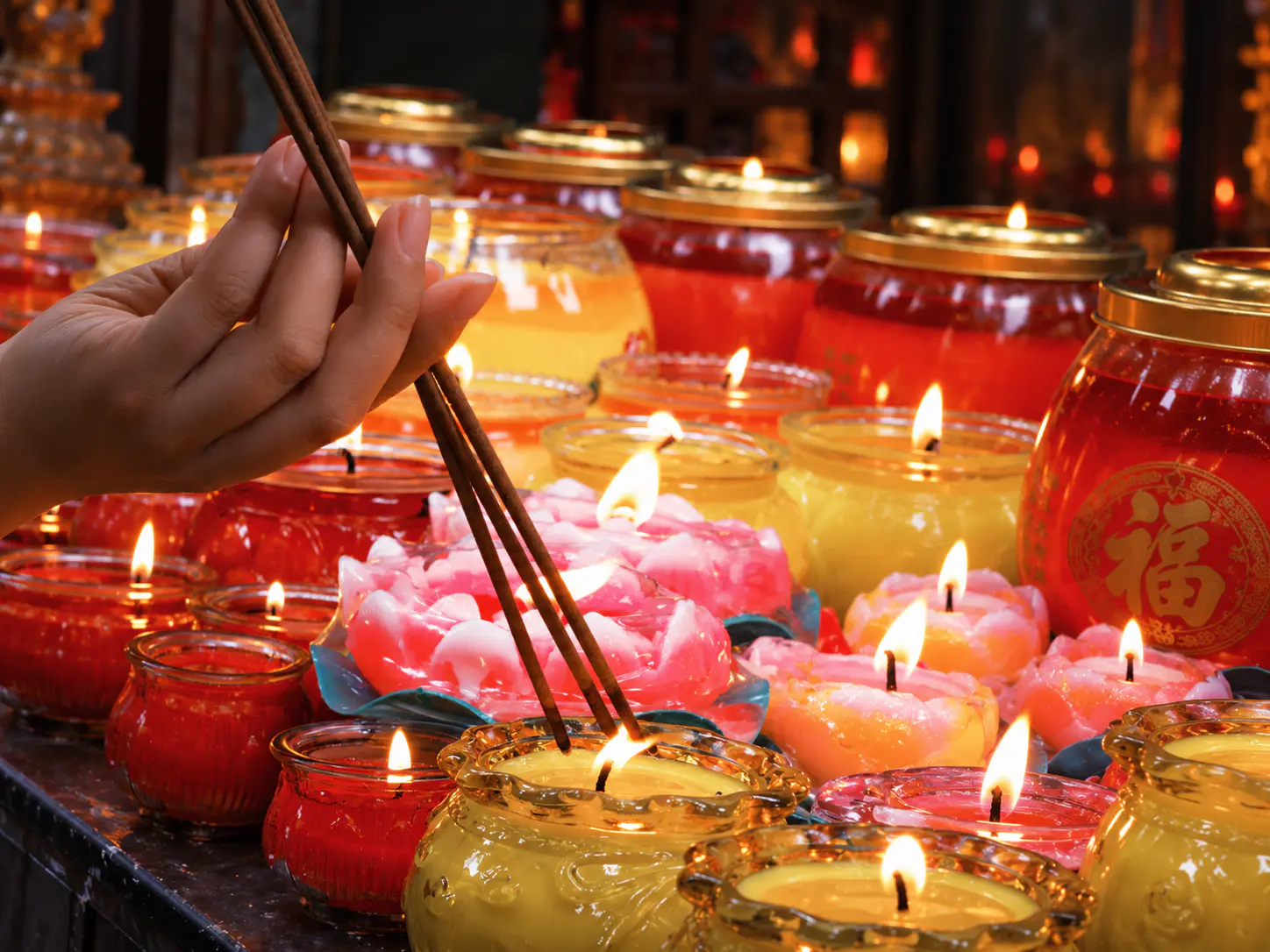
Hungry Ghost Festival at a Glance
| Topic | Detail |
|---|---|
| Common English labels | Hungry Ghost Festival; Ghost Festival |
| Chinese (common association) | 中元节 (Zhōngyuán Jié) |
| Calendar association | Often 15th day of the 7th Chinese-calendar month |
| 2026 date (common association) | 27 August 2026 |
| Nationwide statutory holiday? | No |
| Compare with | Qingming Festival |
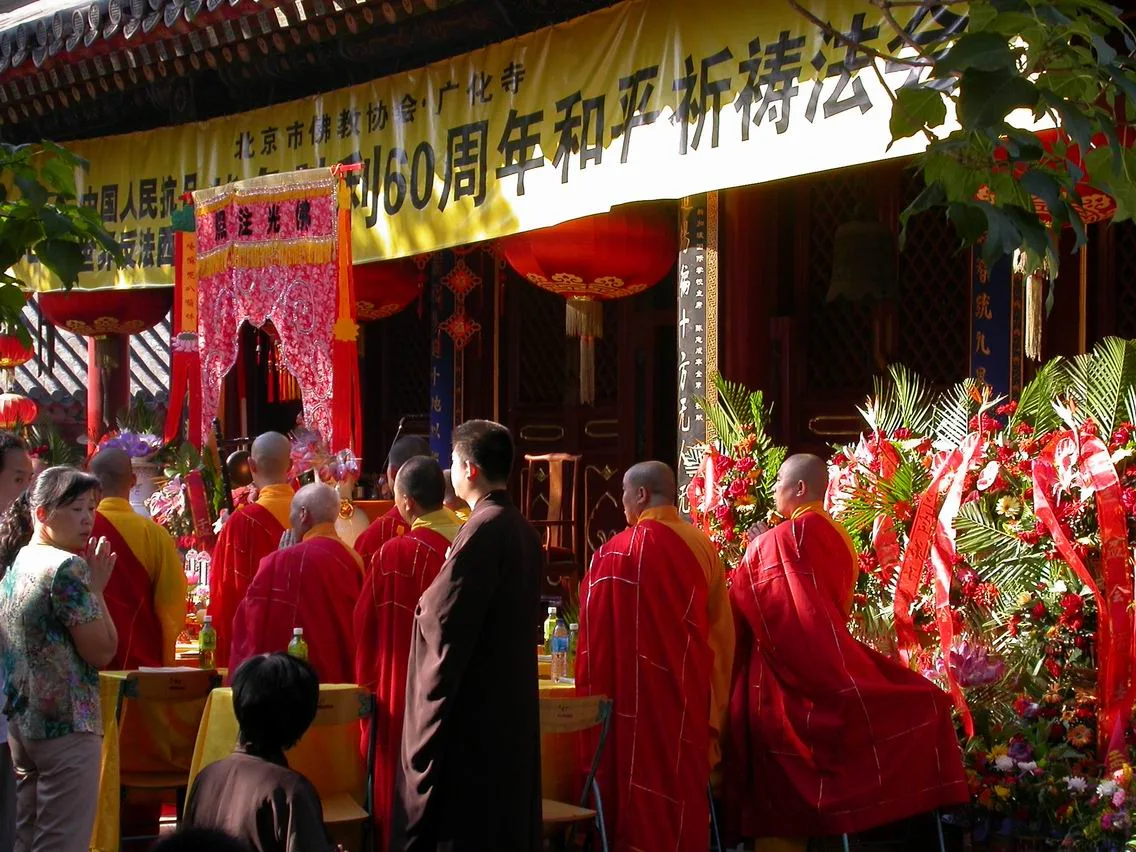
*Ghost Festival Buddhist ceremony context associated with Guanghua Temple, Beijing, in Commons metadata. Wikimedia Commons — CC BY-SA 2.0. Displayed near native resolution without aggressive upscaling.*
What Is Zhongyuan Festival?
中元节 (Zhōngyuán Jié) is a traditional designation in Chinese calendrical and religious vocabulary commonly linked to seventh-month observances. English marketing and diaspora usage often prefer “Ghost Festival” or “Hungry Ghost Festival.”
Ghost Festival, Hungry Ghost Festival and Zhongyuan Terminology
These English and Chinese labels overlap in English usage but do not prove identical theology in every community. Folk practice, Taoist framing and Buddhist ceremonies may share calendar timing while differing in ritual emphasis.
When Is Hungry Ghost Festival?
2026 (common fifteenth-day association): 27 August. Confirm local community calendars when a specific temple or association publishes its own schedule. It is not a nationwide statutory holiday in the 2026 State Council notice.
Why the Seventh Lunar Month Matters
In many traditions, the seventh month is associated with ancestors and wandering spirits; these are religious and folk beliefs whose forms vary by community.
Ancestor Remembrance and Offerings
Offerings and remembrance practices appear in varied forms across communities.
Buddhist, Taoist and Folk Traditions
Buddhist, Taoist and folk layers can coexist in the same city without identical ceremony, and should not be flattened into one theology.
Burning Joss Paper and Other Offerings
Burning joss paper and related offerings appear in some communities as cultural and religious practice; travelers should observe respectfully rather than joining private rites uninvited.
Regional Variation
Practices differ across regions of China. Diaspora observances (for example in Southeast Asia) may illustrate wider Chinese traditions but must be labeled geographically when discussed—and are not automatic models for mainland practice.
Hungry Ghost Festival vs Qingming
| Dimension | Hungry Ghost / Zhongyuan | Qingming |
|---|---|---|
| Calendar timing | Commonly 7th-month fifteenth (2026: 27 Aug) | Early April solar term (2026 festival day: 5 Apr) |
| Primary contexts | Seventh-month offerings / spirit traditions | Ancestor remembrance + spring season |
| Cemetery / tomb-sweeping | Not the same spring tomb-sweeping pattern as Qingming | Strong tomb-sweeping association for many families |
| Offerings | Varied religious/folk forms | Family remembrance practices vary |
| Religious/folk associations | Folk / Taoist / Buddhist layers (varied) | Seasonal + commemorative layers |
Is Hungry Ghost Festival Chinese Halloween?
No. Popular English analogies sometimes borrow “Halloween,” but the historical, religious and ritual contexts are fundamentally different from costume entertainment.
What Travelers May Encounter
You may notice temple activity, offerings or community notices in some neighborhoods. Keep respectful distance from private ritual. Do not intrude or treat ceremonies as street theatre.
Is It a Public Holiday?
No — not a nationwide statutory holiday in the 2026 State Council schedule.
Common Misconceptions
- It is not Chinese Halloween.
- It is not identical to Qingming.
- Practices vary by region and religious tradition.
- Spirit-related ideas belong to religious and folk belief traditions, not verified objective claims.
- It is not a nationwide statutory holiday.
FAQ
What is the Hungry Ghost Festival?
An English label commonly linked to Zhongyuan and seventh-month observances involving offerings and ancestor/spirit traditions in varied forms.
What is Zhongyuan Festival?
中元节 (Zhōngyuán Jié) — a Chinese designation often associated with those observances.
When is Hungry Ghost Festival in 2026?
27 August 2026 under the common fifteenth-day association.
Is Ghost Festival the same as Zhongyuan Festival?
Labels overlap in English usage; local religious meaning is not perfectly identical everywhere.
What happens during the seventh lunar month?
In many traditions, heightened attention to ancestors and spirit-related customs—forms vary.
Why are offerings made?
As religious/folk practice within specific community traditions—not a single universal rulebook.
Is Hungry Ghost Festival the same as Qingming?
No.
Is Hungry Ghost Festival Chinese Halloween?
No.
Is it a public holiday in China?
No — not in the 2026 nationwide statutory schedule.
Continue with Chinese Festivals
Sources & Review
- Chinese lunisolar calendar conversion for 七月十五 / 2026.
- Institutional and scholarly summaries of Zhongyuan / Ghost Festival terminology.
- State Council 2026 holiday notice (absence as statutory holiday).
Last reviewed: August 2026