
Chinese Embroidery Techniques at a Glance
| Topic | Orientation |
|---|---|
| Core fact | Many methods, not one “Chinese stitch” |
| Common families | Flat/satin-like fills; shaded pictorial work; counted work; couching; knots |
| Materials interaction | Silk filament behavior; metallic-thread couching |
| Related technique page | Double-Sided Chinese Embroidery |
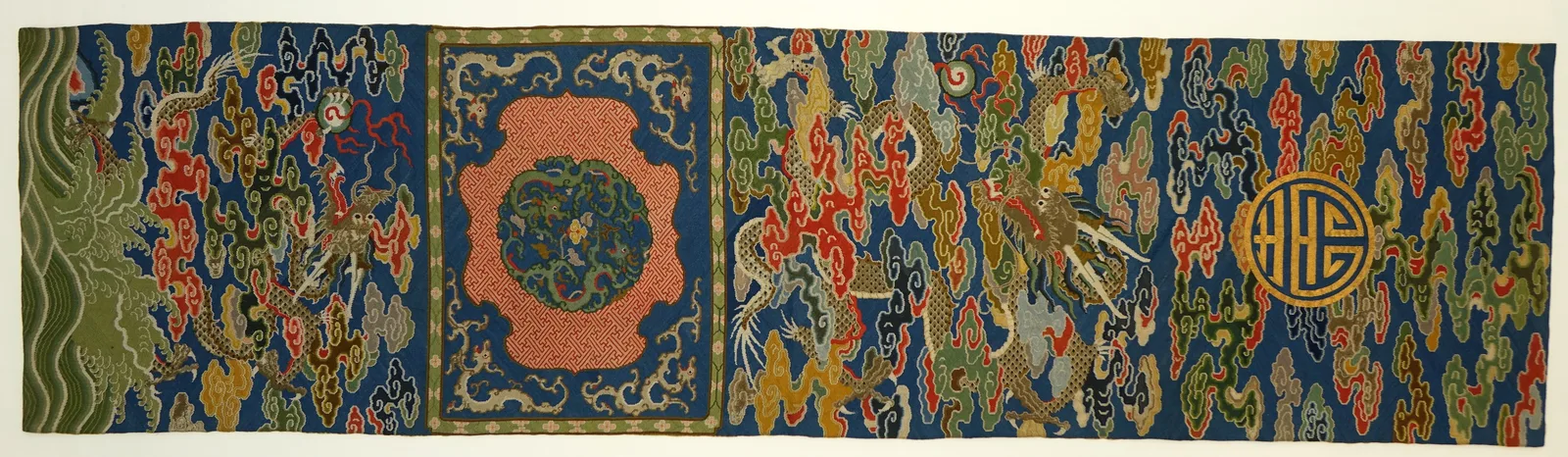
*Chair strip with dragons, Qing dynasty: silk and metallic-thread embroidery on silk gauze. The Metropolitan Museum of Art — Public Domain / Open Access.*
Why There Is No Single “Chinese Stitch”
SCIO cultural overviews note dozens of embroidery needlework methods producing different visual effects. Regional schools, object types and periods select different combinations. English hobby names and Chinese workshop names do not always map 1:1.
Silk Thread Preparation and Direction
Silk filament can be split, combined and laid so that light catches in a controlled direction. Directional stitching is a major reason pictorial embroidery can look “painted” from a distance. Materials context: Chinese Silk Embroidery.
Flat and Satin-Like Stitching
Flat fills cover areas with parallel or carefully angled stitches. English may say “satin stitch” for related visual effects; verify against museum catalogue language before forcing a Western name onto a Chinese object.
Long-and-Short / Shaded Pictorial Techniques
Pictorial modeling often depends on interlocking or sequenced stitches that blend colors. Use Western “long-and-short” language only when it helps a traveler understand the look—not as a claim that Chinese workshops historically used that English term.
Counted Embroidery
The Met documents counted embroidery covering silk-gauze foundations (for example Qing chair strips). Counted work follows the grid of the ground rather than free pictorial laying alone.
Couching and Metallic Thread
Couching lays a thicker or metallic thread on the surface and tacks it with smaller stitches. It is common where gold or wrapped threads would be impractical to pull repeatedly through delicate grounds.
Knot-Based Techniques
Knot stitches create textured points or fills. English “Chinese knot stitch” / related names appear in embroidery literature with inconsistent translation; identify from the object and catalogue when possible.
“Forbidden Stitch” Terminology
Collector and hobby literature sometimes uses “forbidden stitch” for very fine knotting or related tiny stitches. Stories explaining the term through eye strain or historical bans are often repeated, but their etymology is uncertain. Prefer museum or academic usage when identifying an object.
Random Stitch / Modern Pictorial Developments
Modern pictorial embroidery developments are discussed in twentieth-century craft histories. Origin stories and inventor attributions for modern stitch innovations vary and should be treated cautiously unless supported by documented craft histories.
Double-Sided Technique
Two-sided construction is a planning/system problem as much as a stitch type. Dedicated page: Double-Sided Chinese Embroidery.
Regional Technique Variation
Su, Xiang, Shu and Yue traditions share tools and many stitch families while emphasizing different object formats and workshop aesthetics. Classification page: Four Famous Chinese Embroideries.
Hand Embroidery vs Machine Embroidery
| Hand embroidery | Machine embroidery | |
|---|---|---|
| Process | Manual needle control | Mechanized stitching |
| Visual tells | Often irregular microscopic variation | Often highly regular repeats |
| Value implication | Not automatically “better” for every use | Not automatically fraudulent |
Machine work can be legitimate modern product. Fraud questions belong with provenance, not stitch regularity alone. Antique market notes: Antique Chinese Embroidery.
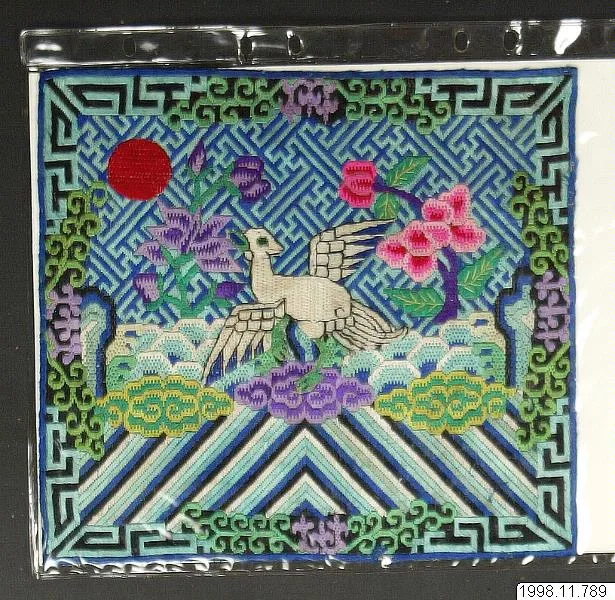
*Detail of Chinese silk embroidery. Wikimedia Commons — CC0.*
How to Look at Stitching in a Museum
- Step back for overall pictorial effect.
- Step in (without touching) for stitch direction and density.
- Note metallic couching vs silk fills.
- Compare label technique terms with what you see.
- Photograph only where permitted; do not touch.
Common Misidentifications
- Calling all pictorial silk “embroidery”
- Forcing one English stitch name onto every Chinese object
- Treating “forbidden stitch” folklore as documented fact
- Equating regularity with authenticity
Techniques & Stitches FAQ
What stitches are used in Chinese embroidery?
Many families: flat fills, shaded pictorial work, counted techniques, couching, knots and combinations.
Is there one traditional Chinese embroidery stitch?
No.
What is couching?
Laying a thread on the surface and tacking it with smaller stitches—often used with metallic threads.
What is Chinese knot stitch?
A knot-based textured stitch family; English naming is inconsistent—prefer catalogue language.
What is forbidden stitch?
A contested collector/hobby term; verify against museum/academic usage and avoid folk-etymology claims.
How is gold thread attached in embroidery?
Often by couching rather than pulling heavy metallic thread repeatedly through the ground.
What makes Suzhou embroidery look so detailed?
Fine silk control, dense stitching and pictorial color transitions—tendencies, not magic rules. See Suzhou Embroidery.
Is machine embroidery the same as hand embroidery?
No. Different processes; both can be legitimate modern products.