
Suzhou Embroidery at a Glance
| Topic | Orientation |
|---|---|
| Chinese names | 苏绣; Su Xiu; Suzhou embroidery |
| Region | Jiangsu, centered on Suzhou |
| Four Famous role | One of the four celebrated regional schools |
| Materials often discussed | Fine silk grounds and silk threads |
| Signature associations | Pictorial embroidery; double-sided screens |
| Living craft base | Zhenhu and Suzhou institutions (confirm current venues) |
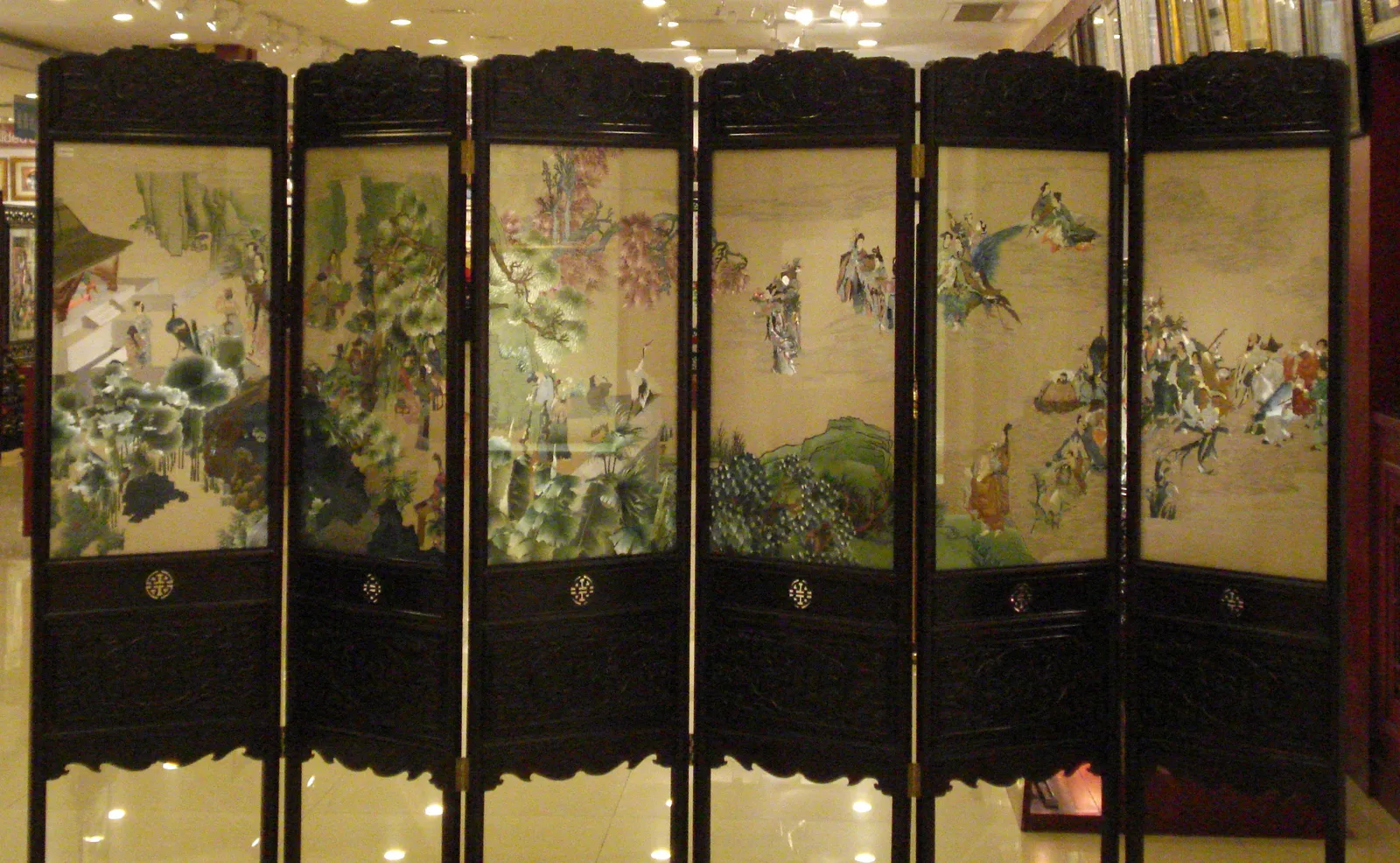
*Suzhou silk-embroidery manufacture / silk screen. Wikimedia Commons — CC BY-SA 3.0.*
Su Embroidery, Su Xiu and Suzhou Embroidery
In English, three labels commonly appear for this tradition:
- Suzhou embroidery — place-based English name
- Su embroidery / Su Xiu — romanizations of 苏绣
- Jiangsu embroidery — broader provincial framing (less common in school-name lists)
Use them as near-synonyms for the Suzhou-centered tradition. Do not use any of them as a synonym for Chinese embroidery as a whole. Parent: Chinese Embroidery. Classification: Four Famous Chinese Embroideries.
How Suzhou Embroidery Developed
Su embroidery grew inside a silk-rich Jiangnan economy where painting taste, court and commercial demand, and workshop specialization reinforced one another. Later cultural writing presents Su Xiu as a flagship pictorial embroidery tradition. Su embroidery developed over a long period rather than through one documented invention event, and modern institutional descriptions should be read alongside museum and object-level evidence.
Modern Suzhou municipal cultural materials continue to identify Su Xiu among China’s national intangible-cultural-heritage embroidery traditions (first national list, 2006) and document living institutions and Zhenhu’s embroidery-focused craft base.
Materials and Silk Thread
Su embroidery is strongly associated with silk—both as ground and as thread—because silk supports fine tonal transitions and dense pictorial fills. That association is historical and aesthetic, not a law: other grounds and mixed media can appear. Materials-focused reading: Chinese Silk Embroidery.
What Makes Su Embroidery Distinctive?
Common descriptive language (use cautiously) points to:
- close control of stitch direction
- gradual color transitions
- pictorial effects that echo painting taste
- high stitch density on prestige pieces
- celebrated double-sided screen formats
These are tendencies discussed in cultural writing, not laboratory rules that every Su object must meet.
Double-Sided Suzhou Embroidery
Double-sided embroidery is especially associated with sophisticated Su work and freestanding silk screens. It means both faces are designed to be viewed, not that every Su piece is double-sided. Dedicated guide: Double-Sided Chinese Embroidery.
Pictorial Embroidery and “Embroidery Painting”
Su workshops historically produced pictorial panels and screens that collectors and museums discuss alongside Chinese painting taste. English retail and collector language sometimes uses “embroidery painting” or “thread painting” for pictorial embroidered works, but these are not always precise historical technique names.
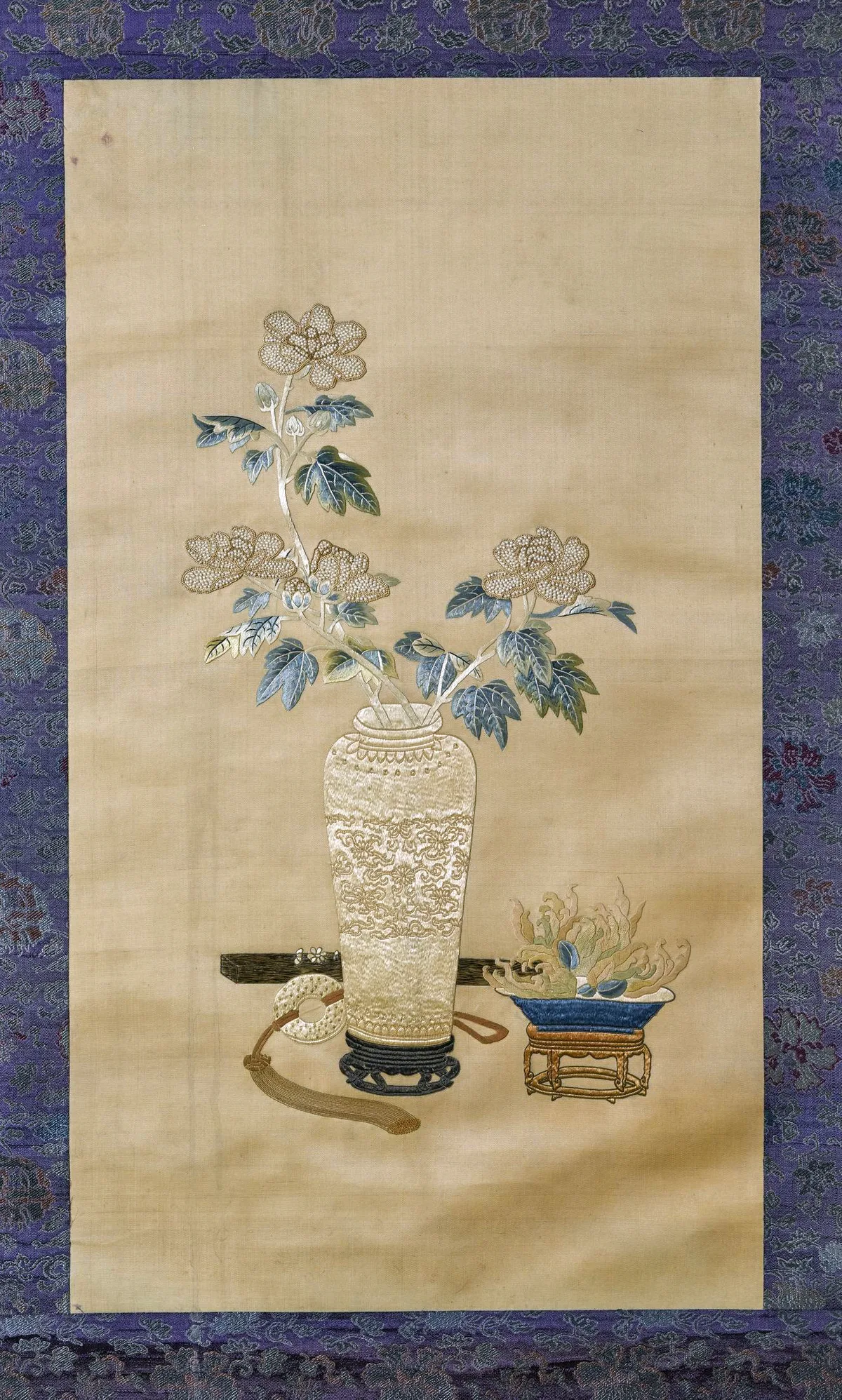
*Qing dynasty Suzhou embroidery panel (博古图), Shanghai Museum holding via Wikimedia Commons (Public Domain Mark).*
Shen Shou and Simulated Embroidery
Suzhou government cultural materials identify Shen Shou as a major innovator who incorporated Western approaches to light, shadow and perspective into *fangzhen xiu* (simulated / imitative embroidery). Use her as a documented modernizing figure—not as proof that all later Su embroidery follows one Westernized formula.
Zhenhu and Contemporary Su Embroidery
Zhenhu is repeatedly documented in Suzhou municipal materials as a living embroidery craft ecosystem with embroidery-focused institutions and an embroidery-themed scenic area. Treat venue names and access details as things to reconfirm at travel time; do not copy stale ticket prices from old pages.
Where Travelers Can See Suzhou Embroidery
Research current naming before you go. Categories that often matter:
- Suzhou embroidery research / art institutes
- Su embroidery museums or galleries
- Zhenhu embroidery attractions and workshops
- Major museum collections outside Suzhou that hold Su pieces
Confirm opening status locally. Parent where-to-see notes: Chinese Embroidery.
How to Look at Su Embroidery
- Start with object type (screen, panel, garment fragment, modern display piece).
- Follow stitch direction across tonal transitions.
- Check whether the reverse is finished (double-sided) or left as working side.
- Separate documentary museum pieces from commercial souvenir products.
- Read labels for date and workshop attribution before guessing age from “fineness.”
Su Embroidery vs Shu Embroidery
| Su (Suzhou) | Shu (Sichuan) | |
|---|---|---|
| Region | Jiangsu | Sichuan / Chengdu |
| Four Famous | Yes | Yes |
| Common traveler association | Pictorial silk; double-sided screens | Sichuan regional embroidery; living Chengdu craft culture |
| Main confusion | Treating Su as all Chinese embroidery | Confusing Shu embroidery with Shu brocade |
Shu guide: Shu Embroidery.
Common Misconceptions
- Su embroidery ≠ all Chinese embroidery.
- Not all Su embroidery is double-sided.
- Silk association ≠ silk-only rule.
- Fine stitching alone does not authenticate age or authorship.
Suzhou Embroidery FAQ
What is Suzhou embroidery?
The Jiangsu embroidery tradition centered on Suzhou, also called Su embroidery / Su Xiu, and one of the Four Famous Embroideries.
Is Su embroidery the same as Suzhou embroidery?
Yes in ordinary traveler English.
What is Su Xiu?
The pinyin/English shorthand for 苏绣.
Why is Suzhou embroidery famous?
Cultural writing highlights its pictorial silk work, workshop history and double-sided achievements. Fame is cultural recognition, not a scientific ranking.
What is double-sided Suzhou embroidery?
A technique especially associated with Su screens where both faces are presentable. See Double-Sided Chinese Embroidery.
Who was Shen Shou?
A major modern Su embroidery innovator associated with simulated embroidery that absorbed Western light-and-shadow approaches, according to Suzhou municipal cultural materials.
Is Suzhou embroidery always made of silk?
Silk is central to many prestige Su works, but “always silk” is too absolute.
Where can I see Su embroidery in Suzhou?
Look for Suzhou embroidery institutes/museums and Zhenhu craft venues; reconfirm current access before visiting.