
Antique Chinese Embroidery at a Glance
| Topic | Orientation |
|---|---|
| Object range | Robes, panels, badges, screens, furnishings, export textiles |
| Common market-era focus | Qing and later pieces |
| Age proof | Multi-factor; not style alone |
| Value factors | Provenance, craftsmanship, condition, rarity, demand |
| Authentication from photos | Often unreliable |
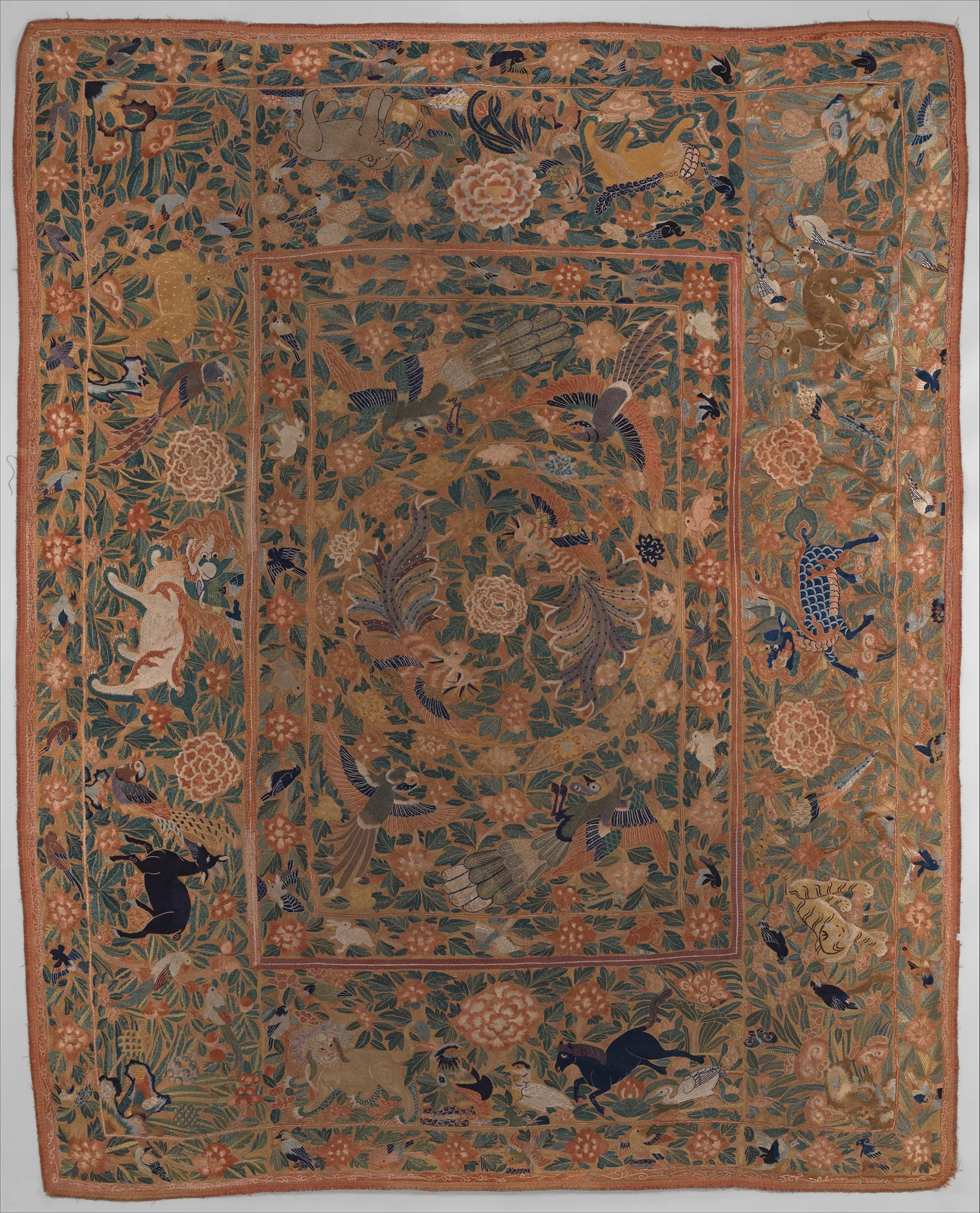
*Panel with flowers, birds and animals — Chinese export embroidery, 17th century. The Metropolitan Museum of Art — Public Domain / Open Access.*
Antique vs Vintage
Market language varies by country and dealer. “Antique” and “vintage” thresholds vary by market and jurisdiction, so documented dates are more useful than relying on those labels alone. Prefer documented date ranges from reputable specialists or museum comparanda.
What Types of Antique Embroidery Survive?
- Panels and wall hangings
- Robes, skirts and accessories
- Rank badges
- Screens
- Furnishing textiles
- Export embroidery made for overseas markets
- Religious/ritual textiles where relevant
Silk object formats: Chinese Silk Embroidery. Motifs: Motifs & Symbolism.
Ming, Qing and Later Embroidery
Dynasty labels are historical frameworks, not visual checklists that a traveler can apply from one photo. Qing pieces are abundant in public collections and markets; earlier survivals exist but require stronger documentation.
Qing Embroidered Textiles
Qing garments and panels dominate many museum teaching collections. Construction, badge systems and decorative programs are specialist fields—use catalogues rather than guessing rank from a souvenir reproduction.
Rank Badges
Rank badges are embroidered (or otherwise decorated) insignia with bureaucratic meaning. They are a distinct collecting category from pictorial screens. Do not read every bird as a badge symbol.
Export Embroidery
Chinese export embroideries circulated internationally and are documented in museum scholarship (including Met publications on export embroideries). Export context can explain unusual formats or hybrid tastes without making a piece “less Chinese.”
Silk, Metallic Thread and Textile Grounds
Ground weave, thread type and metallic couching help description and condition assessment. Technique vocabulary: Techniques & Stitches.
What Can Help Date an Embroidery?
Helpful evidence (combined, not isolated):
- Documented provenance
- Construction and materials
- Professional dye/fiber analysis when available
- Stitching and workshop habits
- Mounting history
- Inscriptions
- Close museum comparanda
Condition Issues
Common issues include fading, silk shattering, losses, metallic-thread tarnish, later remounting and repairs. Condition affects both display and market value.
Reproductions and Modern Decorative Pieces
Modern decorative embroidery and reproductions are legitimate products when sold honestly. Problems arise when modern work is misrepresented as antique.
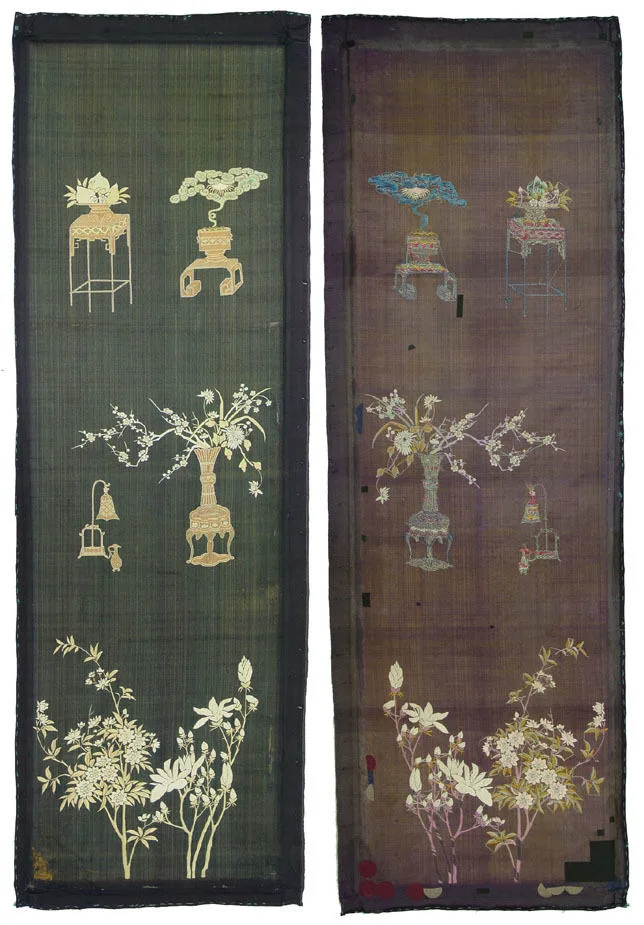
*Embroidered panel from a Qing set. The Metropolitan Museum of Art — Public Domain / Open Access.*
Can You Identify Antique Chinese Embroidery From a Photo?
Not reliably in many cases. Photos hide reverse construction, fiber hand, smell/condition subtleties and mounting tricks. Use photos for triage, not final authentication.
What Affects the Value of Chinese Embroidery?
Factors commonly discussed by specialists:
- Documented age and attribution
- Rarity and historical significance
- Craftsmanship and design
- Provenance
- Condition
- Market demand
Market value varies substantially with documented age, rarity, craftsmanship, provenance, condition and demand.
Buying Antique Chinese Embroidery
Traveler-safe guidance:
- Ask for provenance and condition reporting
- Prefer reputable specialists
- Learn relevant export/cultural-property rules for your route home
- Do not assume “old-looking” equals antique
Where to See Historical Chinese Embroidery
Major museum collections (Met open-access examples above; Shanghai, Beijing, provincial museums; Suzhou/Chengdu craft museums) are safer study contexts than market stalls. Cluster hub: Chinese Embroidery.
Common Misconceptions
- Style alone proves age — false.
- Faded silk proves antiquity — false.
- Photo authentication is reliable — often false.
- All valuable pieces are Qing court robes — false.
Antique Chinese Embroidery FAQ
How can I tell if Chinese embroidery is antique?
Combine provenance, construction, materials, condition and expert comparison—not style alone.
What is antique Chinese silk embroidery?
Historical embroidered silk objects (garments, panels, furnishings, export works) with documented or strongly evidenced age.
Are Chinese embroidery panels valuable?
Some are; value depends on many factors. No honest guide can quote a universal price from a description.
What affects Chinese embroidery value?
Age documentation, rarity, craftsmanship, provenance, condition and demand.
What are Chinese rank badges?
Costume insignia with bureaucratic animal/bird programs—specialist collecting category.
Is faded silk proof of age?
No. Light damage can happen to newer textiles too.
How old are most antique Chinese embroideries?
Many market and teaching examples are Qing or later; earlier pieces exist with stronger documentation needs.
Can Chinese embroidery be authenticated from photographs?
Often not reliably. In-person specialist review is safer.