
Double-Sided Embroidery at a Glance
| Topic | Orientation |
|---|---|
| Core idea | Both faces intended to be presentable |
| Strong association | Sophisticated Su embroidery / screens |
| Not identical with | All Su embroidery |
| Display formats | Freestanding screens; two-sided viewing mounts |
| Recognition caution | A frame that shows two sides is not automatic proof of technical double-sided construction |
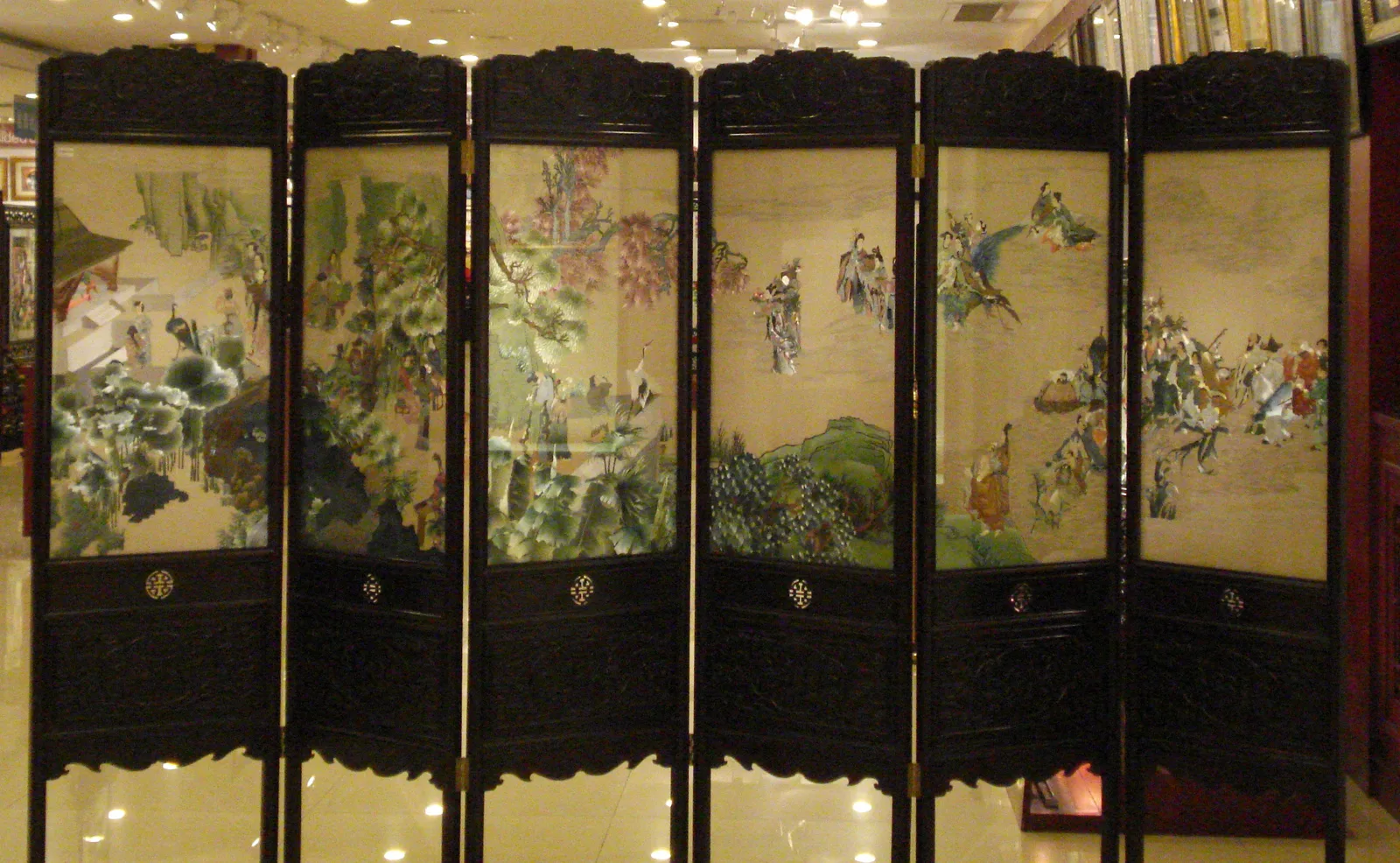
*Suzhou silk-embroidery screen. Wikimedia Commons — CC BY-SA 3.0.*
What Is Double-Sided Embroidery?
In ordinary single-sided embroidery, the reverse may show thread ends, carrying stitches or an unfinished working face. Double-sided work aims for two viewable faces. That is a construction goal, not a marketing synonym for “high quality.”
How Can Both Sides Look Finished?
At a conceptual level, makers control where threads begin and end, how stitches read on each face, and how the textile is mounted for two-sided viewing. For broader stitch terminology, see Chinese Embroidery Techniques & Stitches.
Single-Sided vs Double-Sided Embroidery
| Single-sided | Double-sided | |
|---|---|---|
| Viewing intent | Primary face | Both faces |
| Reverse | Often unfinished / working side | Designed to be presentable |
| Common display | Wall panel, garment exterior | Freestanding screen / two-sided mount |
| Traveler check | Look at reverse if accessible | Confirm both faces are stitched as finished surfaces |
Suzhou Embroidery and Double-Sided Work
Chinese cultural sources specifically identify double-sided embroidery among Su embroidery’s representative achievements. Association is not exclusivity: Su traditions include many single-sided objects, and other regions can explore two-sided techniques. Su guide: Suzhou Embroidery.
Double-Sided Screens
Screens are a natural format because viewers can walk around them. A screen mount can also display a single-sided textile cleverly; mounting alone does not equal double-sided construction.
Same Image, Different Color and Different Image Variations
Some advanced two-sided works are discussed as showing matching imagery, color variations or different imagery between faces. Only use specific Chinese technical category names when an authoritative museum or institutional source confirms them for the object at hand. Do not copy unsourced tourism-site jargon.
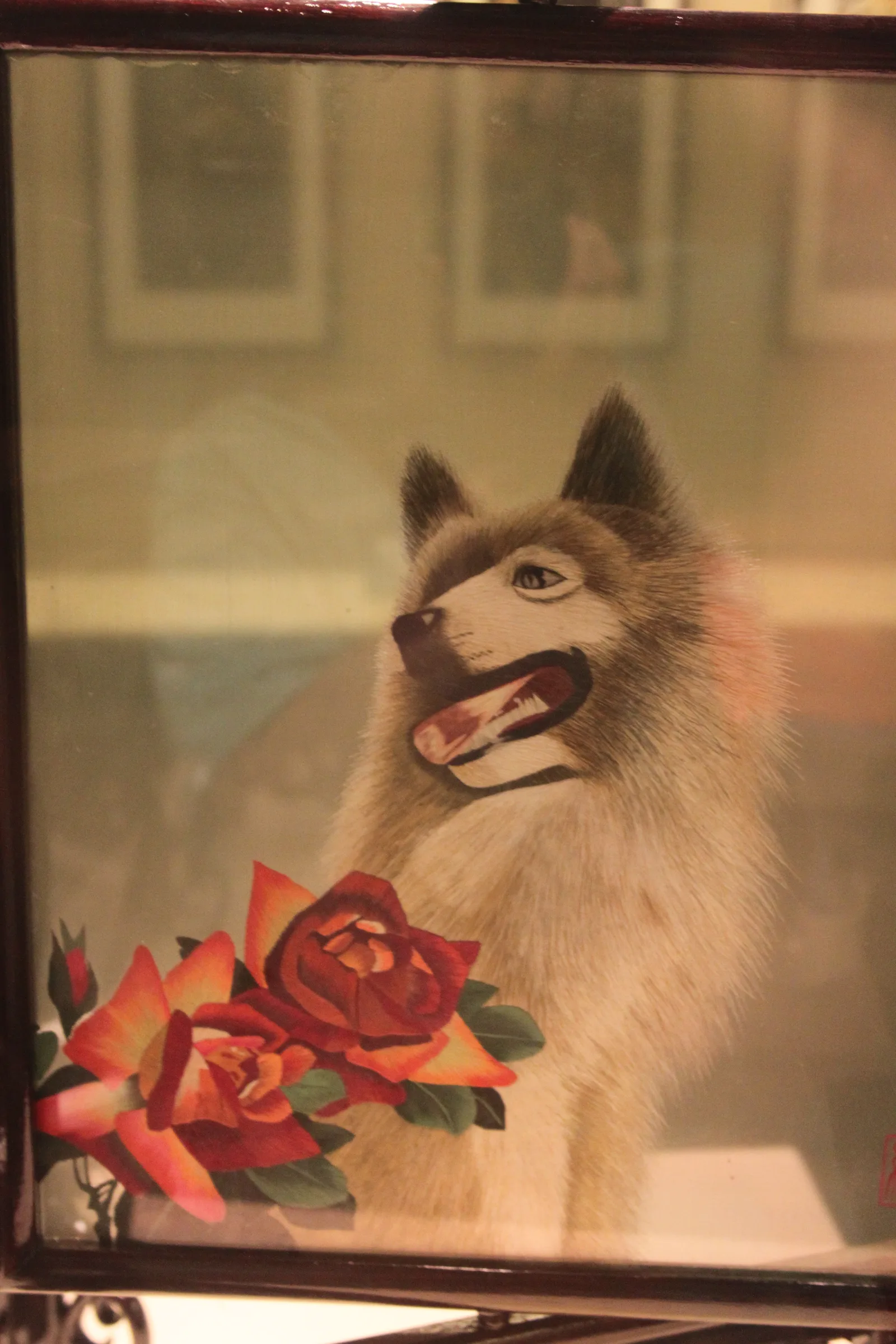
*Sichuan embroidery, one face (Sichuan Provincial Museum context). Wikimedia Commons — CC0. Documentary comparison imagery; do not assume a named “different-image double-sided” technical subtype without catalogue confirmation.*
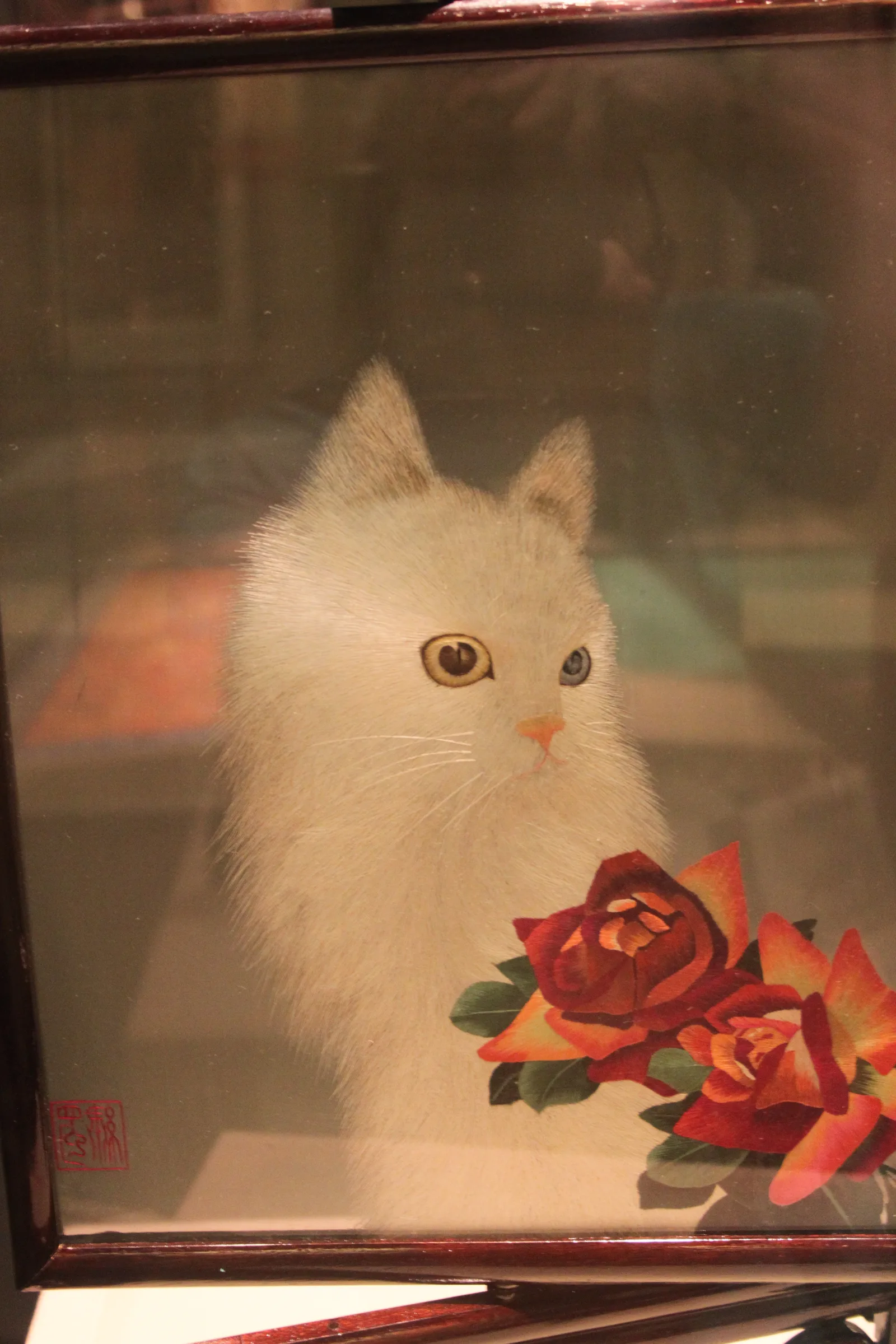
*Opposite face of a Sichuan embroidery display pair. Wikimedia Commons — CC0. Use as viewing comparison, not as authentication of a specific double-sided subtype.*
Why It Is Technically Difficult
Controlling two faces multiplies planning: thread management, design registration, color decisions and mounting constraints all interact. Difficulty explains cultural prestige; it does not automatically authenticate a souvenir.
Can Other Chinese Traditions Use Two-Sided Techniques?
Avoid claiming Suzhou exclusive ownership of the concept. Su association is strong in cultural writing; exclusive ownership claims are stronger than the evidence usually supports.
How to Recognize Genuine Two-Sided Construction
Museum-viewing level only:
- Both faces show intentional finished stitching.
- Thread ends are managed rather than casually left.
- Mounting allows two-sided viewing without hiding an unfinished reverse.
Do not claim authentication from a single photograph.
Common Misconceptions
- Double-sided embroidery ≠ all Su embroidery.
- A two-sided frame ≠ automatic technical double-sided construction.
- Machine products may imitate the look.
- One photo cannot establish authenticity or age.
Double-Sided Embroidery FAQ
What is double-sided Chinese embroidery?
Embroidery designed so both faces can be viewed as finished surfaces.
How is Chinese embroidery made on both sides?
Through controlled stitching and thread management planned for two faces—this page explains the concept, not a workshop recipe.
Is double-sided embroidery from Suzhou?
It is especially associated with Su embroidery, not exclusively owned by it.
Is all Suzhou embroidery double-sided?
No.
Can each side show a different image?
Advanced variations are discussed in specialist contexts; confirm with authoritative object documentation before naming subtypes.
Why are double-sided embroideries often displayed in screens?
Screens let viewers see both faces without hanging the textile against a wall.
How can I tell if embroidery is genuinely double-sided?
Inspect both faces in person when possible; do not authenticate from a photo alone.