
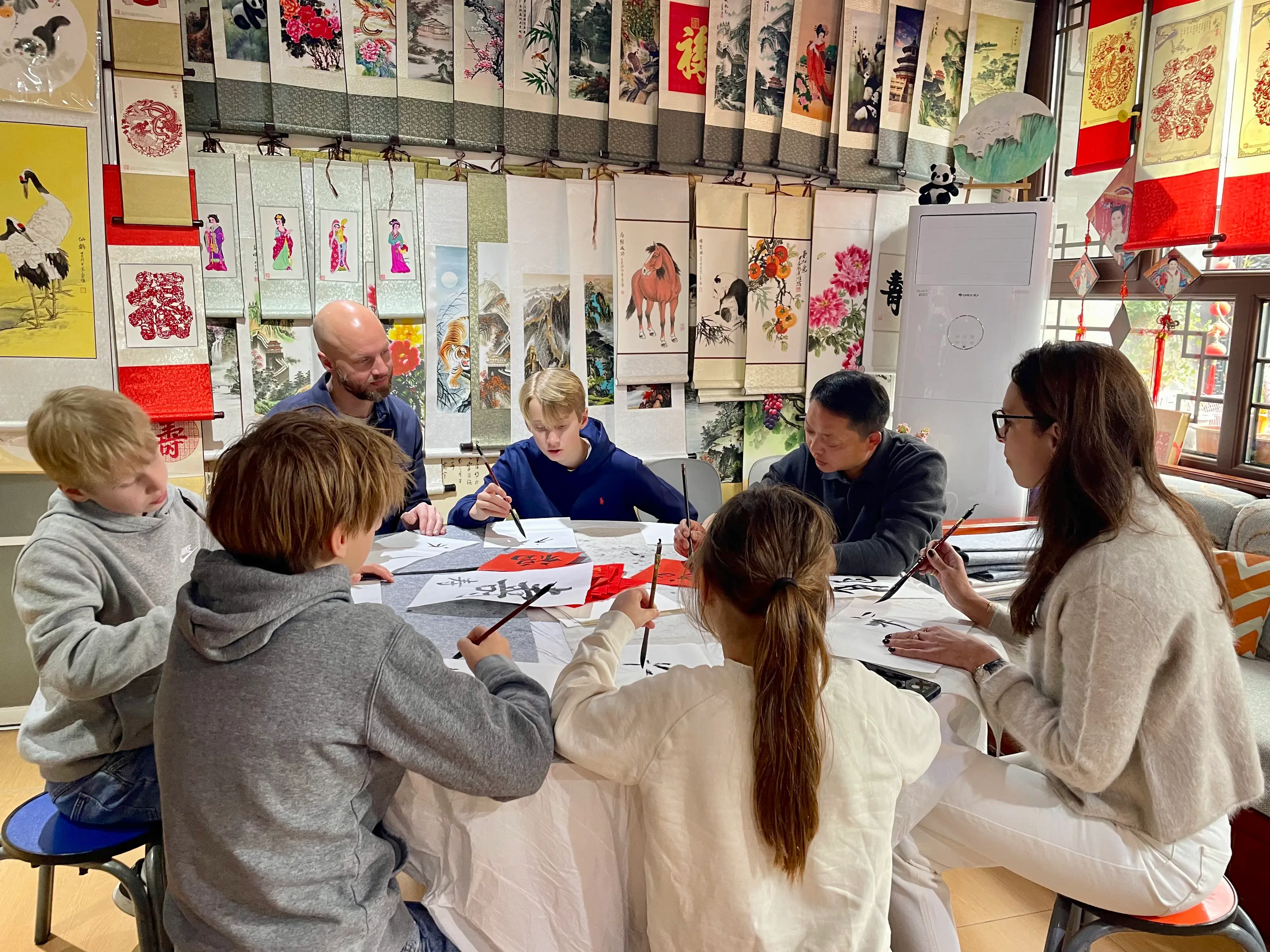
Beijing cultural experiences side by side
| Experience type | Best for | Time | Pacing |
|---|---|---|---|
| Hutong walking | Photographers, first-timers, families with older children | 2-3 hr | Walking, outdoor |
| Dumpling class | Families, couples, food-curious visitors | Provider-dependent; often around half a day when bundled | Hands-on, normally indoor kitchen |
| Calligraphy class | Visitors interested in writing, art and quieter practice | Often 60-90 min alone; longer when combined | Seated, indoor |
| Courtyard visit | Architecture-curious, slower-paced visits, seniors | 30-60 min | Seated + walking |
| Food tour | Couples and small groups wanting tasting variety | Often 2-3.5 hr | Walking, weather-dependent outdoor sections |
| Combined format | Visitors seeking variety rather than depth in one activity | Often 3-4 hr for a named combined cultural encounter | Indoor practice plus courtyard / kitchen components |
Calligraphy or dumpling making: which fits you?
Calligraphy and dumpling making offer different kinds of participation. Calligraphy is quieter and centres on brush movement, characters and individual practice. Dumpling making is more social and centres on food preparation, shared activity and eating the result. Neither is universally better; the stronger choice depends on the group, available time and the kind of interaction you want.
| Factor | Calligraphy | Dumpling making |
|---|---|---|
| Main focus | Brush handling, strokes, characters and visual form | Dough, filling, folding, cooking and shared food |
| Atmosphere | Quiet, concentrated and individually paced | Social, active and group-oriented |
| Typical format | Demonstration followed by guided individual practice | Host demonstration followed by hands-on preparation |
| Physical demand | Low; normally seated | Low to moderate; normally standing or seated around a work surface |
| Result | Practice sheets or a written piece may be taken away | Participants normally eat the dumplings they prepare |
| Best suited to | Visitors interested in writing, art and slower observation | Families, food-focused visitors and groups seeking interaction |
| Important variable | Depth of instruction and individual correction | Kitchen format, dietary requirements and level of participation |
| Children | Works best when duration and exercises are adapted | Often easier for children who prefer immediate hands-on feedback |
| Cultural context | Chinese writing, brush practice and character structure | Domestic food practice, shared preparation and family-style eating |
Is a Beijing calligraphy class worth doing?
A Beijing calligraphy class can be worthwhile when you want a quiet, hands-on introduction to Chinese writing and brush practice. It is less compelling when the session is designed mainly for photographs, provides little correction, or takes time away from priorities that matter more to your trip. The value depends on the teaching format, not simply on the activity label.
| Situation | Assessment | Why |
|---|---|---|
| Interested in Chinese writing or visual art | Usually a good fit | The session gives physical context for brush movement, stroke sequence and character structure |
| Prefer quiet, seated activities | Usually a good fit | Practice is individually paced and physically light |
| Want detailed cultural explanation | Potentially a good fit | Confirm that the practitioner explains the character, materials and technique rather than only demonstrating |
| Travelling with children | Depends on adaptation | Session length, exercise difficulty and the child's interest matter more than one universal minimum age |
| Very limited time in Beijing | Lower priority | Major sights or essential logistics may provide more value on a compressed itinerary |
| Want a highly social activity | May be a weaker fit | Dumpling making or another shared activity may create more group interaction |
| Expect mastery or polished artwork | Poor fit | A short visitor session provides an introduction, not technical competence |
| Session offers no individual feedback | Lower value | Copying without explanation or correction provides limited understanding |
The strongest indicator of value is whether the host demonstrates, explains and corrects—not whether the room is photogenic or the listing uses words such as “authentic” or “immersive.”
It is more likely to be worthwhile when:
- You are interested in Chinese characters, brushwork or visual art.
- The session includes guided practice and individual correction.
- The practitioner explains the selected character and its structure.
- The group prefers a quiet and individually paced activity.
- The session complements museum visits, historic inscriptions or other cultural context.
- The time allocation is sufficient for repetition rather than only a demonstration.
It may be less worthwhile when:
- The activity consists mainly of a brief photo opportunity.
- The host provides no explanation or correction.
- The itinerary is too compressed to justify a dedicated cultural activity.
- The group strongly prefers food, movement or social interaction.
- The listing promises mastery, perfect results or an authentic experience without explaining the teaching format.
- The session duplicates another activity already included in the itinerary.
Set the right expectation
A beginner session may help you understand how a brush is held, why stroke sequence matters and how ink behaves on paper. It will not teach fluent Chinese writing, mastery of calligraphy or reliable interpretation of historical works.
Choose calligraphy when:
- The visitor is specifically interested in Chinese writing or visual art.
- The group prefers a quieter, seated activity.
- Individual practice is more appealing than group food preparation.
- The visitor wants physical context for understanding Chinese calligraphy.
- Dietary requirements make a cooking activity less practical.
- See what to expect from a beginner calligraphy class
Choose dumpling making when:
- The group prefers a more social and immediately hands-on activity.
- Food is a central interest.
- Children are more engaged by making and eating something.
- Shared participation matters more than individual technical instruction.
- The group wants an activity that naturally leads into a meal.
- Read the dumpling-making guide
Choose both when:
Combining both works when the purpose is a broader cultural encounter rather than a deep standalone class. The two activities create a useful contrast: individual brush practice followed by collaborative food preparation. Confirm how much time is allocated to each component, because a combined format will normally provide less depth in either activity than a dedicated session.
Compare the actual format, not only the activity name
A well-taught calligraphy session may provide more cultural depth than a lightly hosted cooking activity, while a practitioner-led dumpling session may offer more social and domestic context than a photo-oriented calligraphy workshop. Compare the host, teaching structure, group size, language support and time allocation before choosing.
Cultural tour or food tour?
A Beijing cultural half day (hutong walk, courtyard visit, calligraphy, dumpling making, or a combined format) and a food tour answer different goals. Choose cultural when you want neighbourhood context and participation. Choose a food tour when tasting variety across stops matters more than craft or courtyard time. Neither is universally better; match the format to the group and the rest of the itinerary.
| Factor | Cultural / hutong half day | Food tour |
|---|---|---|
| Main focus | Neighbourhood context, courtyard life, and hands-on practice (walk, brush, kitchen) | Guided tasting across several restaurants or snack stops |
| Typical duration | Often 60-90 min for a hutong walk alone; about 3-4 hr when combined with calligraphy and dumpling lunch | Often 2-3 hr |
| What you do | Walk working lanes, visit a courtyard, and often write or cook | Sit and taste at multiple stops with guide commentary |
| Cultural depth | Higher when the format includes neighbourhood context plus a hands-on component | Strong on food culture; lighter on courtyard or craft practice |
| Often suits | First-time visitors, families, and travellers who want participation over tasting breadth | Food-focused visitors and travellers who already did a hands-on cultural half day |
| Children | Usually easier when the session stays active (walk + kitchen or brush) and pacing is adapted | Harder for younger children when the route is mostly seated tasting |
| Includes a meal? | Combined cultural formats often include dumpling lunch; short hutong walks may not | Yes — tasting portions across stops |
Choose a cultural / hutong half day when:
- It is a first Beijing trip and you want one participatory cultural slot.
- The group prefers walking lanes, courtyard context, brush practice or kitchen work over multi-stop tasting.
- Children or mixed ages need an active format rather than a long tasting menu.
- You want participation and neighbourhood context in one half day rather than multi-stop tasting alone.
- Compare cultural formats side by side on this hub
- See a hosted hutong + calligraphy + dumpling format
Choose a food tour when:
- Food is the main trip priority and you want several Beijing flavours in one outing.
- You already completed a hands-on cultural half day and want tasting breadth next.
- The group prefers eating over cooking or brush practice.
- Read the Beijing food experience hub
- Compare dumpling class vs food tour
Doing both
On a multi-day Beijing trip, book them on different days. A cultural half day that already includes dumpling lunch plus a same-day food tour usually creates food overload. A common split is cultural afternoon on one day and a food tour on another evening.
Hutong tour vs cultural tour
A hutong tour is the neighbourhood-walk form of a cultural half day. The broader cultural format may add calligraphy, dumpling making or courtyard hosting in the same window. Use the same decision rule against a food tour either way: pick participation and place context, or pick multi-stop tasting.
Which is best for families?
Suitability depends on session length, the child’s interest and whether the activity is adapted by the host. Dumpling making is often easier for children who prefer immediate hands-on feedback. Calligraphy works best when duration and exercises are adapted. Hutong walks suit children who can manage outdoor walking at a moderated pace.
- Prefer dumpling making when the group wants shared kitchen participation and an edible result.
- Prefer calligraphy when the child is interested in writing, drawing or quieter seated practice.
- A combined cultural encounter can work for mixed ages when each component is adapted — confirm pacing and language support.
- Very young children may struggle with either format unless the host shortens and simplifies the session.
Which works on a rainy day?
Calligraphy and cooking sessions are normally the more reliable wet-weather choices when held indoors. Hutong walks and walking food tours remain weather-dependent, even when parts of the route include covered courtyards.
- Indoor-protected: dumpling making and calligraphy when the session is held indoors.
- Covered courtyards can reduce exposure on a short hutong visit, but the walk itself stays weather-dependent.
- Walking food tours with outdoor segments are less reliable in rain.
Compare cultural experiences
The authenticity angle - what 'local' actually means on the ground.
Which Beijing cultural activities actually work with kids.
The 3-4 hour cultural slot that pairs with morning sightseeing.
Indoor cultural picks when Beijing weather doesn't cooperate.
By traveller type, season & rainy days
Top picks ranked by family fit - ages, pacing, payoff.
Seated, slower-paced cultural activities that travel well.
Indoor cultural standouts ranked for wet-weather backup.
Hands-on cultural half day vs multi-stop tasting — pick by trip priority.
Common Beijing cultural-pick mistakes
Picking 'a cultural experience' without picking which type
There are four (hutong, dumpling, calligraphy, courtyard). Bundles cover three. Walking into Beijing without knowing which means you'll default to whatever is available, not what fits.
Doing a food tour with picky eaters
Food tours include offal, fermented sauces, street-style cooking. Picky eaters and kids do better with cooking classes.
Cramming a Great Wall day + cultural half day
Great Wall day is 12 hours. Cultural half day is 3-4 hours. They don't fit same day. Plan separately.
Booking a self-walk hutong tour with mobility limits
Hutong stone is uneven; benches are scarce. Add a guide or a rickshaw for seniors; pick courtyard visits over walks.
Skipping the cultural day on a 2-day trip
A 2-day Beijing trip with no cultural half day is two days of palaces and walls. Add the bundle to day 2 afternoon.
Best cultural experiences FAQ
- Hutong walking, dumpling making, calligraphy sessions and courtyard visits are useful cultural formats for many visitors. A combined hutong, calligraphy and dumpling encounter can suit visitors seeking variety in one half day, while dedicated sessions provide more depth in a single activity.
- Sightseeing first (Forbidden City and Great Wall need fuller days). Add a cultural half day in the afternoon of day 2 or day 3.
- Suitability depends on session length, the child’s interest and whether the activity is adapted by the host. Dumpling making is often a strong family fit when participation is hands-on. Calligraphy can work when exercises are shortened and guided. Long walking food tours are usually harder for younger children.
- Courtyard visits and calligraphy (seated, slower-paced); guided hutong walks with rest stops; courtyard meals. Long walking food tours may be less suitable depending on mobility.
- Calligraphy and cooking sessions are normally the more reliable wet-weather choices when held indoors. Hutong walks and walking food tours remain weather-dependent, even when parts of the route include covered courtyards.
- A cultural or hutong half day emphasises neighbourhood context and hands-on practice (walk, brush, kitchen). A food tour emphasises guided tasting across multiple stops. First-time visitors often prefer participation and neighbourhood context; food-focused travellers often prefer tasting breadth. Match the format to the group rather than ranking one as inherently deeper. Do both on different days when time allows — not usually the same day if the cultural session already includes a meal.
- On many first Beijing trips, a hutong or combined cultural half day is a useful early choice for neighbourhood context and participation. Book a food tour when tasting breadth is the priority or after you already have one hands-on cultural session on the trip.
- Neither is universally better. Choose calligraphy for a quieter activity focused on brushwork, characters and individual practice. Choose dumpling making for a more social food activity based on shared preparation. Families and interactive groups often find dumpling making easier, while visitors interested in writing or art may prefer calligraphy.
- Yes. Some hosted cultural experiences combine calligraphy and dumpling making, sometimes with a hutong walk or courtyard visit. A combined session offers broader variety, but normally less depth in each individual activity than two dedicated classes.
- It can be worthwhile for visitors interested in Chinese writing, visual art or a quiet hands-on activity. The strongest sessions include demonstration, explanation and individual correction. It may be a lower priority on a very short itinerary or when the workshop is mainly a photo activity with little instruction.
Plan a Beijing cultural half day
The most popular Beijing cultural half day is a bundled hutong walk + calligraphy + dumpling-making + lunch in one hutong-area courtyard - 3-4 hours, covers three of the four experience types, works for couples, families, and groups.
Pair with a morning Forbidden City or Temple of Heaven tour for the canonical Beijing city day.
Book the hutong + calligraphy + dumpling experienceSee all Beijing experiences