This page is where to sit; the food-cluster page is the dish
This page is for travelers who already know they want Peking duck in Beijing and now need a booking decision. It is not the dish explainer. That live food-cluster page covers how the roast is served, what the pancakes are for, and how the carving ritual works. We stay here with a different job: which part of the city, how formal the room should be, and whether the same evening still has a show. We write as operators who have to get you from a hotel door to a table and, sometimes, to a curtain after the last pancake.
We will not publish a ranked paid list. We will not publish a price. Historic roast-duck houses, hotel dining rooms, courtyard rooms, and neighborhood restaurants are types, not a scoreboard. A name you saw on a social feed is a starting point, not a reservation. Availability, the size of the bird, and the time the kitchen will carve all move. Confirm the table for your date. If a page promises the one official restaurant, treat that as marketing. Beijing has more than one honest room.
The useful questions are ordinary. How close is the table to the hotel. How formal do you want the room. How many people need to sit, including children. Does the same night still hold a Peking Opera or acrobatics start. Is this the celebration dinner or a Tuesday lunch after a palace morning. Those answers change the booking more than a list of famous signs. We would rather place you in a room you can reach than in a room that wins a photograph and loses the show.
If you want us to look at a specific night, send the hotel area, the group size, and whether a curtain sits after dinner. We reply with a neighborhood and a formality, not with a priced menu on this page. The food guide remains the place to understand the dish. The nightlife page remains the place to choose a show or a walk. This page only places the table. Soft ask, not a hunt: tell us the night you actually have.
Decide how formal the room should be before you chase a name
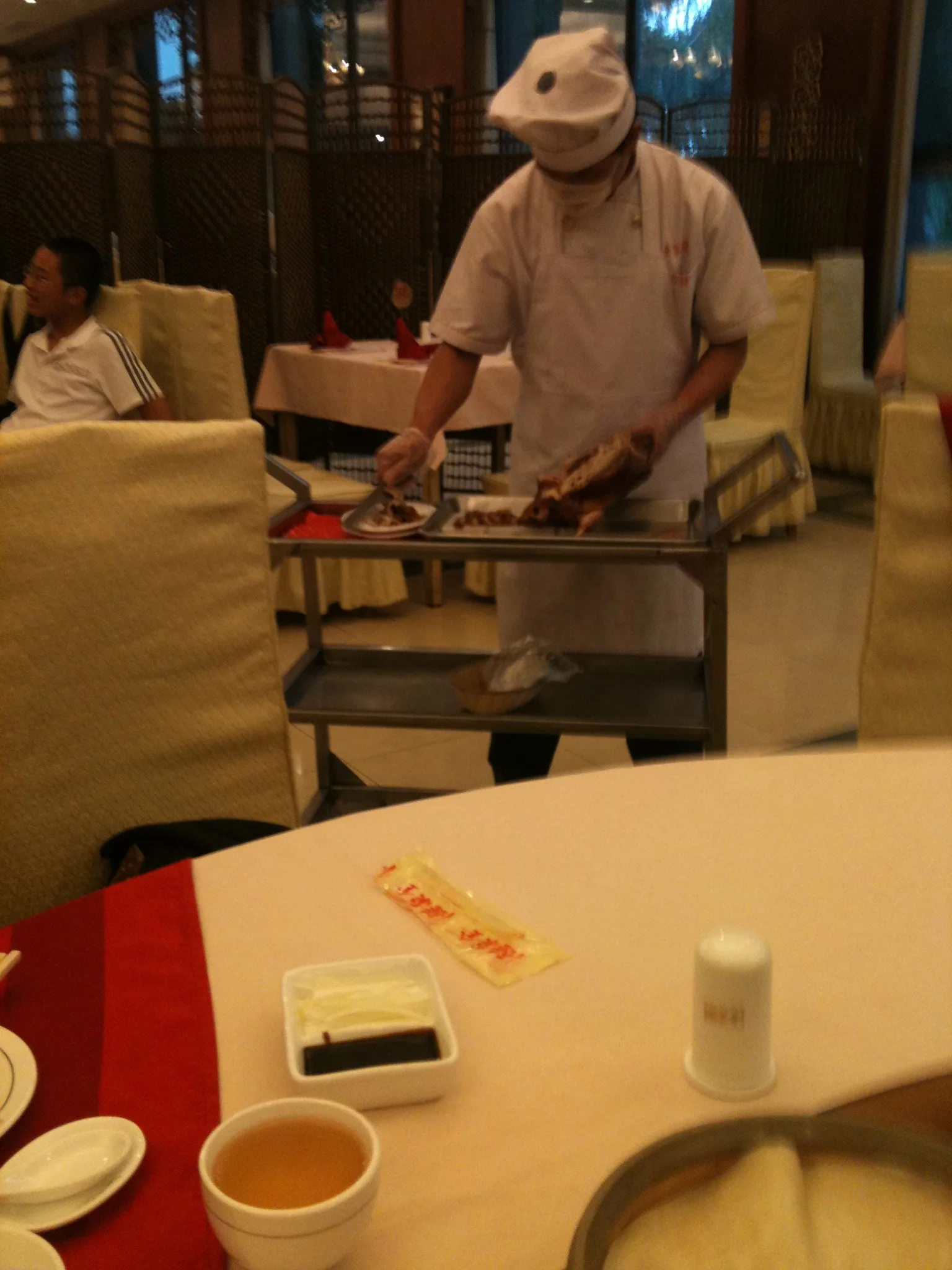
A carved duck dinner can be a banquet room, a hotel dining room, a busy historic house, or a quieter neighborhood table. Formality is the first fork because it decides dress, noise, and how long you will sit. A celebration with older relatives often wants a room that can hold a conversation. A first-time visitor who wants the carving tableside often wants a house that still does that ritual properly. A tired palace afternoon often wants the nearer good room, not the famous sign across the city. We ask what the night is for before we ask which street.
Hotel dining rooms are the calm tool for groups, jet-lagged arrivals, and anyone who does not want a cross-town taxi after a Wall day. They are not automatically “less authentic.” They are closer, they take the booking in the language you already used for the room, and they can usually hold a dietary note. If the hotel’s duck is the one you will actually eat, eat it. A second reservation across town on the same night is how people skip the carving because they are late. Distance is a flavor.
Historic houses around the old-city south and the Qianmen approaches are the rooms travelers mean when they say they want a traditional roast-duck evening. They can be busy, tourist-heavy, and still good. They can also be a queue with a name. Book. Walk in only if the house says walk-in still works on that date. We will not pretend that a famous sign guarantees a quiet table at seven. We will pretend even less that a courtyard photograph guarantees the bird you wanted. Confirm the kitchen’s last carving time, not only the dining-room closing hour.
Courtyard and hutong rooms add atmosphere and add a walk. They are a poor match for a tight show transfer and a good match for a night when the walk is the point. If you want both duck and a lakeside stroll, place the table near the lake you already chose, not near a house you saw in a film. The hutong guides exist so you pick the district first. Formality still applies: a courtyard can be a party or a quiet table. Ask what the room will actually feel like on a weekday versus a Saturday.
Areas we actually book around: old-city south, Wangfujing, Chaoyang, hutong
The old-city south around Qianmen and Dashilar is the usual historic-house cluster. It sits well after a palace day if you still have legs and do not have a northern-hotel return plus a curtain. It sits poorly after a Mutianyu day if the hotel is in Chaoyang and everyone is already tired. We treat this area as a destination dinner, not as a default. If you are staying nearby, it becomes a neighborhood dinner and the walk home is part of the night. If you are not, we count the road.
Wangfujing is the shopping-and-hotel base many first stays already chose. Duck here is often a hotel room or an established house a short ride from the pedestrian street. That is a kind evening after a city day. It is a less romantic sentence than “Qianmen at dusk,” and it is how people actually eat the bird they booked. The where-to-stay page is the neighborhood version of this choice. If Wangfujing is your base, we start the duck search there before we send you south for a sign.
Chaoyang — including the embassy and Sanlitun pattern many business hotels use — is a contemporary-room area. The bird can still be carved tableside. The room will feel more like a city restaurant than like a historic house. That is fine. It is the honest dinner after a day that already used the old city, and it is the honest dinner when the hotel is already here. Crossing back to Qianmen for a name, then crossing again for sleep, is a night we rewrite. Stay in the district you are already in unless the historic house is the point of the trip.
Hutong dinners belong to the district you chose: Nanluoguxiang, Shichahai, Wudaoying, or a quieter lane. The food may be duck, and it may be something else. Do not force a banquet bird into a small courtyard that would rather serve a mixed table. If you want duck and a hutong walk, we look for a room on the edge of the walk, then we walk. The street-food page is a different evening. A skewer street is not a carving. Do not mix them on a night when you wanted the ritual.
Match the room to the night you actually have
| Night | Room type that usually fits | Room type we usually avoid |
|---|---|---|
| Arrival evening | Hotel dining room | A historic house across the city |
| Palace day, no show | Old-city south or Wangfujing sitting | A Chaoyang destination if the hotel is already south |
| Palace day plus a curtain | Early hotel or nearby sitting | A courtyard that cannot release you on time |
| Wall-day evening | The nearest good room to the hotel | Qianmen as a fourth outing |
| Hutong walk night | A table on the edge of the district you chose | A banquet hall you must taxi to and from |
Timing versus a show: the same evening has to be honest
A carved duck dinner wants time. The bird is ordered, roasted or finished, carved at the table, then eaten with pancakes and the dishes that come after. That is not a forty-minute pizza. If the same night holds a Peking Opera or an acrobatics curtain, we work backward from the start time, then from the transfer, then from the last pancake. If the remainder is too short, we move the duck to another night or we move the show. We will not shorten the carving to make a brochure pairing true.
The opera guide and the opera-versus-acrobatics page are the show-choice tools. The private-transfer product is the road tool when the curtain is the point. This page only needs the table to let you go. Book an earlier sitting if the show is that night. Book the later sitting if the show is not. Hotel dining rooms are easier to leave on time than a courtyard that is still pouring tea. Tell the restaurant you have a curtain. A house that cannot respect that is the wrong house for that night, however famous the sign.
A Wall-day evening is another honesty test. People who walked a ridge usually want the nearer room, a simpler order, and a short ride home. A historic house across the city is a second outing. We would rather you eat a good bird near the hotel than sleep through a famous dining room. If the Wall day was winter or high summer, that preference gets stronger. The weather-by-month page explains why the body is already spent. Dinner should not be the second ridge.
Lunch duck is a real option after a palace morning if the kitchen carves at midday. It frees the evening for a show or for sleep. It also uses a meal slot you might have given to something lighter. We ask whether you want the ritual at lunch or at dinner before we lock both a show and a table. Two heavy meals around one palace day is how people skip the evening they booked. One carving and one simple meal is the week we prefer.
Duck, show, walk — pick the evening’s job
| If the night’s job is | Keep | Drop or move |
|---|---|---|
| The carving ritual | A sitting with enough time | A curtain that sits too close |
| The theatre | An early simple dinner or a lunch bird | A destination banquet |
| The lakeside walk | A table near Shichahai | A house that sends you back across town |
| Sleep before a ridge | Hotel-proximate food | Any destination dinner |
Quick facts for booking a duck table
- What this page is: Where to sit — area, formality, sitting — not the dish explainer and not a ranked list
- Sibling page: Peking duck in Beijing — how the roast is served and what you are eating
- First decision: Formality: hotel room, historic house, courtyard, or neighborhood table
- Usual areas: Qianmen and Dashilar, Wangfujing, Chaoyang, and the hutong district you already chose
- Same-night show: Work backward from the curtain; move the duck or the show if the carving cannot finish
- After a Wall day: Eat near the hotel. A destination house is a second outing.
- What we will not publish: A ranking, a price, or a last-carving minute copied from memory
Book the bird, the sitting, and the group size — not a vibe
Peking duck is often ordered as a whole bird or as a set that assumes a whole bird. Group size therefore matters more than it does for noodles. Two people can still eat duck; they should say they are two so the house can scale the rest of the table. Six people should say they are six so the kitchen does not send a single bird into a hungry table. We put the headcount in the booking. We do not assume a house will guess. Confirm for your date how they portion and how late they will still start a bird.
Weekend evenings and holiday weeks fill first. A date-fixed trip that overlaps a public holiday should book the duck when it books the palace, not on the afternoon walk. Walk-in fame is a photograph, not a plan. If you do not want to lock a restaurant, lock a neighborhood and a formality, then choose a house that still has a sitting. We can work that way. We cannot work from “we will see a sign.” Signs in Qianmen are not a queue-management system.
Dietary needs belong in the note: no wheat, no meat except the duck, no duck at all for one person, children who will only eat pancakes. A roast-duck house can usually feed a mixed table if it knows. It cannot invent a second kitchen at seven. Vegetarian Beijing food exists and is a different restaurant decision; do not force it onto a house that is built around a bird. The food guide can point you at other meals. This page will not turn a duck house into a general dining directory.
Name mismatches and hotel-guest lists are ordinary booking failures. Use the same spelling you used for the hotel if the restaurant asks who to hold. Arrive with the confirmation the house sent. If you are late, call or message in the channel they gave you. A courtyard that releases the table is following a rule, not insulting your trip. We would rather move the sitting than argue in the doorway while the bird dries. Confirm the hold time when you book.
What “famous” means when we will not rank a paid list
Some houses are historic names. Quanjude and Bianyifang are the two that travelers have heard for decades; they are types of old roast-duck tradition, not a scoreboard we will order for you. Some rooms are modern houses that still carve tableside and are easier to book near a Chaoyang hotel. Some rooms are hotel kitchens that do a careful bird for guests who will not cross town. Famous is a history word. It is not a quality guarantee for your Saturday. Book the room that matches formality, area, and timing.
A long queue is not proof. A celebrity photograph is not proof. An empty room at six is not proof of a problem. The proof is whether the kitchen will carve the bird you ordered at the sitting you booked, and whether you can reach the table without spending the evening in a car. We will name a type and a district. We will not sell you a ranking. If a friend has a house they loved, bring the name and we will check whether it still fits the night you have. Fit beats fame.
Tour-bus restaurants exist. So do shopping-stop dinners that were never on your list. If a stranger at a gate offers a special duck, that is a scams-page pattern, not a reservation. If a day includes an unannounced jade shop and then a duck house you did not choose, that is a different product from a private day. Say if you want no shopping stop. We will keep the dinner on the list you wrote. The private-versus-group page is the wider version of that sentence.
English menus and picture menus are ordinary in visitor houses and are not a reason to distrust the bird. A house with no English can still be the right room if someone in the group can order, or if we are booking for you. A house with only English and a carving show can still be the right room if that is the night you wanted. We judge the sitting, not the language of the menu. Confirm that the duck you want is the roast you meant. Other roasted birds appear. Ask.
Lunch carving versus dinner carving
Lunch is the underused sitting. After a Forbidden City morning, a midday bird near Wangfujing or the old-city south can be the celebration without touching the evening. It also fails if the kitchen’s lunch carving ends earlier than you think. Confirm the last midday bird when you book. A palace day that runs long will miss it. In that case, eat something simple near the gate and keep duck for another night. We would rather move the ritual than rush the palace to catch a lunch oven.
Dinner is the sitting most visitors imagine. It pairs with a show only when the start time is honest. It pairs with a hutong walk when the table is on the walk. It pairs badly with a late Wall return. If the only free evening is the Wall evening, choose the nearer room or skip the ritual that night. Beijing food is larger than one bird. Hot pot, noodles, and a hotel dinner are allowed. The hotpot page and the food guide exist so the week can hold more than one idea.
Two duck dinners in one short stay are rarely what people actually want. One careful carving is enough for most first visits. A second bird is for someone who already knows they want a different style — historic house then hotel room, or lunch then a leftover-meat dish the next day. Leftovers and “duck bone soup” customs vary by house. Do not expect a second meal to appear unless the kitchen says it will. Ask when you book if that tradition matters to you.
Families often do better at lunch. Children sit more kindly, the room is less formal, and the evening can be early. If a child will not eat duck, order the rest of the table so they have something, and do not make the ritual a lecture. The food-cluster page explains the pancakes; this page only needs the sitting to be short enough. Confirm a high chair or a booth if that changes the house. A banquet hall can be a poor family room even when the bird is excellent.
Hotel-proximate dinner versus destination dinner
A hotel-proximate dinner is the one we book when the day already used the group. Wall days, arrival nights, and winter evenings belong here. The bird can still be good. The night can still feel like Beijing. What you give up is the photograph of a particular sign. What you keep is the ability to walk upstairs and sleep. We recommend this more often than brochures do, because we see the mornings after the destination dinner that ran late. Those mornings are when palace tickets get missed.
A destination dinner is the one we book when the house or the district is the point, and the clock can hold it. A first-night arrival is rarely that clock. A second-night city day often is. A night before an early palace ticket is a maybe. Work backward from the next morning as well as from the curtain. If the next morning is Mutianyu, we keep dinner near the hotel even if you wanted Qianmen. The ridge will not care that you saw a sign. It will care that you slept.
Mixed groups split on this choice. One person wants the historic house. One person wants to stop walking. Name the person whose constraint wins before you book. A private day can drop one couple at the house and send the others home only if you planned two end points. That is a logistics note, not a romance. We would rather book two tables on two nights than build a split that leaves someone in a taxi arguing. Confirm how the night ends.
Where you stay changes the map. A Shichahai hotel makes a lakeside courtyard obvious. A Guomao hotel makes a Chaoyang room obvious. A Wangfujing hotel makes both the pedestrian street and a short southward hop possible. Read the where-to-stay page before you lock a destination house from another district. The dinner should sit on the week you already built, not on a list that ignores the bed. If the hotel is already booked, we place the table around it instead of wishing the road were shorter.
Common mistakes when booking duck
Treating a social-media ranking as the reservation
Choose formality, area and sitting. Then book a house that can carve on that sitting.
Pairing a late banquet with a fixed curtain
Work backward from the show. Move the duck to lunch or to another night if the carving cannot finish.
Crossing the city for a sign after a Wall day
Eat near the hotel. The ridge already used the evening’s energy.
Walking into a famous house on a holiday Saturday
Book. Holiday weeks and weekends fill. A sign is not a queue system.
Substituting a snack street for the ritual
Street food is a different evening. Keep it on another night if you wanted the carving.
Street food is a different evening — do not substitute a skewer for a carving
Beijing street food is its own page: snacks, night markets, and the things you eat walking. That evening is cheaper in time and lighter on the body. It is not Peking duck. If you want both, give them different nights. A skewer street after a carving is how people remember neither. A carving after a snack street is how they skip the pancakes. We will not combine them into a “food night” that looks good on an itinerary and feels poor at the table.
Hutong snack lanes near Nanluoguxiang are busy and lit. They are a browse, not a banquet. If your group wanted the ritual, keep walking to the room you booked and eat the snacks on another date. If your group wanted the browse, cancel the duck and read the street-food page. Honesty about the night is cheaper than a table you resent. We can help with either. We cannot help with both in ninety minutes. Name the night’s job before you leave the hotel, and keep the other food idea for tomorrow.
Hotel breakfast is also not duck, and it is still the meal that saves a palace morning. Do not skip it for a lunch carving you might miss. Eat, walk, then decide whether midday still holds a bird. The planning page owns reservation order. This page owns the meal that sits after the reservation. When those two fight, the reservation wins. You can eat duck tomorrow. You may not enter the palace tomorrow. A timed ticket does not wait for a kitchen that is still finishing someone else’s bird.
If someone in the group does not eat duck, the street-food page, the hotpot page, and a hotel kitchen are the alternatives. Do not force a vegetarian to sit through a carving they will not taste unless they want the room. Split the group only if the evening can hold two end points. Otherwise choose a restaurant that can feed everyone, even if that restaurant is not a roast-duck house. A good mixed table beats a famous bird that leaves one person hungry.
How we help book around your hotel — without a public ranking
Send hotel area, date, sitting preference, group size, dietary notes, and whether a show sits on the same night. That is enough for us to propose a district and a formality. We may name a house in the reply. We will not turn that name into a public ranked list on this page. Houses change kitchens. Sittings change. A name that was right in March can be wrong in October. Confirm for your date. If you already have a house in mind, send it and we will check fit.
We can include a duck dinner in a private city day as a drop-off, not as a shopping stop. The car waits or returns according to the note you wrote. We do not walk you into a jade shop on the way. If you want the evening to end at the theatre, say so and we will treat the table as a timed sitting with a transfer. The opera transfer product is the show version. This page is the table version. Together they are an evening. Apart they are two maybe’s.
We will not quote a menu on this page. We will not invent a “from” number. If you need a sense of formality, we will say banquet, hotel, historic house, or neighborhood table. That is the language that helps you pack a shirt or a pair of walking shoes. It is also the language that keeps this page honest. The food-cluster page may discuss typical visitor expectations in its own voice. We stay with placement. Confirm the sitting with the house you booked, not with a number you found on a blog.
If you do not want help, you can still use the order here. Choose formality, then area, then sitting, then a house that can carve on that sitting. Book. Tell them about the curtain. Eat near the hotel after a Wall day. Keep street food on another night. Read the dish page so you know what you ordered. That is the whole where-to-eat plan. Famous signs are optional. A table you can reach is not. Confirm the hold time when you book, and arrive with the name the house wrote down.
What we will not publish, and what we still confirm
We will not publish a top-ten. We will not publish a price. We will not publish a last-carving minute that will be wrong next season. We will not publish a claim that one house is official. Those sentences are how restaurant pages go stale and how travelers argue with a door. The confirmation sits with the house you booked. Our job is to place you in the right district with the right amount of time. That job stays useful when kitchens change.
We will confirm, for your date, whether the sitting you want can sit next to the show you want. We will confirm whether the hotel area makes a destination house kind or foolish. We will confirm whether lunch or dinner is the better ritual. We will confirm whether the group size needs two birds or a different restaurant. Those are operator questions. They are not a ranking. They are why this page exists beside the dish explainer. Send the night you actually have and we will place the table, not a scoreboard.
If a house disappoints, the recovery is another sitting on another night, not a refund conversation we cannot have from a guide. Tell us what failed — timing, room, or the bird — and we will change the type, not chase the same sign. A historic house that felt like a hall may want a neighborhood table next time. A hotel bird that felt quiet may want a busier room if you still have energy. Fit is iterative. Fame is not.
Read this page with the dish page, the nightlife page, and the where-to-stay page. Together they answer what you are eating, where you are sitting, what else the night holds, and how far you will walk after. Apart, each one is only a piece. We would rather you keep one complete evening than three unfinished food ideas. Confirm for your date. Then sit down long enough to watch the carving. A rushed bird is just poultry. A complete sitting is the reason you booked the table.
Where the duck sits on a two-day or three-day week
On a two-day week the honest duck is usually the city-day evening, not the Wall-day evening. The two-day itinerary page shows why that city day is already full. Dinner should be near the hotel or near the last walk, not a fourth outing. If you only have one city evening, choose duck or a show, or choose an early sitting plus a later curtain only if the transfer is booked. We will not stack a destination house, a lake walk, and a theatre on the one free night.
On a three-day week you can give duck its own evening. That is the first time the historic house is an easy yes. Put it on the night that is not the Wall return and not the arrival. The three-day itinerary is the clock. This page is the table. If the third evening is a show, use lunch duck or a hotel room. If the third evening is empty, use the destination house. Empty evenings are a gift on a first visit. Fill them with one thing.
Transit stays and layover clocks change the advice again. An arrival night is a hotel dinner. A departure night is a maybe. Read the visa-free and layover pages if that is your week. Do not book a Qianmen banquet for a landing at nine. Do not book a carving for a morning that has to reach Daxing. Permission to stay is not permission to ignore the body. We keep the bird movable on short stays. A stamp that looks long still has airports on both ends, and those airports eat sittings.
If you are still deciding whether Beijing is worth the trip, the worth-visiting page is the honest yes-or-no. Duck is not the reason to come and is a good reason to stay one extra night if the palace and the Wall already have their days. Do not add a day “for dinner” if you still lack a Wall day. The carving is a meal. The ridge is a day. We will not let a restaurant steal a landscape. Clock questions after that sentence belong on how-many-days, not on a menu.
Frequently asked questions
- No. The Beijing food / Peking duck page explains the roast, the pancakes and the carving. This page is where to sit: area, formality and timing. Read both.
- We will not publish a ranking or a price. Tell us hotel area, group size and whether a show sits on the same night. We will propose a district and a formality, and we may name a house in the reply.
- Yes if the sitting is early and the transfer is honest. No if the carving would still be going when the curtain rises. The opera pages and the transfer product own the show. This page owns the table.
- Book there if the historic-house cluster is the point and you can reach it. Book nearer the hotel if the day was a ridge or an arrival. Famous signs are optional.
- It can be a carefully carved bird in a room you can leave on time. Formality and reach matter more than whether the sign is historic. Eat the bird you can sit through.
- Lunch frees the evening for a show or sleep and needs a kitchen that still carves at midday. Dinner is the sitting most people imagine and needs more clock. After a palace morning, lunch is often kinder.
- Say so in the booking. Choose a sitting and a room that can feed a mixed table, or choose a different restaurant. Do not force a banquet on a child who wanted noodles.
- No. Confirm the sitting with the house. Send us the night you have if you want help placing the table.
- Yes as a drop-off you asked for, not as a surprise shopping stop. Say if a curtain follows. We keep the evening on the list you wrote.
Visitor information sources
Checked on 2026-10-21. Read the attraction’s latest notices before travel.