A day trip from Beijing is a full date — pick one landscape
This page is the parent for outings that leave the central Beijing walking pattern and consume a whole date. Mutianyu and other Wall sections, Tianjin, Chengde, the Ming Tombs, and the Eastern Qing Tombs each have their own guide. We will not rebuild those pages here. We will help you choose which one belongs on the leftover date you actually have. The rule we keep is simple: one landscape per date. After lunch is not a second city. After lunch is the return, a meal, and the energy you still want for tomorrow.
A day trip is not a prize you add because three Beijing days felt short. It is a trade. If you do not yet have a palace opening day and a Wall day, you do not have a day-trip date. Read the how-many-days page first. Read the planning-order page second. Then come here with a leftover full date that is not the inbound and not the outbound. People who skip that order arrive in Chengde talking about the Forbidden City they never entered. We would rather you stay in Beijing one more day.
City-scale places are not day trips in the sense of this page. The Summer Palace, Temple of Heaven, Fragrant Hills, and a hutong district are Beijing days or half-days. They can fill a third city date beautifully. They should not be used as a consolation prize after you have already stacked a ridge and a tomb field. If you name those places in a day-trip email, we will move them back onto a city day and keep this page for the longer roads.
Coach brochures like to print two landscapes on one line. Badaling plus the Ming Tombs is the usual pairing, and it is a product with its own clock, not a free extra after Mutianyu. Chengde plus Jinshanling is a two-day combination, not a lunch idea. Eastern Qing plus Western Qing is a geography error. We will slow down and separate the names before we talk about cars. Confirm opening notices for the date you will actually travel. Then pick one place you would still want if the weather is only ordinary.
Day-trip facts
- Rule: One landscape per date — after lunch is the return, not a second city
- Usual first outing: A Great Wall section, often Mutianyu, on its own daylight
- Second city: Tianjin — river and concession streets, full rail or car day
- Garden and temples: Chengde — Resort plus one temple, or an overnight
- North corridor cemetery: Ming Tombs — choose visitor areas, not thirteen interiors
- Hebei cemetery: Eastern Qing Tombs near Zunhua — not the Ming Tombs and not Western Qing
- Not on this page: Summer Palace, Temple of Heaven, hutongs — those are city days
- When to come here: After the palace and Wall core is safe and a leftover full date exists
The Great Wall is the usual first day trip — and it still needs the whole date
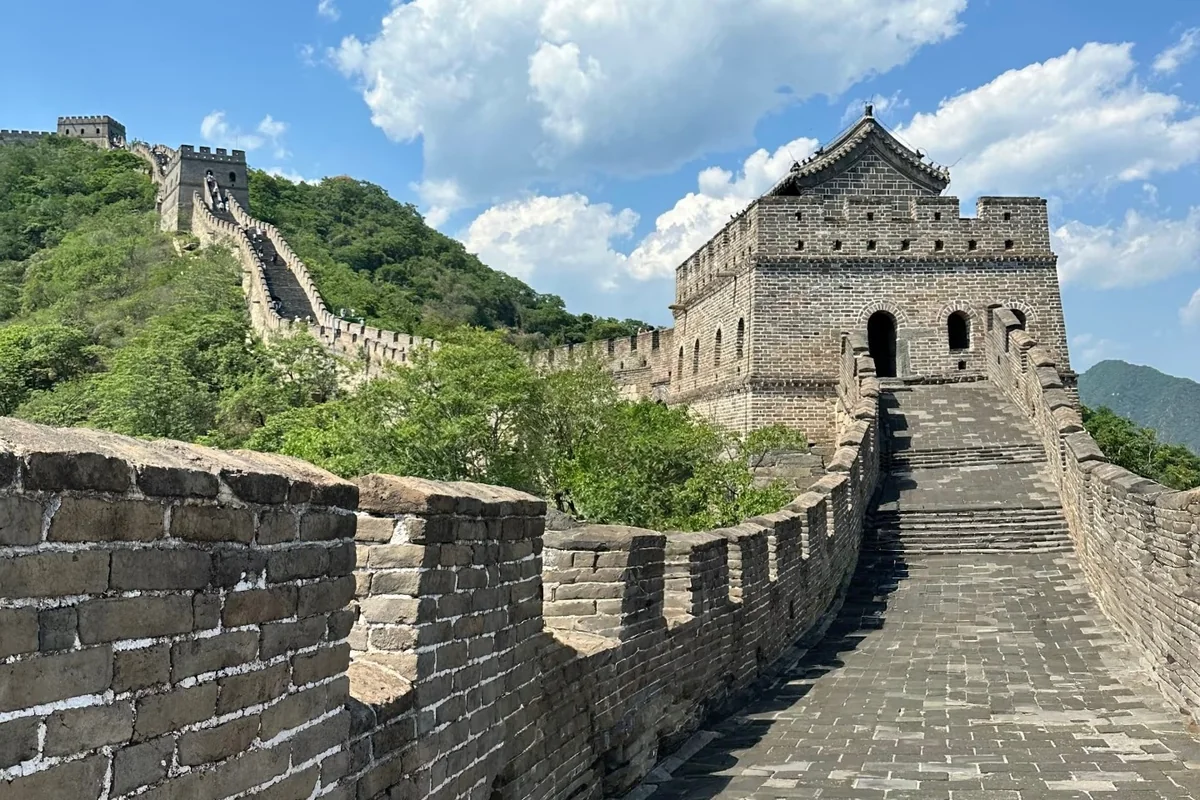
For most first visits, the Wall is the day trip, even when people do not use that phrase. Mutianyu is the usual first-time section from Beijing because the walking options and the exits fit most groups. Other sections have their own access, lifts, and unrestored stretches. Choose the section for the walk you want, then give it the date. A private car does not shorten the ridge. A cable car does not make the visit step-free. Explain knees, children, and fear of heights before we pick a tower range.
Do not add the Ming Tombs after a Mutianyu walk because the map shows both north of the city. They share a corridor in a loose sense and they do not share an honest afternoon. Do not add the palace on the same date. Do not add Chengde because someone said Hebei is on the way home. The Great Wall guide is the section-comparison page. This page only protects the daylight and stops the second landscape. If the Wall is already on your core two-day or three-day shape, you may not need another day trip at all.
Winter days are shorter and colder. Summer afternoons are harder on an open ridge. Families need toilets and a sure way down more than they need extra towers. Those facts change the section; they do not create room for a tomb after lunch. A half-day Wall product exists when the group does not want a full ridge, and it still occupies the date. The getting-home hour is part of the visit. Plan dinner in Beijing, not in a second ticket line.
A second Wall section is a later taste choice, not an upgrade you earn by waking earlier on the same trip. Jinshanling is a different walk. Badaling is a different corridor and a different crowd pattern. Combining two sections belongs on a stay that already finished the first ridge properly. Combining two sections plus a cemetery is how the week becomes a highway with two parking lots. Choose the first ridge. Finish it. Then ask whether another leftover date exists before you name a second section.
Tianjin is a different city day, not a Beijing suburb extra
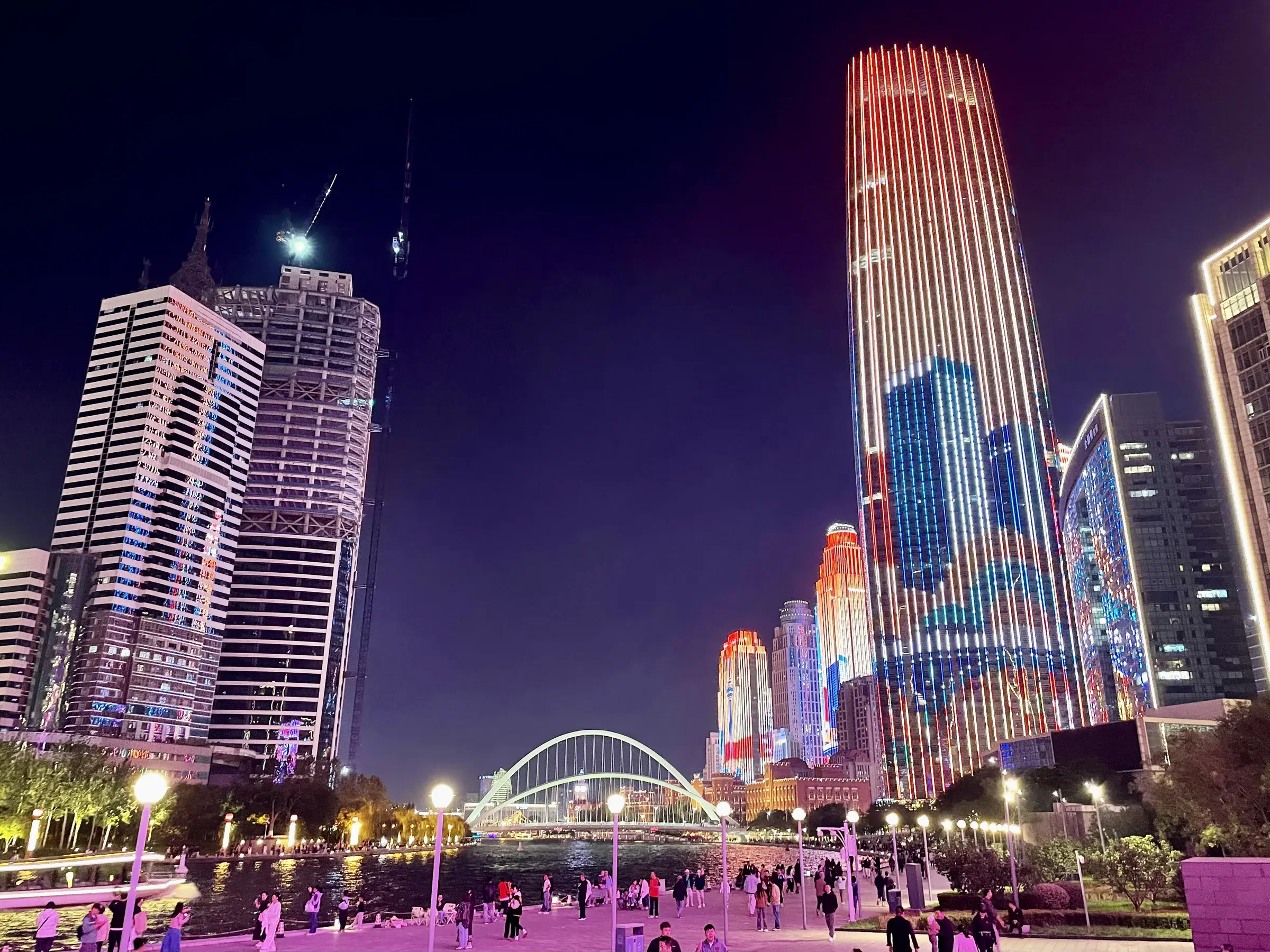
Tianjin sits close enough for a private day and far enough to feel like a different city: a river promenade, concession-era streets, and museums that are not copies of the Forbidden City. Travelers often come after several Beijing palace and Wall days, when they want water and an evening skyline rather than another hike. It is still a full outing. Station time or road time belongs in the clock. A Haihe night view is one of the reasons to go, but only if the last train or the car buffer still works.
Do not plan Tianjin as a short extra after a Forbidden City morning. Do not plan it on the outbound date toward PKX unless you have already done the arithmetic and we agree it is still kind. The Tianjin city guide owns the riverside, the museum question, and the cruise-port variant. This page only asks whether Tianjin is the one landscape you want on this leftover date. If you still lack a Wall day, stay on the ridge. If you want a second city because you are tired of palaces, Tianjin is a coherent answer.
Rail is the steadier one-day shape for a simple Tianjin visit. A private car is useful with luggage, mixed pickups, or a reason to stay door-to-door. We confirm the mode after we see the hotel area and the required Beijing return. We do not publish a sample timetable here. Last trains and holiday crowds move. Share the evening constraint if you have a show or a flight. A laser-show fantasy that misses the last train is not a day trip; it is an unplanned overnight.
Transit travelers must confirm that Tianjin sits inside the current permitted stay area before they buy the extra rail seat. Permission to stay in Beijing is not automatically permission to collect every nearby city. The 240-hour stay page is the policy-shaped version of that caution. Visa travelers can ignore the stamp and still must respect the clock. One city per date remains the rule either way. If the stay is short, we would rather you walk one more Beijing lane than spend the leftover date proving that the train exists.
Chengde is a garden-and-temple day — or an overnight, not a lunch stop
Chengde was the Qing court’s summer seat: a vast imperial garden, the Mountain Resort, with a ring of temples that are not ten-minute add-ons. It is a different register of Qing history from the Forbidden City and from the Eastern Qing Tombs near Zunhua. Rail or road time is part of the day. A honest first visit is either a focused one-day — the Resort plus one temple — or an overnight so Little Potala and Puning are not leftovers. Treat checklists that name five temples in one daylight window as marketing.
Do not add Jinshanling after a Chengde lunch. Do not add the Eastern Qing Tombs on the same date. Those combinations have their own two-day pages because they need a night. Do not use Chengde as a backdrop for a Wall photograph you could have taken from Mutianyu with less road. The Chengde city guide owns the Resort-versus-temple decision and the rail-versus-car decision. This page only asks whether Chengde is the leftover date’s one landscape, and whether you actually have the daylight.
Winter is cold. A snow-covered temple photograph is beautiful and still requires confirmed opening, clothing, and a realistic outdoor hour count. Summer heat changes how far the Resort walk feels. We confirm tickets and closed halls for your date rather than publishing a price or a last-entry minute. If you only want a ridge walk, start from the Great Wall guide instead of using Chengde as scenery. If you want gardens after you have already done palaces, Chengde is the coherent longer outing.
An overnight in Chengde exists so the second morning is a temple morning, not a copy of day one squeezed before a late train. That overnight is a two-day product. It is not a day trip. If you have only one leftover date, keep one temple and come home. If you have two leftover dates, then we can talk about Chengde plus Jinshanling or Chengde plus Eastern Qing as dedicated combinations. Those are still one landscape per date. The night in between is what makes them humane.
The Ming Tombs are a northern landscape, not thirteen interiors
The Ming Tombs sit on the north corridor in Changping. The name covers the burial places of thirteen Ming emperors, and it does not mean there are thirteen visitor interiors to complete on a single ticket. Choose the visitor areas — commonly a tomb plus the Sacred Way — and the walking level before you combine anything else. The dedicated Ming Tombs guide owns which halls are open and how the landscape is spread. This page only places the outing on a leftover date and keeps a second landscape off it.
Coach pairings with Badaling exist because the corridor is convenient for a bus clock. That pairing is a Wall-and-tombs day, not a free extra after you have already walked Mutianyu. If you want tombs without a ridge, say so and we will keep the day at the cemetery. If you want a ridge, walk the ridge and leave the tombs for another date. Mixing both after a first Wall day is how people remember a gate and a parking lot and not much else.
This is not the Eastern Qing Tombs near Zunhua and it is not the Western Qing Tombs in Yi County. Mixing those names is the most common planning error we see in first emails about tombs. A Ming cemetery day is quieter than a palace and still a full outing among courtyards and a spirit way. Heat, ice, and holiday crowds change how far the Sacred Way feels. Confirm the visitor areas for your date rather than copying a list of thirteen names from an old caption that was never a walking plan.
Do not add the Ming Tombs to a palace morning because both words sound imperial and both appear on the same souvenir map. The palace is a city reservation with a timed gate. The tombs are a landscape with a road. They do not share an honest date with each other or with Chengde. If your leftover date is short because of an evening flight, this is usually the wrong outing. Keep a city garden instead. Save the corridor for a morning that can return without panic.
Eastern Qing Tombs are a Zunhua cemetery day, not a Ming Tombs synonym
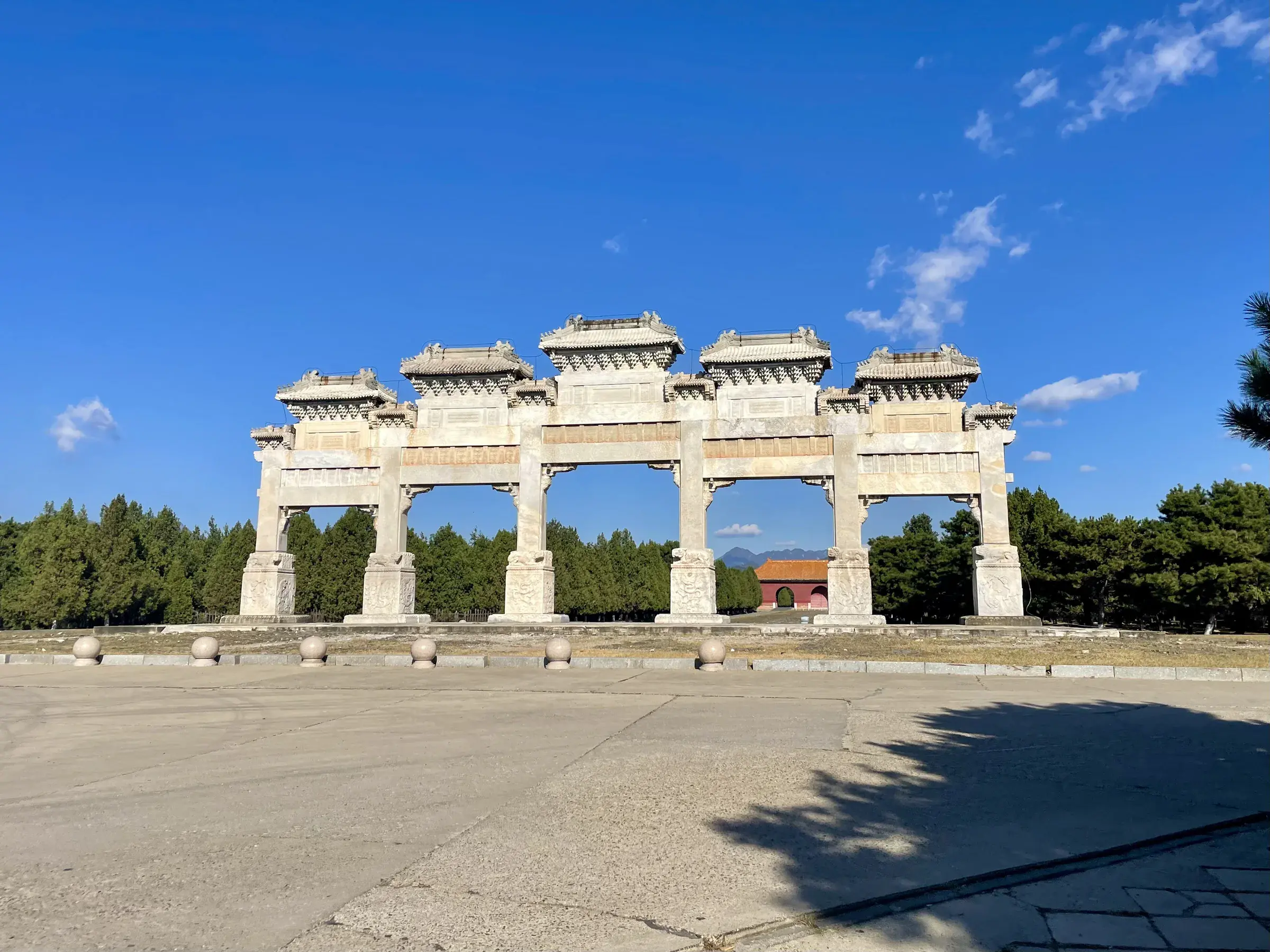
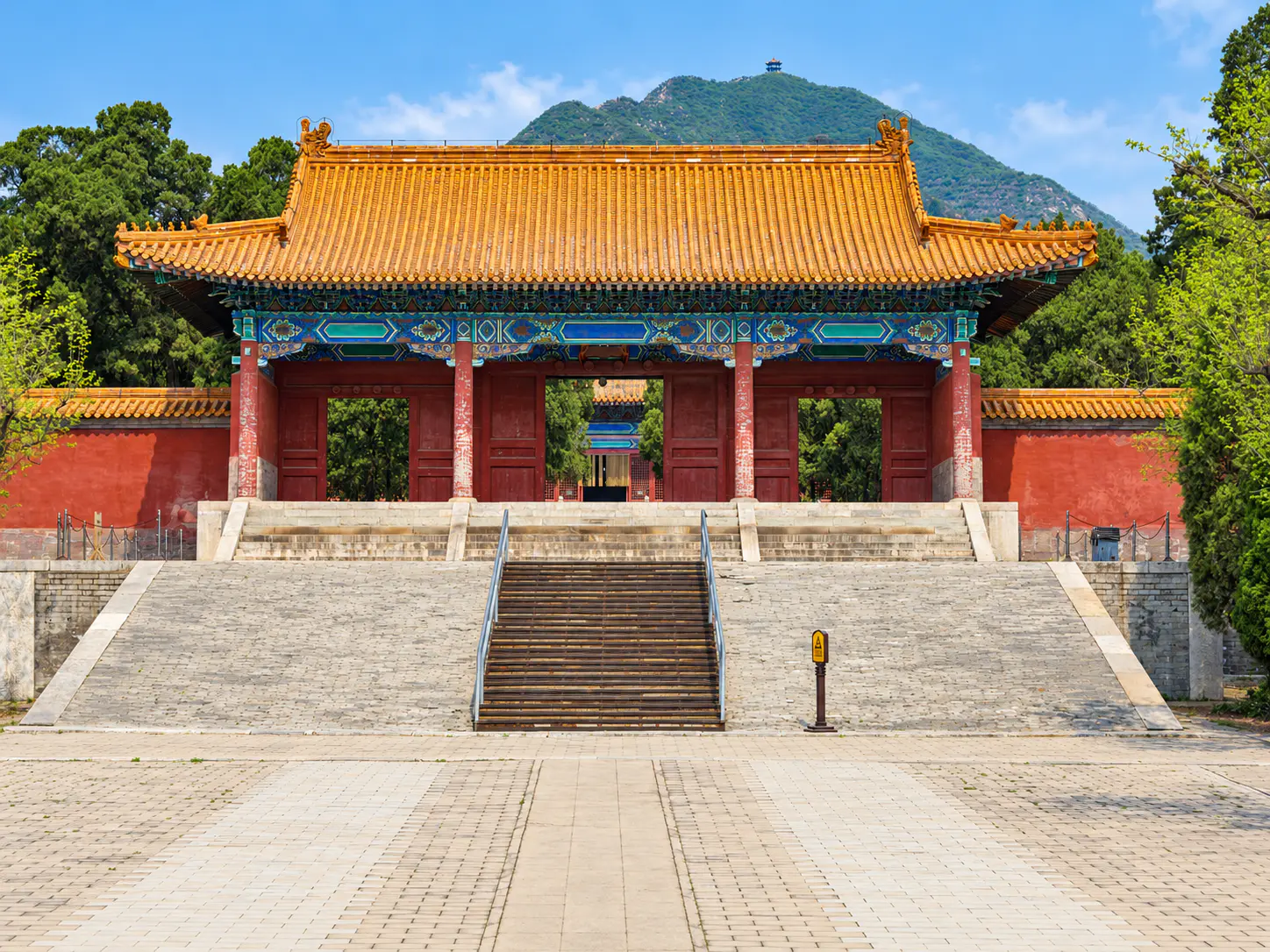
The Eastern Qing Tombs are an imperial cemetery near Zunhua in Hebei, northeast of Beijing. The ceremonial approach is a stone memorial archway and a Sacred Way. Xiaoling is the usual first major tomb complex. Dingdongling, Cixi’s tomb, is the other stop most first-time visitors name. This is a walking day among courtyards and spirit ways — quieter than a palace, still a full outing. The dedicated Eastern Qing guide owns the layout and the Xiaoling-versus-Dingdongling choice. This page only decides whether this cemetery is the one landscape on your leftover date.
Do not mix this outing with the Ming Tombs because both are tombs. Do not mix it with the Western Qing Tombs because both say Qing. Do not add Chengde after lunch because both sit in Hebei in a loose map-reading. Chengde plus Eastern Qing is a two-day combination with its own page. A one-day squeeze is rarely realistic. If Cixi is the reason you came, say so. We will still keep Xiaoling and the Sacred Way unless you explicitly want a shorter visit.
Interior access can differ by building and date. We confirm which halls can be entered rather than promising a throne room from an old caption. Winter and summer both change the outdoor hour count. There is no ticket price on this page. Confirm the current notice. If you only have energy for one tomb after the Sacred Way, Xiaoling is the coherent choice. Dingdongling is the usual second stop when the group still has legs. That is already a full day.
Transit travelers again need the permitted-area check before they leave Beijing for Zunhua, because the road is longer than a city garden and the return is not a subway ride. If the stay is short, this outing is usually the wrong leftover. Fill the Beijing core first. If the stay is long and you want a quieter imperial landscape after the palace, Eastern Qing is a coherent fourth-day answer. It is still one landscape. Come home for dinner rather than inventing a second cemetery on the way back.
What is not a day trip on this page
The Summer Palace is a landscape-led Beijing day, not an intercity outing. Temple of Heaven is a city ritual-architecture visit. Fragrant Hills is a seasonal park climb with its own crowd pattern. Beihai and Jingshan are walks you attach to a central day if energy remains. Hutong districts are evenings or half-days. We keep those on city pages so this parent does not become a second city guide. If your leftover date is short, one of those city landscapes is usually kinder than a Hebei road.
Universal Beijing is a full-day park product. It can consume a leftover date, and it does not belong in the same sentence as Chengde or a tomb field. It also does not replace the palace. Say whether this is a cultural leftover or a family-park leftover. Those are different days and they do not combine. The Universal page owns the park clock. This page will only say that if you choose the park, do not add a tomb on the way home and do not call the park a Hebei day trip.
Olympic Park, 798, and Shougang are city districts with their own guides, and they are useful when you want architecture or contemporary space without leaving the municipal pattern. They are not answers to the question of which day trip you should take. If you write those names in a day-trip enquiry, we will treat them as city days and keep the long-road list for Wall, Tianjin, Chengde, Ming Tombs, and Eastern Qing. That list is already long enough for a parent page.
A show with a private transfer is an evening, not a day trip, even when the theatre sits across town. A duck dinner is an evening. Neither repairs a leftover date you do not have. Neither justifies stacking a second landscape after a ridge. If the emotional centre of the leftover date is actually a meal, stay in the city and walk. The road time you save is the point of not taking a day trip. Enjoy the meal without a highway attached to it.
This parent versus the child guides
| Question | This page | Child page |
|---|---|---|
| Which outing | Yes — one leftover date, one landscape | No — each child assumes you already chose it |
| Walking detail | No | Tianjin, Chengde, Ming Tombs, Eastern Qing, Great Wall guides |
| Two-day combinations | Named only so you do not squeeze them into one date | Dedicated Chengde combination pages |
| City gardens | Sent back to a Beijing city day | Summer Palace and other city guides |
Rail or car is a later choice — the landscape comes first
Choose the place before you choose the vehicle. Tianjin and Chengde have honest rail days when the station-to-station clock is steady and a local car can finish the last miles. A private car from the Beijing hotel is useful with luggage, mixed pickups, children, or a reason to stay door-to-door. The Wall and the tomb fields are usually car days from a city hotel, not subway days. We confirm the mode after we see the hotel area, the group, and the required return. We do not publish a timetable here.
A coach clock is a different product. It leaves at a fixed hour from a meeting point you may not want to reach after breakfast. It can make a landscape possible at a lower seat cost, and it can also make a late palace window or a slow walker miserable. The private-versus-group page is the Beijing-wide comparison. On a day trip, the coach question is sharper because the road is longer. If the group hates meeting points, say so before we pretend a shared bus is kindness.
Split-airport stays and departure evenings are the usual reasons we kill a day trip. A Daxing flight after a Chengde return is how buffers die. A Capital landing plus a Zunhua cemetery on the same calendar date is how people eat lunch in a service area. Work backward from the airport or the show. If the remainder is not a full date, keep a city garden. The how-many-days page is the arithmetic. This page is the refusal to spend a partial date on a long road.
Transit travelers have one more filter: the current permitted stay area on the official notice. Confirm it before you buy a rail seat to Hebei. We will not invent a map of every allowed district. If we cannot confirm the area for your date, we keep you in Beijing. That is caution, not a lack of ideas. The 240-hour stay page repeats this for the stamp-shaped visit. Visa travelers still need the clock even when the area is unrestricted for them.
The stacks we will not keep
We will not stack Mutianyu and the Ming Tombs on the same date after you have already decided you want a proper ridge walk. We will not stack the palace and any of these outings. We will not stack Chengde and Jinshanling in one daylight window. We will not stack Eastern Qing and Western Qing because someone mixed the names. We will not stack Tianjin and a Wall morning. Each of those sentences has appeared in a first email. Each of them produces a day people do not enjoy.
The polite version of stacking is “if we have time.” There will not be time. Road, tickets, walking, and a return buffer consume the date. The leftover hour is lunch or a rest, not a second Sacred Way. If you want two landscapes, you want two dates. If you do not have two dates, you want one landscape. That is the entire parent-page argument. It is not a lack of ambition. It is how memory works after a long road.
Coach products that print two names are still one date with two thinner visits. Sometimes that is what a group wants: a look at a ridge and a look at a tomb. Say that you want the thinner pair and we can discuss the Badaling-and-tombs product on its own terms. Do not ask us to add a third name to that pair. Do not ask us to start the pair after a palace morning. Thin plus thin plus a palace is not a day. It is a brochure.
Holiday weeks make stacking worse because every queue grows and every return buffer shrinks. Weather makes stacking worse because the outdoor hour count gets shorter on ridges and in open gardens. Families make stacking worse because toilets and snacks are not optional stops you can skip to save a second ticket. If any of those facts apply, the case for one landscape is stronger, not weaker. Confirm the notice for your date. Then delete the second name from the subject line before we talk about cars or trains.
Common day-trip mistakes
Adding a second landscape after lunch
The leftover hour is the return. Two landscapes need two dates.
Leaving before the palace and Wall are safe
A day trip is a trade against the core, not a decoration on a short stay.
Mixing Ming Tombs, Eastern Qing and Western Qing
Three cemeteries, three corridors. Pick one name and give it the date.
Treating Chengde plus Jinshanling as a day trip
That pair is a two-day combination. A one-day squeeze is rarely realistic.
Calling the Summer Palace a day trip
It is a Beijing city day. Keep this parent for the longer roads.
Choose by the reason you want to leave the city
If you want a ridge and a view, the Wall is the day trip. If you want a different city with water and concession streets, Tianjin is the day trip. If you want imperial gardens and temple architecture after you have already seen Beijing palaces, Chengde is the day trip — or the overnight. If you want a quieter cemetery landscape on the north corridor, the Ming Tombs are the day trip. If you want Xiaoling and Cixi’s tomb near Zunhua, Eastern Qing is the day trip. Pick the reason first. The name follows.
If you cannot name a reason, stay in Beijing and treat the leftover date as a gift rather than as homework. Spending it on a road because a list said “day trips” is how people remember traffic. A Summer Palace morning plus an unhurried lunch is a better use of an unmotivated date than a cemetery you did not want. We will not be offended if you skip this entire page. The parent exists so that when you do leave, you leave for one place you can still describe later.
Photographers should say what they want to photograph. A snow temple, a ridge at late light, a river at night, and a spirit way are four different clocks. We will not chase all four on one date. Families should say the youngest walker’s limit. That fact alone can kill Chengde and keep Mutianyu, or kill the ridge and keep a city park. Mixed-energy groups should not split the car toward two landscapes. Split the trip across dates, or pick one.
Season is a later filter, not the first one. Autumn does not require Fragrant Hills if you already spent the date on a ridge. Winter does not forbid Chengde if you will dress and confirm opening. Summer does not require Tianjin just because the river looks cooler in a photograph. Confirm the forecast as you get closer. Keep one indoor alternative that does not require a new long road. The best-time page and the month table are for people who can still move the week.
Choose the leftover-date outing
| If you want | Take this date | Do not add |
|---|---|---|
| A ridge and a view | A Great Wall section, usually Mutianyu first | Ming Tombs, palace, or Chengde after lunch |
| A different city | Tianjin, with a return that still fits | A Wall morning on the same date |
| Imperial gardens after Beijing palaces | Chengde, one temple on a day trip | Jinshanling or Eastern Qing on the same daylight |
| A quieter cemetery | Ming Tombs or Eastern Qing — pick one name | The other cemetery, or a ridge after lunch |
Weather and season change the walk, not the one-landscape rule
Heat, ice, wind, and rain change how far a Resort walk or a ridge feels, and they do not create a second landscape in the afternoon. If the morning is already hard, the honest move is to go home, not to add a tomb “since we are north.” Confirm the section or garden notice after severe weather. A closed lift or a closed hall is a reason to shorten the visit you already chose. It is not a reason to drive to a different city.
Holiday weeks sit on the calendar independently of the forecast, and they change queues more than they change the sky. A beautiful October day can also be a public holiday with longer security lines at the same gate. Confirm the year you are traveling. If the leftover date is a holiday, start earlier and drop the extra stop you were going to invent after lunch. The one-landscape rule is stricter on holidays, not looser. Crowds do not make a second ticket wiser, and they do not shorten the road home.
Winter Wall days have their own page because clothing and early dusk are real constraints. A winter Chengde day is a clothing-and-opening problem more than a photography guarantee. Tianjin in winter can still be a riverside walk if you dress for wind. We will not promise snow or ice lanterns on any of these outings. Seasonal extras are confirmed for the year, not copied from last year’s caption. Pack for walking. Closed shoes matter more than a formal outfit on every one of these dates.
Air quality can make a long outdoor day feel unwise even when the temperature is fine. Keep a city indoor alternative that does not require a new scarce ticket. Do not use a mountain outing as the automatic backup for a rainy city day; the mountain has its own weather. If the leftover date looks truly unkind, spend it in a museum or at the hotel. A cancelled day trip is cheaper than a miserable one. We would rather move the outing than collect a grey photograph you will not keep.
When to ask which leftover date should leave the city
Send the leftover date, the weekday, the required Beijing return, hotel area, and the reason you want to leave the city. That is enough for us to say Wall, Tianjin, Chengde, Ming Tombs, Eastern Qing, or stay in Beijing. We reply with one landscape and a realistic mode, not with a priced menu on this page. If you do not yet have a palace day and a Wall day, we will send you back to the count and the planning order before we name a Hebei road.
Families, anyone who tires on stairs, and groups with an evening flight should put those facts in the first note rather than after we have named Chengde. They change the landscape more than they change the one-date rule. Mixed passports on a transit stay should also say so, because the permitted-area check sits in front of Tianjin and Chengde. We cannot stamp a passport and we will not invent an allowed-district map. Confirm the official notice when the outing leaves the city.
If you already bought a coach that prints two names, send the meeting time and we will tell you what the day will actually feel like. We may still prefer a private day with one landscape. We will not shout at a ticket you already hold. We will tell you where the afternoon will thin out. Soft advice is still advice. The parent page exists so you can hear the thinning before you add a third name to an outline that is already doing two jobs.
If you do not want help, use the reason test before you open a child guide. Name why you want to leave Beijing. Match that reason to one child page. Give that page the whole date. Come home. That is a day trip. A sentence with two place names and the word “quickly” is something else, and it is the sentence we exist to delete. One landscape per date is the whole parent argument, and it still holds when you are proud of your stamina.
Frequently asked questions
- A Great Wall section, often Mutianyu, on its own daylight. If the Wall is already in your two-day or three-day core, you may not need another outing.
- Only as a deliberately thinner coach-style pair, usually Badaling plus tombs. We will not add that pair after a Mutianyu walk or after a palace morning.
- Yes if you want a different city after Beijing palaces and you have a leftover full date. It is not a suburb extra after a Forbidden City morning.
- One day is enough for the Mountain Resort and one temple. Two days is better if you want more temples. Jinshanling and Eastern Qing need their own dates.
- No. Eastern Qing is near Zunhua. The Ming Tombs sit on Beijing’s north corridor. Western Qing is a third place. Pick one.
- When you do not yet have a palace day and a Wall day, when the leftover date is a departure morning, or when you cannot name a reason to leave the city.
- Choose the landscape first. Rail is steadier for simple Tianjin or Chengde days. A car is better with luggage, children, or a Wall or tomb field. We confirm after we see the hotel and return time.
- Only if the destination sits inside the current permitted stay area. Confirm the National Immigration Administration notice. On most short stays we keep you in Beijing.
- The leftover date, weekday, required return, hotel area, and the reason you want to leave the city. We reply with one landscape.
Visitor information sources
Checked on 2026-10-21. Read the attraction’s latest notices before travel.