Choose the season for the trip you want
For a first visit built around walking, spring or autumn is a sensible starting preference, rather than a guarantee of perfect weather. If your dates are fixed, you can still make a good trip by changing the shape of each day. Indoor time, a realistic walking load and flexible outdoor stops matter more than finding a supposedly perfect week.
Beijing’s official geography overview describes short spring and autumn seasons, hot rainy summers and cold dry winters. Use that broad pattern to compare trips. It cannot tell you whether one particular afternoon will be clear, whether a lake will freeze or whether a mountain route will operate.
Spring or autumn is the comfortable default for a walking-first trip. A fixed summer or winter date still works if you shorten the midday walk and book the scarce tickets first.
Start from the kind of walking you want, then see whether your dates can support it. A palace-and-wall first visit is easiest when you can spend long stretches outdoors without a midday retreat. A museum-and-neighborhood visit can sit in any season if you keep the outdoor piece short.
Fixed summer or winter dates are still workable. Change the day shape: earlier starts in heat, shorter outdoor windows in cold, and one indoor backup you actually want. Do not rebuild the whole trip around a single clear-sky photograph.
Holiday weeks, Monday museum closures and the Great Wall forecast are separate from the season label. Check all three after you pick the month. Share your dates if you want a quoted plan that already accounts for a closure or a festival week.
How the season changes the day
| Season | What to expect | How to plan |
|---|---|---|
| Spring | Short, and a good walking season | Book scarce tickets first. Do not wait on blossom dates. |
| Summer | Hot, with the heaviest rain in July and August | Start earlier, keep a roof nearby, and do not stack two long outdoor sites. |
| Autumn | Short, and the other comfortable walking season | Foliage is a bonus. It is not a date the park can reserve. |
| Winter | Cold and dry. Snow is not guaranteed. | Shorter outdoor time, and a separate check for the Great Wall forecast. |
Spring: leave the flower date flexible
Choose spring when you want to combine city sights with time outside and can adapt to changing conditions. Make the major reservation first, then choose parks or neighborhood walks closer to the date. A flowering-tree photograph from a previous year is not a dependable appointment.
Pack layers and have an indoor alternative for the part of the day you are least committed to. If wind or poor visibility would spoil your main excursion, keep the schedule movable where booking conditions allow. Do not pay for a non-refundable side trip solely on the promise of a precise blossom peak.
Spring is short. Use it for walking days and keep blossom as a bonus. Book the Forbidden City or other scarce tickets first; a flowering tree in a park is not a reservation you can hold.
Wind and dust can change an afternoon even when the temperature looks mild. Keep one indoor alternative — a museum you already reserved, or a neighborhood with short hops — so a blown-out viewpoint does not empty the day.
Layers matter more than a single jacket. Palace courtyards and a wall ridge can feel like different climates on the same date. Pack for both.
If spring is your only window, still treat blossom as optional. A park walk you enjoy without flowers is a successful day. A non-refundable side trip built only on a predicted bloom week is the plan that disappoints. Ask us to quote the walking days you already want, then add foliage if it happens to be there.
Summer: reduce the midday walking load
The city’s climate overview places the heaviest rainfall in July and August. For planning, that means leaving room to swap a long outdoor walk with an indoor visit if conditions warrant it. Avoid creating a day that depends on every outdoor attraction operating in sequence.
Start with one substantial visit, pause properly for lunch and rest, then decide whether to add anything. An air-conditioned vehicle does not change the conditions inside open palace grounds. Carry what you need for the forecast, check attraction notices after severe weather, and avoid using a mountain outing as the automatic backup for a rainy city day.
July and August are the city’s wettest months as well as the hottest. Start the outdoor visit early, take a real indoor lunch, and do not stack two long exposed sites. An air-conditioned car does not cool the Hall of Supreme Harmony courtyard.
After heavy rain, check the attraction notice before you leave the hotel. Some park paths and wall steps are slower or closed. A mountain outing is a poor backup for a washed-out city morning; keep a museum or a mansion as the indoor swap.
Hydration and shade are part of the route. Choose a lunch place you can sit in, not a snack you eat in a queue. If children are in the group, plan the long outdoor piece for the first half of the day only.
If July or August is your only window, we can still quote a private plan. Say so in the enquiry. The useful change is the clock and the indoor backup, not a different city.
Autumn: make reservations before chasing leaves
Autumn is a strong choice for a walking-focused stay, but a comfortable forecast does not create ticket availability. Fix scarce reservations first and place flexible scenery around them. If foliage is the reason for a particular park visit, check current local reports rather than relying on a fixed annual peak.
Separate your weather preference from the holiday calendar. Before booking flights, look up the official holiday dates for your travel year and check attraction opening notices. A week described as autumn can also be a busy holiday period; the month alone does not describe the visitor experience.
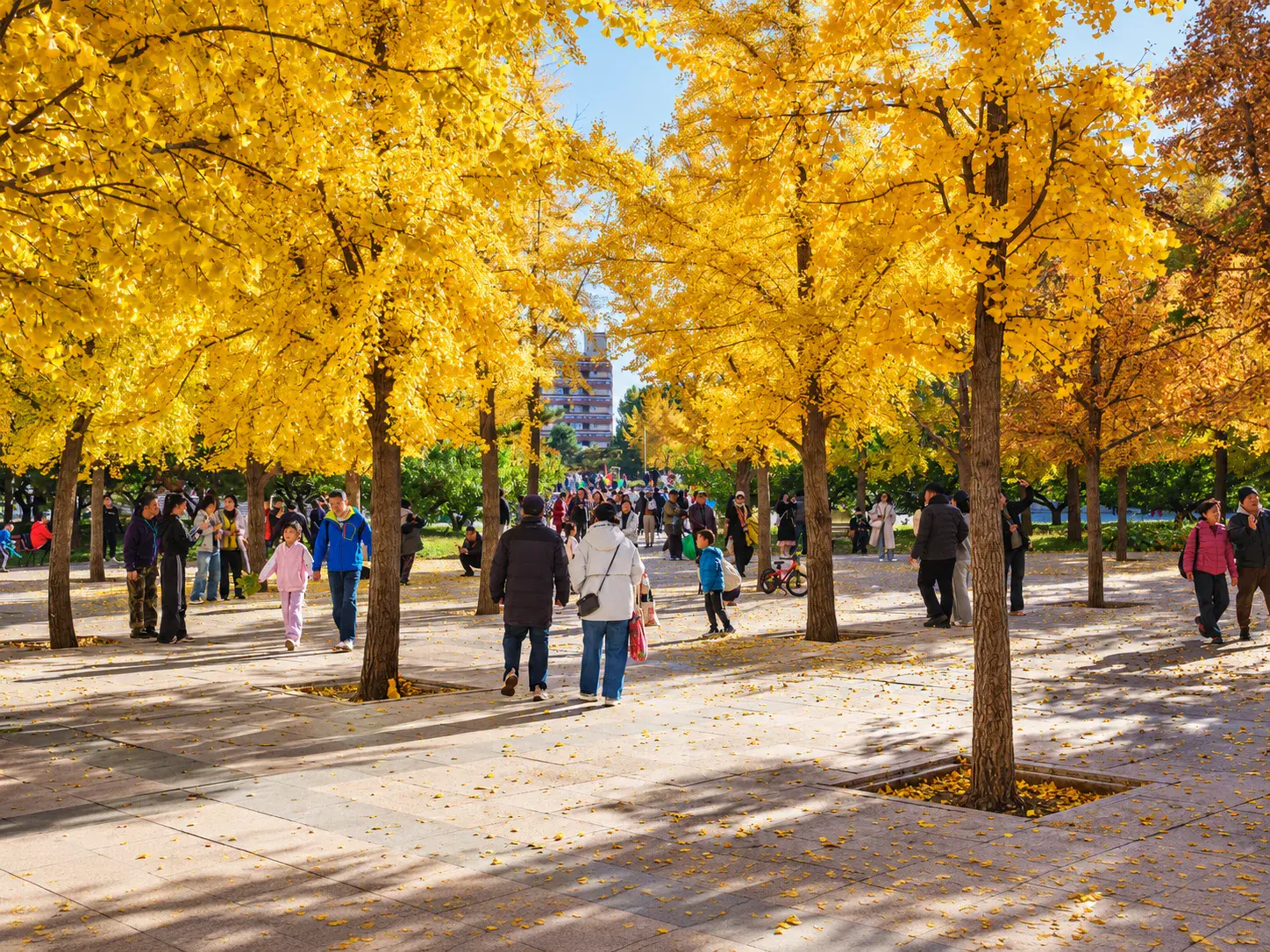
Autumn is the other comfortable walking season, and it is also when many visitors try to time ginkgo or hillside color. Book the scarce tickets first. Leaves move by a week or more from year to year.
National holidays that fall in autumn change crowd more than climate. Look up the official holiday dates for your year before you assume a midweek October day is quiet. Attraction hours can also shift; read the notice, not last year’s blog.
Fragrant Hills and other color spots are popular for a reason. If that park is the point of a day, go for the walk you still want if the leaves are early or late. A park ticket is not a foliage guarantee.
Winter: make warmth part of the route
Winter suits a trip that alternates substantial indoor visits with shorter outdoor stretches. Decide in advance where you can take a proper break rather than assuming that every courtyard or viewpoint will offer somewhere warm. The city’s official climate description is cold and dry; plan clothing for the forecast, not just for photographs.
Snow, ice lanterns and outdoor skating should be treated as separate seasonal plans. Confirm opening announcements for the particular year and activity. Do not assume frozen scenery, safe ice or a winter festival is included in an ordinary park visit.
Winter in Beijing is typically cold and dry. Snow is a bonus, not the plan. Alternate a substantial indoor visit with a shorter outdoor stretch, and decide in advance where you will warm up.
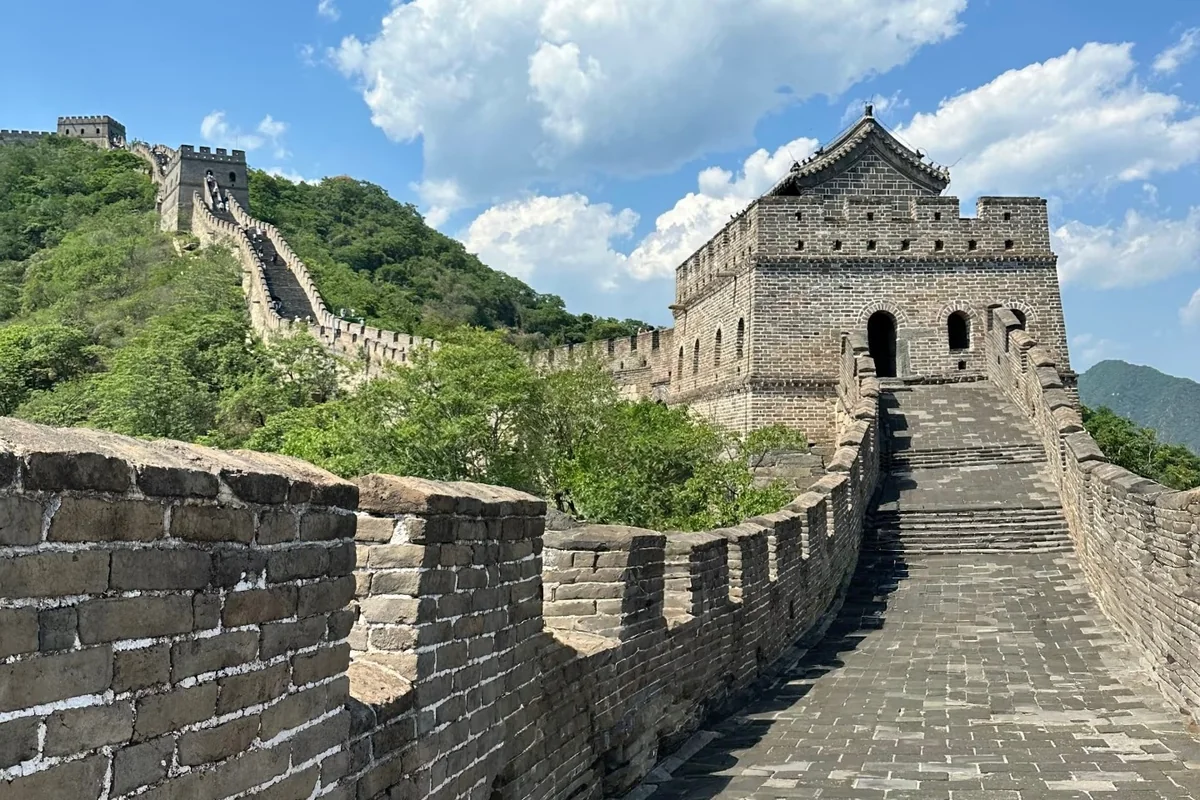
The Great Wall in winter needs its own forecast: wind and ice on the ridge are not the same as a downtown afternoon. Check the section notice and the mountain weather before you keep the outing. Shorter outdoor time is normal.
Ice lanterns, outdoor skating and winter temple fairs are dated events. Confirm the year’s announcement. An ordinary park ticket does not include a festival you saw in a photograph.
Common mistakes
Waiting for a perfect foliage week
Book the Forbidden City or other scarce tickets first. Leaves move.
Using the city forecast for the wall
A downtown afternoon does not tell you the wind on the wall. Check that forecast separately.
Ignoring Monday closures
A museum that closes Monday does not open because the weather is good.
Expecting snow because it is winter
Beijing winters are cold and dry. Snow is a bonus, not the plan.
Climate, opening hours and tickets are different checks
After choosing dates, check each attraction’s actual schedule. The Palace Museum publishes different seasonal closing times and normally closes on Monday, with holiday exceptions. Museum-heavy plans need a closure-day review even when the weather is excellent.
If the Great Wall is important, use its dedicated section guide and current operator notices to choose a suitable outing. Conditions outside central Beijing deserve their own forecast. Build the rest of your stay so moving that outing does not force you to abandon every city reservation.
Climate tells you how to dress and how long to stay outside. Opening hours and tickets tell you whether the visit exists. The Palace Museum’s seasonal closing times and Monday closure are operational facts; good weather does not override them.
Build the stay so a moved wall day does not collapse every city reservation. If you can only hold one scarce ticket, hold the palace and keep the wall date flexible. Share both constraints when you ask about a private plan.
We do not publish a best-week calendar here. Send your dates, the walking you want, and any holiday you already know about. We can then say whether the season helps or whether the day shape needs to change.
A useful seasonal check is a one-page list: the palace date you can actually book, the wall forecast for that week, any Monday museum you hoped to visit, and the official holiday calendar. If two of those four already conflict, change the day shape before you change the flights. Share that list when you ask about a private plan so the quote matches the season you have, not an ideal week.
Quick facts
- Walking default: Spring or autumn
- Summer rain: Heaviest in July and August
- Winter: Cold and dry. Snow is not guaranteed.
- Tickets: Book scarce entries before you chase foliage or a clear-sky photo
- Separate checks: Holiday dates, Monday museum closures, and the Great Wall forecast
Frequently asked questions
- Spring or autumn is a useful starting preference for a walking-focused trip. Choose around your priorities and check the actual forecast and holiday dates.
- No. Plan for cold conditions, but treat snow and seasonal ice activities as uncertain until current information supports them.
- Check the destination forecast and operator notices separately. The city’s general climate description is not an access forecast.
- Not if those are your dates. They are hot, and the heaviest rain falls then. Start earlier and do not stack two long outdoor visits.
- Book the scarce tickets first. Autumn color is a pleasant extra, not a reservation you can hold.
- Public holidays, Monday museum closures and the Great Wall forecast. Each one can change the day even when the city temperature looks fine.
- October is often comfortable for walking, but holiday dates and ticket availability matter more than the month name. Book scarce entries first and check the official holiday calendar for your year.
- Start outdoor visits earlier, keep a real indoor lunch, and do not stack two long exposed sites. Have a museum or mansion ready if heavy rain closes a path. Check notices after severe weather.
- Yes, if you want a shorter, colder outing and you check that section’s notice and the mountain forecast. Downtown weather is not the ridge forecast. Pack for wind, and keep the return simple.
- No. Book the Forbidden City or other scarce tickets first. Autumn color is a pleasant extra. A park cannot reserve a particular leaf week.
- Send the travel dates you already have, the sights you will not skip, and whether heat, rain or ice would change the group’s walking. We can then shape days around the season rather than promising a perfect week.
- They can change hours, ticket windows and which interiors stay open. Look up the official holiday dates for your year and read each attraction’s notice. A comfortable autumn week can still be a festival week.
- Only if you need quiet outdoor sites and easy reservations. Many travelers still visit then, with shorter outdoor time and tickets booked earlier. Read each attraction’s holiday notice rather than assuming a shutdown or a normal week.
Visitor information sources
Checked on 2026-10-18. Read the attraction’s latest notices before travel.