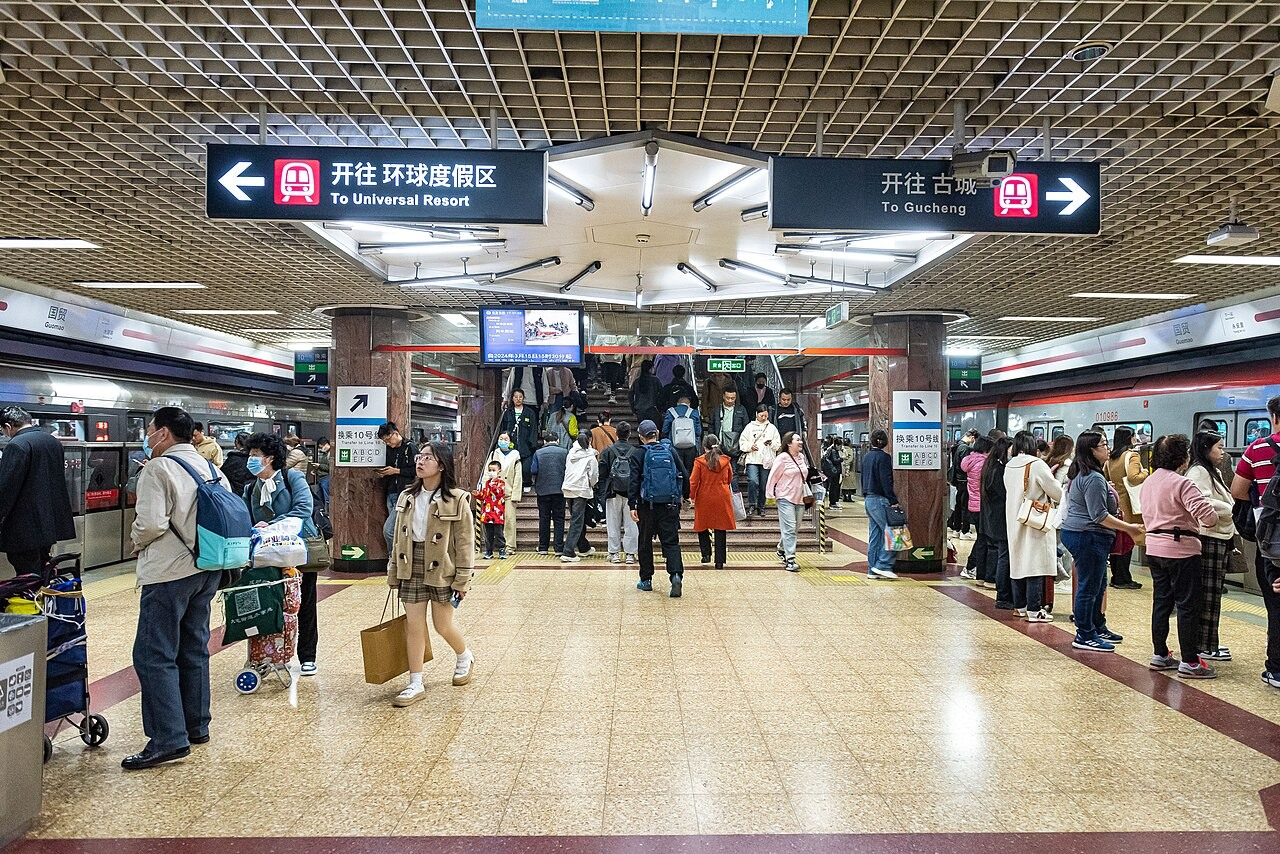
Plan the whole journey, not just the train ride
Beijing journeys become easier when you plan from the hotel door to the attraction’s permitted entrance. The nearest station on a map may not be the easiest one with luggage or limited mobility. Include the final walk, road crossings and any entrance-specific approach before choosing transport.
Save the destination in Chinese as well as English. For an attraction, save the gate; for a hotel, save the actual entrance. Keep the address available offline in case connectivity is poor. A screenshot of the route is useful, but check current notices before relying on an old station map.
Start from the hotel door and end at the permitted entrance, including the walk from the station. A car still leaves that last walk at many gates. Choose a payment method before you are standing at the subway gate.
Name the hotel door, the station or drop-off, and the permitted attraction entrance as three different places. Many palace, park and tomb gates sit a walk beyond the pin that looks central on a map. The last five minutes are where groups get separated.
Save the Chinese name of the gate you mean to use. Drivers and station staff recognize 北门 or a numbered gate more reliably than a neighborhood nickname. Keep that name offline.
If anyone has luggage, a stroller or limited stairs, test the walk on a current map before you call the subway good enough. A car can still leave you at a security line. Share those limits when you ask about a driver day.
Use the subway for a route that fits
The subway is a useful first comparison for city sightseeing. Look at the number of changes and walking connections, not only the displayed ride duration. A journey with one slightly longer ride may be easier than several transfers when you are tired.
Do not plan the last train from a general city-wide closing hour. Check the service in the direction you need, including the final connection. Temporary station closures can change an otherwise familiar route; a new line announced for trial running is not necessarily open to passengers.
Count changes and the walk between platforms, not only the minutes on the map. One longer ride on Line 1 or Line 6 is often easier than two transfers with stairs. Avoid planning a sightseeing hop that needs a last-train connection you have not checked for that direction.
Station names in English and pinyin can collide. Confirm the line and the exit letter when a guide or hotel names a stop. Trial-operation news is not passenger access.
At the attraction end, follow the exit that matches the gate, not the first street you see. Muxidi for the Capital Museum, Beihai North for Prince Gong’s Mansion, and the Universal resort station are different kinds of last walks. Save the exit before you leave the hotel.
Choose a payment method before the gate
Beijing’s official subway guide lists Beijing Pass, Alipay’s Metro QR code, ticket machines and staffed counters. It also describes tap-to-ride support for overseas-issued Visa and Mastercard and UnionPay QuickPass. Check compatibility for your actual card or device rather than assuming any bank card works.
Set up an app before joining the queue and keep a second way to buy a ticket. A payment QR code for a shop is not automatically the same as a transit code. If the gate rejects your payment method, ask station staff about another ticket option instead of following another traveler through. Check any bank or app requirements before your first journey.
Set up one method you have already tested and keep a backup. Beijing Pass, an Alipay metro code, a machine ticket and a staffed counter are all listed on the official guide. Tap-to-ride for some overseas Visa, Mastercard and UnionPay cards is not a promise that your card will work.
A shop QR code is not the metro code. Open the transit function before you reach the gate. If the gate rejects the method, step out of the lane and use a machine or counter rather than following someone through.
Do this before the first ride with luggage. Learning payment at PEK or PKX arrivals, or at a busy transfer, is how the morning starts late. We can still quote a driver day if you would rather not use the subway at all.
If two people in the group use different methods, agree which phone holds the backup ticket before you split at a transfer. A rejected tap at a crowded interchange is easier to solve when someone already has a machine ticket in hand. Keep a small amount of cash only as a last resort; most city rides are card or code.
Subway payment
| Method | What the official guide lists | What you still check |
|---|---|---|
| Beijing Pass | A stored pass for the metro | Where you can buy and top it up on your route |
| Alipay metro code | A phone code at the gate | That your Alipay account can actually open the code |
| Ticket machine or counter | Single tickets without a local bank card | Time at a busy station, and that you know the station name |
| Tap to ride | Support for some overseas Visa, Mastercard and UnionPay cards | Your own card. Support is not a promise for every card. |
Use a car when it solves a real problem
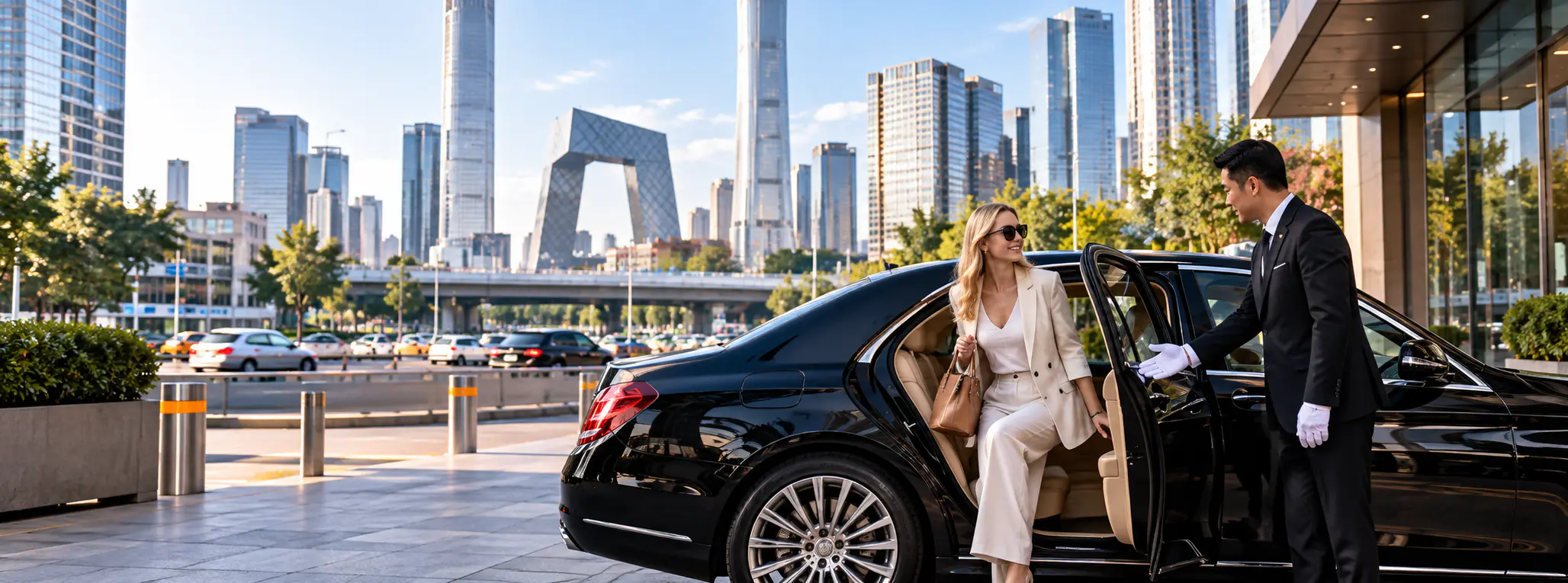
A taxi can be useful for luggage, an awkward connection or a group that would find several transfers tiring. Compare the pickup and drop-off points as carefully as the road journey. Some attraction gates and pedestrian streets cannot be approached directly by car.
A reserved driver is useful when you need a coordinated pickup, several planned transfers or an outing outside the city. Confirm vehicle capacity, luggage space, waiting arrangements and what happens if the schedule changes. A vehicle does not remove security queues or walking inside a palace, park or museum.
Use a taxi for a single awkward hop: luggage, a late dinner, a station with a bad connection. Use a reserved driver when the day has several gates, a wait, or a destination outside the subway’s easy reach — the wall, the tombs, a gorge, or a mixed-pace family.
Agree the pickup as a gate or a hotel entrance, and agree whether the driver waits. A vehicle cannot enter every pedestrian street or park. The last walk still belongs in the plan.
Ask the quote to describe waiting time, parking, and what happens if a visit runs long. Capacity and luggage space matter for ski bags or multiple suitcases. A car is not a skip-the-line ticket.
Read the transport hub on your ticket
Check PEK or PKX before making an airport plan. Confirm the terminal and the complete route to it, including the last transfer. Do not add sightseeing simply because a flight leaves late in the day; count the airport journey and the time you need before departure first.
Likewise, use the exact railway station on your booking. A hotel near one station does not make all Beijing departures convenient. With luggage, compare the station entrance and the onward hotel walk, and leave arrival-day plans flexible if a delayed flight or train would upset them.
PEK (Capital) and PKX (Daxing) are different airports on different sides of the city. Read the code on the booking confirmation before you request a pickup. Terminal mistakes waste more time than traffic.
Railway stations are the same problem at a smaller scale: Beijing Railway Station, Beijing West, Beijing North, Qinghe and Chaoyang are not interchangeable. Match the hotel and the ticket.
Do not add a palace visit on a departure day until you have counted the ride to the airport or station and the carrier’s required arrival time. A layover has its own guide. Share flight numbers if you want the transfer quoted with the sightseeing day.
Quick facts
- Plan: Hotel door to the permitted entrance, including the station walk
- Subway pay: Beijing Pass, Alipay metro code, machines, counters, or tap-to-ride for some overseas cards
- Cards: Check your own Visa, Mastercard or UnionPay card before you rely on it
- Airports: PEK and PKX are different airports with different rides into the city
- Cars: A car hire still leaves a final walk at many gates
Give the last walk its own decision
An arrival pin does not establish a step-free route. If stairs are difficult, ask the attraction or station about the specific entrance and facilities you need. A short distance across a complex can still be the hardest part of the journey for someone using a mobility aid.
Before a major outing, keep a practical fallback: the hotel’s address, a way to contact your companions and a nearby indoor place to regroup if weather changes. Ask for transfer help by sending your start point, destination entrance, group size and luggage needs. That produces a more useful plan than requesting a car for an unspecified city day.
Ask stations and attractions about the specific entrance if stairs are difficult. A short distance across a complex can still include a bridge, a security detour or a long ramp. Step-free is a property of a route, not of a district.
Carry the hotel address, a meeting pin, and a way to reach companions without data. Weather and temporary exits are the usual reasons a group splits. A nearby café or hotel lobby is a better regroup point than a gate name shouted across a plaza.
When you ask for transfer help, send start point, destination entrance, group size, luggage and walking limits. That is enough for a useful plan. A request for “a car for Beijing” is not.
If the group will split — one person returning to the hotel, another staying at a park — write both meeting points before you enter. Beijing’s large sites have more than one exit. A shared pin from the morning is not the afternoon pickup. We can quote a wait or a second pickup when those two points are named.
Common mistakes
Assuming every foreign card taps
The guide lists tap-to-ride for some overseas Visa, Mastercard and UnionPay cards. Test your card, or carry a backup.
One airport plan for both airports
PEK and PKX are different airports. Reuse the hotel, not the transfer.
Dropping the pin in the middle of a park
Save the permitted entrance. A car often cannot reach the ticket gate.
Learning payment at the gate
Set up Beijing Pass, an Alipay code or a backup ticket before the first ride.
Frequently asked questions
- No. The official guide describes several options, including staffed ticket counters and supported overseas cards. Check your chosen method before traveling.
- No. Pedestrian restrictions, security and venue layouts can require a final walk.
- No. Confirm the airport and terminal printed on your flight booking before selecting transport.
- Use a ticket machine, a staffed counter, a Beijing Pass or an Alipay metro code. Tap-to-ride covers some overseas Visa, Mastercard and UnionPay cards, not all of them.
- No. Many attractions still leave a walk from the drop-off to the permitted entrance. Save that gate, not a pin in the middle of the site.
- Yes. Install the option you will use, and keep a machine or counter as the backup, before you reach a gate with luggage.
- Set up the method you will actually use, and keep a machine or counter as backup. Test that your Alipay account can open a metro code, or know where you can buy a Beijing Pass. Do not wait until the first gate with luggage.
- When the day has several gates, mixed walking speeds, luggage, or a destination that sits beyond a simple subway exit. A single central museum morning often does not need a car for every hop.
- Only after you check your own card. The official guide lists tap-to-ride for some overseas Visa, Mastercard and UnionPay cards. Carry a backup ticket method.
- Use the hotel entrance or the attraction’s permitted gate, plus the Chinese name. A pin in the middle of a park or square is how pickups slip. Agree whether the driver waits.
- Flight or train details with the airport or station code, hotel area, group size, luggage, and the sight’s gate if you already know it. We confirm the ride against that entrance, not against a neighborhood nickname.
- It can be, if you can manage luggage and the last city connection. A reserved pickup is simpler when the flight is late, the group is tired, or you land at PKX and the hotel is on the far side of town. Share the flight number if you want that choice quoted rather than guessed at the arrivals door.
Visitor information sources
Checked on 2026-10-18. Read the attraction’s latest notices before travel.