Count usable days, not hotel nights or calendar squares
Most first Beijing visits need three full sightseeing days if both the palace and the Wall matter. That sentence is the honest centre of this page. One day is a single-anchor skim. Two days can hold a city day and a Wall day if you skip a second palace and treat arrival as something else. Three days is the first-time shape we defend. Four or more is when a garden, a hutong walk, or one day trip becomes a choice rather than a theft. Calendar dates and hotel nights will lie to you if you let them.
Arrival is not a full day. Departure is not a full day. Jet lag is not a personality test you can pass at the gate. A stay that looks like four nights can hold two full days and two damaged edges. We count from wheels-down to the last airport road, then we subtract Monday if the palace is closed, then we subtract any date that already has a long train or a show you will not move. What remains is the number we will plan. That number is usually smaller than the number on the hotel voucher.
This page is not a day-by-day. The two-day and three-day itineraries are the walking samples once you know the count. The how-to-plan page is the decision order: palace reservation, Wall day, hotel area, weather. Use those siblings after you accept the arithmetic here. If you came from a blog that promised the palace, the Wall, the Summer Palace, and a tomb field in forty-eight hours, treat that list as marketing. We will not rebuild it. We will tell you which one visit to keep.
Transit stays use the same arithmetic with less forgiveness, because the first and last dates are already spoken for by airports. The 240-hour stay page explains how a qualifying window still loses those edges. Layover connections should not use this page at all; they belong on the layover clock. Visa travelers can ignore the stamp and still must respect arrival physics. Confirm the weekday of each full day before you fall in love with a three-day sample that begins on a Monday palace morning you cannot enter.
One full day: choose a single anchor and stop
One honest full day in Beijing is enough for one major visit and a nearby extra if energy remains. That major visit is usually the Palace Museum on an opening day, or a Great Wall section, not both. People who try both will remember the car and the queue. People who keep one will remember a courtyard or a ridge. If the palace is the reason you came, lock an opening-day reservation and leave the afternoon partly open. Jingshan is a maybe after that, not a requirement, and Tiananmen is a separate security decision.
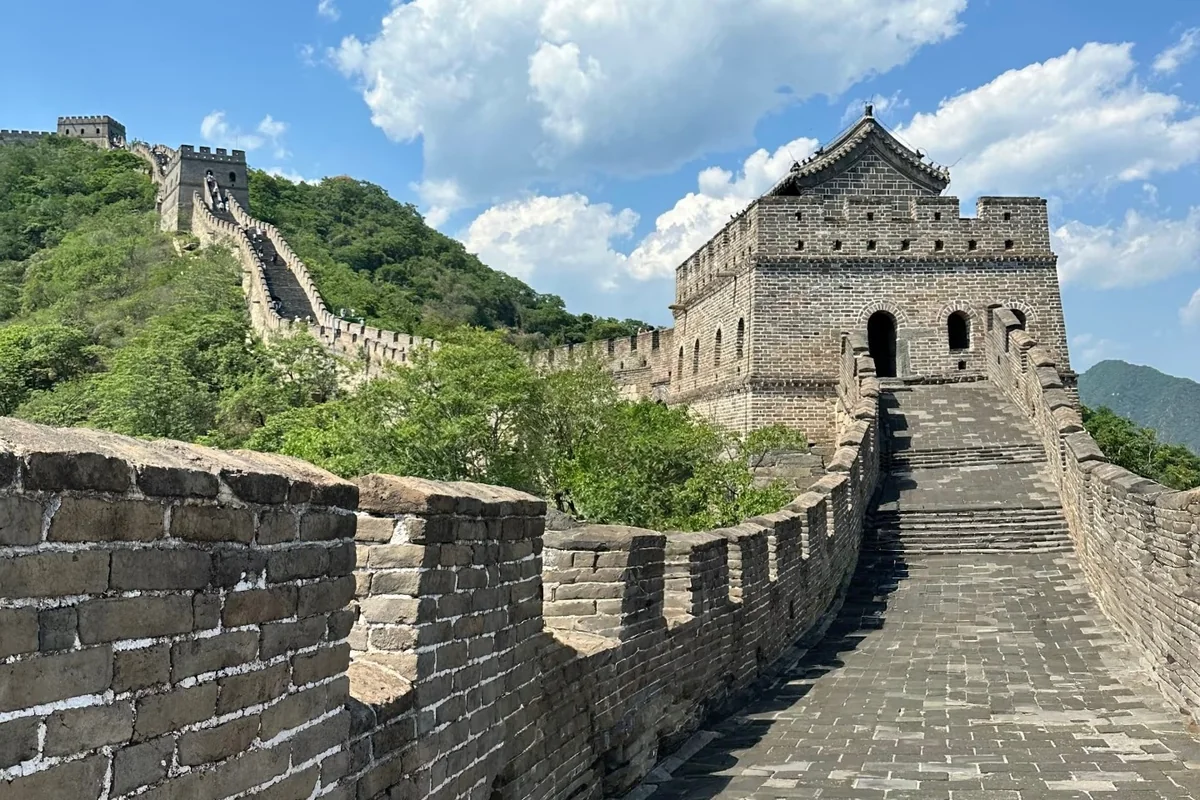
If the Wall is the reason you came, give Mutianyu — or another section you have actually chosen — the whole date. Do not add a tomb field after lunch because a coach brochure printed both names. The Ming Tombs are a landscape with their own page. A one-day Wall outing ends with a return and a meal, not with a second ticket window. Explain walking limits before we pick towers. A cable car does not make the visit step-free, and a private car does not shorten the brick.
A one-day city skim without the palace can still work: Temple of Heaven plus a neighborhood walk, or a garden day at the Summer Palace if you accept the walking. These are not lesser trips. They are different trips. They fail only when you pretend they are the palace. If Monday stole the palace, this is the shape we use. Confirm opening notices for the substitute, because a closed hall on your only day is the same class of disappointment.
Do not count an arrival day as this one full day unless the flight is early and you have already decided the visit can start late. A 14:00 palace window after a night flight is a gamble we dislike. A Wall pickup after a morning landing at Daxing is a worse gamble. If you truly have only the landing date, keep the plan near the hotel and treat Beijing as a first look. Come back when a full day exists, or accept a single gentle walk.
Two full days: city plus Wall, or two city days
Two complete sightseeing days are the first count that can hold both anchors if you want them. The usual split is one palace-centered city day and one separate Wall day. The other honest split is two city days if the Wall is not essential. Neither split includes Chengde, Tianjin, or a second palace. The two-day itinerary page shows both versions as walking samples. Use it after you confirm that you actually have two full days, not two hotel nights with flights on both edges.
The city-plus-Wall version fails when you put the Wall on the outbound or the palace on a Monday. Swap the days to match the reservation and the airport. If Monday is one of the two days, it is often the better Wall day. If the outbound is a late evening from a nearby hotel, it can still hold a short city walk, not a ridge. We would rather move a dinner than move a timed ticket onto a damaged morning. Confirm the weekday before you copy a sample table.
The city-only version is for people who want museums, gardens, and neighborhood walks more than a mountain road. Give the palace its opening day. Give the second day to the Summer Palace or to Temple of Heaven plus a hutong walk, not to both at full depth. Two city days still need lunch and an empty-ish evening. Families often prefer this version when the Wall walk looks longer than the children will enjoy. That is a legitimate first visit, not a lesser one.
Two days is not enough for a day trip plus the Beijing core, and we will say that even when the rail looks short on a map. If you add Tianjin, you have chosen Tianjin over the Wall or over the palace. Say that trade plainly in the first note. The day-trips parent page exists so you can make the choice with your eyes open. We will not hide the trade inside a sentence that begins with “and then quickly.” Two days used honestly beat three days used as a checklist you will not finish.
Three full days: the honest first-time shape
Three full days is the count we recommend when someone asks for a first Beijing visit and both the palace and the Wall are on the list. Day one holds the palace. Day two holds the Wall. Day three holds one more part of the city: a garden, Temple of Heaven, a hutong district, or a rest that keeps the group kind. The three-day itinerary is the sample, not the law. Bend it around Monday, around the inbound, and around whoever tires first. That bending is the work.
The third day is where people ruin the trip by becoming greedy. A Summer Palace morning plus a tomb afternoon plus an evening show is not a third day; it is a second itinerary taped on. Keep one outdoor landscape and one flexible layer. If the group is tired after the Wall, the third day can be shorter on purpose. A café and a neighborhood walk are a valid use of a day you paid for. You do not owe Beijing a third ticket window.
Three days is also the first count that can absorb a Monday without collapsing. If the palace is closed on day two, swap. If the inbound ate day one, the third day is what keeps the Wall from sitting on the outbound. This is why we argue for three even when two looks cheaper on a flight search. The extra day is not luxury. It is insurance against the calendar. Confirm the actual weekdays before you decide two is enough.
Families with children often need the third day more, not less, because energy is uneven. A half-day Wall exists when a full ridge is too much, and it still wants its own date. Universal Beijing is a different product and will consume a full day if you add it; it does not replace the palace. Say whether this is a first cultural visit or a family-park visit. Those are different three-day shapes. We will not merge them into one heroic week.
Day-count facts
- One full day: One anchor: palace or Wall, not both
- Two full days: City plus Wall, or two city days — still no day trip
- Three full days: Honest first-time shape if both anchors matter
- Four or more: One extra landscape per leftover date; see the day-trips parent
- Not a full day: Arrival, departure, and a Monday that closes the palace
- Samples: Two-day and three-day itinerary pages — bend them around your weekdays
- Transit: Same arithmetic; the 240-hour stay page owns the stamp-shaped version
- Layovers: Not a day count — use the Beijing layover clock
Four days and longer: one extra landscape, not two
A fourth full day is when a day trip becomes reasonable. Choose one: Tianjin, Chengde, the Ming Tombs as their own outing, the Eastern Qing Tombs, or a second Wall section if you truly want a different ridge. The day-trips page is the parent. Do not stack two of those on the fourth date. Do not use the fourth day to repeat the first day faster. Longer stays fail when they become a list of every name inside the municipal boundary.
Five and six days are comfortable if you protect rest. A second garden, a museum, 798, or a hutong evening can sit without stealing the anchors. This is also when a Chengde overnight can make sense, because you are no longer stealing the only Wall day. Western Qing Tombs sit on the other side of Beijing and are a different outing from Eastern Qing; do not mix them because the word Qing appears twice. Confirm opening and road time for the date you actually have.
A week in Beijing is enough to dislike the city if you refuse to leave a morning empty. It is also enough to like it if you walk one district slowly. We are not trying to fill your week. We are trying to stop the week from filling itself. If you have a week and a China onward train, still protect the first three full days as if they were the whole trip. The later days can be softer. Soft days are how people remember food.
Longer than a week is a different product: neighborhoods, repeat restaurants, a class, a second visit to a park at a quieter hour. That stay does not need this page as much as it needs a hotel you like and a morning you are willing to leave empty. Use the city guide and the where-to-stay page for that shape. Come back here only when a friend asks you to add a fifth landscape on a Tuesday. The answer is still one landscape per date, whether you have four days or fourteen.
What each day count can honestly hold
| Count | What fits | What does not fit |
|---|---|---|
| One full day | Palace or Wall, plus a nearby extra if energy remains | Palace plus Wall, or any intercity day trip |
| Two full days | City plus Wall, or two city days | A second palace, Chengde, Tianjin, or tombs plus the core |
| Three full days | Palace, Wall, and one more city piece or a rest day | Two day trips, or a four-stop merge of the samples |
| Four or more | The core plus one landscape per leftover date | Two landscapes on the same leftover date |
Arrival is not a full day — plan from wheels-down
Wheels-down is the start of the clock, not the time printed in another city and not the time you hoped to be in a courtyard. Immigration, possible bags, customs, and the road to the hotel all sit in front of the first gate. PEK and PKX are different roads. A Daxing landing plus a northern hutong hotel can consume the afternoon you had mentally given to Temple of Heaven. Tell us local landing time and the hotel area. We will tell you whether day one is a walk or a wash.
Jet lag deserves a sentence of its own because people treat it as optional. It is not optional on a first East Asia arrival. A timed palace ticket on the inbound morning is the plan we rewrite most often. We would rather you sleep, eat near the hotel, and hold the scarce reservation for the next opening day. If that next opening day does not exist, we will say the stay is a one-anchor skim and stop adding names. Honesty on day one protects day two.
Night arrivals deserve an empty evening. A show with a fixed curtain is a poor partner for a delayed inbound. A duck table you cannot move is the same problem with better food. If you have only three nights, one is already damaged by landing and one by leaving. That is the hidden way a “four-day trip” becomes two days. Count nights if you are booking hotels. Count usable days if you are booking tickets. They are different numbers and they both matter.
Departure works backward from the airline’s required airport arrival, then from the hotel-to-airport road for PEK or PKX, then from checkout. What remains is the only honest last morning. Two leftover hours are breakfast, not Temple of Heaven. A late-evening flight from a nearby hotel can hold a short city walk. A Wall pickup on the outbound date is how people miss aircraft. Split-airport stays make the last morning harsher. Transit travelers should also read the 240-hour stay page, because the stamp will not refund a missed buffer.
Monday can steal the palace — check before you count the day
The Palace Museum normally closes on Mondays, with statutory-holiday exceptions that you must confirm on the museum’s own notice for your year. A stay whose only full day is Monday may have no legal palace morning at all. That is not a disaster if you planned a Wall day or a garden day. It is a disaster if the palace was the only reason you came. We look at the weekday of each full day before we talk about how many days you “have.” A closed gate does not count as a palace day.
Holiday weeks can open the museum on a Monday and close your patience at the same time. Crowds, security, and earlier starts change the walking load even when the door is open. Confirm the year you are traveling rather than a memory from a previous winter or from a friend’s photograph. If your only opening day is a holiday, keep the afternoon empty on purpose. The three-day sample will not save you from a holiday Monday. Swapping days to match a valid reservation is the whole skill, and it is worth doing before you buy a show ticket.
Other museums and some interiors have their own closed days. We do not publish a city-wide closure table here because those notices move. If your three-day plan is museum-heavy, we check each notice. If your three-day plan is palace plus Wall plus a garden, Monday is usually easy: put the Wall or the garden there. The palace goes on the first opening day that is not the inbound. That rule is older than this page and it still prevents most angry emails.
Bring the identification that matches the reservation, including the spelling on the booking. A Monday surprise plus a name mismatch is how a three-day stay becomes a two-day stay with a wasted morning you cannot buy back. We would rather move the visit than argue with a posted rule at the gate. If tickets are gone for every opening day you have, choose an alternative city day before you commit the Wall car. A guide cannot honestly promise sold-out admission. Anyone who does is selling a story, not a gate.
What steals a day from the voucher count
| Thief | What it does | What we do |
|---|---|---|
| Arrival | Immigration, bags, road and jet lag | Keep day one flexible; do not spend a timed ticket |
| Departure | Airport buffer and the PEK or PKX road | Work backward; kill the Wall on that date |
| Monday palace closure | Removes a palace morning unless a holiday exception applies | Confirm the notice; put the Wall or a garden there |
| Split airports | Adds a cross-city transfer you may not have budgeted | Protect the last morning; do not add a ridge |
The Wall is why two days is the minimum for both anchors
A Great Wall section consumes daylight and a road. That is the physical reason most first visits need more than one full day if both anchors matter. Mutianyu is the usual first-time section; other ridges have their own walking and access rules. You cannot hold a palace timed entry and a ridge walk on the same date without dropping one of them into a sketch. People who say they did both in one day are describing a day we do not want to sell. We will not stack them.
Winter days are shorter and colder. Summer afternoons are harder on an open ridge. Families need exits and toilets more than they need extra towers. Those facts change the section and the hour count; they do not change the need for a separate date. A half-day Wall product exists when the group does not want a full ridge, and it still occupies the date. Do not put a palace window on the other end of that date. The getting-home hour is part of the visit.
If you have two full days and you skip the Wall, say so and we will build two city days without apology. If you have two full days and you skip the palace, the Wall plus a garden is a coherent pair. The problem is the traveler who wants both and only counts hotel nights. This page exists to catch that traveler before the tickets are bought. The planning-order page then places the two dates. The sample itineraries then show a walking shape.
A second Wall section is a four-day conversation, not a two-day upgrade you earn by waking earlier. Jinshanling is a different walk from Mutianyu. Badaling is a different corridor with a different crowd pattern. Combining two sections in one stay is a taste choice after the first ridge has been done properly. Combining two sections plus the palace in two days is a sentence we will not write into an itinerary. Choose the first ridge. Finish it. Then ask whether another full date exists.
Use the two-day and three-day pages as samples, not as formulas
Once you know you have two full days or three, open the matching itinerary page and read it as a sample. The two-day page asks you to choose a city-plus-Wall version or a city-only version. The three-day page shows how a third day absorbs a garden or a neighborhood without stealing the Wall. Neither page can see your Monday, your Daxing landing, or your child’s nap. Bring those facts back here, then bend the sample. An unbent sample is how people arrive at a closed gate.
Do not merge the two samples into one four-stop day that still returns for a show. They are already compressed for first-time walking. Adding Temple of Heaven, Summer Palace, and a tomb field onto a two-day stay is how the trip becomes a car interior with tickets you barely used. If a blog shows that merge, it is not a walking plan. If a coach sells that merge, it is a clock we will not copy. The day-trips parent exists for leftover full dates. Samples exist for the core. Keep those jobs separate.
Food and evenings are not extra days. A duck dinner can sit on a city night. A show can sit on a night that is not the Wall return. They do not turn a two-day stay into a three-day stay. They also do not repair an arrival day you spent on a timed ticket. If a restaurant is the emotional centre, protect that evening after the count is honest. The Peking-duck page can help you choose an area. This page will not rank rooms or publish a menu.
If you already wrote your own day-by-day, send it and we will edit it without ceremony. The usual cuts are the same three we make on the planning page: move the palace off Monday, pull the Wall off the departure morning, and delete the extra stop after lunch. What remains is usually closer to the sample than to the draft you liked in the lounge. That is a good sign. It means the samples are doing their job and this page has done its job on the count.
Common day-count mistakes
Counting hotel nights as sightseeing days
Four nights can hold two full days. Count from wheels-down to the last airport road.
Treating arrival as a palace morning
Immigration and jet lag are part of the day. Hold the scarce ticket for the next opening date.
Ignoring Monday when the palace is the point
A closed museum is not a palace day. Confirm the notice and swap.
Merging the two-day and three-day samples
The samples are already compressed. Extra landscapes belong on leftover full dates.
Calling a layover a one-day Beijing trip
Use the layover clock. This page is for usable sightseeing days after you have them.
Transit windows and layovers use the same honesty with less room
A 240-hour visa-free transit stay can look long on the permission and still hold only one or two full sightseeing days. Arrival, departure, and one rest evening eat the window. The dedicated transit-stay page is the Beijing planner for that scheme. This page only needs you to apply the same usable-day count. Do not convert a qualifying stamp into eight sightseeing days. Confirm eligibility on the National Immigration Administration notice and on the China-wide policy page before you use either planner.
Same-day and overnight connections are not “one day in Beijing.” They are layovers. The layover clock page owns PEK and PKX processing and the question of whether you should leave the airport at all. We will not let a layover borrow the three-day sample. If you have twelve hours, you may have a city fragment or you may have an airport. That is a different conversation. Using this page for a layover is how people over-plan a city they will not reach.
Split airports make every count harsher, even when both airports participate in the same transit scheme. A stay that arrives at Capital and leaves from Daxing spends a transfer you may not have noticed when you booked the onward seat. Subtract that road from the usable days before you add a garden. We would rather move the hotel than invent a sightseeing stop that only exists to fill the transfer. Tell us both airport codes in the first note. The count changes when the codes differ, and the last morning is the first thing we protect.
Visa travelers sometimes assume they are free of these problems because they are not reading a transit stamp. They are free of the stamp math. They are not free of wheels-down, Monday, or the Wall’s need for daylight. The count on this page is for everyone who lands in Beijing. Transit only makes the edges less forgiving. If you are unsure which document you are traveling on, settle that first with the official notice. Then come back and count the days you can actually walk.
Families and mixed-energy groups should count a day for rest
A family with small children, a pair of keen walkers, and a group with one person who hates stairs can share a hotel and still need different counts. The reservation order stays the same. The number of full days may grow by one so that nobody is asked to be heroic. Say who tires first. We will shorten the ridge, skip Jingshan, or keep an afternoon empty. We will not add a third gate to prove the day was full. Finished and still speaking to each other is the goal.
Children change the Wall more than they change the palace date. Mutianyu is the usual family section because exits and lifts exist; unrestored ridges are a later conversation. A half-day Wall still occupies the date. Universal Beijing, if you add it, occupies another full date and does not replace the palace. The family Wall page and the Universal page are the detail documents. This page only needs you to add those dates to the count instead of hiding them inside a city day.
Older travelers and anyone managing heat, cold, or knees should treat three days as the minimum even when two looks possible on a flight search. The extra day is where the walk can be shorter without stealing an anchor. A private car helps the transfers; it does not remove courtyard stone or ridge steps. The private-versus-group page is the mode comparison. Energy is still an input to the count. Mode is an input to comfort. Do not confuse them, and do not let a coach clock talk you into a thinner count.
If the group cannot agree on palace versus Wall, do not split the only full day. Split the trip: one full day each when you have two, or accept a single-anchor skim. Splitting a car in two directions on one date makes both visits thin. We would rather pick one well and leave the other named for next time. Agreement is part of the count. A group that has not agreed does not yet know how many days it needs.
When to ask us how many days you actually have
Send local landing time, local departure time, both airports if they differ, hotel nights, and whether the palace or the Wall is the visit you will not drop. That is enough for us to convert nights into usable days and to place a Monday. We reply with a count and a realistic order, not with a priced menu on this page. If the inbound is a layover, we will say you do not have a day and we will point you at the layover conversation instead of forcing a sample itinerary onto a short connection.
If your flights are already bought, say so in the first note so we do not waste a paragraph on moving them. We will work inside those dates, including a Monday that cannot hold the palace and a Daxing departure that cannot hold a ridge. If your flights can still move, say that too. Moving one day to create a third full day is sometimes the entire improvement. We will not move you for foliage. We will consider moving you when the current count cannot hold both anchors you said you needed.
Families, mixed passports, and anyone who needs a step-free story should put that in the first note rather than after we have sketched a ridge. Those facts can add a rest day or change the Wall section. They do not change the rule that arrival is not a full day. The planning-order page can come next. The sample itineraries can come after that. This page is only the count. Getting the count wrong is how every later page becomes decoration on a week that already leaked.
If you do not want help, do the arithmetic yourself before you open a sample itinerary. Subtract arrival. Subtract departure. Subtract a Monday that closes the palace if the palace is essential. Ask whether a Wall day still has its own daylight. If both anchors remain, you have a two-day or three-day trip and you can open the matching sample. If only one anchor remains, keep that one. A smaller honest trip is the one people finish, and it is the one we would rather you remember.
Frequently asked questions
- Three full sightseeing days if both the palace and the Wall matter. Two can work if you skip a second palace and you truly have two full days, not two hotel nights.
- One full day is enough for one anchor. Choose the palace or the Wall. We will not plan both.
- Not as a full sightseeing day. Plan from wheels-down. Keep timed tickets off the inbound morning unless the landing is early and the visit can start late.
- The Palace Museum is normally closed. Confirm the notice. Use the day for the Wall or a garden, or accept that this visit will not include the palace.
- No. Those pages are samples. Bend them around your weekdays, airports and energy. This page decides which sample you are allowed to open.
- On a leftover full date after the core is safe — usually day four or later. Use the day-trips parent. Do not stack two landscapes.
- No. Apply the same usable-day count. The transit-stay page is the Beijing planner for that scheme. Confirm eligibility on the official notice.
- Local landing and departure times, both airports if they differ, hotel nights, and the one visit you will not drop. We reply with a count and an order.
- No. A car helps transfers. It does not create daylight or open a closed palace. Mode is comfort; count is arithmetic.
Visitor information sources
Checked on 2026-10-21. Read the attraction’s latest notices before travel.