
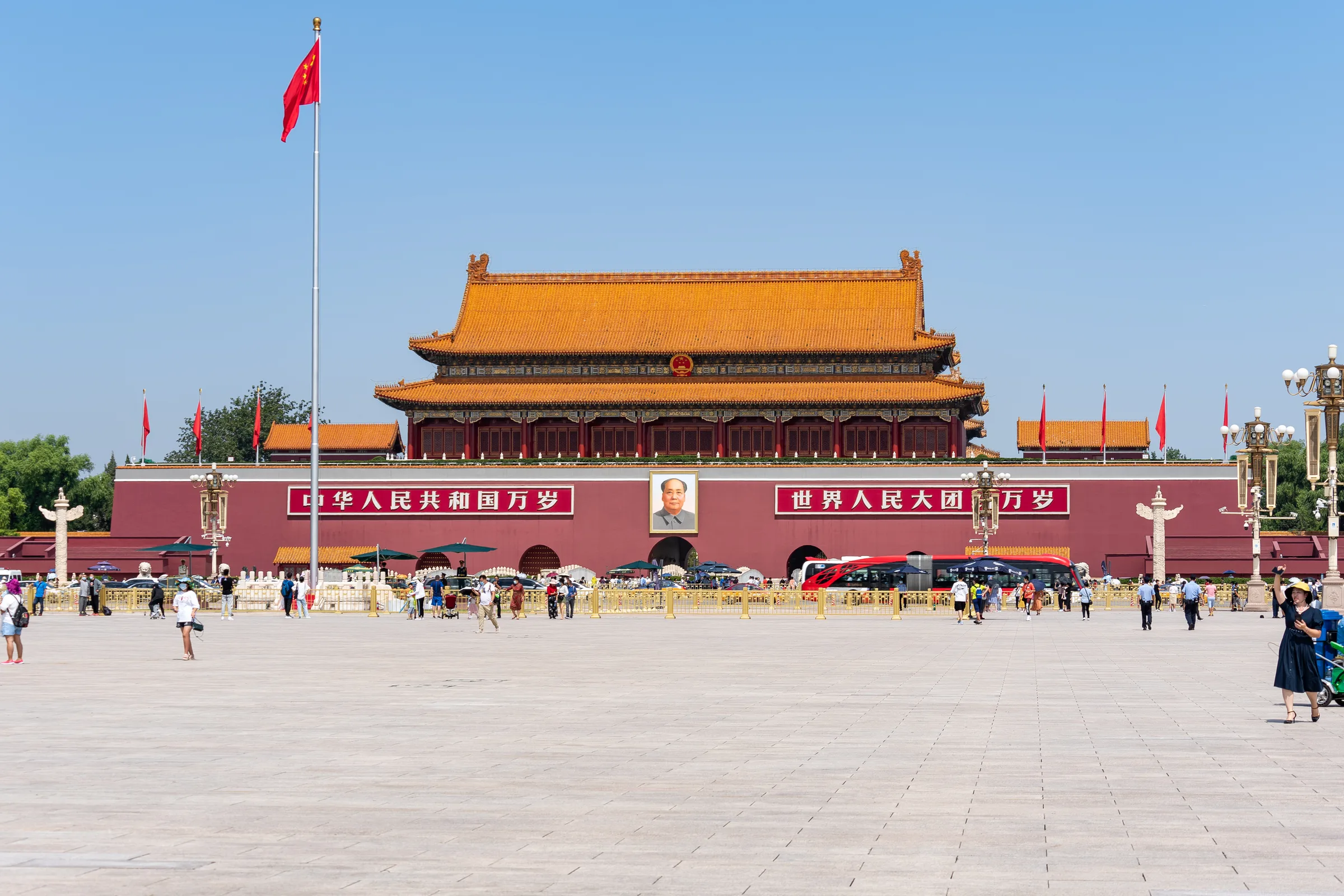
Tiananmen Square sits directly south of the Forbidden City. Foreign visitors can usually reserve through the Tiananmen Square WeChat mini-program or have someone make the reservation on their behalf. Some qualifying same-day reservations for designated nearby attractions may also satisfy square-access requirements under current rules; verify the current Tiananmen reservation guidance before relying on this.
Most first-time visitors spend about 30–60 minutes in the square itself. Allow longer if you want to watch the flag-raising ceremony, visit Chairman Mao Memorial Hall, enter Tiananmen Rostrum, or continue north into the Forbidden City.
At a glance
| Item | Detail |
|---|---|
| Admission | Free |
| Reservation | Real-name reservation or qualifying same-day attraction reservation required |
| Opening hours | 05:00–22:00 |
| ID | Bring the original passport used for the reservation |
| Typical visit | 30–60 minutes for the square itself |
| Flag ceremony | Flag raised daily around sunrise and lowered around sunset |
| Subway | Line 1: Tiananmen East or Tiananmen West |
| Tiananmen Rostrum | Separate attraction; adult ticket currently 15 RMB |
| Best pairing | Tiananmen Square → Forbidden City |
Important: Tiananmen Square, Tiananmen Rostrum and the Forbidden City are three different visitor entries. The square is free; the Rostrum and Forbidden City have their own reservations and ticket rules.
Visiting Tiananmen Square: Reservations, Hours & Entry
Tiananmen Square is free to visit, but free admission does not mean walk-in entry. Visitors need an accepted real-name reservation record and must pass identity verification and security screening before entering the square.
Is Tiananmen Square Free?
Yes. Tiananmen Square itself is free to enter. A real-name reservation and security check are still required.
The square has no admission charge. The reservation is an access record, not a paid ticket, even though many travelers search for "Tiananmen Square tickets."
Tiananmen Rostrum is a separate attraction on the north side of Chang'an Avenue and currently charges 15 RMB for an adult ticket. Nearby sites such as the National Museum of China and Chairman Mao Memorial Hall run their own reservation systems and are not included in square access.
How to Reserve Tiananmen Square as a Foreign Visitor
Foreign visitors can reserve Tiananmen Square. The current official workflow does not treat a non-Chinese phone number as a substitute for a completed real-name record.
The web reservation portal does not currently support registration with non-Chinese phone numbers. Foreign visitors can use the WeChat mini-program 天安门广场预约参观 ("Tiananmen Square Visit Reservation") and choose the individual/personal reservation function. Passport name and passport number are required. Another person can make the reservation on the traveler's behalf.
Current Beijing guidance allows up to seven people on one reservation order, subject to the platform's adult/child composition rules.
A valid same-day reservation for certain designated nearby attractions can allow entry to Tiananmen Square during applicable daytime periods without a separate square reservation. When the direct Tiananmen booking route is difficult, the National Museum of China's international reservation channel can be a practical alternative for daytime square access.
Check the reservation record and ID details the day before you go. Slot types (flag-raising, morning, afternoon, flag-lowering) are not interchangeable.
For a full screen-by-screen booking explanation, see our Tiananmen Square reservation guide.
Opening Hours and Entry Times
Tiananmen Square is currently listed by the Beijing municipal government as open from 05:00 to 22:00.
Reservation periods and operational controls can differ from those headline hours. Flag-raising reservations are distinct from normal daytime planning. Temporary restrictions can occur around major state events, holidays or security operations. Check current official Beijing information shortly before visiting rather than relying on a printed seasonal table.
Passport and Security Check
Foreign travelers should bring the original passport associated with their reservation. A photo of the document is not a reliable substitute at identity check.
A reservation does not bypass security. Everyone entering the square still passes screening. Allow buffer time before any timed next stop, especially a Forbidden City entry slot. Holidays and major events can materially increase entry time.
What to See at Tiananmen Square
Tiananmen Square is organized around Beijing's north–south Central Axis. Tiananmen Gate and the Forbidden City lie to the north; Zhengyangmen lies to the south; the National Museum of China borders the east side and the Great Hall of the People the west. The Monument to the People's Heroes and Chairman Mao Memorial Hall occupy the central portion of the square.
Schematic of the Central Axis. Not a street map.
West
Great Hall of the People
- North
- Forbidden City
- Tiananmen Gate / Rostrum
- Chang'an Avenue
- National Flag
- Monument to the People's Heroes
- Chairman Mao Memorial Hall
- Zhengyangmen / Qianmen
- South
East
National Museum of China
Tiananmen Gate and Tiananmen Rostrum
Tiananmen Gate is not the same place as Tiananmen Square. The gate stands on the north side of Chang'an Avenue and forms the southern approach toward the Forbidden City. Most visitors photograph the gate from the square, looking north across the avenue.
Tiananmen Rostrum is the upper viewing level of that gate and is a separately ticketed attraction. The current official adult ticket is 15 RMB. Square access does not include Rostrum entry. The Rostrum has its own reservation channel and capacity limit.
Monument to the People's Heroes
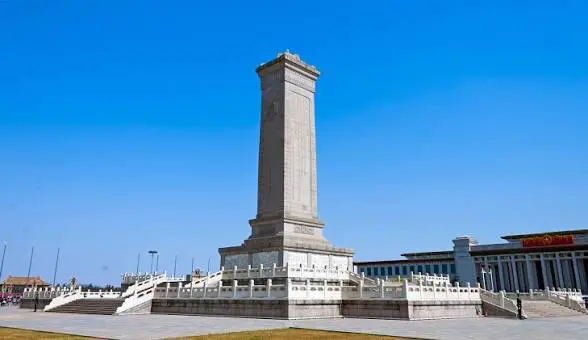
The Monument to the People's Heroes stands on the central axis of the square, south of the national flag and north of Chairman Mao Memorial Hall. It is a granite obelisk completed in 1958 and dedicated to those who died in China's revolutionary struggles. Reliefs around the base depict selected historical episodes; inscriptions face north toward Tiananmen Gate.
For visitors, the monument is the square's midpoint marker. Walking the axis from the flag toward Zhengyangmen, you pass the monument before you reach the Memorial Hall. It is an outdoor landmark, not a ticketed interior. Most people stop for photographs and orientation rather than a long visit. Keep the north–south line in mind: the monument sits between the flag and the Memorial Hall, which is why it reads as the center of the modern square.
Chairman Mao Memorial Hall
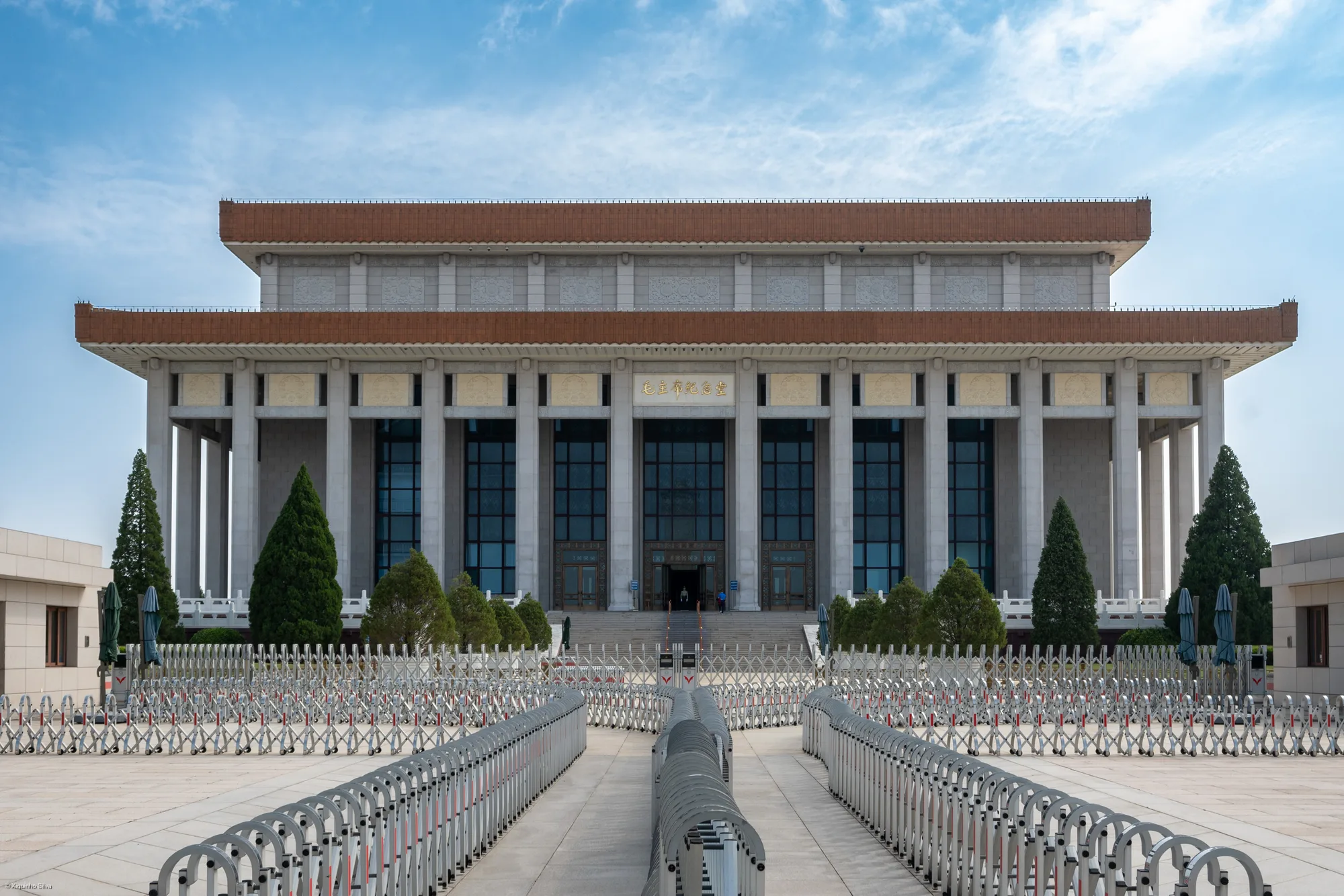
Chairman Mao Memorial Hall stands south of the Monument to the People's Heroes, still on the central axis. It is a separate attraction with its own reservation and entry process. Square access does not automatically include going inside.
Visit rules and opening status can change. Travelers who want to enter the hall should check the official operating status before the day of travel rather than treating an older guidebook note as current. If you only walk the square, the hall remains a southern visual landmark even without going in.
National Museum of China
The National Museum of China occupies the east side of the square. It is a separate attraction with its own reservation system, not a quick add-on to a square walk.
A full museum visit is a major indoor block of time. Combining the National Museum, the square and the full Forbidden City in one compressed morning is usually unrealistic. If the museum is your priority, plan the square as a short approach or a later pass rather than stacking all three at full depth.
Great Hall of the People
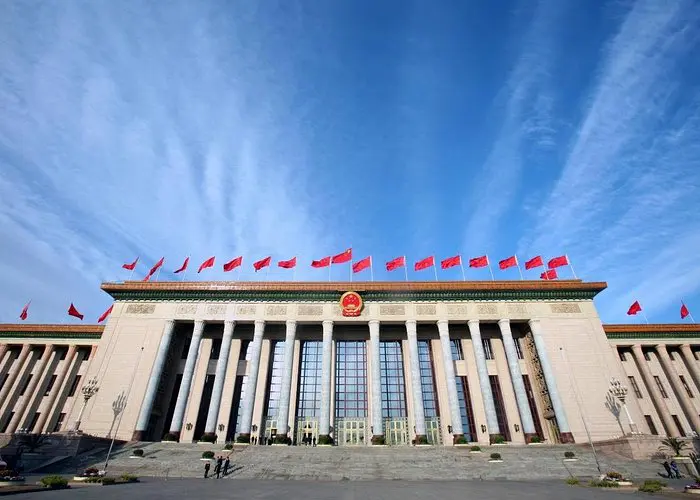
The Great Hall of the People occupies the west side of the square, facing the National Museum across the axis. Together with the museum, the Memorial Hall and the monument, it belongs to the square's monumental 20th-century composition.
Treat exterior viewing from the square separately from any interior visitor arrangements. Interior access, when offered, follows its own rules and is not part of ordinary square admission.
Zhengyangmen and the Southern End of the Square
Zhengyangmen, often called Qianmen in visitor language, marks the southern visual end of the square. Travelers approaching from the south see this gate as the counterpart to Tiananmen Gate in the north.
It is useful for orientation: once Zhengyangmen is behind you, the axis runs north through the Memorial Hall, the monument, the flag and then Chang'an Avenue toward Tiananmen Gate. This page does not replace a separate Zhengyangmen visit guide.
A Short History of Tiananmen Square
Tiananmen Square began as imperial-era ceremonial space outside the Forbidden City, south of Tiananmen Gate. In the 20th century the area changed from a gated imperial approach into a public national square.
The May Fourth Movement of 1919 used this ground as a political gathering place, which is why the square still appears in accounts of modern Chinese civic history. On 1 October 1949, the People's Republic of China was founded here, with the proclamation made from Tiananmen Rostrum.
During the 1950s the square was substantially enlarged and given its present monumental frame: the Monument to the People's Heroes, the Great Hall of the People, the museum buildings on the east side, and later Chairman Mao Memorial Hall. It remains China's principal national ceremonial and civic space, used for state events, the daily flag ceremony and ordinary public visits.
Tiananmen Square Flag-Raising Ceremony
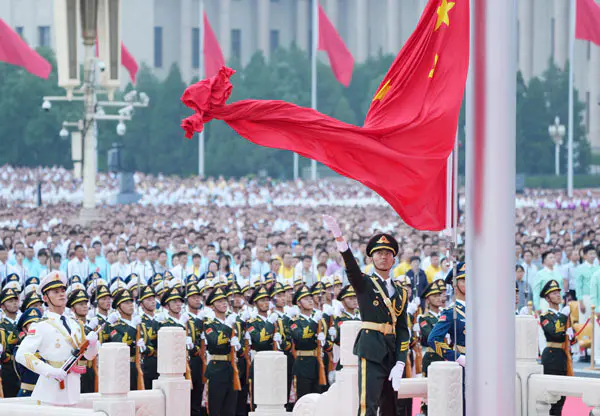
The Chinese national flag is raised at Tiananmen Square every day around sunrise and lowered around sunset. The exact time changes through the year, so visitors should check the official daily schedule rather than relying on a fixed clock time.
What Time Is the Flag Raised?
The flag is raised around sunrise, so there is no single year-round start time. A clock time such as 05:00 or 06:00 is not universally correct.
Use the day's reservation slot and the official schedule published for that date. The Beijing municipal English page for Tiananmen Square lists headline hours; the reservation mini-program is the practical place to confirm the flag-raising session for your date.
Do You Need a Reservation for the Flag-Raising Ceremony?
Yes. Visitors planning specifically for the ceremony need the appropriate reservation and entry period. Ordinary daytime access should not be assumed to cover the flag-raising session.
If your record is for a later morning or afternoon window, arrive for that window. Do not treat a daytime square reservation as a dawn ceremony pass.
How Early Should You Arrive?
Arrive significantly earlier than the ceremony itself. Large crowds occur on weekends, holidays and symbolic dates. October 1 and other major holidays require particularly conservative planning.
Transport before normal subway operating hours can become part of the planning problem. Build the dawn visit as its own schedule, including how you will reach the security perimeter before Line 1's usual daytime pattern.
Is the Flag-Raising Ceremony Worth It?
It is worth considering if the ceremony itself is important to you or you want to experience Tiananmen Square at dawn. If your priority is the Forbidden City and you have limited time in Beijing, a normal morning visit to the square is usually more efficient than building the whole day around a very early flag-raising start.
Plan Your Tiananmen Square Visit
Tiananmen Square Map and Layout
Use the north–south schematic above as the working map. From north to south the visitor sequence is: Forbidden City, Tiananmen Gate / Rostrum, Chang'an Avenue, the national flag, the Monument to the People's Heroes, Chairman Mao Memorial Hall, then Zhengyangmen / Qianmen. The National Museum is east; the Great Hall of the People is west.
Walking logic is axial, not a loop around every façade. Most first visits move along the center line, stop for the flag and monument, photograph the gate looking north, and then either continue toward the Forbidden City or exit south. East and west buildings are orientation landmarks unless you have a separate museum or hall reservation.
How to Get to Tiananmen Square
The official primary subway guidance is Line 1, stations Tiananmen East or Tiananmen West.
The actual entry path may be affected by security-perimeter routing, so the nearest subway exit does not always equal the shortest walking time. Follow on-site signs to the visitor screening point that matches your reservation, rather than assuming a straight walk from the platform to the flag.
Best Time to Visit Tiananmen Square
Normal sightseeing: early morning or later afternoon, when light is clearer and the open plaza is easier to walk.
Forbidden City combination: visit the square first, then continue north.
Photography: morning or evening light, subject to access rules and your reserved entry window.
Flag ceremony: separate early-morning planning, not a bolt-on to a late start.
Chinese national holidays: expect much heavier crowd and security conditions. No weekday is reliably quiet year-round.
How Long to Spend at Tiananmen Square
| Visit style | Approximate time |
|---|---|
| Walk through + key photographs | 20–30 min |
| Normal first visit | 30–60 min |
| Square + one nearby monument/attraction | 1–2 hr |
| Flag-raising visit | Separate early-morning plan |
| Square + Forbidden City | Approximately half a day overall |
Tiananmen Square is geographically large, but most travelers do not need several hours simply walking around the open plaza. Extra time belongs to the Memorial Hall, the Rostrum, the National Museum or the Forbidden City, each of which is a separate entry.
Tiananmen Square and the Forbidden City
Tiananmen Square sits immediately south of the Forbidden City, so the two are naturally visited in the same sequence: Tiananmen Square first, then north through the Tiananmen approach toward the Forbidden City's Meridian Gate. For most first-time visitors, this is more efficient than treating them as two separate trips.
For the combined sequence, time budget and security buffer, use the Tiananmen Square + Forbidden City planning guide. For palace tickets, hours and route, see the Forbidden City visitor guide. Travelers who want a guided palace day can look at a private Forbidden City tour.
Visit Tiananmen Square with the Forbidden City
DragonTrail can arrange a private Forbidden City visit with ticket and reservation planning and guide support. Tiananmen Square naturally forms part of the approach when the itinerary uses that northbound route.
Plan a Private Forbidden City Visit
Return to the Beijing City Guide for Forbidden City, Temple of Heaven and Summer Palace planning.
Headline hours and free admission follow the People's Government of Beijing Municipality English page for Tiananmen Square. The Rostrum adult price follows the municipal English page for Tiananmen Rostrum.
Tiananmen Square FAQ
- Yes. Tiananmen Square itself has no admission charge. Visitors still need an accepted real-name reservation record, the original ID used for that record, and must pass security screening. The Rostrum and nearby museums are separate paid or separately reserved entries.
- Yes. Foreign visitors need a real-name reservation or a qualifying same-day nearby-attraction reservation for applicable daytime entry. The usual foreign booking route is the WeChat mini-program 天安门广场预约参观, using passport name and number. Someone else can complete the order on the traveler's behalf.
- Yes, with help or an alternate daytime route. Another person can reserve on the visitor's behalf. A valid same-day reservation for certain designated nearby attractions may provide daytime square entry without a separate square order. The web portal currently does not support registration with non-Chinese phone numbers.
- Yes. Carry the original passport associated with the reservation. Identity verification at screening matches the document used to book. A phone photo is not a reliable substitute.
- Tiananmen Square is currently listed by Beijing municipal visitor information as open 05:00–22:00. Reservation windows and temporary controls can change. Confirm official information shortly before you go.
- Most first visits take 30–60 minutes in the square itself. A photograph-only walk can be 20–30 minutes. Add time only if you enter the Memorial Hall, the Rostrum, the National Museum or continue into the Forbidden City.
- Yes. Tiananmen Square sits immediately south of the Forbidden City, across Chang'an Avenue and Tiananmen Gate. The usual visitor sequence is the square first, then north toward the palace.
- No. Tiananmen Gate is the landmark and Rostrum on the north side of Chang'an Avenue. Tiananmen Square is the public plaza to the south. Photographing the gate from the square is not the same as entering the Rostrum.
- The current official adult ticket is 15 RMB. The Rostrum is separate from the free square and needs its own reservation. Square admission does not include going up.
- The flag is raised daily around sunrise and lowered around sunset. The exact time varies by date. Use the official daily schedule and the matching reservation period.