Choose a length
| Detail | Plan |
|---|---|
| Wall-only day | Shanhaiguan day tour, train home, no beach promise |
| One night | Arrive, pass the next morning, beach evening, leave the morning after |
| Two nights | Pass plus an unhurried beach morning |
| Drop first | Jiaoshan, then Nandaihe, then any hope of Chengde |
| July | Expect crowds; do not add extra stops |
| October | Favor the Wall; treat swimming as over |
The useful trip is two places and a sleep. Beidaihe is the resort southwest of the port. Shanhaiguan is the pass to the east, where the Wall meets the Bohai at Old Dragon's Head. They are about half an hour by car, not a walk, and not a second rail journey you need to treasure. One night is the minimum if you want both. A same-day return from Beijing is only a Wall day.
The Qinhuangdao guide is the map of those names. This page is the order: what happens on one night, what a second night adds, what a there-and-back Wall day contains, and what you drop when the train will not move. High-speed trains from Beijing often take about two hours, sometimes less. Not every train stops at Qinhuangdao Station, Beidaihe Station, and Shanhaiguan Station. The from Beijing page is the stop list. Read it before you fall in love with a timetable that does not call where you are sleeping.
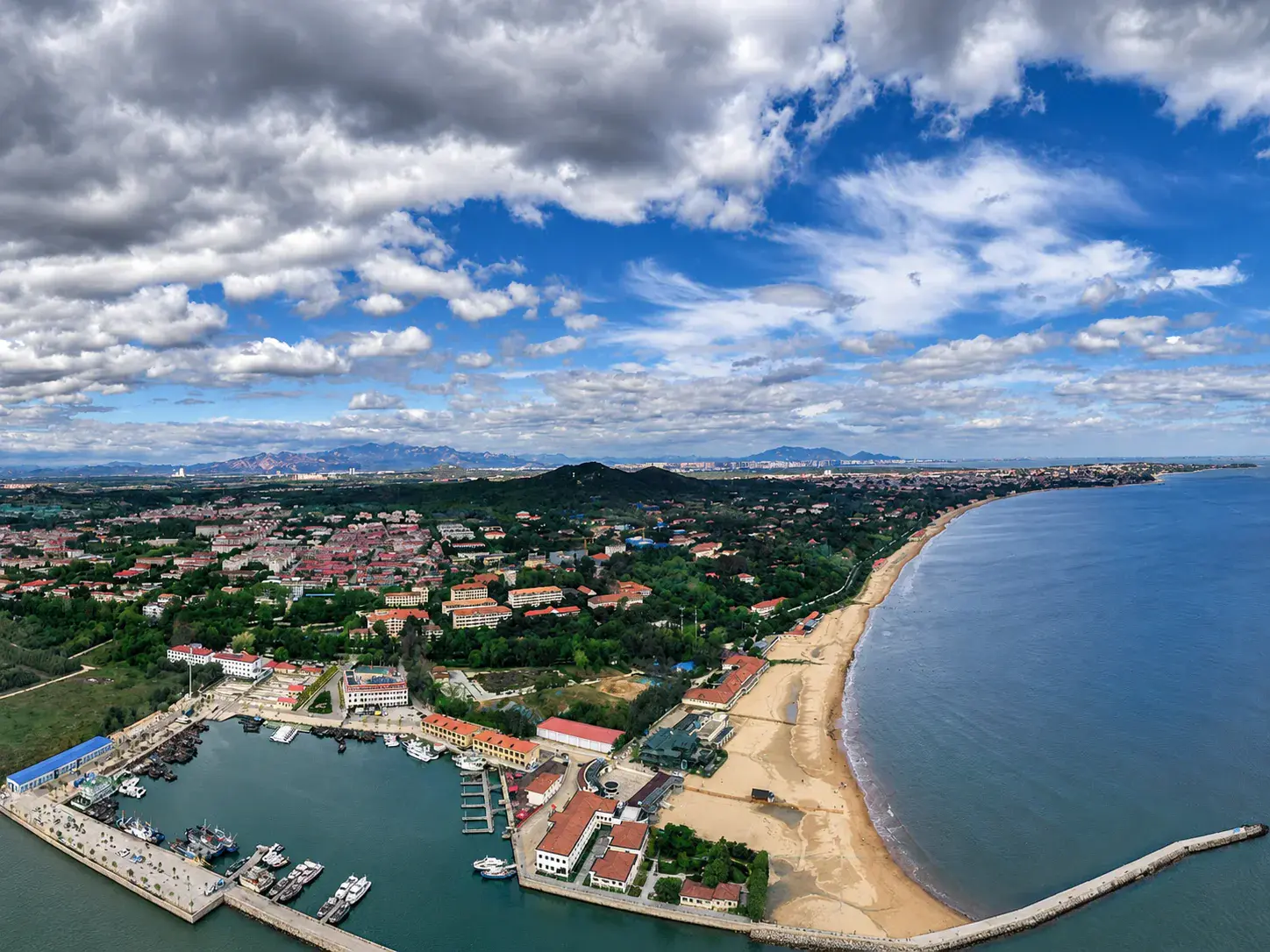
Write one sentence before you book: the sea-end of the Wall, a real beach evening, or both. That sentence picks the shape. Dates, the station your train can actually use, and who cannot climb pick the edits inside the shape.
One night, the useful minimum
Arrive from Beijing in the late afternoon or evening. Get off at Beidaihe if the beach night is the point and the train stops there. Get off at Shanhaiguan only if you have already decided the next morning's opening matters more than the shore, and you accept a shorter beach later. Do not get off at the port because the station name matched the prefecture. A taxi from Qinhuangdao Station to a resort hotel is across town. On an arrival evening, that taxi is the whole program.
Sleep in one place. A Beidaihe bed is the right bed when you want to walk the promenade after dinner. The evening is a stroll you can leave: Pigeon Nest or Tiger Stone if the light remains, seafood if you ask the price before it is cooked, and an early enough end that the next morning is a Wall morning. It is not the hour you also see the First Pass. The pass is closed to the kind of looking you came for once the light is gone, and you will be tired from the train.
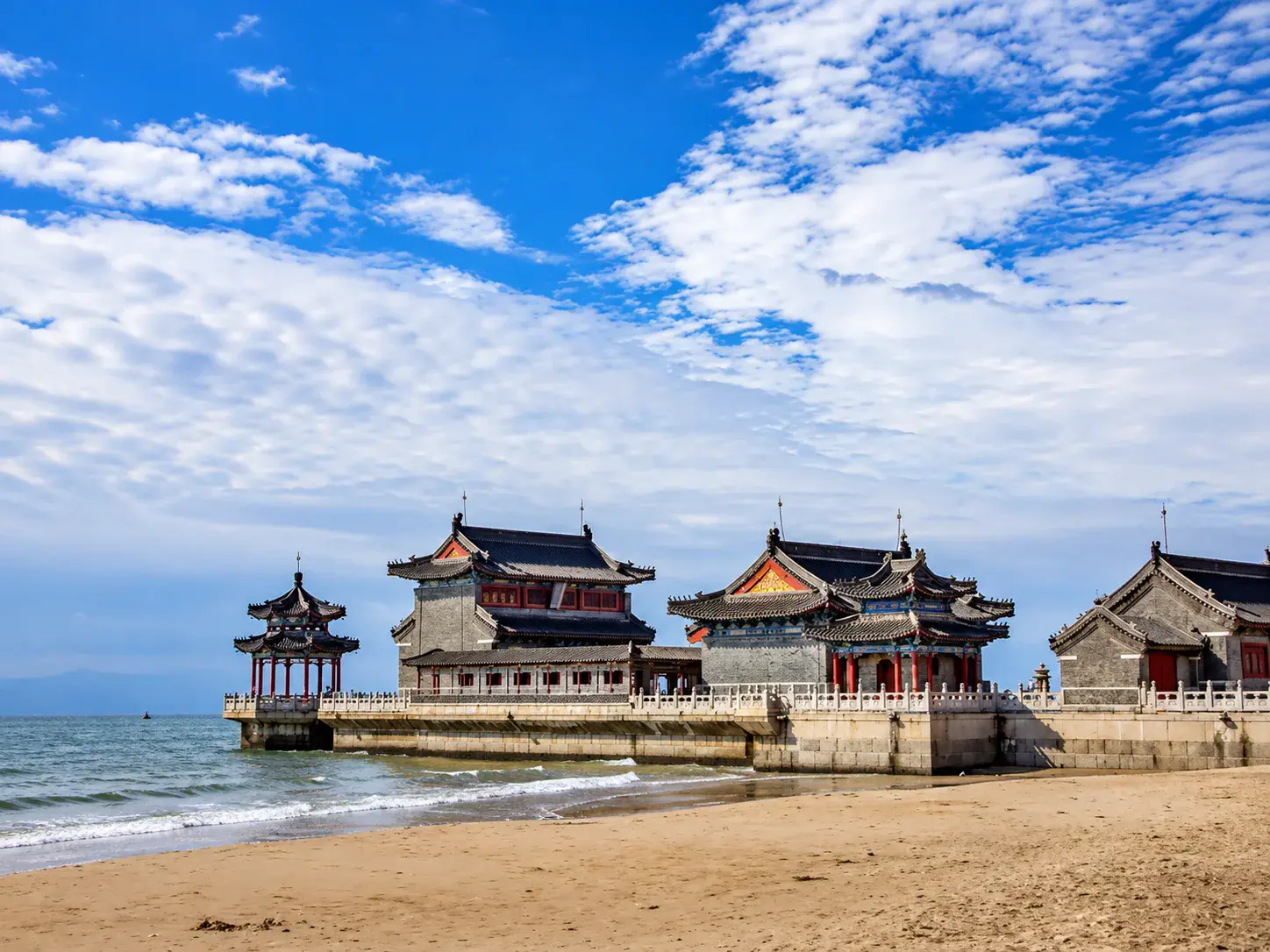
The next day, eat breakfast at the hotel and drive east. About half an hour later you are at the pass. First Pass at opening, then Old Dragon's Head while the group will still walk a pier slowly. The complex at the water was heavily rebuilt in the late twentieth century. You are there for wall meeting water, not for untouched Ming fabric. Skip Jiaoshan unless everyone is fresh and the return is not looming. Skip Mengjiangnu Temple unless the legend is already something someone cares about. Drive back to Beidaihe for a second, easier evening if you are leaving the following morning, or go straight to the station if the train is the same afternoon.
One night means one sleep. You arrive in the evening, give the next day to the Wall, and take the beach again only if the train home is late enough. If you leave on the morning after the Wall day, that is two nights, and it belongs to the next section. Count the pillows. A two-day trip with a single sleep is this shape. It works. It does not also include a leisurely beach morning, Jiaoshan, and a long lunch.
How the one-night hours fall
The arrival block is station, transfer, room, food, maybe a flat walk. If the train is late, the walk shrinks to the street outside the hotel. That is still a success. Pretending you will "quickly" see Nandaihe and Pigeon Nest and the port lights is how the next day starts already annoyed.
The Wall block is a morning. Gate and pier. Car. Do not return to the hotel at noon to rest and then invent Jiaoshan in the mid-afternoon plus a late train from a different station. Pick the pier as the thing you will not rush. The mountain is the thing you may drop.
The departure block needs a gap you can miss. A train late enough to allow Old Dragon's Head and a calm ride to the station is the one to buy. A train that requires you to be in security at Qinhuangdao Station while you are still on the Jiaoshan steps is the one to avoid. If your outbound train only stops at the city station, the last ride is longer than the half hour between beach and pass. Put that ride in the plan in ink.
Children do well on this shape when the beach evening is protected and the mountain is not promised. Older walkers do well when the gate tower is optional and the pier is the goal. A group that wants every stair should not be on the one-night shape unless they have agreed the beach is a token.
Two nights, when the morning can be slow
Two nights is the better length when you want an unhurried beach morning as well as the Wall, or when the group includes children, older walkers, or anyone who hates a pre-dawn rail departure. You still do not need two hotels. Switching at noon burns the margin you came to buy. Sleep in Beidaihe both nights if the shore is half the point. The half-hour drive to the pass is cheaper, in time, than a checkout.
A clean version looks like this. Evening one: arrive, promenade, dinner, sleep. Morning two: walk the classic shore from Pigeon Nest Park at the east end toward Tiger Stone, without trying to finish every meter of sand. Afternoon two: the pass, First Pass and Laolongtou, back for a quiet night. Morning three: either Jiaoshan, if the stairs are the unfinished wish, or a second short walk and the train. If Jiaoshan is the wish, go there first and do not also schedule a ceremonial breakfast on the promenade.
The other clean version puts the Wall on the fresh morning. Evening one on the beach. Morning two at the gate at opening, pier after, mountain only if legs agree. Afternoon two back on the sand, with nothing left to achieve. Morning three: train. This version suits summer, when the pier is a poor place to be at noon. Give the stones the cool hours. Give Beidaihe the evening, which is what a beach evening is for.
Nandaihe, the newer strip south of the older resort, is a reasonable bed if central Beidaihe is full in late July. It is the same sea and the same season, and it adds a short ride to Pigeon Nest. It does not add a reason to sleep at the port. Haigang still makes both days into transfers.
A Wall-only day
Same-day return is right when Old Dragon's Head is the whole wish and the beach is a photograph you are willing to skip. You leave Beijing, you see the gate and the pier, you come back. Jiaoshan fits only with a late return and a group that still wants stairs after the water. Mengjiangnu fits only as a scrap of time. Beidaihe does not fit. A stop "on the way" at Tiger Stone is how the return becomes a sprint.
The Shanhaiguan Great Wall tour is that narrower day, arranged. Use it when you want the order kept and you have already agreed there is no coast holiday hiding inside it. On your own ticket, choose a train that stops at Shanhaiguan if you can. If it does not, the day includes taxis at the port station, and those taxis have to be in the timing or they will eat the pier.
This day is also the right day in October if you only have one date, the weather is jacket weather, and swimming is no longer the attraction. It is a poor day in Golden Week if you expected an empty tablet. The gate will be crowded. Go anyway only if the sea-end still matters when the railing is full. Do not add Chengde to rescue the crowds. Chengde is a different ticket and a different direction.
What you drop first
Drop the port. The cranes are not a viewpoint, a compromise hotel zone, or a rainy-day museum of industry. Drop Mengjiangnu before you drop Laolongtou. Drop Jiaoshan before you drop the First Pass and the pier, unless the mountain was the sentence you wrote at the start and everyone can climb.
Drop a second Wall. Sections closer to Beijing are different walls. They do not become unnecessary because you saw Shanhaiguan, and they do not belong on the morning you get off the coast train. Drop Zhangjiakou. Chongli is a ski trip, not an afternoon when the beach feels ordinary. Drop any theme-park style add-on sold at a July hotel desk. If the desk plan includes more than the pass, the sea-end, and a beach walk, ask what gets cut when the train is in the afternoon.
Drop the long seafood comparison between towns. One dinner, with the price asked before the cooking, is the meal. A red flag or a closed swimming section means stay out of the water even if that dinner was going to be your reward for a brave swim. The flag wins.
Drop Nandaihe and Pigeon Nest and Jiaoshan on the same one-night diagram. Two of those can be a choice. Three of them are a fantasy with a station clock attached. The Hebei guide can suggest other days in the province. It is not a menu you staple to this sleep.
July and August, rewritten
In the crush months the shape does not change, the emphasis does. Book the room before you book the extras. Hotels fill. A sold-out Beidaihe does not mean you should sleep beside the coal piers. Nandaihe is the overflow. The port is the mistake.
Start the Wall earlier. Heat on the pier is part of the day, and noon is the worst of it. The beach evening is the piece you protect: flat, possible with children, possible after a gate tower has already been enough stairs. Swim only where it is open. Bohai water is not Sanya in any week of August. Expect a wide shore, hawkers, and ordinary gulf light. If turquoise was the requirement, this itinerary was the wrong one before you bought the train.
Weekends are the thick end. If your dates are a Saturday night, keep the plan smaller than the plan you would trust on a Tuesday. One shore walk, one pass morning, one departure. No salvage excursion inland because the sand felt busy. Busy is the season.
The Qinhuangdao two-day tour earns its keep in these weeks if you would rather not spend the evening negotiating stations. It is the shape that keeps the pass and a Beidaihe evening. It is not a vessel you then fill with Chengde.
September and October
September is the balanced month. Afternoons can still be warm enough to paddle, groups thin out, and both a beach morning and a patient pier fit inside two nights. "Calmer" is not "empty." Pack a layer and a swimsuit, and let the forecast pick. This is the month when the two-night shape feels luxurious rather than necessary, and when the one-night shape feels fair rather than mean.
October is jacket weather and a good Wall month. Swimming is mostly over. Rewrite the beach blocks as walks: Pigeon Nest, Tiger Stone, a promenade, dinner. Do not leave a hole in the day for a swim that the gulf will not give you. The one-night shape and the Wall-only day both get more honest in October, because you are no longer pretending the water is the second monument.
Golden Week, at the start of October, crowds the gates even when the water is cold. Keep the opening hour. Expect the tablet to be a crowd photograph. Drop Jiaoshan first if the lines are the story of the morning. The beach is the decompression, not a third ticket you must honor. Winter, later, is wind and empty decks. The itinerary shrinks to the pass and a short shore walk. Do not sell it to yourself as out-of-season swimming.
One hotel, one direction
Whichever shape you choose, point the car once. Beach evening, then Wall morning, then train: you sleep in Beidaihe and drive east after breakfast. Wall at opening because you slept near the pass: the beach is a late add-on and may shrink to a walk, which you should admit while you are still in Beijing. Driving back and forth so both hotels feel used is the way a half-hour road becomes the main attraction.
The fragile hour decides the bed. If missing opening would ruin the trip, sleep nearer Shanhaiguan Station and let the resort be second. If missing the evening shore would ruin the trip, sleep on the Beidaihe promenade side and accept a slightly later gate. The wrong fragile hour is the one you spend in Haigang, central to a map and central to nothing you came to do.
Luggage stays in the room on the Wall morning. You do not climb the gate tower with a full case, and you do not want the case in a taxi you might have to change. On a Wall-only day from Beijing, travel light enough that a station transfer is annoying rather than a project.
Which arranged day matches which wish
Choose the Shanhaiguan Great Wall tour when the sentence at the top of this page is only the sea-end of the Wall. You will be back in Beijing at the end of it. You will not have had a resort evening, and you should not reorganize the date in the car to grab one.
Choose the Qinhuangdao two-day tour when the sentence is both: the pass and a Beidaihe evening. That is the one-night shape with the transfers handled. Ask, before you go, whether Jiaoshan is in or out, because stairs change the day more than a slogan does. If someone cannot climb, the pier and a ground-level look at the pass are the honest core.
Choose your own trains when you want the two-night version, a September beach morning, or a station you have already checked on the stop list. The tours are not a failure of nerve. They are the right tool when the tool's shape matches the sentence. They are the wrong tool when you need three nights, a ski day, and the Mountain Resort, because no version of this coast contains those.
A last pass before you pay
Read the stop list out loud against the hotel's district. Beidaihe Station for the resort, Shanhaiguan Station for a Wall-first morning, Qinhuangdao Station only if you have planned the cross-town ride and you are not calling that ride a sightseeing bonus. Confirm who cannot climb. Confirm you are not also holding a Chengde ticket on the arrival date. Confirm Golden Week if the dates sit in early October, and expect gates, not empty piers.
Then stop adding. The coast is a promenade, a rebuilt sea-end, and a gate with a famous tablet. One night holds two of those if you are disciplined. Two nights hold the third, the mountain, or a slow beach morning. A single day holds the Wall and the train. Anything past that belongs to Beijing on a different morning, or to another season entirely. The Bohai will still be there. It does not require you to see Hebei at the same time.
Ways to plan the days
These match the two real coast products: a two-day stay and a Shanhaiguan day.
One night
Time fit: 2 days
Pass in the morning, Beidaihe after, train the next day.
- One night
Why choose it: Pass in the morning, Beidaihe after, train the next day.
Two nights
Time fit: 3 days
The same, plus a beach morning you do not have to rush.
- Two nights
Why choose it: The same, plus a beach morning you do not have to rush.
Wall only
Time fit: 1 day
First Pass and Old Dragon's Head from Beijing.
- Wall only
Why choose it: First Pass and Old Dragon's Head from Beijing.
Want the length matched to your train?
Send the arrival time. A late train deletes the same-day pass and makes the night do the work.
Keep planning the coast
Itinerary questions
- Arrive later in the day, give the next morning to Shanhaiguan, keep the evening for Beidaihe, leave the following morning.
- When you want a beach morning, or when children or older walkers should not make a pre-dawn rail departure.
- Cut Jiaoshan first. Do not cut the night and then try to invent one.
- You can, but the pass is calmer early. The beach is the better evening.
- Scenic gates, including Shanhaiguan, even when the water is cold.
- Two-day tour for pass plus beach night. Shanhaiguan day tour for the Wall alone.
Set the Qinhuangdao length before you book the train
One night is the useful minimum for sand and stone. A day return is a Wall trip.