Beidaihe at a glance
| Detail | Plan |
|---|---|
| What it is | A long-running Chinese seaside resort on the Bohai |
| Orient the walk | Pigeon Nest at the east end, Tiger Stone along the shore |
| If the center is full | Nandaihe, the newer strip to the south, same sea |
| Peak | July and August |
| Calmer swim | September, often |
| Not included | Shanhaiguan, half an hour away by car |
Beidaihe is the resort on this coast, southwest of the working port. It has its own station, a long promenade, and a summer reputation older than most of the hotels. People book "Qinhuangdao" and then find themselves looking at cranes. If the beach evening is why you left Beijing, the pin has to be on this shore, not on the docks at Haigang.
The Qinhuangdao guide keeps the two famous stops apart: this resort, and Shanhaiguan, where the Wall meets the sea. They are about half an hour by car in ordinary traffic. That is a transfer, not a stroll, and it is short enough to do once in the right direction rather than shuttle all day. The itinerary puts the nights in order. The from Beijing page is the station list, which you need before you choose a bed.
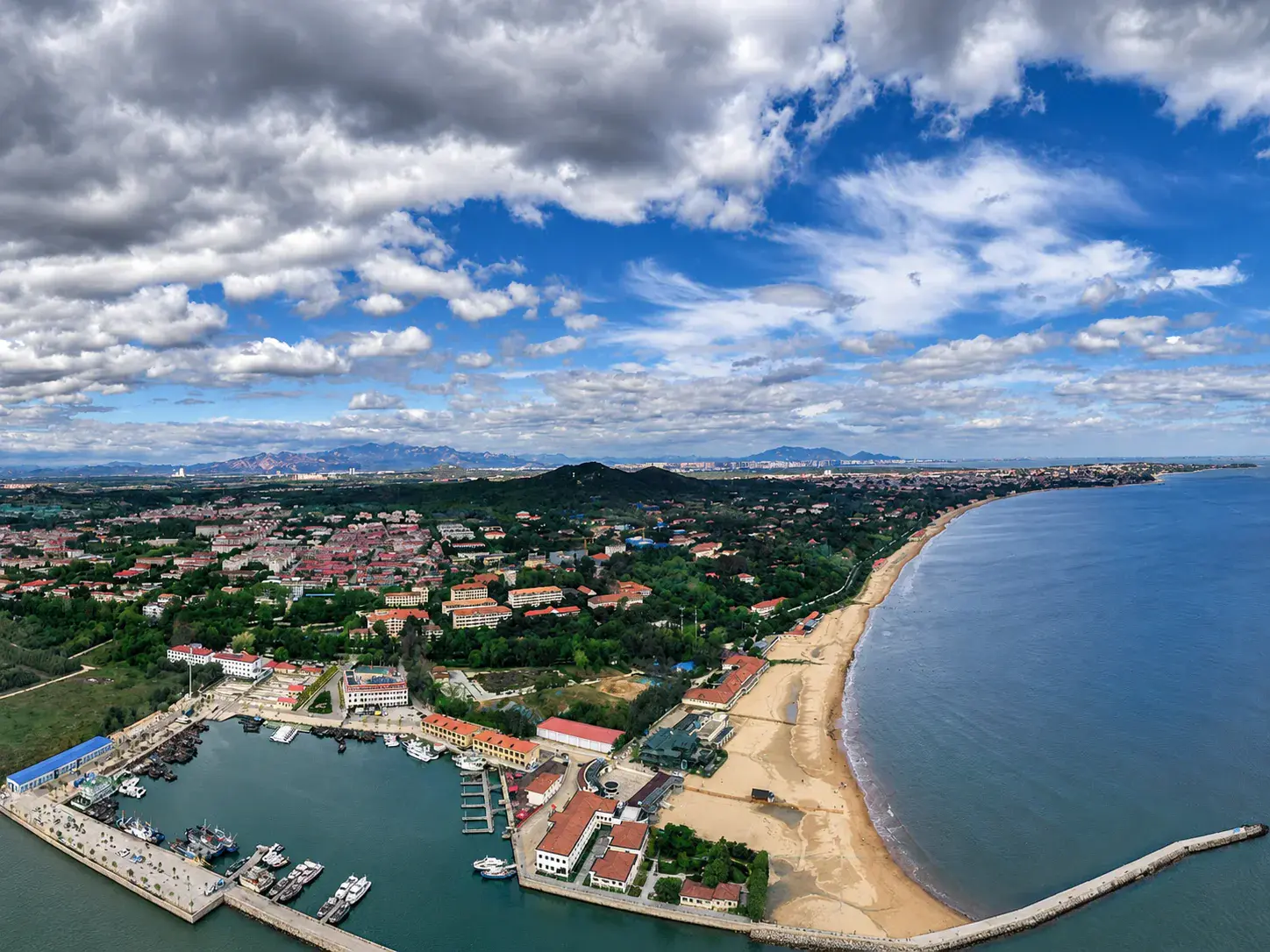
The water is the Bohai gulf. It is not Sanya, and haze on the horizon is normal. Expect a wide sandy or pebbly edge, pine shade in places, hawkers in the peak weeks, and the odd pleasure of a northern beach after palace courtyards. Come for the walk and the evening light. Skip the swim, or come in another season, if the photograph in your head is a limestone bay.
The port is the wrong start
Qinhuangdao city and Haigang district are the harbor and the ordinary downtown. Container yards and coal piers are a working coast. They are not a scenic prelude, not a sunset to "do quickly," and not a clever base between the beach and the pass. A hotel there makes both outings into taxis, and the first taxi already spends the hour the promenade was going to get.
Search results mix the names. A booking title that says beach and a map that says docks are in conflict. Believe the map, then move the booking. Showing a driver a photo of sand does not fix a pin in the port. Save the resort address, and the station you mean, before you leave Beijing. Start where you intend to walk.
How to walk the older shore
The classic strip is the older resort front. Use Pigeon Nest Park, at the east end, as one end of the walk, and treat Tiger Stone as the gathering point along the way. You do not need a step counter. You need a direction so the group is not orbiting a parking lot.
Go out in the morning if you want space, or in the last hours of daylight if the evening is the point of the night you bought. Midday in late July is heat, rented shade, and a shoreline that feels smaller than the map. The promenade is flat. That is its gift on a trip that also includes stairs at the pass. Do not turn a shore walk into training for Jiaoshan.
Residents use this front for exercise. Ask before a close portrait of someone fishing or stretching. Hawkers thicken in school-holiday weeks. A finished walk back toward the room is a complete visit. A hat in July, and a light shell in October, matter more than another plan. If the group splits, name a rock or the park, not "the beach," because the beach is long.
Pigeon Nest Park
Pigeon Nest Park (鸽子窝) caps the east end of the classic beach. The name belongs to the rock and the birds. You do not need a birding plan. Use the park as a landmark you can say out loud to a driver and recognize when you arrive. If the walk has a start, this is a clean one: you begin at a named edge instead of in the middle of umbrellas.
The park is a viewpoint and a short set of paths above the shore, not a second city. Give it long enough to see the line of the coast and to decide which way the promenade runs. Then leave it. People lose the morning by treating every pavilion as a required room. One look at the east-end rocks, then the beach, is the right proportion.
Morning is kinder here in summer. Do not schedule the park for the same hour you meant to be at the First Pass. Pick a day part. The Shanhaiguan page is what the other day part is for. The park is a place to look from, not the best place to swim. If the section is closed, stay on the paths. The viewpoint still works in October, when the swim is over and the coast is a walk.
Tiger Stone
Tiger Stone (老虎石) is the gathering rock on the classic shore. Swimmers, families, and people who got separated all use it as the place name. If the group splits between a paddle and a seat in the shade, name the rock. When the tide is friendly and the flags allow, people wade out toward it. When the flag is red, or the section is closed, you stay on the sand and the promenade. Warm air is not an override.
The rock is not a climb that replaces Jiaoshan. In July the crowd around it is the resort at full volume. In September it is easier to see as a rock. Do not arrange a pickup that only says "Beidaihe beach." Send a pin near Tiger Stone or near your hotel gate. The promenade has many stops a car cannot quite reach. Tiger Stone plus the walk back is enough Beidaihe when energy is low. You will have touched the shore people mean when they say the name. If you do not have a second morning, choose the east-end park or the rock, not a jog between them in the last light before a train.
Nandaihe, when the older strip is full
Nandaihe (南戴河) sits south of the older resort. It is the newer beach development: more planned fronts, more recent hotels, the same Bohai water. In late July, when central Beidaihe is sold out, it is a practical place to sleep. It is not a secret cove, and it is not quieter in a way that changes the season. Summer crowds move to wherever the rooms are. The blocks are more spread out, so a dinner you can walk to is less automatic than on the older strip.
Staying there means a short car transfer to Pigeon Nest and Tiger Stone. Do not describe that transfer as a walk you will "just do" after dinner. The newer strip and the classic strip are neighbors at the scale of a prefecture and separate at the scale of a tired evening. Budget the ride, or accept that your walk is the Nandaihe front and you will not also reach the east-end park before dark.
Nandaihe can be a good base when the group wants sand more than the old resort names, and when the next day is still the pass by car. The half hour to Shanhaiguan is the same kind of ride from either beach. The mistake is a third pin, downtown at the port, chosen because a map label said Qinhuangdao and the dot looked central. If you sleep in Nandaihe, say so in the taxi note. Drivers treat the newer strip and the old one as different jobs.
Where to sleep relative to the station
Beidaihe Station (北戴河站) is the resort's station. It is not a platform that opens onto the sand. Plan a short ride from that station to a promenade hotel, and a real cross-town ride if the ticket dropped you at Qinhuangdao Station (秦皇岛站) instead. The second ride is the one that deletes a beach evening. Read the stop list before you pay for the bed. Not every train from Beijing calls at both stations. Many of those trains take about two hours, sometimes a little less. The from Beijing page is the version of this with all three stations named, including Shanhaiguan Station if the morning must start at the gate.
Sleep on the resort side when this night exists so you can walk after dinner. A room that still needs a taxi at dusk is a downtown room with a beach in the marketing. You will sit in the room. The promenade only works if leaving the hotel is boringly easy. Near Tiger Stone, the evening walk starts outside. Near the east end, the first hour can be Pigeon Nest. Both are Beidaihe. Neither is the port.
Sleep nearer Beidaihe Station, and ride once to the sand, when the early train home is the constraint and the evening can be short. That is a fair trade. Sleeping in Haigang to be "between everything" is not. Between the port and the resort is a compromise that punishes both morning and night.
On a one-night stay, do not change hotels at noon to be closer to the pass. The drive is half an hour. A checkout is longer, once bags and breakfast are honest. Keep one bed in Beidaihe if the evening shore is the success you wrote down. Keep a Shanhaiguan bed only if the next morning must start at the gate and the beach is a last stroll you can afford to shorten. The overview of those lengths is the itinerary.
Put the hotel name and the station name in Chinese in an offline note. Ride-hailing pins still confuse Qinhuangdao (秦皇岛) and Beidaihe (北戴河) when the passenger shows a photo of a lobby. They are not interchangeable spellings of one beach.
July and August
July and August are the crush. School holidays, water warm enough for paddling, tour groups, and hotels that fill. This resort has a long twentieth-century history, including years when it was a summer retreat for officials. The shaded streets come from that history. The sea does not become a different sea because of it. The promenade is busy, the seafood streets are busy, and a quick look takes longer because everyone else had the same plan. Book the night before you book the casual extras. A sold-out resort does not grow a spare room beside the station.
Swim only where swimming is open. A red flag or a closed section means stay out of the water even when the air feels soft and other people are edging in. Evening is a bad time to debate a flag. The gulf is ordinary sea, often gray-green rather than turquoise, not a pool with a lifeguard who knows your hotel.
Heat on the sand is real, and so is heat the next day on the pier at Old Dragon's Head. If this trip includes the Wall, give the pass the earlier, cooler hours and give Beidaihe the evening. Reversing that in August feels fine at breakfast and worse on the stones at noon. Children do better with the beach as the reward than with a full shore march before a gate tower.
Do not add an inland city because the beach felt crowded. Crowds are the season you chose. Chengde is a different direction from Beijing, and it will not fit after a swim. The ski hills at Zhangjiakou are a winter trip, not a cool room you add when the sand is hot.
September
September is the month many return visitors would pick if the dates were free. The sea can still be pleasant on some afternoons, the tour-group volume drops, and the promenade starts to look like a town again. Calmer does not mean empty. Domestic travel does not vanish because a school term started. It does mean you can hear the shore.
This is the easiest month to keep both a beach walk and a patient visit to the pass. You are less likely to be choosing between heat on the pier and a room that only existed in the port. An unhurried beach morning fits here, which is one reason a second night is worth it in September even if you would have forced a tighter plan in August.
Swimming is a forecast question, not a promise. Some afternoons are paddle weather and some are a jacket on the promenade. Pack for both. A swimsuit you never use is a smaller error than a cold swim you talked yourself into because the calendar said early autumn. September's gift is that it sits between the August crush and the first week of October. Do not let a quiet late-September afternoon set your expectations for Golden Week.
October, Golden Week, and winter
October is jacket weather. Swimming is mostly over. The beach remains a good walk, especially early or late, when the wind is the main company. This is a strong month for the Wall and an honest month for the resort if you stop pretending you will swim. Wear the layer. The gulf wind does not read the sunny icon on a phone. Pigeon Nest still works as a viewpoint. Tiger Stone still works as a meeting place. The water is a shoreline you look at.
Golden Week, at the start of October, crowds scenic gates even when this water is already cold. If those dates are yours, expect the First Pass tablet to be a crowd photograph and keep Beidaihe as the decompression, not as a third monument you must complete. A promenade you can leave is more valuable in a holiday week than another ticket. The shore is busier too. It is still the easier half of the trip.
Winter is wind, empty decks, and a shore that feels harsh and interesting. Come for the pass and a short walk by the water. Do not come for a swim, or for the idea that a northern resort turns tropical in January. Seafood streets and hotel fronts shrink to whoever is actually open. Check that the room is open in fact, not only on a listing. The port is still the wrong base. An empty beach is not improved by a view of coal piers. The Hebei guide is the wider map if this coast is only one piece of the province.
What a beach evening is for
A beach evening is a promenade and a meal. It is not a second sightseeing list, and it is not the hour you finally visit the gate tower. The pass is a daytime visit. Old Dragon's Head after dark is not the meeting of wall and water you came to see. Walk until the light goes. Stop at Tiger Stone or at the east end if you want one landmark in that light. Then eat. Then go back to the room.
Leave the evening as a promenade you can abandon. A theme-park suggestion from a hotel desk is how the morning train becomes a panic.
This is also why you do not start at the docks. The evening has one job. A cross-town arrival from Haigang, plus a quick look at the harbor, plus dinner, is three jobs. The light will not wait. If the train gets in late, a short walk outside a Beidaihe hotel is the whole win. Pretending you can still see Pigeon Nest properly, eat a long seafood dinner, and repack for a dawn Wall departure is how people dislike a coast that would have been pleasant at half the ambition.
Families, and anyone who should not be promised Jiaoshan, do well here. The ground is flat, and the outing is still real. Spend it on the sand.
If you want that evening set beside a pass morning, the Qinhuangdao two-day tour is the arranged version. A same-day Shanhaiguan Great Wall tour is the opposite choice: the Wall, then Beijing, and no Beidaihe night at all. Do not ask that day tour to grow a beach after the pier.
Seafood, flags, and the small frictions
Ask the price before the fish is cooked. Point at the dish and repeat the number. Photo menus on a summer street are not the whole bill. A second plate, a beer, or a local specialty you nodded at can appear without having been ordered in any sense you would recognize. This is ordinary resort behavior. It is not a reason to skip dinner, and it is not solved by anger at the end.
Cashless payment is normal in hotels and many restaurants. Small stalls may still want a phone wallet that is awkward with a foreign card. Carry a little cash for that edge. Do not assume an international card taps on the sand.
A red flag means stay out. So does a closed swimming section. If you only wanted your feet in the wash, do that where people are walking the lip of the sea, and stop if the signs say otherwise. Breakfast in the hotel is the right meal when Shanhaiguan opens the day. A long cafe on the promenade is the right meal only when the morning is already a beach morning. Drones over a crowded beach are a poor idea. Assume they are unwelcome.
How this night sits with the rest of the trip
Beidaihe is a coast add-on to Beijing, not a replacement for the city, and not a way to see the Mountain Resort at Chengde. People draw a triangle on a phone and call it one loop. The trains do not run that triangle. Give Chengde its own ticket. Give this shore the night it needs if you also want the pass.
Zhangjiakou and Chongli are a ski decision. They do not combine with a beach afternoon except as two trips in two seasons. The Wall sections closer to Beijing are different walls. Seeing the sea-end at Shanhaiguan does not retire a restored section in the hills, and a hill section does not give you this gulf. Doing both in one week is reasonable. Doing both before lunch, with this evening glued on, is not.
Write down the one success you want from the night: a real walk on the northern shore. If that sentence is true, sleep here, skip the port, and let the pass be its own morning. If it is false, you may not need Beidaihe, and the day tour to the pass is the cleaner plan. The province context lives in the Hebei guide. Use it when someone asks what else sits inland. Use this page when the question is where to walk, where to sleep, and why the docks were never the start.
Ways to plan the days
Use Beidaihe as the sleep and the evening. Put the pass in the morning of another block of hours.
Beach evening
Time fit: 1 night
Arrive, walk, leave the pass for the next morning.
- Beach evening
Why choose it: Arrive, walk, leave the pass for the next morning.
Two nights
Time fit: 2 nights
One full beach morning plus Shanhaiguan.
- Two nights
Why choose it: One full beach morning plus Shanhaiguan.
Shoulder walk
Time fit: 1 night
September or October, when swimming is optional.
- Shoulder walk
Why choose it: September or October, when swimming is optional.
Want Beidaihe as the night, not an afterthought?
Tell us the month. We will say whether you are in the crush or in a walking season.
Keep planning the coast
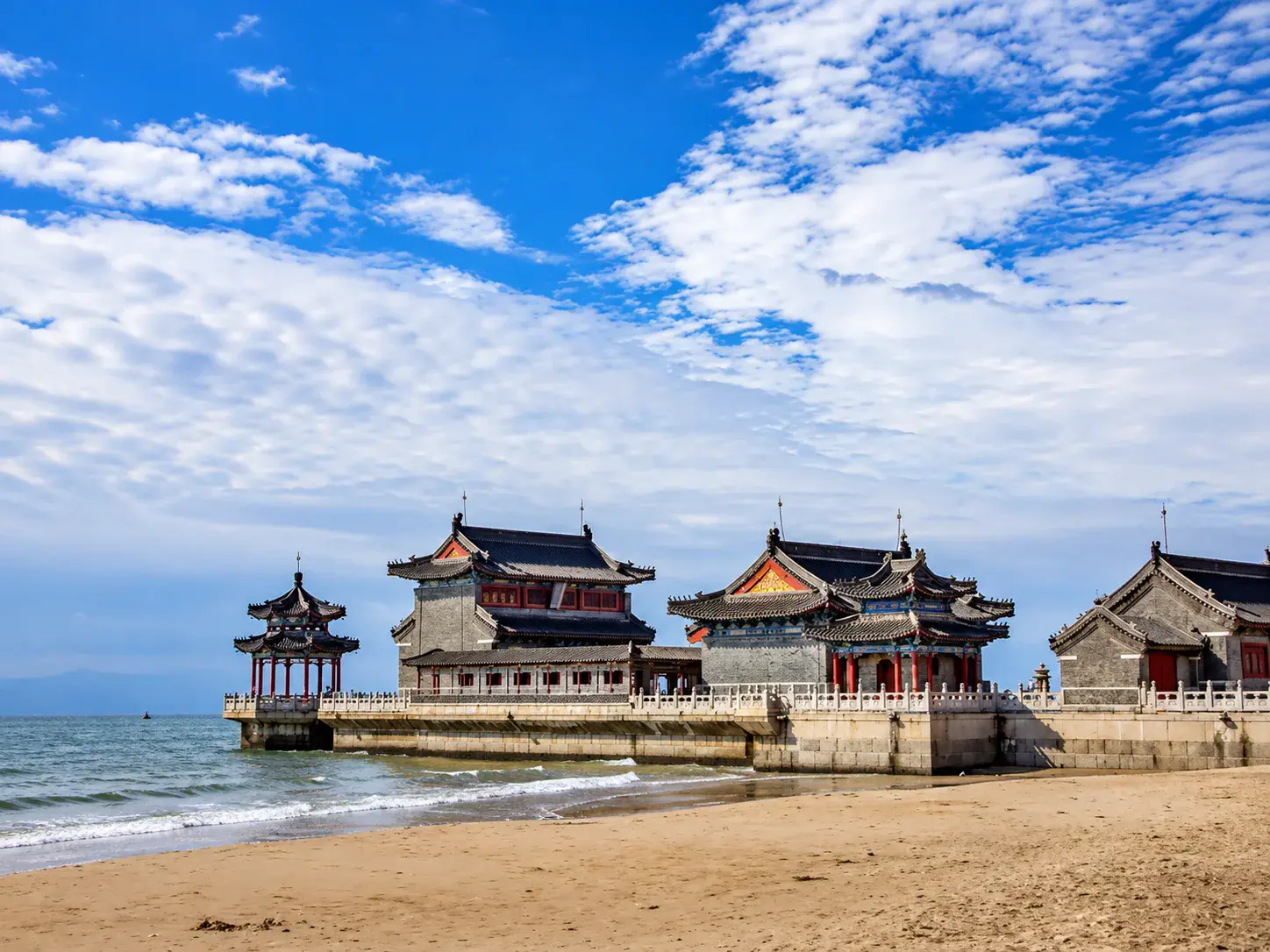
Beidaihe questions
- No. Beidaihe is the resort district. The city station serves the port side.
- Pigeon Nest Park at the east end of the classic beach, and Tiger Stone along the shore.
- Treat October as jacket weather and a Wall month. Swimming is mostly over.
- Ask the price before the fish is cooked. A photo menu is not the whole bill.
- No. It is the newer strip south of the old resort, useful when central rooms are gone, with the same summer crowds.
- Only if the next morning must start at the pass. Switching hotels at noon wastes the margin you came for.
Keep a night for the Beidaihe walk
The promenade works when you are not racing a train back to Beijing the same afternoon.