
Hong Kong at a glance
| Detail | Plan |
|---|---|
| Good first stay | 3 full days |
| Add Lantau or Macau | 4–5 days, and not both on the same date |
| Arrival | Airport Express to Hong Kong station is about 24 minutes |
| City transport | MTR, tram, and Star Ferry for the urban days |
| Use a car | Airport luggage, the south side, or a crossing with bags |
| Entry | Check Hong Kong rules separately from the mainland |
The harbour is the day people mean when they say they are going to Hong Kong. Victoria Peak on one side, the Tsim Sha Tsui promenade on the other, and a short Star Ferry crossing between them. We plan that as a single piece of the trip, with a clear window for the Peak and dusk kept for the water. Symphony of Lights can sit at the end if you are already on the promenade. It does not steer the day.
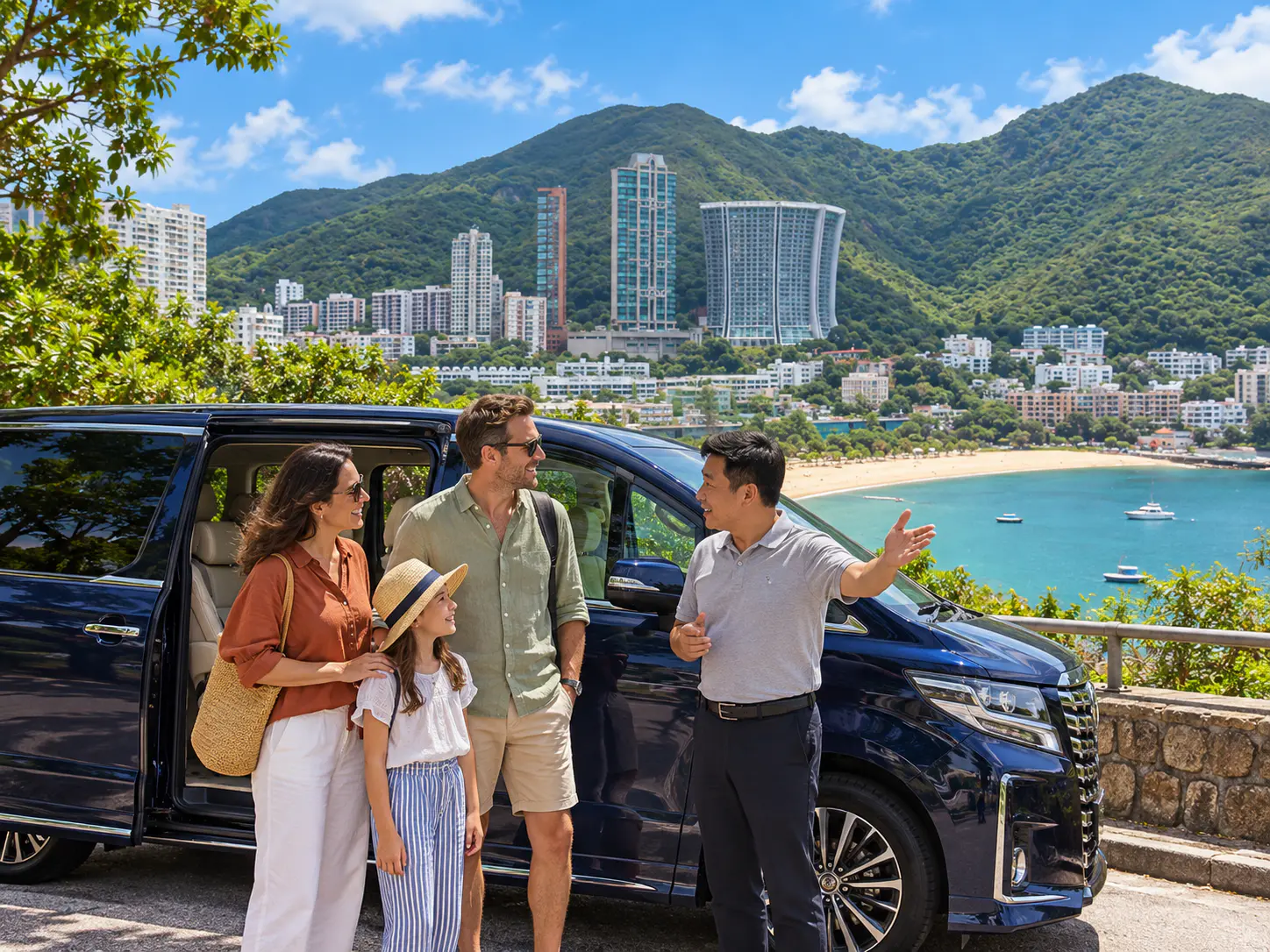
This page is the view: when to go up, what to do when the cloud sits on the ridge, how the ferry fits, and why daylight and night are different pictures of the same water. Neighbourhood walks, Lantau, and the south side belong on other days.
The harbour day, kept as one piece
A harbour day that works has four possible parts, and you will not need all four at full strength. The Peak, if the air is clear enough to repay the queue. The Star Ferry once, between Tsim Sha Tsui and Central. Time on the Tsim Sha Tsui promenade, ideally into dusk. A walk on whichever side of the water you have not already exhausted. Lunch belongs in that sequence. A second district, a mountain village, and a theme park do not.
The geography is simple once you stand still and look. Hong Kong Island carries Central, Admiralty, Wan Chai, and the Peak above them. Kowloon, across the water, carries Tsim Sha Tsui and the promenade that faces the island skyline. The harbour between them is working water: ferries, cargo, the occasional cruise ship, and the constant small traffic that makes the view feel inhabited. You are not looking at a backdrop built for the photo. You are looking at the front door of the city.
Cross once on the Star Ferry and let the rest of the day stay on one side or the other. The mistake is to treat every impulse as a crossing. Up the Peak, down to the ferry, over for a photo, back for lunch, over again for the lights, back to a dinner you booked in SoHo. Each crossing is short. The sum of them is a day spent in stations and piers. Choose the island for the morning if the Peak is on, and Kowloon for the late afternoon, or the reverse if you are sleeping in Tsim Sha Tsui and the morning light on the promenade is the thing you woke up for.
We would rather you leave one famous stop undone than rush all of them. A clear hour at the Peak and a slow dusk on the promenade will outlast a day in which you touched both and saw neither.
Victoria Peak, where the queue is the visit
The Peak Tram starts at Garden Road, above Central, a short uphill walk from the business streets and an easy taxi from the Star Ferry pier if your legs are already spent. The ride itself is short. The constraint is the line at the lower station, and sometimes again if you want a particular car back down. On a wet Tuesday in January the wait can be modest. On a clear Saturday, or any holiday when the sky suddenly opens, the queue is the activity. People lose the morning they meant to spend on the view.
Go early, or go later. The first hours of the day are when the air is most often clear and the line has not become a crowd. Late afternoon can be as good, with the city starting to light and the midday tour groups gone, provided the haze has not thickened. Midday on a weekend is the slot we would not choose for you. You stand in the sun, or in a covered queue that still feels like a mall, and you arrive at the top when the light is flattest.
Check the ticketing in use on your date. The tram has used timed boarding since the line was rebuilt, and the practical advice is the same either way: be at Garden Road at the start of the window you actually hold, not twenty minutes later with a coffee. If you have no reservation and the board is ugly, you have other ways up. A taxi to the top skips the tram queue entirely and still gives you the walk. City buses and a green minibus also climb to the Peak from Central; the boarding point in Central is worth confirming on the day, because road works move it. The view at the top does not improve because you suffered the tram line. Take the tram when the wait is reasonable and you want the ride. Leave it when the line will cost you the hour the weather is giving you.
At the top, the ticketed terrace is one way to see the bowl of the city. The public walk is the other. Lugard Road leaves the upper terminus and runs along the hillside to meet Harlech Road, a mostly level loop of about an hour if you stop for the view. That path is the part we would not skip. The Peak Tower and the Galleria are commercial buildings with food and shops. Use them for a cold drink and a toilet. Do not confuse a lap of the mall with having been on the Peak.
The tram ride back down is the same short journey in reverse, and it can carry its own queue. If the line is long and you are finished, take the bus or a taxi down. Garden Road returns you to Central, close enough to walk to the Star Ferry or to lunch in Sheung Wan if the hill does not bother you.
When the view fails
Humidity, low cloud, and rain take the view away. This is not a minor disappointment you can pose through. When the Peak is inside the cloud, the terrace is a white room with a railing, and the famous photograph is a blank. The tram may still be running. The ride is then a ride, which is a thin reason to spend the queue.
Test the day before you commit. Stand on the Tsim Sha Tsui promenade, or even at the Central waterfront, and look at the ridge. If you cannot see the skyline clearly, or the hills behind Kowloon have disappeared into milk, the Peak will be worse, not better. High ground sits in the cloud first. Save the queue. Spend the morning in Sheung Wan, at Tai Kwun, or in a museum, and look again after lunch. Summer and spring haze can also flatten the city without a single raindrop. If distant towers look soft and grey, believe the air. A filter will not put the ridges back.
Night is not a reliable rescue. A clear evening after a hazy afternoon can be beautiful, because the lights punch through air that looked dead at noon. Fog at night is simply darkness with some glare. Do not keep a tired group on the terrace “in case it clears” with no sign that it will. Rain is the same decision, faster. A shower that passes can leave the air washed and sharp, which is worth a second look from the promenade. Steady rain on the Peak is a slippery path and no view. Come down.
The honest success is to notice the failure early. Visitors who burn the only clear hour of a three-day trip inside a cloud bank are the ones who leave thinking Hong Kong had no skyline. It did. It was lower down, or it was yesterday, or it will be tomorrow morning if you kept the morning free.
The Star Ferry, once
Take the Star Ferry between Tsim Sha Tsui and Central once. The crossing is short, well under a quarter of an hour on the water, and it is the right way to understand the harbour you have been photographing from the edge. From the deck you are in the view, with both skylines moving and the ordinary traffic of the port around you. From the promenade you are only facing it.
The Tsim Sha Tsui pier sits by the Clock Tower, the stump of the old railway terminus, which is the easiest meeting point on the Kowloon side. The Central pier is the island end, a short walk from the business core and from the pedestrian routes toward the Mid-Levels Escalator. There is another Star Ferry service to Wan Chai. Use the Central crossing for this day. It joins the two places the rest of the plan already uses.
Ride on the upper deck if you can. Pay with your Octopus card. The boat is a working ferry, not a cruise, so the plastic seats and the short wait between departures are part of it. Sit for the whole crossing rather than spending it in the stairwell with a suitcase. If you are changing hotels with luggage, use the MTR or a taxi. The ferry is for people who came to look.
Once is the point. A second crossing later, because dinner is on the other side, is perfectly sensible and does not need a ceremony. What we mean is that you should not skip it in favour of another mall, and you should not ride it back and forth as if more laps would improve it. One slow crossing, in daylight or at dusk, is the version people remember. Dusk is the prettier lap if you have to choose. Daylight shows you the working harbour more honestly: the colour of the water, the smaller boats, the scale of the towers without their lights doing the work.
Wind on the upper deck is real, even on a warm day. A light layer earns its place on the boat and again in the air-conditioned mall you will enter afterward. In a hard rain the crossing still runs in ordinary weather, and it is a bleak few minutes. Save it for a dry hour if the rest of the day gives you one.
How to choose
| Choice | Fit | Skip when |
|---|---|---|
| Make this the focus | When this page is the reason for the day | When it is only a name on a list |
| Pair it | With one nearby stop | With a second full excursion |
| Leave it | If the main stay is already full | If you have the night it needs |
The Tsim Sha Tsui promenade
The promenade is the Kowloon waterfront facing the island, from the Clock Tower and the Cultural Centre along the Avenue of Stars and onward as far as you feel like walking. This is the free, simple, correct place to look at Hong Kong. No tram queue, no timed ticket, no need to be anywhere but present while the light changes.
Come in the afternoon and stay into dusk if the day allows. The walk is flat, which matters after the Peak. You can step into the Museum of Art, on the water, when you want a roof and a longer look at how the city has pictured itself. The Cultural Centre is the blunt modern building that blocks a slice of view and orientates everyone else: if you can see it, you can find the pier. The Clock Tower is the meeting point we trust, because it is unmistakable and it stands still.
The Avenue of Stars is a refurbished stretch of this walk, with film-related plaques and a steady crowd. Treat it as part of the promenade, not as a separate attraction you must complete. The better photographs are usually a few steps away from the densest group, looking straight at Central and Wan Chai as the lights come on. Keep walking until the skyline sits in the frame without a stranger’s phone in the corner. Then stop.
If your hotel is in Tsim Sha Tsui, this walk is the natural end of every day you have nothing else planned. If your hotel is on the island, take the Star Ferry over in the late afternoon and go back by ferry or MTR when you are done. Nathan Road, one block inland, is the bright commercial street. It is fine for a pharmacy or a snack. It is a worse view than the water you just left, and it will still be there after dark.
On holidays the promenade fills. You will not be alone at dusk in December or over National Day. Arrive a little earlier, accept the company, and do not expect a solitary bench. The skyline does not require solitude.
Daylight, dusk, and the night skyline
Daylight and night are both worth having, and they are not substitutes. In the daytime you see the harbour as a port. The water has a colour, the ferries draw lines across it, and the towers show their actual shapes instead of a grid of windows. This is the hour that tells you where Central is, where Wan Chai starts, and how close the Peak sits over the offices. It is also the hour when haze shows itself. If the day is milky, you are learning something useful for the Peak decision, not failing at a photograph.
Dusk is the picture most people came for. The sky goes blue, the offices light in bands, and the colour lasts longer than newcomers expect. Be on the promenade before the moment you think of as sunset, not twenty minutes after, when you are still in a taxi. Blue hour from Tsim Sha Tsui, with the island in front of you, is the frame we would protect on a short trip. A clear late afternoon from the Peak can rival it, because you see both sides of the water at once. You will not always get both. Take the one the weather is offering.
Full night is the skyline holding its lights, plus the street life behind you. It photographs well when the air is clear, and it feels like a city rather than a viewpoint. It is also when Nathan Road and the malls take over the energy of Tsim Sha Tsui. If you have already had dusk, night is a bonus walk, not a third obligation. If the only dry hour of the day is after dinner, go anyway. A clear night from the promenade beats a theoretical dusk you spent indoors refreshing a forecast.
What we would not do is rank them so strictly that you skip a clear morning in order to save yourselves for a night that turns out rainy. The hierarchy is the clearer hour first, dusk when you can get it, night if you are still out. The harbour is patient. Your three days are not.
Symphony of Lights, in its place
Symphony of Lights starts at about 8pm. You watch it free from the Tsim Sha Tsui promenade, looking at the island buildings as they run a short lighting show. Lasers and facade lights play across towers you can see perfectly well on any other evening. It is pleasant when you are already standing there. It is optional. It is not a reason to plan the whole day, and it is not a reason to decline a dinner table that happens to be ready at eight.
Be on the promenade a few minutes before the hour if you want to see it, not an hour before unless you simply feel like being early. The show is short. People who have guarded a railing since seven have usually over-invested. Stand where you can see the island face, which is most of the central promenade, and ignore anyone selling you a better vantage. You do not need a boat ticket for this. A harbour cruise that happens to be out on the water at 8pm will see the same lights from a different angle. Book a cruise if you want to be on a boat. Do not book one solely because a leaflet said the lights look secret from the channel.
Haze and rain thin the show. On a poor night it becomes a few bright buildings and a crowd waiting for a climax that stays modest. Leave, and look again on a clearer evening. If the Peak and the ferry already happened, you have had the better part. Catch the lights only if you are still on the promenade when eight arrives. With children, treat it as a few minutes of lit towers. Dinner and the hotel win if anyone is finished for the day.
An order that survives a real day
On a clear day, go to Garden Road early. Ride the tram if the line is kind, or take a taxi if it is not. Walk the Lugard Road loop. Come down before the visit turns into a shopping lap. Eat in Central or Sheung Wan, dim sum if the hour is still right, something else if it is not. Cross on the Star Ferry in the afternoon. Stay on the Tsim Sha Tsui promenade through dusk. If you are still there at about 8pm and you want the lights, stay. If you are hungry and the show is about to start, eat.
On a day that starts cloudy, do not queue for the Peak on faith. Take the ferry in daylight, walk the promenade, and put the neighbourhood hours on the island: Tai Kwun, Hollywood Road, the escalator up into SoHo for lunch. Look at the ridge again after you eat. If it has cleared, go up then, and accept a later slot. If it has not, the day was still a harbour day. You saw the water from the deck and from the promenade, which is the part that does not depend on the summit.
On a day you land in the afternoon, skip the Peak. Immigration, bags, and the Airport Express have already spent your best energy. The promenade at dusk is the right scale. Put the Peak on the next clear morning, ahead of anything else that can move. A Lantau booking, a long lunch, and a market can all shift by an hour. A cloud bank on the ridge will not wait while you finish Mong Kok.
In hard rain, keep the pieces that still make sense. The Museum of Art is on the promenade. The Hong Kong Museum of History is a short ride east, in Tsim Sha Tsui East, if you want a longer indoor hour. Malls around the harbour are easy to find and heavily cooled, so keep a layer in the bag. The Star Ferry in a downpour is optional. The Peak in a downpour is a no. We would move a neighbourhood lunch forward and give the view back to a later day rather than stand on a terrace for a photograph of mist.
What does not belong on this day
Leave Ngong Ping, the Tian Tan Buddha, and Tai O off the harbour day. That Lantau sequence is a full day of its own, with a cable car and a bus at the far end. Pinning it after the Peak produces a late, rushed village and a group that has stopped enjoying both. Stanley, Repulse Bay, and Aberdeen are a south-side half day, not a quick addition after Garden Road. The bus ride over the island is part of the pleasure and part of the time. It does not fit behind a Peak queue.
Macau is a different territory. The ferry takes about an hour from the Hong Kong, Kowloon, or airport terminals, depending on the operator and the pier, and you still have two immigration halls. It is not an evening after Symphony of Lights. Disneyland and Ocean Park each consume a day if you go at all. They are optional, and they are a poor trade for the only clear harbour weather of the week.
Temple Street, if you are already in Kowloon after dark and curious, is a short walk and a tourist night market. It can follow the promenade. It should not replace the promenade. A private car is unnecessary for this day unless someone in the group cannot manage the tram, the ferry, and the walk. Taxis cover the awkward hops. The MTR covers the rest.
If the trip is only two full days, this harbour sequence is the one to protect, with a single neighbourhood walk beside it. The itinerary page shows where the other days go. The neighborhoods page is the walk you add when the view has had its hours. Lantau and the islands stays on its own date, which is the kindness that keeps the Peak from becoming a hurry.
Ways to plan the days
These shapes match the Hong Kong tours page. They are starting points, not fixed departures.
Harbour and City
Time fit: 3 days
The harbour, one neighbourhood day, and a south-side or market afternoon.
- Hong Kong
- Harbour and City
Why choose it: The harbour, one neighbourhood day, and a south-side or market afternoon.
Classic Hong Kong
Time fit: 4 days
Add a full Lantau day or a slower south-island day.
- Hong Kong
- Classic Hong Kong
Why choose it: Add a full Lantau day or a slower south-island day.
Hong Kong and Macau
Time fit: 5 days
Four Hong Kong days plus one full Macau day with a ferry buffer.
- Hong Kong
- Hong Kong and Macau
Why choose it: Four Hong Kong days plus one full Macau day with a ferry buffer.
Want help shaping the Hong Kong days?
Tell us how many full days you have and whether Macau is included. We reply with a private plan for the days a car or a guide actually helps.
Keep planning
Hong Kong
Central, Sheung Wan, Tsim Sha Tsui, and Mong Kok are different walks. Collecting every district in a day does not work.
October to December is the easy window. Summer is hot, and typhoon season means keeping a flex day.
Three days for the harbour and one neighbourhood, four with Lantau, five if Macau gets its own day.
Ngong Ping and Tai O are one full day. Lamma or Cheung Chau is a different, quieter day.
Compare a 3-day harbour stay, a 4-day classic, and a 5-day trip that gives Macau its own day.
Questions people ask
- Go early, or go later in the afternoon. The tram ride is short. The line at Garden Road is what uses the hour, especially on clear weekends and holidays. A morning slot is the one we trust when you want both clearer air and a shorter wait. Late afternoon can be as good when the midday crowds have thinned and the city is starting to light, as long as the haze has not built. Midday is the weak choice. Check whether timed tickets are in use on your date and be there at the start of the window. If the queue is already ugly, take a taxi or the bus to the top and spend the time on the Lugard Road walk instead of on the lower station.
- Skip it until the air changes. Humidity, low cloud, and rain can erase the view completely, and a terrace inside a cloud is not a hidden version of the skyline. Look across the harbour from Tsim Sha Tsui first. If the island ridge is already vague, the summit will be worse. Use the morning for a neighbourhood walk, Tai Kwun, or a museum, then look again after lunch. A shower that passes can leave the air sharper, which is worth a second chance. Steady fog at night will not redeem a wasted queue. The Star Ferry and the promenade still give you the harbour on a day when the Peak cannot.
- Yes. Take it once between Tsim Sha Tsui and Central. The ride is short, and it puts you on the water between the two shores you have been looking at from the edge. The upper deck is the right deck. The Clock Tower is the simple meeting point on the Kowloon side. A second crossing, later, because you need to be on the other side for dinner, is fine and does not need to be an event. Skipping the ferry entirely, because the promenade photo looked sufficient, is the miss. Use the MTR or a taxi when you are hauling luggage. The ferry is for looking, not for moving suitcases between hotels.
- No. It begins at about 8pm, it is free, and the Tsim Sha Tsui promenade is the straightforward place to watch the island buildings run a short lighting show. Stay if you are already there and curious. Do not aim the Peak, the ferry, and dinner at that one slot. The ordinary skyline at dusk is the better picture on a clear evening, and it does not depend on the show starting on time or the haze cooperating. Arrive a few minutes early if you do want to see it, not an hour early. In rain or thick haze, leave without treating the night as spoiled. You can see the towers on any other clear evening.
- They show you different cities, and a short trip should try for both if the weather allows. Daylight shows the working port, the real shapes of the towers, and whether the air is clear enough for the Peak. Dusk from the Tsim Sha Tsui promenade is the frame we would protect: blue hour, lights coming on, both shores readable. Full night is a good walk when the air is clear and a thin one when it is foggy. If you only get one window, take the clearer hour rather than the one that looks better in a brochure. A sharp morning beats a hazy, famous sunset. A clear dusk beats a theoretical plan you spent in a taxi.
- Give the Peak the harbour day, and give Lantau a different date. Ngong Ping 360, the Tian Tan Buddha, Po Lin Monastery, and Tai O are a full day from Tung Chung, not an extra stop after Garden Road. Stanley is a south-side half day, with a bus ride that is part of the time. Putting it after the Peak queue makes both visits hurried and leaves no dusk for the promenade. If the trip has only one clear day, spend it on the harbour. The Buddha and the south side can move. A clouded ridge cannot. Two full days in the city are a harbour sampler plus one walk, not a harbour day with an island attached.
Plan a Hong Kong visit
Share your dates, whether you land at HKIA, and if Lantau or Macau is the extra day. We reply with a harbour-first plan.