
Hong Kong at a glance
| Detail | Plan |
|---|---|
| Good first stay | 3 full days |
| Add Lantau or Macau | 4–5 days, and not both on the same date |
| Arrival | Airport Express to Hong Kong station is about 24 minutes |
| City transport | MTR, tram, and Star Ferry for the urban days |
| Use a car | Airport luggage, the south side, or a crossing with bags |
| Entry | Check Hong Kong rules separately from the mainland |
Lantau is a full day. Ngong Ping 360, the Tian Tan Buddha, Po Lin Monastery, and the stilt village at Tai O belong together, and they belong to the daylight you have, not to the afternoon left over after Victoria Peak. Lamma and Cheung Chau are a different kind of day, relaxed and flat by comparison, and they do not combine with the Buddha. Disneyland sits on the same island and still consumes a separate date.
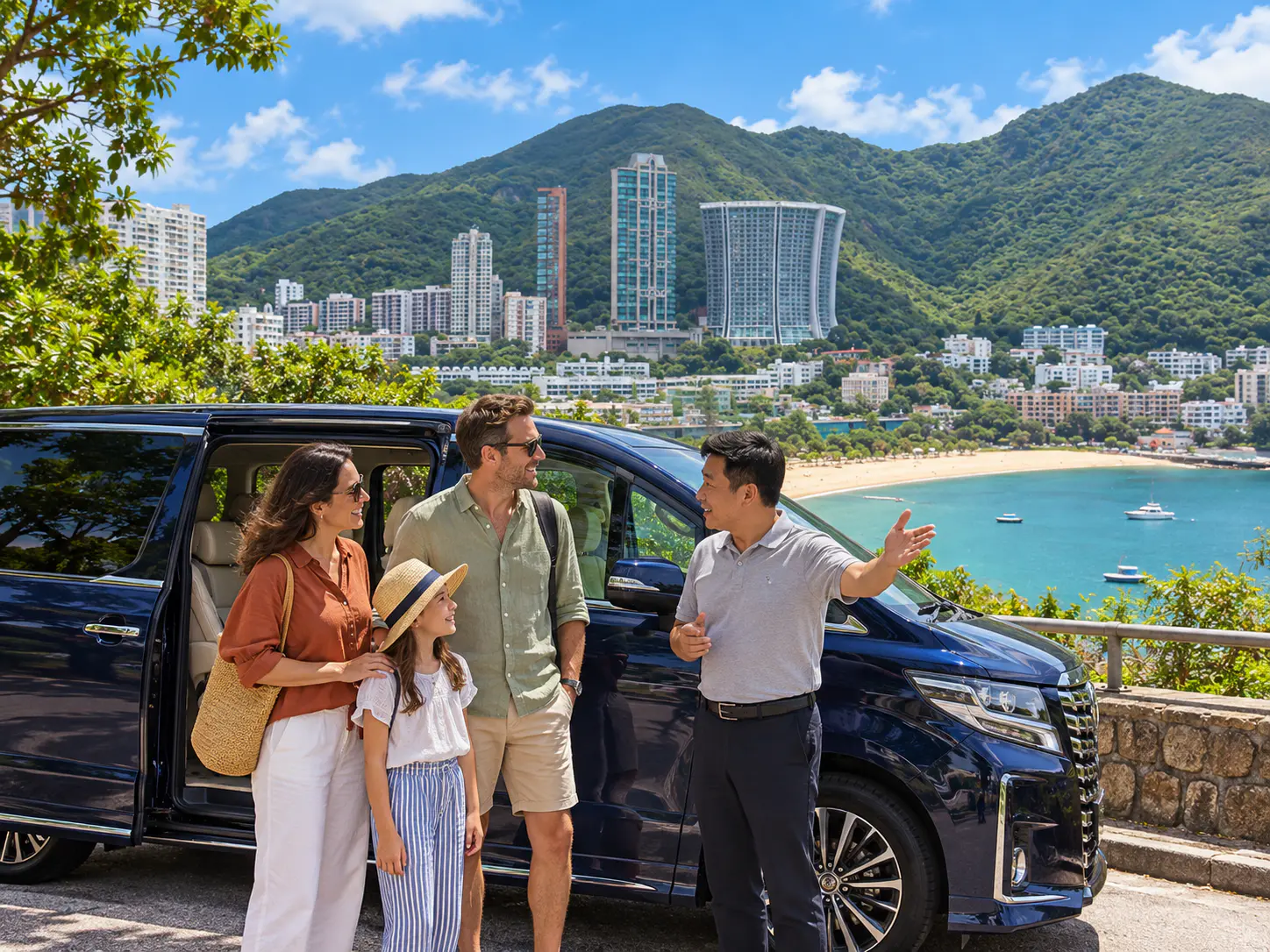
We plan Lantau as a mountain morning and a village afternoon, with an early start at Tung Chung and dinner back in the city. This page is that day, plus the honest version of the ferry islands.
One mountain day, kept whole
The mistake is the map. Lantau looks like a western extension of the airport you already landed at, so it feels as if it should attach to any day that is not quite full. The cable car, the stairs, the monastery, and the bus to Tai O disagree. Each piece is pleasant at the right hour and poor when you arrive late, rushed, or already tired from Garden Road.
Give the day a morning departure from the city. The Tung Chung line of the MTR runs from Hong Kong station and from Kowloon, and Tung Chung is the end. Follow the signs to Ngong Ping 360 rather than wandering into the mall because it is air-conditioned and in the way. The cable car is the journey up. The village at the top is a built visitor approach, with shops and a path onward to the Buddha. The monastery sits with the statue. Tai O is a bus ride farther west, a fishing village on stilts, and it is the part that feels least like an attraction and most like a place. You need time there while the light is still good.
Come back by bus to Tung Chung and the MTR home. Do not invent a second summit, a beach island, or a theme park on the return. Dinner in Tsim Sha Tsui or Central is the correct end. If you are counting hours and the arithmetic only works by skipping Tai O, you have chosen a shorter day, which is allowed, and you should skip it on purpose in the morning rather than by accident at 4pm when the village would have been the memory.
Weekends and holidays add a queue at the cable car. The early start is then not a preference. It is the difference between riding and waiting. A weekday outside school holidays is the kinder date if your itinerary can move.
From Tung Chung to Ngong Ping
Tung Chung station is the door. The cable-car terminal is signed, and the walk is ordinary. Buy or collect the tickets the system is using on your date, and keep the return in mind before you ride up. The flight itself is about twenty-five minutes, long enough to understand the scale of Lantau and short enough that the day is still about what you do at either end. Sit if you can. The cabin is the view. A clear day shows you the airport, the water, the hills, and the approach to the plateau. A cloudy day shows you the inside of a cloud, which is a reason to check the ridge from the city before you commit the whole date.
Wind and thunderstorms stop the cable car. This is not a rare footnote in the hot months, and it is not unheard of in the clearer ones when a front comes through. If the operator has suspended the ride, believe them. Do not travel to Tung Chung hoping they will change their mind in the next twenty minutes unless you have nothing else you wanted from the day. A stopped cable car is the moment to spend the flex day in town, or to switch to a neighbourhood walk, rather than to stand in a hall refreshing a board.
The village at Ngong Ping is part of the visitor route. It has food, shops, and the staged approach to a religious site. Enjoy a coffee if you need one. Do not spend the morning shopping it, because the Buddha and the monastery are why you rode up, and Tai O still needs the afternoon. The path from the terminal toward the statue is obvious. Follow it, and let the group set a pace that includes the stairs still ahead.
There is a bus between Tung Chung and Ngong Ping for days when the cable car is down or someone prefers the road. It is the practical backup, slower and less grand, and it still gets you to the same plateau. Ask at the station on the day rather than trusting a departure time memorised from a previous year. The existence of the bus is the reason a cable-car suspension does not have to cancel the Buddha if the weather is otherwise safe to be out. A typhoon signal is a different case. Then you stay in the city.
The Buddha, the monastery, and the stairs
Tian Tan Buddha is the large bronze statue on the rise above Ngong Ping, and the approach is a long flight of stairs, a little over two hundred and sixty steps. The number matters less than the fact. You climb them in the open, often in sun, often behind other people, and you come down the same way. Anyone who is unsteady, anyone with a knee that complains, and anyone who is already overheated should hear that before the cable car, not at the foot of the stairs. The monastery grounds below are the part of the site you can still visit if the staircase is the wrong tool. There is no prize for reaching the terrace.
Po Lin Monastery is the working complex beside this visit. Dress and speak as you would in any temple that is still in use. The incense, the halls, and the courtyards are the point. A vegetarian meal in the monastery dining hall is the traditional lunch and a practical one, because you are already here and the food matches the place. It is not a ranked restaurant, and it does not need to be. Eat it if you want the full day to pause properly. Eat in the village instead if the group will be happier with something simpler and faster. Either lunch should end with enough afternoon left for Tai O.
The site is busier on weekends, on holidays, and on Buddha’s Birthday, which falls on the lunar calendar and often in May. Arrive with the early cable car and you still share the stairs. Arrive at midday and you share them slowly. Give the statue the time it takes to climb, look, and come down without turning the descent into a race for a bus you have not checked.
Photos from the terrace, on a clear day, show Lantau and the water in a way the city viewpoints do not. On a humid day they show a bright haze and a large statue in the foreground, which is still a fair visit and a weaker panorama. Do not expect the Peak’s skyline shot from up here. This is a different view, of a monastery plateau and the hills, and it is worth the day for that reason.
Tai O in the afternoon
Tai O is a fishing village at the western edge of Lantau, built in part on stilts over the creek. The bus from Ngong Ping is a short hop, not another expedition, and it is the right connection after the monastery. There is also a bus from Tung Chung if you ever do the village without the Buddha, which is a reasonable half day of its own and a poor use of the full day you already spent getting to the plateau. Do the village after the mountain. Then ride back toward Tung Chung when you are done, rather than returning to the cable car unless you specifically held a return cabin and the timing is kind.
Walk the paths along the creek. The stilt houses are close, ordinary, and still lived in. You are a guest in a narrow place, not a customer in a themed lane. Keep to the public paths, do not lean into doorways, and do not fly a drone over people’s roofs. A small boat will cross the water or take a short loop if you want to see the stilts from the channel. That ride is optional and brief. The walk is the visit. Dried-seafood shops line some of the lanes. Look, buy a small thing if you actually want it, and leave the performance of shopping alone.
Kwan Tai Temple and the working waterfront give the village its landmarks. You do not need a checklist beyond them. If you have arrived with light still in the sky, sit and watch the boats. If you have arrived in the late gloom because the Buddha ran long, walk once and go home. Tai O after dark is not a night market, and it is not improved by rushing. The last buses matter. Check them when you arrive, not when the sky is already purple and the group is spread along the creek.
The return to Tung Chung is the moment people get careless. It is a bus, then the MTR, then the city, and it takes the time it takes. Build dinner for after that, in Kowloon or on the island, rather than promising a sunset table in Central that depends on every connection being perfect.
How to choose
| Choice | Fit | Skip when |
|---|---|---|
| Make this the focus | When this page is the reason for the day | When it is only a name on a list |
| Pair it | With one nearby stop | With a second full excursion |
| Leave it | If the main stay is already full | If you have the night it needs |
Wind, rain, and a spare plan
Lantau weather is less forgiving than a museum day, and it is more specific than “it might rain.” The cable car stops for wind and for lightning. The stairs are exposed in the summer sun and slippery after rain. The bus still runs in ordinary wet weather and does not run you into a typhoon. From May through September, this is the day you should be willing to move. A signal of 8 or above from the Observatory means you are not on Lantau. A lower signal that is rising means you do not start the trip out, because the island is the wrong place to be when the ferries and buses begin to fold.
Cloud on the plateau is a softer failure. You can still visit the monastery and still go to Tai O. You should not pretend the panorama will appear if the Ngong Ping end of the cable car was already white. Go for the village and the temple day, or postpone if the view was the only reason. Rain that is simply rain, without a storm signal, still allows the bus and the village. Carry a jacket, accept a wet path, and skip the boat if the water looks rough.
Have the spare plan written down before you need it, so the decision at Tung Chung takes one minute. The spare plan is the neighbourhood day: Sheung Wan, Tai Kwun, a long lunch, and the promenade if the harbour side is clear even when the hills are not. It is not a sullen return to the hotel and it is not a last-minute ferry to Lamma, which has its own weather limits. The best time page is the seasonal version of this advice. On the morning itself, the operator’s board and the Observatory say more than the itinerary.
Why this is not an evening add-on
People attach Lantau to the harbour day because both are famous and the MTR makes Tung Chung feel close. Closeness is the train. The day is the mountain. If you ride to the Peak in the morning, queue, walk Lugard Road, come down, eat, and then set off for the cable car, you will reach Ngong Ping in the heat or the late light, you will rush the stairs, and you will see Tai O as a bus stop. That is the version of the day that convinces people the village is not much. The village needed two unhurried hours you had already spent on a terrace.
The reverse stack is no better. A Lantau day that tries to finish with Symphony of Lights at about 8pm will make the Tai O hour anxious and the promenade a sprint from the MTR. Let the lights go. They are optional on any evening you are actually in Tsim Sha Tsui. They are a nuisance as a deadline on the far side of Lantau.
Put this day on its own date in the itinerary. Three-day trips choose it or the south side. Four-day trips may do both, on different dates. The harbour day stays intact beside them. If you only remember one constraint from this page, remember that one. The Buddha is not a late addition to Central.
Lamma or Cheung Chau on a different day
Lamma and Cheung Chau are the relaxed island days, and each one replaces Lantau rather than following it. They are reached by ferry from the Central piers, not by the Tung Chung line. There are no cars on Lamma. Cheung Chau is a walking and bicycle island. Neither has the Buddha, the cable car, or a stilt village on the Lantau scale. Combining either with Ngong Ping is how you spend the day in piers and see two places badly.
Lamma is the green, village-and-path version. The ferry from Central to Yung Shue Wan takes roughly half an hour, depending on the boat. You land in a village, you eat seafood if that is the meal you want, and you can walk toward Sok Kwu Wan and leave by the ferry there instead of doubling back. Beaches and low hills fill the hours between. Agree the return boat before you wander, including the last sailing, which is the detail groups forget once lunch has gone well. The island is quiet in the way a residential island is quiet. It is not empty, and it is not a resort. A weekday is calmer. A Sunday brings hikers and extended family tables.
Cheung Chau is busier and more compact. The ferry from Central takes under an hour, faster on the fast boat. You can rent a bicycle, visit Pak Tai Temple, swim if the season is right, and eat on the waterfront. The Bun Festival, tied to the lunar calendar and usually in the same season as Buddha’s Birthday, fills the island and the ferry. Go then only if the festival is the reason. On an ordinary day the pleasure is a flat harbour, a few lanes, and a slower clock than Mong Kok. It is a good day for people who found the Peak enough height for one trip.
Choose one island, not both, and not both plus Lantau. A three-day first trip that already has a harbour day and a neighbourhood day has room for Lantau or for one of these ferries, not for a tour of the archipelago. Families with small children often prefer Cheung Chau or Lamma to the Buddha stairs. That is a sound preference. Take it as the outing day and drop Ngong Ping without a compromise attempt in the late afternoon.
Seafood on these islands is the meal, not a ranked destination. Pick a busy room on the waterfront and order what the kitchen is clearly already cooking. The same rule as the city applies: there is no official best restaurant, and the table that is full of people eating will beat the one that is full of pictures.
Disneyland, Ocean Park, and the days they consume
Hong Kong Disneyland is on Lantau, with its own MTR spur from Sunny Bay. That geographical fact causes the planning error. People see one island and assume the park and the Buddha share a day. They do not. The park is a full day, from opening until the group is actually finished, and the cable car will not still be a pleasure afterward. If Disneyland is the reason a child is on this trip, give it the outing day and be glad you did. If nobody particularly wants it, skip it. A first visit about the city does not owe anyone a park.
Ocean Park is not on Lantau at all. It is on the south side of Hong Kong Island, with an MTR station on the South Island line. It is also a full day, of rides and marine exhibits, and it replaces Stanley rather than accompanying it. A morning at the park and an afternoon in Stanley Market is fair to neither. Choose the park if the group lights up at it. Choose Stanley if what you wanted was the coast and a market. The neighborhoods page treats Stanley as the half-day south-side anchor for people who are not going to the park.
Neither park is the default first trip. Both are legitimate days when they match the people you are actually travelling with. The error is the add-on. Write the park as the whole label for that date, then leave Ngong Ping, Tai O, and the south-side market for another day or another visit.
South Lantau roads and a car
A private car is the wrong default for this day. The route that works is the MTR to Tung Chung, the cable car or the bus, and the bus to Tai O. Some roads on south Lantau are restricted, and an ordinary city car is not a magic key to the monastery gate. If you want a vehicle, ask specifically whether the day you have in mind is permitted, and expect the answer to push you back toward the cable car and the bus. The itinerary assumes that public route because it is the one that matches the geography.
A car earns its place on a different outing: the south side of Hong Kong Island, linking Aberdeen, Repulse Bay, and Stanley, or an airport arrival with more luggage than the Airport Express feels kind about. That is not this page. Do not book a driver for Ngong Ping out of habit and then discover the interesting roads are closed to you.
Taxis on Lantau exist and can solve a specific hop, especially if the cable car has stopped and a bus is not at hand. They are a backup, not the design of the day. The design is an early train, a ride up, a climb you have agreed to, a monastery lunch, a village, and a calm return. Kept whole, it is one of the two best outings in a short Hong Kong trip. Split across a harbour morning, it is a blur.
Ways to plan the days
These shapes match the Hong Kong tours page. They are starting points, not fixed departures.
Harbour and City
Time fit: 3 days
The harbour, one neighbourhood day, and a south-side or market afternoon.
- Hong Kong
- Harbour and City
Why choose it: The harbour, one neighbourhood day, and a south-side or market afternoon.
Classic Hong Kong
Time fit: 4 days
Add a full Lantau day or a slower south-island day.
- Hong Kong
- Classic Hong Kong
Why choose it: Add a full Lantau day or a slower south-island day.
Hong Kong and Macau
Time fit: 5 days
Four Hong Kong days plus one full Macau day with a ferry buffer.
- Hong Kong
- Hong Kong and Macau
Why choose it: Four Hong Kong days plus one full Macau day with a ferry buffer.
Want help shaping the Hong Kong days?
Tell us how many full days you have and whether Macau is included. We reply with a private plan for the days a car or a guide actually helps.
Keep planning
Hong Kong

Time the Peak Tram, ride the Star Ferry once, and treat the night view as weather-dependent.
Central, Sheung Wan, Tsim Sha Tsui, and Mong Kok are different walks. Collecting every district in a day does not work.
October to December is the easy window. Summer is hot, and typhoon season means keeping a flex day.
Three days for the harbour and one neighbourhood, four with Lantau, five if Macau gets its own day.
Compare a 3-day harbour stay, a 4-day classic, and a 5-day trip that gives Macau its own day.
Questions people ask
- You can reach Tung Chung by train after the Peak, and you will wish you had not. The Peak queue, the Lugard Road walk, and lunch already use the best of the day. Ngong Ping 360, the stairs to the Tian Tan Buddha, Po Lin Monastery, and Tai O need their own morning start and their own afternoon. Arriving at the plateau late means a rushed climb and a village seen in a hurry, which is the version people find disappointing. Give Lantau its own date. Let the harbour day end on the Tsim Sha Tsui promenade, with Symphony of Lights only if you happen to be there around 8pm. The two famous views are not a combo.
- A couple of unhurried hours after the monastery, while there is still daylight. The bus from Ngong Ping is a short ride. The village is a walk along the creek, the stilt houses, a temple, and an optional short boat loop. It is not a night market and it does not reward a sprint. Check the return bus toward Tung Chung when you arrive, then ignore the clock until that departure is actually close. If the Buddha ran long and you are arriving in deep dusk, walk once and leave. A dedicated half day for Tai O alone is possible another time. On this itinerary it is the afternoon of the mountain day, and that is enough.
- Treat it as a real closure. Ngong Ping 360 stops in high wind and in thunderstorms, which is most relevant from May through September and still possible in other months. If the ride is already suspended, switch to the spare plan rather than waiting in the terminal on hope: a neighbourhood day in Sheung Wan and Tai Kwun, or the south side if the weather is safe at sea level. A bus between Tung Chung and Ngong Ping can save the Buddha on a day when the only problem is the cable and the hills are otherwise fine to be on. A typhoon signal is not that day. Stay in the city, and use the flex day you kept in the warm months.
- No. Lamma and Cheung Chau are separate relaxed days, each reached by ferry from Central, and each is a full enough outing on its own. Lamma to Yung Shue Wan is about half an hour on the water, with a village, seafood, and an optional walk to another pier. Cheung Chau is under an hour, with bicycles, a temple, and a beach. Neither combines with the cable car, the stairs, and Tai O. Doing both islands and Lantau in one day is a tour of ferry queues. On a three-day trip, pick Lantau or one ferry island as the single outing. Families who do not want the Buddha stairs should choose the ferry and drop Ngong Ping cleanly.
- The terrace under the statue is up the stairs, a long exposed flight of a little over two hundred and sixty steps, and you come down the same way. If that is the wrong walk for someone in the group, skip the terrace without apology and spend the time in Po Lin Monastery and the village path, which are the lower part of the same visit. Decide before you ride the cable car, so nobody feels ambushed at the bottom. The monastery vegetarian meal is still available as the lunch. Tai O does not require that climb. The day remains worthwhile without the terrace, and it is a better day than a climb that hurts someone.
- Disneyland is on Lantau and on its own MTR spur, and it is still a separate full day. Do not pair it with Ngong Ping and Tai O. If the park is the point of the trip for a child, make the park the outing and leave the Buddha for another visit. If the city and the monastery are the point, skip the park. Ocean Park is a similar choice on the other side of the territory, on Hong Kong Island, and it replaces Stanley rather than joining this Lantau sequence. A first trip can be complete with the harbour, a neighbourhood, and this mountain day, and with neither park included.
Plan a Hong Kong visit
Share your dates, whether you land at HKIA, and if Lantau or Macau is the extra day. We reply with a harbour-first plan.