
Hangzhou at a glance
| Detail | Plan |
|---|---|
| Good first stay | 2 nights on the lake |
| Add the hills | A third day for Lingyin and Longjing |
| Add the wetland | A fourth day for Xixi, not the same afternoon |
| From Shanghai | Often 45–70 minutes to Hangzhou East |
| Airport | HGH is east of the city, not on the lake |
| Skip stacking | Lingyin, tea, and Xixi are three plans |
Xixi is the outing people add when the lake has already had its day and they still want water. It lies northwest of West Lake: creeks, boardwalks, low houses, and boats that move through reeds rather than across an open basin. Give it a half day and a morning start. The other outings in this page are the ones that get bolted on by enthusiasm and then steal the trip. Wuzhen is a water town on its own road day, outside the city. The Qiantang bore is a seasonal tide downstream at Yanguan. Hefang Street is an hour. None of them is a substitute for the shore, and none of them belongs on the morning you meant to spend there.
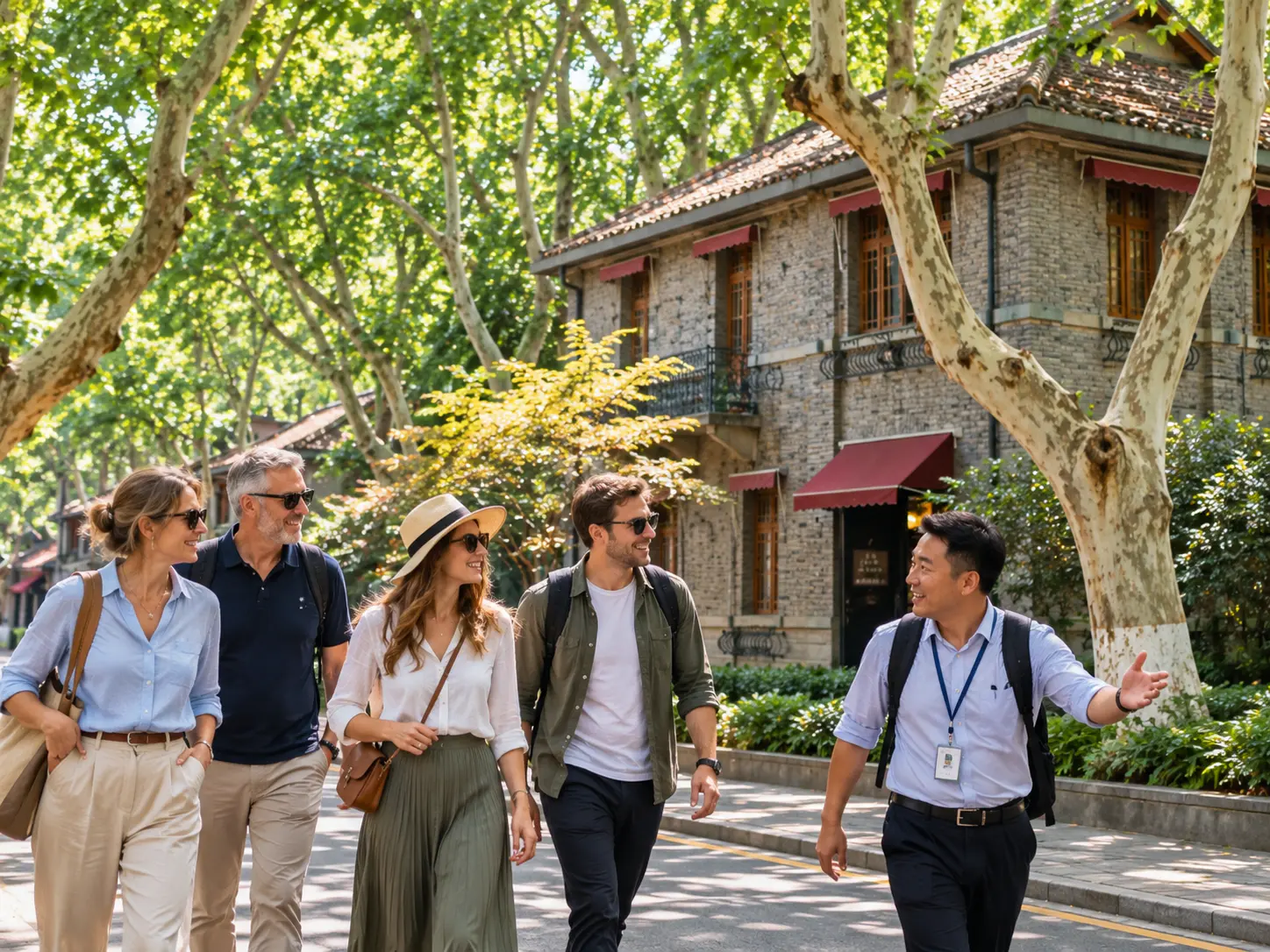
Northwest of the lake, a different landscape
Xixi National Wetland Park is a real wetland with a visitor layer on it, not a small copy of West Lake and not a theme park with a single circuit. The water is narrow. The views are banks, bridges, persimmon and plum trees in their seasons, and houses that open onto creeks. You will not see Su Causeway from here, and you will not see Leifeng. If the open lake is still undone, go there first. The itinerary puts Xixi on a third day for that reason.
The ride from a lakeside hotel is often 30–50 minutes, depending on the gate and the traffic. Morning is the version to book the car for. A departure at 8:15 from the north shore can have you walking by about 9:00. A departure at 11:00 can have you arriving with the largest knot of people and a shortened loop. Metro also reaches the area. Use it if you are comfortable with the change of lines, and still name the gate before you leave, because the park does not have one obvious front door that every station serves equally.
Summer is green, shaded, and buggy near the water. A repellent in July is more useful than another viewpoint. Late winter and early spring can bring plum blossom along parts of the wetland. Cooler months bring reeds and a quieter path. None of that makes the wetland the main event. Shade is welcome in the heat, after a dawn causeway rather than instead of one.
The ground is flat in the way boardwalks are flat, with the occasional step and a lot of standing if a boat queues. It suits people who have already climbed at Lingyin and want a kinder surface. It does not suit a plan that also includes terrace paths in the tea hills on the same date. Different directions, different mornings.
A half day on the boardwalks
Leave the hotel around 8:15. Be at your chosen gate by about 9:00. Spend the first hour walking away from the entrance plaza. The plaza is where groups gather, maps are photographed, and the visit feels smaller than it is. The park becomes itself once the boardwalk has bent twice and the creek is the only road.
Plan on three to four hours inside. A sound split is an hour on foot, one boat of well under an hour, then another hour or so among the side paths and a waterside house or two, then the exit. You are out around 12:30 or 13:00. Lunch after you leave, or at a simple place near the gate if you are hungry, not as a project that adds a second district. The afternoon returns to the lake or stays empty. Both are correct uses of a third day. Filling the afternoon with Meijiawu is how the half day stops being half.
Go slower than the boards invite. They are continuous, so the instinct is to keep moving until you have "done" the park. You cannot do it, and you do not need to. Sit when a stretch of water lines up with a row of trees. Watch a boat pass. Then walk again. Leave in the early afternoon anyway, so the ride back does not erase the morning.
Skip it on a one-day stay. That day is West Lake. Skip it as a recovery after Lingyin when the next morning is already a tea village. The boards want a morning you are awake for.
Rain changes the feel more than it cancels the trip. Light rain on a boardwalk is atmospheric and a bit slick. A storm is a reason to wait half an hour under cover and then decide. The boats may pause. Have the footpaths as the part you came for, so a stopped boat is not a failed morning. In a true downpour, this is the outing to move, and Lingyin's halls are the better wet interior if you have not already used them.
Gates, boats, and how not to overwalk
The park has several gates, and they are not interchangeable. Two names you will see often are Zhoujia Village and Gaozhuang. They are different doors, with different walks to the first interesting creek. Pick the gate that matches the boat direction you want, drop a pin, and give the driver that name. "Xixi" alone has produced a lot of confident drop-offs at the wrong fence.
A common pattern is to enter at one gate, walk, take one boat, and leave from another gate rather than retracing the entrance plaza. Confirm the day's boat direction at the dock before you commit to an exit. Routes are practical things. They change with water levels, maintenance, and the season. A map from a previous year is a hint, not a promise. Check the current entry arrangement for the park when you go, including which gates are open, and keep the confirmation with you.
The boats are the narrow kind, electric or poled, covered, moving between banks that are close enough to touch with your attention. This is not a West Lake ferry and it is not a place to stand up for a panorama. One segment is the right number. A second segment, if the first was a queue and a straight ditch, can be worth it. A plan to ride every advertised loop is how a half day becomes a sequence of docks. You came for the wetland, and the walking is more of it than the riding.
Stay on the boards. The edges are water and planted mud, not a shortcut. In summer the insects are part of the contract. In winter some side paths feel abandoned, which is a pleasure if you are dressed for damp cold and a disappointment if you wanted blossom. Do not add a rented costume, a staged punt photograph, and a shopping pause at the gate and then wonder where the three hours went. The same rule as the lake applies: one small commercial extra, or none.
If someone in the group cannot manage a long boardwalk, shorten rather than cancel. Gate, a short walk to the first open water, one boat, and out in about two hours is a real visit. It is better than a grim march to a far dock. Agree that shorter version before you arrive, when it is still a choice and not a negotiation beside a ticket window.
When Xixi earns the third day
Xixi earns the day when three things are already true. The lake has had a real morning, ideally a full day. Lingyin has had the opening hour, or is planned for its own morning and is not being asked to share this one. And the group wants a change of texture: shade, narrow water, fewer postcards of pagodas.
It earns the day in summer, when an 8:30 start under trees is kinder than Su Causeway at 14:00, provided the causeway got its dawn on another date. It earns the day in November, when the paths are quiet and you do not need a flush or a blossom to justify the ride. It earns the day on a four-day stay as the single add, paired with slow lake time rather than with a water town.
It does not earn the day as a first impression. People who see Xixi before the lake often think Hangzhou is a pleasant wetland with a famous neighbor. The famous neighbor is the point. It does not earn a slot after Lingyin on the same morning. The temple lets you out around 11:30 if you did it properly. You would reach the wetland near the time you should be leaving it, and you would walk the plaza. It does not earn a combination with Longjing. The village is south and west. The wetland is northwest. The road between them is an ordinary crossing of the city, and both visits shrink.
Use a third day this way: 8:15 departure, about three to four hours in the park, lunch, and a free afternoon on whichever shore you liked. If the afternoon wants a structure, make it a short boat on West Lake or a seat in a north-shore park, not a new gate. The best time page tells you when that afternoon will be too hot to pretend. Believe it.
On a two-day stay, Xixi does not fit. You would be removing either the south shore or the temple. Remove Xixi instead. On a three-day stay it fits as the one addition, which means the tea village does not. Choose before you arrive. Choosing in the hotel on the morning of day three is how people try to do both and do neither.
How to choose
| Choice | Fit | Skip when |
|---|---|---|
| Make this the focus | When this page is the reason for the day | When it is only a name on a list |
| Pair it | With one nearby stop | With a second full excursion |
| Leave it | If the main stay is already full | If you have the night it needs |
Wuzhen is a water town outside the city
Wuzhen is a canal town north of Hangzhou, in Tongxiang, not a neighborhood you can tuck behind Leifeng. The west zone is the one most visitors mean: stone bridges, dark-tiled houses, water lanes, and a long run of shops and snacks. It is photogenic. It is also restored, managed, and often crowded. The east zone is a separate area, not the next street of the same stroll. Doing both "quickly" is two ticketed worlds and a thinner look at each. Pick the west zone unless you already know why you want the east.
By road from a lakeside hotel, plan on roughly an hour and a half to two hours each way. Clear expressway days can be kinder. Holiday afternoons can be worse. A half day means you leave Hangzhou around 8:00, walk the west-zone lanes for a couple of hours, and turn back in the early afternoon. You have been in the town less time than you spent traveling, and you have not had a meal that felt like a pause. A full day means the same early start, a slower loop, a real lunch by the water, and a return in the late afternoon. That is the honest version if Wuzhen is the point. It uses the day completely. There is no Lingyin in it, and there is no meaningful causeway.
The town is worth that full day if a water town is something you specifically want and you have the length to give Hangzhou its own days as well. The canals are the pleasure: a bridge every few minutes, boats in a narrow cut, white walls, and the particular light of a Jiangnan lane. It is a poor day if you want "old Hangzhou." The Hangzhou that rewards the trip is the lake and the western hills. Wuzhen is a different place with a different crowd, and on weekends and in the May holiday or Golden Week the crowd is the dominant fact. You will shuffle. You will photograph the same bridge as the person in front of you. Go on a weekday if you can. If you cannot, go with an early arrival and a willingness to step off the main lane.
Check the current entry rules for the zone you chose. Do not assume a blog's map of gates still matches the one-way walking pattern, which is real and which keeps people moving in a set direction. An overnight inside the town is a different trip again. It takes a night away from the lake. On a short Hangzhou stay, that trade is usually worse than a full day-return. Sleep near West Lake. Visit Wuzhen only by spending a day you can spare, or skip it without feeling you missed the city. You did not. It was never in the city.
The autumn tide at Yanguan
The Qiantang River's tidal bore is a genuine natural event, and it is not a West Lake show. The strongest tides cluster around the autumn equinox. People watch them downstream at Yanguan, in Haining, from managed viewing points along the river. That is east of the city, a separate half or full day by road or rail, and it depends on the tide table for the year you travel. You will not see it from a causeway, from a hotel balcony, or from the musical fountain.
On a famous tide the bore is a wall of water and the platforms fill early. On a lesser tide in the same season it is still a bore, and it may not justify the hours. Read the forecast for your dates. Arrive early enough to be in place before the window, not merely in the county. The wave itself is brief. The day is mostly positioning, waiting, and the ride. Treat it with that proportion. A group that needs entertainment for six hours will be unhappy. A group that wants the one dramatic minute, and is honest about the waiting, may talk about it for years.
If the bore is the priority, plan it before you plan a second loop of Su Causeway. Do not attach it to Lingyin, to a tea village, or to Xixi. The directions do not forgive you. Do not schedule it during Golden Week unless you already accept crowds on top of crowds. Spring has tidal movement too. The trip people mean is the autumn one. Outside that equinox window, let the idea go completely. A causeway in good light is the better use of the only cool morning you may have.
Children who need to run, and anyone who dislikes a fixed viewing pen, should skip it even in season. The lake is kinder. The bore is a specific pleasure. It is not a required chapter of Hangzhou, and the city will not feel unfinished if the tide was on a workday you never saw.
Hefang Street, capped at an hour
Hefang Street, also called Qinghefang, is a commercial pedestrian street southeast of the lake, under Wu Hill. Restored shopfronts, snacks, souvenirs, and a dense evening crowd are the whole offer. It is a reasonable hour after you have already walked a causeway. It is not the old city in any sense that replaces the lake, and it will not teach you the Southern Song capital. Lin'an is context for why the shore was cherished. It is not hiding in a snack lane.
From the southeast shore the walk is often 20–30 minutes. From a north-shore hotel it is a short taxi, about 15–20 minutes in ordinary evening traffic, or a longer walk than the street deserves. Go around 19:00 if you want it lively. Daytime is the same shops without the lights, and it is even easier to overstay because there is less atmosphere to tell you when you are finished. One hour is the cap. Eat something small if you are hungry. Then leave. If a single stall is actually good, that stall can have an extra few minutes. The street as a street cannot.
Place it on a night that does not precede Lingyin at opening. The itinerary keeps the night before the temple short for this reason. Hefang on the last evening, after the early mornings have been spent, is the right slot. Hefang on the arrival night, when the hotel is new and the bridge is still unseen at dawn, is how people wake up late and then describe Broken Bridge as "a crowd." The street caused it.
You can skip it entirely and miss nothing essential. Many good trips do. The lit causeway is the better evening, and it is free of the decision about how many shops constitute an hour. If someone in the group loves night markets, give them this one hour and do not apologize for the limit. Hangzhou's night is allowed to be quiet.
What not to attach to a lake day
A lake day already has a shape: north shore in the morning, Su Causeway and Leifeng later, or a half of that done well. The attachments that ruin it are predictable.
Xixi after Leifeng means you arrive at the wetland late, walk the plaza, and ride back in the dark having seen neither place at its hour. Wuzhen after the lake means two hours in a car for a water town at closing energy, then two hours back, with a fragment of lane in the middle. The bore after a causeway morning fails the tide table more often than it fails your enthusiasm. You cannot be early at Yanguan and early at Broken Bridge and still have a calm meal between them.
Lingyin attached to any of these outings fails in the same way. The grottoes want the opening hour. By the time a water town or a wetland has had its due, the temple is in its crowded phase or its halls are winding down. The Lingyin and Longjing day can include one village because the village is the afternoon of the same hills. It cannot include Xixi, Wuzhen, or Yanguan.
Hefang attached to a full day is the only bolt-on that works, and only for an hour, and only at the end. A fountain show on the east shore is the same category: a short extra after you have checked it is running, not a destination that pulls you off Leifeng at sunset.
If a driver or a friend proposes "on the way," ask which way. Almost nothing is on the way between these places. The airport is east. The wetland is northwest. The tea is southwest. Wuzhen is north. Yanguan is downstream to the east. The lake is the center. Routes that claim to string three of them between breakfast and dinner are routes that show you gates.
Choosing among the outings
Choose Xixi when you have a third or fourth day, you have already honored the lake, and you want a flat green morning. Three to four hours, one boat, one gate plan, then stop.
Choose Wuzhen when a canal town is a real desire, you can give it a full day, and you are not in a holiday week if you can help it. Leave around 8:00. Stay for lunch. Do not describe it afterward as Hangzhou. If you only have a half day to spare, you will mostly see the road. Wait for a longer trip.
Choose Yanguan when your dates sit around the autumn equinox, the tide forecast for that year is a strong one, and you are willing to spend the day on a brief event. Otherwise skip it without a second thought.
Choose Hefang when you want snacks and a lit street for an hour on a night that can afford it. Choose none of the above when you are on a two-day stay. The lake and Lingyin are the stay. Outings added out of worry that the city is bigger than your plan will make the city feel smaller, because you will see it from car windows.
If you are deciding between Xixi and a tea village for the one free day, use the season. April favors the village, if you keep it to one place and one cup. A hot stretch favors Xixi's shade, after the lake has had its dawn. A quiet November favors whichever surface the group will enjoy walking, since neither is at a must-see peak. The wrong choice is both, plus Wuzhen, because the week looked long on a screen. It will feel short on the stone.
Ways to plan the days
These shapes match the Hangzhou tours page. They are starting points, not fixed departures.
West Lake Essence
Time fit: 2 days
Causeways, one boat or bike loop, and an easy evening.
- Hangzhou
- West Lake Essence
Why choose it: Causeways, one boat or bike loop, and an easy evening.
Classic Hangzhou
Time fit: 3 days
The lake, an early Lingyin morning, and an unhurried tea village.
- Hangzhou
- Classic Hangzhou
Why choose it: The lake, an early Lingyin morning, and an unhurried tea village.
Slow Hangzhou
Time fit: 4 days
Add Xixi or a second lake afternoon instead of a new city.
- Hangzhou
- Slow Hangzhou
Why choose it: Add Xixi or a second lake afternoon instead of a new city.
Want help shaping the Hangzhou days?
Tell us how many nights you can give the lake. We reply with a West Lake plan and add Lingyin, Longjing, or Xixi only when the day count allows.
Keep planning
Hangzhou
Walk the Su and Bai causeways, choose a boat for the islands, and keep the Ten Scenes from becoming a checklist.
Go to Lingyin at opening, then give the tea villages an unhurried afternoon instead of a shop circuit.
Spring and autumn are the easy months. Summer is humid, lotus season is hot, and holiday weeks fill the causeways.
Two days for the lake, three days to add Lingyin and Longjing, four days if Xixi or a slower tea afternoon matters.
Compare a 2-day lake stay, a 3-day classic with Lingyin and Longjing, and a 4-day slower trip.
Questions people ask
- Yes, as a half day, once the lake has had its own morning. Xixi is northwest of the water you have been walking: narrow creeks, boardwalks, and a boat between close banks. It is not a second angle on Su Causeway, and it will not show you Leifeng. Go around 9:00, stay three to four hours, take one boat, and leave in the early afternoon. The first plaza is the crowded part. The park gets better after the boardwalk bends. Skip it if you have only one full day, or if you would be arriving after Lingyin at noon. In that case you would see the entrance and call it a wetland. The lake remains the reason to be in Hangzhou. Xixi is the change of pace after that reason has been satisfied.
- Give yourself 30–50 minutes by car from a lakeside hotel, and do not tell the driver only "Xixi." The park has several gates that are not the same door. Zhoujia Village and Gaozhuang are two names you will see often. Pick the one that matches your boat plan, drop a pin, and use that name. A sensible pattern is to enter at one gate, walk, take a single boat, and leave from another, after you have confirmed the day's direction at the dock. Metro can work if you are easy with a transfer, and you still need the gate. Check the current entry arrangement when you go. Routes and open doors change with the season and with maintenance. A map saved from a previous trip is only a hint.
- It is not. Wuzhen is a water town in Tongxiang, north of the city, typically an hour and a half to two hours by road from a lakeside hotel, longer in holiday traffic. The west zone is the canal town most people mean. The east zone is separate, not the next lane. A half day is mostly travel, with a short shuffle in the middle. A full day, leaving around 8:00 and staying for a real lunch, is the honest visit, and it replaces the lake for that date. The town is restored, often crowded, and genuinely pretty if a canal town is what you want. It is a bad stand-in for "old Hangzhou." Sleep near West Lake. Spend a day on Wuzhen only when you can spare one, and check the current entry rules for the zone you chose.
- No. The bore is a tidal surge on the Qiantang, strongest around the autumn equinox, and the usual place to watch it is downstream at Yanguan, in Haining. Getting there and being in place early is its own half or full day. The wave is brief. The waiting is the rest. You will not see it from the causeways or from Leifeng, and you cannot be early at Yanguan and early at Broken Bridge. On a famous tide the platforms fill. On a weak tide the ride may not be worth it, so read the forecast for your year. Outside that autumn window, ignore the bore and walk the lake. Spring has tides too. The one people travel for is the autumn event, on its own date.
- One hour, once, in the evening, on a night that does not come before an opening-hour temple. Hefang, or Qinghefang, is a commercial pedestrian street southeast of the lake: snacks, shops, and lights under Wu Hill. From the southeast shore it is often a 20–30 minute walk. From the north shore it is a short ride, and a longer walk than the street deserves. Go if you want that hour. Leave when the shops repeat. You can skip it and miss nothing the city actually requires. The better evening is a short return to the lit causeway. If you do both, the street is the one that should be cut first when anyone is tired.
- Drop Wuzhen, the bore, and Xixi before you drop a causeway or Lingyin. On two days, the outings on this page shrink to a possible hour at Hefang on the second night, and even that yields to sleep if the next morning is early. On three days, pick Xixi or a tea village, not Xixi and Wuzhen. On four days, Xixi can be the extra morning, and Wuzhen still costs a full day you may prefer to spend repeating the lake. The bore enters the plan only around the autumn equinox, and only by taking a day of its own. A short stay feels larger when the lake is walked twice than when three gates are photographed once.
Plan a Hangzhou visit
Share your dates, whether you land at HGH or Hangzhou East, and if Longjing or Xixi matters. We reply with a lake-first plan.