

| Giant panda | Quick answer |
|---|---|
| Scientific name | *Ailuropoda melanoleuca* |
| Animal family | Bear |
| Natural range | Central China |
| Main wild provinces | Sichuan, Shaanxi, Gansu |
| Main food | Bamboo |
| Conservation status | Vulnerable |
| Wild population | Around 1,900 (2024 national estimate) |
| Best-known conservation city | Chengdu |
Before the Panda Became Famous
It is misleading to say that the panda was simply “discovered” in 1869. People living in the mountains of western China already knew the animal. Chinese references to panda-like animals go back much further, even though the giant panda was never as prominent in traditional art and symbolism as the tiger, crane or dragon.
What changed in the nineteenth century was not the panda's existence. It was who knew about it.
Remote mountain habitat had kept the species largely outside the natural-history collections being assembled in Europe and North America. That changed in western Sichuan in 1869.
A useful distinction: 1869 marks the panda's entry into Western scientific literature, not the moment local people first encountered it.
This distinction is important. Do not reproduce the oversimplified claim: “The panda was discovered in 1869.”
1869: The Panda Enters Western Science
In March 1869, French missionary and naturalist Armand David was working in Baoxing, in the mountains of western Sichuan, when he encountered the skin of an unfamiliar black-and-white bear.
David realized that the animal appeared to be unknown to European zoology. Specimens and descriptions were sent to Paris, and the animal entered Western scientific literature under the name that eventually became *Ailuropoda melanoleuca*.
The encounter transformed the panda from an obscure mountain animal into an international zoological curiosity. In the decades that followed, foreign museums and zoos wanted specimens of an animal very few outsiders had ever seen alive.
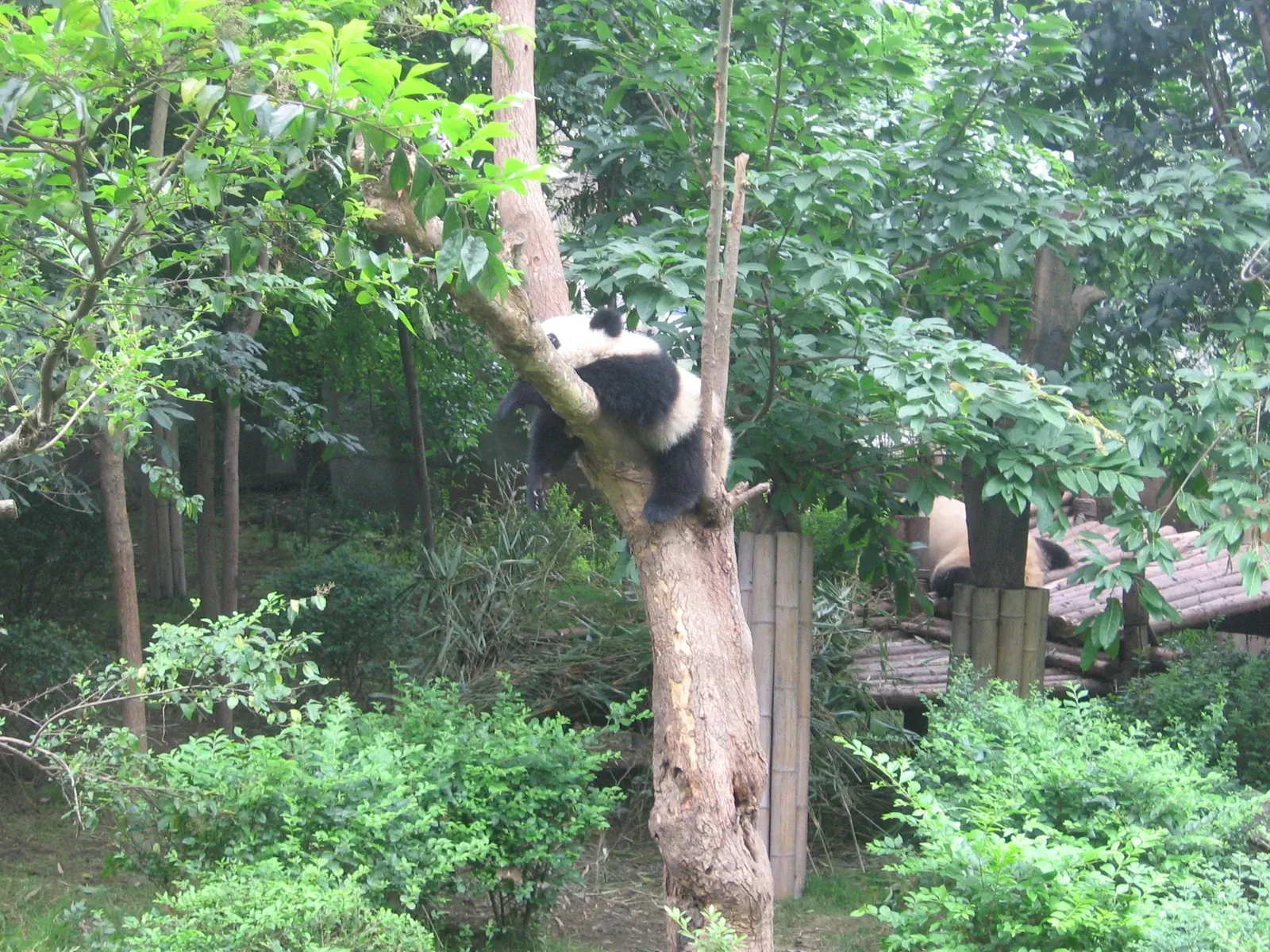
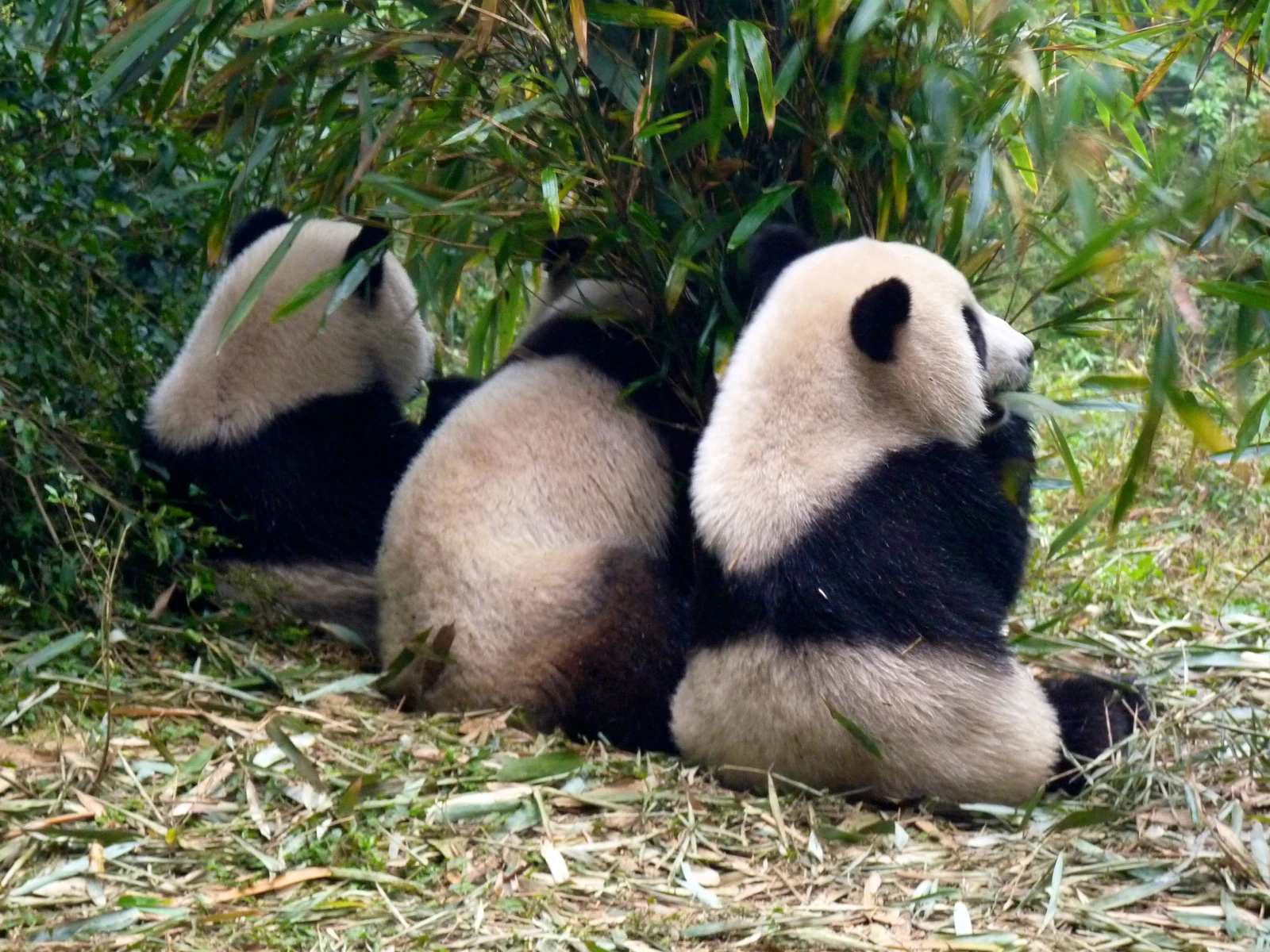
*A group of giant pandas feeding together.*
There is an irony here that is worth keeping in the story. The first international wave of fascination with pandas was based on collecting them. The later wave would be based on keeping them alive.
When the World Fell for the Panda
By the 1930s, living giant pandas had begun reaching Western zoos. A cub named Su Lin arrived in the United States in 1936 and helped turn a zoological rarity into a popular phenomenon.
Pandas were unusually suited to the new age of mass media. Their black-and-white markings were unmistakable even in newspaper photographs. Their rounded faces and apparently awkward movements made them easy to anthropomorphize. An animal that had spent most of its history hidden in mountain forests became recognizable almost anywhere in the world.
From Rare Animal to Diplomatic Gift
The panda's next role was political.
China began using giant pandas as high-profile gifts of friendship, a practice that became known as “panda diplomacy.” A less remembered episode came during the Second World War, when two pandas were presented to the United States in 1941 as a gesture of gratitude and solidarity.
But the moment that fixed panda diplomacy in the modern imagination came in 1972.
During President Richard Nixon's historic visit to China, First Lady Pat Nixon mentioned her affection for pandas to Premier Zhou Enlai. Zhou subsequently offered Ling-Ling and Hsing-Hsing to the American people. They arrived at the Smithsonian's National Zoo in Washington that April.
Millions came to see them.
It is difficult to imagine a diplomatic symbol with less need for translation. The animals carried no slogan and made no political argument. Their value came precisely from the fact that people on both sides could respond to them before they agreed on almost anything else.
Pandas are no longer simply diplomatic gifts
The system later changed. Modern overseas panda programs are primarily structured as cooperative conservation, breeding and research arrangements, rather than permanent state gifts.
The Smithsonian's current program, for example, operates under a renewed research and breeding agreement with Chinese conservation partners. Its work encompasses reproduction, veterinary medicine, genetics, habitat research and professional training.
So “panda diplomacy” survives, but the institutional structure underneath it is now much more about conservation science.
From National Symbol to Individual Stars
Something else has changed in the panda story.
Earlier generations knew the panda. Today's visitors increasingly know a panda.
Livestreams, short video and social media have turned individual animals into recognizable personalities. People learn their names, identify them by their ears or eye patches, follow family relationships and plan visits specifically around seeing one animal.
In that sense, panda culture has moved from species-level fame to something closer to celebrity culture.
Hua Hua — Chengdu's superstar
He Hua, usually called Hua Hua, lives at the Chengdu Research Base and became an extraordinary online and in-person celebrity. Her compact body, rounded face and unhurried behavior make her unusually easy for fans to recognize.
By her fifth birthday in 2025, visitors were queuing before dawn for the chance to see her. She is an example of what the panda has become in twenty-first-century China: not simply an endangered species people support in principle, but an individual animal whose life people actively follow.
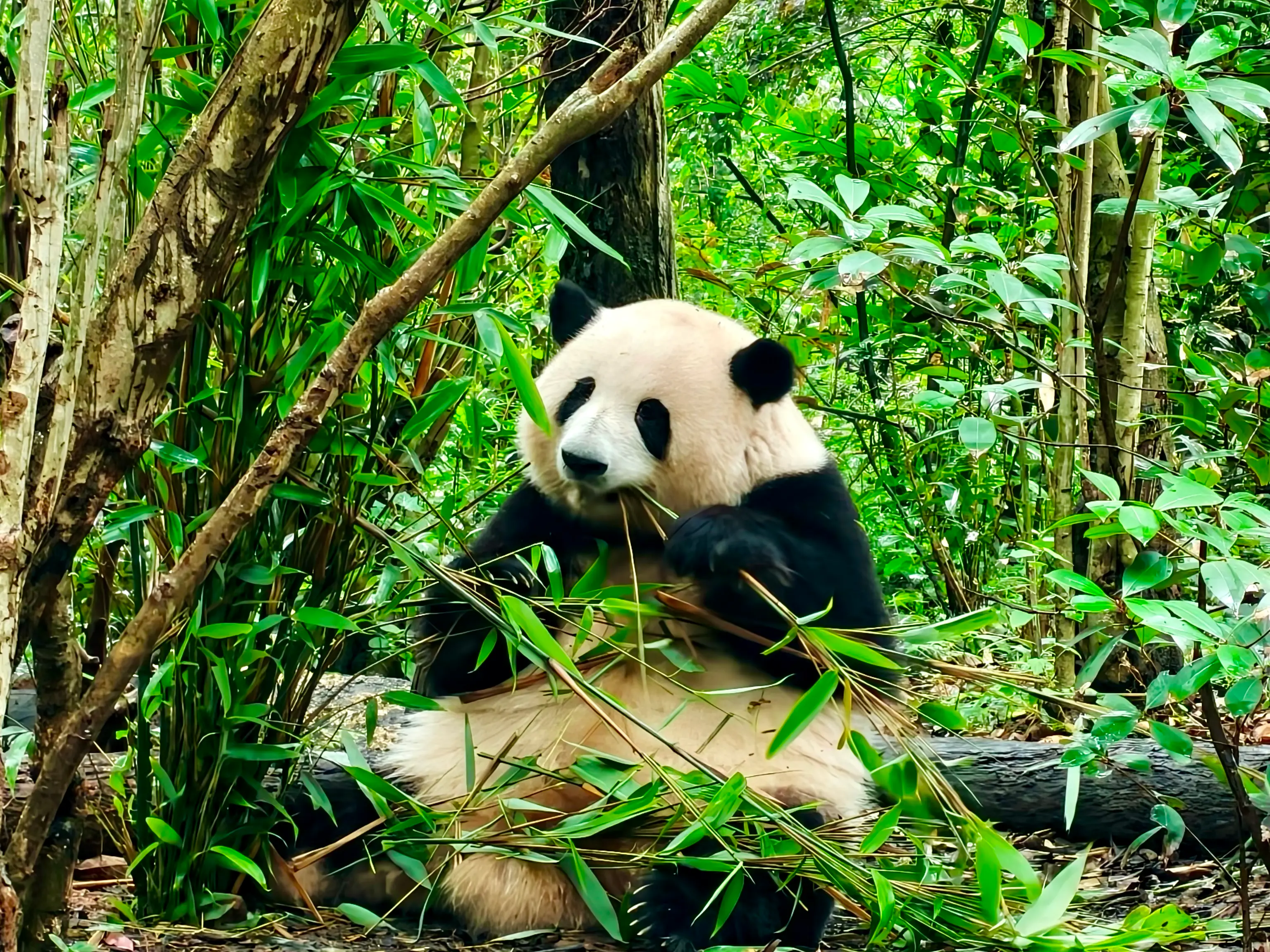
*A giant panda feeding on bamboo in a wooded enclosure.*
Meng Lan — Beijing's “Third Prince”
In Beijing, the best-known panda is Meng Lan, whose energetic behavior earned him the nickname “Third Prince of Xizhimen” among fans.
His fame became significant enough that Beijing's official tourism material now treats a visit to Meng Lan almost as an attraction within the attraction. In July 2026, Beijing Zoo opened a new 13,000-square-meter Giant Panda House; ten pandas, including Meng Lan, were moved into the expanded panda complex.
→ Beijing Panda House Private Tour
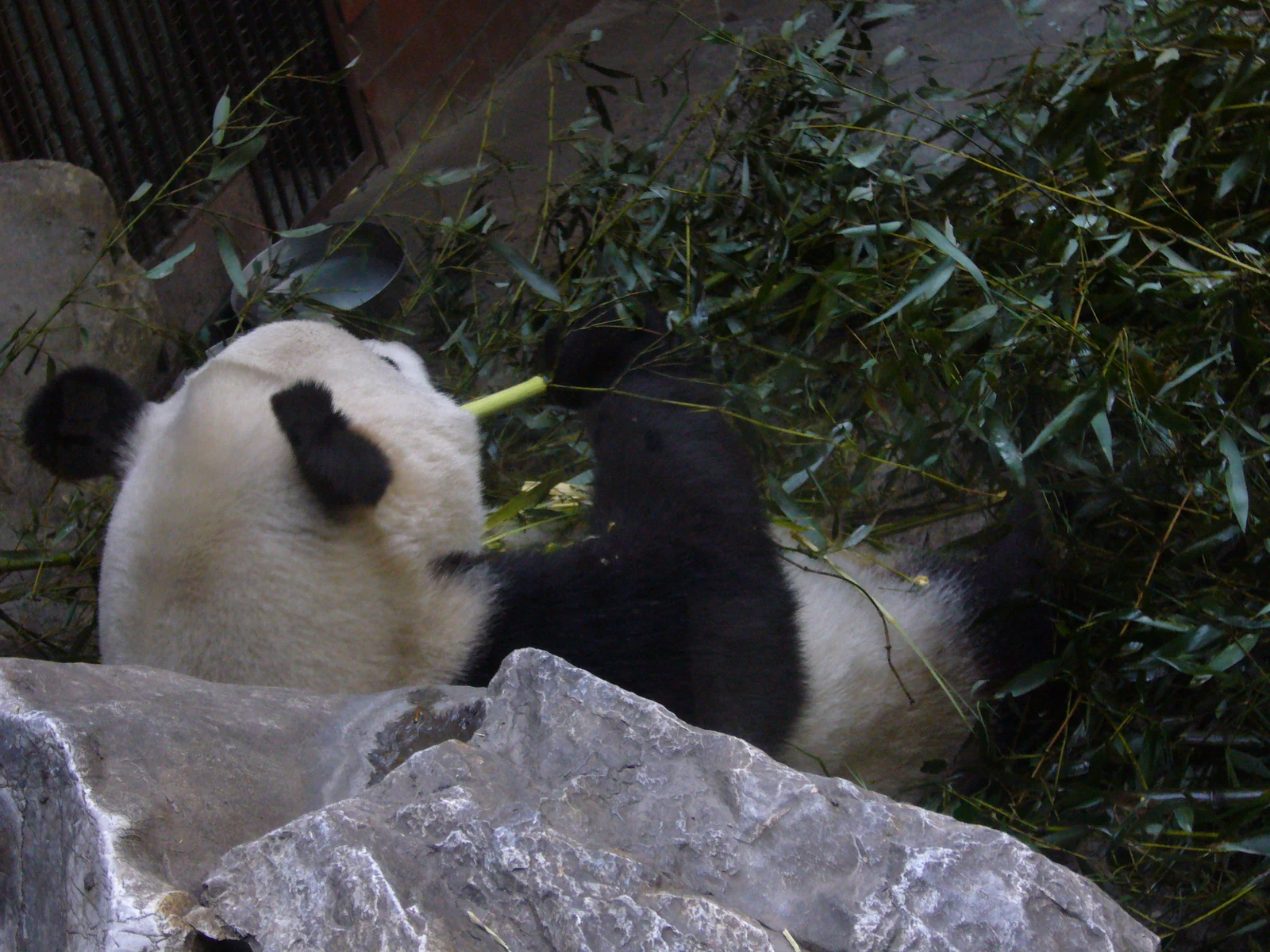
*A giant panda resting among bamboo.*
Qizai — the brown panda of Qinling
Not every giant panda is black and white.
Qizai, who can be seen at Xi'an's Qinling Four Treasures Park, is brown and white. Brown giant pandas are exceptionally rare and have been recorded in the Qinling Mountains of Shaanxi.
That makes Xi'an's panda experience conceptually different from Beijing or Shanghai: it connects the visitor to the Qinling population and landscape, not merely to pandas as zoo animals.
Basi — a star before social media
Panda celebrity itself is not new.
Basi, rescued in Sichuan in the 1980s and later based in Fuzhou, became one of China's most famous pandas decades before livestreaming. She visited San Diego in 1987, drew enormous crowds, and later became the model for Pan Pan, the panda mascot of the 1990 Beijing Asian Games.
Hua Hua and Meng Lan therefore belong to a longer history. Technology changed the scale of panda fandom, not the basic human instinct to recognize an individual animal.
The Conservation Story Is Bigger Than Breeding Pandas
The panda conservation story is often simplified into a single success statistic: panda numbers increased.
That is true, but incomplete.
China's official estimates put the wild population at nearly 1,900, up from roughly 1,100 in the 1980s. The International Union for Conservation of Nature moved the giant panda from Endangered to Vulnerable in 2016.
But “Vulnerable” still means threatened.
The core problem is no longer simply whether pandas can be bred successfully in captivity. It is whether enough connected mountain habitat remains for wild populations to move, feed and reproduce.
Why habitat matters
Giant pandas live in temperate mountain forests and depend heavily on bamboo. Roads, settlements, agriculture and other infrastructure can divide habitat into isolated fragments.
A panda population may survive inside one forest patch, but long-term conservation also requires connections between populations so animals can disperse and genetic diversity can move with them. Climate change adds another uncertainty because bamboo distribution can shift.
Giant Panda National Park
China formally established Giant Panda National Park in 2021 across parts of Sichuan, Shaanxi and Gansu.
The park covers more than 22,000 square kilometers and protects roughly 72 percent of China's wild giant pandas according to official figures.
Why saving pandas protects more than pandas
Conservation biologists often describe the giant panda as an umbrella species.
Protecting a large area of panda forest also protects the plants and animals sharing that ecosystem — including golden monkeys, takins, pheasants and many less famous species.
In practical terms, the panda's extraordinary public appeal helps mobilize money and political attention for an ecosystem much larger than the animal itself.
The panda may be the face on the conservation poster; the real object of protection is a functioning mountain ecosystem.
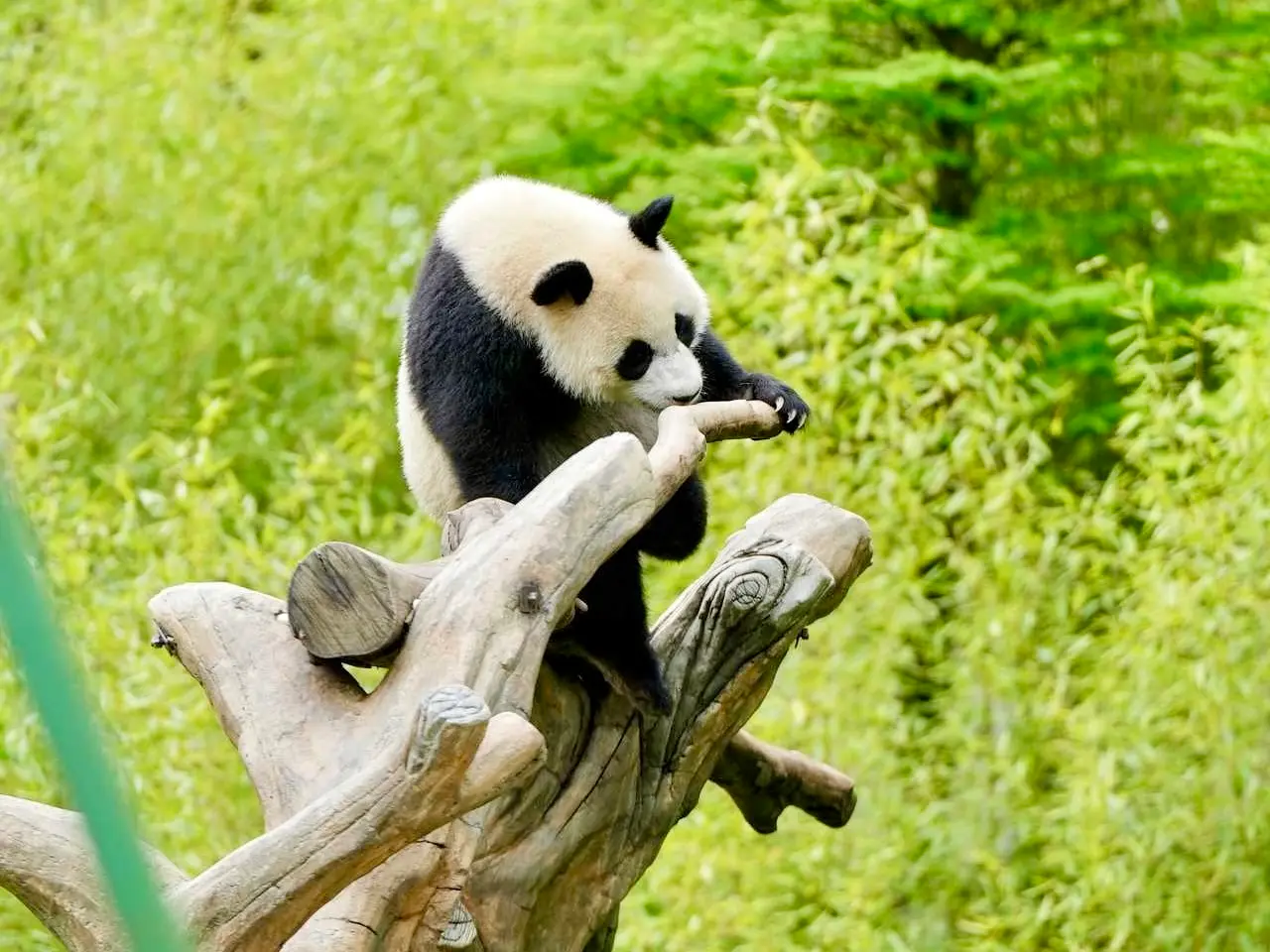
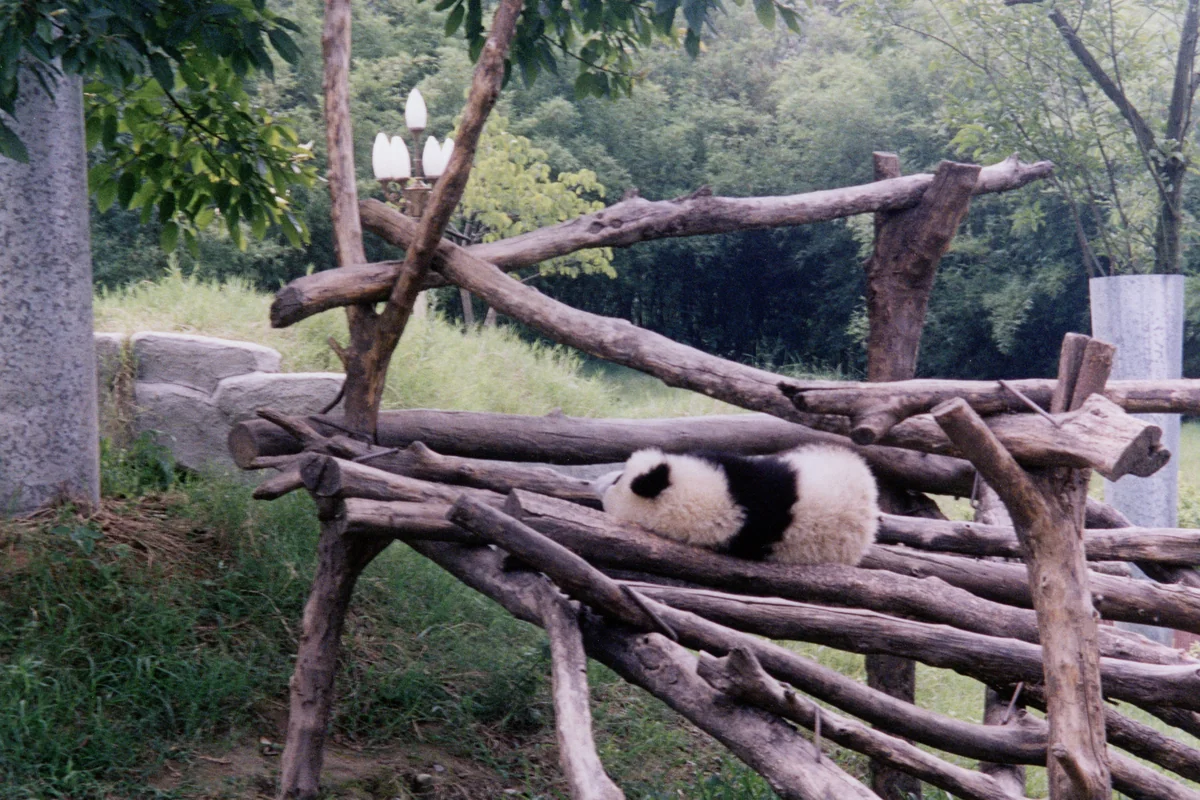
*A giant panda resting on an outdoor climbing structure.*
Where Do Giant Pandas Live in the Wild?
Wild giant pandas are found only in China, principally in mountain systems across Sichuan, Shaanxi and Gansu.
This is very different from where tourists normally see them.
Chengdu Panda Base, Beijing Zoo and Chongqing Zoo are ex-situ conservation or zoological facilities. They allow reliable observation of captive pandas. They are not wild-panda habitats.
Travelers should not expect to enter Giant Panda National Park and casually encounter a panda. Wild pandas are sparse, solitary and difficult to observe, and conservation areas are managed for wildlife protection rather than guaranteed sightings.
For almost every international traveler, a specialist panda base or well-run zoo is the responsible and realistic way to see the species.
Where Can Travelers See Giant Pandas in China Today?
You do not need to travel only to Chengdu to see a giant panda. Captive pandas live at conservation centers and zoos across China. These experiences are not interchangeable — choose by itinerary fit, not by collecting every named site.
| Destination | Reliable panda viewing? | Primary visitor option | DragonTrail view |
|---|---|---|---|
| Chengdu | Yes | Chengdu Panda Base | Best default if pandas are a major trip priority |
| Beijing | Yes | Beijing Zoo Giant Panda House | Easiest panda addition to a classic Beijing itinerary |
| Chongqing | Yes | Chongqing Zoo | Strong urban panda option if Chengdu is not on the route |
| Xi’an / Qinling | Yes | Qinling Four Treasures Park | Distinctive for Qinling ecology and Qizai |
| Shanghai | Yes | Shanghai Wild Animal Park | Convenient if Shanghai is already on the route |
| Specialist Sichuan | Yes | Panda Valley / Shenshuping / Bifengxia / Mianyang depending route | Requires more deliberate logistics |
| Zhangjiajie | Not a core panda destination | — | Keep the trip focused on Wulingyuan and Tianmen Mountain |
For facility-by-facility logistics, current access and specialist Sichuan options, see the complete Where to See Pandas in China guide.
Chengdu — Go Here If Pandas Are Part of the Reason for Your Trip
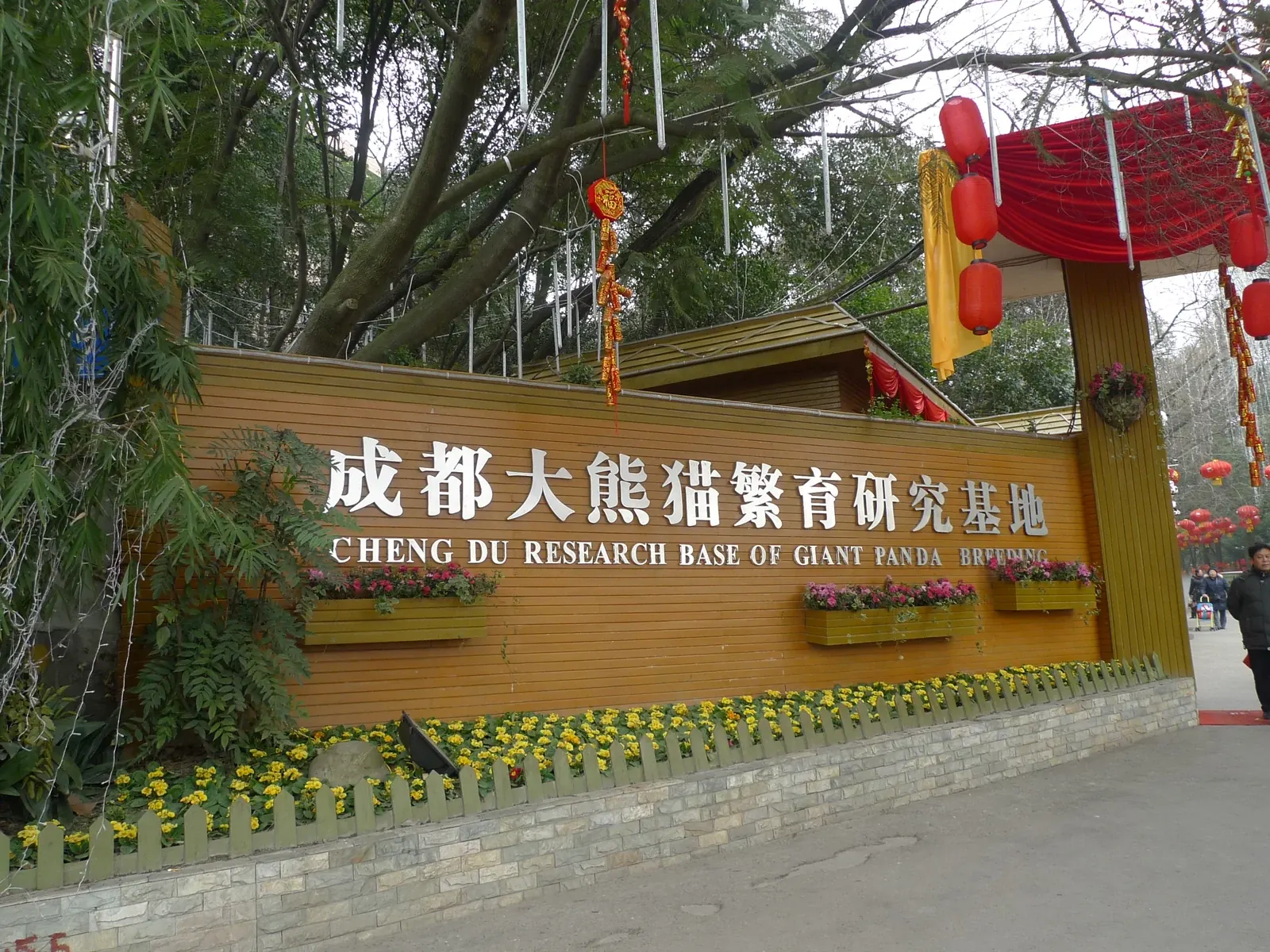
Choose Chengdu when pandas are one of the reasons for your China trip. The Chengdu Research Base of Giant Panda Breeding (Chengdu Panda Base) is a specialist conservation, breeding and education campus rather than a single zoo pavilion — the strongest default for a dedicated panda morning or half day.
→ Chengdu Panda Base Private Tour
Beijing — The Easiest Panda Visit to Add to a Classic China Trip
Choose Beijing if you want an easy panda addition without adding Sichuan. Beijing Zoo’s new Giant Panda House opened July 16, 2026 (about 13,000 square meters) and houses ten pandas including Meng Lan; individual panda visibility is never guaranteed.
Chongqing — One of China's Strongest City-Zoo Panda Stops
Chongqing Zoo is a strong urban panda option for travelers already visiting Chongqing. It combines ordinary zoo access with an established giant-panda conservation and breeding program, so Chengdu is not essential simply to see the species.
Xi'an — The Most Interesting Alternative for Panda Enthusiasts
Qinling Four Treasures Park is the most distinctive alternative for travelers interested in the Qinling population and ecosystem. Its animals include giant pandas and the rare brown-and-white panda Qizai. For a first Xi’an trip with limited time, the Terracotta Warriors remain the higher general sightseeing priority.
Shanghai — Convenient, but Not a Reason to Choose Shanghai
Shanghai Wild Animal Park provides current giant-panda viewing for travelers already in Shanghai. It should be treated as a convenient city-route option rather than a reason to choose Shanghai over Chengdu for a panda-focused trip.
Specialist Sichuan options
Travelers building a specialist Sichuan panda itinerary can also consider Panda Valley, Wolong Shenshuping Giant Panda Base, Bifengxia Giant Panda Base and the newer Mianyang CCRCGP Base. These involve more deliberate transport and should be compared on the dedicated Where to See Pandas in China page rather than treated as interchangeable Chengdu attractions.
Zhangjiajie — Keep the Trip About Zhangjiajie
Zhangjiajie is not a core panda destination. Keep the trip focused on Wulingyuan and Tianmen Mountain; see pandas on a Chengdu, Beijing, Chongqing, Xi’an or Shanghai segment instead.
Which Panda Experience Should You Choose?
| Your situation | Practical fit |
|---|---|
| Pandas are a major reason for visiting China | Chengdu Panda Base |
| First China trip, no Chengdu | Beijing Zoo Giant Panda House |
| Already visiting Chongqing | Chongqing Zoo |
| Panda enthusiast wanting Qinling context | Qinling Four Treasures Park |
| Already in Shanghai | Shanghai Wild Animal Park |
| Specialist Sichuan itinerary | Compare on Where to See Pandas |
| Short Zhangjiajie stay | Skip pandas here |
There is no need to chase pandas through five cities. Choose one good panda experience that fits the route you already have.
Panda Guides
Six-city decision matrix: Chengdu, Beijing, Chongqing, Xi'an, Shanghai and what to skip.
Tickets, hours, route planning and how the Base differs from Panda Valley.
Current prices, 14-day reservations, passport entry and refund basics.
Arrival timing, walking vs bus, and realistic half-day visit models.
Compare Chengdu Panda Base, Panda Valley, Shenshuping, Bifengxia and other specialist Sichuan options by logistics and trip fit.
Affiliated field research center near Dujiangyan — separate tickets.
See giant pandas in Beijing without adding Sichuan — 2026 hours and tickets.
How to Actually Enjoy Seeing Pandas
Go earlier rather than later
Pandas spend a large part of the day feeding or resting, and cooler morning periods are generally better for activity. This matters particularly in warmer months.
Don't build the visit around one celebrity panda
Hua Hua, Meng Lan and other famous pandas draw intense crowds. Enclosure rotation, health care, weather and animal welfare always take priority over visitor expectations. Treat seeing a particular individual as a bonus, never a guaranteed product.
Watch before photographing
Panda exhibits can turn into walls of raised phones. Give yourself ten minutes to watch how the animal eats, climbs, manipulates bamboo or responds to its enclosure before reducing the experience to photographs.
Leave some space between you and the glass
Crowding is worst around famous animals. Follow staff instructions and do not bang on glass, call to the pandas, use flash where prohibited or attempt to attract their attention.
Look beyond cuteness
The most interesting panda centers explain reproduction, habitat fragmentation, veterinary science, genetics and reintroduction. That is the difference between seeing an animal and understanding why the animal is there.
The Panda Is Still Changing
The strange thing about the giant panda's history is how quickly its meaning has changed.
A little over 150 years ago, it was scarcely known outside the mountains where it lived. Then it became a specimen for museums, an exotic prize for zoos, a gift exchanged between governments and eventually the black-and-white face of conservation itself.
Today the relationship has become more personal again.
Visitors arrive in Chengdu asking for Hua Hua by name. Beijing residents call Meng Lan their “Third Prince.” People recognize individual pandas from photographs, know their birthdays and follow where their cubs eventually go.
That attention can look superficial — another form of celebrity culture. But it also gives conservation something most threatened species never receive: a very large human constituency.
The useful question is therefore not simply why people love pandas so much.
It is what that attention can protect beyond the panda itself: bamboo forests, mountain ecosystems and thousands of species that will never have their own livestream.
If you are traveling through China, Seeing a captive giant panda is straightforward on many China itineraries because several managed facilities provide public viewing. Understanding how this improbable bear came to occupy such an unusual place between wildlife, science, politics and popular culture makes the encounter considerably more interesting.
FAQ
Are giant pandas only found in China?
Wild giant pandas occur only in China, principally in mountain areas of Sichuan, Shaanxi and Gansu. Captive pandas are also maintained through international conservation partnerships in several countries.
Are giant pandas endangered?
Giant pandas are currently classified as Vulnerable, rather than Endangered, by the IUCN. Their numbers have improved, but the wild population remains small and habitat fragmentation continues to matter.
How many giant pandas are left?
Current official Chinese estimates place the wild population at close to 1,900. Captive populations exist in China and through overseas conservation programs.
Who discovered the giant panda?
Local communities in China already knew the animal. French naturalist Armand David introduced it to Western scientific attention in Sichuan in 1869. Saying simply that he “discovered the panda” removes that distinction.
What is panda diplomacy?
Panda diplomacy describes China's use of giant pandas in international relations. Earlier pandas were given as state gifts; modern overseas programs are generally structured around temporary cooperative research, breeding and conservation agreements.
What city in China is best for pandas?
Chengdu is the strongest choice for a dedicated panda experience. Beijing and Chongqing are easier additions to existing city itineraries, while Xi'an offers distinctive Qinling panda context.
Can I see pandas in Beijing?
Yes. Beijing Zoo operates a dedicated Giant Panda House. Its expanded new facility opened in July 2026 and houses ten pandas, including Meng Lan, with animals displayed on rotation.
Can I see pandas in Chongqing?
Yes. Chongqing Zoo has a major Giant Panda House and an active breeding and conservation program.
Can I see pandas in Shanghai?
Yes. Shanghai Wild Animal Park currently houses giant pandas and is the clearest current Shanghai option for this guide.
Can I see pandas in Xi'an?
Yes. Qinling Four Treasures Park outside central Xi'an houses giant pandas, including the rare brown-and-white panda Qizai.
Can tourists see giant pandas in the wild?
A reliable wild sighting is not a realistic tourism product. Wild pandas are rare, solitary and protected within mountain habitats. For nearly all visitors, a conservation center or professionally managed zoo is the responsible way to see them.
Sources and review
Facts on this page draw on high-authority institutional sources rather than travel blogs:
- National Forestry and Grassland Administration of China — wild population estimates (nearly 1,900), Giant Panda National Park and current conservation context
- IUCN — Vulnerable status and the 2016 category change
- Chengdu Research Base of Giant Panda Breeding — Chengdu visitor and institutional context
- Beijing Municipal Government / Beijing Zoo — 2026 Giant Panda House facts
- Xi’an Municipal Government / Qinling Four Treasures Park — Qinling / Qizai context
- Chongqing Municipal Urban Management / Chongqing Zoo — urban panda program context
- Shanghai Municipal Government / Shanghai Wild Animal Park — current Shanghai viewing option
- Smithsonian National Zoo — historic overseas panda / diplomacy material where relevant
.
Want to Make Pandas Part of Your China Trip?
You do not need to build an entire itinerary around pandas unless they are a major interest.
If Chengdu is already on your route, the Panda Base is the strongest dedicated visit. If your trip centers on Beijing, the new Beijing Zoo Panda House is an easy addition without changing cities.
DragonTrail can help arrange the visit around the rest of your day rather than turning it into a standalone packaged attraction.
Panda visit options
Choose the city that fits your route: