
Chinese Folk Religion at a Glance
| Topic | Orientation |
|---|---|
| Chinese terms | Often discussed via *minjian xinyang* / popular religious practice; local *shen* |
| Structure | Decentralized; place- and lineage-based |
| Core practices | Offerings, incense, vows, festivals, ancestor rites |
| Typical spaces | Community temples, household altars, festival grounds |
| Not the same as | One national church; “superstition” as a dismissal; identical to Daoist philosophy |
| Related pages | Chinese Religion, Daoism, Gods, Chinese Folklore |
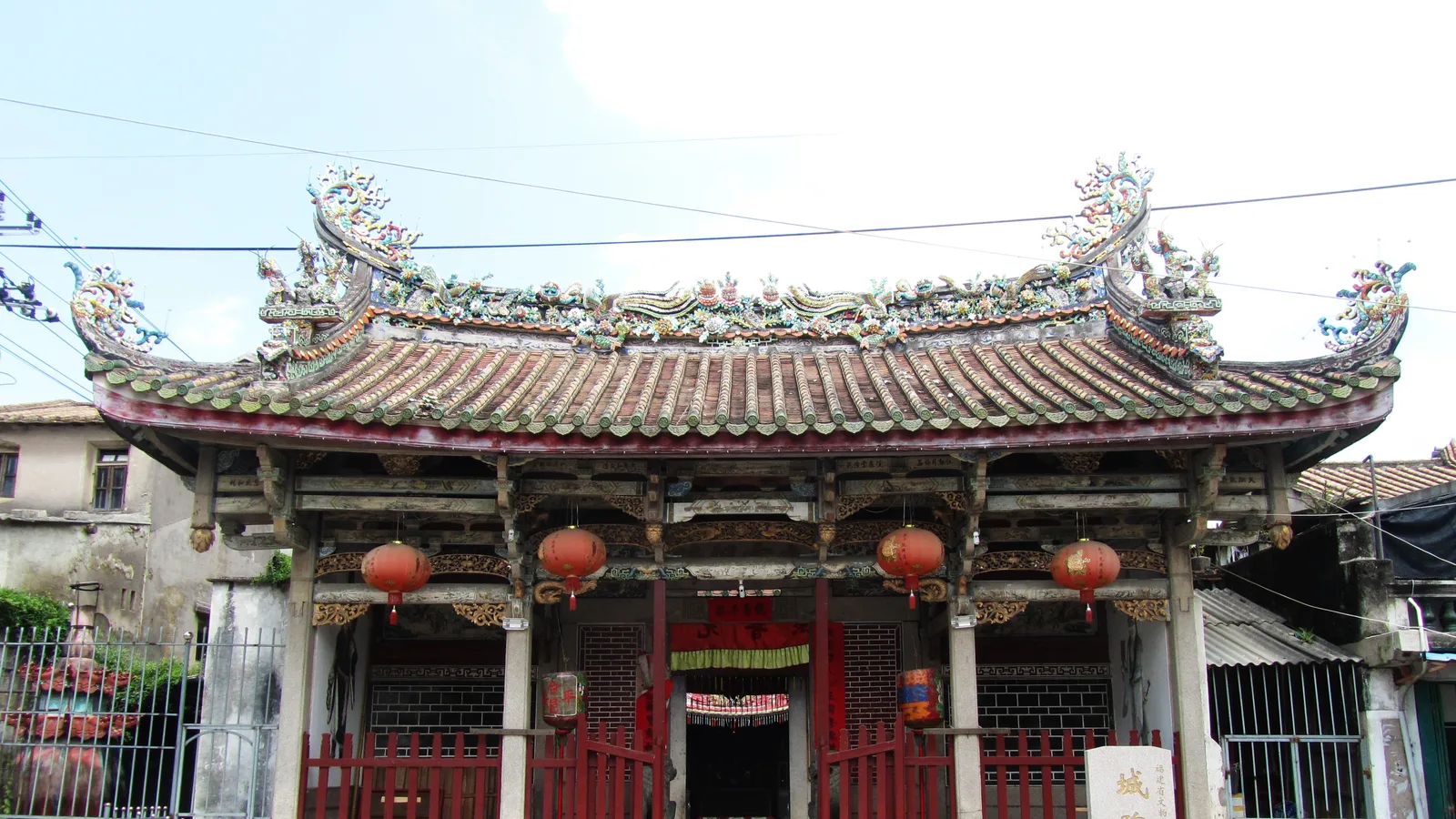
*Temple of the Town Deity (City God temple) in Zhao’an, Fujian, 2013. Photo via Wikimedia Commons — CC BY-SA 3.0. Cropped and resized by DragonTrail; non-generative. Local temple architecture varies widely by region.*
What Makes Folk Religion “Folk”?
“Folk” here means popular, local and often non-clerical—not “primitive” or “incorrect.” Authority is frequently community- and lineage-based rather than national. Written liturgy may exist in Daoist or Buddhist registers even when the temple’s social role is a local cult. Folk religion is a living matrix of practice in its own right, not leftover scraps of “real” religions.
Shen, Gods, Local Deities and Ancestors
Chinese religious language uses *shen* (神) for a wide range of numinous beings and powers. In folk-religious practice, local deities may protect a place, occupation or kinship group. Ancestors are remembered and offered to as family continuity—not identically treated as gods, though English collapses distinctions. Mythic figures in Chinese mythology: gods circulate through temple art and opera; a temple image is not automatic proof of one fixed nationwide pantheon.
Ancestor Veneration and Household Ritual
Ancestor rites—tablets, offerings, grave visits, Qingming remembrance—anchor family time. They intersect with calendar festivals (Chinese Festivals) and with Confucian language of filial duty without requiring every participant to self-label as Confucian.
City Gods, Mazu, Guandi and Other Examples
Examples (not a closed list):
- City God (Chenghuang) temples for civic protection and community ritual
- Mazu (Lin Moniang), venerated as a protective deity in many coastal communities
- Guandi (Guan Yu) as a widely venerated martial and moral figure
- Local earth gods, dragon kings, craft and guild patrons
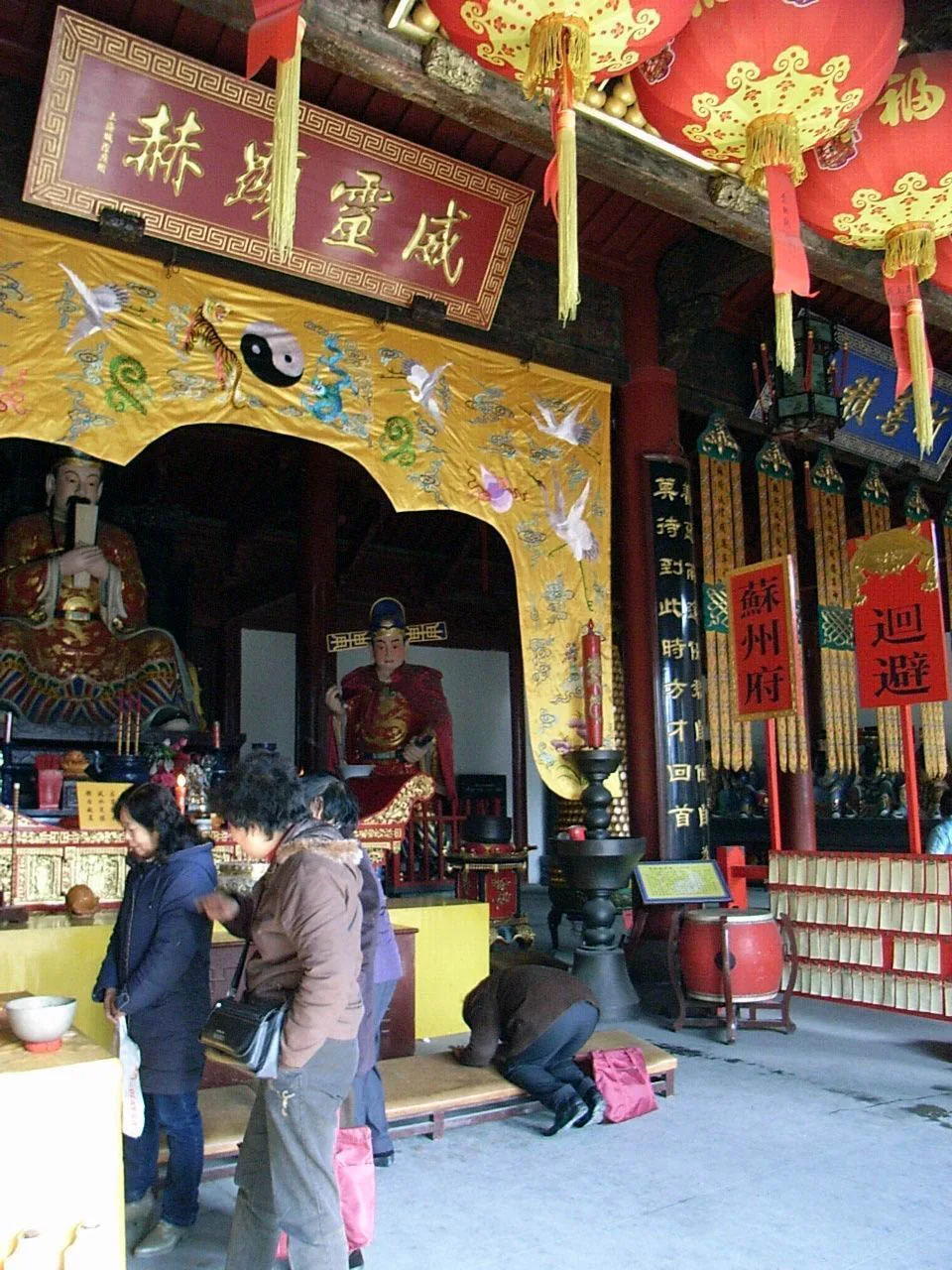
*Worship in Suzhou City God Temple. Photo via Wikimedia Commons — CC BY 2.0. Attribution required; resized for web; non-generative.*
Temples, Offerings and Festivals
Typical visitor-visible acts include incense, fruit or paper offerings, vow-making and temple festivals. Schedules and etiquette vary; follow posted rules and local practice. Festival calendars connect folk religion to Chinese Festivals and to folklore motifs such as door gods.
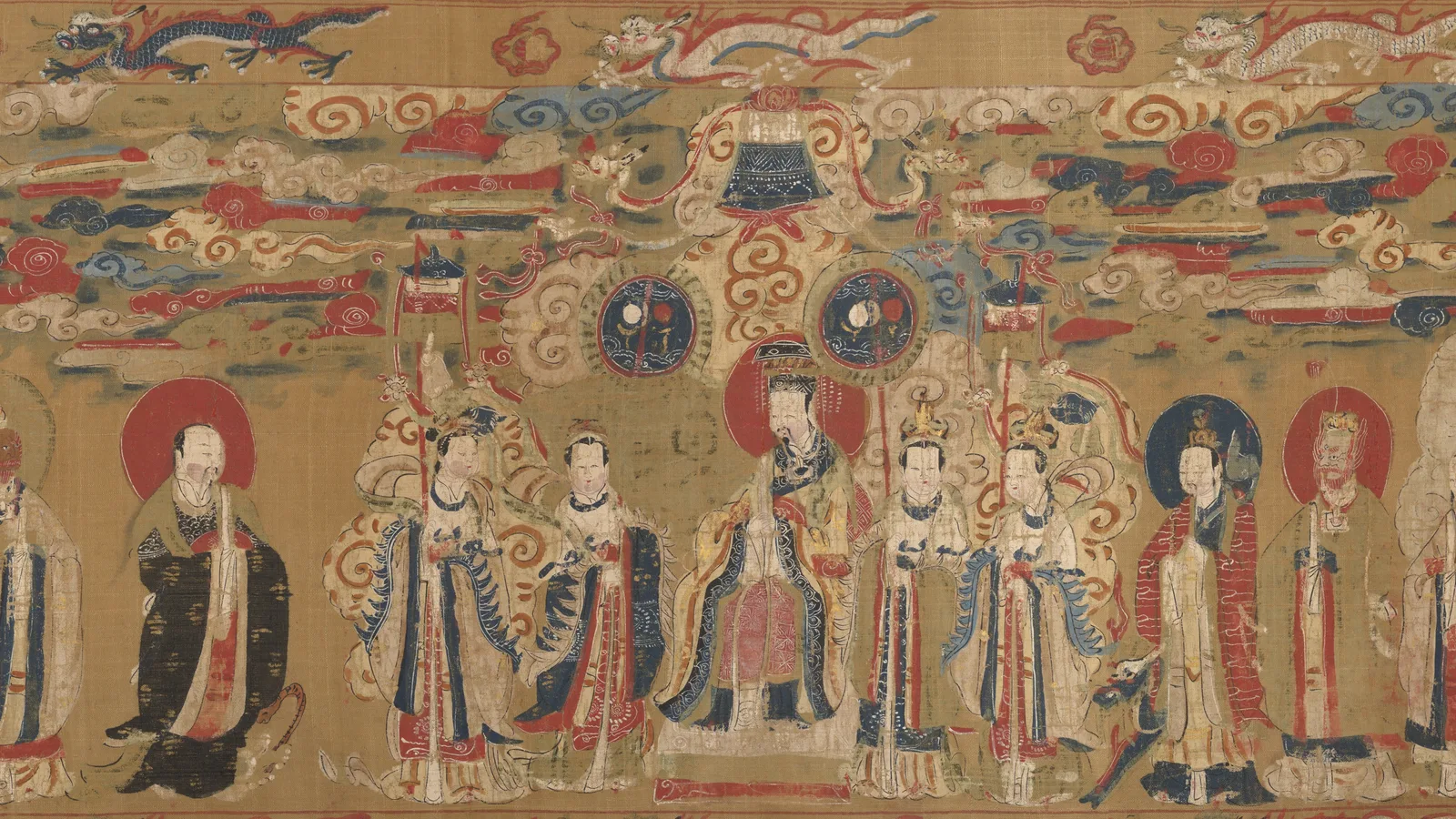
*Canonization scroll associated with Jade Emperor imagery (Li Zhong). Met Open Access / CC0 via Wikimedia Commons. Useful pantheon/folk-religion context—not a universal “official chart” of all Chinese gods.*
Relationship with Daoism and Buddhism
Folk temples may employ Daoist ritual specialists or host Buddhist images; Buddhist and Daoist institutions also absorb local cults. Philosophical Daoism and organized Daoist religion are related contexts—not synonyms for every local shrine.
Regional Variation
Coastal Mazu networks, northern City God temples, southwest multi-ethnic practices and overseas Chinese temple cultures differ. One city’s temple map does not define “Chinese religion” nationwide.
What Travelers May See
Incense halls, theatrical temple stages, festival processions, household altars visible from courtyards, and museum displays of ritual prints. Imperial ritual sites such as the Temple of Heaven show state cosmology, not everyday folk practice—a different historical layer from community temples.
Common Misconceptions
- Folk religion ≠ one church.
- Ancestor rites ≠ “worshipping ghosts” as a single English stereotype.
- Temple labels (Buddhist/Daoist) do not erase folk social roles.
- There is no single fixed pantheon identical in every province.
Chinese Folk Religion FAQ
What is Chinese folk religion?
Popular religious life centered on local gods, ancestors and community temples without one centralized hierarchy.
Is folk religion the same as Daoism?
No. They overlap in temples and ritual specialists, but folk religion is broader and more local than organized Daoist institutions or philosophical Daoist texts.
Do Chinese people worship ancestors?
Many families practice ancestor remembrance and offerings; exact forms and meanings vary. It is better described as veneration/ritual continuity than as a single English “worship” model.
Who is the City God?
A civic protective deity associated with City God temples in many historically Chinese cities—local cults differ.
What should travelers do in a folk temple?
Be quiet near offerings, follow photography rules, do not move ritual objects, and ask before participating in rites.
Related Pages
Sources
- Pew Research Center, *Measuring Religion in China* — folk religion and practice vs affiliation.
- Metropolitan Museum of Art open-access ritual prints and related collection materials for pantheon/folk imagery context.
- Temple documentation and ethnographic surveys of City God, Mazu and related local cults (regional variation).
Reviewed September 2026.