
Daoism at a Glance
| Topic | Orientation |
|---|---|
| Primary spelling here | Daoism (Taoism = common English alias) |
| Core ideas | Dao, De, wu wei, ziran |
| Key texts | *Daodejing*, *Zhuangzi* |
| Religion vs philosophy | Related streams, not identical |
| Traveler sites | Daoist temples; mountains such as Qingcheng |
| Related | Chinese Religion, Qingcheng / Dujiangyan |
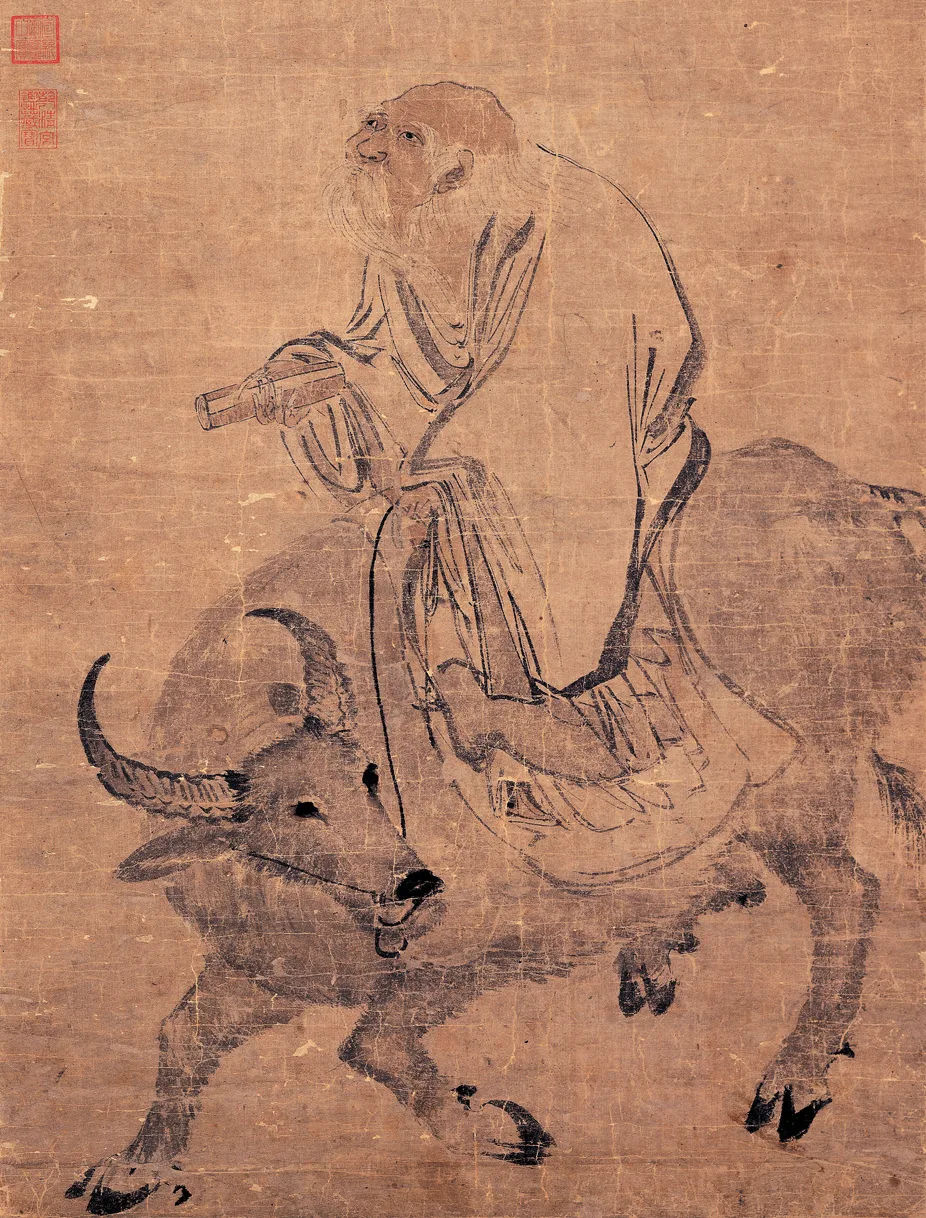
*Laozi Riding an Ox, associated with Zhang Lu tradition. Public domain via Wikimedia Commons. Conservative resize; later painting, not a documentary portrait.*
Dao and De
Dao (道) is the way/process beyond simple naming. De (德) is power/virtue as efficacy aligned with the Dao. Definitions stay deliberately open in the texts.
Wu Wei
*Wu wei* is often glossed “non-action,” better as non-coercive / non-forcing action—acting with the grain of situations rather than bulldozing them.
Ziran / Naturalness
*Ziran* points to so-of-itself naturalness—spontaneity without forced artificiality. Not a license for chaos as a political slogan.
Laozi and the Dao De Jing
Traditional authorship stories are uncertain; the text’s formation is layered. Treat early attributions and chronologies with dating caution grounded in manuscript and received-text scholarship. See Chinese Philosophers.
Zhuangzi
Narrative philosophy that relativizes rigid value hierarchies and celebrates transformative perspective.
Philosophical Texts vs Organized Daoist Religion
Temple Daoism, ritual masters, immortality cultivation traditions and liturgical communities developed over centuries. They claim Laozi/Daoist heritage but are not reducible to reading the *Daodejing* alone. Folk temples may also host Daoist ritual—see folk religion.
Temples, Priests and Ritual
Travelers encounter incense halls, festival rites and mountain monasteries. Qingcheng mountain contexts: Dujiangyan & Qingcheng.
Daoism and Chinese Culture
Art, medicine-adjacent cosmologies, martial internal arts marketing language and literary allusion all borrow Daoist vocabulary—sometimes loosely. Medical yin-yang language belongs primarily with TCM yin-yang & five elements.
Where Travelers Encounter Daoist Heritage
Urban Daoist temples, sacred mountains, museum painting of immortals and Laozi imagery.
Common Misconceptions
- Daoism ≠ only “go with the flow” posters.
- Philosophical Daoism ≠ every temple labeled Daoist.
- Taoism spelling ≠ a different religion.
Daoism FAQ
Is Taoism the same as Daoism?
Yes in this guide—different English spellings of the same Chinese term in this context.
What is the Dao?
The way/process that texts refuse to reduce to one fixed name—central to Daoist philosophy.
What is wu wei?
Non-coercive action; not literal laziness.
Is Daoism a religion or a philosophy?
Both dimensions exist historically; distinguish texts from organized religious institutions.
Related Pages
Sources
- Stanford Encyclopedia of Philosophy — Daoism.