
Chinese Philosophers at a Glance
| Thinker | Approx. period | Tradition | Major text(s) | Core question / idea |
|---|---|---|---|---|
| Confucius | late Spring and Autumn | Confucian | *Analects* (compiled) | Ritual, humaneness, cultivated person |
| Mencius | Warring States | Confucian | *Mencius* | Moral sprouts; benevolent rule |
| Xunzi | Warring States | Confucian | *Xunzi* | Ritual/education shaping human nature |
| Laozi (traditional) | traditionally earlier; text complex | Daoist | *Daodejing* | Dao; soft power; naming limits |
| Zhuangzi | Warring States | Daoist | *Zhuangzi* | Perspective, spontaneity, uselessness |
| Mozi | Warring States | Mohist | *Mozi* | Inclusive care; utility; anti-waste |
| Han Fei | late Warring States | Legalist | *Han Feizi* | Standards, technique, situational power |
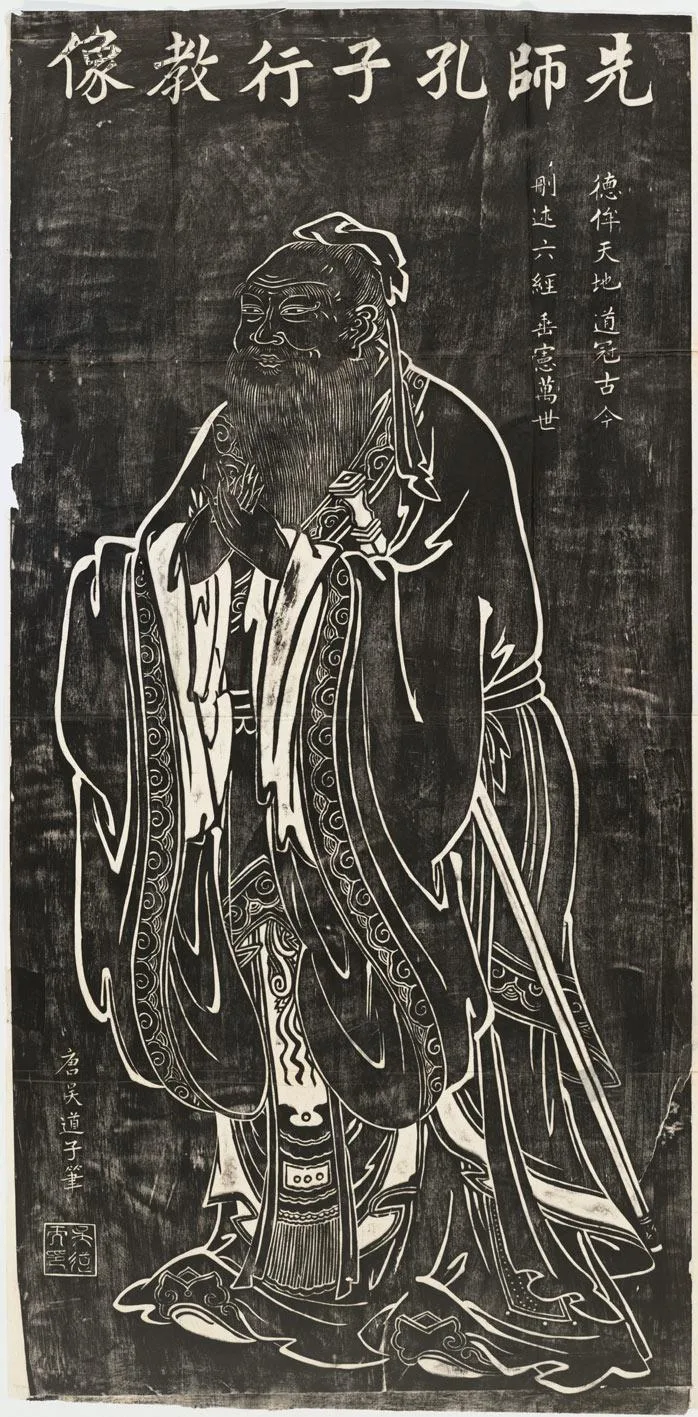
*Confucius in a Tang-dynasty black print tradition. Public domain via Wikimedia Commons. Conservative resize; portrait traditions are later visual culture, not photographs.*
Confucius
Kongzi taught through conversation preserved in the *Analects*. Focus: learning, ritual propriety, humaneness and political moral example. See Confucianism.
Mencius and Xunzi
Mencius emphasized innate moral tendencies and righteous governance. Xunzi stressed artifice of ritual and education to order desires. Both are Confucian—and disagree productively.
Laozi and Attribution Caution
The *Daodejing* is foundational for Daoist thought; the biography of “Laozi” is historically uncertain and layered by later tradition. Text history and manuscript scholarship are more reliable guides than cinematic sage biography. See Daoism.
Zhuangzi
Stories and arguments that unsettle rigid categories—usefulness, transformation, perspectival limits. Literary brilliance is part of the philosophical method.
Mozi
Critique of exclusive partiality and extravagant funerary waste; emphasis on standards that serve collective benefit. Often contrasted with Confucian ritual emphasis.
Han Fei
Systematizer of Legalist themes: clear laws/standards, administrative methods, and the ruler’s positional advantage. See Legalism.
How to Use This Map
Read thinkers with their debates, not as isolated quote posters. Cross-check ancient Chinese philosophy for chronology and comparisons for school contrasts.
Common Misconceptions
- Later portraits are visual traditions, not documentary likenesses.
- Laozi’s life story is not as solid as Confucius’s teaching record.
Chinese Philosophers FAQ
Who are the most famous Chinese philosophers?
Classically: Confucius, Mencius, Xunzi, Laozi (as text tradition), Zhuangzi, Mozi and Han Fei—among others.
Did Laozi definitely write the Dao De Jing?
Traditional attribution exists; modern scholarship treats authorship and dating as complex.
Are these philosophers also religious founders?
Some later religious traditions reclaim them; classical texts are primarily intellectual-political. Religious practice: Chinese Religion.
Related Pages
Sources
- Stanford Encyclopedia of Philosophy — Confucius; Daoism; Legalism in Chinese Philosophy; Philosophy in Han Dynasty China; School of Names.