
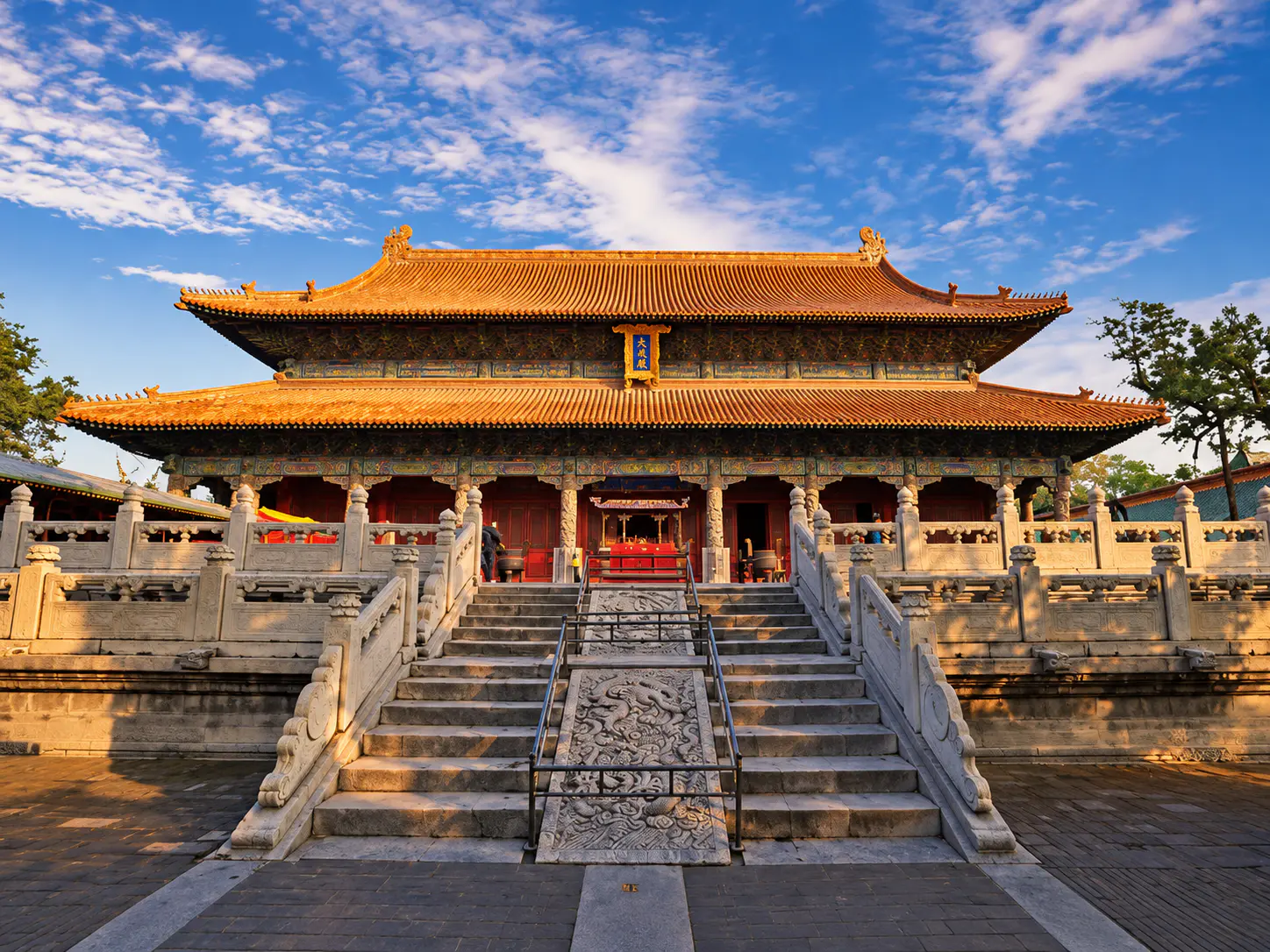
Quick Comparison
| Dimension | Confucianism | Daoism |
|---|---|---|
| Central concern | Ethical social order; cultivated roles | Alignment with Dao; critique of forced artifice |
| Ideal person | *Junzi* / cultivated exemplar | Often the spontaneous / unforced person; sage-king tropes differ by text |
| Social order | Hierarchy tempered by virtue and ritual | Suspicion of over-coding; value of simplicity |
| Ritual | Central (*li*) | Philosophical texts often relativize lavish ritual; religious Daoism has its own rites |
| Government | Moral example + role ethics | Soft power, less coercive rule (textual ideal) |
| Nature / spontaneity | Patterned human culture | *Ziran*, *wu wei* |
| Key texts | *Analects*, *Mencius*, *Xunzi*… | *Daodejing*, *Zhuangzi*… |
| Major thinkers | Confucius, Mencius, Xunzi | Laozi (trad.), Zhuangzi |
| Religion/philosophy | Ethical-ritual + classical learning | Philosophical texts + organized religion |
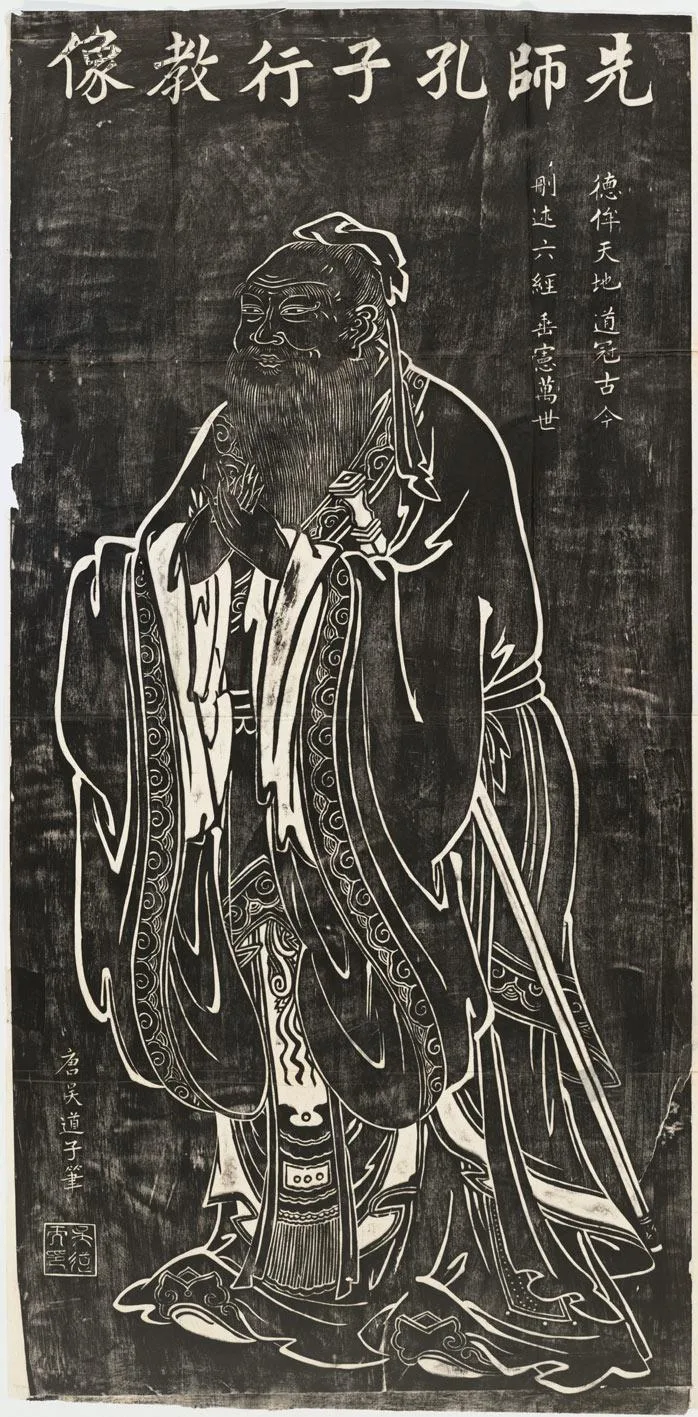
*Confucius portrait tradition (Tang black print). Public domain. Visual culture—not a documentary photo.*
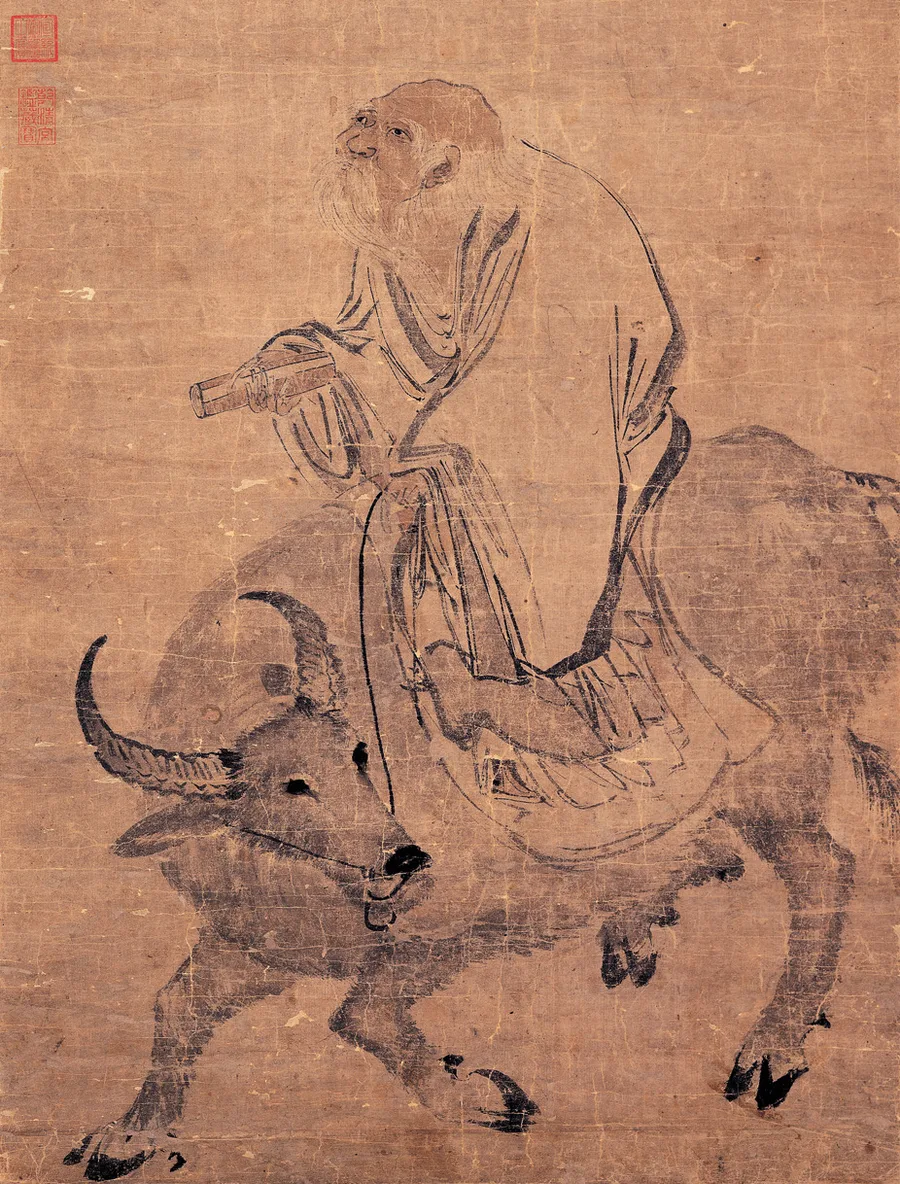
*Laozi Riding an Ox. Public domain via Wikimedia Commons. Pair with Confucius image for comparison pages; non-generative resize.*
What They Share
Concern with how humans should live; critique of chaotic greed; long afterlives in Chinese culture; eventual temple and educational institutions.
Major Differences
Confucians generally trust cultivated ritual culture to civilize. Classical Daoist texts often distrust forced naming and heavy-handed moralism. Religious Daoist communities complicate the simple binary.
Ethics and Social Role
Filial and role ethics weigh heavily in Confucianism. Daoist texts play with usefulness, humility and perspectival flexibility.
Government
Moral rulership vs ideals of lighter touch / non-coercion—both ideals, both historically compromised.
Ritual
*Li* is Confucian center of gravity. Daoist philosophy may satirize empty ceremony, while organized Daoist religion performs complex liturgy. Classical Daoist philosophy and organized Daoist religion overlap historically but are not identical. Folk practice: Chinese folk religion.
Nature, Spontaneity, Wu Wei
Daoist keywords; Confucians care about human cultural patterning. Neither reduces to “city vs nature” tourism slogans.
Later Coexistence
Imperial eras often housed Confucian officials, Daoist temples and Buddhist monasteries together—the “Three Teachings” social reality. See Chinese Religion.
Which Came First?
Confucius is comparatively well dated, while the formation and authorship of early Daoist texts are more historically complex.
Common False Dichotomies
- Not every Confucian loves bureaucracy for its own sake.
- Not every Daoist rejects all social duty.
- Religious practice ≠ philosophy textbook.
Confucianism vs Daoism FAQ
What is the main difference between Confucianism and Daoism?
A common contrast: ritual-social cultivation vs Dao-aligned naturalness/non-coercion—tendencies, not airtight boxes.
Is Taoism vs Confucianism the same comparison?
Yes—Taoism/Daoism spelling variants.
Did they oppose each other completely?
They debated and later also coexisted and blended in practice.
Related Pages
Sources
- Stanford Encyclopedia of Philosophy — Confucius; Daoism.