
Ancient Chinese Music at a Glance
| Evidence type | Examples |
|---|---|
| Bronze bells | Bianzhong sets |
| Excavated zithers | Early guqin-related finds |
| Texts | Ritual and music theory writings |
| Imagery | Tomb and cave depictions (interpret carefully) |
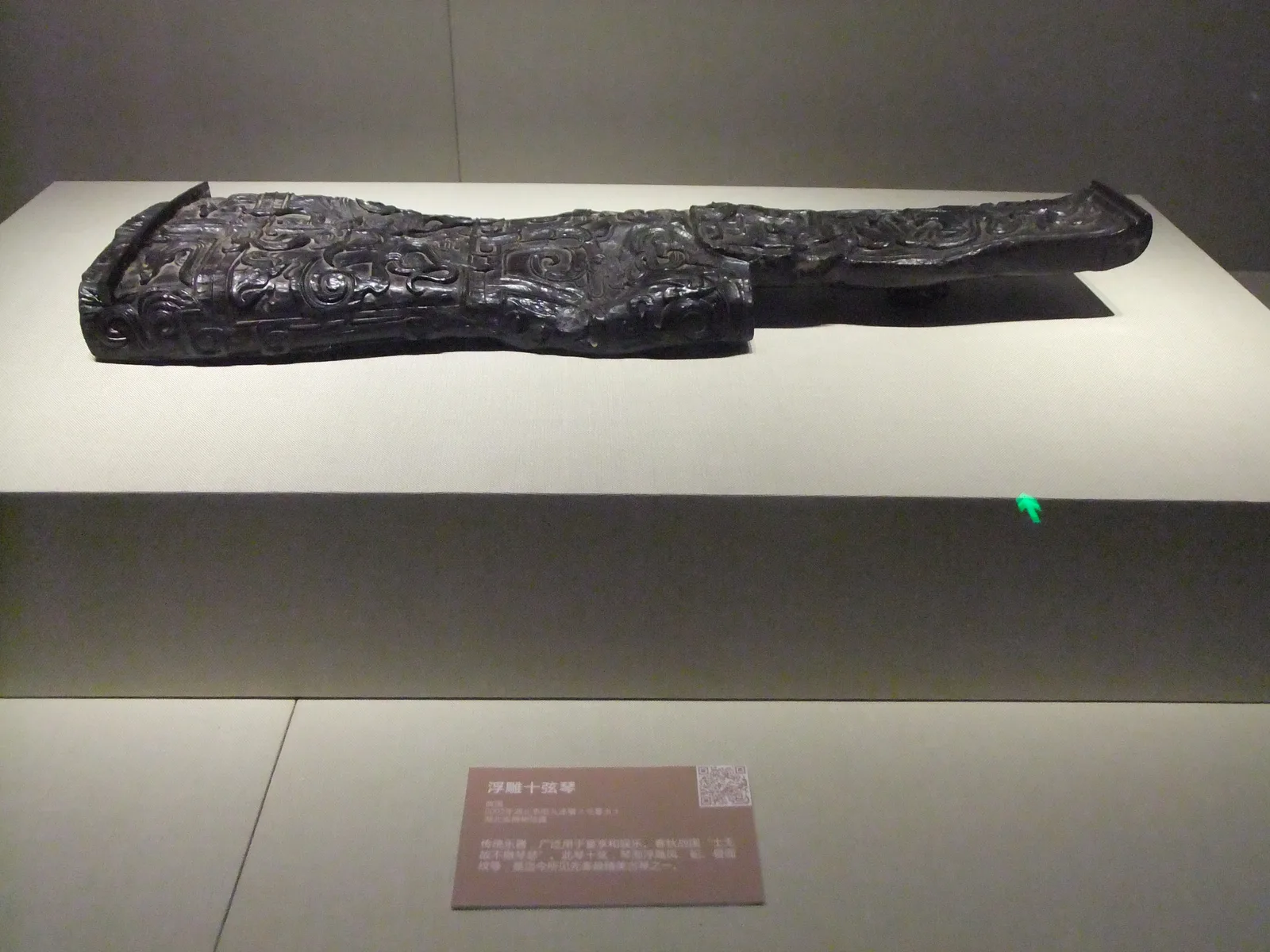
*Ten-stringed instrument (often discussed in guqin history), Warring States, Hubei Museum. CC0. Cropped/resized; do not present as a modern playable guqin without qualification.*
Bianzhong and Ritual Sound
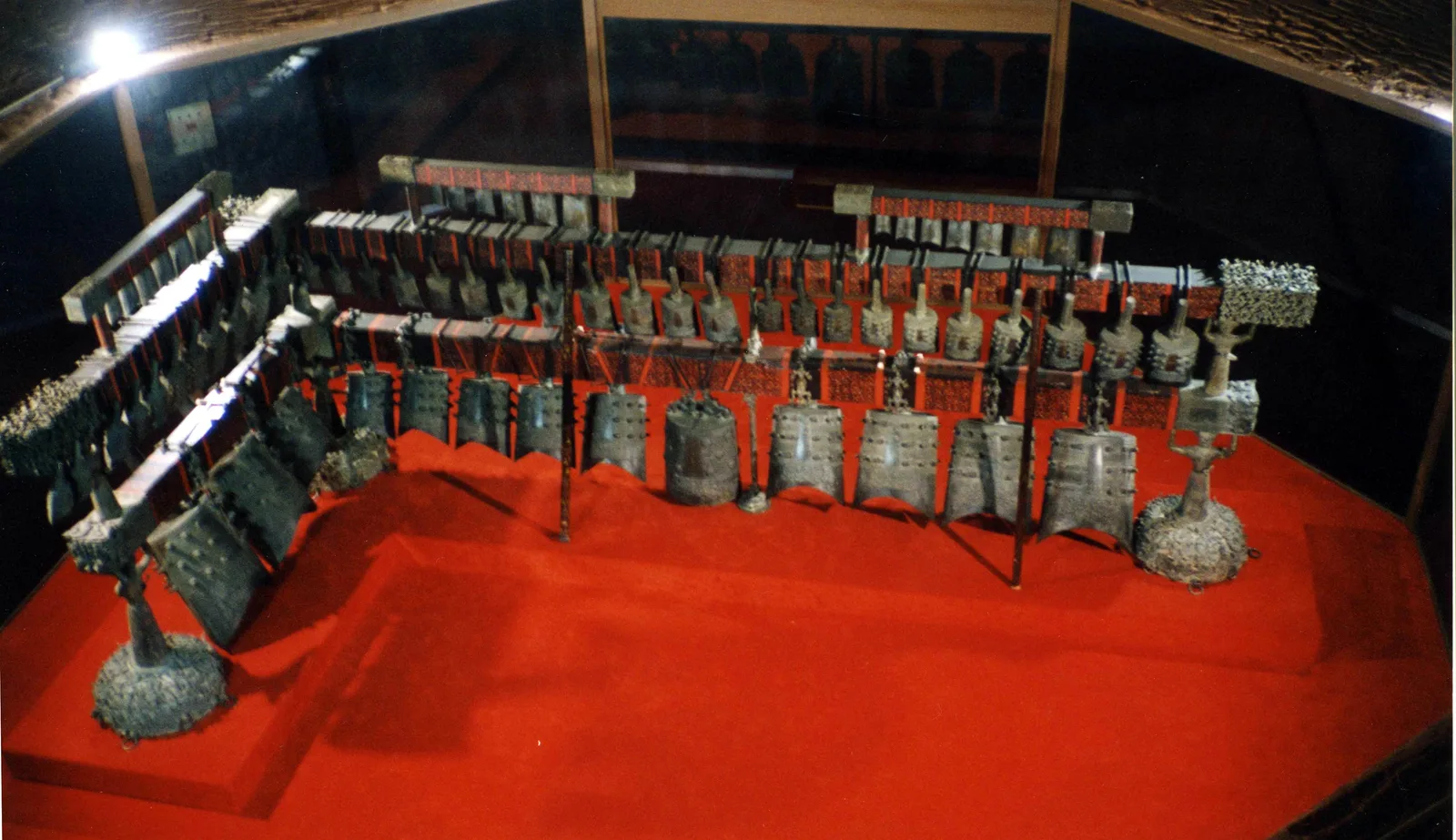
*Bianzhong bronze bells. CC BY-SA 3.0 / GFDL. Resized; non-generative. Historical illustration context.*
See also Bronze Bells / Bianzhong.
Continuity Caution
Surviving objects prove early musical culture; they do not automatically validate modern tourist claims of unbroken performance practice.
FAQ
What do we know about ancient Chinese music?
Enough to document instruments, ritual roles and some theory—not enough to treat one modern concert as identical to Zhou court music.
Related hub: Chinese Music. Last reviewed: September 2026. Volatile venue, schedule and ticket details change—confirm with official operators before travel.