
Traditional Chinese Music at a Glance
| Strand | Broad orientation |
|---|---|
| Court / official | Ceremonial and elite historical contexts |
| Literati | Solo/chamber ideals (e.g. guqin culture) |
| Folk / regional | Local songs, bands, silk-and-bamboo, etc. |
| Ritual | Temple, seasonal, life-cycle music |
| Opera-related | Xiqu melodic/percussion systems |
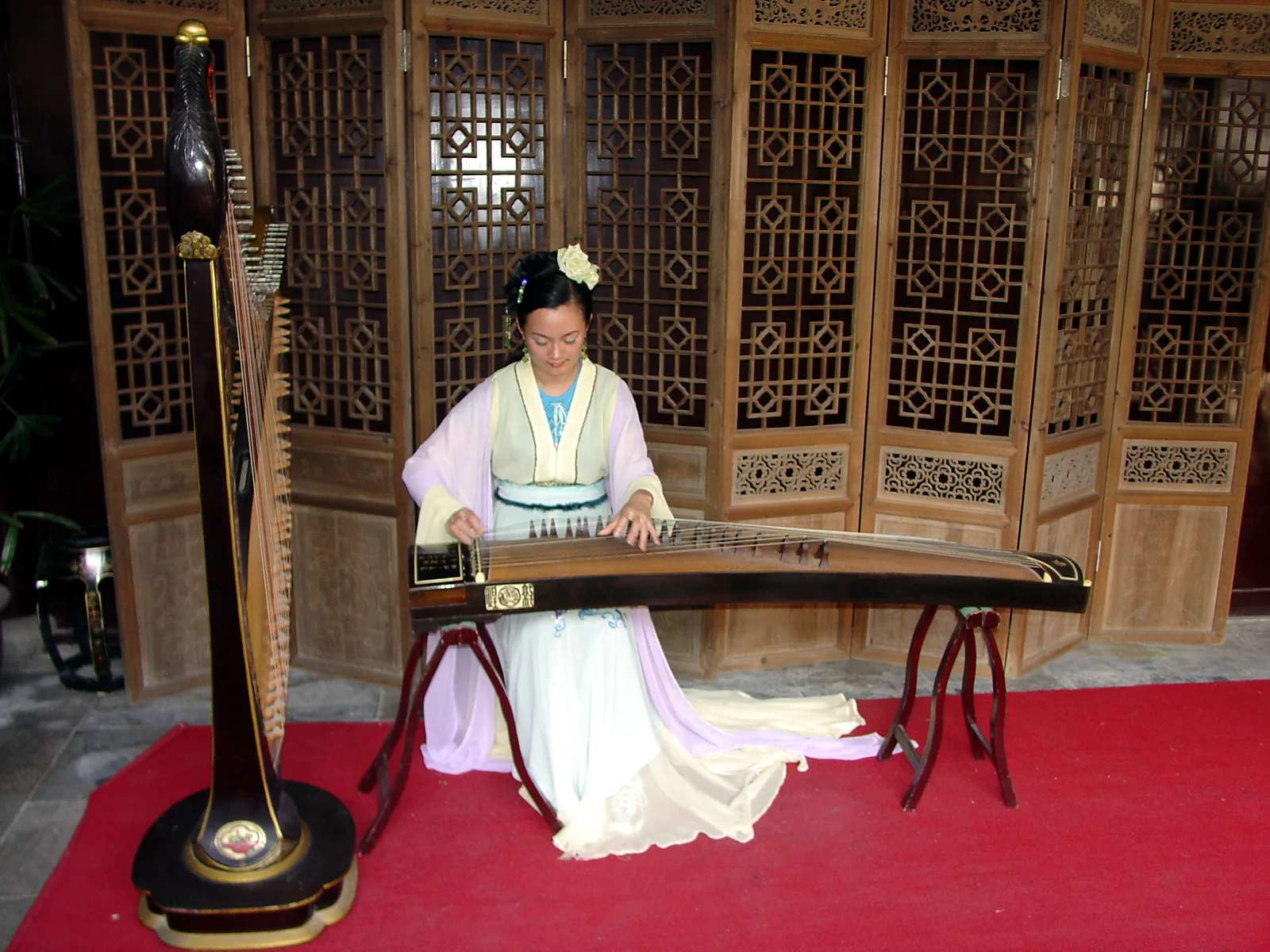
*Guzheng performance context in Suzhou. Wikimedia Commons — CC BY-SA 4.0. Cropped/resized; non-generative.*
Court, Literati, Folk and Ritual
Treat these as overlapping categories, not airtight boxes. A melody can move between folk and theatrical use; instruments migrate across contexts.
Ensembles Travelers May Hear
Silk-and-bamboo (丝竹) chamber textures, wind-and-percussion bands, and opera orchestras are common tourist contact points. Ask what regional tradition a program claims—and whether it is concert arrangement or local practice.
Relation to Instruments and Opera
For instruments travelers hear most often, see Chinese Musical Instruments. Stage music: Chinese Opera. Related hub: Chinese Music.
Listening Tips
- Identify setting (concert, teahouse, theatre, outdoor ritual).
- Note which instruments lead.
- Separate percussion drama from lyrical chamber sound.
- Avoid ranking “most authentic” from one show.
Common Misunderstandings
- Traditional = ancient and unchanged — false.
- One national folk style — false.
- Dinner-show medleys = ethnographic field recordings — usually false.
FAQ
What is traditional Chinese music?
Historical and regional musical practices spanning court, literati, folk, ritual and related ensemble forms.
Is Chinese folk music the same as traditional music?
Folk is one strand inside a broader traditional umbrella.
How is traditional music different from Chinese opera?
Opera is a theatrical system with its own music; traditional music also includes non-theatrical strands.
Last reviewed: September 2026. Volatile venue, schedule and ticket details change—confirm with official operators before travel.