
Chinese Musical Instruments at a Glance
| Family | Examples in this cluster |
|---|---|
| Plucked zither / lute | Guzheng, pipa (guqin mentioned for comparison) |
| Bowed | Erhu (and wider huqin family) |
| Transverse flute | Dizi (distinct from end-blown xiao) |
| Percussion / other | Present in ensembles and opera; covered for orientation |
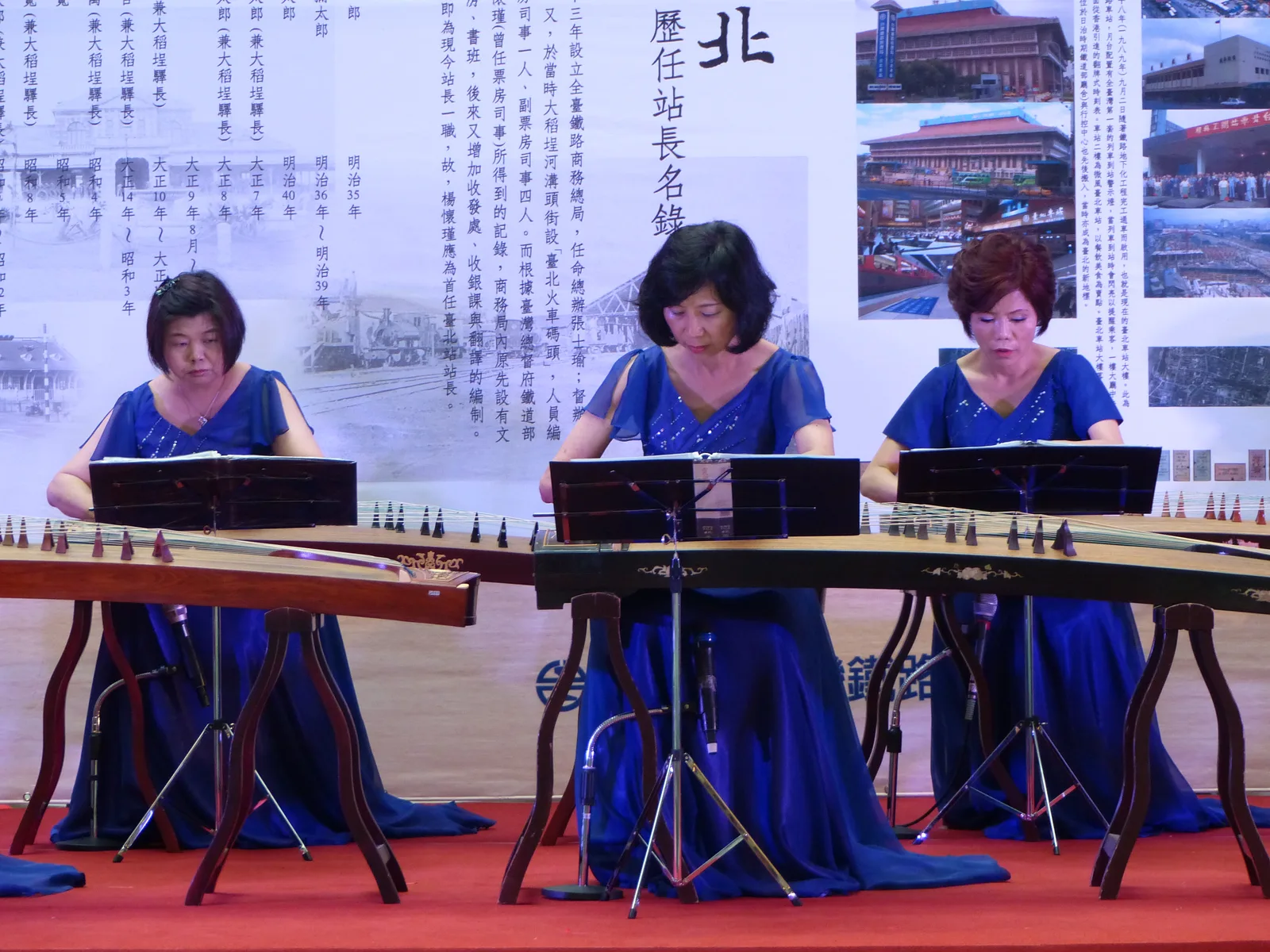
*Guzheng players on stage (Yulin Guzheng Band), Taipei. CC0. Cropped/resized; non-generative.*
Strings, Winds and Percussion
Travelers often meet guzheng (movable-bridge zither), erhu (two-string bowed fiddle), pipa (pear-shaped lute) and dizi (bamboo transverse flute with a buzzing membrane). Compare carefully—do not map Chinese instruments one-to-one onto Western orchestra seats.
Explore the Main Instrument Guides
Instruments in Opera
Opera orchestras combine melodic instruments with a decisive percussion section that cues action. See Chinese Opera and What Is Peking Opera?.
Other Instruments You May Encounter
Other important instruments travelers may encounter include guqin, sheng, suona, xiao, ruan, yangqin and many types of drums and percussion. They belong to different traditions and ensembles, so do not treat the four detailed instrument guides on this site as a complete list of Chinese instruments.
FAQ
What are the main Chinese instruments?
Many exist; traveler-facing focus here is guzheng, erhu, pipa and dizi.
What is the difference between guzheng and guqin?
Different zither traditions—bridges, technique and cultural roles differ. See the guzheng page.
Is the Chinese flute a dizi?
Dizi is a specific transverse bamboo flute with a membrane (*dimo*). Other Chinese flutes exist.
Related hub: Chinese Music.
Last reviewed: September 2026. Volatile venue, schedule and ticket details change—confirm with official operators before travel.