
Kung Fu Styles at a Glance
| Style | Chinese | Broad association | Common training emphasis | Important caveat |
|---|---|---|---|---|
| Shaolinquan | 少林拳 | Shaolin / Dengfeng martial culture | Forms, weapons, conditioning; visitor demos vary | Not one fixed routine; not the source of all kung fu |
| Taijiquan | 太极拳 / 太極拳 | Chenjiagou and later family styles; UNESCO ICH 2020 | Routines, push-hands in many lineages | Specific art—not synonym for all “internal” arts |
| Wing Chun | 咏春拳 / 詠春拳 | Southern short-range tradition; Foshan associations | Close-range drills, wooden dummy in many schools | Lineages differ; film ≠ syllabus |
| Baguazhang | 八卦掌 | Circle-walking “internal” tradition | Circle walking, palm changes | Origin stories vary in certainty |
| Xingyiquan | 形意拳 | Linear “internal” striking tradition | Linear power methods, animal/element frameworks vary | Do not flatten every school into one set |
| Bajiquan | 八极拳 / 八極拳 | Short-power northern tradition | Explosive short-range methods | Distinct from taijiquan despite “internal arts” marketing clusters |
| Hung Gar | 洪家拳 | Southern family tradition; Wong Fei-hung cultural link | Southern forms; cultural legend overlays history | Film hero ≠ complete biography |
| Choy Li Fut | 蔡李佛 | Southern multi-lineage system | Broad curriculum in many schools | Regional variation is normal |
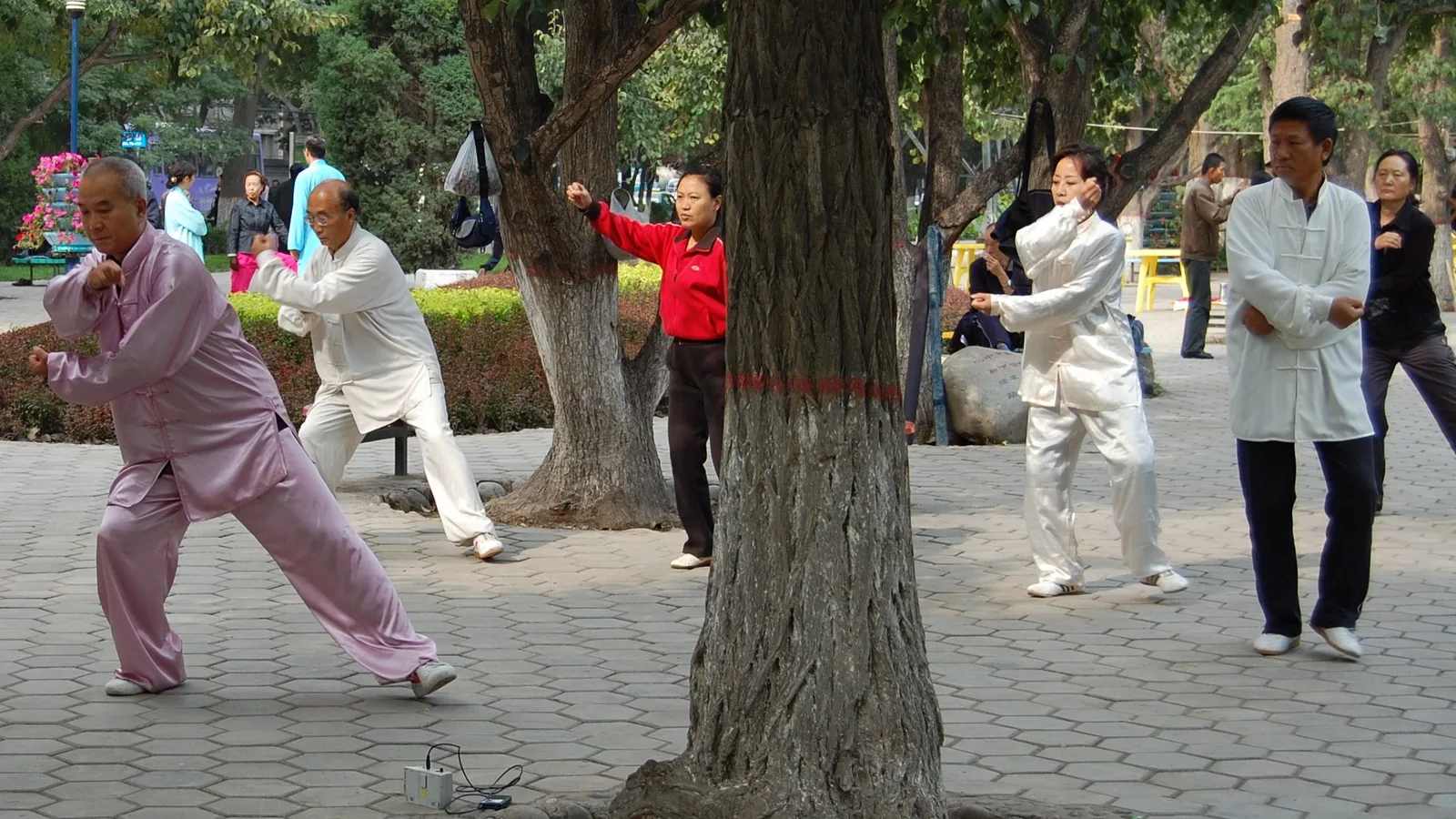
*Taijiquan practice in Lanzhou, Gansu, China. Photo: Sigismund von Dobschütz / Wikimedia Commons — CC BY-SA 3.0. Cropped and resized for web; non-generative.*
Why There Is No Single Definitive List
Style names can refer to a family of related curricula, a lineage brand, a regional label or a marketing category. Sub-styles split; schools merge material; English spellings multiply. A “styles list” is therefore a traveler orientation tool, not a census of Chinese martial culture.
Parent map: Chinese Kung Fu.
Shaolinquan
Shaolinquan names martial practice associated with Shaolin Temple and the wider Dengfeng martial-school culture. It is better understood as a tradition with internal diversity than as one choreographed set. Heritage visiting, tourist demonstrations and long-term school training are different formats. Full place guide: Shaolin Kung Fu.
Taijiquan
Taijiquan is a specific Chinese martial art. UNESCO inscribed Taijiquan on the Representative List of the Intangible Cultural Heritage of Humanity in 2020. Practice may include solo routines and push-hands depending on lineage. Do not use “tai chi” as a synonym for every slow or “internal” Chinese martial art.
Wing Chun
Wing Chun is a southern Chinese martial-arts tradition often associated with Foshan cultural memory and twentieth-century teachers such as Ip Man. Training commonly emphasizes close-range partner work; wooden-dummy practice appears in many schools. Treat film depictions as popular culture, not documentation. Portrait and biography context: Famous Kung Fu Masters.
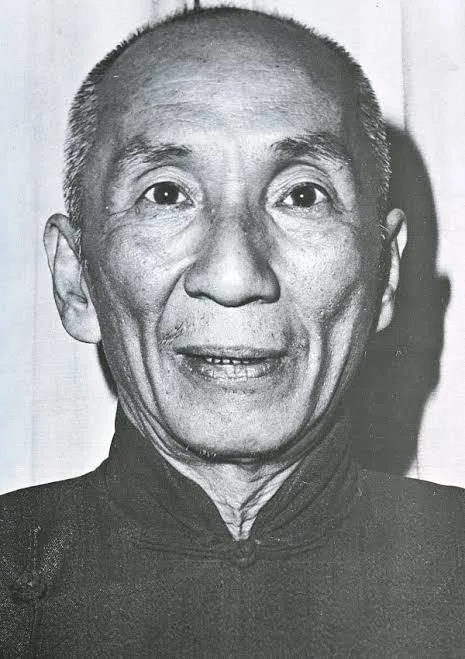
*Wing Chun practice context. Photo: Maqbool ahmed sifu / Wikimedia Commons — CC BY-SA 4.0. Small inline display; near-native resolution; non-generative.*
Baguazhang
Baguazhang is widely recognized for circle-walking footwork and palm-change methods. Dong Haichuan is the key historical association in standard accounts; origin narratives still require caution about certainty. It is often grouped with taijiquan and xingyiquan in later “internal arts” discourse without being identical to them.
Xingyiquan
Xingyiquan emphasizes relatively linear power methods and distinctive training frameworks that vary by lineage. Sun Lutang’s writing and teaching helped connect xingyiquan with baguazhang and taijiquan in modern internal-arts conversations—see the masters page.
Bajiquan
Bajiquan is a northern short-power tradition with its own technical reputation. Including it here prevents style pages from collapsing into only Shaolin + taijiquan + Wing Chun.
Southern Chinese Martial Arts
Southern Chinese martial cultures include systems such as Hung Gar and Choy Li Fut, among many others. Foshan is a major southern martial-culture place for travelers interested in Wong Fei-hung heritage and Wing Chun associations—see Kung Fu in China. Southern/northern labels describe tendencies, not sealed biological categories.
How Chinese Martial Arts Are Classified
Common orientation frameworks:
- Northern vs southern — broad regional emphases often discussed in teaching culture
- Internal vs external — later pedagogical language; useful, not absolute science
- Family / lineage traditions — transmission through named teachers and schools
- Temple / religious associations — e.g. Shaolin Chan Buddhist context
- Regional schools — local identities that may cut across neat north/south bins
- Long-fist / short-bridge style descriptors — practical teaching language where properly sourced
Use these to navigate; do not treat them as a complete taxonomy of China.
Forms, Weapons, Partner Work and Sparring
Chinese martial arts may combine different mixes of:
- forms / routines (*taolu*)
- basics and conditioning
- weapons training
- partner drills
- push-hands or sensitivity drills (especially relevant in some taijiquan lineages)
- sparring / free fighting
- performance or competition
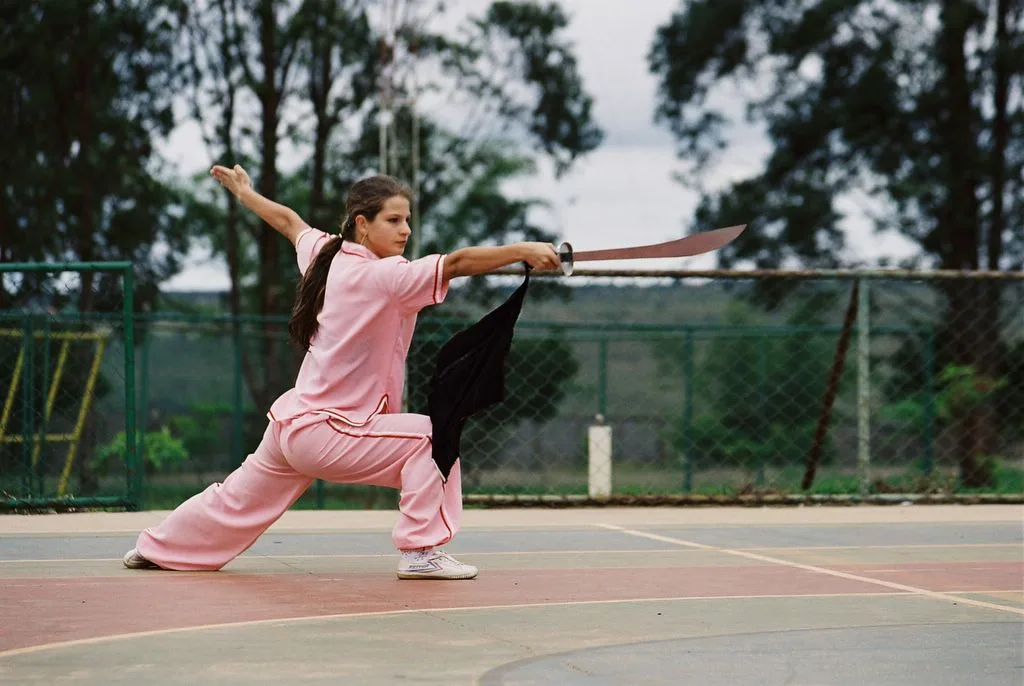
*A dao used in contemporary wushu. Photo: Alexandre Ferreira / Wikimedia Commons — CC BY-SA 2.0. Near-native width; not aggressively upscaled. Does not represent every historical Chinese dao.*
Sport-wushu weapons and competition rules are modern institutional contexts; traditional schools may use different weapons curricula.
How to Recognize Styles When You Visit China
As a visitor, you will more often recognize formats than authenticate lineages:
- Park practice (often taijiquan-like group routines)
- Stage or tourist demonstration (costume, music, shortened sets)
- Local recreational class
- Residential school timetable
- Sport-wushu event
Asking “which style and which lineage?” is more useful than asking whether something is “real kung fu.” Travel formats: Kung Fu in China.
Kung Fu Styles FAQ
How many kung fu styles are there?
Hundreds of systems and sub-systems, depending on how you count lineages and name variants. There is no single official national count.
What are the main styles of Chinese martial arts?
For orientation: Shaolinquan, taijiquan, Wing Chun, Baguazhang, Xingyiquan, Bajiquan and southern systems such as Hung Gar and Choy Li Fut. Many other regional arts exist.
Is Shaolin a single style?
No. Shaolin martial culture includes diverse curricula and school contexts. See Shaolin Kung Fu.
Is tai chi a kung fu style?
Taijiquan is a Chinese martial art and therefore falls under the English umbrella “kung fu” for many speakers. It is not a synonym for all kung fu.
Is Wing Chun a Chinese martial art?
Yes. It is one Chinese martial-arts tradition, not a synonym for kung fu as a whole.
What is the difference between internal and external martial arts?
A teaching/orientation contrast used in many modern discussions. It is not a laboratory classification that cleanly sorts every Chinese system.
What is the difference between northern and southern kung fu?
A regional orientation framework with useful tendencies and many exceptions. Do not treat it as absolute geography-as-destiny.
Which kung fu style should a traveler watch or try in China?
Choose by availability, place and format—heritage visit, park practice, workshop, school or show—not by claims of fighting superiority. Match intensity and language support to your trip length.
Explore Related Chinese Kung Fu Guides
Sources & Review
- UNESCO — Taijiquan ICH listing (2020).
- UNESCO — Shaolin Temple steles / “one of the birthplaces” framing.
- International Wushu Federation — sport and traditional wushu terminology.
- Peter A. Lorge; Meir Shahar — academic martial-history orientation.
Last reviewed: August 2026