
Shaolin Kung Fu at a Glance
| Fact | Detail |
|---|---|
| Location | Dengfeng / Mount Song area, Henan Province |
| Temple foundation | 495 AD |
| Religious association | Chan Buddhism |
| Martial association | One of China’s best-known martial traditions |
| Historical caution | Martial documentation and later legend are not the same |
| Visitor context | Temple complex, Dengfeng/Songshan martial-school culture, demonstrations depending on current availability |
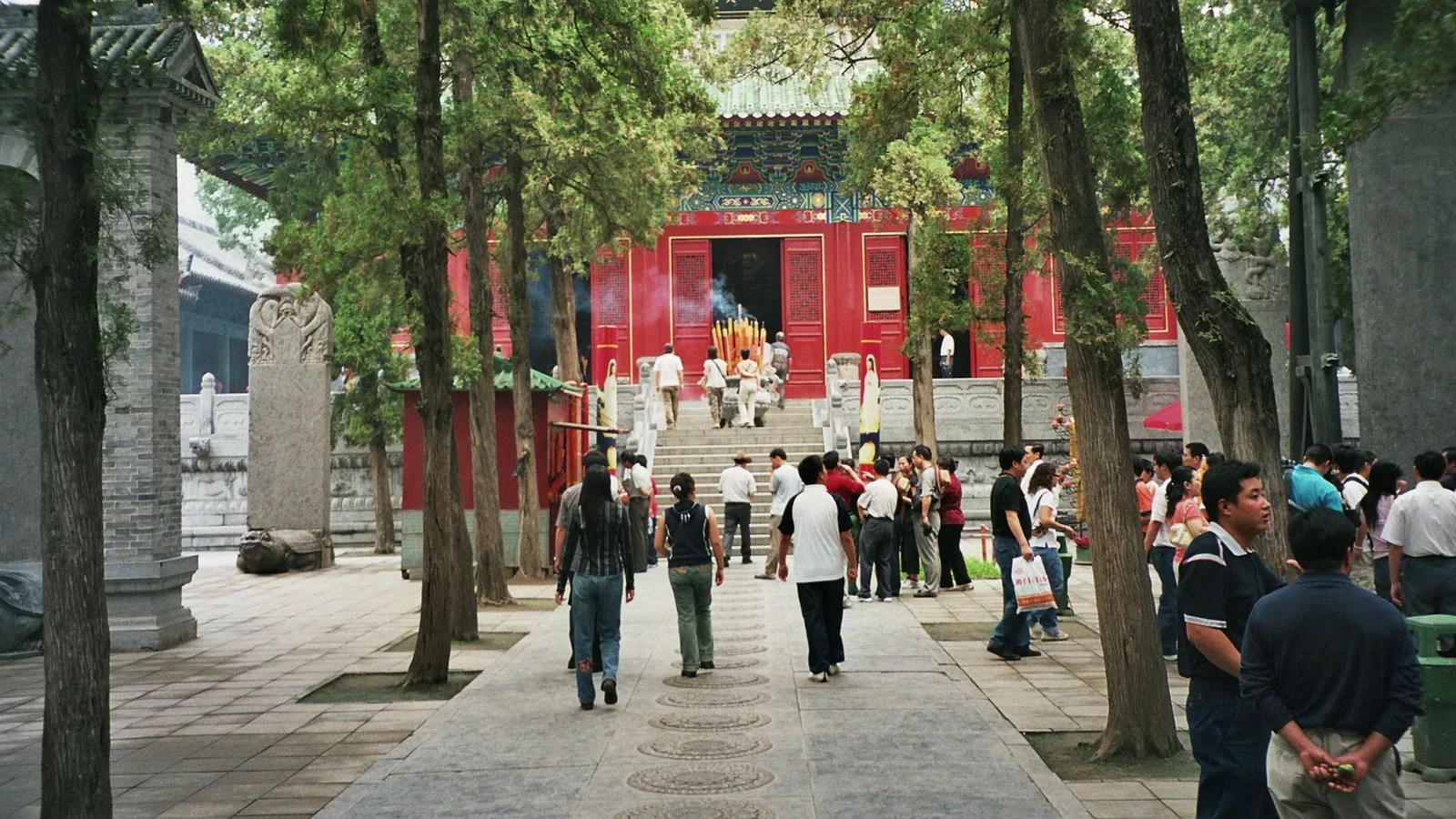
*Shaolin Monastery in 2006. Photo: Don-kun / Wikimedia Commons — CC BY-SA 3.0. Cropped and resized for web; non-generative. Shows the physical heritage place, not proof of a specific modern lineage.*
What Is Shaolin Kung Fu?
Shaolin kung fu / Shaolinquan names martial practice linked to Shaolin Temple and the Songshan/Dengfeng ecosystem. Curricula vary by school and teacher. Empty-hand forms, staff and other weapons, basics and conditioning appear widely in descriptions of the tradition; exact sets are not universal across every “Shaolin” brand.
Parent context: Chinese Kung Fu. Style comparisons: Kung Fu Styles.
Where Is Shaolin Temple?
Shaolin Temple sits in the Dengfeng / Mount Song area of Henan Province. For travelers, “Shaolin” often means both the heritage temple complex and the surrounding martial-school landscape. Those are geographically close and culturally associated—but not every school is temple-operated.
Shaolin Temple and Martial Arts History
UNESCO’s Memory of the World documentation for *The Steles of Shaolin Temple (566–1990)* supports key traveler-facing facts: the temple’s 495 AD foundation and its status as one of the birthplaces of Chinese martial arts. Meir Shahar’s academic history remains the main English scholarly guide to documented martial activity, Tang-era fighting-monk evidence, staff traditions and later boxing development.
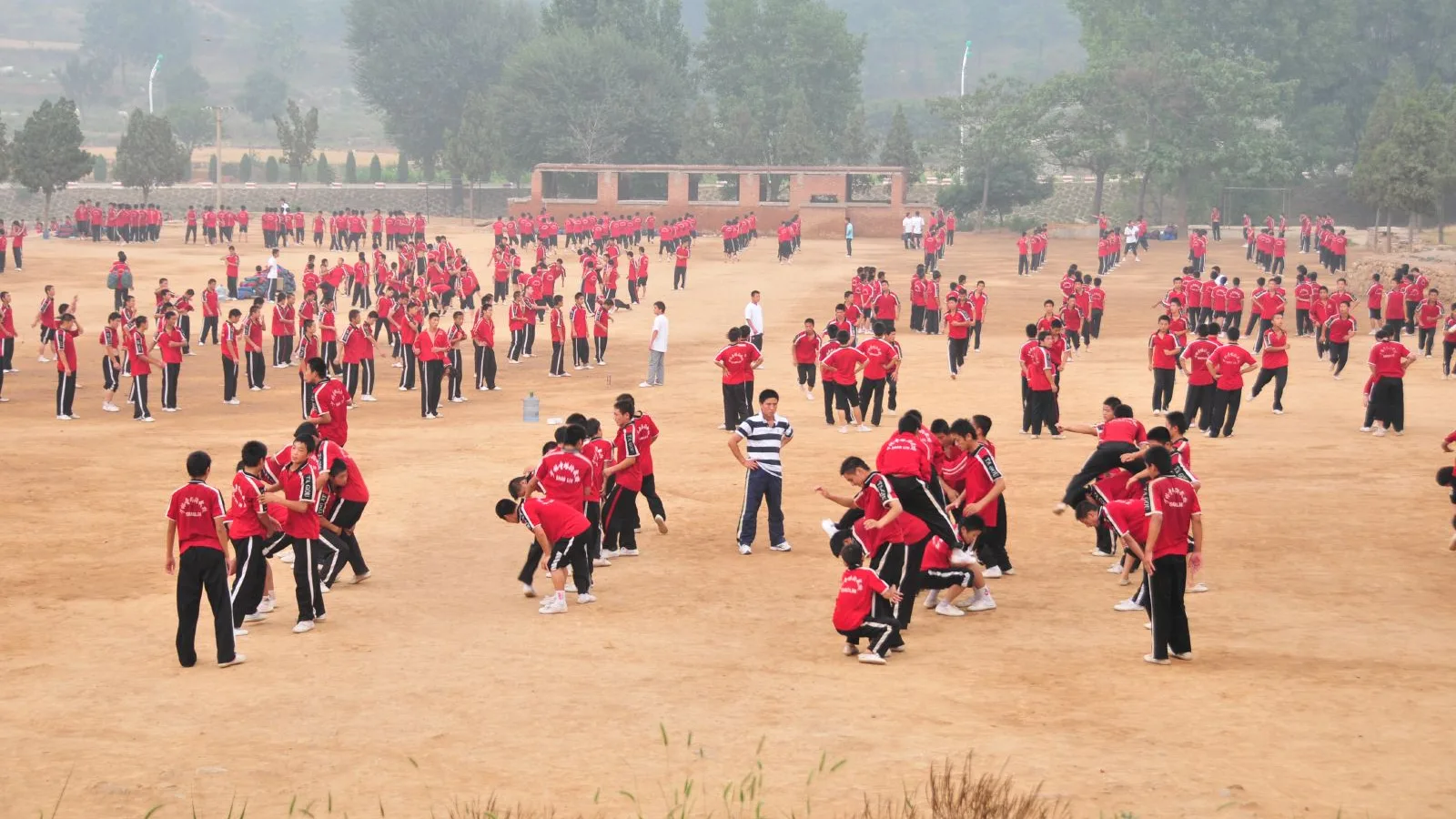
*Wushu practice at a school near Songshan Shaolin Temple, 2008. Photo: KongFu Wang / Wikimedia Commons — CC BY-SA 2.0. Do not assume practitioners are Shaolin monks unless a source establishes that.*
Broader chronology: History of Kung Fu.
Did Bodhidharma Invent Shaolin Kung Fu?
Bodhidharma is central to Chan Buddhist tradition and later Shaolin martial legends. Historians do not treat him as the documented inventor of Chinese martial arts or Shaolin boxing. Lineage stories from school websites should be weighed carefully against documented history rather than treated as settled fact.
Shaolinquan: Forms, Weapons and Training
At a cultural (not how-to) level, Shaolin-associated training commonly discusses:
- empty-hand forms
- staff and other traditional weapons
- basics, stances and conditioning
- partner practice depending on school
- lineage variation in what is emphasized
This page does not provide fighting instructions or claim supernatural physical feats. Cheng Zhongyou’s early-seventeenth-century staff-method material is one documentary touchpoint for historical staff culture (see the history page illustration).
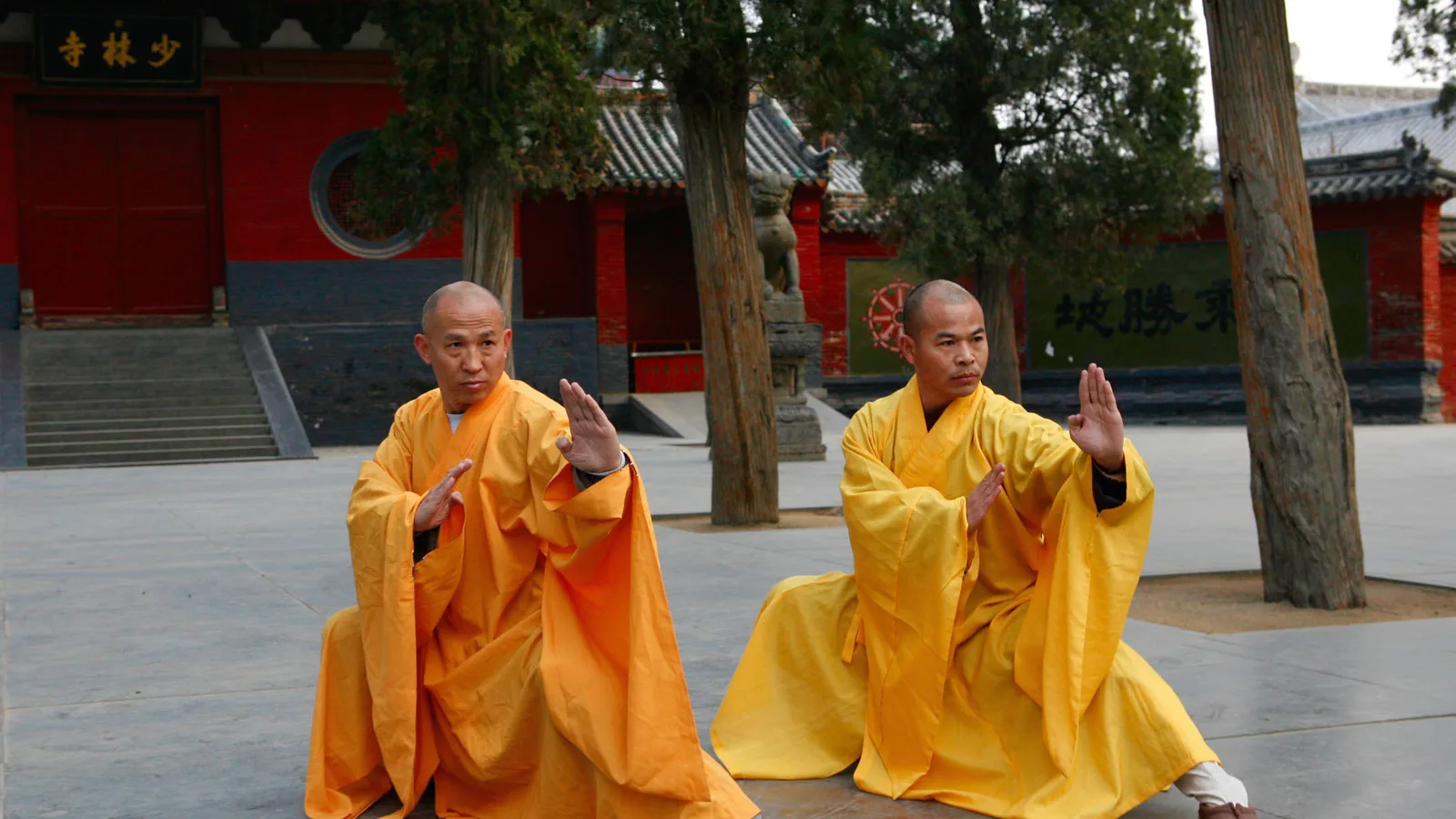
*Shi DeRu and Shi DeYang. Photo: Shi Deru (also known as Shawn Xiangyang Liu), CC BY-SA 3.0 via Wikimedia Commons. Cropped and resized for web; non-generative. The pose is not labeled here as a named technique.*
Chan Buddhism and Martial Practice
Shaolin is a Chan Buddhist monastery with a martial reputation. Religious life, tourism management and martial training ecosystems interact but are not interchangeable. Visitors should not assume every demonstration is a liturgical practice, or that every martial school shares monastic vows.
Shaolin Kung Fu Today
Today’s Dengfeng area includes heritage tourism, performance-oriented presentations and residential martial schools. Branding that uses the word “Shaolin” can mean temple-adjacent location, historical inspiration or marketing language. Ask what is actually included before equating a school with the monastery.
Visiting Shaolin Temple and Dengfeng
Practical orientation (verify current operations before travel):
- Locate Shaolin within Dengfeng / Songshan, Henan
- Distinguish visiting the heritage site from enrolling in a school
- Short demonstrations, tourist-oriented experiences and long-term training are different products
- Confirm current school fees, inclusions and schedules directly with the school before booking
DragonTrail can include Henan heritage and martial-culture stops in a private itinerary when they fit the route. See also Kung Fu in China.
What Visitors Should Not Assume from Shows and Schools
| Assumption | Better framing |
|---|---|
| Every “Shaolin” school is run by the temple | Many schools are independent businesses in the Dengfeng ecosystem |
| A show proves a lineage | Demonstrations are performance products |
| Costumes equal historical monks | Tourist presentation ≠ monastic identity |
| Shaolin invented all kung fu | Influential, not exclusive — UNESCO: one of the birthplaces |
Shaolin Kung Fu FAQ
What is Shaolin kung fu?
A family of martial traditions associated with Shaolin Temple and Dengfeng martial culture—not one universal fixed routine.
Where is Shaolin Temple?
In the Dengfeng / Mount Song area of Henan Province, China.
When was Shaolin Temple founded?
495 AD, per UNESCO Memory of the World materials on the Shaolin steles.
Did Shaolin invent kung fu?
No. Shaolin is highly influential and one of the birthplaces of Chinese martial arts, not the sole origin of all Chinese martial traditions.
Did Bodhidharma invent Shaolin kung fu?
Not as established historical fact. Bodhidharma is central to Chan tradition and later martial legend.
What is Shaolinquan?
The martial tradition(s) associated with Shaolin; curricula vary by school and lineage.
Do Shaolin monks still practice martial arts?
Martial practice remains part of Shaolin’s public identity and of the surrounding school culture. Exact current monastic training patterns should be verified against current institutional sources rather than assumed from film.
Can tourists visit Shaolin Temple?
Yes as a heritage destination in normal travel conditions; check current access rules and seasonal operations before you go.
Can foreigners study kung fu in Dengfeng?
Many residential schools accept international students. Vet style, intensity, language support, inclusions and legal/operating status carefully—see the school questions on Kung Fu in China.
Explore Chinese Kung Fu
- Chinese Kung Fu hub
- History of Kung Fu
- Kung Fu Styles
- Kung Fu in China
- Plan a private China trip · Request a private itinerary
Sources & Review
- UNESCO Memory of the World — *The Steles of Shaolin Temple (566–1990)*.
- Meir Shahar, *The Shaolin Monastery* (University of Hawai‘i Press, 2008).
- Peter A. Lorge, *Chinese Martial Arts* (Cambridge University Press).
- International Wushu Federation — contemporary terminology context.
Last reviewed: August 2026