
Kung Fu in China at a Glance
| Place | Best known for | What a visitor may encounter | Typical visitor format | Important caveat |
|---|---|---|---|---|
| Dengfeng / Shaolin / Henan | Shaolin Temple & martial-school ecosystem | Heritage site, demos, residential schools | Day visit or multi-week training | “Shaolin” branding ≠ temple-operated school |
| Foshan / Guangdong | Southern martial culture; Wong Fei-hung / Wing Chun associations | Museums/memorial culture, schools, presentations | City culture day + optional class | Film memory ≠ current syllabus |
| Beijing | Park practice; institutions; capital cultural life | Taijiquan-style park groups; events vary | Casual watch or arranged class | Confirm current class and event options locally |
| Wudang Mountains / Hubei | Daoist / martial cultural association | Scenic heritage + training offerings vary | Heritage travel ± school stay | Verify current visitor products before booking |
| Other regions | Local lineages & sport-wushu scenes | Parks, clubs, competitions | Ad-hoc | Availability is highly local |
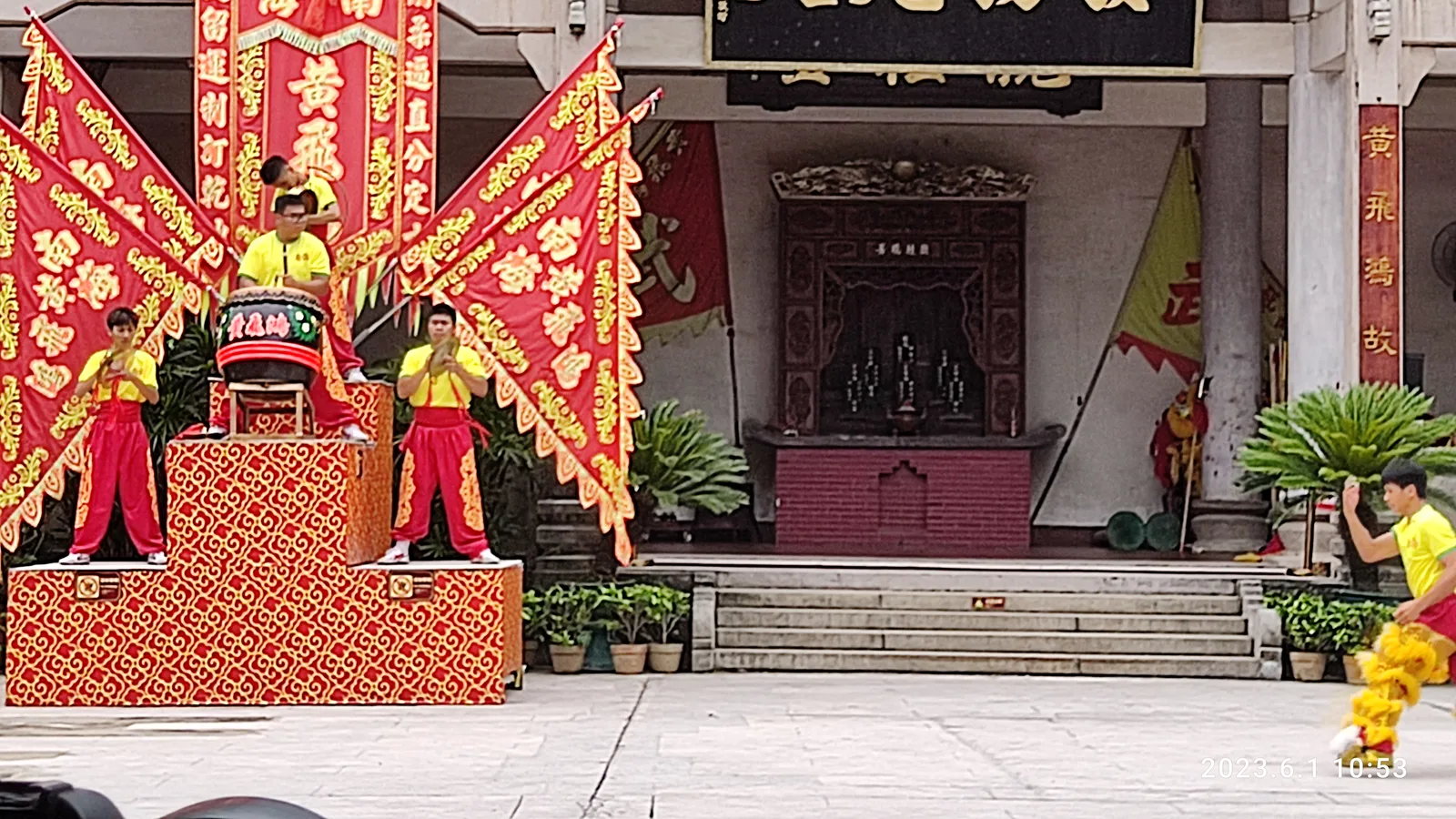
*Contemporary kung-fu presentation at the Wong Fei-hung Lion Dance & Martial Arts School setting in Foshan, Guangdong, June 2023. Photo: Lukwo RuoShuma Simonz / Wikimedia Commons — CC BY-SA 4.0. Cropped and resized for web; non-generative.*
What Does “Experiencing Kung Fu in China” Mean?
Clarify your goal before you search schools:
- See a place and short demonstration
- Try a beginner workshop
- Train for weeks or months
- Watch sport-wushu competition
- Attend a staged performance
Parent definition map: Chinese Kung Fu. Style names: Kung Fu Styles.
Dengfeng and Shaolin, Henan
Dengfeng combines Shaolin Temple heritage with a dense martial-school landscape around Songshan. Visit the temple as a cultural/heritage stop; evaluate schools separately. Full entity guide: Shaolin Kung Fu. History caveats: History of Kung Fu.
Foshan, Guangdong
Foshan is a major southern martial-culture city for travelers. Carefully distinguish:
- Wong Fei-hung cultural heritage and memorial/martial-arts settings
- Wing Chun / Ip Man associations in popular memory
- Museums and cultural presentations
- Actual modern schools with their own curricula
Verify named venues before planning around opening hours. Biography caution: Famous Kung Fu Masters.
Beijing
In Beijing, travelers most reliably encounter public park practice (often taijiquan-like group routines) and occasional institutional or event contexts. Arranged classes exist but should be confirmed case by case.
Evening martial-themed stage shows in Beijing have changed over time; check what is currently available rather than relying on older guidebooks. For evening performance culture more broadly, see Chinese Performing Arts. City planning: Beijing Travel Guide.
Wudang Mountains and Hubei
Wudang is a major Daoist and martial cultural association for many travelers. Scenic heritage travel and training offerings can overlap in marketing. Verify current visitor access and any school claims before booking.
Other Cities and Regional Traditions
Many Chinese cities host local clubs, university teams, sport-wushu pathways and family schools. Shanghai and other hubs appear in performance and club contexts; treat them as local discovery rather than a second Shaolin. China-wide planning: China Travel Guide.
Watching a Performance vs Learning a Martial Art
| Format | What it is | Best for | What it does NOT prove |
|---|---|---|---|
| Stage / demonstration | Short choreographed presentation | Atmosphere, photos, evening plans | Lineage authenticity or fighting skill |
| Short visitor workshop | Hours or a few days of intro practice | Trying basics safely | Meaningful martial competence |
| Regular local class | Ongoing recreational training | Skill building while resident | “Secret Shaolin” marketing claims |
| Residential / long-term school | Immersive timetable | Serious learners with time | Automatic temple affiliation |
| Sport-wushu event | Competition / display under sport rules | Seeing modern athletic wushu | That sport equals all traditional kung fu |
Short Workshops vs Long-Term Training
Exposure can happen in hours or days. Meaningful skill requires sustained training. Match the product to your visa/stay length, fitness, language needs and recovery time. Avoid “black belt in two weeks” marketing language.
Questions to Ask Before Booking a Martial-Arts School
- Legal/current operating identity of the school
- Exact style and lineage taught
- Instructor background (without accepting unverifiable claims)
- Daily training hours and physical intensity
- Beginner suitability and injury protocols
- Language support
- Accommodation and meal inclusions
- Refund / cancellation terms
- What stay length requires which visa/residency status (check official sources for current rules)
- Medical and travel insurance expectations
- Whether “Shaolin” in the name means a real temple connection
DragonTrail can help design a culture-focused private itinerary that includes martial-heritage places; we do not publish unverified school rankings or prices here.
Kung Fu in China FAQ
Where is the best place to see kung fu in China?
There is no single “best.” Dengfeng/Shaolin is the highest-profile martial-heritage destination; Foshan suits southern cultural memory; Beijing often offers park practice. Choose by format and trip geography.
Can tourists visit Shaolin Temple?
Yes under normal tourism conditions; confirm current access before travel. See Shaolin Kung Fu.
Can foreigners learn kung fu in China?
Many schools accept international students. Vet intensity, language, inclusions and legal stay requirements carefully.
Is Foshan famous for kung fu?
Foshan is a major southern martial-culture place, especially in Wong Fei-hung and Wing Chun popular memory. Verify current venues and schools rather than assuming film geography.
Can I watch kung fu in Beijing?
You may see park practice and occasional events or arranged classes. Confirm current evening-show options if that is part of your plan.
What is the difference between a kung fu show and a martial-arts class?
A show is performance. A class is training. Neither automatically proves historical lineage.
How long does it take to learn kung fu?
You can get exposure quickly; meaningful skill takes sustained practice over months and years. Avoid fixed promises.
What should I check before booking a kung fu school in China?
Use the vetting list above—identity, style, instructors, intensity, language, inclusions, cancellation terms and visa/stay constraints.
Plan a Culture-Focused China Trip
- Plan a private China trip
- Request a private itinerary
- Chinese Kung Fu hub
- Shaolin Kung Fu
- Beijing Travel Guide
- Chinese Performing Arts — for staged performance culture
Sources & Review
- UNESCO Shaolin steles materials — temple foundation and “one of the birthplaces” framing.
- UNESCO Taijiquan ICH (2020) — for understanding park/heritage taijiquan as a specific art.
- International Wushu Federation — sport-wushu event context.
- Confirm school and venue details close to travel; schedules, prices and hours change.
Last reviewed: August 2026