
China Snow Town at a glance
| Detail | Plan |
|---|---|
| Where | Xuexiang, Hailin, Heilongjiang |
| From Harbin | About 5–6 hours on the winter road |
| Minimum stay | Two nights |
| Why overnight | Dawn and blue hour, not a dark arrival |
| Not the same as | Yabuli skiing or the Ice Festival |
| Crowds | Weekends and Chinese New Year |
A China Snow Town itinerary is a small number of days with the road told truthfully. Xuexiang, in Hailin, is typically five to six hours from Harbin in winter. The shapes that work are two nights or three. A day trip from the city fails before anyone argues about viewpoints.
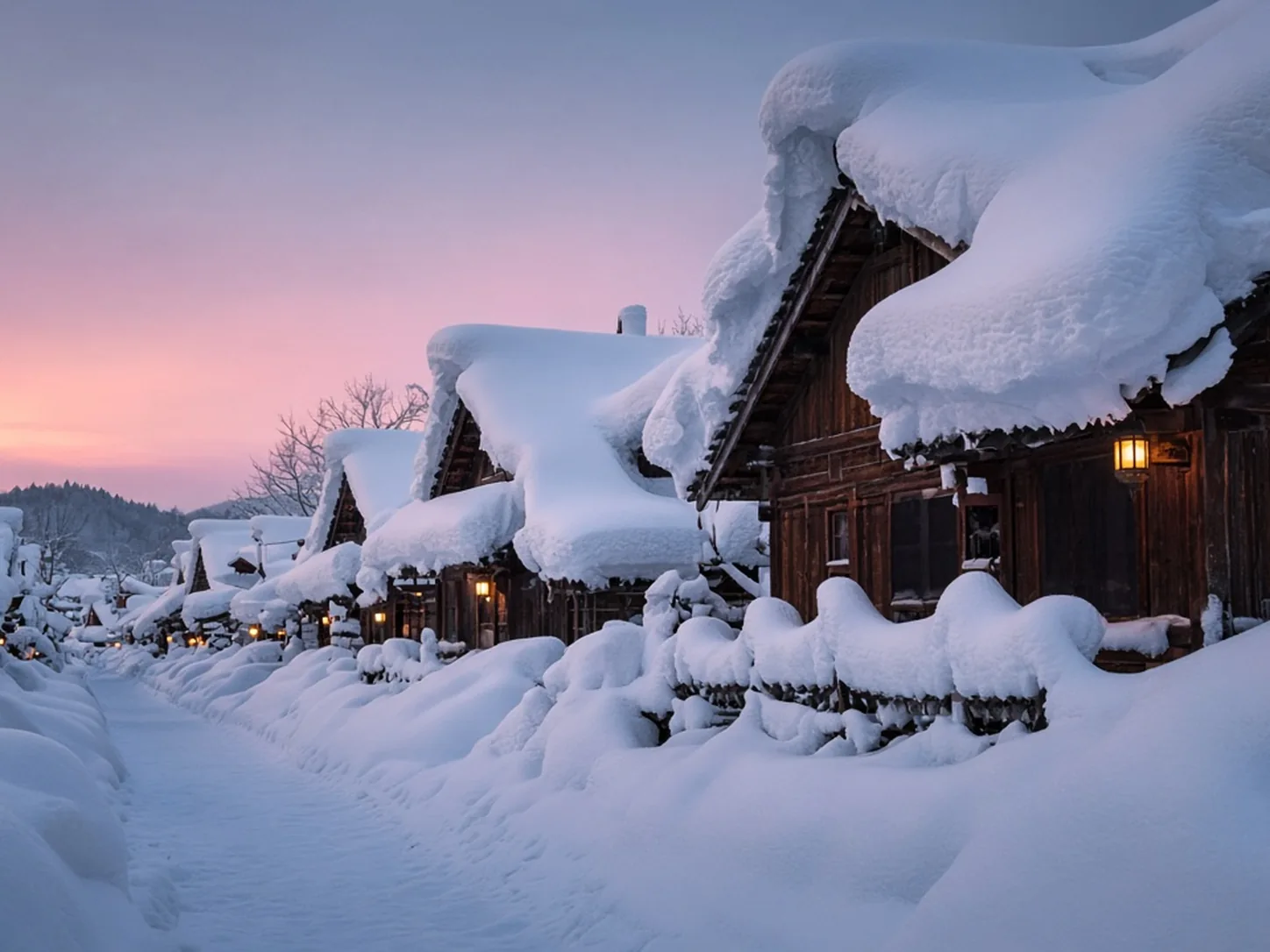
Why a Day from Harbin Fails
Put the day on a clock. You leave a Harbin hotel in the morning, because leaving later throws away the light. Five to six hours later you reach the scenic area, longer if snow or traffic disagrees. Scenic-area entry is its own queue. The internal shuttle is another wait and another ride. Only then are you in the lane, in the cold, with the clock already running backward toward the return. The return is the same five to six hours. Whatever stood between those drives was a fragment: a crowded walk, cold hands, and a turnaround.
You miss blue hour, because blue hour was happening while you were still on the expressway. You miss a patient daylight loop, because patience does not fit. You arrive back in Harbin at night, tired in the specific way a winter car makes people tired, having seen the village as a task. That is a poor plan even in a comfortable vehicle. Comfort is not daylight.
One free day in the city should stay in the city. Ice and Snow World, the streets, and a real meal are a coherent day. The Harbin travel guide and Harbin tours are where that day is designed. Borrowing it for Hailin produces neither a festival evening nor a village morning. Harbin’s Snow Town chapter reaches the same conclusion from the festival side: the mountain is an overnight, not an errand. If the arithmetic of your dates cannot hold two nights, do not go.
Travelers still attempt the day trip because the map shows one province. The map does not show the shuttle, the gate, the mid-afternoon sunset, or the way −25°C feels after ten hours of sitting. Believe the clock.
Two Nights, the Stay That Works
Three days and two nights is the minimum useful village stay. Day one is travel. Day two is the village. Day three is travel again. The point of the shape is the middle day, protected on both sides from the road.
Leave Harbin in the morning on day one. A morning start gives you a chance of fading afternoon light at the gate, which is a pleasant first look and not the picture you came for. If the road runs long, you arrive in the dark, check in, eat, and sleep. That outcome is acceptable, because dawn is tomorrow and the room is inside the scenic area or at its edge, where you can walk out without waiting on the first shuttle. Eat simply. Sleep. Do not schedule a performance of energy on arrival night unless people still have some.
Day two starts before you want it to. Dress completely in the room — wool or synthetic against the skin, insulation, a wind shell, face covered — and be in the lane for blue hour and first light. Come in when your hands fade. Eat a real breakfast then. Rest or take a short midday loop while the air is at its least cruel. Go out again for the low afternoon light, which ends sooner than a city person expects. Dinner early enough that a night walk is a choice rather than a stumble. The night lights on snow and wood are worth seeing once. They are not a substitute for the morning you already had.
Day three can include a short second dawn if the return road and the Harbin plan allow it, or it can be a breakfast and a departure. You are not leaving without having had a full day. That is the entire achievement of the second night. Build a buffer in Harbin before any flight. Do not land the return on the evening of an international departure.
This is the Snow Town stay on China Snow Town tours. It assumes the scenic entry and the shuttle are in the plan, separate from whatever Harbin hotel you use on either side. It does not assume rime. If the middle dawn is grey, you still walked the roofs under snow, which is the trip these days were for.
Three Nights, When You Want a Spare Dawn
Four days and three nights is the same journey with a second full day in the village. Day one is still the road, and it is allowed to be dark at the end. Day two is the first complete day. Day three is the spare. Day four is the return.
Use the spare day on purpose. If day two dawns in falling snow or a wind that clears the ridge in ten minutes, day three is when you try again. If day two was already beautiful, day three is when you stop collecting viewpoints and repeat the one lane that worked, at a slower pace, with drier gloves and a group that knows the ice. Repetition is how this village gets better. A checklist of platforms is how people get cold and quarrelsome.
The extra night also absorbs human limits. Someone sleeps badly. Someone’s boots were wet. A child needs a morning off. On a two-night stay those problems collide with the only dawn. On a three-night stay they collide with one of two. The coldest person should set the length of each loop anyway. Three nights make that rule survivable.
Do not fill the extra day with a side trip to Yabuli. The ski area in Shangzhi is about three hours from Harbin on a related southeast corridor, and it is not a nearby add-on to Hailin. Read the Yabuli guide and give skiing its own day on a different shape of trip. A “rest day” that is secretly another winter drive is not rest. The longer village stay is still a village stay. It is the right upgrade for weather, for photographs, and for people who run cold. It is the wrong upgrade for travelers who are bored by the idea of walking the same roofs twice. Those travelers may not want Xuexiang at all.
The longer stay is the second shape on China Snow Town tours. Hold the room inside or at the edge for all three nights. Splitting the third night back toward a station to shorten the last morning usually shorts the second dawn, which was the reason you added the night.
What One Night Actually Becomes
One night is the pattern festival itineraries sometimes use, and it should be recognized before it is accepted. You leave Harbin after the city morning has already taken a piece of the day. You arrive at dusk or later. You see lamps, eat, and sleep in your coat-ache. In the morning you have a brief, cold look at the lane while luggage is organized, then you leave so the return might reach Harbin in time for whatever the city promised. The sentence people remember is “we arrived in the dark and left after breakfast.”
That can be a knowing trade when the Ice Festival is the spine and the village is a hard extra you have decided to glimpse. Harbin’s Snow Town chapter is the honest description of that trade from the Harbin side. Read it before you call a single night a Snow Town holiday. If the roofs are the reason for the winter, the trade is a bad one. You spent the long road and skipped the full day that justifies it.
There is no clever version that fixes one night with an earlier car. Earlier helps the arrival light. It does not create a second morning. The second morning is a second night. Groups who discover this on the way home are the groups who should have changed the plan in the kitchen a month before. If your dates can stretch, stretch them. If they cannot, stay in Harbin and do the festival properly instead of doing both places poorly.
How to choose
| Choice | Fit | Skip when |
|---|---|---|
| Short | The sampler | Only if China Snow Town is a hinge, not the point |
| First stay | The default | When you want the main sights without a second region |
| Longer | One add-on | When a single extra place is worth another night |
How to Spend the Full Day
The full day, the one in the middle, has a shape worth protecting. Start outside. The lane at first light is the village with the fewest people and the snow at its cleanest, especially the morning after a fall. Walk a loop you can finish before your hands fail. Include the main lane and, only if the wind allows, a short time at a viewpoint over the roofs. Come in. Eat. Change socks if the first pair is damp. Warm the batteries in a pocket while you warm yourself.
Late morning is when groups arrive and the main lane clogs, earlier on weekends and over Chinese New Year, later on a midweek day and never quite “never.” This is a good time to be indoors or to walk a quieter edge if one is still pleasant. Do not spend your best energy fighting a doorway crowd for a frame you already made at dawn. Midday, such as it is in January, is the least harsh hour and a reasonable time for a slower stroll if people are restless. It is also a reasonable time to nap. Deep cold punishes the heroic schedule.
Go out again before the light collapses in the mid-afternoon. The low sun on the roof caps is a different picture from the blue morning, and it is short. Then decide about the night. Lit houses and the gleam on snow are worth one deliberate outing with a known path back and a small light that does not blast other people. They are not worth a second exhaustion if day three is a long drive and the group is already done. Dinner is for heat. Village meals are about being warm and fed. Eat before you are shaky, and say so if someone needs a particular kind of food, because the choices narrow in a scenic area in peak winter.
The coldest person ends the loop. Waiting for them to admit defeat is how the day sours. Agree the signal before you go out.
Dawn, Daylight, and After Dark
Treat the three lights as three visits, not as one marathon. Dawn is quiet, coldest, and the reason the alarm exists. Daylight is for walking farther and for seeing the roofs without a headlamp, and it ends sooner than your instincts say. After dark is lamps, reflections, and more people on weekends. Each deserves dry gloves and a warm-up before the next. Stacking them without going inside is how cameras get dropped on ice.
Blue hour will not wait for a shuttle from an outside hotel. The itinerary assumes you slept where your feet can reach the lane. If the room is wrong, the day’s first visit is already gone and the schedule on paper is fiction. Fix the room before you fine-tune the hours.
Rime, if the night was cold, clear, and relatively still, shows at this first visit. If it does not show, the dawn is still the right place to be. You do not reschedule the whole day around a chase into worse wind. You walk the snow you have, come in, and — on a three-night stay — try again tomorrow. On a two-night stay you accept the morning you were given and you let the afternoon be the second look. There is no third look hiding in Harbin tonight.
Night photography and a pre-dawn alarm fight each other. Choose. On the two-night stay, prioritize the morning after arrival and treat night lights as optional. On the three-night stay you can give one evening to the lamps and the other to sleep, which is the more civilized split. Tired people miss the dawn they paid the road to see, then blame the village.
Adding the Village to a Harbin Winter
A combined winter is not a village day glued to a festival day. It is city time, plus the road, plus the nights in Xuexiang, plus city time again. The village block is the same two-night or three-night shape above. The festival block stays on Harbin tours, because Ice and Snow World and the urban nights are Harbin decisions. China Snow Town tours is where the road and the village nights are added without pretending they are a half-day.
Order it so fatigue has somewhere to go. Land in Harbin and sleep before the mountain. Do not collect luggage at the airport and continue for five or six hours. Give the village its middle day, or its two middle days. Return to Harbin and sleep again before you fly. Put the festival evening on a city day that is not the return day. The drive back already consumes the afternoon and the patience. A lit ice park on top of it is how people remember only that their feet hurt.
Read Harbin’s Snow Town chapter while you test whether your total days can hold this. The chapter is the city-side view, and it is not an old page you should ignore. If it shows that your week can only afford a glimpse, believe it and either lengthen the trip or skip Hailin. A glimpsed village plus a rushed festival is the classic way to enjoy neither. The Harbin travel guide keeps the city pieces coherent while you decide.
Say the plan out loud in days. Example of a combined shape, not a script: two city nights with a festival evening, then two or three village nights, then a city night before departure. The numbers move with your flights. The rule does not: the mountain middle stays intact, and the return day stays a travel day.
What Not to Pile on the Road Day
The road day is full when it contains the road, entry, the shuttle, a meal, and a short first look if light remains. It is overfull when it also contains Yabuli, a list of viewpoints, or an expectation of rime on the way in. Skiing is a different day for a different reason. Viewpoints can wait for the full day, when you know which way the wind is blowing. Rime is a dawn event, and you may not have a dawn on the day you arrive.
Do not plan a celebratory long lunch in Harbin and a same-day scenic arrival in daylight. The lunch eats the only hours that could have produced afternoon light in the lane. Eat on the road, simply, and eat properly once your boots are off. Do not plan the scenic shuttle as something you will “just catch” after a train with no slack. Confirm the station — Hailin or Mudanjiang, whichever your transfer actually uses — and the shuttle, and then leave a gap large enough for winter.
Do not hand the mountain morning to a group that landed overnight and has not slept in a bed. Jet lag plus −20°C to −30°C plus a ridge wind is how the first loop lasts eight minutes and the rest of the day is spent resentful. Sleep in Harbin. Start the itinerary the next morning. The village will still be there, and you will be a person who can dress without sitting down on the bed in defeat.
Families should pick the two-night shape only if everyone can do one early morning. If that is doubtful, the three-night shape is the kinder minimum, not a luxury. A child who is finished after twenty minutes still had a real morning, provided the adults did not need that morning to be their only one.
Leave So the Morning Still Counts
Departure day is a choice between a short dawn and a calmer road. On two nights, if yesterday’s dawn was the one you needed, leave after breakfast and give the return its margin. If yesterday was a loss to weather and the flight is not tonight, take the short dawn and then go. On three nights you should already have had a morning worth keeping, so the last dawn is a gift you can skip without grief.
Either way, the drive back to Harbin is another winter road of about five to six hours, sensitive to the same snow and the same Sunday crowds. “Back by lunch” is a wish. Aim at the afternoon or the evening in your head, and be pleased if the city appears sooner. Meet the car or the station transfer at the point you confirmed when you arrived, with the name written in Chinese, because phones fade in the cold at the exact moment everyone is ready to leave.
Then stop. A buffer night in Harbin is part of a serious itinerary, especially before an international flight. Use it for a meal, a warm shower, and the festival only if the festival was already planned for that city night and the group still wants it. Many groups want soup and an early night instead, and that is a successful ending. The lane does not require you to add a spectacle on the way out. It required you to stay long enough to see it once, properly, in the morning, with your hands still working.
Ways to plan the days
These shapes match the China Snow Town tours page. They are starting points, not fixed departures.
Snow Town stay
Time fit: 3 days
The winter road, two nights, and one real dawn.
- China Snow Town
- Snow Town stay
Why choose it: The winter road, two nights, and one real dawn.
Longer snow stay
Time fit: 4 days
A second morning when the first dawn was cloudy or crowded.
- China Snow Town
- Longer snow stay
Why choose it: A second morning when the first dawn was cloudy or crowded.
Add to a Harbin winter
Time fit: Add-on
Village nights beside a festival plan quoted on the Harbin page.
- China Snow Town
- Add to a Harbin winter
Why choose it: Village nights beside a festival plan quoted on the Harbin page.
Want help shaping the China Snow Town days?
Tell us your Harbin arrival and whether the Ice Festival is also in the trip. The village nights are planned here; festival days stay with Harbin.
Keep planning
China Snow Town
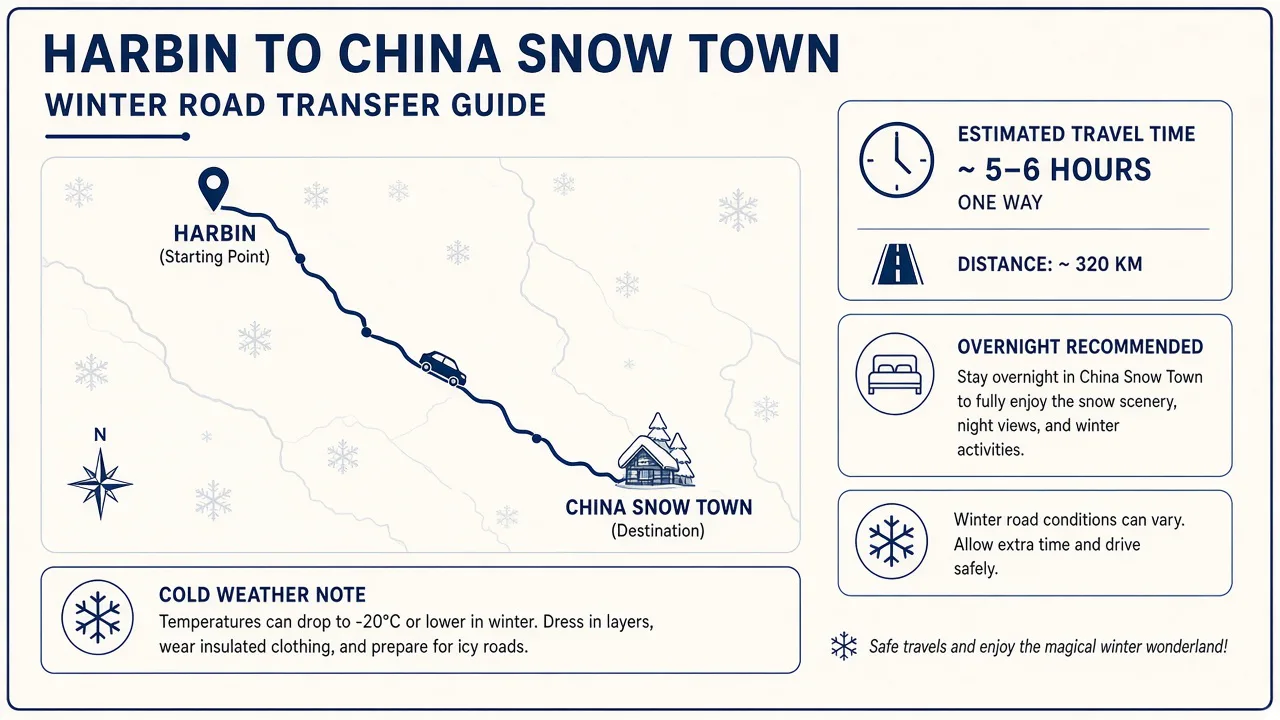
The winter road from Harbin is about 5–6 hours. Rail plus a shuttle is the alternative, and both need daylight at the far end.
Sleep inside or at the edge of the scenic area if the dawn photographs are why you came.
December to February is the season. Midweek January after fresh snow beats a holiday weekend.
Blue hour and the hour after sunrise are the quiet windows. Cold drains camera batteries and patience.
Compare a 3-day village stay, a 4-day longer stay, and adding the village to a Harbin winter.
Questions people ask
- Because the winter road is typically five to six hours each way, and the scenic area still adds entry and an internal shuttle before you are in the lane. Leave in the morning and you arrive late, walk briefly in the cold, and drive back into the night. Blue hour happened without you. A full daylight loop does not fit between those drives. A comfortable car changes the seat, not the distance or the mid-afternoon sunset. If you have one open day in Harbin, use it in the city — the festival, the streets, a proper meal — through Harbin tours. The mountain is a stay. Two nights is the minimum that puts one complete village day between the journeys. Anything shorter is a long sit with a postcard in the middle.
- Three days. On the first day you leave Harbin in the morning and accept that arrival may be dusk or dark if the road runs long. You sleep inside the scenic area or at the edge, so the next morning does not depend on a shuttle. On the second day you go out for first light, eat afterward, rest in the warm hours, and take a shorter afternoon walk before sunset in the mid-afternoon. Night lights are optional. On the third day you leave after a short dawn or after breakfast, and you give Harbin a buffer before any flight. That middle day is the whole point. Rime may or may not be on the branches. The snow-loaded roofs are the sight you planned to have time for.
- Add the third night when you want a spare dawn, when someone in the group runs cold or sleeps badly, or when a weather miss on the first morning would ruin a shorter stay. Four days and three nights give you the road, two full village days, and the road back. Use the extra day to repeat the lane that worked, or to try again after wind or falling snow, not to drive to Yabuli. Skiing is a different trip. The third night should be in the same place as the others, inside or at the edge. Moving it toward the station to “save” the last morning usually deletes the second dawn, which was the reason for the extra night. Families unsure about one early alarm should treat three nights as the kinder minimum.
- Yes, if the night arrival is the first evening of a two-night or three-night stay and your room can reach the lane on foot before sunrise. The dark arrival is then just travel, and the village day is still ahead of you. It is a poor trip if that night is your only night and you leave after breakfast. You will have seen lamps and a rushed morning beside the luggage. Festival plans sometimes accept exactly that glimpse. Harbin’s Snow Town chapter describes it from the city side. If Xuexiang is the reason you came, protect the second night so a late road does not become the whole memory. Eat, sleep, and set the clothes out before you close your eyes.
- Keep both pieces intact. Spend nights in Harbin for the festival, including a real evening at the ice park on a day that is not also your mountain return. Spend two or three nights in the village for the lanes, with the five-to-six-hour road on the travel days. Sleep in the city before you start that road, and sleep there again before you fly. Harbin tours holds the festival days. China Snow Town tours holds the road and the village nights. The Harbin travel guide keeps the city readable. Do not glue a day trip onto a festival evening and call it a combined winter. If the total days cannot hold both blocks, choose one and do it properly.
- A choice, made on purpose. If you already had the dawn you needed, leave after breakfast and give the return its margin. If the only good morning was lost to weather and you are not flying tonight, take a short final dawn and then go. The drive to Harbin is another five to six hours and can run longer on a Sunday or in snow. Picture an afternoon or evening arrival, and meet the car or the station transfer at the point you confirmed on the way in, with the name written in Chinese. Then stop in the city. An international flight the same evening is the mistake that undoes a good morning. Soup and an early night in Harbin count as a successful last page.
Plan a China Snow Town visit
Share your Harbin dates and whether you can sleep two nights in the village. We reply with a road plan that protects the dawn.