
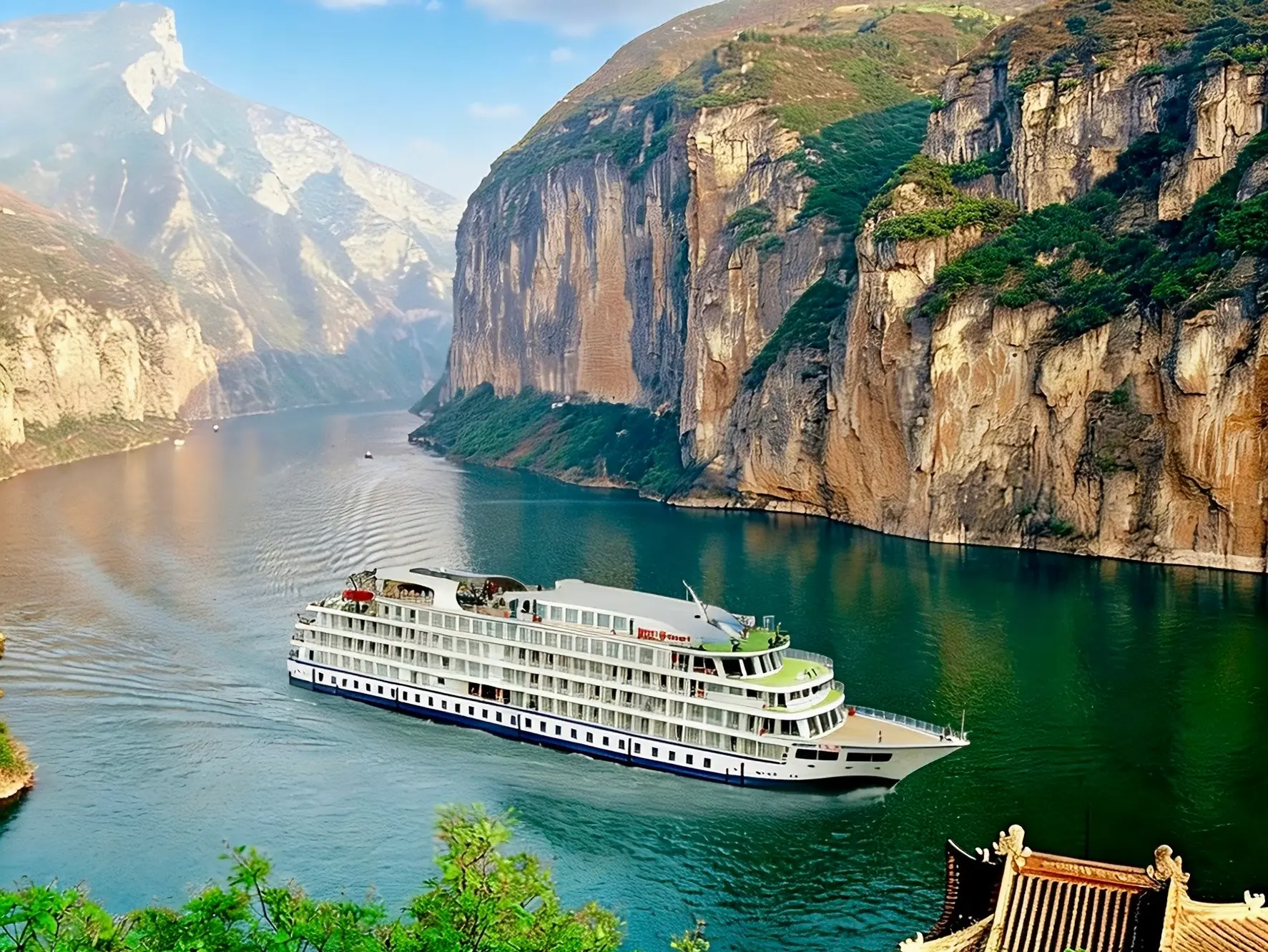
Reviews of Yangtze cruises are often mixed for a clear reason: travelers who want several quiet days of scenery tend to enjoy the journey, while those expecting ocean-cruise entertainment or fully independent sightseeing may find the fixed schedule slow.
Yangtze River Cruise: Pros and Cons
| What makes it worthwhile | Main trade-off |
|---|---|
| See the Three Gorges continuously from the river | Takes 4–5 calendar days |
| Unpack once for several nights | Less independent than normal city travel |
| Travel between Chongqing and Yichang while sightseeing | Shore excursions usually operate on group schedules |
| Combines scenery, cultural stops and the Three Gorges Dam | Exact excursions vary by ship and departure |
| Provides a slower break between busy China destinations | Onboard entertainment is lighter than on a large ocean cruise |
| Can be relatively easy physically between shore excursions | Some excursions still involve buses, stairs and walking |
| Balcony and open-deck viewing can be very relaxing | Weather and visibility cannot be guaranteed |
Most of the disagreement about the Yangtze comes from how travelers value the two sides of this table.
Why Are Yangtze Cruise Reviews So Mixed?
Because travelers are often reviewing very different ships—and arriving with very different expectations.
Is the cruise mainly for Chinese tourists?
On many mainstream Yangtze departures, domestic Chinese travelers can make up a large part of the passenger mix. Other sailings attract more international groups, and premium foreign-facing products can feel quite different. Do not assume every departure has the same atmosphere.
If English support and an international guest mix matter to you, choose the ship and departure accordingly rather than booking solely by price. See how to compare Yangtze cruise ships.
Is there enough to do onboard?
A Yangtze river ship is not a large ocean cruise liner. There may be talks, demonstrations, evening entertainment, a gym, spa or other activities depending on the ship, but the main experience is the river itself.
There are also periods when very little is scheduled. Travelers who enjoy reading on a balcony, watching the landscape and having some downtime often like this. Travelers who need constant activities can find it slow.
Are the shore excursions very group-oriented?
Usually, yes. Mainstream cruise excursions are organized around buses, guides and scheduled return times. Some travelers appreciate the convenience; others find the group pace less appealing than independent sightseeing.
The exact excursions also matter. Fengdu, White Emperor City, Wushan-area tributaries and other stops appear in different combinations depending on the cruise. See the Yangtze cruise itinerary for how shore days are structured.
Is English available?
English support is available on international-facing Yangtze cruises, but the depth of English service varies by cruise line, ship and departure. Confirm the excursion language and onboard support before booking if this matters to you.
Are Yangtze cruises crowded or noisy?
It depends heavily on the ship and travel date. Larger ships naturally have more passengers moving through restaurants, excursion assembly points and gangways. Chinese public holidays can make shore attractions noticeably busier.
A smaller premium ship provides a different atmosphere from a large mainstream vessel, but at a much higher price. Compare Yangtze cruise ships and see best time for a Yangtze cruise for season and holiday effects.
Who Usually Enjoys a Yangtze Cruise?
| Traveler | Why it can work well |
|---|---|
| Couples | Several relaxed days together without changing hotels |
| First-time China visitors on a longer trip | Adds river and mountain scenery to an otherwise city-heavy itinerary |
| Repeat China visitors | Provides a slower experience different from intensive sightseeing |
| Landscape-focused travelers | Qutang and Wu Gorges are experienced directly from the river |
| Older travelers | Less daily packing and transport than a multi-city land itinerary |
| Travelers between western and eastern China | The cruise can function as both transportation and sightseeing |
Older travelers should still check the physical demands of shore excursions. Some sites involve stairs, uneven surfaces or bus transfers even though the cruise itself is relatively easy physically.
Who May Prefer to Skip It?
The Yangtze is probably not the best use of your time if several of these describe you:
* you have a very short China itinerary * you prefer completely independent travel * you want to be actively sightseeing from morning to night * you dislike scheduled meals or group excursions * your main priority is hiking or high-intensity mountain scenery * several nights of quiet ship time sound boring * your route requires major backtracking solely to take the cruise
Skipping the cruise does not mean the Yangtze is overrated. It simply means another part of China may fit your travel style better.
Is the Cruise Worth 4–5 Days of a China Trip?
For many travelers, time matters more than price. Four or five days is a substantial part of a first China trip.
DragonTrail planning view — not a fixed rule
| Total China trip | How we would think about the cruise |
|---|---|
| 7–9 days | Usually skip unless the Yangtze is one of your main reasons for visiting China |
| 10–13 days | Possible, but keep the rest of the itinerary focused |
| 14–20 days | Much easier to justify as a slower scenic section |
| 3 weeks or more | Strong fit if river scenery and slower travel appeal to you |
These are not hard cutoffs. A traveler who has dreamed of the Three Gorges for years may reasonably include the cruise in a shorter trip, while someone who prefers cities and hiking may skip it even with three weeks available.
The Cruise Is More Worthwhile When It Also Moves You Forward
One of the Yangtze cruise's less obvious advantages is that it is a one-way journey. Instead of spending four days sightseeing and then returning to your starting point, you finish in another part of China.
For example, a route such as Beijing → Xi'an → Chengdu / Chongqing → Yangtze cruise → Yichang → Shanghai can work naturally downstream. The reverse direction can make sense when traveling from eastern China toward Chongqing or Sichuan.
The cruise is less efficient when you have to make a major detour to reach Chongqing or Yichang and then backtrack afterward.
See the Yangtze cruise itinerary for downstream and upstream patterns.
What Does a Day on a Yangtze Cruise Actually Feel Like?
A typical cruise day is a mixture of scheduled activity and free time rather than continuous sightseeing.
Morning Breakfast followed by a shore excursion or scenic sailing.
Late morning / lunch Return to the ship, eat and continue along the river.
Afternoon Another scenic section, tributary excursion, cultural stop or downtime onboard depending on the itinerary.
Evening Dinner, light entertainment or free time.
There can be several hours when the main activity is simply watching the river from your balcony, lounge or open deck. For some travelers that is exactly the appeal. For others, it is the main reason not to book.
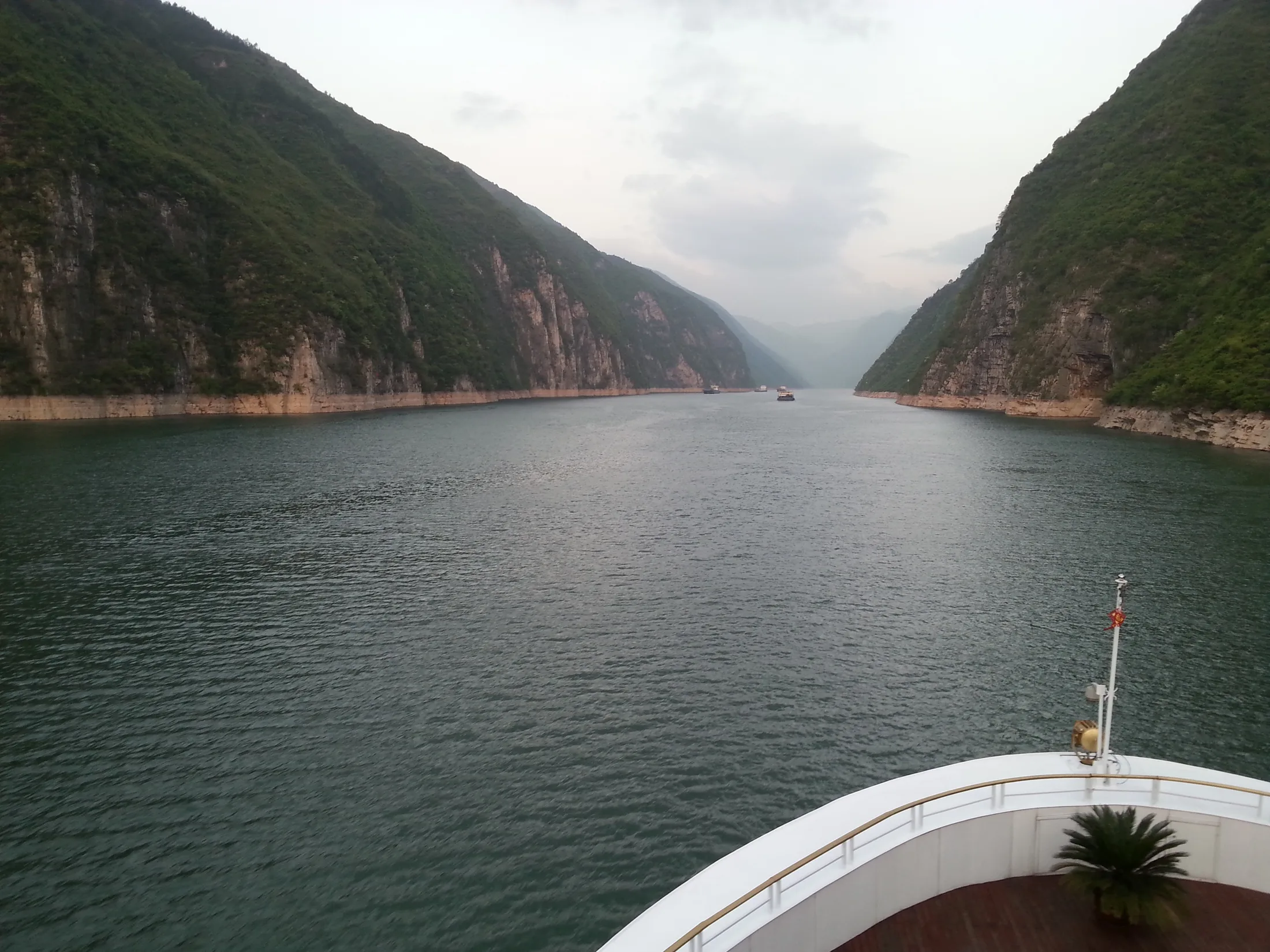
For day-by-day structure, see the Yangtze cruise itinerary.
Is a Yangtze Cruise Worth the Money?
The cruise fare is easier to judge when you remember that it covers more than accommodation. You are normally paying for several nights aboard, meals, transportation along the Yangtze and a program of included sightseeing. Optional excursions, cabin upgrades, service charges and transfers can still change the final cost.
For most travelers, the value question is therefore not "Is a river cruise cheap?" It is: "Would I rather spend this money and these days on the Yangtze, or use them somewhere else in China?"
A mainstream premium cruise and Yangzi Explorer are also very different value decisions. The first competes mainly on ship quality, cabin, inclusions and price. Yangzi Explorer charges substantially more for a much smaller ship, higher service ratio and more premium experience.
See our Yangtze cruise prices & booking guide for current planning prices.
Yangtze Cruise vs Other Scenic Days in China
| Experience | Best if you want | Typical travel style |
|---|---|---|
| Yangtze cruise | Slow river scenery with minimal hotel changes | Relaxed, structured |
| Zhangjiajie | Dramatic mountain scenery and active sightseeing | More walking, cable cars and viewpoints |
| Guilin / Yangshuo | Karst scenery with more independent options | Flexible mix of river, cycling and countryside |
| Extra city days | Food, museums, neighborhoods and nightlife | Independent urban exploration |
None is universally better. The question is whether you want the Yangtze's slow-moving river experience or would rather use those days for a more active destination.
Has the Three Gorges Dam Changed the Experience?
Yes. Today's Yangtze cruise travels through a reservoir-influenced landscape, and the river is different from descriptions and photographs made before the Three Gorges Dam reached its current operating level. Water levels, shorelines and settlements have changed.
That does not mean the Three Gorges disappeared. Qutang and Wu still rise steeply above the river, Xiling forms the eastern part of the journey, and the dam itself has become one of the major sights near Yichang.
The important thing is to book the modern experience rather than expecting the Yangtze described in travel writing from decades ago.
For the history and physical changes, read our Three Gorges Dam guide. For gorge-by-gorge context, see the Three Gorges guide.
A Simple Decision Checklist
The Yangtze is probably a good fit if you can answer "yes" to most of these:
* Do I actually want several days of river and mountain scenery? * Does a slower travel pace appeal to me? * Am I comfortable with scheduled shore excursions? * Can I spare 4–5 days without cutting something I value more? * Does Chongqing → Yichang, or the reverse, fit my route? * Am I comfortable with weather and visibility being unpredictable? * Have I chosen a ship whose cabin, language support and passenger scale suit me?
If you are hesitating mainly because you do not know which ship to choose, that is a ship-selection problem rather than a reason to reject the Yangtze itself. Compare Yangtze cruise ships for that decision.
Common Reasons Travelers Choose the Wrong Cruise
- Booking by price without checking the ship. A larger mainstream ship and a small premium ship can feel very different.
- Expecting an ocean-cruise entertainment schedule. The Yangtze is primarily about the destination and river journey.
- Ignoring the group nature of shore excursions. Make sure structured sightseeing suits your travel style.
- Giving the cruise too much of a short first trip. Consider what has to be removed from the itinerary.
- Expecting guaranteed clear gorge views. Weather and mist are part of the journey.
- Using pre-dam photographs as the expectation for today's landscape.
How We Would Decide
For a first China trip of around two weeks or longer, we would seriously consider the Yangtze if scenery and slower travel are priorities. It adds a very different rhythm from Beijing, Xi'an, Shanghai, Chengdu or Chongqing.
For a short trip, we would only add it if the Three Gorges are genuinely one of your priorities. Four or five cruise days should not be included simply because the Yangtze appears on a classic China checklist.
Once the cruise itself makes sense, choose the ship based on your dates, cabin expectations, passenger scale, English support and budget.
Related Guides
Yangtze River Cruise Guide
Start with the complete overview of the Chongqing–Yichang cruise.
Compare Yangtze Cruise Ships
Choose between Century, Victoria, Vista, Yangtze No.3 and Yangzi Explorer.
Yangtze Cruise Itinerary
See how the 4-day downstream and 5-day upstream journeys actually unfold.
Yangtze Cruise Prices & Booking
Compare current planning prices and what each fare includes.
Best Time for a Yangtze Cruise
Compare weather, temperatures and Chinese holiday periods.
Three Gorges Guide
See what you actually experience through Qutang, Wu and Xiling Gorges.
DragonTrail does not operate Yangtze cruise ships. We compare sailings through local cruise partners and help fit the cruise into the rest of your China trip. If we think the cruise does not fit the itinerary you send us, the useful answer may be to leave it out.
Decide With Your Actual China Itinerary
Send us your travel dates, cities you already want to visit, number of travelers and approximate budget. We can tell you whether the Yangtze fits naturally and, if it does, compare a small number of suitable sailings.
FAQ
- Ja, für Reisende, die gerne langsame, malerische Reisen unternehmen, die Drei Schluchten vom Fluss aus erleben möchten und sich damit wohlfühlen, 4–5 Tage auf einer strukturierten Kreuzfahrt zu verbringen. Für kurze Reiserouten oder Reisende, die den ganzen Tag unabhängiges Sightseeing bevorzugen, ist es weniger lohnenswert.
- Das kann es sein. Die Kreuzfahrt ist auf einer Reise von etwa zwei Wochen oder länger leichter zu rechtfertigen, da vier oder fünf Tage eine erhebliche Zeitspanne darstellen. Bei einer kürzeren Reise sollten Sie sie nur einplanen, wenn der Jangtse eines Ihrer Hauptziele ist.
- Das hängt davon ab, was Sie von der Reise erwarten. Es gibt Landausflüge, Mahlzeiten und einige Aktivitäten an Bord, aber es gibt auch lange Phasen des Flussbeguckens und der Untätigkeit. Reisende, die gerne langsam reisen, schätzen dies oft; Reisende, die ständige Aktivität benötigen, könnten es als zu ruhig empfinden.
- Viele Mainstream-Abfahrten führen eine große Anzahl chinesischer Inlandsreisender mit sich, während einige internationale und Premium-Abfahrten ein gemischteres Gästeprofil haben. Die Zusammensetzung der Passagiere variiert je nach Schiff, Datum und Buchungskanal.
- Kreuzfahrtlinien mit internationalem Ansatz bieten englische Unterstützung, aber die Menge an Englisch, die an Bord und bei Landausflügen verwendet wird, variiert. Bestätigen Sie die Sprachunterstützung für das spezifische Schiff und die Abfahrt, bevor Sie buchen.
- Normalerweise sind mehrere Landausflüge inbegriffen, aber das genaue Programm variiert je nach Reederei und Fahrt. Einige Attraktionen können optional sein. Vergleichen Sie die tatsächliche Liste der Inhalte, anstatt davon auszugehen, dass jede Jangtse-Kreuzfahrt die gleichen Orte besucht.
- Der Damm hat die Wasserstände, die Uferlinien und den Charakter des Flusses verändert, sodass die heutige Kreuzfahrt anders ist als die in älteren Büchern und Fotografien beschriebene Reise vor dem Bau des Damms. Die Drei Schluchten bleiben wichtige Landschaften, und der Damm selbst ist nun Teil der modernen Kreuzfahrterfahrung.
- Keine der beiden Richtungen bietet an sich einen besseren Wert. Flussabwärts dauert normalerweise 4 Tage / 3 Nächte, während flussaufwärts in der Regel 5 Tage / 4 Nächte dauert. Wählen Sie die Richtung, die am besten zu Ihrem restlichen China-Reiseplan passt und die geringste Rückkehr erfordert.
- Oftmals ja, weil Sie nur einmal auspacken und weniger Zeit mit dem Wechsel der Hotels verbringen. Allerdings können Landausflüge Treppen, unebenes Gelände und Bus-Transfers beinhalten, daher prüfen Sie die spezifische Schwierigkeit der Ausflüge, wenn Mobilität ein Anliegen ist.
- Das hängt vom Alter und den Interessen ab. Kinder, die Boote, Landschaften und kulturelle Stopps mögen, könnten sie genießen, während sehr junge Kinder lange Segelzeiten und geplante Ausflüge möglicherweise langweilig finden. Prüfen Sie die Kabinenbelegung und die Regeln für Ausflüge für die spezifische Kreuzfahrt.
- Es kann von Vorteil sein, wenn Ihnen ein kleineres Schiff, ein höherer Servicelevel und eine privatere Atmosphäre wichtig sind. Wenn Preis und Abfahrtsmöglichkeiten mehr ins Gewicht fallen, könnte ein gutes Premium-Massenschiff ein besseres Preis-Leistungs-Verhältnis bieten. Vergleichen Sie die tatsächlichen Optionen für Ihre Daten.