- Chinese name: 兵马俑 (Bīngmǎyǒng), literally 'soldier-and-horse figures'
- Location: Lintong district (临潼区, Líntóng Qū), roughly 40 km east of central Xi'an
- Discovered: 1974, by farmers digging a well
- UNESCO status: Part of the Mausoleum of the First Qin Emperor, a World Heritage Site since 1987
- What's on site: Main museum area: Pits 1, 2 and 3 plus the Bronze Chariots exhibition; the same ticket also covers Lishan Garden / the Qin Shi Huang Mausoleum Archaeological Site Park, reached by free shuttle.
- Tickets and hours: Standard adult ticket ¥120 (eligible students ¥60); real-name online reservation required. Peak season ticket inspection 08:30–17:00 (closes 18:30); off-season inspection ends 16:30 (closes 18:00). Confirm current notices
What are the Terracotta Warriors?
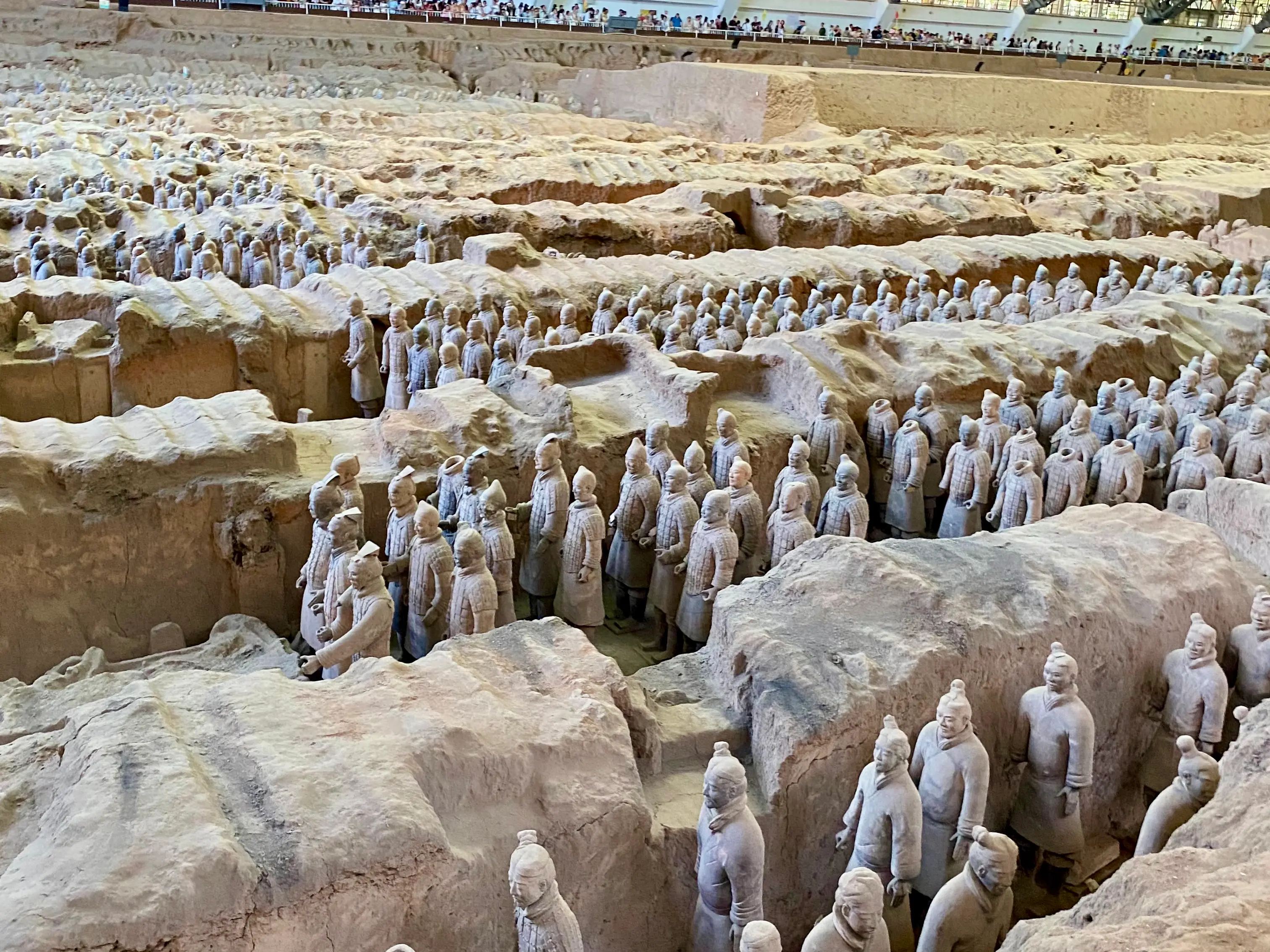
The Terracotta Army was built as part of the mausoleum complex of Qin Shi Huang, who unified China and founded the Qin dynasty. The figures — soldiers, officers, horses and chariots — were arranged in battle formation and buried to protect the emperor in the afterlife. They were rediscovered accidentally more than two thousand years later.
Why were they buried here?
Chinese historical and archaeological accounts connect the army to Qin Shi Huang's mausoleum at the base of Mount Li (骊山, Lí Shān). The figures functioned as a guard for the emperor's tomb rather than as public art.
How many figures are there?
Estimates for the total number of figures across all three pits are commonly cited in the thousands, though the exact count and condition vary by pit and excavation stage. Treat any single number you see online as an estimate rather than a fixed count.
Pit 1 vs Pit 2 vs Pit 3
If you can only see part of the site, Pit 1 is the priority — it holds the rows of soldiers most people picture when they think of the Terracotta Army. The Bronze Chariots exhibition hall, shown separately from the pits, is also worth the extra time.
| Pit | What's inside | Why visit |
|---|---|---|
| Pit 1 | The largest pit, with long rows of standing infantry | The single most photographed part of the site — go here first |
| Pit 2 | A mix of cavalry, chariots and kneeling archers, with more visible excavation-in-progress | Best for understanding how the figures were arranged militarily |
| Pit 3 | The smallest pit, thought to represent a command post | Quick to see; skip first if you're short on time |
The Bronze Chariots hall
A separate exhibition building displays two bronze chariot-and-horse sets found near the mausoleum. They're smaller in scale than the terracotta figures but show a different level of craftsmanship, and many visitors nearly miss them by only visiting the three pits.
How to get to the Terracotta Warriors
The site is a separate trip from central Xi'an, not a stop you can casually add to a city-wall walk. Most visitors go by private car or organized tour, though public buses also run from the city.
Private car or tour
The most time-efficient option, since it removes the need to find and time public transport around a fixed schedule.
Public bus
Tourist buses run from central Xi'an to the site; check current routes and schedules locally, since bus numbers and departure points change.
Combining with other sights
Most visitors treat this as a dedicated half day rather than combining it with in-town sights on the same morning.
Common Terracotta Warriors mistakes
Treating it as a 1-hour stop
A fuller visit covering both the Warriors museum area and Lishan Garden can take around three hours or more before transport, while a pits-focused visit can be shorter.
Skipping the Bronze Chariots hall
It's a separate building from the three main pits and easy to miss if you're rushing or don't know it's part of the site.
Not confirming current hours and ticket rules in advance
Expecting to touch or get close to the figures
The pits are viewed from raised walkways and barriers, not up close — bring a zoom lens or binoculars if photography matters to you.
Confusing it with other 'warrior' attractions
Some replica or themed exhibits elsewhere use terracotta-warrior imagery; the original excavation site is specifically in Lintong district, east of Xi'an.
Terracotta Warriors FAQ
- They were built more than two thousand years ago during the reign of Qin Shi Huang, China's first emperor, and rediscovered in 1974.
- The site sits in Lintong district, commonly cited as roughly 40 km east of central Xi'an — plan for a dedicated half-day trip rather than a quick add-on.
- A fuller visit covering both the Warriors museum area and Lishan Garden can take around three hours or more before transport, while a pits-focused visit can be shorter. Add central Xi'an ↔ Lintong travel time on top of on-site time.
- No. The figures are viewed from walkways and behind barriers to protect them; touching is not permitted.
- A guide isn't required, but many visitors find the historical context — why the army was built, how it was arranged, what each pit represents — much clearer with one.
- Most travelers keep this as its own half day, given the travel time involved, and save the city-center sights for a separate morning or afternoon.
- Photography rules can vary by area of the site and change over time; check current signage and official guidance on-site.
Plan a Xi'an visit
A private tour handles the transfer, entry logistics and pacing between the three pits and the Bronze Chariots hall, so you're not working out bus routes or ticket lines on the day.
Tell us your travel dates and group size and we'll help you plan the visit.