
Suzhou at a glance
| Detail | Plan |
|---|---|
| Good first stay | 2 nights for gardens and Pingjiang |
| Add one excursion | A third night for Tongli or the west side |
| From Shanghai | About 25–35 minutes to Suzhou Station |
| On to Hangzhou | About 1.5–2 hours to Hangzhou East |
| Walk | North gardens, south gardens, and Pingjiang |
| Take a car | Water towns, Tiger Hill, and luggage |
Most Suzhou trips we arrange fall into three shapes. Suzhou Essence is two days in the old city, gardens and Pingjiang Road, with no excursion bolted on. Classical Suzhou is three days, the same old-city walks plus one water town. Suzhou and Hangzhou is four or five days, with the train between them treated as its own event. You can ask for any of the three on Suzhou tours. The days below are the substance. The precise arrangement follows your dates, your group, and how you like to spend a morning.
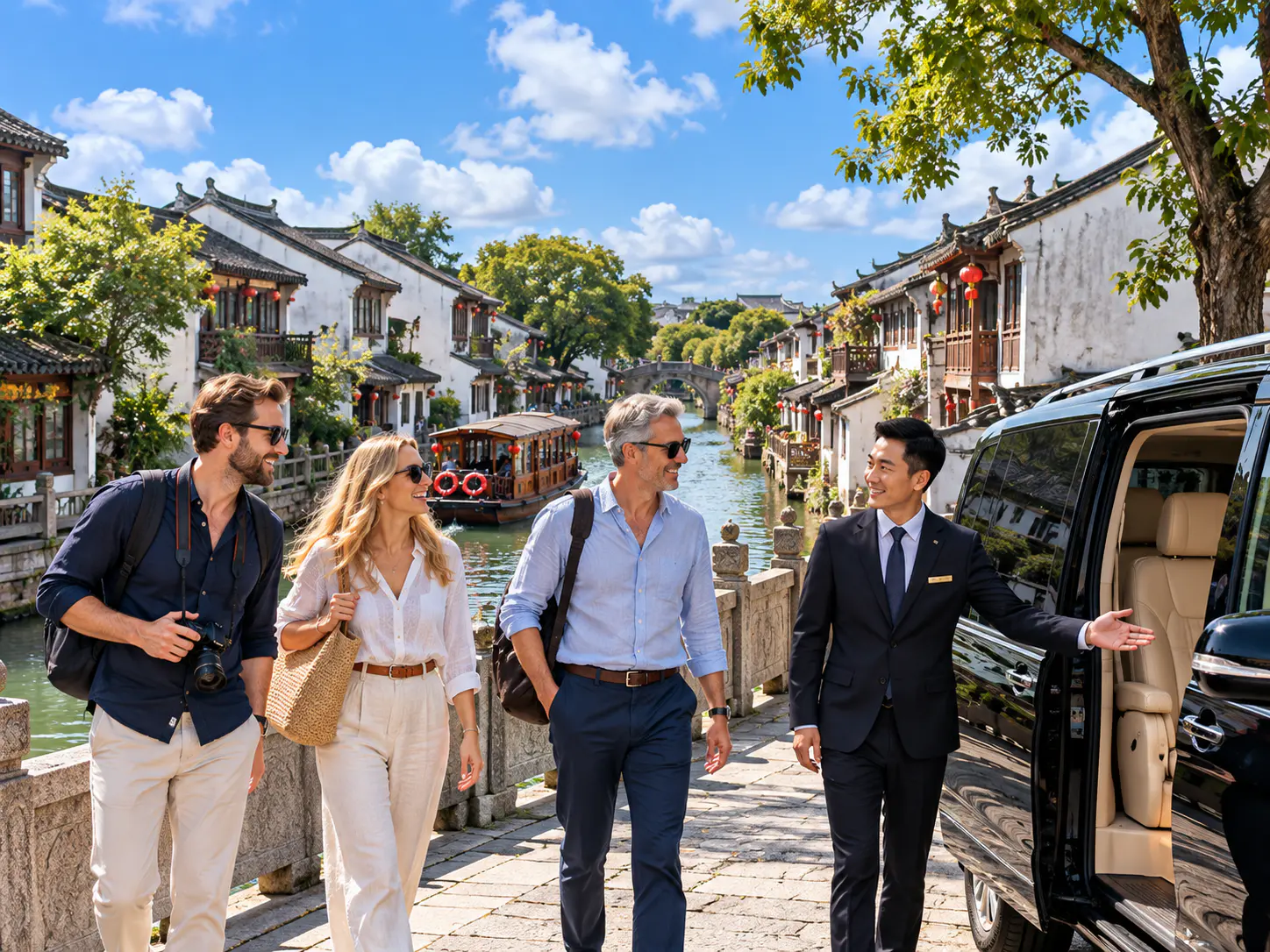
These are not a menu of every sight in Jiangsu. They are the lengths at which the city stays pleasant. A shorter visit can still be a good sampler, and it is a different request. A longer one should add rest and repetition before it adds a second canal town.
What stays constant in every shape
Each shape uses the same daily rhythm. Morning is one garden cluster, begun near opening. Afternoon is either a second, smaller stop in the same part of town or a canal walk. The evening stays on foot. Only one day in the trip carries a long transfer, and that transfer is announced in advance: the train from Shanghai, the ride to a water town, or the train to Hangzhou East. A day that tries to hold two of those is the day we will talk you out of.
Humble Administrator’s Garden anchors the first full morning, with Suzhou Museum beside it when the entry time cooperates. The Master of the Nets and Canglang Pavilion anchor a second morning when the trip is long enough. Lingering Garden, Tiger Hill, and Hanshan Temple stay off the list unless we have deliberately built a west day, which the three named shapes do not assume. Pingjiang Road is the evening on the first old-city day. Shantang Street is optional color, never the lane that replaces Pingjiang. The detail of those choices lives in the classical gardens guide and the itinerary.
A guide and a driver do different work, and neither is automatic scenery. Inside a garden, a guide keeps the sequence intelligible and the pace human. On the road, a driver covers a station and luggage, a west-side hop if you have added one, or the water-town day with the car waiting while you walk. Many old-city mornings need neither a waiting car nor a lecture, only an early gate and a clear map. Tell us which hours you want accompanied. We would rather leave a morning quiet than fill it.
Check the current opening arrangement as the dates get close. Hours move, especially in holiday weeks, and a shape survives that better than a minute-by-minute fantasy does. We shift the museum and the second garden. We do not invent a third district to replace a closed hour.
Suzhou Essence, two days
Essence is the old city, slept in once or twice, and then released. Day one starts at Humble Administrator’s Garden, ideally as the gates open, for ninety minutes to two and a half hours. Suzhou Museum comes next if the timed entry still leaves an afternoon, about an hour to ninety minutes. Lion Grove is included only when the group is curious and the rockery is moving. Lunch sits near the north-central lanes. Pingjiang Road begins by mid-afternoon and runs into the evening, with dinner a street or two off the busiest stretch.
Day two starts south. The Master of the Nets comes first, forty-five to seventy minutes, then Canglang Pavilion for a similar span. Lunch is unhurried. Couple’s Garden can take the later afternoon if feet agree, because it sits toward the Pingjiang side and does not require a new district. If feet do not agree, the afternoon is a rest, a short return to the canal, or the train. Shantang is not part of the promise. A water town is not part of the promise. Tiger Hill is not hiding in the margin.
Arrival and departure wrap the two days rather than competing with them. A late arrival the evening before is the comfortable way to begin, so day one is a real morning. If you must arrive on the morning of day one, we aim for Suzhou Station early enough that the garden still gets the first hours, and we drop the museum before we drop the garden. Departure after lunch on day two is clean. Departure early the next morning is cleaner still if you want the second evening. Suzhou Station is the railhead we plan around. Suzhou North changes the last hop, so the ticket has to say the station we named.
Who Essence is for
Essence fits a first visit whose wish is the classical city itself. You want to understand a Suzhou garden by standing in one long enough, and you want the canal lane at dusk, not as a photograph taken on the way to a car. You have two clear days, or two days plus the edges of the nights on either side. You are coming from Shanghai, or through Shanghai, and you are willing to sleep in the old city rather than commute from a distant tower.
It also fits travelers who already know they dislike excursions. The trip never asks you to pack an overnight bag for a canal town or to trade a garden for a hill. Couples, friends, and parents with adult children often prefer this length because the evenings are free and the mornings are specific. A guide on the first morning and a simple station transfer can be the whole of the help you need. The rest is walking.
Essence is a good companion to a longer Shanghai stay when Suzhou should feel like a complete short trip and not a footnote. You leave having seen the north-central cluster, the south gardens, and Pingjiang. That is the definition of the shape. If your description of the trip starts with Zhouzhuang or with West Lake, you are describing one of the other two shapes, and Essence will feel oddly strict. The strictness is the kindness.
Who should skip the two-day shape
Skip Essence if the water town is the reason you are excited. Two days cannot hold Tongli or Zhouzhuang and still give the gardens their mornings. You would either rush the town onto a garden day or delete the south gardens to make room, and neither result is the trip you named. Move to the three-day shape and keep the town on its own date.
Skip it if you only have an afternoon and a morning, with a late train in and an early train out. That pattern is a sampler, and it can be lovely, and it is not two days of Essence. We can still help you spend the hours well. We should not pretend the south gardens and a full Pingjiang evening will fit. Skip it also if Hangzhou is already booked on one of the two days. The train to Hangzhou East is roughly 1.5–2 hours and wants the day it sits in. A two-day window that must contain both cities contains neither.
Skip it if you have been to the famous gardens and you are returning for Tiger Hill, Hanshan Temple, and a slower west side. Essence will walk you through courts you already know and never reach the pagoda. Tell us that. A different two-day emphasis, still based in the old city, can put Lingering Garden and the hill on one morning and leave you a canal evening. That is a fair variation. It is not Essence, and we should not call it Essence.
Classical Suzhou, three days
Classical Suzhou keeps the Essence days and adds one water town. Day one is Humble Administrator’s Garden, the museum if it fits, and Pingjiang into the evening. Day two is the Master of the Nets, Canglang Pavilion, and a quieter afternoon, with Couple’s Garden only if it still sounds like pleasure. Day three is the town. You leave after breakfast, arrive late morning, walk, eat, and return by mid-afternoon or early evening for a simple dinner in the old city. The ride is the long transfer. The gardens do not come along.
Tongli is the default town. It is the calmer half day, and Retreat & Reflection gives the outing a real garden at its center, forty-five to seventy-five minutes, without pretending you are still inside the old walls. Zhouzhuang, in Kunshan, replaces Tongli if you specifically want the famous bridges and you accept the crowds. We then start earlier and treat the day as fuller. Luzhi replaces either if you want the smallest scale. The comparison is on the water towns page. What we will not do is schedule two of them.
A night in Tongli is possible inside this shape when the quiet evening is the point. You give up one night in the old city to have it. For most first visits we keep the single old-city hotel and make the town a day trip, because day one and day two are better when the suitcase stays put. A driver is the natural company on the town day. A guide is more useful on the first garden morning than in a lane you mainly want to wander. Say which you prefer. Both can be arranged. Neither has to be constant from breakfast to dinner.
If you would rather spend the third day at Lingering Garden and Tiger Hill than in a canal town, tell us before we hold the shape. That west day is a handsome alternative, and it is a different trip from Classical Suzhou as we mean it here. Gardens plus one water town is the version with the outing beyond the wall. Gardens plus the pagoda is the version that stays in Suzhou’s own western reach. Both are three days. They scratch different itches, and choosing in advance keeps the first two mornings intact.
How to choose
| Choice | Fit | Skip when |
|---|---|---|
| Suzhou Essence | 2 days | Gardens and Pingjiang, with a night in the old city. |
| Classical Suzhou | 3 days | Gardens, Pingjiang, and one water town. |
| Suzhou and Hangzhou | 4–5 days | Two nights in each city, with the train kept to one day. |
Who the three-day shape is for
This shape fits people who want the classical set without a rush and who also want one look at a canal town. You have three days you can protect. You like the idea of a single excursion with a clear return, and you do not need the excursion to collect every famous town in the delta. You are happy to walk on the first two days and ride on the third.
It fits families who need a change of scene after two garden mornings, and it fits photographers who want Pingjiang at dusk and a town in late morning light, on separate dates. It fits a holiday week only if you accept crowds and early gates. In late March through May, or mid-September through mid-November, outside Qingming, Labor Day, and National Day, it is the length we suggest most often when someone says “Suzhou properly, and one town.” The best time page is the place to test your dates against that hope.
It also fits travelers who want the arrangements held by someone else: entries watched, the town chosen once, the car at the hotel after breakfast on day three, dinner back in a familiar neighborhood. The days are still simple. The help is in the order and the timing, not in a thicker list.
Who should skip the three-day shape
Skip it if you do not want to leave the old city. A third day of smaller gardens, a longer lunch, and another evening on Pingjiang is a wonderful stay, and it is not this shape. We can plan that slower city visit. We should not drive you to Tongli in order to satisfy a name.
Skip it if you already have Zhouzhuang, or a similar town, booked from Shanghai on either side of these dates. A second canal town inside the same week repeats the bridges and steals a garden morning. Keep Essence, enjoy the town on the day you already planned, and let Suzhou be courts and Pingjiang.
Skip it if the three days are not really three days. A late evening arrival, one full day, and an dawn departure is Essence with a fragment, or a sampler with luggage. The water-town day needs a morning departure and a calm return. If that return is also your train to the airport, the shape has become tight in a way we should say out loud. Often the repair is to drop the town, keep the gardens, and leave for the flight from a south-garden morning instead.
Skip it if what you really want is Hangzhou. Three days that try to hold Suzhou’s gardens, a water town, and West Lake will blur all three. Move to the four- or five-day shape, or cut the town and give Hangzhou its nights.
Suzhou and Hangzhou, four or five days
This shape treats the two cities as neighbors with a proper train between them, not as a single breathless loop. Suzhou to Hangzhou East is roughly 1.5–2 hours by high-speed train. Hangzhou East is the usual arrival, and it still needs a local hop toward West Lake. The Hangzhou guide is where that city’s own walks should be read. The days you want held as a trip can be asked for alongside Hangzhou tours as well as on the Suzhou side. One conversation is enough. The geography still changes in the middle.
A four-day version usually means two nights in Suzhou and two nights in Hangzhou. Suzhou gets the Essence pair: north-central gardens and Pingjiang, then the south gardens. The moving day is a single morning cluster, or a late-morning train if the previous evening should stay unhurried, then the lake edge and the hotel in Hangzhou, with the larger Hangzhou sights saved for the next morning. You do not tour Tiger Hill before the train and a mountain temple after it.
A five-day version adds one unhurried date. The clean additions are a water-town day in the Suzhou half, or a slower Hangzhou day that stops trying to see the whole lake and the hills before dinner. Adding both a town and a west-side Suzhou morning inside five days, plus a full Hangzhou list, is how the extra day disappears. We will ask which city is the priority. The priority gets the unhurried date. The other city keeps a strong, shorter shape.
Hotel changes happen once. Bags are easier if the Suzhou nights are consecutive and the Hangzhou nights are consecutive, with the train in between, rather than a zigzag back to Shanghai in the middle. Luggage on the moving morning is a reason to keep that morning light. A station car at each end is often the right help, and then the walking days proceed without a vehicle in tow. Garden paths and Pingjiang will not admit the car anyway.
Who the two-city trip is for
Choose this shape if both cities are genuinely on your list and you can give them four or five days. You want Suzhou’s gardens and you also want West Lake to be a place you wake up beside, not a photograph from a moving window. You are willing to change hotels once. You like trains. You would rather do each city on its own mornings than sample them from a single base in Shanghai, which is possible and usually thinner.
It fits a first journey through this part of the delta, especially in the kinder months, when both cities reward walking. It fits travelers who want the rail leg arranged, the first Suzhou gate secured, and a Hangzhou first morning that does not depend on leftovers. It fits anyone who has looked at a map, seen how close the cities appear, and still wants a person to say that close is not the same as simultaneous.
Four days is enough when Essence plus a real Hangzhou stay is the wish. Five days is better when a water town is also dear to you, or when Hangzhou is the city you came farther for and Suzhou should not shrink to a single gate. Tell us which of those sentences is yours. The shape can lean. It cannot lean so far that one city becomes a platform for the other.
Who should skip the two-city shape
Skip it if Suzhou is the whole desire. Hangzhou will take two nights and a travel day that could have been Lingering Garden, Tongli, or simply a third evening on Pingjiang. Stay with Classical Suzhou or with Essence. The lake will remain available on another journey, and it is better as its own trip than as a duty at the end of a garden visit.
Skip it if you only have three days in the region. Forcing both cities into that window means a moving day with sightseeing glued to both ends, which is the pattern this shape exists to avoid. Choose one city. If you are already sleeping in Shanghai and hoping to “touch” both, take one sampler day to Suzhou and give Hangzhou a different visit, or the reverse. Touching both in one holiday is how people remember stations.
Skip it if a second hotel move sounds worse than a missed city. Some travelers, especially with small children or with a lot of luggage, are happier in one old-city base. Believe that feeling. A beautiful itinerary you dread packing for is the wrong itinerary. Skip it also if Hangzhou is a vague maybe suggested by a list. Maybe is not a reason to shorten Suzhou’s second morning. When the maybe becomes a yes, the four-day shape will still be here.
If you tell us the dates, the station you arrive at, and which of the three wishes is actually yours, we can hold the days in that order. Gardens in the morning, a canal when the day is still in the old city, one long transfer when the map requires it, and a night you did not spend negotiating the next gate. That is the whole offer.
Ways to plan the days
These shapes match the Suzhou tours page. They are starting points, not fixed departures.
Suzhou Essence
Time fit: 2 days
Gardens and Pingjiang, with a night in the old city.
- Suzhou
- Suzhou Essence
Why choose it: Gardens and Pingjiang, with a night in the old city.
Classical Suzhou
Time fit: 3 days
Gardens, Pingjiang, and one water town.
- Suzhou
- Classical Suzhou
Why choose it: Gardens, Pingjiang, and one water town.
Suzhou and Hangzhou
Time fit: 4–5 days
Two nights in each city, with the train kept to one day.
- Suzhou
- Suzhou and Hangzhou
Why choose it: Two nights in each city, with the train kept to one day.
Want help shaping the Suzhou days?
Tell us your dates and whether Tongli or Hangzhou belongs in the same trip. We reply with a garden-and-canal plan, with a car only on the days that leave the old city.
Keep planning
Suzhou
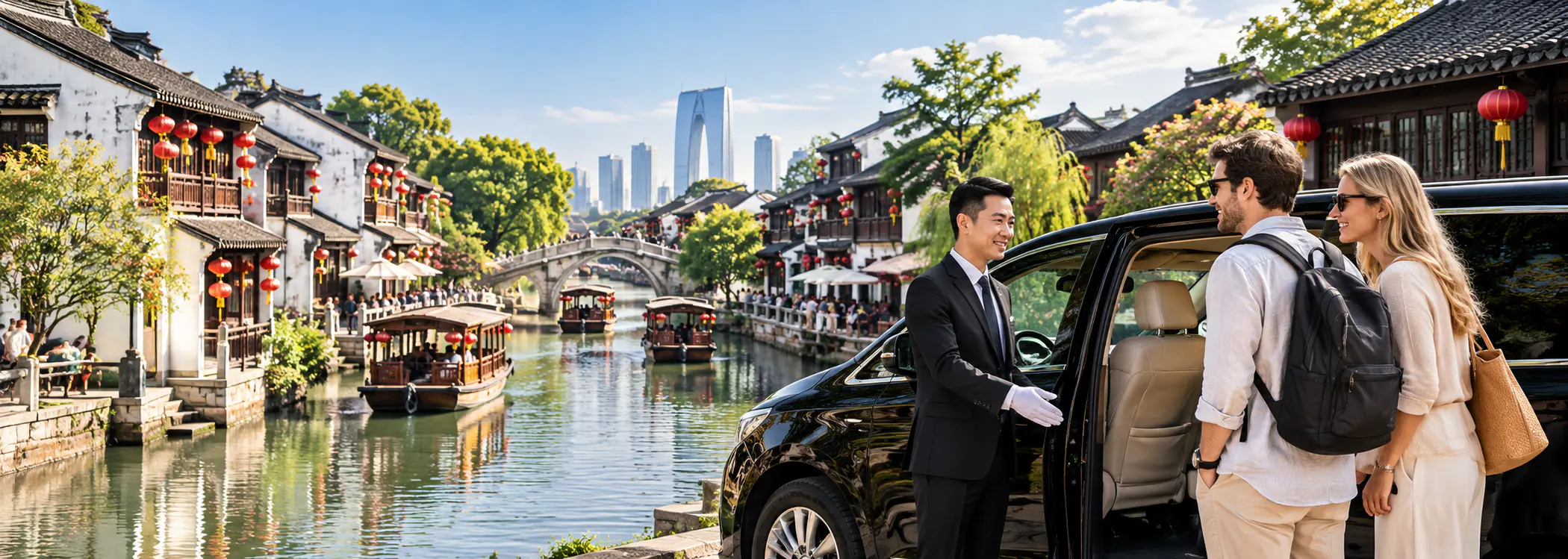
How to pair Humble Administrator’s Garden, the museum, Lion Grove, and the south gardens without rushing the west side.
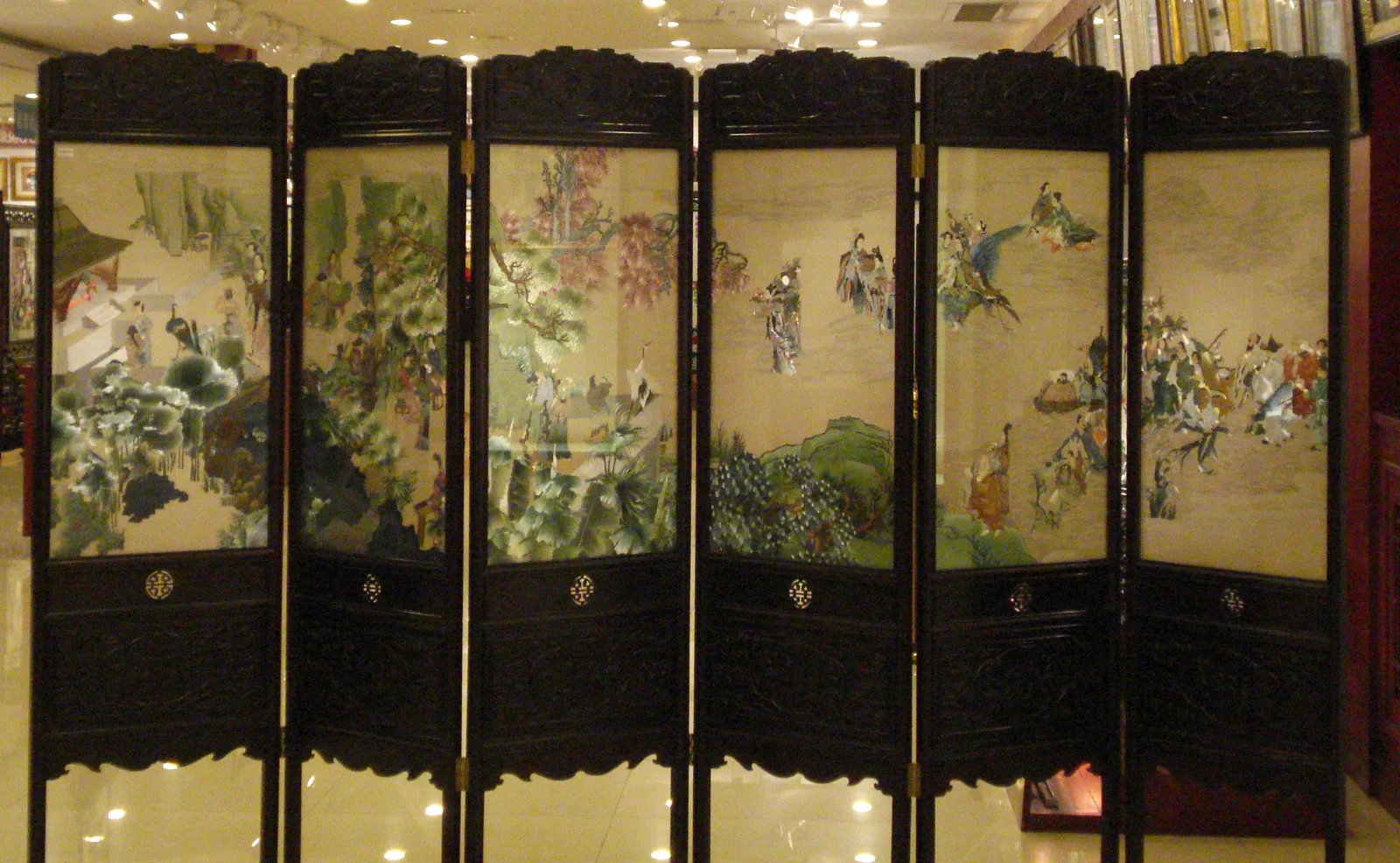
Walk Pingjiang for the canal lane, and treat Shantang as the longer, more rebuilt street — not the same hour.
Late spring and autumn suit the gardens. Summer is humid, winter is quiet, and holiday weeks fill the famous gates.
A one-day sampler from Shanghai, a two-day garden stay, and a three-day plan that adds one water town or the west side.
Tongli, Zhouzhuang, and Luzhi are outside the old city. Choose one, and do not stack two canal towns in a day.
Questions people ask
- Essence is two days in the old city and no excursion beyond it. The first morning is Humble Administrator’s Garden, with Suzhou Museum next door if the entry time still leaves you an afternoon, and the first evening is Pingjiang Road. The second morning is the Master of the Nets and Canglang Pavilion, with Couple’s Garden only if you still want another court. Lingering Garden, Tiger Hill, and the water towns stay off the list. You sleep in or beside the old city and use Suzhou Station. It is the right shape when the gardens and the canal lane are the wish. Ask for it on the Suzhou tours page with your dates, and we will match the gates to the hours that are actually open that week.
- It adds one water town on its own day, and it keeps the first two days as the old-city essence. You leave after breakfast, arrive late morning, and return for dinner, or you sleep in Tongli if a quiet night there is the point. Tongli is the usual choice, with Retreat & Reflection in the middle of the walk. Zhouzhuang or Luzhi can replace it if you have a reason, and a second town is not added. A driver suits this day because the ride is the long transfer. The garden mornings remain walks. If you would rather spend the third day at Lingering Garden and Tiger Hill, say so. That is a good trip and a different one from gardens plus a water town.
- Two nights in Suzhou and two nights in Hangzhou is the four-day core. Suzhou keeps its north morning and its south morning, with Pingjiang on the first evening. The moving day is a late-morning or early-afternoon train to Hangzhou East, about 1.5–2 hours, then the hotel and an easy lakeside arrival. The next morning belongs to Hangzhou, not to leftovers from the train. A fifth day adds either one water town on the Suzhou side or a slower day in Hangzhou, not both plus a west-side Suzhou morning. Read the Hangzhou guide for the lake city itself, and ask for the combined days when you want one held trip. We will ask which city should receive the unhurried date.
- A second water town is the addition we decline inside these shapes. Tongli, Zhouzhuang, and Luzhi are too alike to share a day, and a short Suzhou trip has room for only one. Tiger Hill, with Lingering Garden and perhaps Hanshan Temple, is a full west morning. It replaces the water town on a three-day trip if you prefer the pagoda to the canals. It does not join the town, and it does not join the train day to Hangzhou. Essence, at two days, has room for neither. If your heart is set on the hill and a town and both cities, you are describing a longer stay than these three shapes. We can talk about that longer stay. We will not hide it inside a four-day promise.
- You need them for different hours, and many hours need neither. A guide is most useful on the first garden morning, when the courts are new and the group has mixed patience. A driver is most useful between Suzhou Station and the hotel, on the water-town day, and at the Hangzhou end of the train. Old-city afternoons on Pingjiang are walks, and a car cannot follow you down the lane. Tell us whether you want company in the gardens, help with bags, or both. The shape of the days stays the same either way. What changes is who meets you at the gate and who is simply waiting when the town visit ends.
- Then you have a sampler, not one of these three shapes. Take an early train into Suzhou Station, spend the morning at Humble Administrator’s Garden, add the museum only if the afternoon is still safe, and walk Pingjiang before the train back. Skip the south gardens, the west side, and every water town. We can help arrange that day, and we should not stretch Essence across a window that does not exist. If the one day leaves you wishing for the south gardens or for Tongli, the next visit wants a night in Suzhou. Until then, one garden and one canal lane, done at the right hour, is a complete small trip and a fair way to spend the time you actually have.
Plan a Suzhou visit
Share your dates, whether you arrive at Suzhou Station or Suzhou North, and if a water town matters. We reply with a practical Suzhou plan.