
Request a Quote
Share your hotel area, luggage and meeting times — we will recommend metro, DiDi or a private driver only where it saves stress.
Loading form…
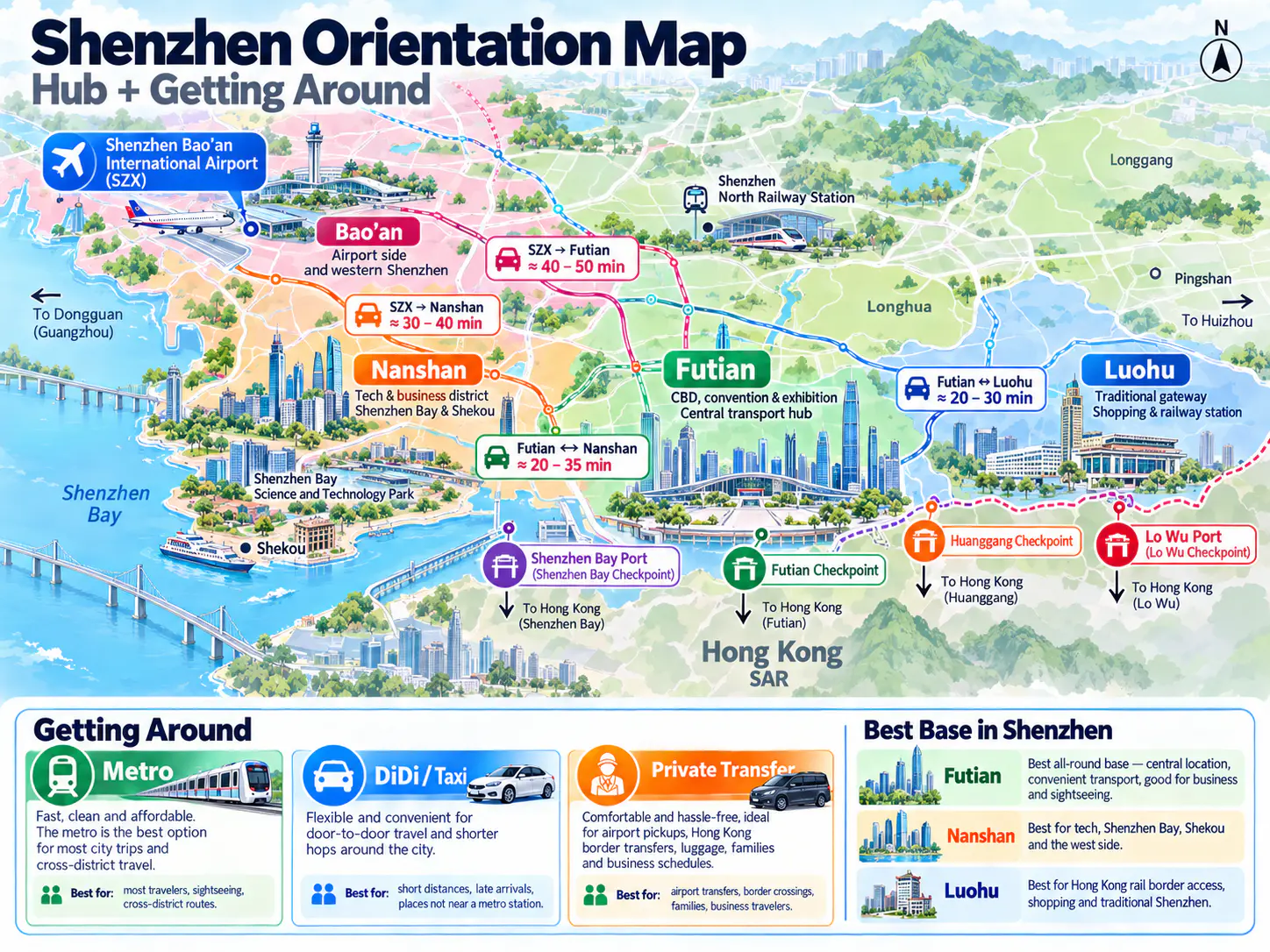
Yes for most visitor days inside the metro-covered core. Shenzhen's metro network is extensive, bilingual and runs frequently, which makes independent travel realistic between Futian, Nanshan and Luohu. What still benefits from road transport: Bao'an Airport with heavy luggage, business/factory circuits with multiple stops, and the Hong Kong border crossings where a driver can meet you on one side only.
| Best for | Central sightseeing, Huaqiangbei shopping, metro-linked hotel stays |
|---|---|
| Time needed | Most central hops 20–45 minutes door-to-door on metro |
| Transport default | Metro first; DiDi for last mile; driver for multi-stop logistics |
| Typical difficulty | Low if you can use Alipay/WeChat Pay or a transit card |
| When to avoid DIY | Business circuits, large purchases, or border-crossing days |
Match the mode to the day's friction rather than reaching for a single default. Metro wins when both ends are near station exits. DiDi wins for short door-to-door hops. A private driver wins when waiting, luggage and multiple stops matter more than per-kilometer fare — see the Huaqiangbei guide for that stack specifically.
| Situation | Metro | Taxi / DiDi | Private driver |
|---|---|---|---|
| Futian ↔ Nanshan sightseeing | Usually best | Fine off-peak | Optional |
| SZX airport with luggage | Possible via Line 11 | Common choice | Helpful for groups or tight timing |
| Huaqiangbei shopping trip | Direct station access | Fine, especially carrying purchases | Useful if combined with factory/business stops |
| Multi-stop business or sourcing day | Not practical for waiting/carrying | Workable but no waiting support | Typical for logistics-heavy days |
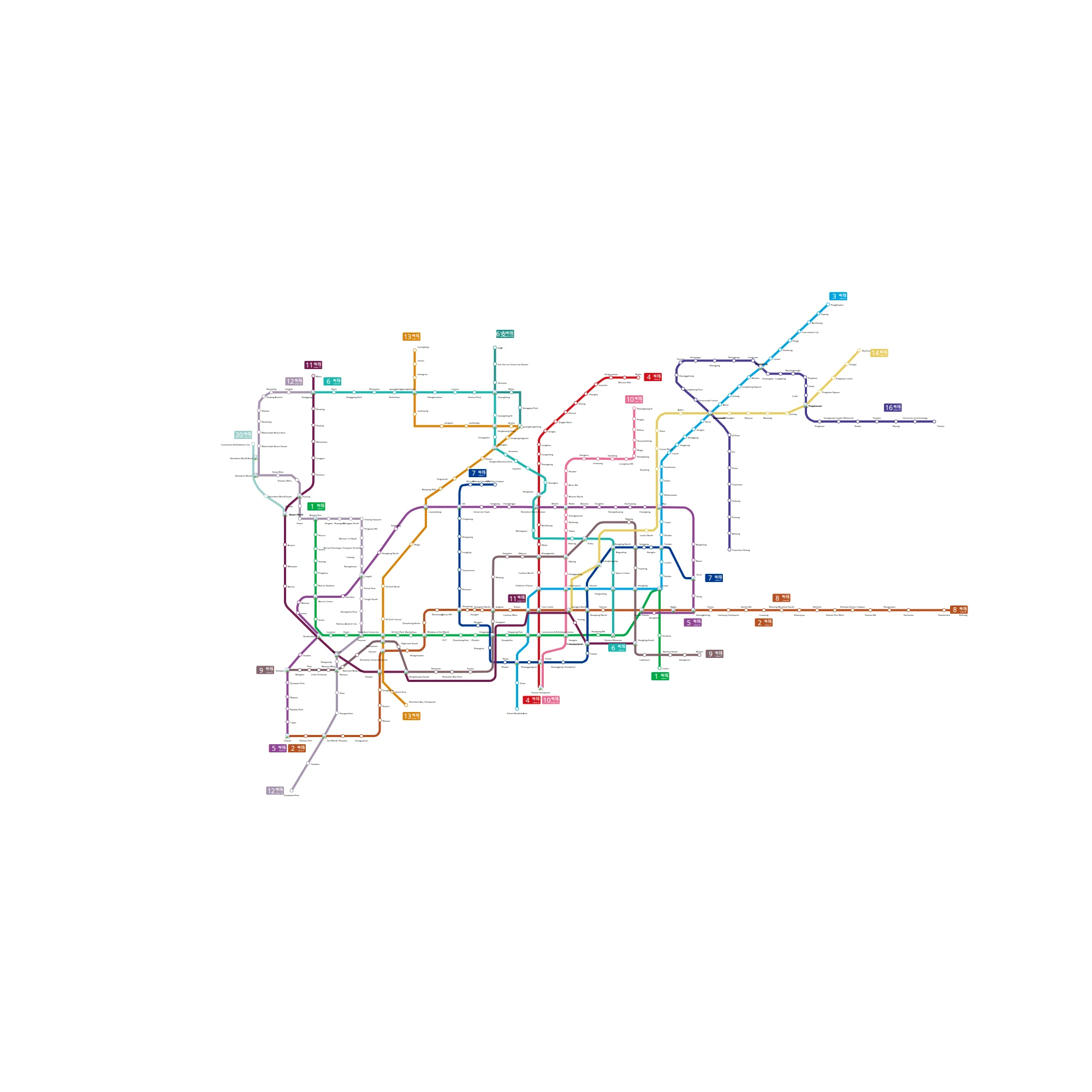
Station names appear in Chinese and English, and major lines are usable without speaking Mandarin. The friction is less about reading signs and more about walking inside large interchanges, choosing the right exit for your destination, and paying at the gate.
Licensed taxis and DiDi both work for short urban hops. DiDi is usually easier when you can show a map pin; hotel doormen often help call a car. The airport and major stations have formal pickup zones — follow signed areas rather than accepting curb solicitations.
Expect worse waits in heavy rain and near Huaqiangbei during peak shopping hours. Luggage fits ordinary cars for one or two medium suitcases; oversized purchases from Huaqiangbei may need a larger vehicle. Address language is the main failure mode: save the Chinese address or a WeChat/Amap pin instead of assuming the driver understands an English hotel name.
Hire a driver for logistics density, not for prestige. A day with one sightseeing stop rarely needs a waiting car. A day that moves between airport, business meetings and Huaqiangbei across districts usually does.
| Scenario | Verdict | Why |
|---|---|---|
| SZX → hotel → meeting → dinner | Good use | One contact, luggage, fixed times |
| Hotel → factory/showroom → Huaqiangbei → hotel | Good use | Waiting and purchase-carrying dominate |
| Pickup after a Hong Kong border crossing | Good use | Driver meets you on the Shenzhen side only |
| Futian hotel → single tech showroom | Not worth it | Metro/DiDi covers this without idle hire hours |
Place transport choices against your route in the itinerary guide, or request a Shenzhen private driver quote once the stop list is real.
Shenzhen Bao'an Airport (SZX) sits northwest of the city; metro Line 11, taxi/DiDi or a pre-booked driver all work depending on luggage and timing — full detail in the Shenzhen Airport Guide. Crossing to or from Hong Kong is a separate border step: a private car cannot drive across the border in one ride, so plan the crossing and your onward transport as two linked legs rather than one continuous transfer. See Hong Kong to Shenzhen for crossing options.
For most international visitors, no. Self-drive assumes a valid license accepted locally, comfort with Chinese navigation and parking, and tolerance for dense urban traffic. Without those, metro, DiDi and occasional private hire are the normal toolkit, and self-drive is not required to enjoy Shenzhen's technology sights or Huaqiangbei.
Yes. Stations are usable with English signage. The practical requirement is a working payment method at the gate (commonly Alipay, WeChat Pay or a transit card/QR option).
It is workable when your app and payment method function in China and you can share a precise pin. Hotel staff can often help with the first pickup.
Metro Line 11 if you travel light; taxi/DiDi or a pre-booked transfer with luggage, kids or a tight meeting. See the airport guide for detail.
Not for a standalone shopping trip — the market has its own metro station. A driver helps more when Huaqiangbei is one stop among several business or sourcing stops.
No. A driver can meet you on the Shenzhen side right after you cross on foot, but cannot drive you across in the same vehicle.
A private driver for airport, border and multi-stop days, or a guided technology day when you want help getting past what is publicly accessible.
Door-to-door private car for Bao'an Airport runs, Hong Kong border transfers, business days and multi-stop city routing.
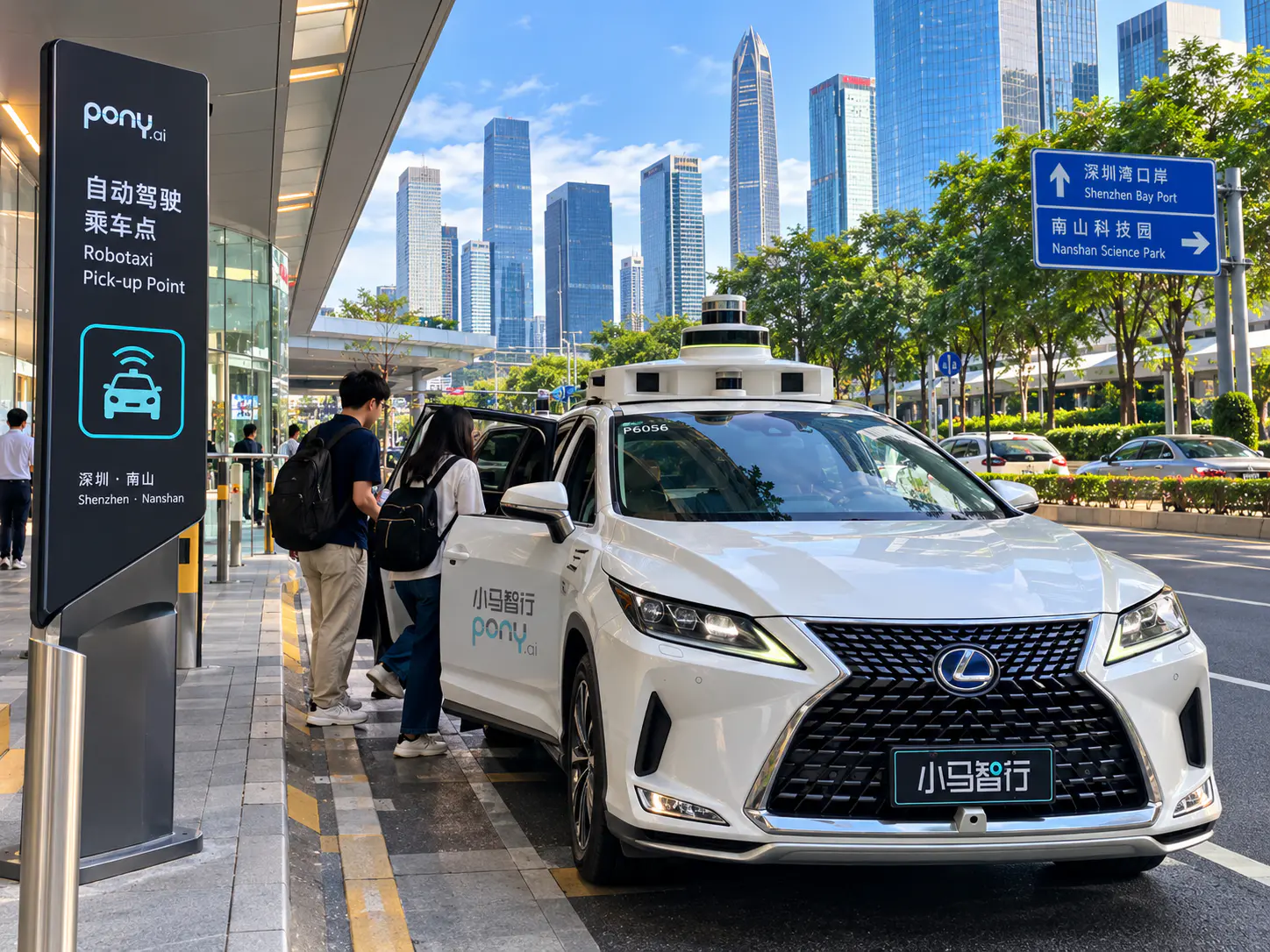
A guided day covering robotaxi rides, robot cafes, and Huaqiangbei with an English-speaking contact for access and timing.
Not seeing the right fit?
Tell us your dates, hotel area and whether the focus is technology, Huaqiangbei shopping or a Hong Kong crossing — we will recommend a driver day or technology tour that fits.
Share your hotel area, luggage and meeting times — we will recommend metro, DiDi or a private driver only where it saves stress.