
Explore Shenzhen
Start with what you actually want from the city — robots and factories, electronics shopping, or a Hong Kong border crossing — then open the matching guide for current access rules, transport choices and realistic timing.
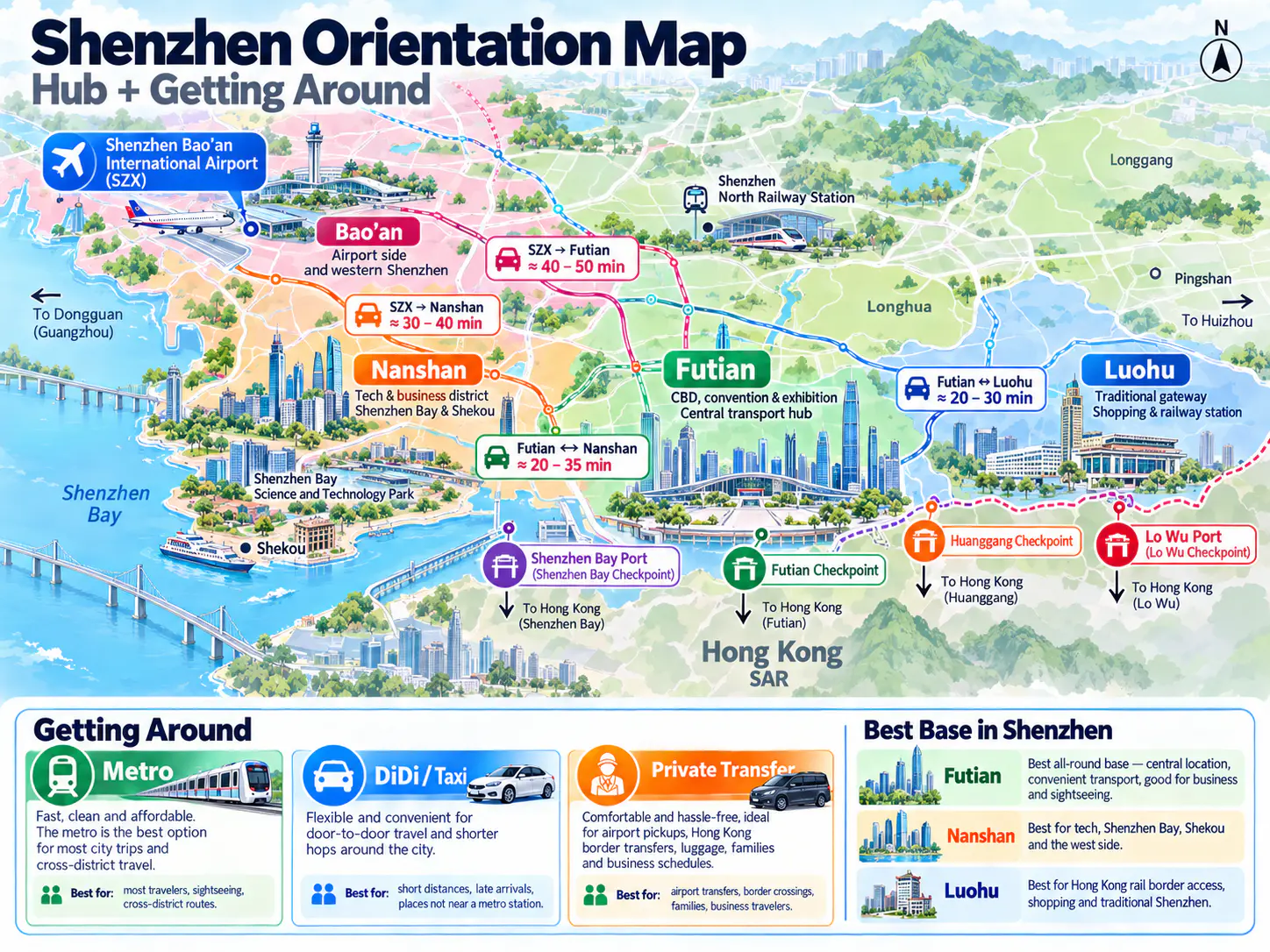
China's hardware capital, a short ride from Hong Kong — plan robotics visits, electronics shopping, border crossings and airport transfers with realistic expectations on availability and timing.
Start with what you actually want from the city — robots and factories, electronics shopping, or a Hong Kong border crossing — then open the matching guide for current access rules, transport choices and realistic timing.
Shenzhen is China's hardware and technology capital — a working city where consumer electronics, robotics prototyping and modern urban planning are visible on the street rather than staged for visitors. It also sits directly across the border from Hong Kong, which makes it a practical add-on for travelers already in the region rather than a destination most people fly in for on its own.
The main reasons to spend time here are specific: Huaqiangbei for electronics shopping and component markets, a growing set of public robotics experiences (robotaxis, robot cafes), business and manufacturing travel tied to the Pearl River Delta supply chain, and a modern skyline and coastline that read very differently from older Chinese cities. If you want imperial history or classic old-town streets, Shenzhen is not that city — Guangzhou or Beijing serve that purpose better.
Shenzhen spreads along the border with Hong Kong, so geography here is mostly about which district and which border crossing you are closest to, not a single downtown core.
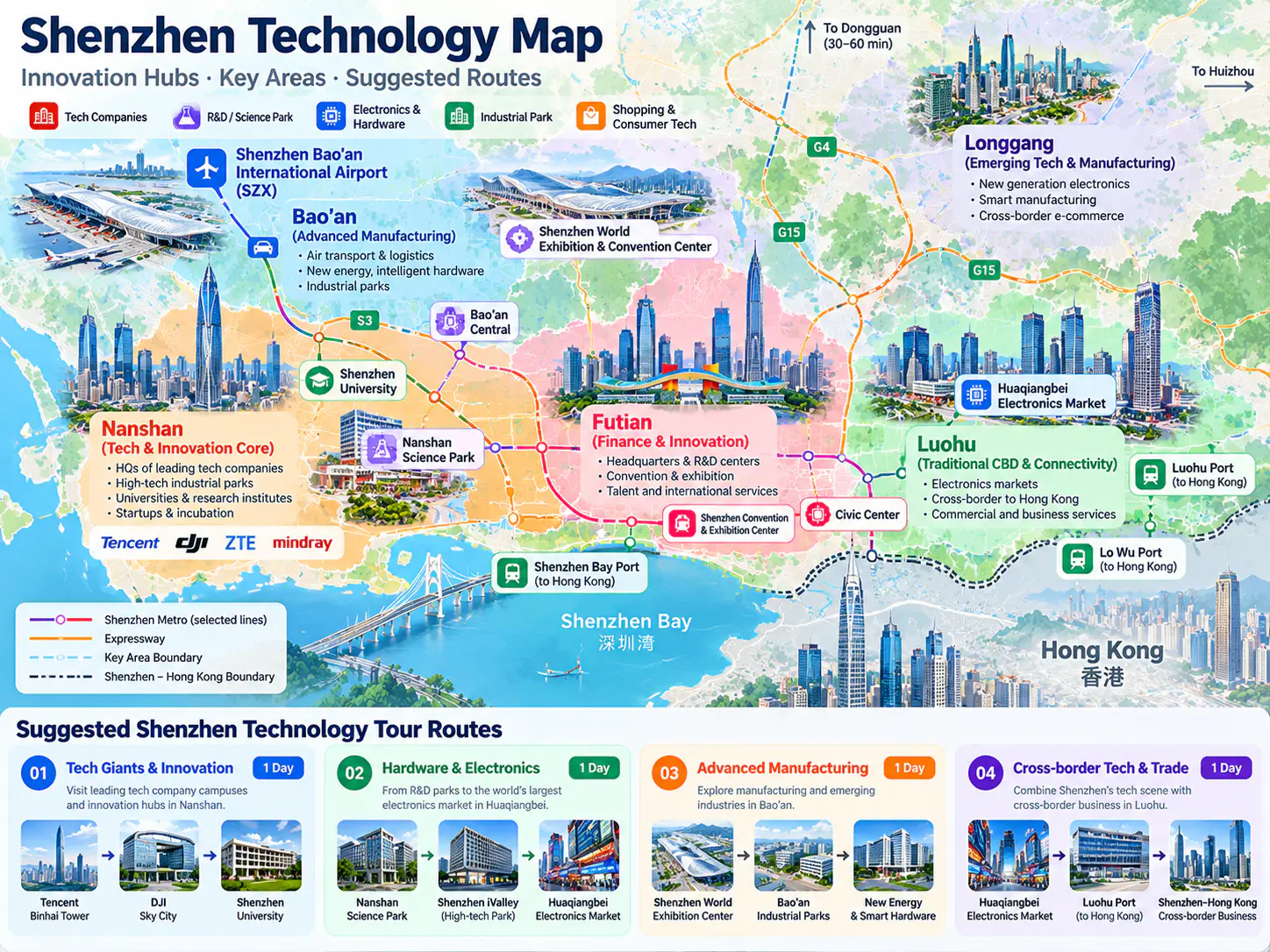
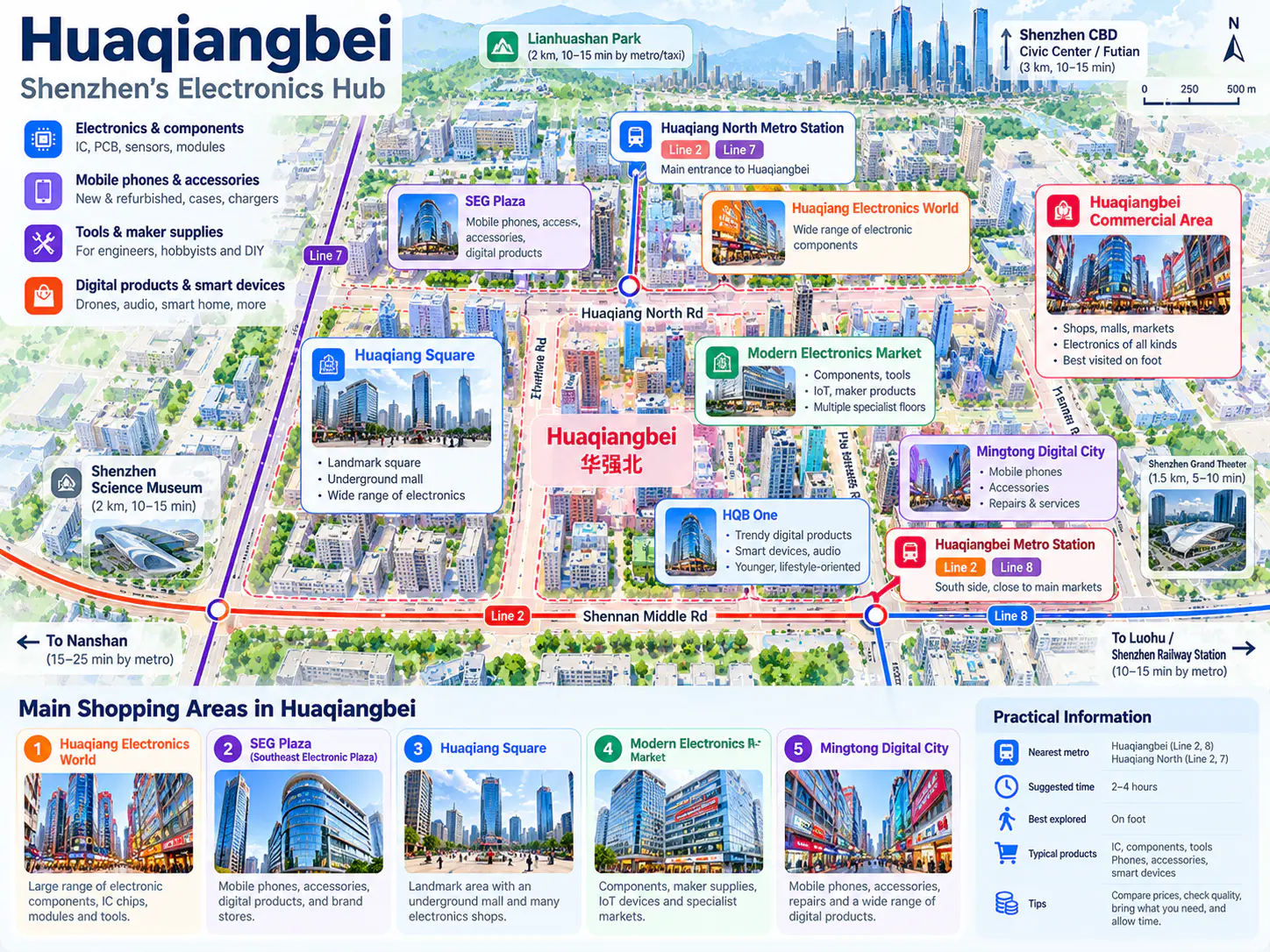
This is the main reason most leisure travelers add Shenzhen to a trip. Public robotics pilots — driverless robotaxis sharing ordinary traffic lanes and cafes with robot baristas or servers — are real but limited in coverage and availability, and change faster than a typical sightseeing itinerary. Huaqiangbei, the city's electronics market, is a separate but related reason to visit: multiple multi-storey buildings selling components, accessories and finished electronics at a scale most visitors have not seen before.
For what is currently accessible, how to try a robotaxi or find a robot cafe, and how to combine that with Huaqiangbei in one day, see the Shenzhen Technology Guide.
Shenzhen's proximity to Hong Kong is one of its most useful planning features. Several border crossings connect the two cities by rail or on foot across a controlled bridge, and travel time between central Shenzhen and central Hong Kong can be under an hour depending on the crossing you use. This makes Shenzhen workable as a day trip from Hong Kong, or Hong Kong workable as a side trip while based in Shenzhen — but immigration queues and crossing hours vary, so build in a buffer rather than assuming the fastest-case timing.
For the full comparison of crossings and timing, see Hong Kong to Shenzhen and Shenzhen to Hong Kong.
One day covers a single theme — a technology day or a Huaqiangbei shopping visit, not both at a relaxed pace. Two days let you combine both without rushing. Three days add either a slower exploration of Nanshan's tech campuses and Shenzhen Bay, or a dedicated Hong Kong connection day.
| Days | Realistic focus | Skip if short |
|---|---|---|
| 1 day | Technology day or Huaqiangbei shopping (pick one) | The other theme, Hong Kong connection |
| 2 days | Technology day plus Huaqiangbei, at a comfortable pace | Hong Kong side trip |
| 3 days | Both city themes plus a Hong Kong connection day | — |
Timed sample routes live in the Shenzhen itinerary guide.
Start metro-first. Shenzhen's metro network covers Futian, Nanshan, Luohu and reaches toward Bao'an, so most hotel-to-attraction hops do not need a car. DiDi or taxis fill gaps when stations sit far from an entrance or you are carrying luggage. A private driver becomes genuinely useful for the airport, a Hong Kong border transfer, or a business day stacking multiple factory or office visits — not for a single metro-linked sightseeing stop.
Full scenarios and payment notes are in Getting Around Shenzhen.
Shenzhen Bao'an International Airport (SZX) connects to Futian, Nanshan, Luohu and Shenzhen North by metro, taxi/DiDi or private transfer, and also has a sea-air ferry link toward Hong Kong and Macau for travelers continuing onward without entering the city.
Terminal layout and transport comparisons are in the Shenzhen Airport Guide.
Sometimes — not automatically. Metro or DiDi is usually enough for a single hotel-to-Huaqiangbei trip or one technology stop. A driver earns its keep for Bao'an Airport with heavy luggage, a Hong Kong border transfer with a flight to catch, or a business day covering several addresses across districts. If the schedule is one metro station to another, keep the car for another day.
See Shenzhen Private Driver for how that works in practice, or the Shenzhen Technology Tour if you want a guided technology day instead of planning the access points yourself.
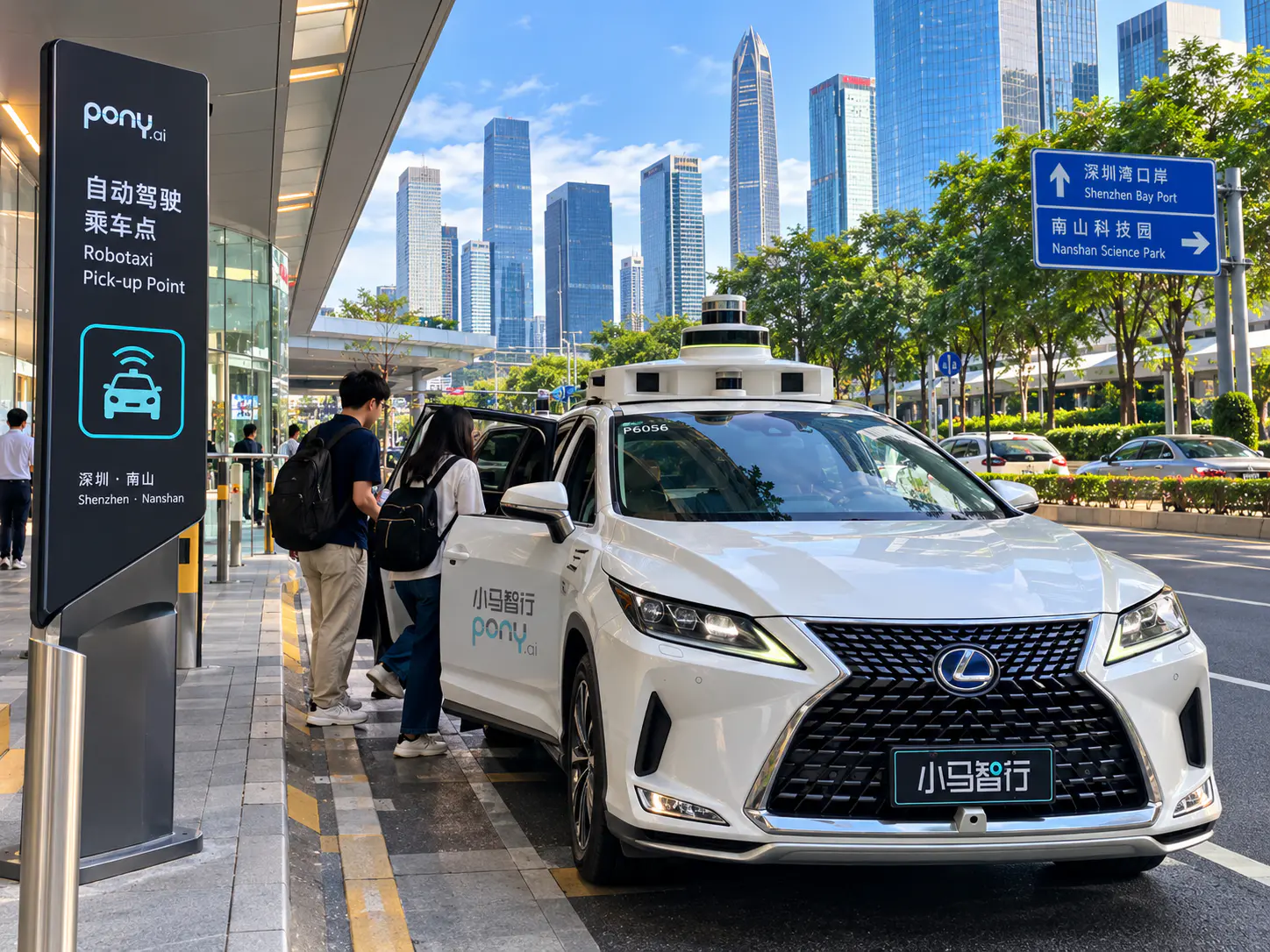
What robotaxi rides, robot cafes and humanoid-robot spots actually look like today, and how to plan a realistic technology day.
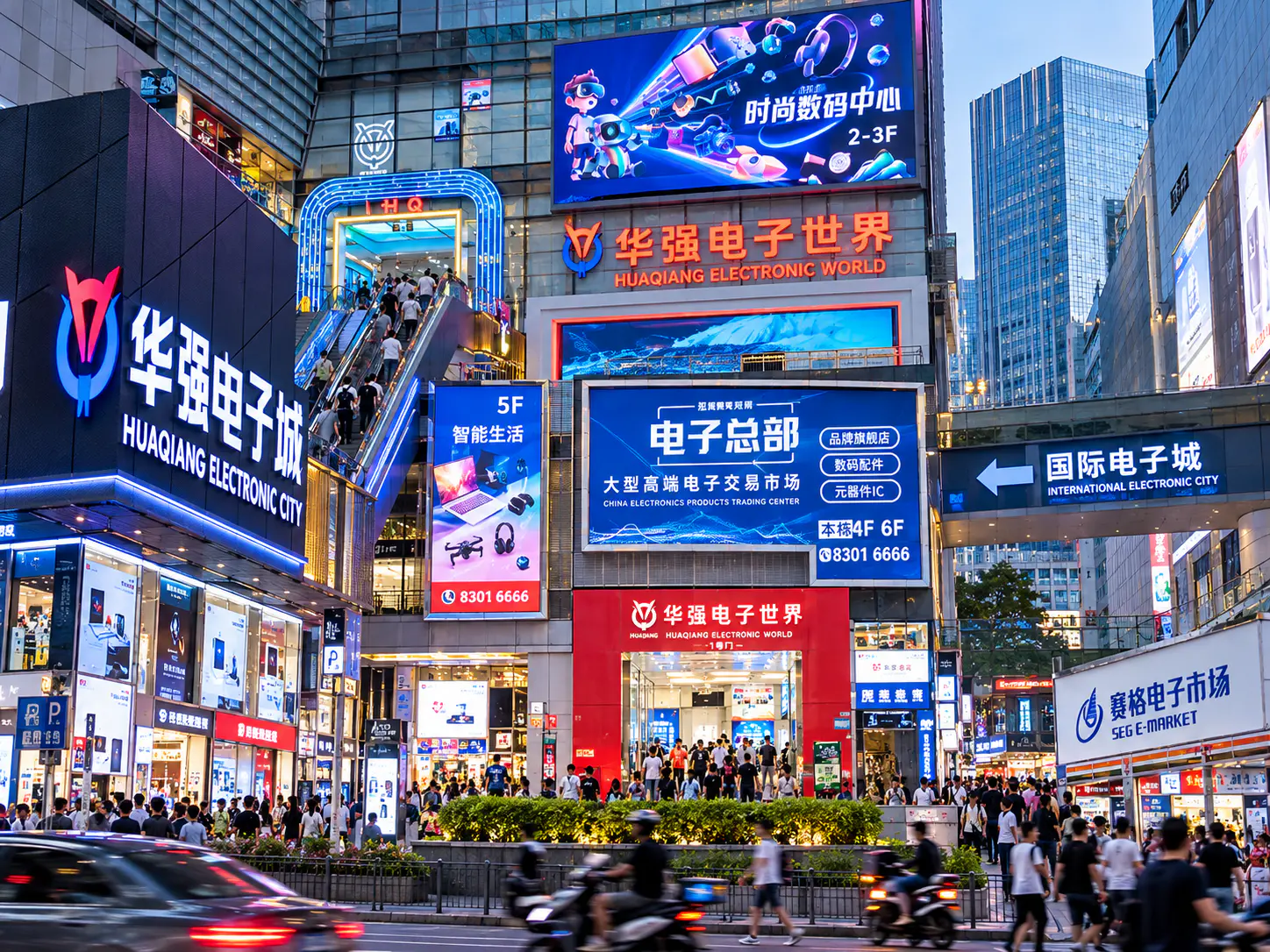
How the market buildings are organized, what each floor sells, and how to get there without wasting a half day.
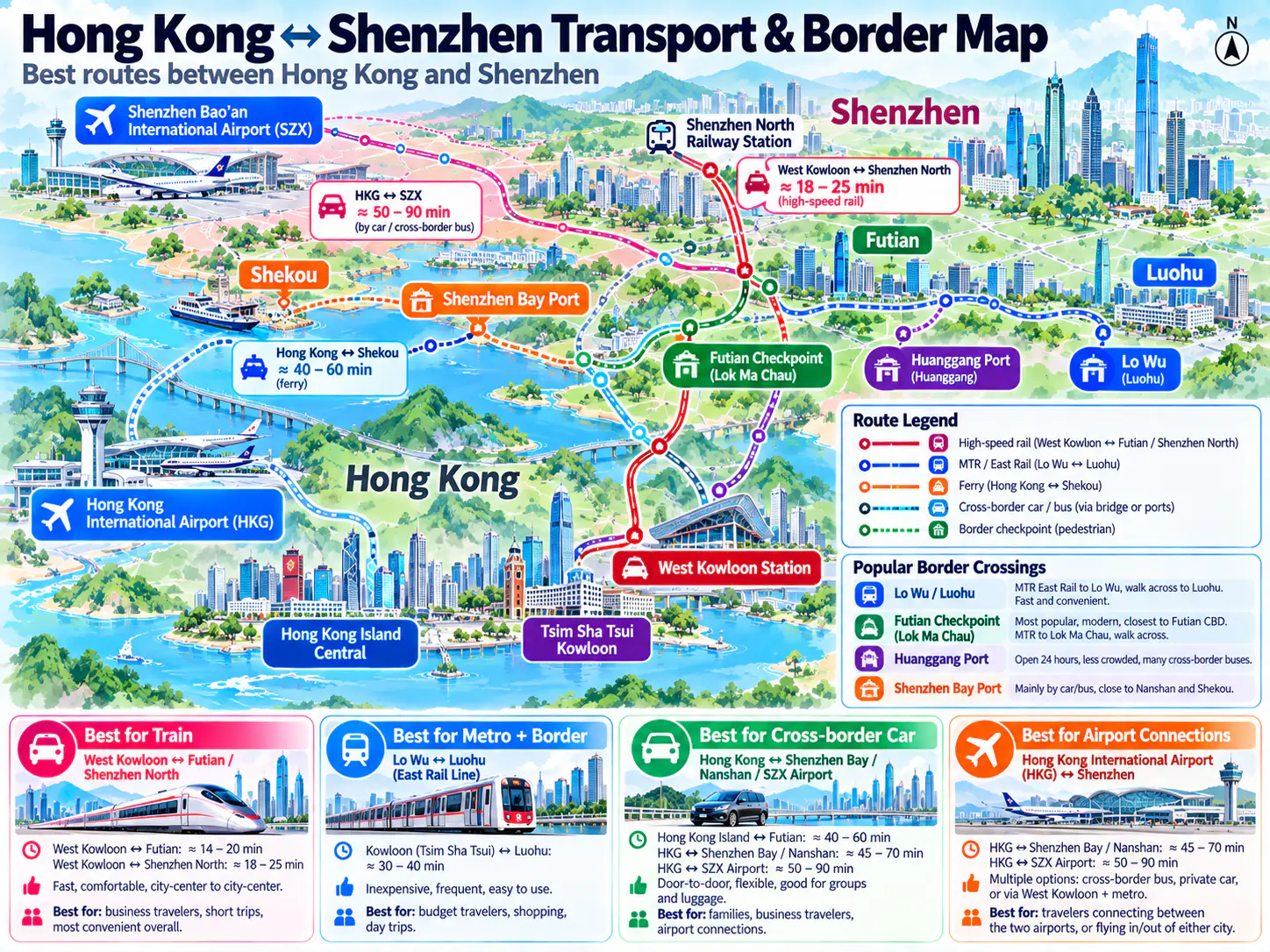
Which border crossing to use, what to expect at immigration, and how to reach Huaqiangbei or your hotel after you cross.
Returning to Hong Kong: crossing choice by destination, timing buffers for HKG flights, and where a driver can and cannot help.
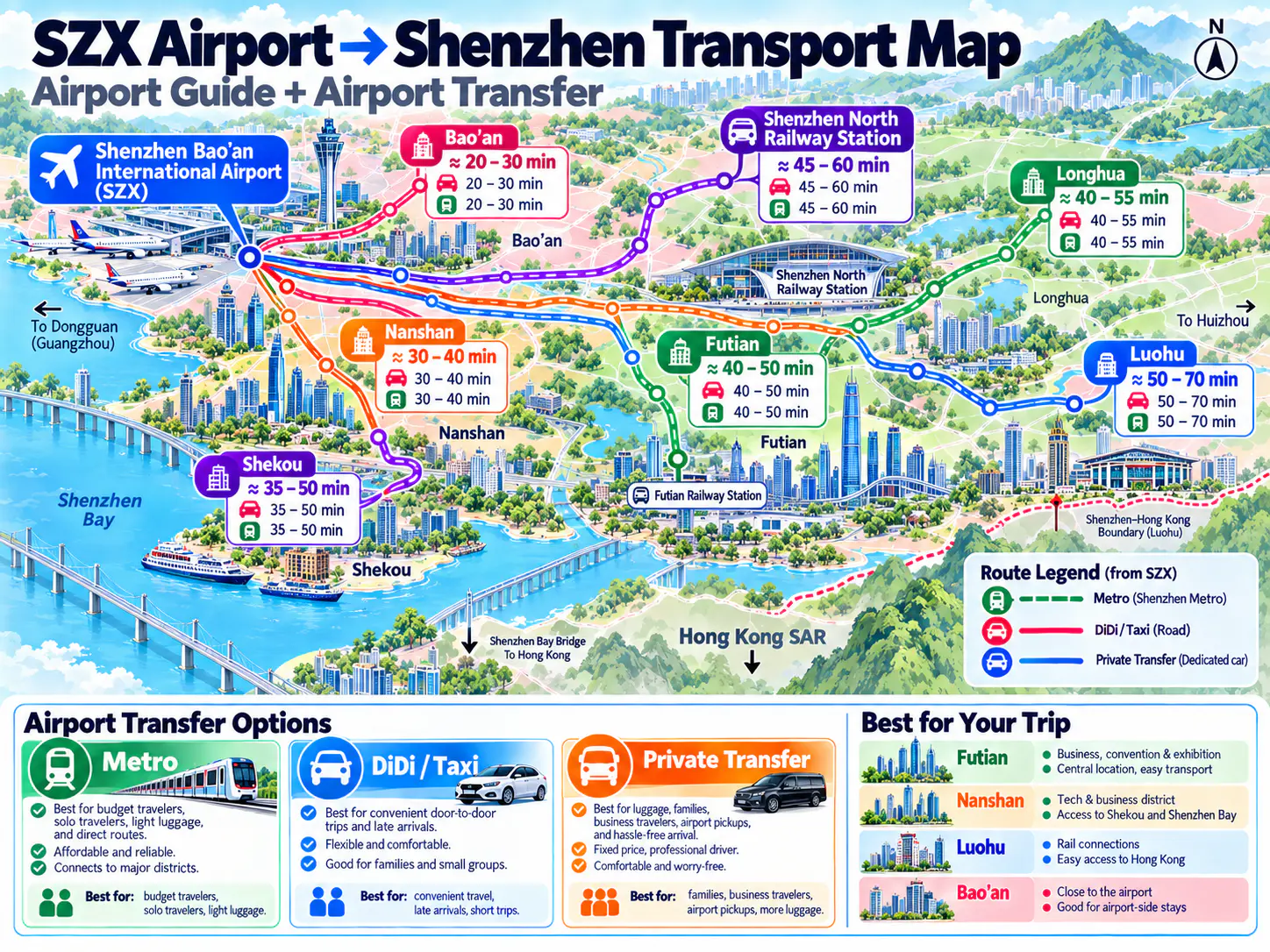
Bao'an Airport (SZX) terminals, transport into the city, and the sea-air ferry link to Hong Kong and Macau.
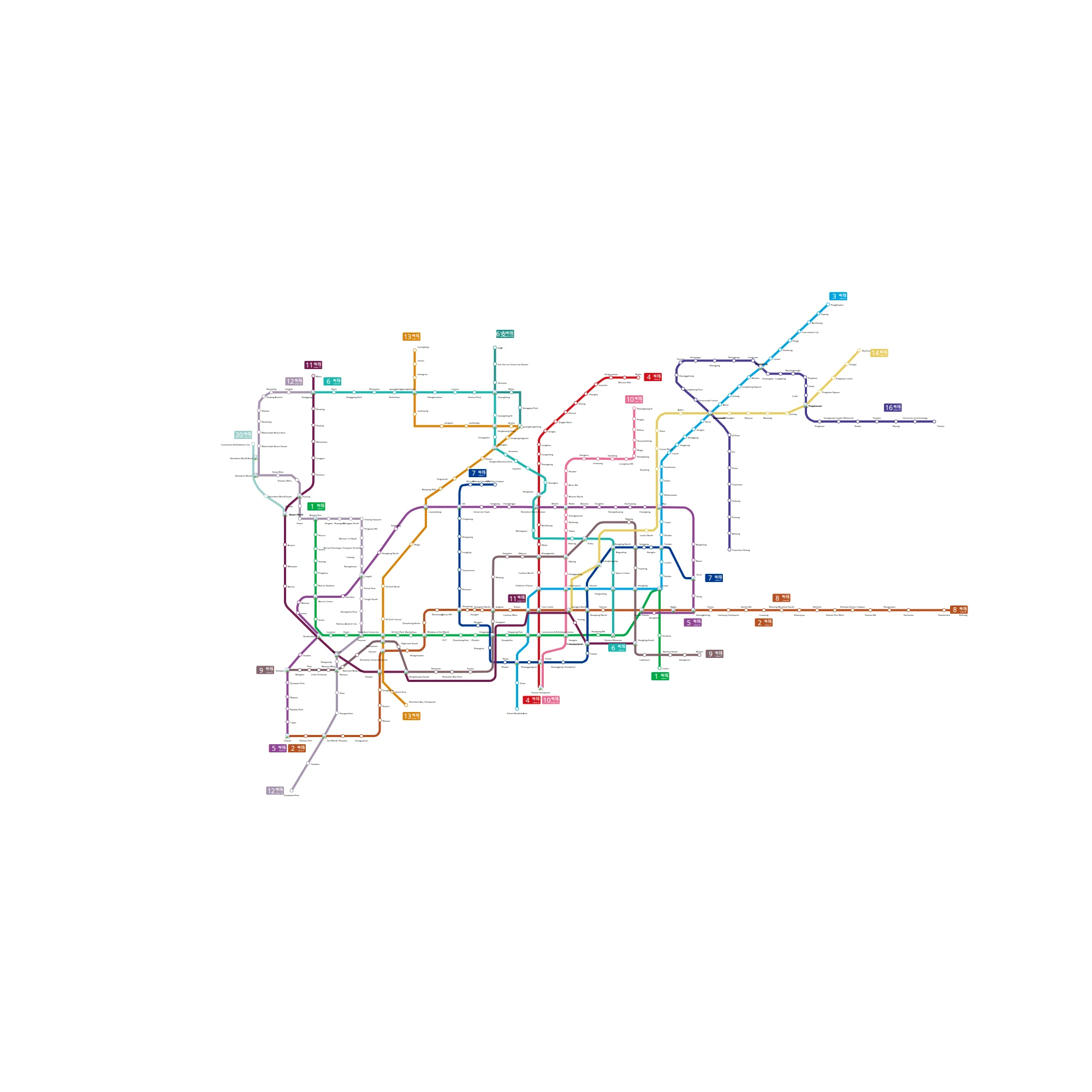
When the metro wins, when DiDi or taxi is easier, and when a private driver earns its cost for business or luggage days.
Timed one-, two- and three-day routes mixing technology stops, Huaqiangbei shopping and an optional Hong Kong leg.
A realistic same-day round trip from Hong Kong: border timing, what fits in one day, and when to stay overnight instead.