
Types of Chinese Opera at a Glance
| Form | Notes for travelers |
|---|---|
| Peking Opera (Jingju) | Beijing-associated form with highly codified roles, music, gesture and facial makeup |
| Kunqu | Historically influential; refined lyric theatre |
| Yue Opera / Shaoxing Opera (越剧, Yuèjù) | Lyrical regional opera originating around Shaoxing in Zhejiang; strong traditions in Zhejiang and Shanghai |
| Sichuan Opera | Southwestern regional tradition; face-changing is one famous technique within it |
| Others | Many regional forms exist beyond this short list |
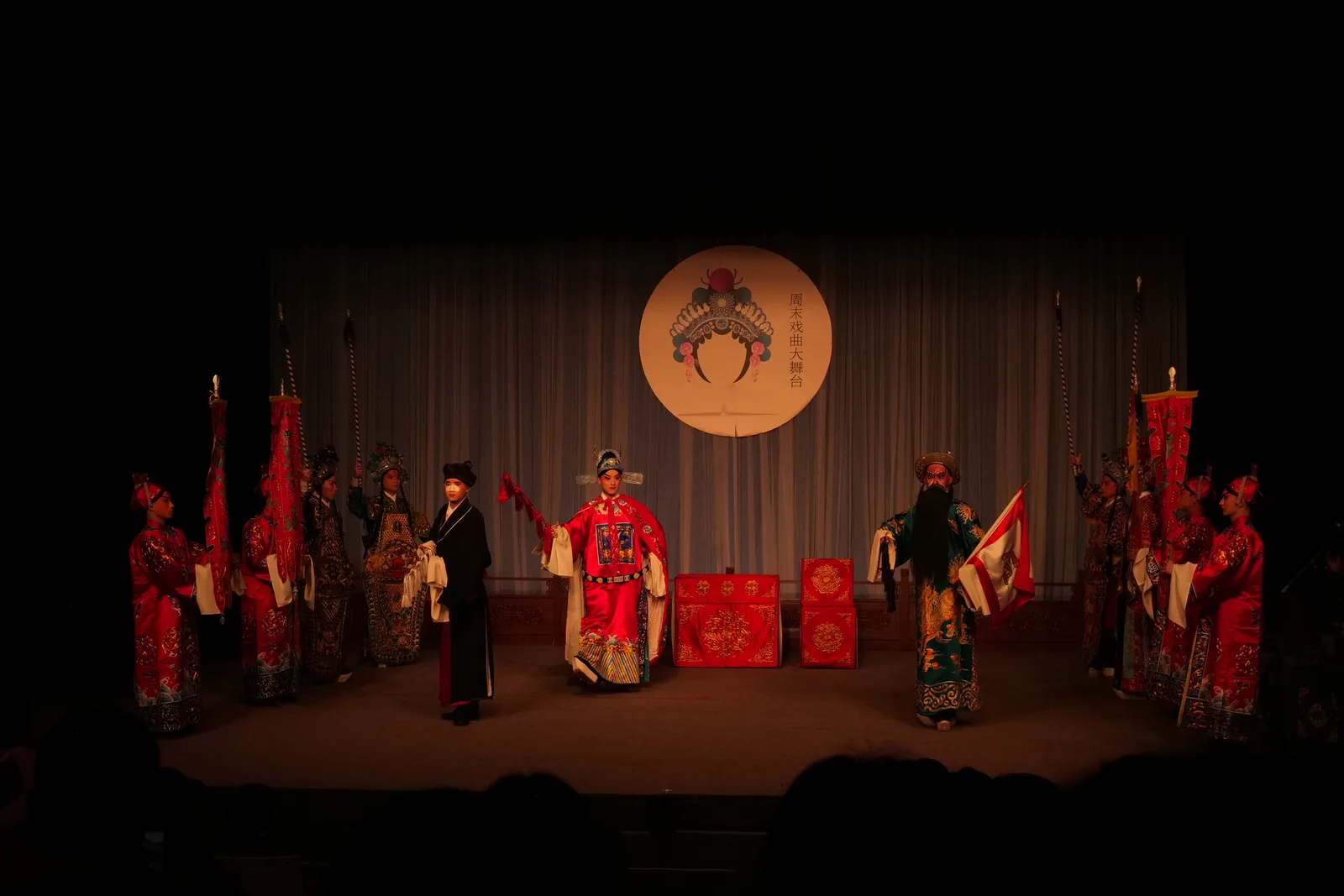
*Kunqu opera performance, Hangzhou Grand Theatre. CC BY-SA 4.0. Cropped/resized; non-generative.*
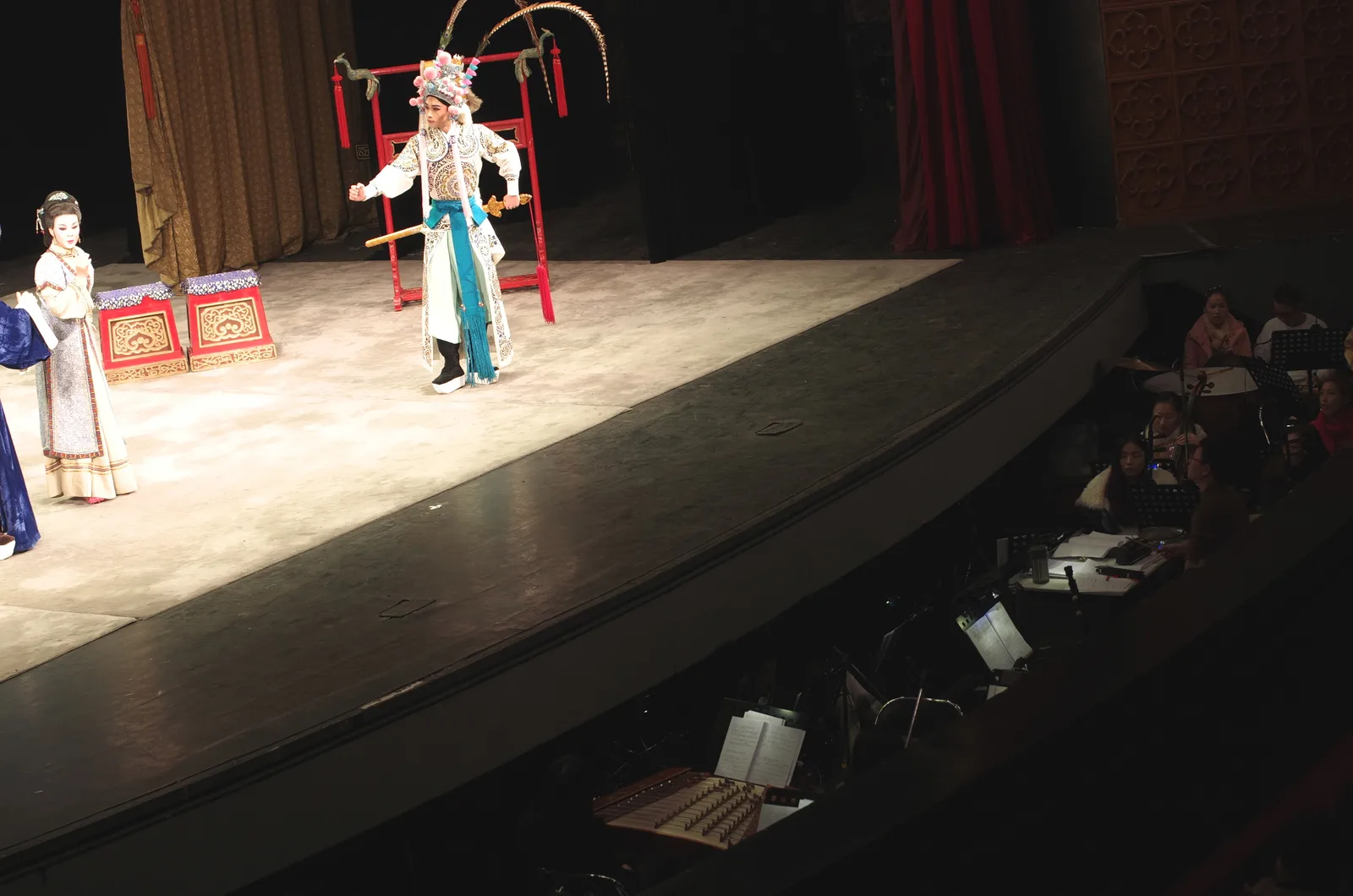
*Yue/Shaoxing opera orchestra context, Shanghai. CC BY 2.0. Useful contrast with Peking Opera imagery.*
Peking Opera
**Peking Opera developed in Beijing through the interaction of earlier regional traditions and became one of China's best-known xiqu forms. See What Is Peking Opera? for its roles, music, makeup and stage language.**
Kunqu and Yue Opera
Kunqu developed around Kunshan in the Suzhou region and is one of the oldest Chinese opera forms still performed today. Its influence can be seen in later theatrical traditions.
Yue Opera, also called Shaoxing Opera (越剧), developed in Zhejiang and later became especially prominent in Zhejiang and Shanghai. Do not confuse it with Cantonese Opera (粤剧), which is also sometimes romanized as “Yueju” in English.
Sichuan Opera
**For a traveler-facing example, see the Sichuan Opera and face-changing guide for Chengdu.**
How to Compare Forms
| Dimension | What to notice |
|---|---|
| Language/dialect | Affects listening difficulty |
| Music | Melodic style + percussion weight |
| Movement | Martial vs lyric balance |
| Visual design | Makeup/costume conventions |
FAQ
How many types of Chinese opera are there?
Dozens of regional traditions; lists vary. This page covers major traveler-facing forms without pretending to be complete.
Hub: Chinese Opera. Last reviewed: September 2026. Confirm current venue names, schedules and tickets with official operators before travel—do not treat this page as a live booking feed.