
Chinese Opera Costumes at a Glance
| Element | Role |
|---|---|
| Robes / armor | Rank, role category, martial vs civil |
| Water sleeves | Extended movement vocabulary |
| Headwear | Status and role cues |
| Makeup | Related but distinct (see Peking makeup page) |
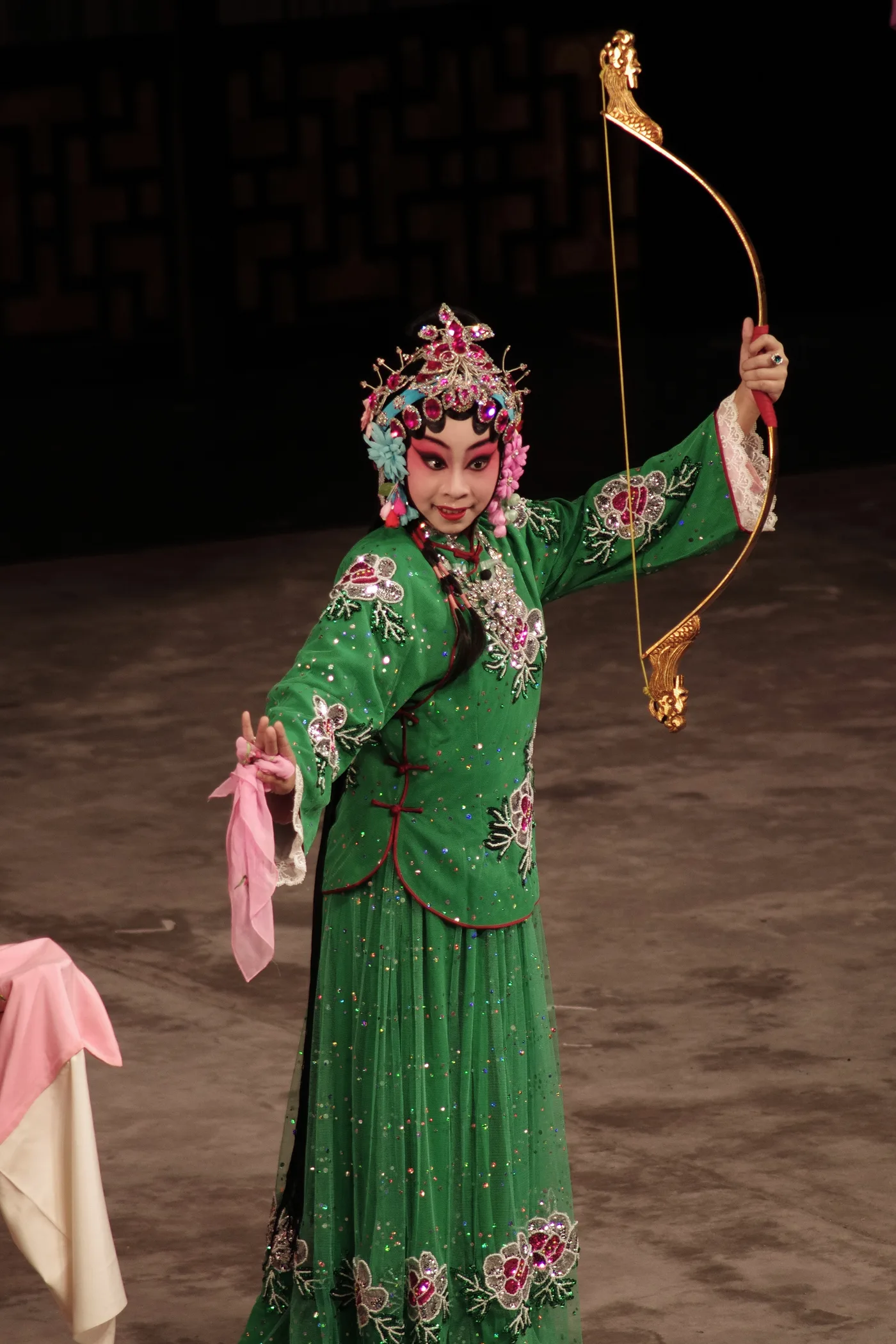
*Full-costume Peking Opera example (Xun Guan), Tianchan Theatre, Shanghai. CC BY 2.0. Page must not imply Peking-only costumes for all xiqu.*
Stylization vs Historical Dress
Stage costume compresses and exaggerates. Do not read a robe as a documentary reconstruction of a dynasty street outfit.
Relation to Makeup Pages
Peking painted-face meanings: Peking Opera Mask & Makeup. Peking Opera facial makeup is covered separately because painted-face design and costume work together on stage but communicate through different conventions.
**For the wider theatrical context, return to Chinese Opera.**
FAQ
What do Chinese opera costumes mean?
Meaning depends on form, role type and design system—avoid one universal color dictionary.
Last reviewed: September 2026. Confirm current venue names, schedules and tickets with official operators before travel—do not treat this page as a live booking feed.