
Mythological Creatures at a Glance
| Creature | Broad associations (context-dependent) |
|---|---|
| Dragon (*long*) | Rain, power, imperial metaphor—varies by era/object |
| Qilin | Auspicious appearance motifs |
| Fenghuang | Often paired auspicious bird imagery—not simply “Chinese phoenix” clone |
| Others | Fox spirits, etc., often via literature/folklore |
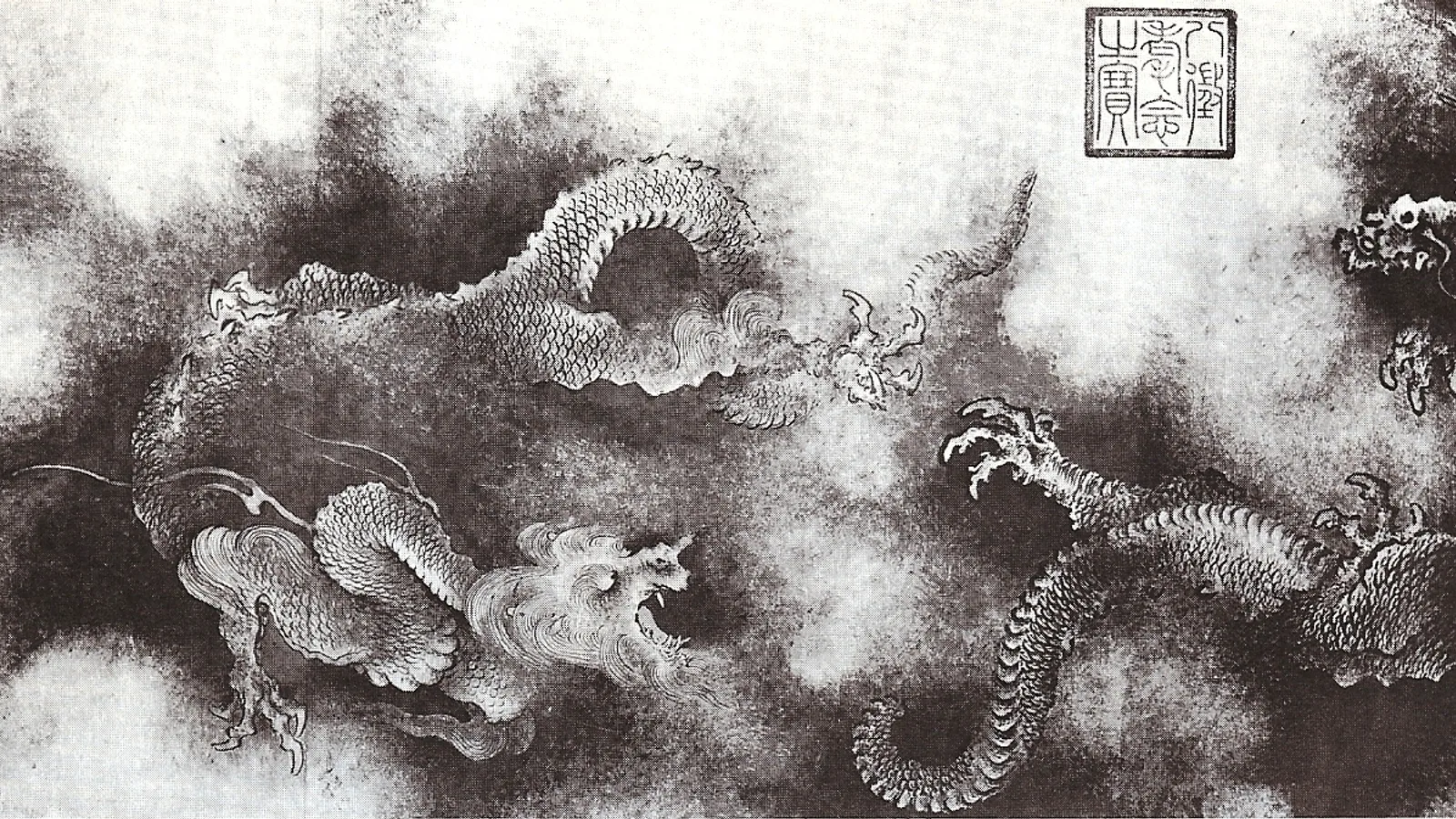
*Detail from Nine Dragons (Song dynasty tradition). Public domain via Wikimedia Commons. Cropped/resized; non-generative.*
Dragons
Chinese dragons differ from European fire-hoarding stereotypes: rain, water, imperial metaphor and decorative vocabulary dominate many contexts. Claw counts and “emperor only” rules are context- and period-sensitive; souvenir explanations should not be treated as universal rules.
Qilin
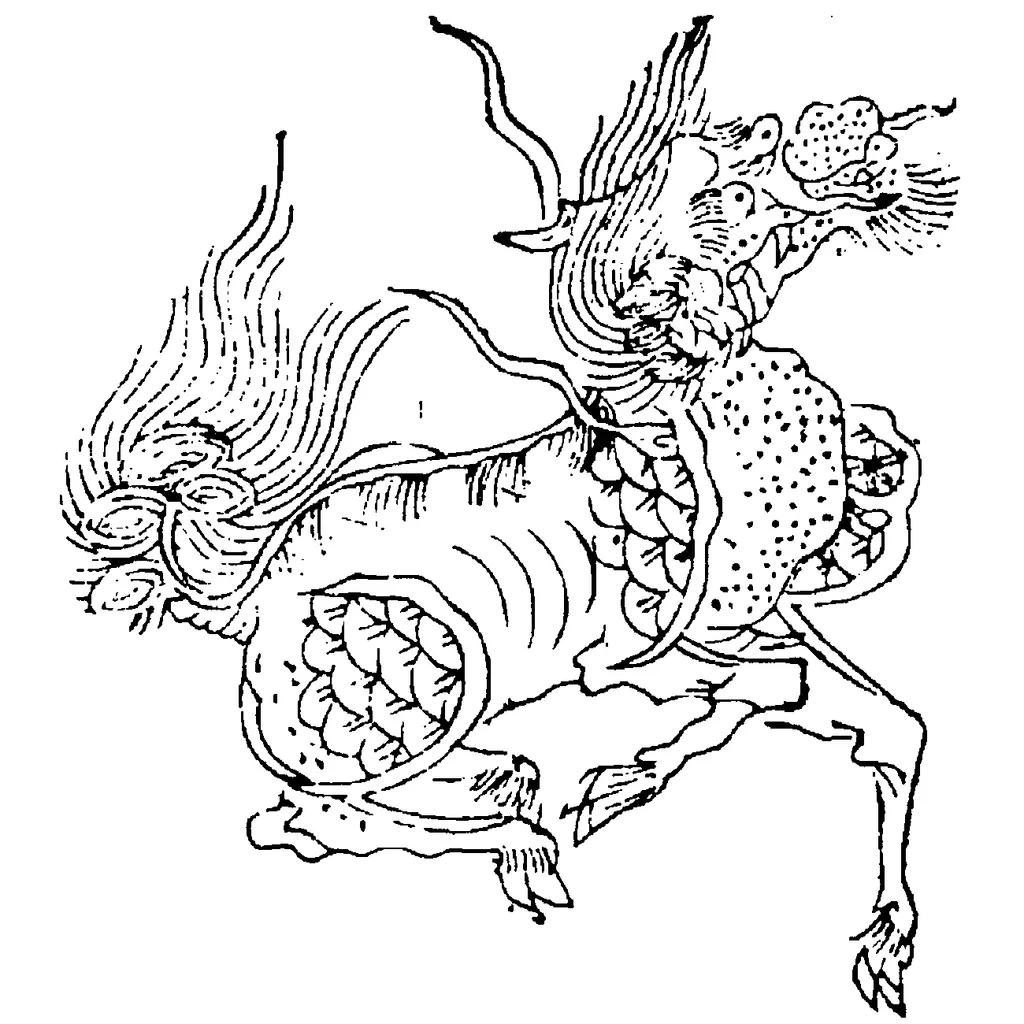
*Qilin in the Sancai Tuhui encyclopedic tradition. Public domain. Later encyclopedic illustration of a mythological creature, not a zoological identification.*
Fenghuang
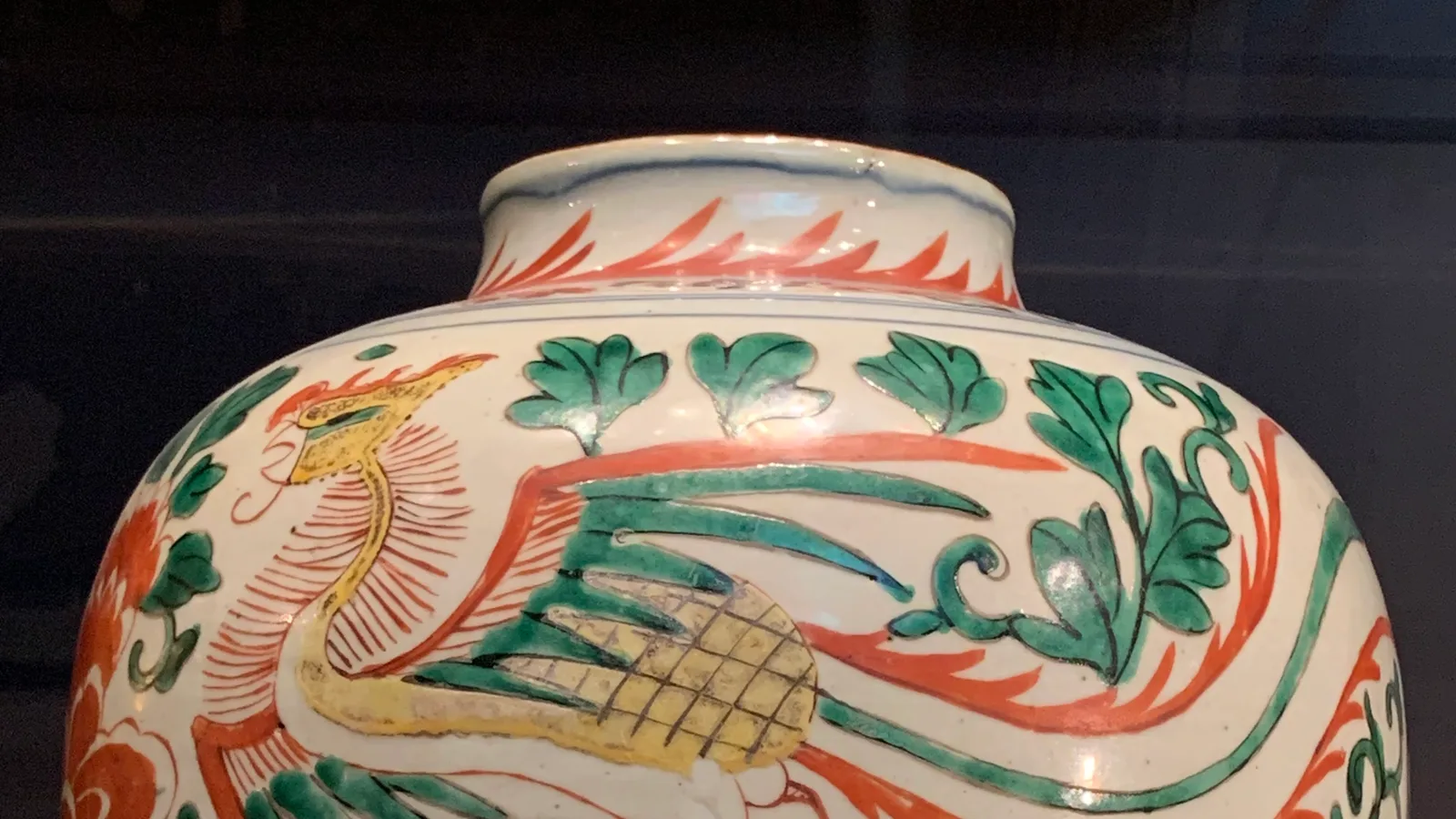
*Chinese phoenix (fenghuang), Ming or Qing dynasty object context, National Museum of Scotland. CC0 via Wikimedia Commons. “Phoenix” is an English convenience label.*
How Creatures Appear for Travelers
Architecture, textiles, jade, opera costumes and temple painting. Motif reading overlaps craft guides but meanings stay context-bound.
Common Misconceptions
- Chinese dragon ≠ Western dragon.
- Fenghuang ≠ identical to Greek phoenix rebirth myth.
- One motif ≠ one eternal meaning.
Mythological Creatures FAQ
What are the main Chinese mythological creatures?
Dragons, qilin and fenghuang are among the best-known creatures; many other beings appear in folklore and literature.
Is the Chinese dragon evil?
Not in the Western “slay the dragon” stereotype; associations are often auspicious or cosmological—still context-dependent.
Is fenghuang a phoenix?
English often says phoenix; *fenghuang* has its own Chinese symbolic history and is not defined by the Greek phoenix's death-and-rebirth cycle.
Related Pages
Sources
- Metropolitan Museum of Art — object labels and collection essays for dragon, qilin and fenghuang imagery.