
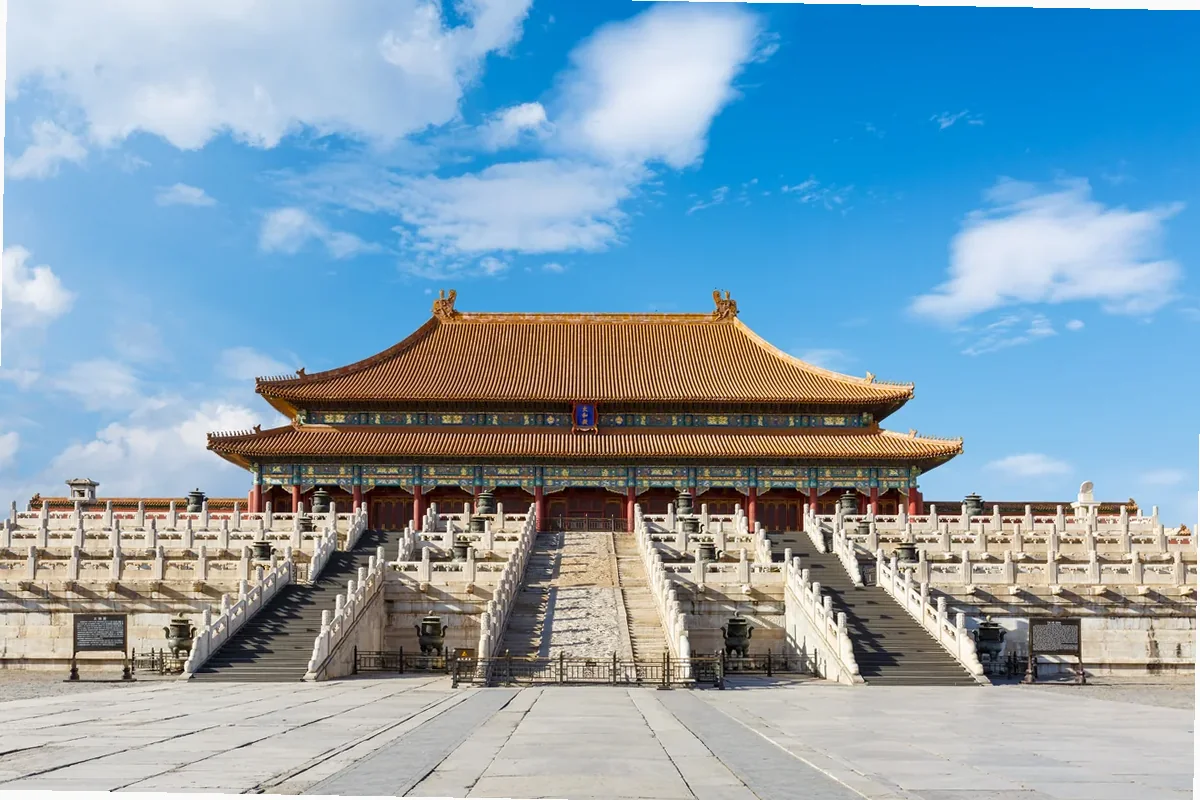
For a first visit with 10 calendar days in China, start with four nights in Beijing, two in Xi’an and three in Shanghai. This gives you the Forbidden City, a Great Wall day, the Terracotta Warriors and time to see Shanghai beyond a quick photograph of the Bund. It also leaves two days mainly for moving between cities.
The route assumes you arrive in Beijing on Day 1 and leave Shanghai on Day 10: nine hotel nights, not ten full sightseeing days. If your flight lands late or departs early, keep those days light. International flights before arrival and after departure may take additional calendar days.
The route at a glance
| Day | Plan | Overnight |
|---|---|---|
| 1 | Arrive in Beijing; check in and eat near your hotel | Beijing |
| 2 | Forbidden City; optional Jingshan if you have energy | Beijing |
| 3 | Mutianyu Great Wall; return to Beijing | Beijing |
| 4 | Temple of Heaven and a relaxed hutong afternoon | Beijing |
| 5 | Train to Xi’an; check in and take a short local walk | Xi’an |
| 6 | Terracotta Warriors; flexible evening in the city | Xi’an |
| 7 | Fly to Shanghai; settle in, with an optional nearby evening walk | Shanghai |
| 8 | Old City and the Bund; choose one additional district | Shanghai |
| 9 | Slower Shanghai day or a dedicated Zhujiajiao excursion | Shanghai |
| 10 | Leave Shanghai | — |
Hotel nights: Beijing 4 + Xi’an 2 + Shanghai 3 = 9.
The order of Beijing’s sightseeing days can change. Confirm the Forbidden City’s opening day and ticket availability before fixing the Great Wall day around it.
Days 1–4: give Beijing three proper sightseeing days
Day 1: arrive without a major reservation
Get to the hotel, settle payment and mobile-data arrangements if needed, and find an easy dinner. If you arrive early, a short walk near the hotel is enough. A late flight, immigration queue or room that is not ready should not put your first attraction booking at risk.
Choose a hotel for the neighborhood you want to return to each evening, with practical transport access. Sleeping near the airport to save money can create extra travel on every city day.
Day 2: the Forbidden City
Make the palace the main visit. Its courtyards and galleries involve substantial walking; avoid attaching several other major attractions to the same day. Jingshan can be an optional stop afterward for a view over the palace roofs, provided the steps suit your group.
The Palace Museum closes on Mondays except statutory holidays, requires advance reservations and does not sell same-day tickets. Bring the original identification used for the booking. Check the museum’s official ticket instructions before arranging your dates. If Day 2 is unsuitable, swap it with Day 3 or Day 4.
Tiananmen Square is not included in this day by default. If it matters to you, check its separate access arrangements and allow more time; do not assume a Forbidden City booking automatically covers the square.
Day 3: Mutianyu Great Wall
Give the Wall its own day. Start early enough to avoid turning the return into a late evening, but agree the actual pickup time around the season, opening arrangements and your hotel.
Choose the amount of walking before choosing the cable-car or chairlift combination. Mechanical access reduces the climb to the Wall; it does not remove steps and uneven surfaces on top. Different travelers in one group may prefer different walking distances.
After returning to Beijing, keep dinner flexible. If the Summer Palace is also on your list, consider it for Day 4 so you have more time at both places. The Mutianyu guide explains the visit options in more detail.
Day 4: Temple of Heaven and hutongs
Visit the Temple of Heaven in the morning, then use the afternoon for lunch and neighborhood walking around the hutongs. Decide whether you want the temple buildings as well as the surrounding park, and check the admission and opening arrangements for the parts you intend to visit.
This is also Beijing’s adjustment day. If you particularly want the Summer Palace, replace the hutong afternoon or revise the whole day around it. If someone needs a break, keep the morning visit and leave the afternoon free. The Beijing city guide helps you choose between the main sights.
Days 5–6: Xi’an with the Warriors as the priority
Day 5: travel to Xi’an
Choose a train that suits your hotel departure and arrival, rather than the shortest advertised journey alone. Count the trip from hotel door to hotel door: packing, station transfer, security and boarding, the train journey, then travel from the arrival station to your next hotel.
Keep this as a travel day. A local meal or short evening walk is a useful extra if you arrive comfortably; leave timed museum visits for another day. Check actual services and station names through China Railway 12306. Bring the original passport used to book your ticket.
Day 6: Terracotta Warriors
The Terracotta Warriors are the reason for the Xi’an stop in this route. Give the visit enough room for the journey out of the city, the museum itself and lunch. A guide is useful if you want help understanding what you are looking at, rather than simply moving through the excavation halls.
Return to Xi’an with an open evening. If energy, opening arrangements and timing allow, choose a short City Wall visit or a food-focused walk. Neither is compulsory, and trying to fit both around a long museum day can remove the time you wanted for dinner.
If the City Wall is a major priority, this two-night allocation is tight. Take a night from Shanghai, or use the Xi’an extension described in the 14-day itinerary. Use the Xi’an guide for a closer look at the city’s options.
Day 7: move to Shanghai
Use this day for the flight and hotel change. A leisurely breakfast is fine; a full Xi’an sightseeing program before the flight is not part of this plan.
Compare the whole journey when choosing a flight, including the airports, baggage allowance and ground transfers. Shanghai has Pudong and Hongqiao airports. Check the actual airport and terminal on your reservation rather than sending a driver only the city name.
After checking in, have dinner locally. Walk to the waterfront only if your arrival time and hotel location make it easy. The main Shanghai sightseeing starts tomorrow, so a delayed flight does not mean losing the Bund.
Days 8–9: see Shanghai, then choose how much more to add
Day 8: Old City, Bund and one further area
Begin around the Old City, with Yu Garden if it interests you and admission is available. Continue to the Bund for the riverfront buildings and the view across to Pudong.
For the rest of the day, choose between the former French Concession’s streets and cafés or Lujiazui’s modern skyline. You can cover more ground, but these places are more rewarding when you have time to stop. An observation deck is optional; poor visibility is a good reason to spend that time elsewhere.
The Shanghai city guide sets out the main districts and their differences.
Day 9: keep it local or visit Zhujiajiao
Stay in Shanghai if you want a museum, more neighborhood walking, shopping or a slow lunch. Check the correct museum building and current exhibition before traveling across the city.
Choose Zhujiajiao if canals, bridges and a water-town visit interest you more. Give it a dedicated excursion day, including transport, rather than trying to add it to yesterday’s city route. You give up most of your second full Shanghai day by going. That is a reasonable exchange, but it should be a deliberate one.
If Shanghai Disneyland is your priority, use Day 9 for it instead. This route does not include Disneyland and a water town as well as two full city days.
Day 10: departure and the return-flight question
Plan around your airline’s check-in requirements and the journey to the correct airport. Only add a local activity if the departure time leaves a comfortable margin.
If your international ticket returns from Beijing, this itinerary needs changing. Move back to Beijing at least the day before departure and remove a Shanghai day, or simplify the route to two cities. Allow time to deal with disruption before your international flight, especially when the bookings are separate.
What to book first, and where help is useful
Set your arrival and departure cities first, then hotel nights and intercity transport. Check attraction opening days before arranging individual tours; book limited-entry visits through their official channels when sales open. Keep at least some evening plans flexible.
You can travel independently between these cities and use local help selectively. A driver is most useful for trips outside the central city, such as Mutianyu or the Terracotta Warriors, and for transfers with luggage. A licensed guide is a separate service for explanation inside attractions. A driver’s transport and coordination role does not automatically include guiding through a museum or palace.
If you want help with particular days, send DragonTrail your dates, flight cities, group size and places you most want to see. Tell us which parts you prefer to handle independently too.
Questions about this 10-day route
Is 10 days enough for Beijing, Xi’an and Shanghai?
Yes, for the main highlights with two days largely devoted to intercity travel. It gives Beijing three full sightseeing days, Xi’an one and Shanghai two. It does not give every city equal depth.
Can I add Chengdu or Guilin?
Replace a destination rather than adding a fourth. Chengdu can replace Xi’an if pandas and Sichuan food matter more than the Terracotta Warriors. Guilin and Yangshuo need a revised route with suitable flights and enough time beyond arrival and departure. Compare the alternatives in the China itinerary guide.
Does this work for children or travelers who prefer less walking?
The city sequence can work, but adjust the visits to the actual group. Shorten palace and Wall walking, protect rest time and discuss steps, seating and vehicle access in advance. Age alone does not tell you how much walking someone wants or can manage.