
Request a Quote
Loading form…
Wangfujing (王府井) is a historic commercial district in Beijing's Dongcheng District, east of the Forbidden City. Originally associated with imperial residences and a historical freshwater well, it developed into a major commercial center during the early twentieth century. Today, its pedestrian streets bring together time-honored businesses, department stores, contemporary architecture, bookstores, theaters and historical landmarks, including St. Joseph's Catholic Church.
Wangfujing is more than a shopping street. It is a historic urban corridor connecting East Chang'an Avenue with the cultural neighborhoods around the National Art Museum of China.
The southern section contains historical hotels and contemporary commercial developments. The central pedestrian area is home to traditional businesses, Beijing Department Store and the historical Wangfujing well. Farther north, churches, theaters and art institutions introduce a different cultural atmosphere.
For a first visit, begin near Wangfujing Subway Station and walk north through the pedestrian street toward St. Joseph's Church.
With additional time, continue toward Capital Theatre, Guardian Art Center and the National Art Museum.
*Last modified: November 2026*
The origins of Wangfujing can be traced to the historical street network of Yuan Dynasty Beijing.
Following the establishment of Beijing as the Ming imperial capital in the early fifteenth century, the area east of the imperial city became associated with residences belonging to members of the imperial family.
The neighborhood was historically known as Shiwangfu Street (十王府街), referring to the princely residences established in this part of the capital.
Unlike the commercial neighborhoods surrounding Qianmen, Wangfujing initially developed within an urban environment closely connected with the imperial city and its residential institutions.
Over subsequent centuries, the character of the neighborhood gradually changed as religious establishments, merchants and other urban activities became increasingly prominent.
The name Wangfujing combines two elements:
The name refers to a historical well associated with the former princely residences of the neighborhood.
The street became officially known as Wangfujing in the early twentieth century, preserving the memory of its earlier imperial associations even as its commercial identity became increasingly important.
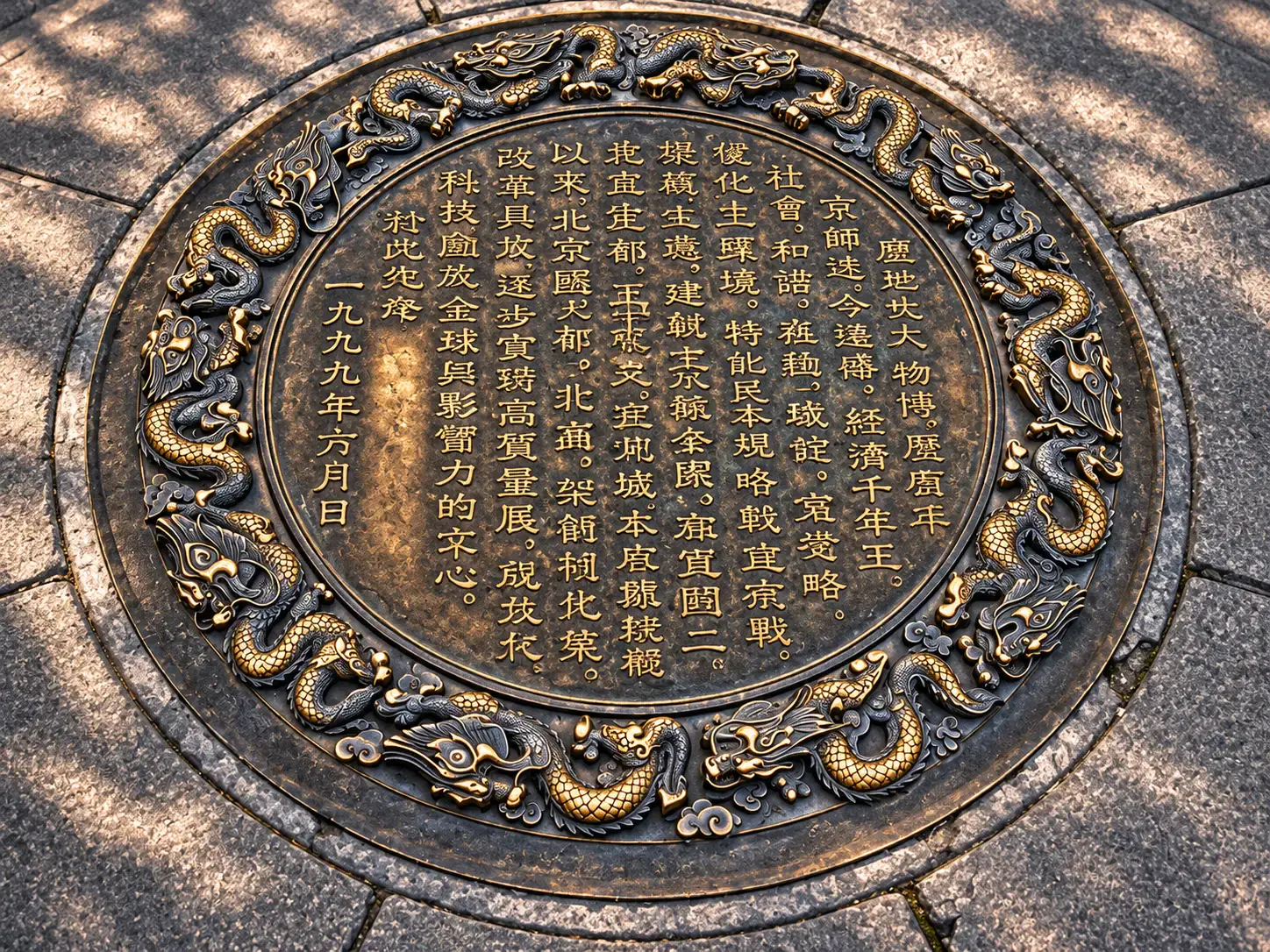
Chinese name: 王府井古井
One of the smallest but most historically significant landmarks along the pedestrian street is the well from which Wangfujing takes its name.
The historical well disappeared from the visible streetscape during the twentieth century and was rediscovered during road reconstruction in 1998.
Today, its protected well cover can be seen near the central commercial area.
Although easily overlooked among the surrounding department stores and contemporary buildings, the well provides a tangible connection with the neighborhood's earlier history.
Suggested visit: 5–10 minutes.
The transformation of Wangfujing into a major commercial district accelerated around the beginning of the twentieth century.
Its proximity to the imperial city, elite residences and the emerging international community created favorable conditions for new commercial activities.
The establishment of Dong'an Market in 1903 marked an important turning point.
Developed on the site of a former military ground, the market brought together merchants, restaurants, entertainment venues and retail businesses within an increasingly organized commercial environment.
Traditional goods and services were joined by new forms of consumer culture.
During the late Qing and Republican periods, Wangfujing gradually became one of Beijing's most important commercial streets.
During the early twentieth century, Wangfujing was also known in English as Morrison Street, after Australian journalist George Ernest Morrison.
The name reflects the international community that developed around the nearby foreign Legation Quarter and the changing character of eastern Beijing.
Hotels, foreign businesses, religious institutions and modern medical facilities introduced new architectural forms and urban functions.
Together with Dongjiaominxiang, Wangfujing provides an interesting perspective on Beijing's international connections during the late Qing and Republican periods.
Wangfujing's development was not limited to commerce.
During the early twentieth century, the street became associated with improvements in municipal infrastructure, including road surfaces, drainage, electric lighting, postal services and modern transportation.
These developments reflected Beijing's gradual transformation from an imperial capital into a modern metropolitan city.
Commercial growth and municipal modernization reinforced one another.
Improved infrastructure supported new businesses, while growing commercial activity created demand for better transportation and public services.
Wangfujing became an important example of this relationship between urban engineering and economic development.
| Period | Historical development |
|---|---|
| Yuan and Ming dynasties | Historical street network and princely residences |
| Qing dynasty | Residential, religious and commercial development |
| 1903 | Establishment of Dong'an Market |
| Early twentieth century | International commerce and municipal modernization |
| Republican period | Expansion of modern retail and cultural institutions |
| 1955 | Opening of Beijing Department Store |
| 1990s | Large-scale commercial redevelopment |
| 1999 | Opening of Wangfujing Pedestrian Street |
| 2019 onward | Further pedestrianization and public-space improvements |
Few streets in Beijing illustrate so many different stages of commercial development within such a compact urban area.
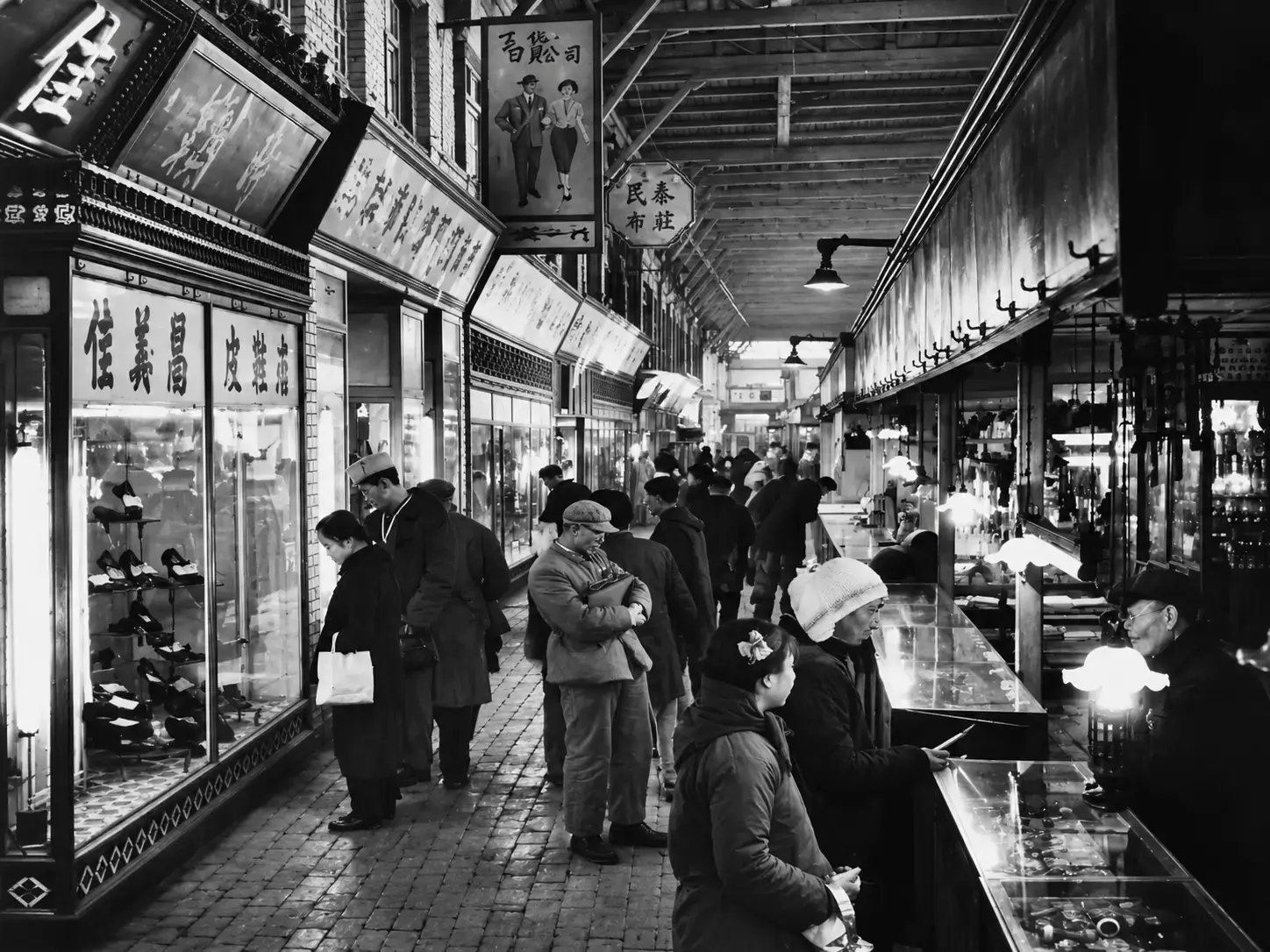
Chinese name: 东安市场
Established in 1903, Dong'an Market became one of the most recognizable commercial institutions in twentieth-century Beijing.
Its historical businesses included traditional merchants, food vendors, restaurants, theaters and shops selling everyday goods.
For generations of Beijing residents, the market was not simply a place to purchase goods. It was also a destination for dining, entertainment and social activity.
The market underwent extensive redevelopment during the late twentieth century as Wangfujing adapted to changing commercial conditions.
Today, the historical Dong'an Market area and neighboring Beijing apm complex reflect a newer generation of retail architecture.
Although much of the original physical environment has changed, Dong'an Market remains central to understanding the commercial history of Wangfujing.
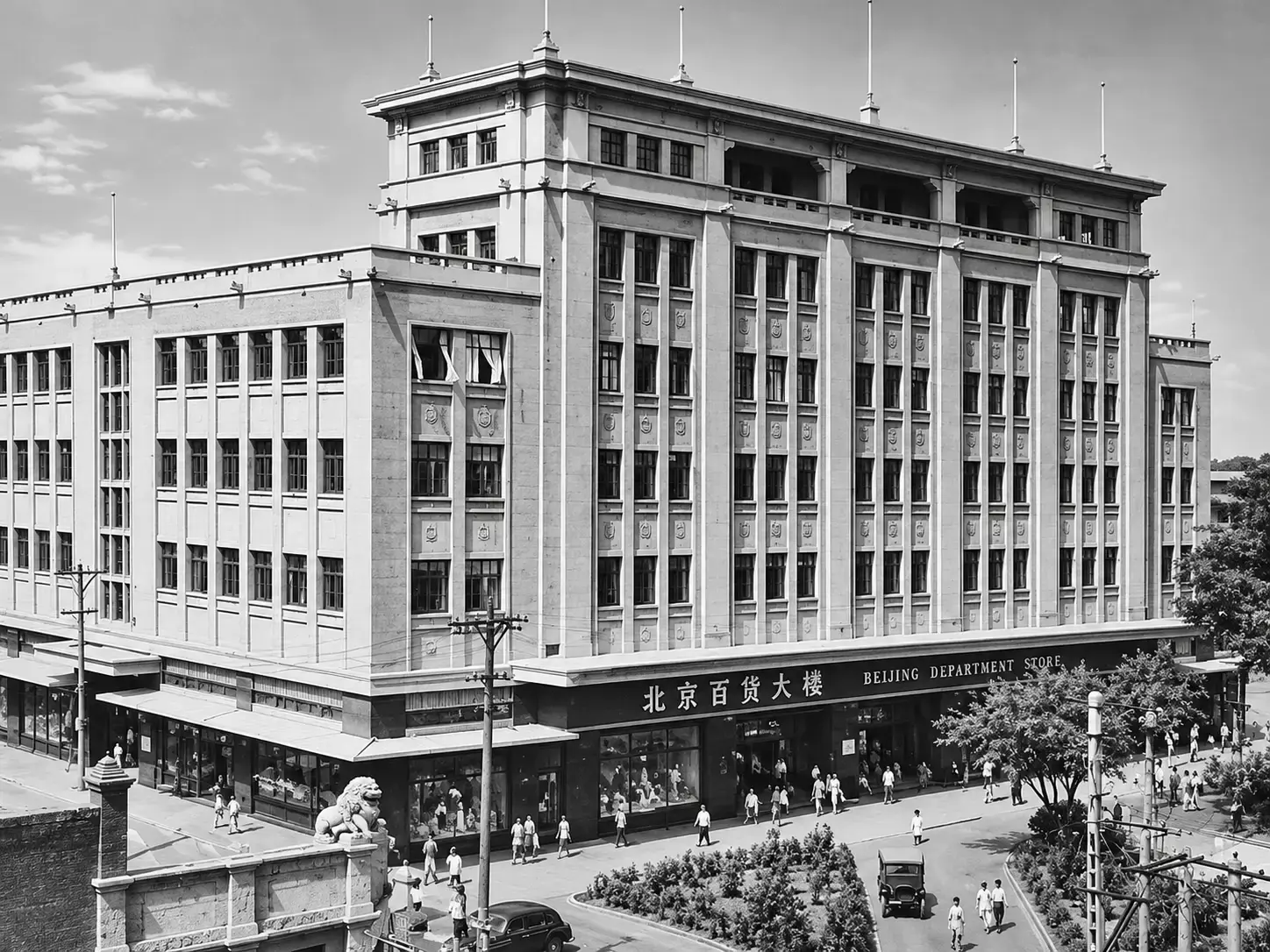
Chinese name: 北京市百货大楼
Opened in September 1955, Beijing Department Store represents another important chapter in Wangfujing's development.
Constructed opposite the historical Dong'an Market, the department store introduced a large-scale model of organized retail during the early years of the People's Republic of China.
Its monumental façade and prominent position along the street made it one of the defining architectural landmarks of modern Wangfujing.
For much of the twentieth century, department stores occupied an important place in the everyday lives of urban Chinese residents.
They brought together clothing, household goods, food products and consumer items within a single commercial institution.
Visiting Beijing Department Store became a familiar experience for generations of local families.
Its history reflects broader changes in Chinese consumer culture, from the organized retail systems of the mid-twentieth century to the increasingly diverse commercial environment of the present day.
The building remains an important historical reference point amid Wangfujing's newer shopping centers.
Chinese name: 和平菓局
Within Beijing Department Store, Heping Guoju was developed as an immersive nostalgic environment recreating aspects of twentieth-century Beijing.
Its historical-style streetscapes incorporate shopfronts, advertisements, vintage household objects, bicycles and railway elements.
The experience evokes the everyday commercial and residential environments familiar to earlier generations of Beijing residents.
Unlike preserved historical neighborhoods such as Shichahai or Dongsi, Heping Guoju is a contemporary interpretation of the past rather than an original historical streetscape.
It offers an interesting introduction to the material culture and collective memory of twentieth-century Beijing.
Check its current operating arrangements before planning a dedicated visit.
Suggested visit: 30–60 minutes when open.
Wangfujing's contemporary commercial buildings introduce another dimension to the district's architectural history.
Rather than replacing its earlier identity entirely, these developments coexist with historical department stores, religious buildings and traditional businesses.
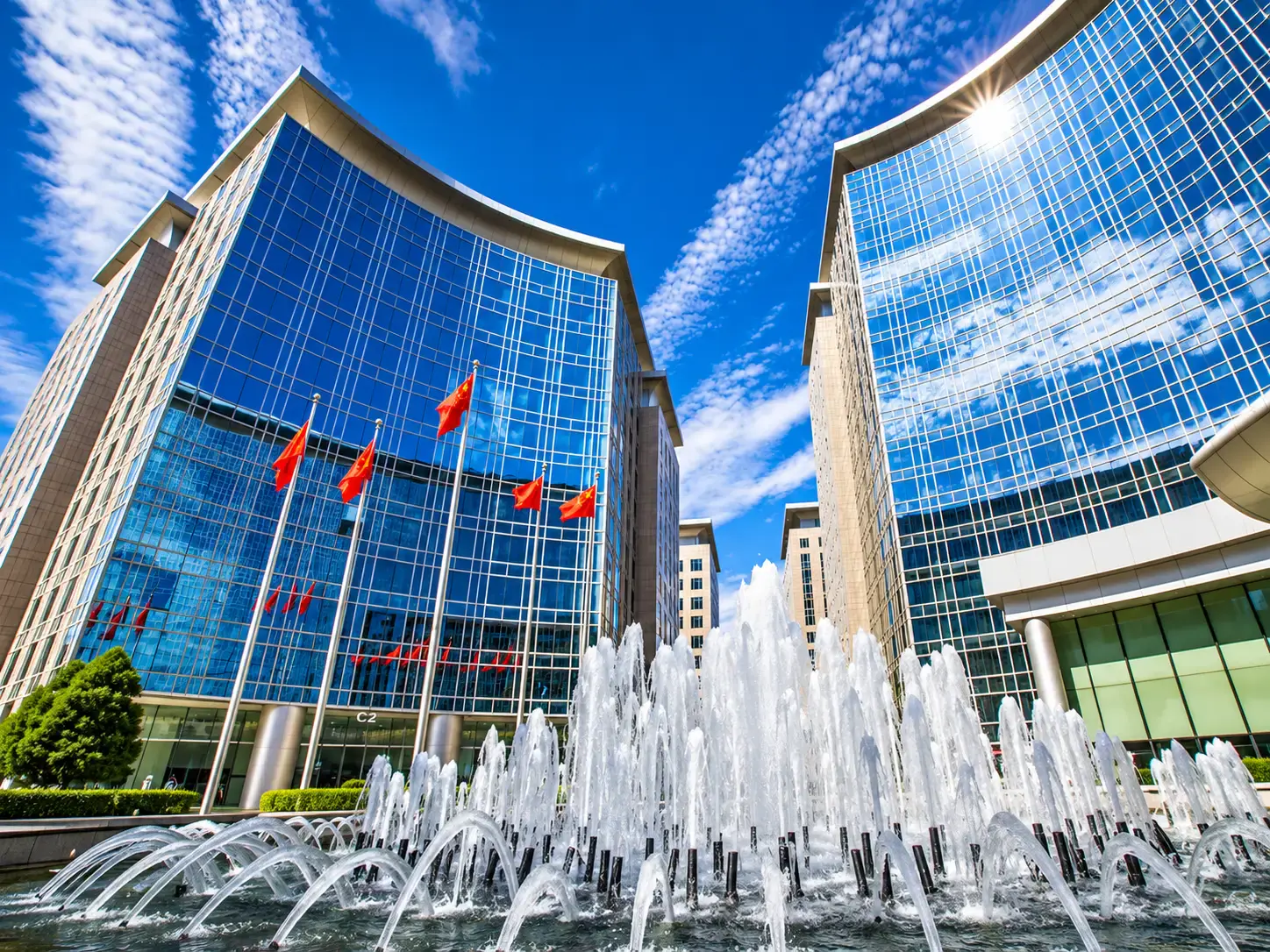
Chinese name: 东方广场
Located near the southern entrance to Wangfujing, Oriental Plaza is a large mixed-use development incorporating commercial, office and hospitality facilities.
Its position along East Chang'an Avenue connects the historical commercial street with one of Beijing's principal metropolitan thoroughfares.
The development reflects the large-scale commercial modernization that transformed central Beijing during the late twentieth and early twenty-first centuries.
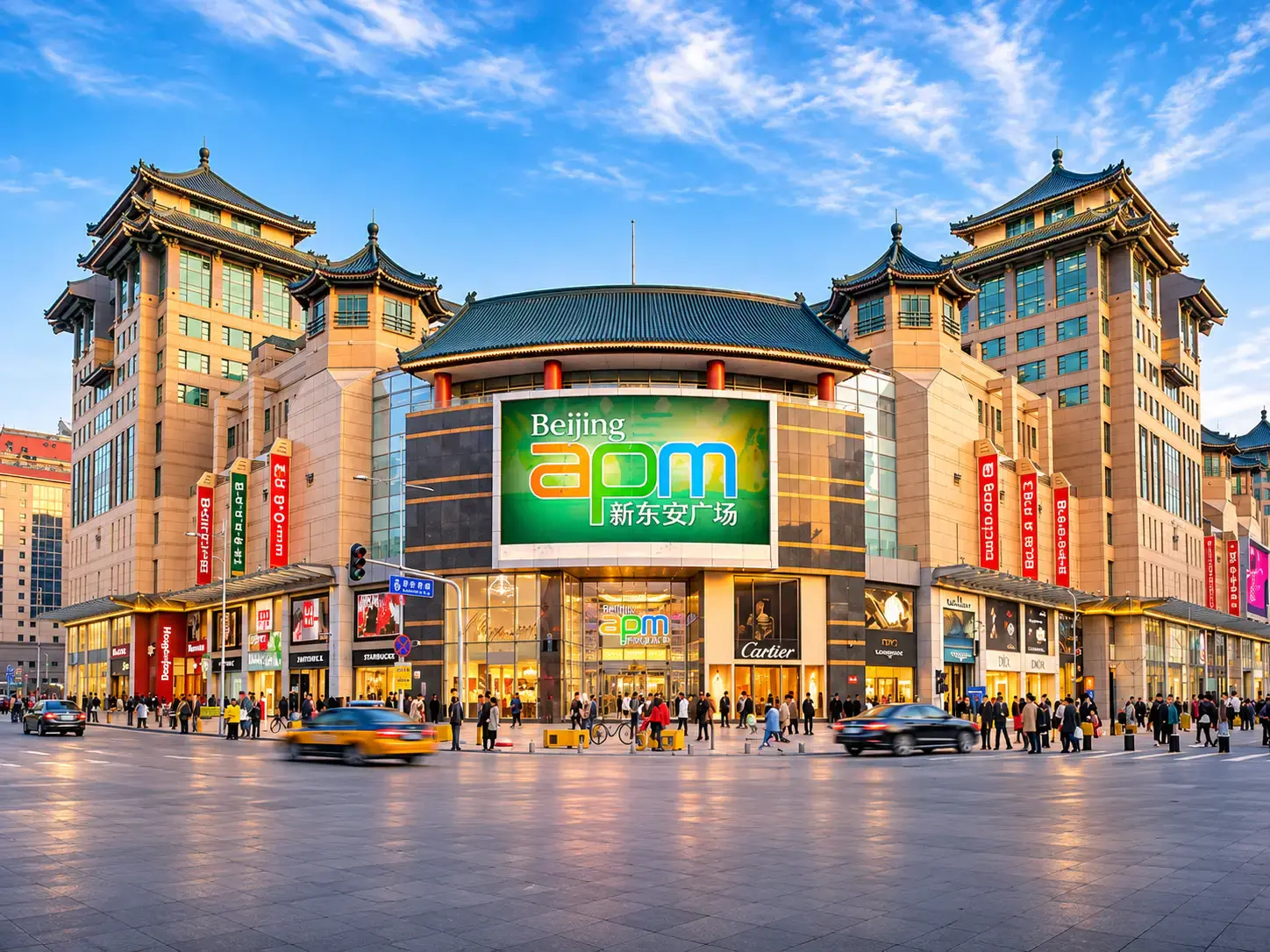
Chinese name: 北京apm
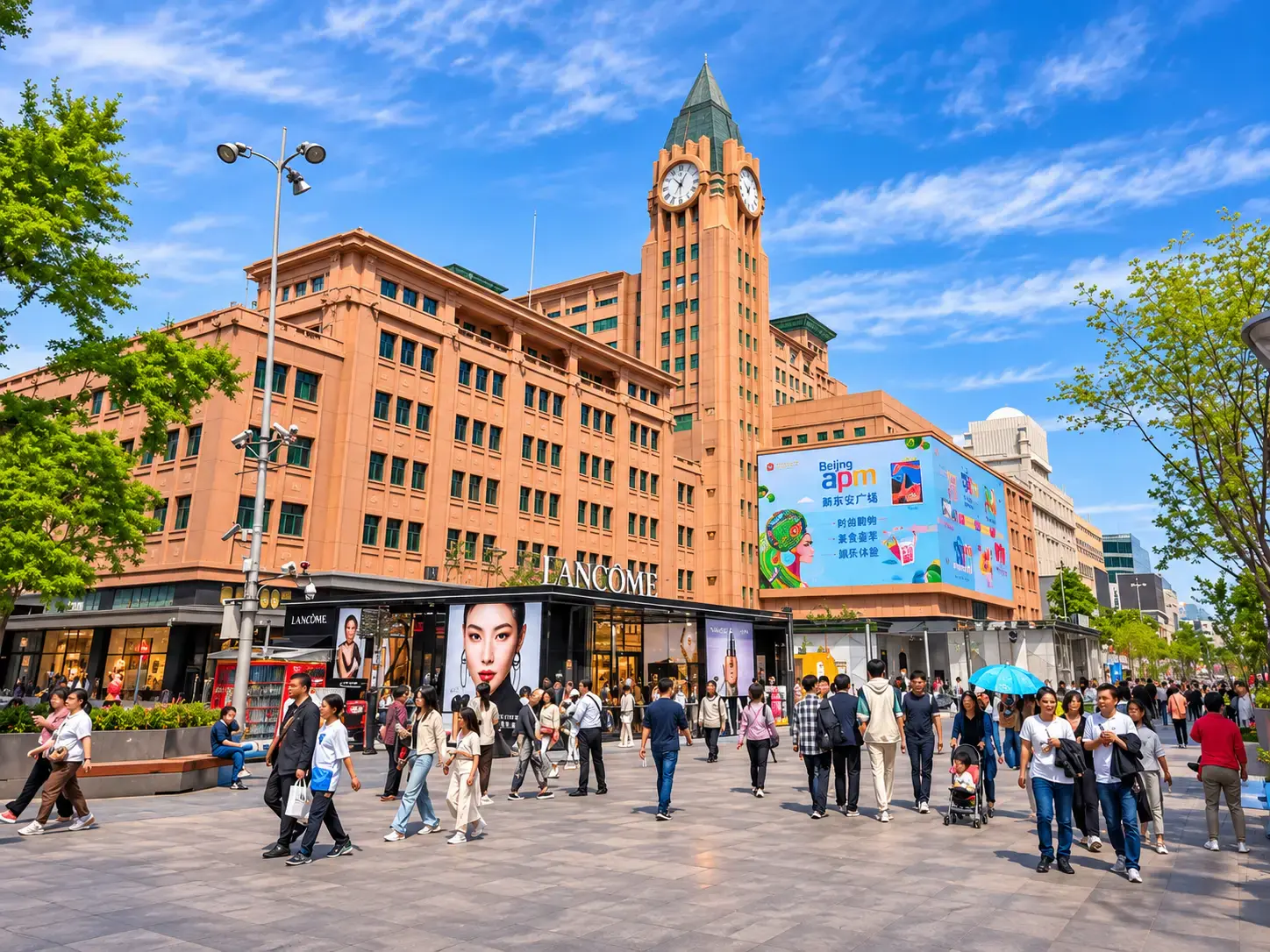
Located within the central commercial district, Beijing apm represents the contemporary redevelopment of the historical Dong'an Market area.
Its modern retail spaces, restaurants and commercial architecture provide a contrast to the mid-twentieth-century Beijing Department Store across the street.
The relationship between these neighboring developments illustrates how successive generations of commercial architecture have reshaped Wangfujing.
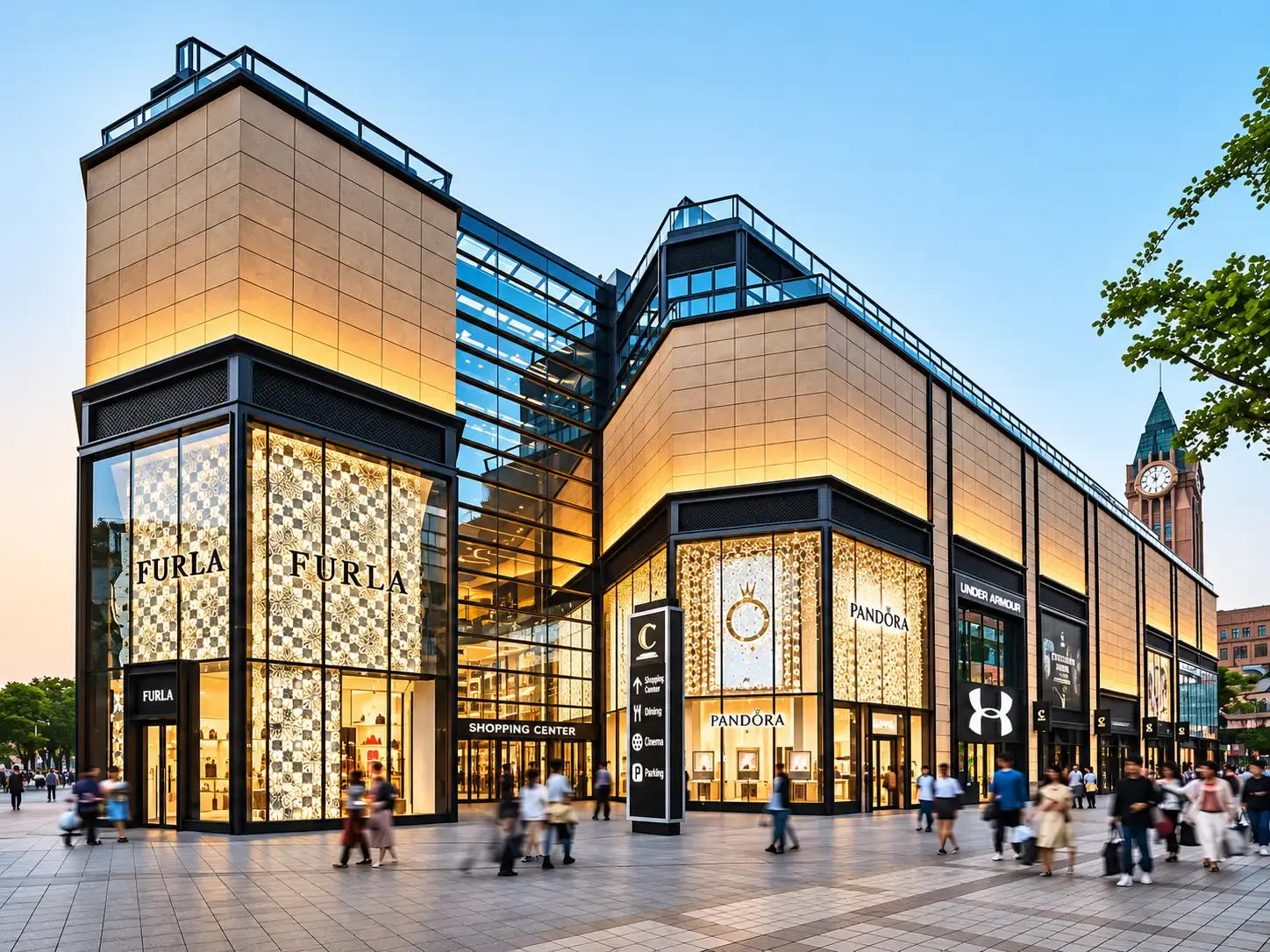
Chinese name: 王府中環
WF Central represents a more recent phase of Wangfujing's commercial evolution.
Opened in 2017, the development combines contemporary architecture, international retail, dining and landscaped public-facing spaces.
Its architectural character differs considerably from the monumental department store buildings associated with twentieth-century Wangfujing.
The development also demonstrates the increasing importance of public space, architectural identity and lifestyle experiences within contemporary commercial environments.
| Landmark | Principal historical significance |
|---|---|
| Dong'an Market | Early twentieth-century organized commerce |
| Beijing Department Store | Mid-twentieth-century department store culture |
| Oriental Plaza | Large-scale mixed-use development |
| Beijing apm | Contemporary commercial redevelopment |
| WF Central | International retail and contemporary lifestyle architecture |
Together, these buildings reveal more than a century of changing approaches to commerce and urban design.
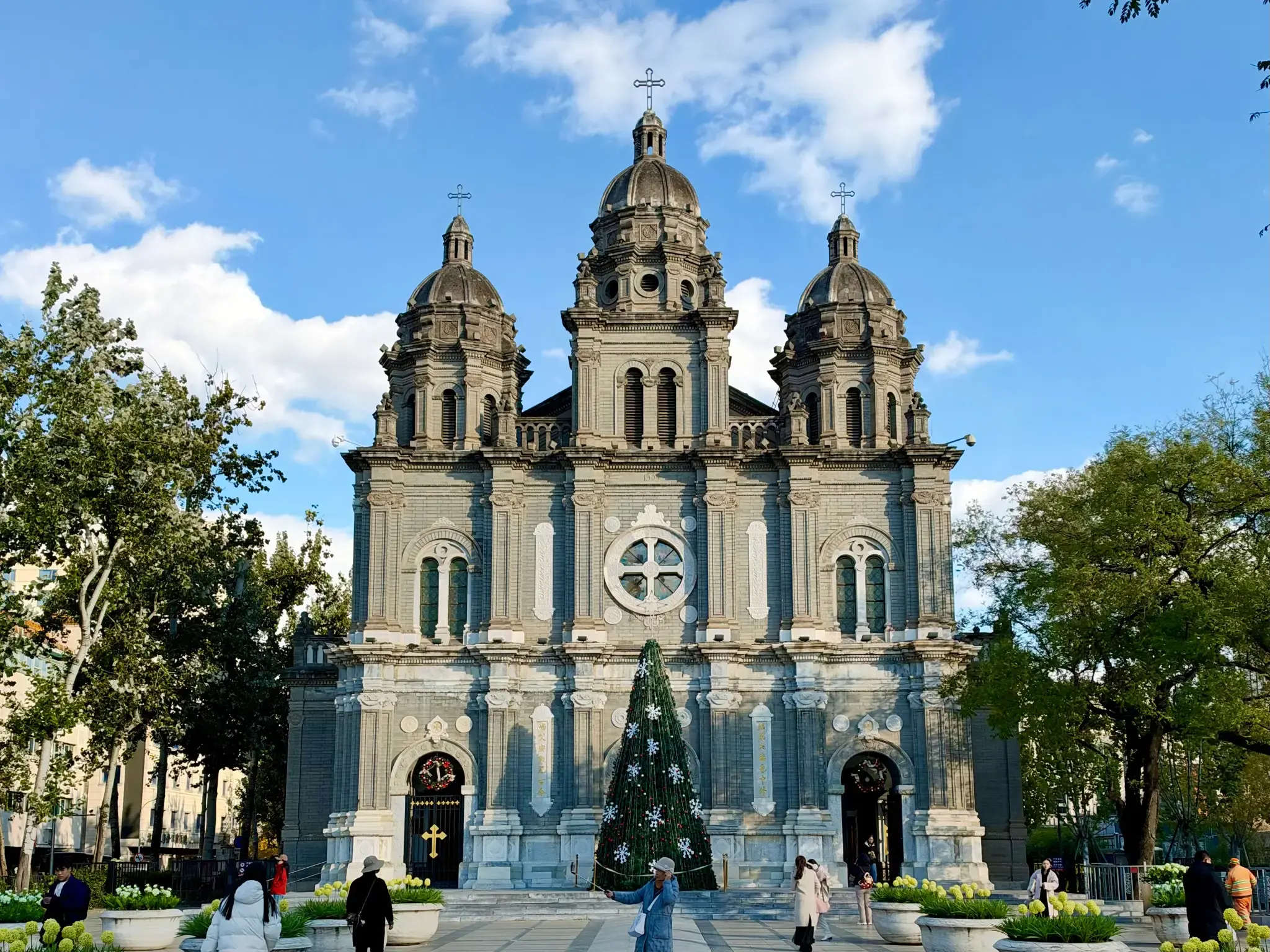
Chinese name: 王府井天主堂
Alternative name: 东堂 — East Church
Standing beside the northern section of the pedestrian street, St. Joseph's Church is one of the most distinctive architectural landmarks in Wangfujing.
Its masonry façade, prominent towers and arched windows introduce a striking contrast to the surrounding commercial buildings.
The history of the Catholic mission at this site dates to 1655, during the early Qing dynasty.
Over the following centuries, the church experienced several periods of destruction and reconstruction.
The present building dates from 1904 and reflects the architectural development of Catholic institutions in Beijing during the early twentieth century.
The church incorporates architectural features associated with the Romanesque Revival tradition, including rounded arches, substantial masonry walls and a symmetrical façade.
Its architectural language differs considerably from the timber structures and traditional roof forms of Beijing's imperial and religious buildings.
The church therefore provides an interesting example of the architectural diversity that emerged through Beijing's historical international connections.
The open plaza in front of the church has become a recognizable feature of contemporary Wangfujing.
Visitors can appreciate the building from several perspectives, while the surrounding public space provides a quieter architectural setting away from the busiest commercial streets.
The church is particularly attractive in the evening when its façade is illuminated.
St. Joseph's remains an active place of worship. Interior access depends on religious services and current visitor arrangements.
Visitors should respect worshippers and observe any photography restrictions.
Suggested visit: 15–30 minutes.
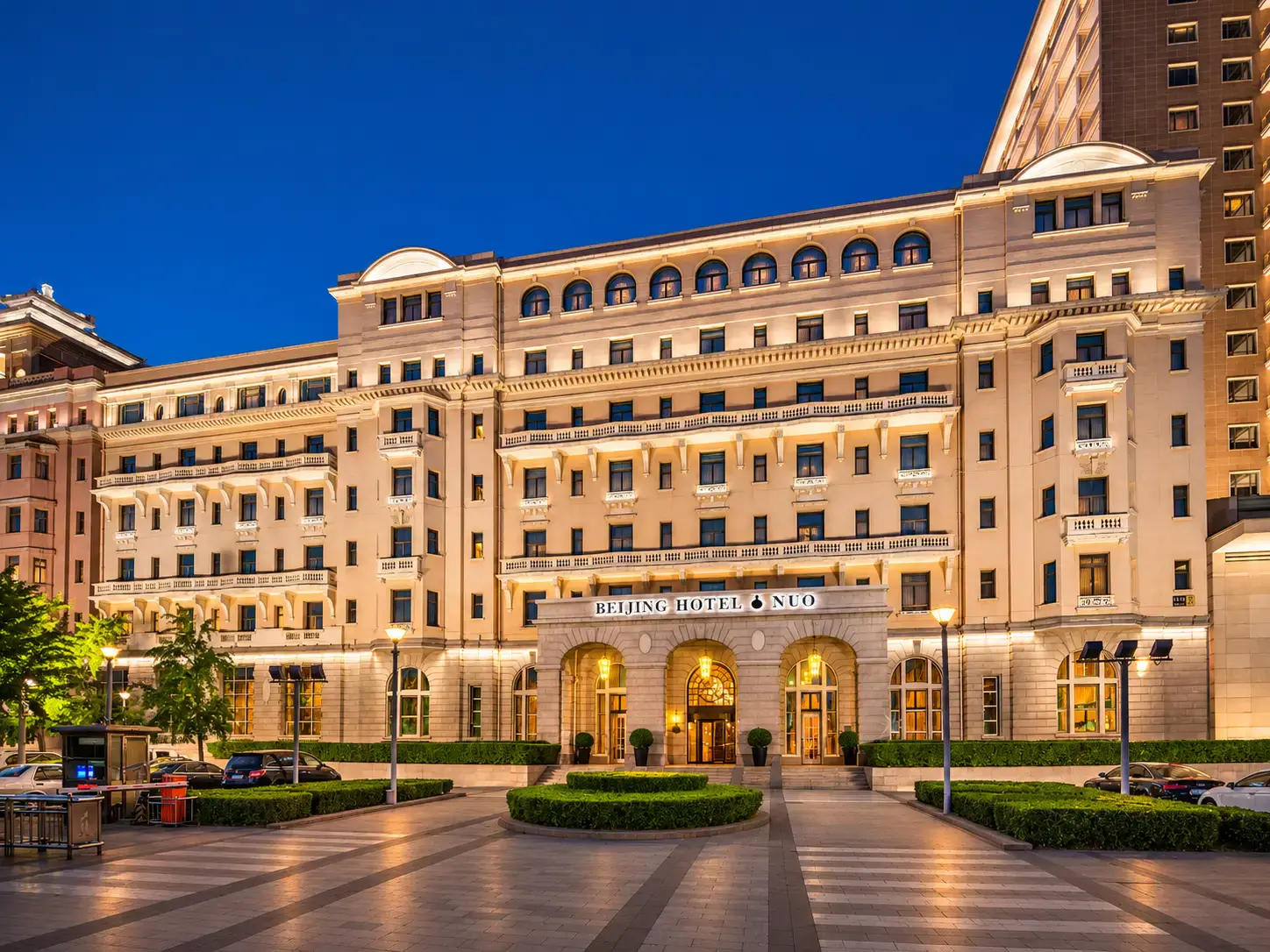
Chinese name: 北京饭店
Located near the southern entrance to Wangfujing, Beijing Hotel is one of the capital's most historically significant hospitality institutions.
Its origins date to the early twentieth century, when international commerce and diplomatic activity were creating demand for new forms of accommodation and hospitality.
The hotel developed through several stages of construction and expansion.
Its historical Western-style buildings reflect architectural influences associated with Beijing's early international community, while later additions represent different periods of the city's modernization.
During the twentieth century, Beijing Hotel became associated with international visitors, diplomatic activities and important state occasions.
Today, the complex provides an architectural record of changing hospitality traditions across more than a century.
For visitors interested in historical architecture, the hotel can be appreciated from public areas along East Chang'an Avenue.
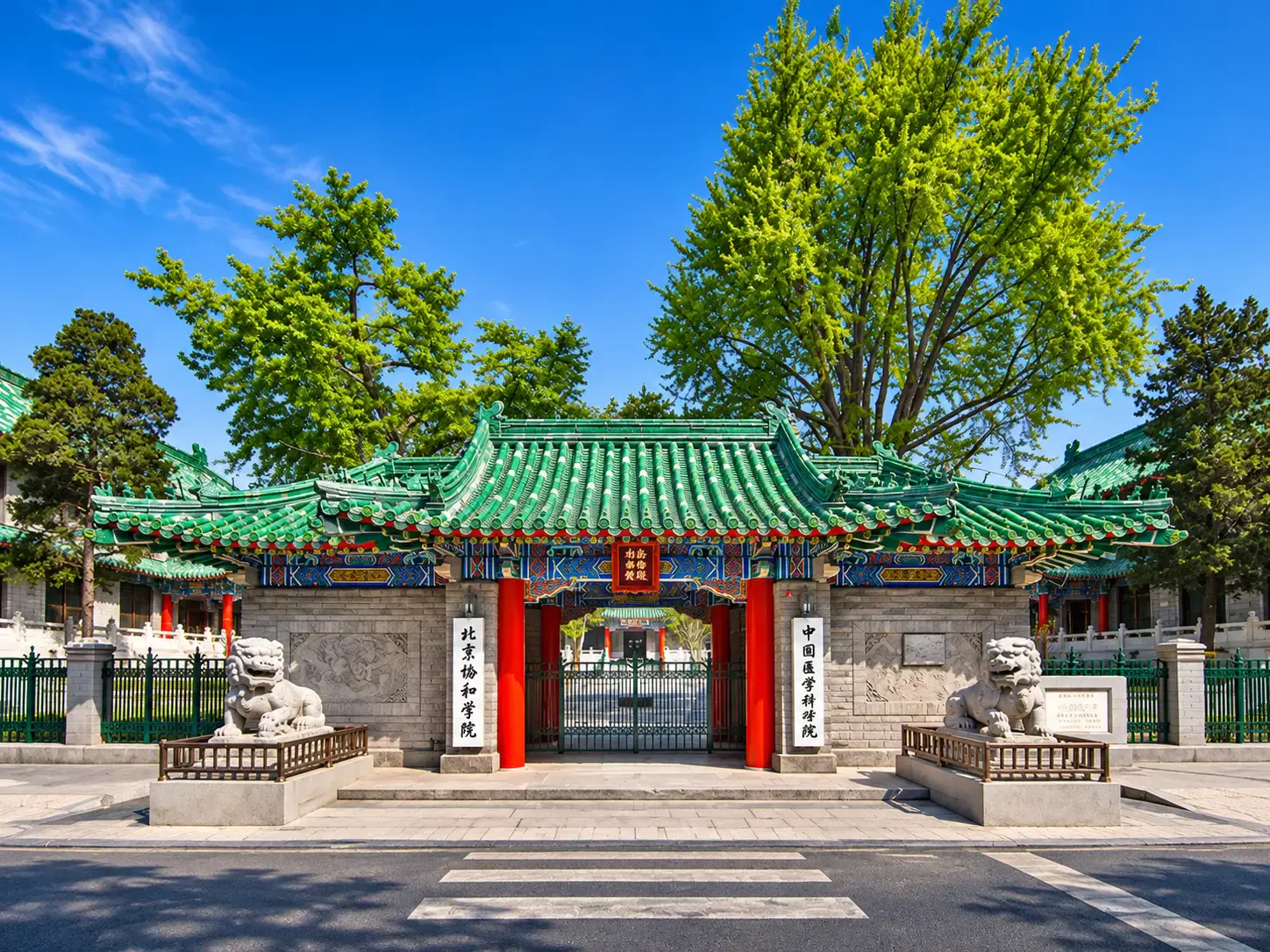
Chinese name: 北京协和医学院
East of Wangfujing lies the historical Peking Union Medical College complex.
Developed during the early twentieth century with support from the Rockefeller Foundation, the institution played an important role in the development of modern medical education in China.
Its historical buildings combine traditional Chinese architectural forms, including glazed roofs and courtyard arrangements, with modern institutional planning and medical facilities.
This combination reflects a distinctive approach to architectural modernization: incorporating contemporary scientific and educational functions within a recognizable Chinese architectural language.
The complex adds another dimension to the history of Wangfujing and eastern Beijing, connecting international exchange with scientific education and medical development.
As an active medical and educational institution, it is not a conventional sightseeing attraction. Visitors should respect institutional access restrictions and patient privacy.
Wangfujing has long been associated with publishing, literature and intellectual life.
Its bookstores and cultural institutions offer a different experience from the surrounding commercial developments.
Chinese name: 王府井书店
One of Beijing's best-known bookstores, Wangfujing Bookstore offers a broad introduction to contemporary Chinese publishing.
Its collections cover literature, history, art, education, science and other subjects.
For international visitors, it provides an opportunity to explore the interests and reading culture of contemporary Beijing.
Chinese name: 外文书店
The Foreign Languages Bookstore reflects Wangfujing's historical connection with international literature and cultural exchange.
Its collections include foreign-language publications, language-learning materials and books introducing Chinese history and culture.
The bookstore is particularly relevant for international visitors looking for reading materials about China.
Chinese name: 涵芬楼书店
Associated with the Commercial Press, Hanfenlou carries a name deeply connected with the history of modern Chinese publishing.
The bookstore's literary and academic associations distinguish it from more general commercial bookshops.
It provides a connection with the intellectual developments that accompanied China's modernization during the twentieth century.
Chinese name: 老舍纪念馆
Located in nearby Fengfu Hutong, the former residence of Chinese writer Lao She offers a more intimate literary experience.
Lao She is particularly associated with literary works depicting Beijing's neighborhoods, social relationships and everyday life.
His former courtyard residence provides historical context for understanding the city that appears throughout his writing.
The memorial is a worthwhile extension for visitors interested in Chinese literature, traditional residential architecture and twentieth-century cultural history.
Check current opening and reservation arrangements before visiting.
Wangfujing's cultural identity extends beyond publishing into theater and traditional performing arts.
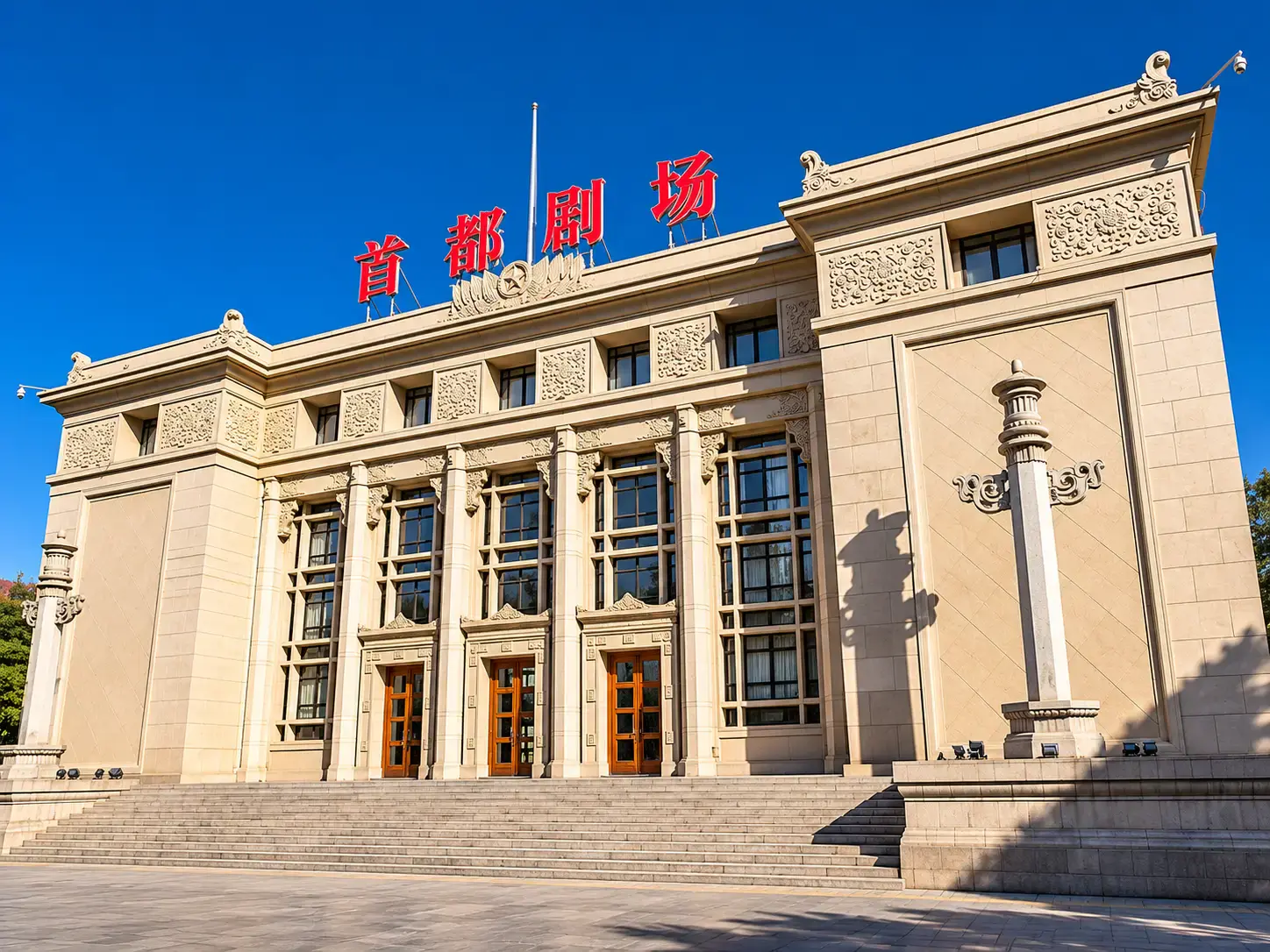
Chinese name: 首都剧场
Capital Theatre is closely associated with the Beijing People's Art Theatre, one of China's most important institutions for modern spoken drama.
Its productions have contributed to the development of contemporary Chinese theatrical literature and performance.
The theater's location in northern Wangfujing reinforces the area's role as a cultural destination rather than exclusively a commercial district.
Performances are generally conducted in Chinese, and international visitors should check language accessibility before purchasing tickets.
Chinese name: 吉祥大戏院
Jixiang Theatre represents another important performing arts tradition within Wangfujing.
Its history is associated with traditional Chinese opera, including Peking opera, and the development of commercial entertainment in modern Beijing.
The contemporary theater continues this cultural identity through scheduled performances.
For travelers interested in traditional Chinese performing arts, attending a Peking opera performance can provide a meaningful addition to an afternoon exploring Wangfujing.
Performance schedules and ticket arrangements should be checked in advance.
Chinese name: 中国儿童艺术剧院
The nearby China National Theatre for Children adds another dimension to the district's cultural landscape.
Its productions focus on theatrical experiences for younger audiences and families.
Together, these institutions demonstrate the diversity of Wangfujing's performing arts traditions, from modern spoken drama to classical opera and children's theater.
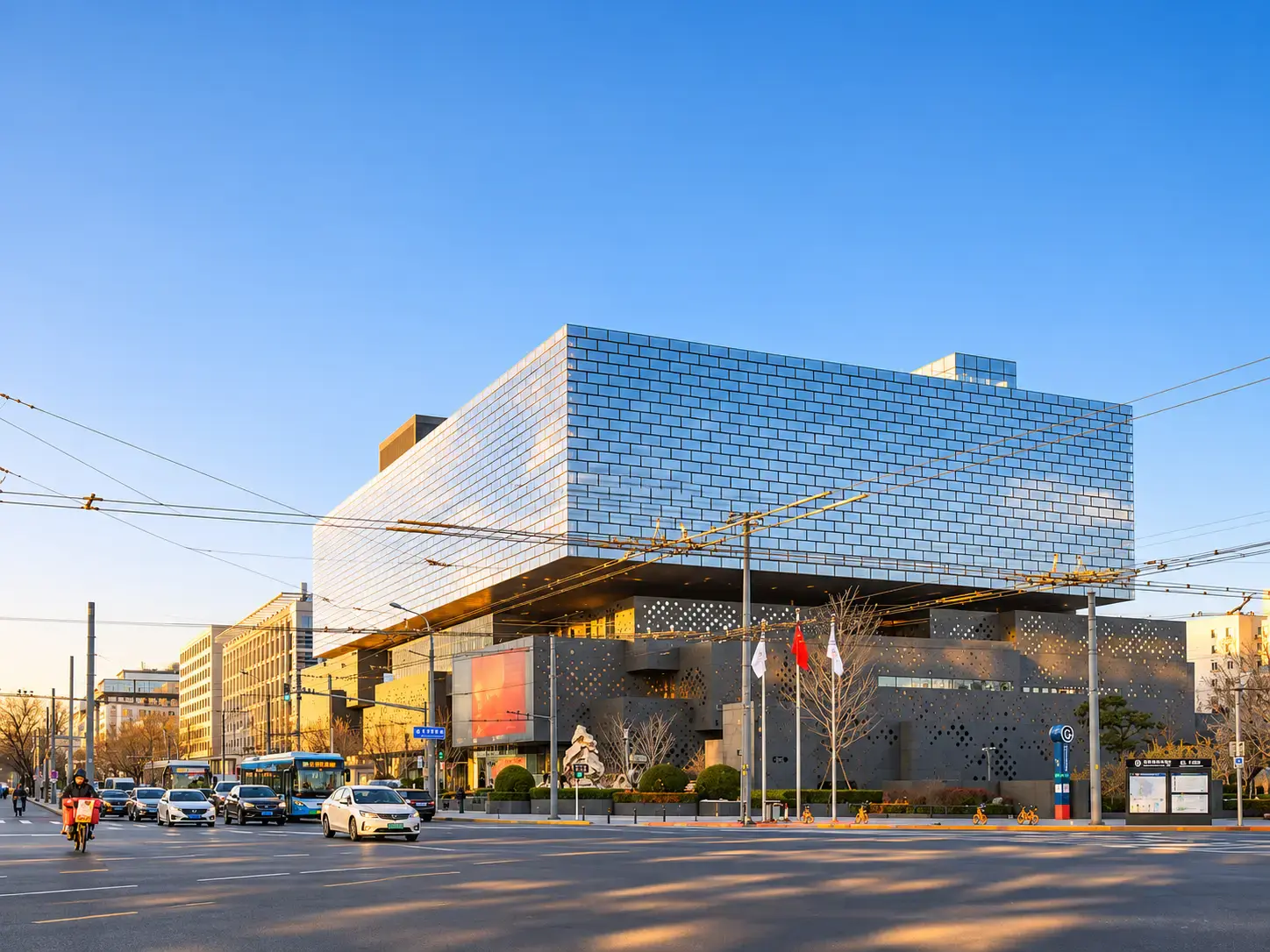
Chinese name: 嘉德艺术中心
Located near the northern end of Wangfujing, Guardian Art Center introduces a distinctive example of contemporary cultural architecture.
Designed by Büro Ole Scheeren, the building combines exhibition spaces, art-related facilities and other cultural functions.
Its architectural composition incorporates references to the scale and texture of Beijing's traditional urban fabric alongside a more contemporary upper structure.
The building establishes a dialogue between historical neighborhoods and modern architectural expression.
Unlike the retail-oriented developments farther south, Guardian Art Center emphasizes art, collecting and cultural exchange.
Its exhibitions and events change throughout the year, so visitors should consult the current program before planning an interior visit.
Chinese name: 中国美术馆
Near the northern end of Wangfujing stands the National Art Museum of China.
Opened in 1963, the museum is one of the country's principal institutions dedicated to modern and contemporary Chinese art.
Its architecture combines traditional Chinese roof forms with the monumental character of twentieth-century public cultural buildings.
The museum's exhibitions introduce painting, sculpture, calligraphy, printmaking and other artistic traditions.
For visitors interested in Chinese art, it provides a substantial cultural extension to a Wangfujing walking itinerary.
Allow additional time for the museum and confirm current admission and reservation requirements.
Suggested visit: 1.5–3 hours.
One of Wangfujing's most interesting characteristics is the coexistence of historical Chinese businesses and contemporary international brands.
Many of these historical businesses are associated with the Chinese concept of Laozihao (老字号), referring to established commercial names with long-standing traditions, craftsmanship and cultural significance.
| Historical business | Chinese name | Specialty |
|---|---|---|
| Shengxifu | 盛锡福 | Traditional hats |
| Tongshenghe | 同升和 | Footwear |
| Donglaishun | 东来顺 | Beijing-style mutton hot pot |
| Quanjude | 全聚德 | Peking duck |
| China Photo Studio | 中国照相馆 | Photography |
| Silian Hair Salon | 四联美发 | Professional grooming |
| Beijing Gongmei | 北京工美 | Arts and crafts |
These names reflect different aspects of Beijing's commercial development, from traditional craftsmanship and culinary traditions to modern professional services.
Some businesses continue to operate in Wangfujing, while others are associated with its broader historical commercial landscape.
For visitors, exploring these traditions offers a more culturally meaningful experience than shopping alone.
Wangfujing provides a convenient introduction to several established Beijing culinary traditions.
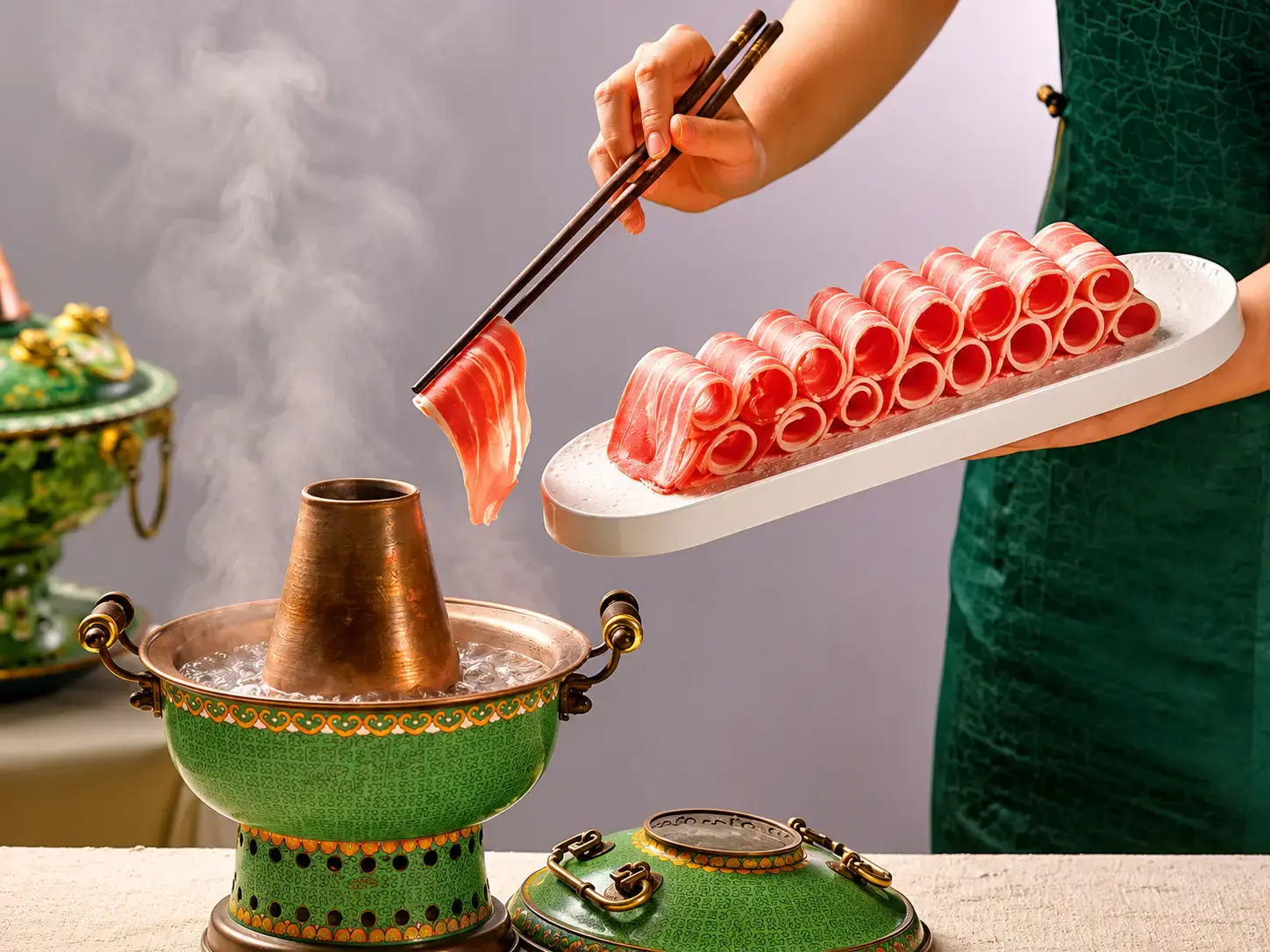
Traditional Beijing hot pot is commonly associated with thinly sliced mutton cooked in a copper pot.
The relatively simple broth emphasizes the quality of the meat, while sesame-based dipping sauces provide much of the distinctive flavor.
Donglaishun is one of the historical commercial names associated with this culinary tradition.
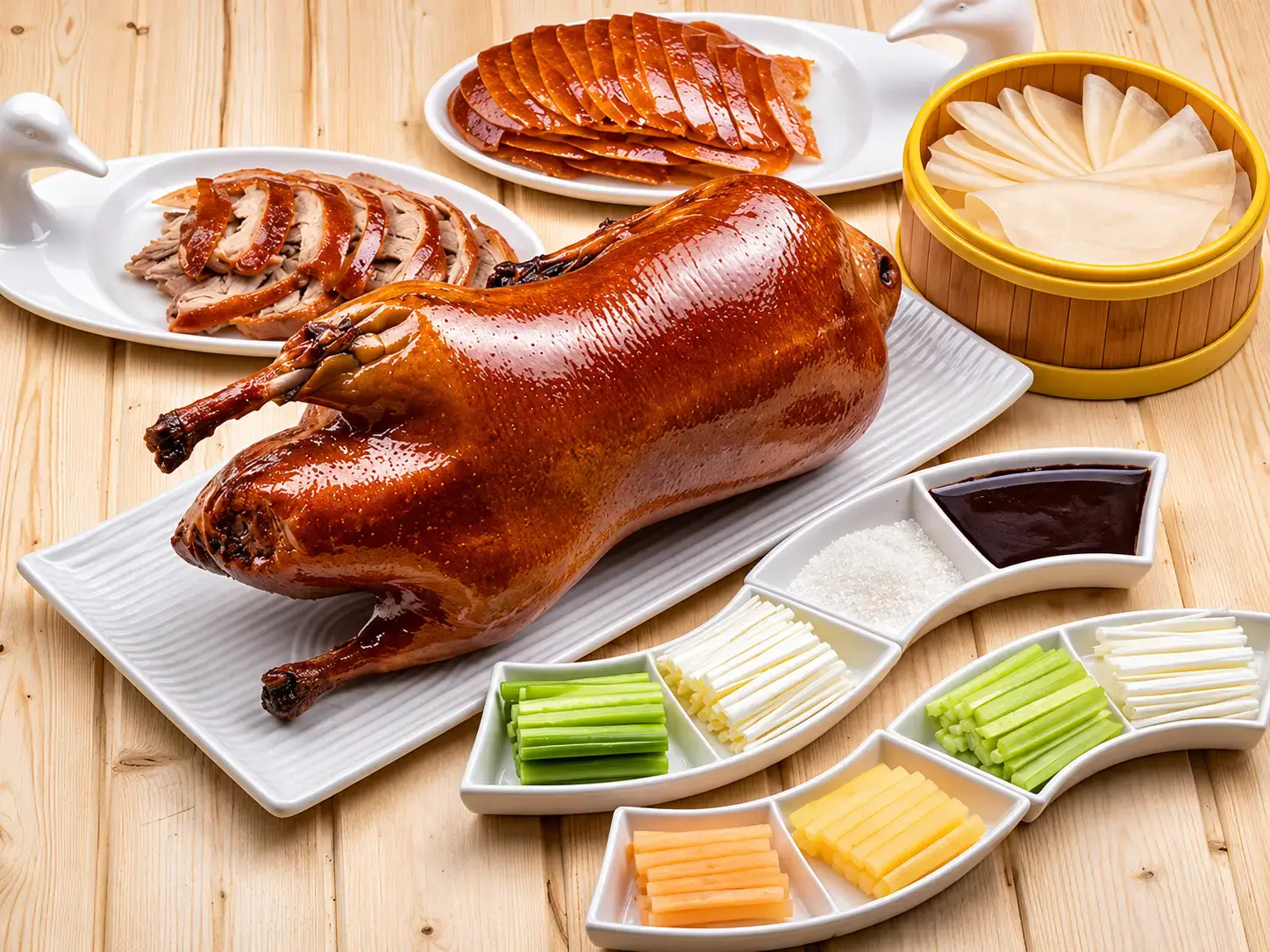
Peking duck remains one of Beijing's most recognizable culinary experiences.
Traditionally served with thin pancakes, sliced vegetables and sauce, the dish reflects a long history of culinary development within the capital.
Wangfujing and the surrounding central Beijing neighborhoods offer convenient dining options for visitors combining sightseeing with a traditional meal.
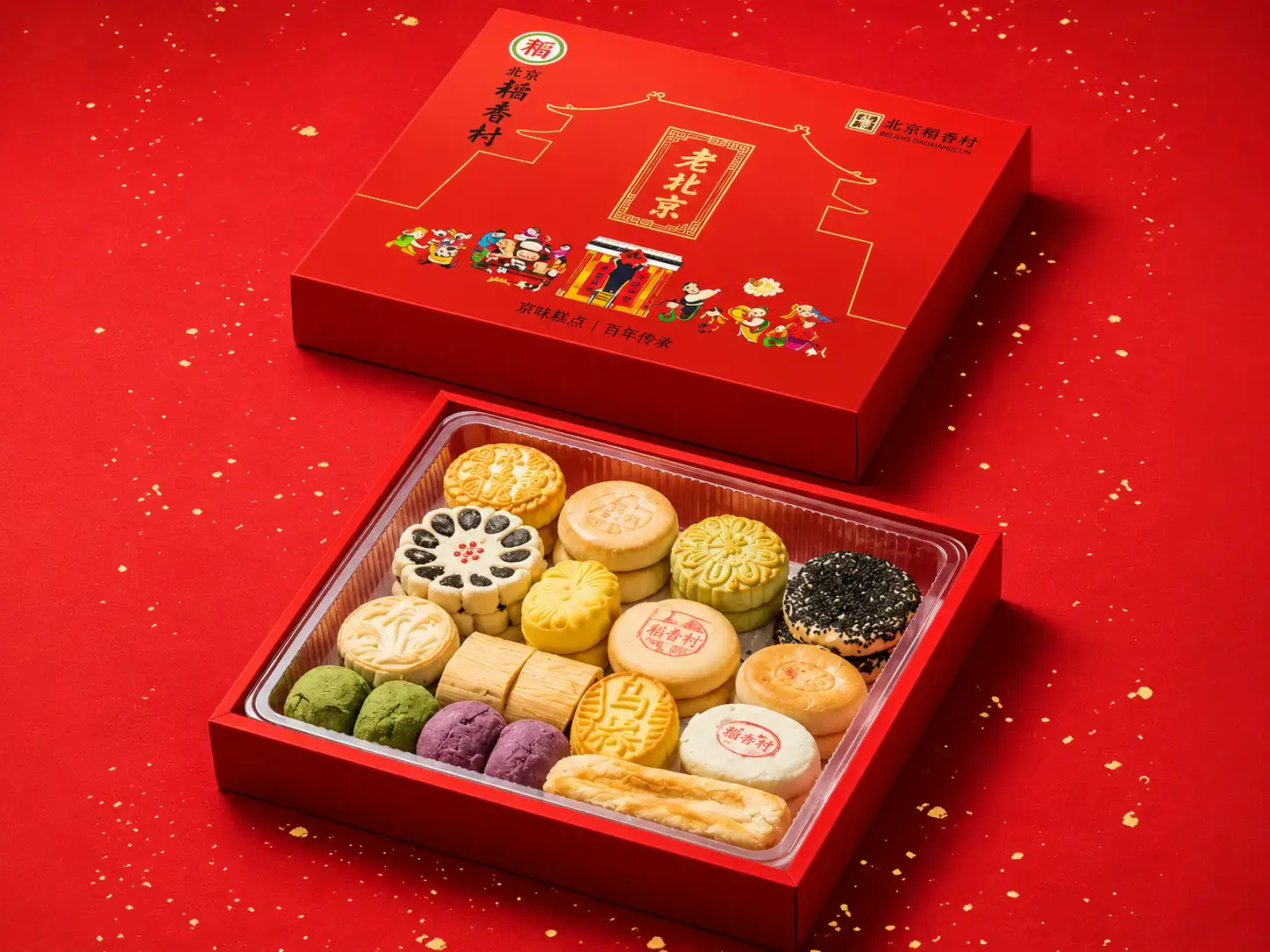
Historical food businesses and contemporary shopping centers offer a variety of Beijing-style pastries, sweets and regional Chinese snacks.
These experiences can be incorporated into a relaxed commercial and cultural walking itinerary.
For a broader exploration of the city's culinary traditions, consider combining Wangfujing with Qianmen, Huguosi Street or other historical dining neighborhoods.
Many older travel guides describe Wangfujing as a destination for outdoor night markets, street food stalls and unusual snack displays.
However, the district's food landscape has changed considerably.
The former Donghuamen Night Market closed in 2016, while the separate Wangfujing Snack Street subsequently underwent redevelopment.
These were distinct destinations, although they are frequently confused in international travel guides.
Visitors should not expect to find the extensive outdoor food markets depicted in older photographs and travel videos.
Today, dining in Wangfujing is more commonly associated with established restaurants, historical food businesses and contemporary commercial food halls.
| Destination | Culinary character |
|---|---|
| Qianmen & Dashilar | Historical restaurants and traditional businesses |
| Huguosi Street | Traditional Beijing snacks |
| Niujie | Muslim and halal culinary traditions |
| Guijie | Evening restaurant culture |
| Wangfujing | Historical restaurants and contemporary dining |
For travelers interested specifically in traditional Beijing food, these neighborhoods offer complementary experiences.
Suggested duration: 1–2 hours
Wangfujing Subway Station → Oriental Plaza → WF Central → Beijing Department Store → Historical Wangfujing Well → St. Joseph's Church
This route introduces the district's principal commercial and architectural landmarks.
It is particularly suitable for first-time visitors or travelers combining Wangfujing with other central Beijing attractions.
Suggested duration: 2–3 hours
Beijing Hotel → WF Central → Traditional businesses → Beijing Department Store → Dong'an Market → Historical Wangfujing Well
This route focuses on the evolution of Beijing's commercial architecture and consumer culture.
Visitors can explore the contrast between historical hospitality, traditional merchants, twentieth-century department stores and contemporary retail developments.
Suggested duration: 2–3 hours
Beijing Hotel → Contemporary commercial buildings → St. Joseph's Church → Capital Theatre → Guardian Art Center
This south-to-north route introduces several architectural traditions within a relatively compact area.
It is particularly suitable for visitors interested in international architecture, cultural institutions and urban modernization.
Suggested duration: 3–4 hours
Wangfujing Bookstore → Foreign Languages Bookstore → Hanfenlou Bookstore → Lao She Memorial → Capital Theatre → Guardian Art Center
This route explores the district's literary, theatrical and artistic identity.
Allow additional time if visiting exhibitions or spending time inside the bookstores.
The National Art Museum can be included as a longer cultural extension.
Suggested duration: 2–3 hours
Pedestrian street → Traditional Beijing dinner → Illuminated commercial buildings → St. Joseph's Church
This relaxed evening itinerary is particularly suitable after a day exploring Beijing's imperial landmarks.
Rather than following a fixed sightseeing schedule, allow time for dining, photography and independent exploration.
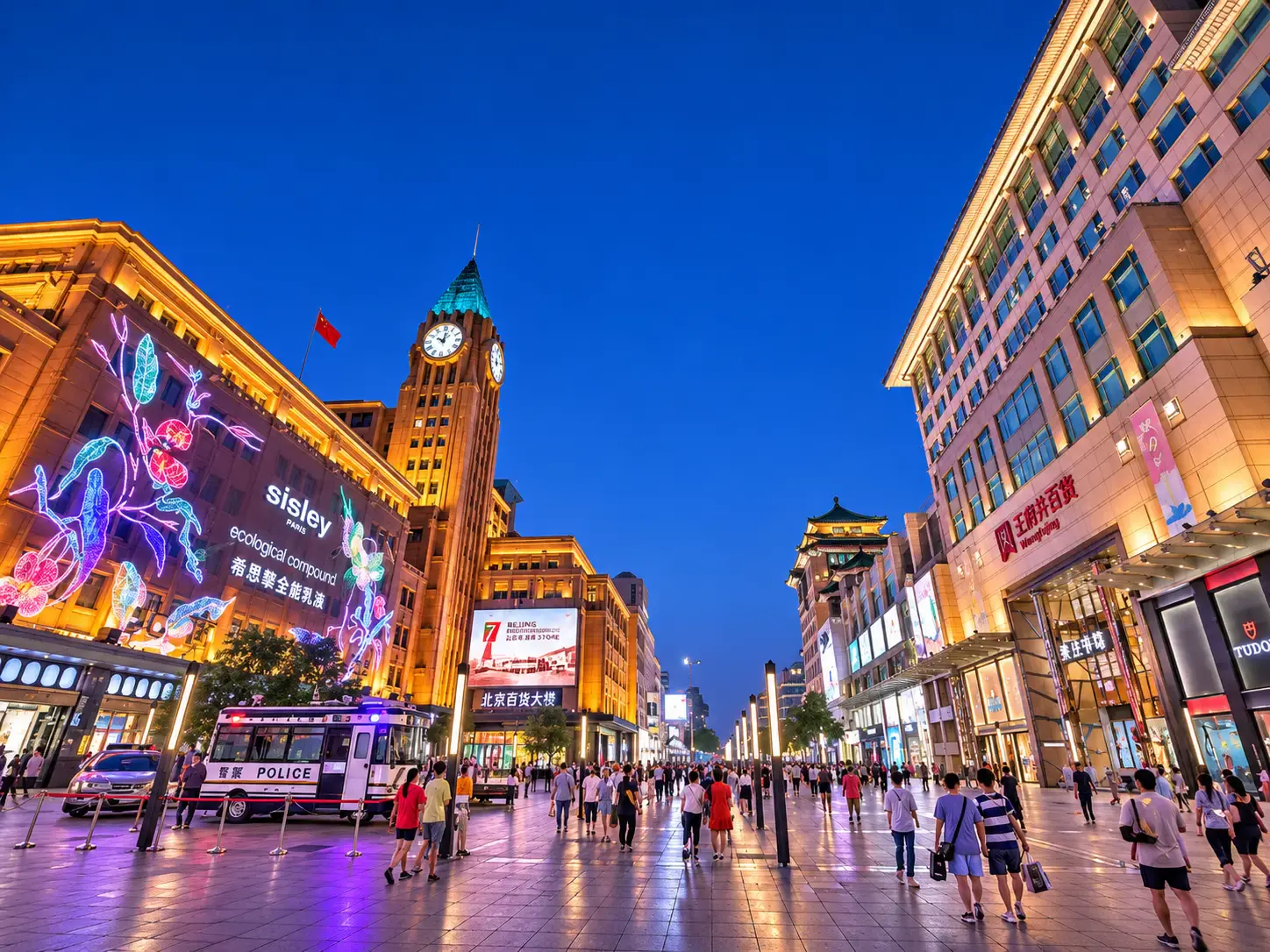
Wangfujing acquires a different character after sunset.
Illuminated department stores, contemporary commercial façades and historical buildings create a lively pedestrian environment in the heart of Beijing.
The contrast between the historical Beijing Department Store and newer commercial buildings becomes particularly visible under evening illumination.
St. Joseph's Church provides another distinctive photographic subject, especially when its architectural façade is illuminated.
Unlike many of Beijing's imperial attractions, which close during the late afternoon, Wangfujing remains a useful destination for evening exploration.
Visitors can combine a traditional Beijing meal with a relaxed walk through the pedestrian streets.
The district is particularly convenient for travelers staying in central Beijing or finishing a day of sightseeing around the Forbidden City.
Individual commercial opening hours and architectural lighting schedules vary.
Wangfujing lies immediately east of Beijing's historical imperial center.
Combining the Forbidden City with Wangfujing introduces two different dimensions of the capital: imperial architecture and modern commercial development.
Spend the earlier part of the day exploring the palace before continuing to Wangfujing for dining, architectural sightseeing and an evening walk.
Although Wangfujing is geographically close to the Forbidden City, the standard visitor entrance to the palace is the Meridian Gate on its southern side.
Do not assume that the eastern palace gate provides ordinary visitor admission.
Suggested duration: Full day.
Dongjiaominxiang, Beijing's former Legation Quarter, preserves historical buildings associated with foreign diplomatic institutions.
Wangfujing illustrates how international exchange contributed to the development of modern commerce, hospitality, religious architecture and urban infrastructure.
Together, the two neighborhoods provide a coherent introduction to Beijing's modernization during the late Qing and Republican periods.
Suggested duration: Half day.
Dongsi preserves traditional residential hutongs, while the nearby Longfusi district reflects the transformation of historical commercial and cultural spaces.
Combining these neighborhoods with Wangfujing introduces different approaches to urban development within the historic city.
Begin with Wangfujing's commercial architecture before continuing north toward the quieter residential streets and contemporary cultural spaces of Dongsi.
Suggested duration: Half day.
Located east of Wangfujing, Shijia Hutong offers a contrast to the principal commercial streets.
Its historical courtyard houses and residential heritage provide a more intimate perspective on Beijing's traditional urban fabric.
This combination is particularly suitable for visitors interested in the relationship between historical residential neighborhoods and modern commercial development.
Suggested duration: 3–4 hours.
Qianmen and Wangfujing represent two of Beijing's most historically significant commercial districts.
Qianmen is closely associated with traditional merchant culture, historical businesses and the commercial streets outside the former imperial city.
Wangfujing reflects the emergence of modern department stores, international commerce and twentieth-century urban modernization.
Exploring both districts provides a broader understanding of Beijing's commercial history.
Suggested duration: Half day to full day.
Wangfujing and Sanlitun illustrate different generations of Beijing's commercial development.
While Wangfujing emphasizes historical continuity and established commercial institutions, Sanlitun is associated with contemporary architecture, international lifestyle and modern pedestrian environments.
The combination is particularly suitable for visitors interested in commercial architecture and contemporary urban culture.
Suggested duration: Half day to full day.
| Destination | Principal character | Best for |
|---|---|---|
| Wangfujing | Historical commerce and modern urban development | Department stores, architecture, cultural institutions |
| Qianmen & Dashilar | Traditional merchant culture | Historical businesses, traditional streets and dining |
| Xidan | Contemporary urban retail | Department stores, youth culture and everyday shopping |
| Sanlitun | International urban lifestyle | Contemporary architecture, dining and fashion |
| Guomao | Metropolitan commercial center | Skyscrapers, modern architecture and city views |
| Longfusi | Historical markets and cultural regeneration | Art spaces, heritage and contemporary urban design |
Wangfujing is particularly interesting for visitors who want to understand Beijing's commercial history without leaving the central historical city.
Wangfujing is an urban neighborhood rather than an enclosed tourist attraction.
General access to its public pedestrian streets is free.
| Attraction or experience | Admission arrangements |
|---|---|
| Wangfujing Pedestrian Street | Free |
| Historical Wangfujing Well | Free exterior viewing |
| Shopping centers | Free general entry |
| Bookstores | Free general entry |
| St. Joseph's Church plaza | Generally accessible |
| St. Joseph's Church interior | Subject to religious and visitor arrangements |
| Heping Guoju | Check current operating arrangements |
| Guardian Art Center | Exhibition-specific |
| National Art Museum | Separate admission and reservation arrangements |
| Theaters | Performance-specific tickets |
Public streets can generally be explored throughout the day.
Most commercial establishments operate from late morning into the evening, while museums, religious institutions and theaters follow their own schedules.
Wangfujing is located in central Beijing's Dongcheng District and is accessible by subway, taxi, public bus and private transportation.
Several subway stations provide access to different sections of the district.
| Station | Subway lines | Best for |
|---|---|---|
| Wangfujing 王府井 | 1, 8 | Southern entrance and Oriental Plaza |
| Jinyu Hutong 金鱼胡同 | 8 | Central pedestrian street |
| National Art Museum 中国美术馆 | 8 | Northern cultural district |
| Dengshikou 灯市口 | 5 | Eastern approach and nearby hutongs |
| Dongdan 东单 | 1, 5 | Eastern commercial and medical district |
For the complete south-to-north walking route, begin at Wangfujing Station and finish near National Art Museum Station.
Visitors concentrating on the central commercial area may find Jinyu Hutong Station more convenient.
Use the Chinese name of your intended destination when arranging transportation.
| Destination | Chinese navigation name |
|---|---|
| Wangfujing Pedestrian Street | 王府井步行街 |
| Beijing Department Store | 北京市百货大楼 |
| Historical Wangfujing Well | 王府井古井 |
| Dong'an Market | 东安市场 |
| Oriental Plaza | 东方广场 |
| WF Central | 王府中環 |
| St. Joseph's Church | 王府井天主堂 |
| Capital Theatre | 首都剧场 |
| Guardian Art Center | 嘉德艺术中心 |
| National Art Museum | 中国美术馆 |
Vehicle access to pedestrianized sections is restricted, so taxis and private vehicles generally use surrounding roads for drop-off and pickup.
Private transportation is useful when combining Wangfujing with attractions in other parts of Beijing.
Within Wangfujing itself, walking is generally the most convenient way to explore the district.
A private driver can arrange transportation between sightseeing areas and provide a convenient pickup following dinner or evening activities.
Wangfujing's principal pedestrian street is predominantly flat and relatively easy to explore.
However, the district can become crowded during weekends, holidays and evenings.
Some commercial buildings incorporate underground levels, escalators and multi-level pedestrian connections.
Visitors with limited walking tolerance can concentrate on the central pedestrian section around Beijing Department Store and St. Joseph's Church.
Elevator access and step-free routes should be confirmed individually when required.
The streets are generally quieter, making the morning suitable for architectural photography and exploring historical landmarks.
Many commercial establishments open later in the morning.
The afternoon is a good time to explore department stores, bookstores, cultural institutions and contemporary architecture.
Visitors can combine sightseeing with cafés, shopping or a traditional meal.
Evening is particularly rewarding for illuminated architecture, dining and pedestrian activity.
Wangfujing works well as a relaxed conclusion to a day exploring Beijing's historical attractions.
Spring and autumn generally provide comfortable conditions for longer walking itineraries.
The district can be explored throughout the year, with indoor commercial and cultural spaces providing alternatives during hot summer weather or cold winter conditions.
Wangfujing is particularly worthwhile for travelers interested in Beijing's commercial history, international architecture, literary culture and contemporary urban development.
Its significance extends beyond shopping.
The historical well, Dong'an Market, Beijing Department Store, St. Joseph's Church and surrounding cultural institutions collectively reveal different stages of the capital's transformation.
For first-time visitors with limited time, Wangfujing works particularly well as an afternoon or evening extension to the Forbidden City and other central Beijing attractions.
For returning visitors, its bookstores, theaters, historical architecture and nearby hutongs offer opportunities for a more detailed exploration of modern Beijing.
Qianmen & Dashilar — Discover traditional merchant streets, historical businesses and the commercial heritage of southern Beijing.
Dongjiaominxiang — Explore the architectural legacy of Beijing's former international Legation Quarter.
Dongsi & Longfu Temple — Discover historical residential hutongs, former temple markets and contemporary cultural regeneration.
Sanlitun & Workers' Stadium — Explore contemporary architecture, international urban culture and Beijing's sporting heritage.
Xidan & Lingjing Hutong — Discover another important chapter in Beijing's commercial modernization.
Forbidden City — Explore the imperial palace and ceremonial architecture at the historical heart of Beijing.
Beijing Food Experience — Discover traditional culinary practices, historical restaurants and regional Chinese food culture.
Allow one to two hours to explore Wangfujing's pedestrian streets, historical commercial landmarks and St. Joseph's Church, or longer if you would like to include its bookstores, cultural institutions and traditional dining experiences.
Wangfujing can be explored independently or combined with the Forbidden City, Dongsi, historical hutongs and other central Beijing attractions.
Plan a private visitExplore private Beijing sightseeing tours and customized itineraries combining imperial landmarks, historical commercial districts, traditional neighborhoods and contemporary urban culture.