
Request a Quote
Loading form…
Sanlitun (三里屯) is an internationally oriented neighborhood in Beijing's Chaoyang District, known for its diplomatic history, contemporary architecture, international dining and urban lifestyle. Together with the neighboring Workers' Stadium, originally built in 1959 and reconstructed in 2023, it represents an important part of Beijing's modern cultural and architectural landscape.
Sanlitun is an urban neighborhood rather than a single enclosed attraction.
The area can be divided into three principal geographical sections: Workers' Stadium to the west, Taikoo Li and the surrounding commercial streets at the center, and the diplomatic neighborhoods extending north toward the Liangma River.
For a first visit, allow two to three hours to explore Workers' Stadium and the different architectural zones of Taikoo Li.
With additional time, continue through the quieter neighborhood streets toward the Liangma River waterfront.
Sanlitun is particularly rewarding in the late afternoon and evening, when its pedestrian spaces, restaurants and illuminated architecture become part of Beijing's contemporary urban landscape.
*Last modified: November 2026*
The name Sanlitun traditionally refers to a settlement located three Chinese li, approximately 1.5 kilometers, from the old city.
For much of Beijing's history, the area lay beyond the principal urban environment enclosed by the capital's city walls.
Its transformation into an internationally connected neighborhood occurred primarily during the second half of the twentieth century.
As Beijing expanded eastward, new residential compounds, public institutions and sporting facilities gradually changed the character of the area.
The construction of Workers' Stadium in 1959 introduced one of the capital's most important modern architectural landmarks.
The subsequent development of diplomatic facilities established another foundation for Sanlitun's distinctive identity.
During the early 1960s, Beijing began developing its second diplomatic district in the Sanlitun area.
Foreign embassies, diplomatic residences and supporting facilities introduced a new international dimension to eastern Beijing.
The neighborhood developed a relatively low-rise urban character, with tree-lined streets, residential compounds and institutional buildings.
Unlike Dongjiaominxiang, Beijing's historical Legation Quarter associated with the late Qing and Republican periods, Sanlitun reflected the diplomatic relationships established during a new chapter of China's modern history.
The two neighborhoods offer different perspectives on the development of Beijing's international connections.
During the 1980s and 1990s, China's economic reforms introduced new commercial and cultural activities to Sanlitun.
The presence of diplomatic communities created demand for international restaurants, cafés, hospitality services and entertainment venues.
Independent businesses gradually expanded beyond their original international clientele, attracting Beijing residents and contributing to the development of a distinctive urban culture.
Sanlitun became associated with new forms of dining, fashion, music and social life.
Its transformation reflected broader changes taking place across Beijing as the city became increasingly connected with international commerce and culture.
For many years, Sanlitun Bar Street was one of the neighborhood's most recognizable features.
Its independent bars and entertainment venues became closely associated with Beijing's emerging nightlife culture during the 1990s and early 2000s.
However, the district has changed considerably since that period.
In 2023, businesses along the original Bar Street closed as part of a redevelopment process addressing building safety and the area's future commercial functions.
Although the surrounding neighborhood continues to offer restaurants, bars and evening entertainment, the original Bar Street belongs increasingly to the historical narrative of Sanlitun.
Today's district is characterized by a broader combination of international dining, contemporary commercial architecture, cultural activities and pedestrian-oriented public spaces.
Chinese name: 三里屯太古里
Taikoo Li is the architectural and commercial centerpiece of contemporary Sanlitun.
Originally developed as Sanlitun Village, the project introduced a different approach to commercial architecture in Beijing.
Rather than organizing its activities within a single enclosed shopping mall, Taikoo Li consists of individual buildings connected through pedestrian lanes, courtyards, plazas and outdoor gathering spaces.
Its architectural organization draws inspiration from the spatial characteristics of traditional Beijing hutongs and courtyard neighborhoods.
These historical references are expressed through contemporary materials, commercial functions and architectural forms.
The result is an environment that can be explored as a collection of urban streets rather than simply as a shopping center.
Chinese name: 太古里南区
Opened in 2008, Taikoo Li South introduced the architectural identity that became closely associated with modern Sanlitun.
Its colorful façades, irregular building forms and interconnected pedestrian spaces create a lively commercial landscape.
Individual buildings possess distinct architectural identities rather than following a uniform design language.
The spaces between them are equally important, providing outdoor seating, gathering areas and pedestrian connections.
For visitors, the southern section offers an introduction to Sanlitun's contemporary lifestyle, fashion culture and public urban environment.
Chinese name: 太古里北区
The northern section presents a more restrained architectural character.
Its buildings are organized around courtyards, quieter pedestrian spaces and carefully designed commercial façades.
The development incorporates international fashion houses and contemporary flagship architecture, with individual buildings often serving as architectural expressions of their occupants.
A major redevelopment phase completed in early 2026 introduced renewed public spaces and a new generation of flagship buildings.
These additions make Taikoo Li North particularly interesting for visitors exploring the relationship between architecture, commercial identity and contemporary urban design.
Even without an interest in shopping, the area rewards a walk through its courtyards and architectural spaces.
Chinese name: 太古里西区
Opened in 2021, Taikoo Li West represents a more recent stage in the district's development.
The project transformed a former commercial building into a contemporary retail and lifestyle destination.
Its architectural character incorporates expansive glass surfaces, modern structural elements and renewed connections with the surrounding pedestrian environment.
A pedestrian bridge linking the southern and western sections further integrates the different parts of Taikoo Li.
The western zone also provides a convenient transition between Workers' Stadium and the principal Sanlitun commercial streets.
The architectural development of Taikoo Li involved international design practices including The Oval Partnership, Kengo Kuma and other architectural teams.
One of the project's most interesting characteristics is its reinterpretation of Beijing's traditional urban fabric.
Historical hutong neighborhoods are organized around narrow lanes, interconnected courtyards and relatively human-scale buildings.
Taikoo Li adapts some of these spatial principles to a contemporary commercial environment.
| Traditional Beijing | Contemporary Taikoo Li |
|---|---|
| Hutong lanes | Pedestrian commercial streets |
| Siheyuan courtyards | Open-air plazas and courtyards |
| Individual courtyard residences | Distinct commercial buildings |
| Neighborhood gathering spaces | Public-facing social and cultural spaces |
| Traditional architectural materials | Glass, steel, stone and contemporary façades |
The comparison is primarily spatial rather than stylistic.
Taikoo Li does not reproduce traditional hutong architecture. Instead, it demonstrates how aspects of Beijing's historical neighborhood organization can inform contemporary urban design.
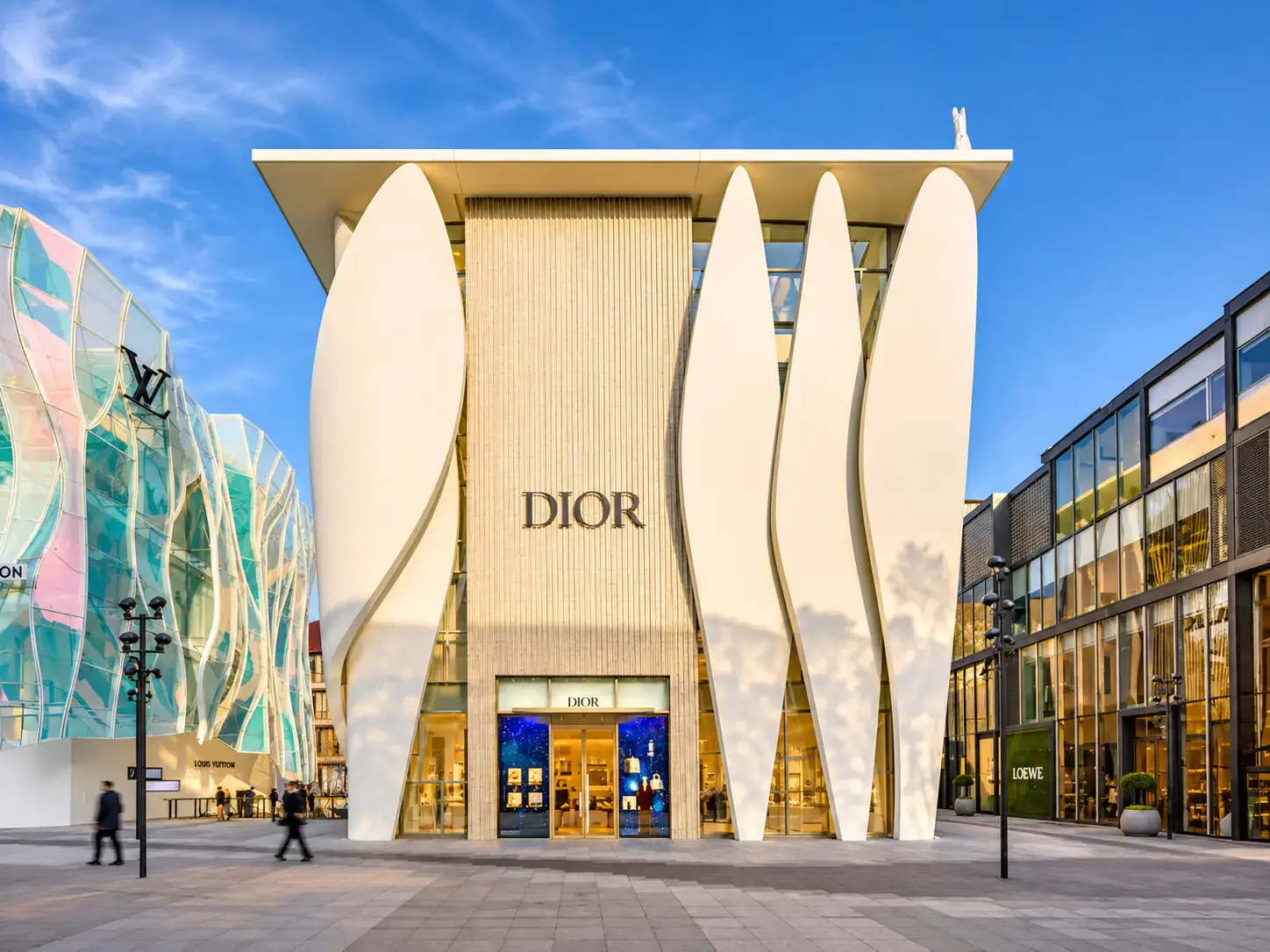
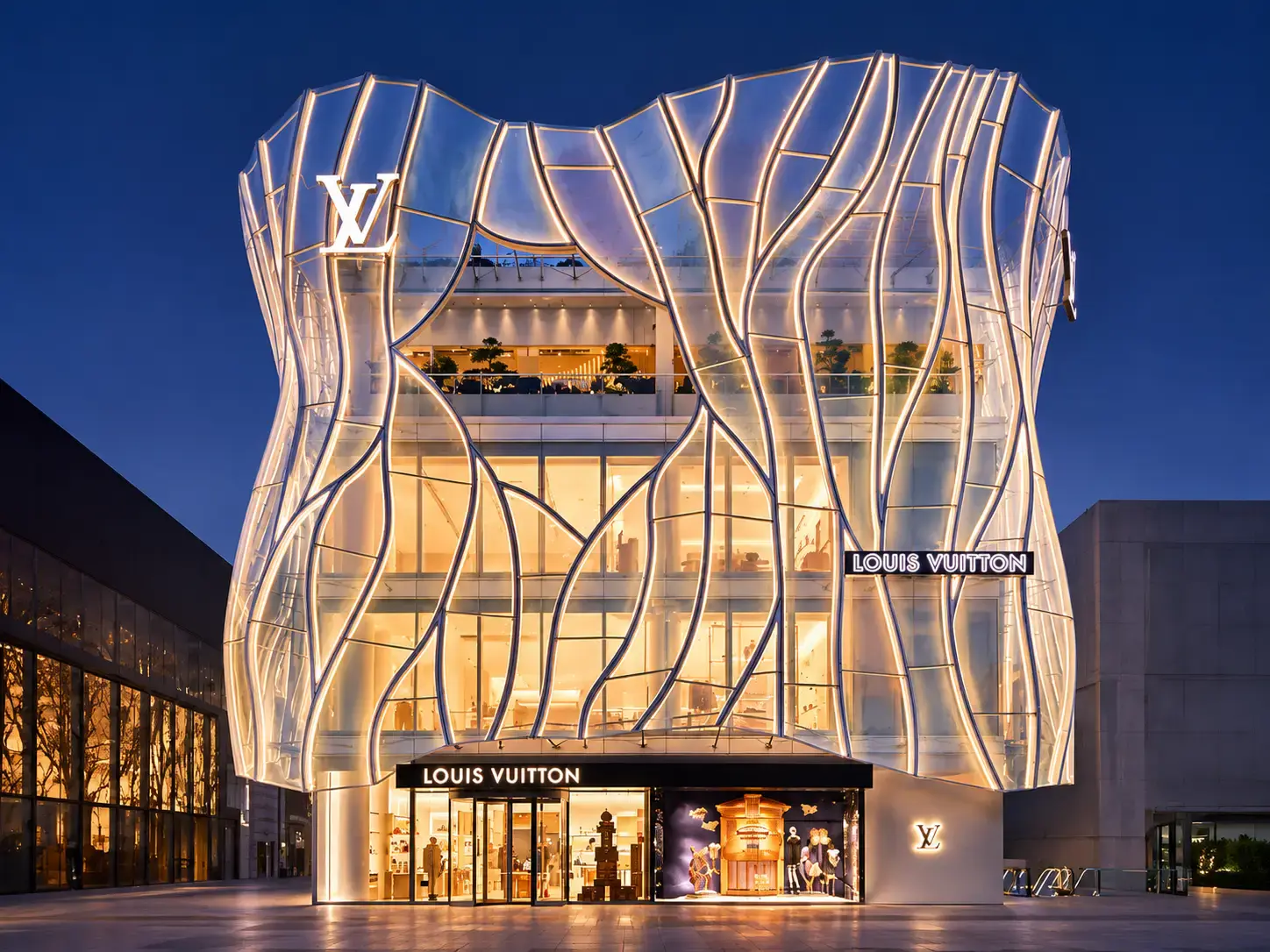
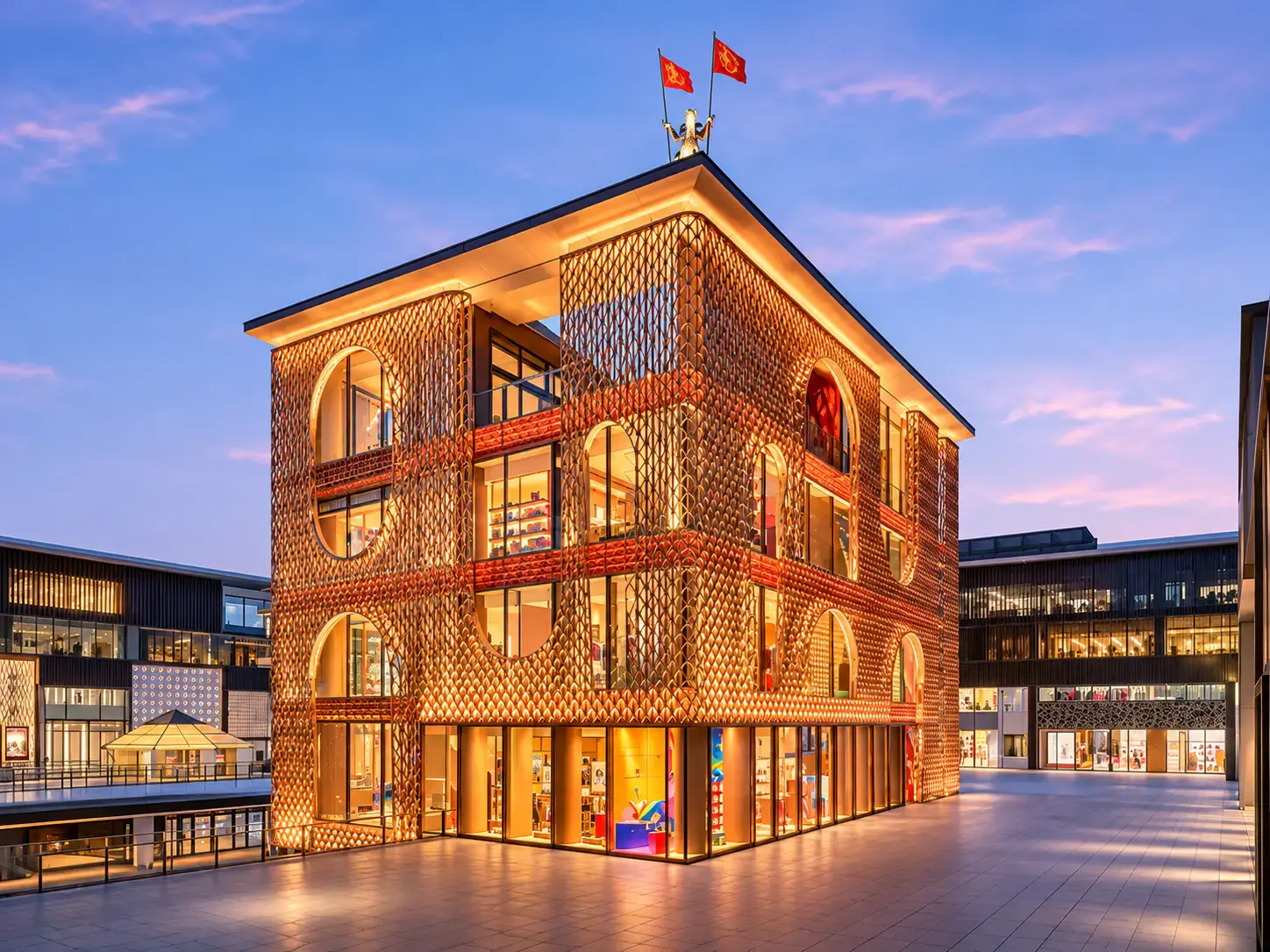
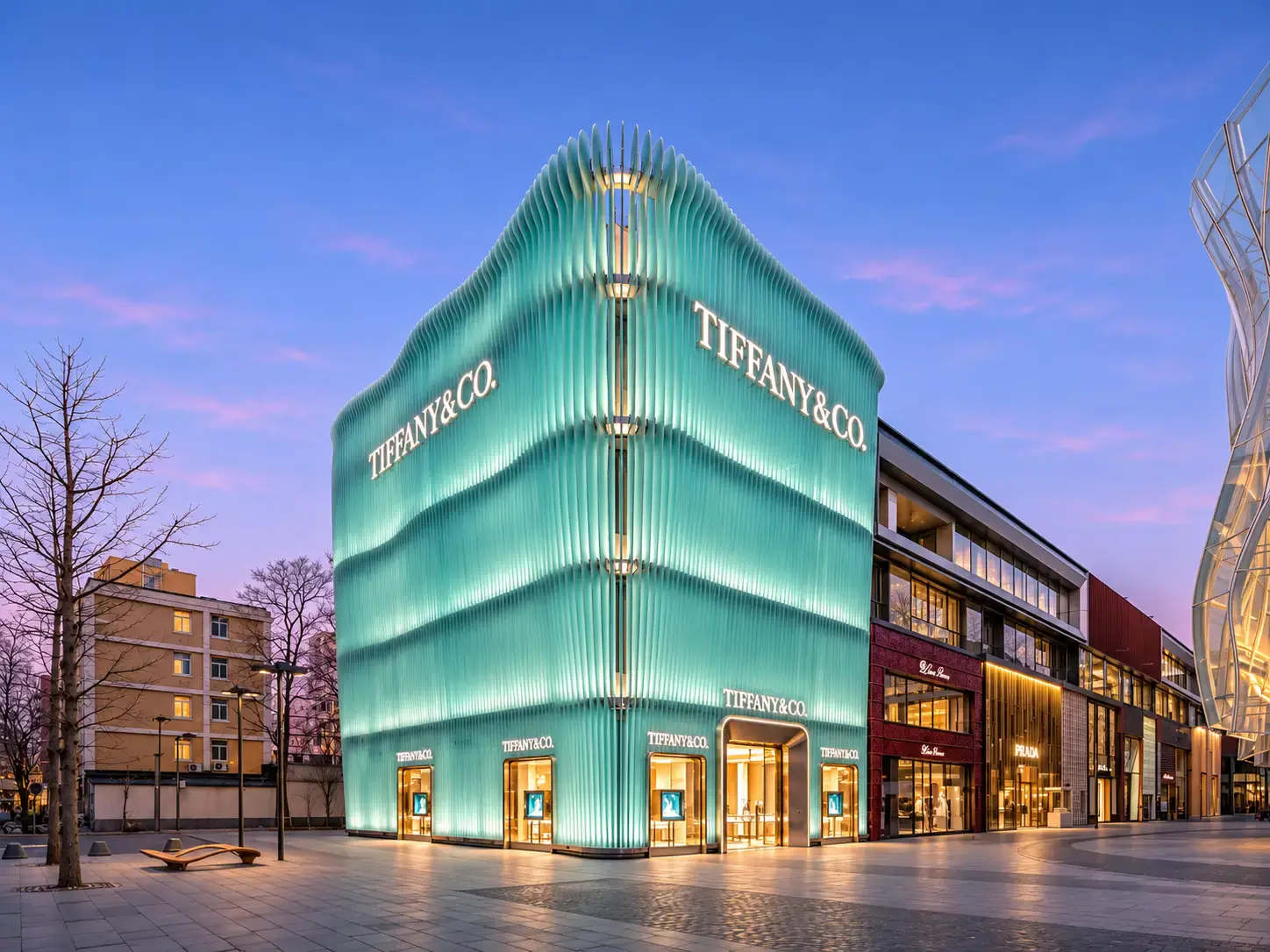
Sanlitun has become an important destination for contemporary commercial architecture.
International fashion houses increasingly use their flagship buildings as architectural statements, introducing distinctive façades, materials and spatial experiences.
The redevelopment of Taikoo Li North has added another layer to this architectural landscape, with prominent buildings associated with Dior, Louis Vuitton, Hermès and Tiffany & Co.
These buildings can be appreciated for their architectural character independently of their commercial functions.
For visitors interested in design, the area offers examples of how international architectural languages are adapted to the urban environment of contemporary Beijing.
The neighborhood also illustrates how commercial architecture continues to evolve as the relationship between shopping, cultural activities and public space changes.
Chinese name: 三里屯SOHO
Located near Taikoo Li, Sanlitun SOHO introduces another approach to contemporary mixed-use architecture.
Its sculptural building forms, commercial spaces and residential and office functions create a distinctive urban ensemble.
Designed by Japanese architect Kengo Kuma, the development contrasts with the lower-rise pedestrian environment of Taikoo Li.
The relationship between these neighboring projects illustrates the diversity of architectural approaches that emerged during Sanlitun's commercial development.
Chinese name: 工体北路
Workers' Stadium North Road forms one of the principal connections between Gongti and Taikoo Li.
Recent streetscape improvements have strengthened pedestrian connections between the stadium and surrounding commercial areas.
Walking along this corridor reveals the changing relationship between sporting infrastructure, commercial development and public urban space.
The area is increasingly experienced as a connected district rather than a collection of isolated destinations.
Beyond the principal developments, Sanlitun contains quieter streets, independent cafés, residential compounds and smaller commercial establishments.
Sanlitun West Fifth Street, the surrounding diplomatic neighborhoods and the Xingfucun area provide a more intimate perspective on contemporary urban life.
These streets offer a contrast to the monumental architecture of Workers' Stadium and the commercial intensity of Taikoo Li.
For visitors spending several hours in the district, exploring these smaller spaces can be as rewarding as visiting its principal landmarks.
Chinese name: 工人体育场
Local name: 工体 (Gongti)
Located immediately west of Sanlitun's principal commercial district, Workers' Stadium is one of Beijing's most important modern sporting landmarks.
Its history spans more than six decades of architectural development, international sporting events and cultural transformation.
The reconstructed stadium, opened in 2023, preserves the recognizable architectural identity of the original building while introducing contemporary football facilities.
Completed in 1959, Workers' Stadium was constructed as one of the Ten Great Buildings commemorating the tenth anniversary of the founding of the People's Republic of China.
Its monumental elliptical form reflected the architectural language of major public buildings constructed during that period.
The stadium hosted the first National Games in 1959 and subsequently became one of Beijing's principal venues for large-scale sporting and cultural events.
Before the construction of the Bird's Nest, Workers' Stadium occupied a central position in the capital's sporting landscape.
| Year | Historical milestone |
|---|---|
| 1959 | Original stadium opens and hosts the first National Games |
| 1986 | Associated with an important moment in the emergence of Chinese rock music |
| 1990 | Hosts events during the Beijing Asian Games |
| 2001 | Hosts events during the Summer Universiade |
| 2004 | Hosts AFC Asian Cup matches |
| 2008 | Hosts Olympic football competitions |
| 2020 | Major reconstruction begins |
| 2023 | Reconstructed Workers' Stadium opens |
| 2025 | Major surrounding streetscape improvements are completed |
The stadium's significance extends beyond professional sport.
For generations of Beijing residents, Gongti has been associated with concerts, public gatherings, football matches and important cultural events.
It occupies a distinctive place within the collective memory of modern Beijing.
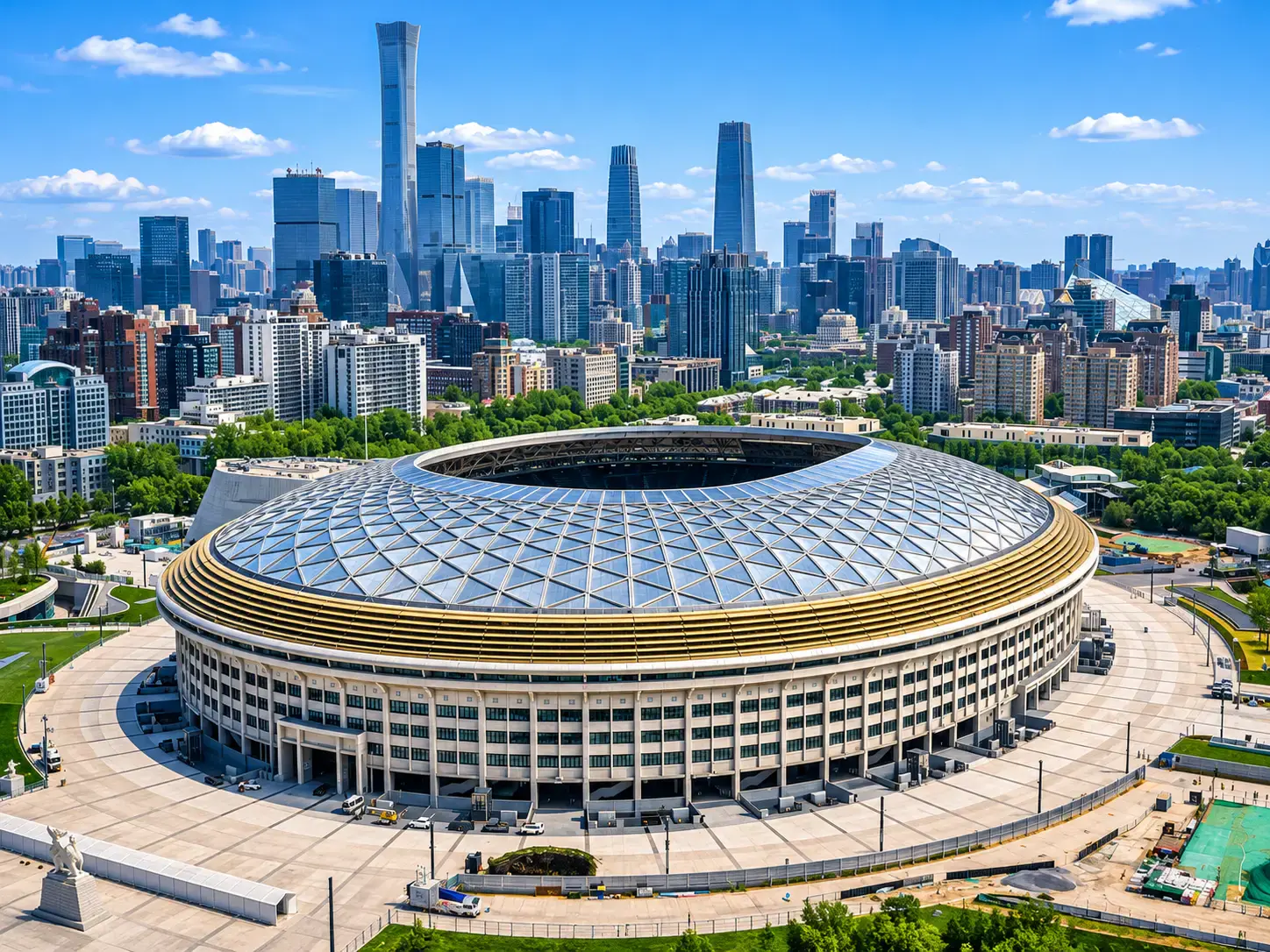
The original stadium underwent a comprehensive reconstruction beginning in 2020.
The new building opened in 2023, retaining the recognizable elliptical exterior and monumental architectural character of the former stadium.
Behind this familiar appearance, however, the internal structure was fundamentally transformed.
The athletics track was removed, spectator seating was reorganized around the football pitch, and contemporary engineering systems were introduced.
The new stadium accommodates approximately 68,000 spectators and is designed primarily for professional football.
| Original Workers' Stadium | New Workers' Stadium |
|---|---|
| Completed in 1959 | Reopened in 2023 |
| Multipurpose sporting venue | Football-specific stadium |
| Athletics track | Football-oriented seating arrangement |
| Historical monumental exterior | Reconstructed historical architectural identity |
| Traditional stadium infrastructure | Contemporary sporting and engineering facilities |
The project demonstrates a particular approach to architectural continuity: preserving the recognizable identity of a historical landmark while fundamentally transforming its structure and function.
The reconstructed stadium was designed by the Beijing Institute of Architectural Design.
Its architectural approach balances historical continuity with the requirements of contemporary international football.
The external form recalls the original stadium, while the internal seating arrangement, roof structure, playing surface and supporting facilities reflect modern sporting requirements.
The wider development also incorporates underground spaces and improved connections with the surrounding urban environment.
For visitors interested in architecture, Gongti offers a different example of urban regeneration from the adaptive reuse of industrial buildings at 798 Art District or Shougang Park.
Chinese name: 工人迎宾雕塑
The Workers' Welcome Sculpture, originally associated with the 1959 stadium, was preserved and returned following reconstruction.
The sculpture provides a tangible connection between the historical architectural ensemble and the new stadium.
Its presence introduces an element of mid-twentieth-century public art into the contemporary sporting landscape.
Visitors exploring the stadium exterior should look for this historical feature as part of their architectural walk.
Workers' Stadium is the home of Beijing Guoan, one of China's best-known professional football clubs.
On match days, the stadium and surrounding streets take on a distinctive atmosphere as supporters gather before and after games.
For international visitors, attending a football match offers an opportunity to experience contemporary Beijing through local sporting culture.
Unlike conventional sightseeing attractions, the experience is shaped by the activities and traditions of the city's residents.
Match tickets, admission procedures and transportation arrangements should be checked in advance.
General interior access to Workers' Stadium is not guaranteed outside scheduled events or authorized visitor experiences.
North of Taikoo Li, the urban landscape gradually changes.
The commercial façades and pedestrian plazas give way to tree-lined streets, diplomatic compounds and quieter residential environments.
These neighborhoods reflect the historical development of Sanlitun as an international district during the second half of the twentieth century.
Chinese name: 三里屯西五街
West Fifth Street and the surrounding lanes offer a more relaxed neighborhood atmosphere.
Their smaller-scale buildings, mature trees and cafés provide a contrast to the principal commercial streets.
The area is particularly suitable for a leisurely walk after exploring Taikoo Li.
Chinese name: 三里屯北街
Sanlitun North Street extends toward the diplomatic and residential areas of the neighborhood.
Its streetscape reflects a different stage of Beijing's modern urban development, characterized by institutional buildings, residential compounds and landscaped public streets.
The diplomatic compounds themselves are not conventional sightseeing attractions.
Visitors should remain within public areas, respect security arrangements and observe any photography restrictions.
Chinese name: 幸福村
The Xingfucun neighborhood provides another perspective on everyday life around Sanlitun.
Its residential streets and smaller commercial spaces reveal a more local urban environment beyond the internationally recognized shopping and entertainment areas.
For visitors interested in contemporary Beijing as a living city, these quieter neighborhoods add depth to the experience.
Chinese name: 亮马河国际风情水岸
Extending north and northeast of Sanlitun, the Liangma River waterfront represents another important development in Beijing's contemporary urban landscape.
Formerly a relatively ordinary urban waterway, the river has been transformed through landscaping, pedestrian improvements and waterfront development.
Today, its public spaces connect walking paths, bridges, commercial areas, restaurants and recreational environments.
The Liangma River illustrates a different approach to contemporary urban development from the commercial architecture of Taikoo Li.
Its principal attraction is the relationship between water, landscape and public life.
Tree-lined walking paths, landscaped riverbanks and pedestrian bridges create a more relaxed environment within the surrounding metropolitan district.
The waterfront is particularly popular for evening walks, outdoor dining and photography.
After sunset, illuminated bridges, waterfront buildings and reflections across the water create a distinctive urban landscape.
The river provides a quieter alternative to the more active commercial streets of central Sanlitun.
An evening walk along the waterfront can be combined with dinner or a visit to one of the surrounding commercial areas.
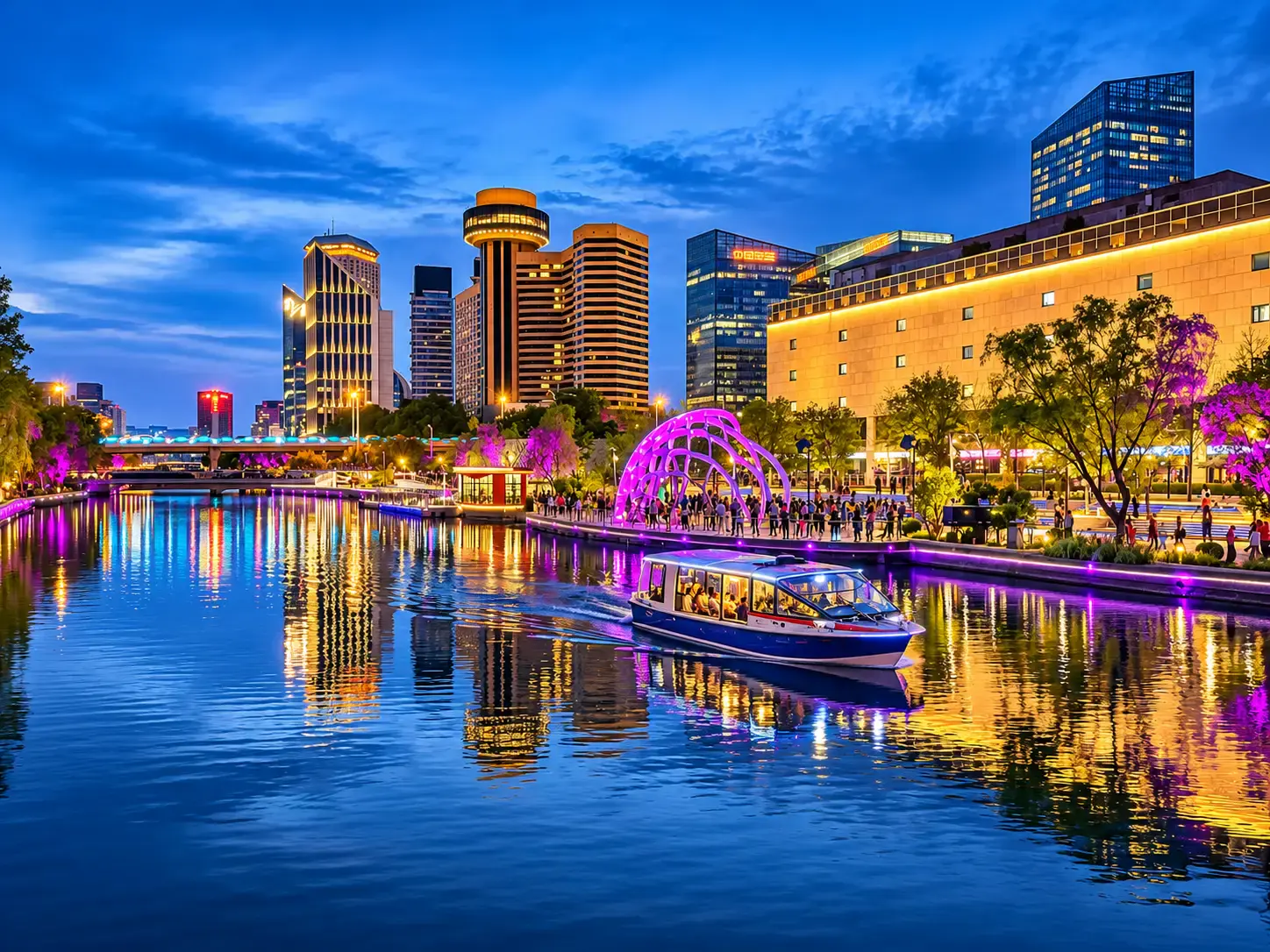
Seasonal sightseeing cruises operate along sections of the Liangma River.
These experiences introduce another perspective on the waterfront's bridges, landscaped spaces and contemporary architecture.
Boarding locations include areas around Yansha and SOLANA, depending on the selected cruise service.
Cruise schedules, routes and ticket prices vary according to season and operating arrangements.
Visitors interested in an evening cruise should confirm availability before planning their itinerary.
Chinese name: 蓝色港湾
SOLANA is a waterfront commercial and lifestyle development near Chaoyang Park.
Its pedestrian spaces, restaurants and lakeside environment make it a possible extension of a Liangma River walk.
For visitors with additional time, continuing toward SOLANA provides a broader experience of contemporary eastern Beijing.
Suggested Liangma River visit: 45–90 minutes for a short waterfront walk, or longer when including dining or a sightseeing cruise.
Chinese name: 团结湖公园
Located southeast of the principal Sanlitun commercial area, Tuanjiehu Park provides a different recreational environment.
Its landscaped lake, traditional-style pavilions and garden paths introduce elements of classical Chinese landscape design into a modern residential district.
The park is used by local residents for walking, exercise and everyday recreation.
For travelers interested in exploring Beijing beyond its major attractions, Tuanjiehu offers a quieter contrast to the commercial architecture and activity of Sanlitun.
It is best treated as an optional extension rather than a required part of a short neighborhood visit.
Suggested duration: 2–3 hours
Workers' Stadium Station → Workers' Stadium exterior → Taikoo Li West → Taikoo Li South → Taikoo Li North
This route introduces the district's principal sporting landmark and three major architectural zones.
Begin with the historical and contemporary architecture of Workers' Stadium before continuing east toward Taikoo Li.
Allow time to explore the individual buildings, pedestrian lanes and courtyards rather than following only the principal commercial streets.
Suggested duration: 2–3 hours
Workers' Stadium → Workers' Welcome Sculpture → Gongti North Road → Taikoo Li West → Sanlitun SOHO → Taikoo Li South and North
This route focuses on architectural transformation, contemporary commercial design and the changing relationship between buildings and public space.
It is particularly suitable for visitors interested in architecture, engineering and urban planning.
Suggested duration: 2–3 hours
Taikoo Li South → Taikoo Li North → Sanlitun West Fifth Street → 3.3 Mall area → surrounding public neighborhood streets
This route combines contemporary commercial architecture with quieter streets associated with Sanlitun's international residential and diplomatic history.
It offers a more varied perspective on the district than a visit limited to Taikoo Li.
Suggested duration: 4–5 hours
Workers' Stadium → Taikoo Li → diplomatic neighborhood public streets → Liangma River waterfront → optional dinner or sightseeing cruise
This extended route introduces several different dimensions of contemporary Beijing within a single afternoon and evening.
Begin with sporting and commercial architecture before continuing toward the more relaxed waterfront environment.
Depending on walking preferences, a short taxi ride can be used between Sanlitun and the river.
Suggested duration: 3–4 hours
Guomao skyline → Sanlitun → Taikoo Li illuminated architecture → dinner → Liangma River
This itinerary combines Beijing's modern metropolitan skyline with its contemporary commercial and waterfront environments.
It is particularly suitable for visitors who have spent the daytime exploring the city's historical attractions.
Suggested duration: 4–6 hours, depending on the event
Sanlitun → dinner or refreshments → Workers' Stadium football match → surrounding evening district
Attending a football match introduces a different dimension of Beijing's contemporary cultural life.
This experience requires advance planning around the confirmed event schedule, ticket availability and transportation arrangements.
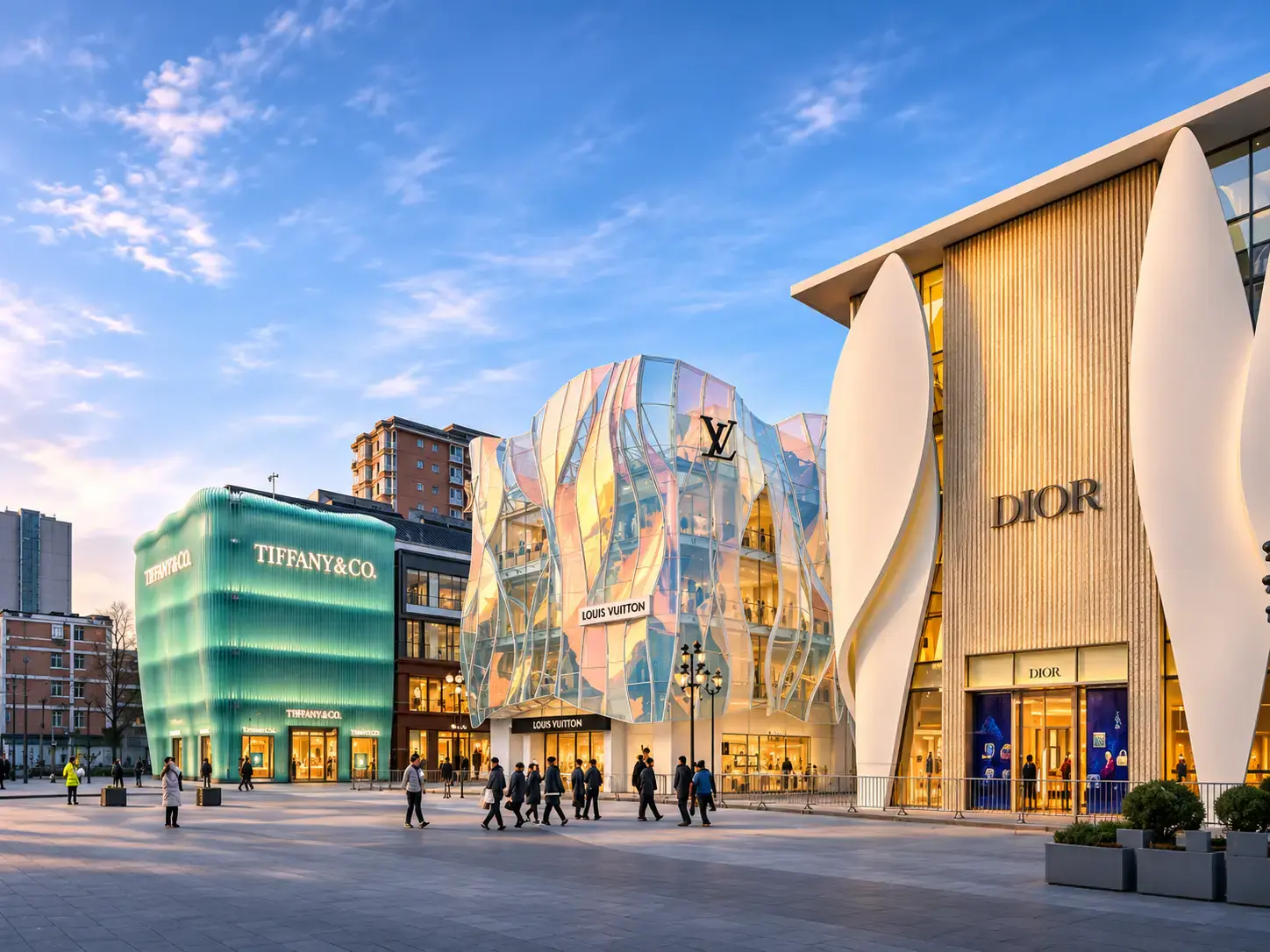
Sanlitun is one of Beijing's principal destinations for contemporary fashion and international retail.
Its commercial environment ranges from internationally recognized flagship buildings to smaller independent establishments.
However, the district's appeal extends beyond shopping.
The architectural design of its commercial buildings, pedestrian connections and public spaces makes it an interesting destination even for visitors who do not intend to make purchases.
Sanlitun's diplomatic history contributed to the development of one of Beijing's most internationally diverse dining environments.
The neighborhood contains restaurants representing different Chinese regional cuisines alongside international culinary traditions.
Cafés, contemporary restaurants and casual dining establishments are distributed throughout Taikoo Li and the surrounding streets.
For travelers spending several days in Beijing, Sanlitun offers an alternative to the more traditional dining environments of Qianmen, Shichahai and the historic hutong neighborhoods.
Contemporary commercial spaces in Sanlitun frequently accommodate temporary exhibitions, installations, design events and seasonal public activities.
These experiences change throughout the year and are best explored according to the current program.
For visitors interested primarily in galleries and contemporary artistic production, 798 Art District remains a more substantial destination.
Sanlitun offers a complementary experience focused on the relationship between design, commercial architecture and everyday urban culture.
Sanlitun is particularly rewarding after sunset.
Illuminated architectural façades, outdoor dining spaces and active pedestrian streets create a different atmosphere from Beijing's historical sightseeing districts.
Unlike many imperial attractions that close during the late afternoon, Sanlitun remains a useful destination for evening exploration.
The contemporary buildings of Taikoo Li and the surrounding commercial developments acquire a different character under artificial illumination.
Visitors interested in photography can explore the relationship between architectural materials, illuminated façades and pedestrian activity.
Sanlitun can be visited as a relaxed evening destination without following a fixed sightseeing itinerary.
Begin with a walk through Taikoo Li, continue toward a restaurant or café, and explore the surrounding neighborhood afterward.
For a quieter conclusion, continue to the Liangma River waterfront.
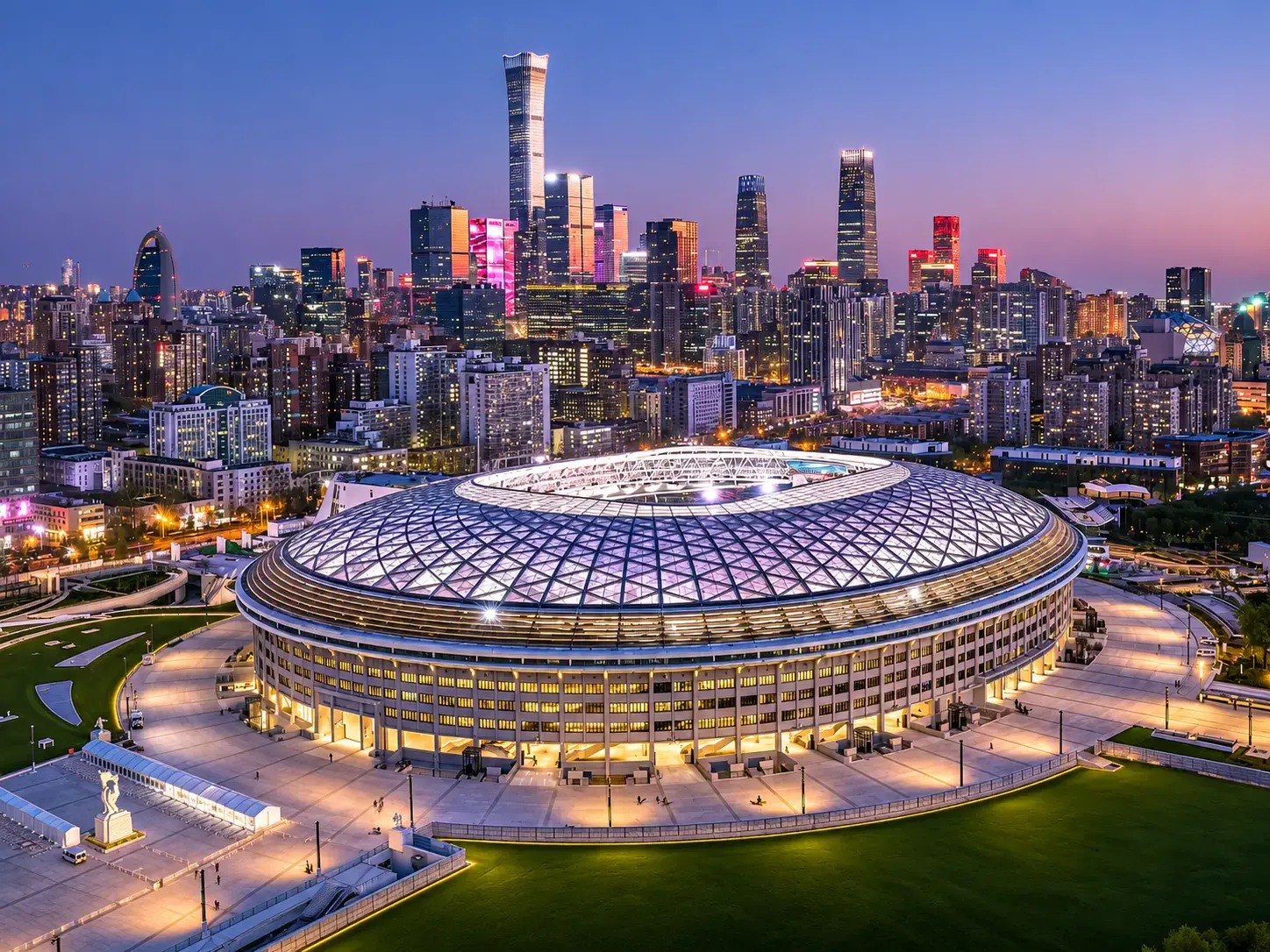
Football matches and major events introduce another dimension to the district's evening atmosphere.
The surrounding streets may become considerably busier, with temporary transportation and crowd-management arrangements.
Visitors who are not attending an event may prefer to explore other parts of Sanlitun during particularly busy match periods.
This combination introduces two complementary aspects of contemporary Beijing.
798 Art District explores industrial heritage, contemporary art and adaptive reuse, while Sanlitun emphasizes international urban culture and contemporary commercial architecture.
Spend the earlier part of the day exploring galleries and former industrial buildings at 798 before continuing to Sanlitun for an afternoon walk or evening dining.
Suggested duration: Half day to full day.
Beijing's Central Business District around Guomao contains some of the city's most prominent contemporary skyscrapers and architectural landmarks.
Combining the CBD with Sanlitun introduces two different scales of metropolitan development.
The CBD emphasizes high-rise commercial architecture and the modern skyline, while Sanlitun offers pedestrian-oriented commercial streets and neighborhood-scale experiences.
Suggested duration: Half day.
Olympic Park and Workers' Stadium represent different periods of Beijing's modern sporting history.
The Bird's Nest, Water Cube and Ice Ribbon reflect the architectural and engineering ambitions of the 2008 and 2022 Olympic Games.
Workers' Stadium connects these contemporary developments with Beijing's earlier sporting heritage dating back to 1959.
This combination is particularly interesting for visitors interested in stadium architecture and urban development.
Suggested duration: Full day.
A morning visit to the Forbidden City followed by an afternoon or evening in Sanlitun provides a striking contrast between imperial and contemporary Beijing.
Traditional palace architecture, ceremonial courtyards and historical urban planning give way to contemporary commercial buildings, international dining and modern pedestrian environments.
This combination is particularly suitable for first-time visitors seeking different perspectives on the capital within a single day.
Dongjiaominxiang and Sanlitun represent different historical stages of Beijing's international development.
The former Legation Quarter reflects the diplomatic architecture and international relationships of the late Qing and Republican periods.
Sanlitun illustrates the development of a new diplomatic district and its subsequent transformation into a contemporary international neighborhood.
Together, they offer a thematic itinerary exploring Beijing's changing relationship with the wider world.
These three districts offer different perspectives on Beijing's commercial and urban development.
| Destination | Principal character | Best for |
|---|---|---|
| Sanlitun | International urban culture and contemporary architecture | Dining, design, lifestyle and evening walks |
| Wangfujing | Historical commerce and pedestrian shopping streets | Traditional businesses, commercial history and shopping |
| Guomao | Metropolitan skyline and business district | Skyscrapers, contemporary engineering and city views |
| 798 Art District | Industrial heritage and contemporary art | Galleries, creative spaces and adaptive reuse |
| Shichahai | Historical lakeside neighborhoods | Hutongs, traditional architecture and relaxed walking |
| Liangma River | Contemporary waterfront landscape | Riverside walks, dining and evening photography |
For visitors interested in modern architecture and international lifestyle, Sanlitun offers a particularly varied experience.
Wangfujing is more closely connected with Beijing's historical commercial development, while Guomao provides a stronger metropolitan skyline experience.
Sanlitun is an urban neighborhood with no general entrance ticket.
Its public streets and open-air commercial spaces can generally be explored independently.
| Attraction or experience | Admission arrangements |
|---|---|
| Sanlitun public streets | Free |
| Taikoo Li outdoor spaces | Free |
| Individual shops and commercial facilities | Business-specific opening hours |
| Workers' Stadium exterior | Generally free from public areas |
| Workers' Stadium interior | Event or authorized visitor access |
| Liangma River waterfront | Free general access |
| Liangma River cruises | Separately ticketed |
| Restaurants and cafés | Individual purchases |
Commercial opening hours vary by business.
Most shopping and dining activities take place from late morning through the evening, while public streets can generally be explored throughout the day.
Temporary restrictions may apply around Workers' Stadium during major events.
Sanlitun is located in eastern Beijing's Chaoyang District and is accessible by subway, taxi, public bus and private transportation.
The opening of Beijing Subway Line 3 in December 2024 improved access to Sanlitun and Workers' Stadium.
Several stations serve different parts of the district.
| Station | Subway lines | Best for |
|---|---|---|
| Workers' Stadium 工人体育场 | 3, 17 | Workers' Stadium and western Taikoo Li |
| Tuanjiehu 团结湖 | 3, 10 | Eastern Sanlitun and Taikoo Li |
| Agricultural Exhibition Center 农业展览馆 | 10 | Northern Sanlitun |
| Liangmaqiao 亮马桥 | 10 | Liangma River waterfront |
| Dongsi Shitiao 东四十条 | 2, 3 | Western approach |
| Dongdaqiao 东大桥 | 6, 17 | Southern approach and CBD connections |
For the principal walking route, begin at Workers' Stadium Station and continue east toward Taikoo Li.
Visitors concentrating on the waterfront may prefer Liangmaqiao Station.
Taxi and DiDi services provide convenient access from hotels and other Beijing attractions.
Use the Chinese name of your intended destination rather than the general Sanlitun neighborhood name.
| Destination | Chinese navigation name |
|---|---|
| Sanlitun | 三里屯 |
| Taikoo Li Sanlitun | 三里屯太古里 |
| Taikoo Li South | 三里屯太古里南区 |
| Taikoo Li North | 三里屯太古里北区 |
| Taikoo Li West | 三里屯太古里西区 |
| Workers' Stadium | 工人体育场 |
| Sanlitun SOHO | 三里屯SOHO |
| Sanlitun West Fifth Street | 三里屯西五街 |
| Liangma River Waterfront | 亮马河国际风情水岸 |
| SOLANA | 蓝色港湾 |
| Tuanjiehu Park | 团结湖公园 |
Traffic conditions can become particularly busy during evenings, weekends and major sporting events.
Private transportation is useful when combining Sanlitun with destinations such as Olympic Park, 798 Art District, the Forbidden City or Beijing's CBD.
Within Sanlitun itself, the principal commercial streets and architectural spaces are best explored on foot.
A private driver can provide transportation between different sightseeing districts and arrange a convenient pickup after dinner or evening activities.
Sanlitun is predominantly flat and generally easy to explore.
Its principal commercial areas contain pedestrian streets, outdoor plazas and interconnected buildings.
However, some routes involve major road crossings, elevated pedestrian connections and multi-level commercial spaces.
Crowds may also become substantial during weekends, evenings and special events.
Visitors with limited walking tolerance can concentrate on one or two sections of Taikoo Li rather than exploring the entire district.
Elevator access and continuously step-free routes should be confirmed where required.
The surrounding residential and diplomatic streets are generally quieter during the morning.
This period is suitable for relaxed neighborhood walks and architectural photography, although many commercial establishments open later.
The afternoon is a good time to explore Taikoo Li, Workers' Stadium and contemporary architectural developments.
Commercial activities are underway, and natural daylight provides favorable conditions for observing architectural details.
Evening is particularly rewarding for visitors interested in international dining, illuminated architecture and contemporary urban life.
Sanlitun can be combined with a waterfront walk along the Liangma River for a more extended evening experience.
Weekdays generally provide a more relaxed environment for architectural sightseeing.
Weekends offer a livelier atmosphere, with greater pedestrian activity and more crowded commercial spaces.
Major football matches and stadium events may affect transportation and access.
Spring and autumn are particularly comfortable for extended outdoor walks.
During summer, late afternoon and evening visits can help avoid the hottest part of the day.
In winter, combine shorter outdoor walks with cafés, restaurants and indoor commercial spaces.
Liangma River sightseeing cruises may operate seasonally.
Sanlitun is particularly worthwhile for travelers interested in contemporary architecture, international culture, urban development and modern Chinese lifestyles.
Its significance extends beyond shopping and nightlife.
The neighborhood reflects several decades of Beijing's transformation, from the establishment of diplomatic institutions to the development of internationally recognized commercial architecture and the reconstruction of Workers' Stadium.
For first-time visitors with limited time, Sanlitun works particularly well as an evening destination after exploring Beijing's historical landmarks.
For returning visitors, it offers a different perspective on the capital through contemporary design, local sporting culture, international dining and public urban spaces.
The combination of Sanlitun, Workers' Stadium and Liangma River provides one of the most varied introductions to contemporary eastern Beijing.
798 Art District — Discover former industrial workshops transformed into contemporary galleries, creative spaces and cultural institutions.
Beijing Olympic Park — Explore the Bird's Nest, Water Cube and architectural heritage of the 2008 and 2022 Olympic Games.
Shougang Park — Discover industrial heritage, architectural regeneration and Winter Olympic venues within Beijing's former steelworks.
CBD & Guomao — Explore contemporary skyscrapers, metropolitan architecture and Beijing's modern commercial skyline.
Wangfujing — Discover the historical development of one of Beijing's most important commercial streets.
Dongjiaominxiang — Explore historical diplomatic architecture and the former Legation Quarter.
Dongsi & Longfu Temple — Discover traditional residential neighborhoods and contemporary cultural regeneration within the historic city.
Allow two to three hours to explore Sanlitun's contemporary architecture, Taikoo Li and the surrounding Workers' Stadium area, or longer if you would like to include the Liangma River waterfront.
The district is particularly rewarding in the afternoon and evening and can easily be combined with 798 Art District, Beijing's CBD and other contemporary cultural attractions.
Plan a private visitExplore private Beijing sightseeing tours and customized itineraries combining the city's historic landmarks with contemporary architecture, international dining and evening experiences.