| Item | Detail |
|---|---|
| Founded | 1669, Beijing |
| Chinese | 同仁堂 — "Hall of Benevolent Union" |
| Known for | Patent medicines, decoction culture, imperial supply history |
| Visitor sites | Qianmen flagship area, other Beijing branches, culture exhibitions |
| DragonTrail boundary | Retail browsing OK; no personal formula advice from this guide |
Brand History in Brief
Tongrentang grew from Qing-dynasty pharmacy discipline—processing, weighing, and formulary standards marketed as consistency and ethics (同名同人同品同质). Historical links to imperial supply appear in brand storytelling—see Imperial Medicine for court context vs commercial shop today.
Modern Tongrentang Group includes retail, manufacturing, and medical institutions—verify which entity you enter (shop vs clinic).
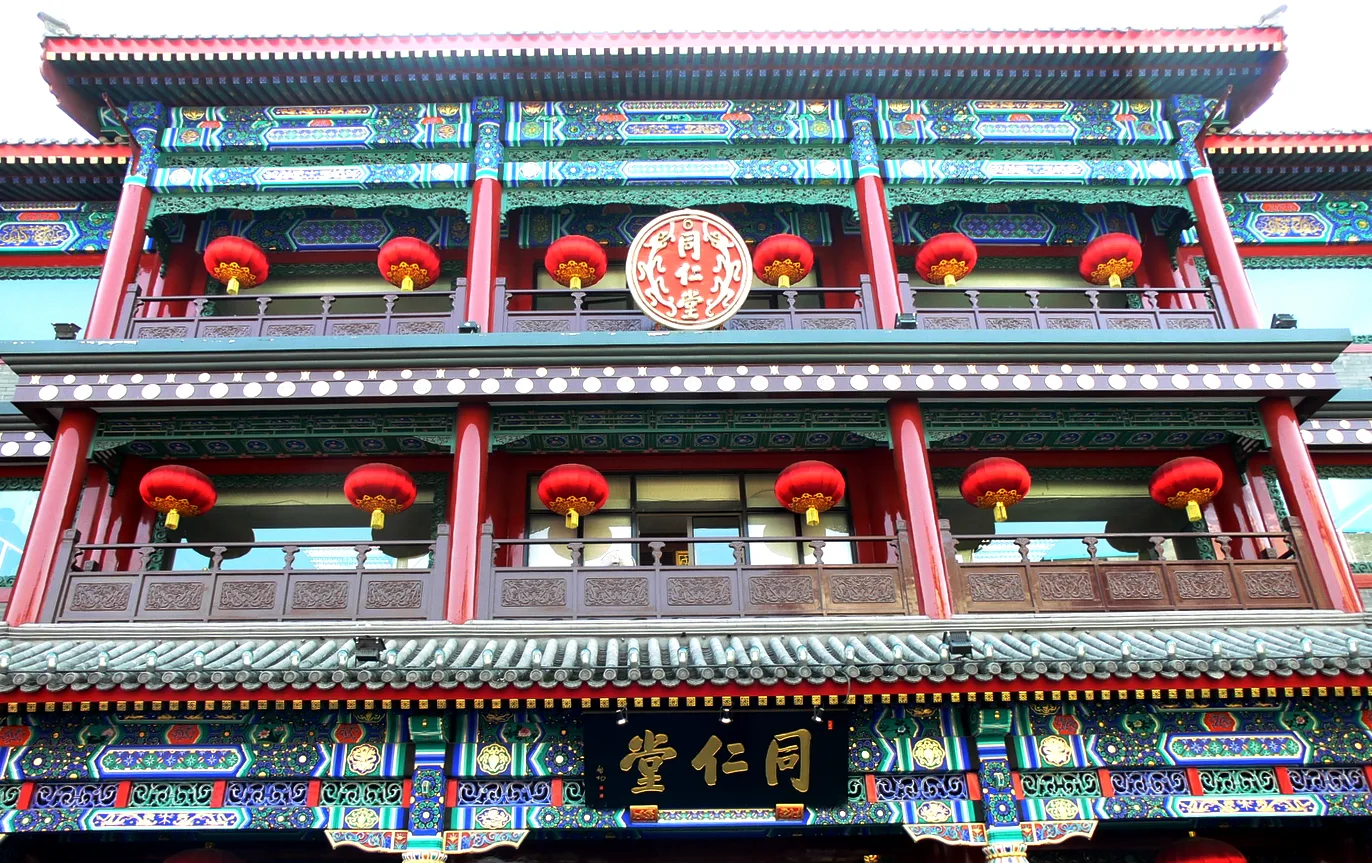
*Tongrentang flagship area near Qianmen, Beijing. Photograph for DragonTrail media library. Cropped/resized for web.*
What Visitors Do at Qianmen
The Qianmen district flagship streetscape is a common photo stop combining traditional architecture with active retail:
- Browse packaged patent medicines (中成药) and health products—labels often Chinese-only
- View cultural displays on processing and brand lineage
- Shop gift items (honeys, lozenges, cosmetic TCM-line products)—check import restrictions
Shopping is at your own risk without prescriber—see Chinese Herbal Medicine and Evidence & Safety.
Retail vs Clinic
| Setting | Expect |
|---|---|
| Retail floor | OTC-style products, staff sales assistance |
| Tongrentang medical clinic | Licensed visit with intake—appointment and language planning |
| Museum/culture hall | History, not full diagnosis |
DragonTrail commercial pages are inquiry-only; this CMS guide does not list clinic appointment services.
Pairing with Tours and Experiences
- Royal Medicine TCM cultural tour may include Tongrentang narrative—confirm inclusions.
- Traditional Chinese Medicine experience may reference brand history without mandatory shopping.
- Combine with Qianmen street food as Chinese Food sightseeing—separate spending decisions.
What Not to Expect
- English prescription consultation on every retail floor
- Custom decoction prepared in minutes for tourists with no medical workup
- Disease cure claims from souvenir clerks—reject pressure
Quality and Counterfeits
Buy from official stores; third-party market stalls may sell counterfeit packaging. Keep receipts for customs; many countries restrict animal-derived ingredients—check laws before bulk purchase.
Common Misconceptions
- "Tongrentang equals hospital." Brand spans retail and medical arms—know which door you enter.
- "Imperial brand means safe for everyone." Products still have contraindications and interactions.
- "All Beijing red-sign pharmacies are Tongrentang." Verify branding—similar names exist.
FAQ
Where is Tongrentang in Beijing?
Major visitor-facing flagship near Qianmen; other branches citywide—navigate to official locations.
Can tourists buy medicine there?
OTC products are sold; that is not personalized TCM care—consult your doctors for health conditions.
Is photography allowed inside?
Follow store rules; respect other customers at counters.
How long should I allow?
Retail browse 30–60 minutes; longer with culture hall or guided tour.
What should I read before buying?
Chinese Herbal Medicine and TCM vs Western Medicine.
Continue Exploring
Sources & Review
- China Beijing Tong Ren Tang Group — heritage pharmacy brand context
- History of TCM — Li Shizhen and pharmacy context
- Chinese characters verified
- Author: Chuan Shi
- Last reviewed: September 2026