
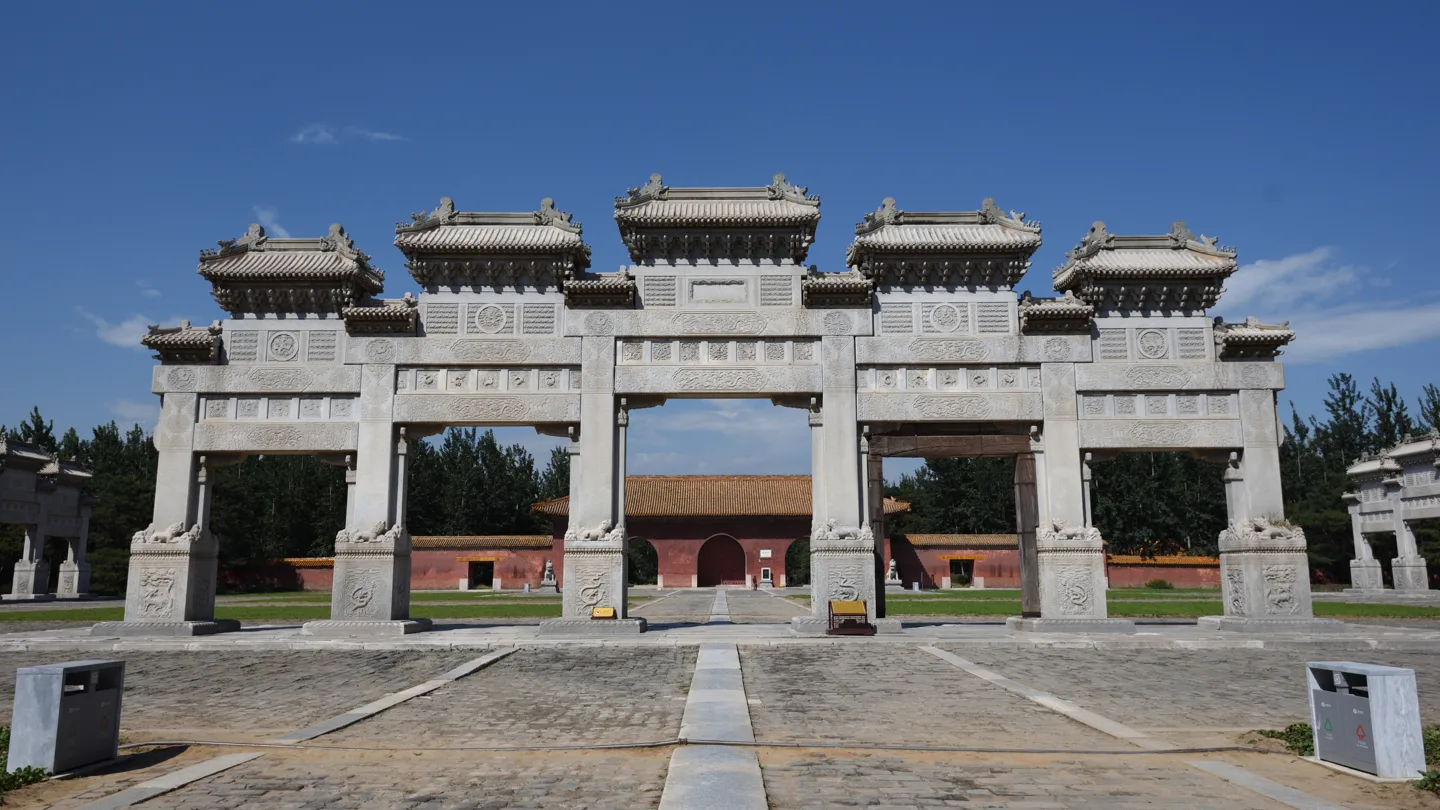

Tailing — Yongzheng Emperor
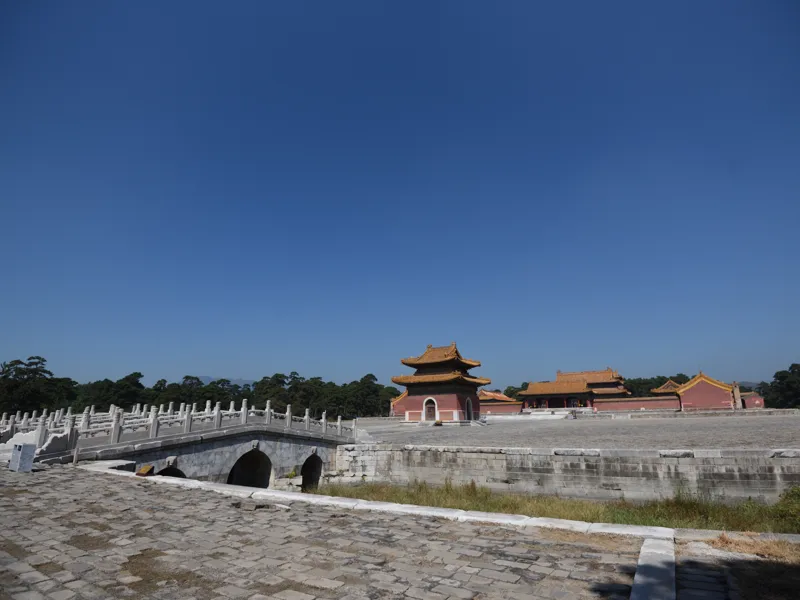
The Yongzheng Emperor consolidated imperial administration. At Tailing, bridges, courtyards and halls set the pace of the ceremonial approach.
Siyuwj / Wikimedia Commons · CC BY-SA 4.0 · Cropped and converted to WebPDiscover the Imperial Tombs of the Qing Dynasty. Travel from Beijing to the Western Qing Tombs in Hebei, where four Qing emperors were buried amid ceremonial pathways, monumental architecture and pine forests.
Discover the Imperial Tombs of the Qing DynastyTravel from Beijing to the Western Qing Tombs in Hebei, where four Qing emperors were buried amid ceremonial pathways, monumental architecture and pine forests.
The Western Qing Tombs (清西陵) lie in Yixian, Baoding, Hebei, about 140 km southwest of downtown Beijing. Built between 1730 and 1915, the complex holds four Qing emperors and tombs associated with empresses, princes and other members of the imperial household.
As part of the UNESCO-listed Imperial Tombs of the Ming and Qing Dynasties, it shows how burial traditions, architecture and the surrounding terrain expressed imperial hierarchy. See the Visit Beijing account for historical background.
The Yongzheng Emperor consolidated imperial administration. At Tailing, bridges, courtyards and halls set the pace of the ceremonial approach.
Siyuwj / Wikimedia Commons · CC BY-SA 4.0 · Cropped and converted to WebP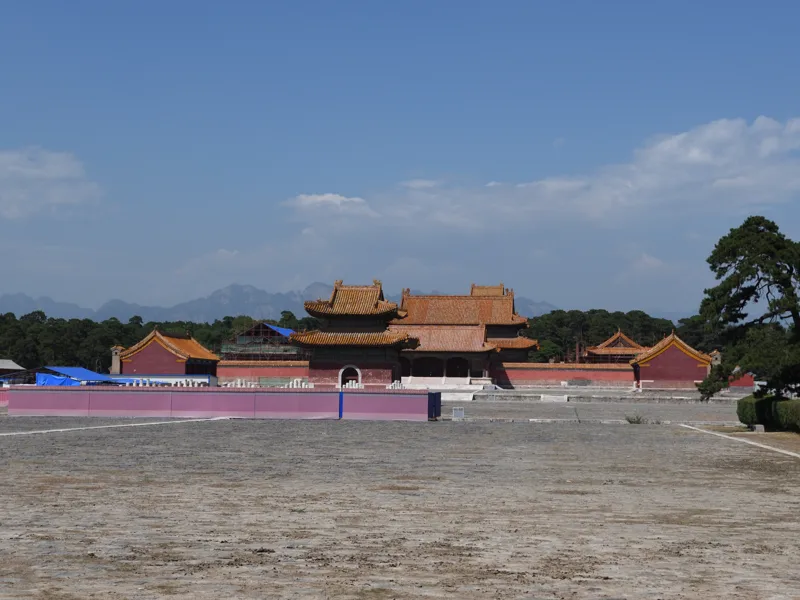
The Jiaqing Emperor succeeded Qianlong. His mausoleum offers a second example of court architecture from a period of transition in the Qing dynasty.
Siyuwj / Wikimedia Commons · CC BY-SA 4.0 · Cropped and converted to WebP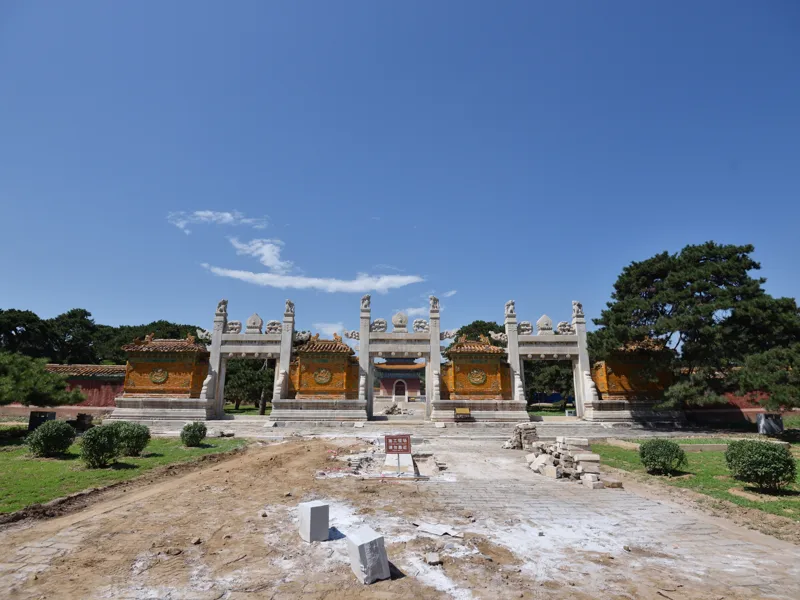
The Daoguang Emperor’s reign saw the First Opium War. Muling’s scale and layout offer a different perspective on Qing burial architecture.
Siyuwj / Wikimedia Commons · CC BY-SA 4.0 · Cropped and converted to WebP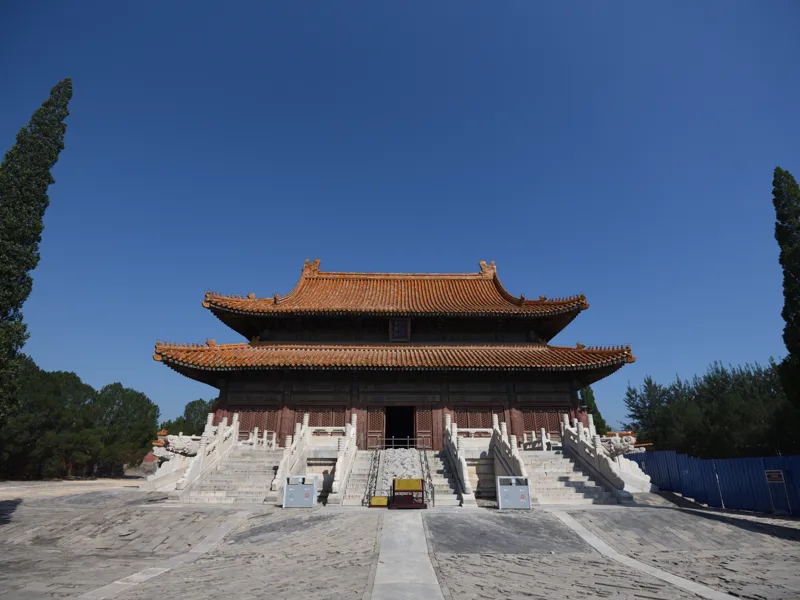
Chongling belongs to the Guangxu Emperor, whose reign included the Hundred Days’ Reform in the final decades of imperial rule.
Siyuwj / Wikimedia Commons · CC BY-SA 4.0 · Cropped and converted to WebPLook at the tiled halls, terraces and carved stonework to see how architecture expressed rank and ritual.
Siyuwj / Wikimedia Commons · CC BY-SA 4.0 · Cropped and converted to WebP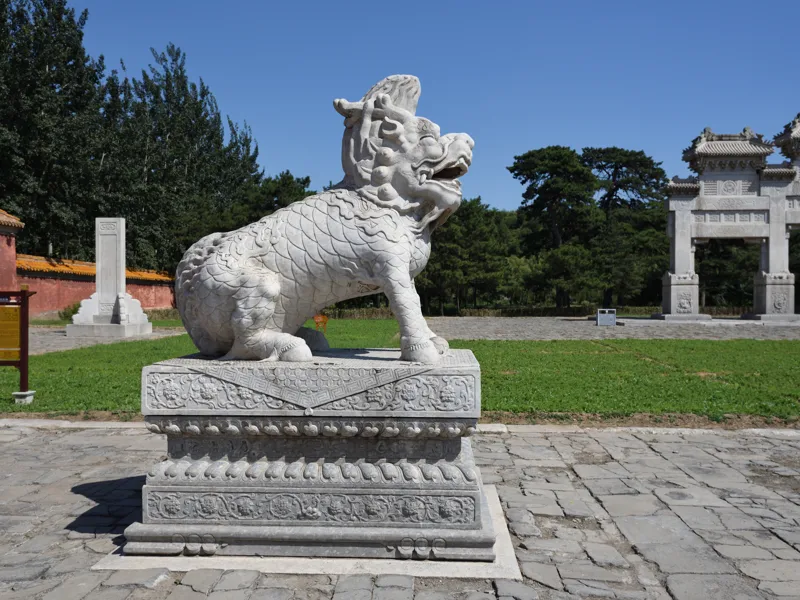
Follow the sequence of gates and ceremonial spaces. Stone guardians mark the approach to the burial grounds.
Siyuwj / Wikimedia Commons · CC BY-SA 4.0 · Cropped and converted to WebPThe surrounding trees and hills are part of the design. Fengshui, or Chinese geomancy, informed the relationship between tombs and terrain.
Siyuwj / Wikimedia Commons · CC BY-SA 4.0 · Cropped and converted to WebPAllow about 9–10 hours for the round trip and selected sites. This sample day adjusts to traffic, opening arrangements, walking pace and your return deadline.
| Time | Activity |
|---|---|
| 07:30–08:00 | Meet your driver at your Beijing hotel |
| 08:00–10:30 | Drive to the Western Qing Tombs in Yixian |
| 10:30–13:00 | Explore selected mausoleums and their ceremonial approaches |
| 13:00–14:00 | Optional local lunch |
| 14:00–15:30 | Continue exploring accessible areas of the complex |
| 15:30–18:00 | Return to Beijing |
Plan a Beijing hotel pickup and return, a private vehicle, an English-speaking guide and a selection of mausoleums. Add a local lunch if you wish.
Request more time for photography and interpretation within the same complex. The quote confirms timings, selected stops, any additional hours and optional lunch.
Both options are privately quoted. We itemize the vehicle, guide, admission, any internal shuttle, and optional lunch or extra hours.
The operator’s reopening notice reports normal operation from August 27, 2026. Notice checked November 16, 2026. We check current access, hours and ticket arrangements for your travel date.
The Eastern Qing Tombs are in Zunhua, northeast of Beijing, with a different group of imperial burials. Plan them as a separate day. See the Hebei travel guide, Beijing private day trips, or Beijing private driver service for related options.


