
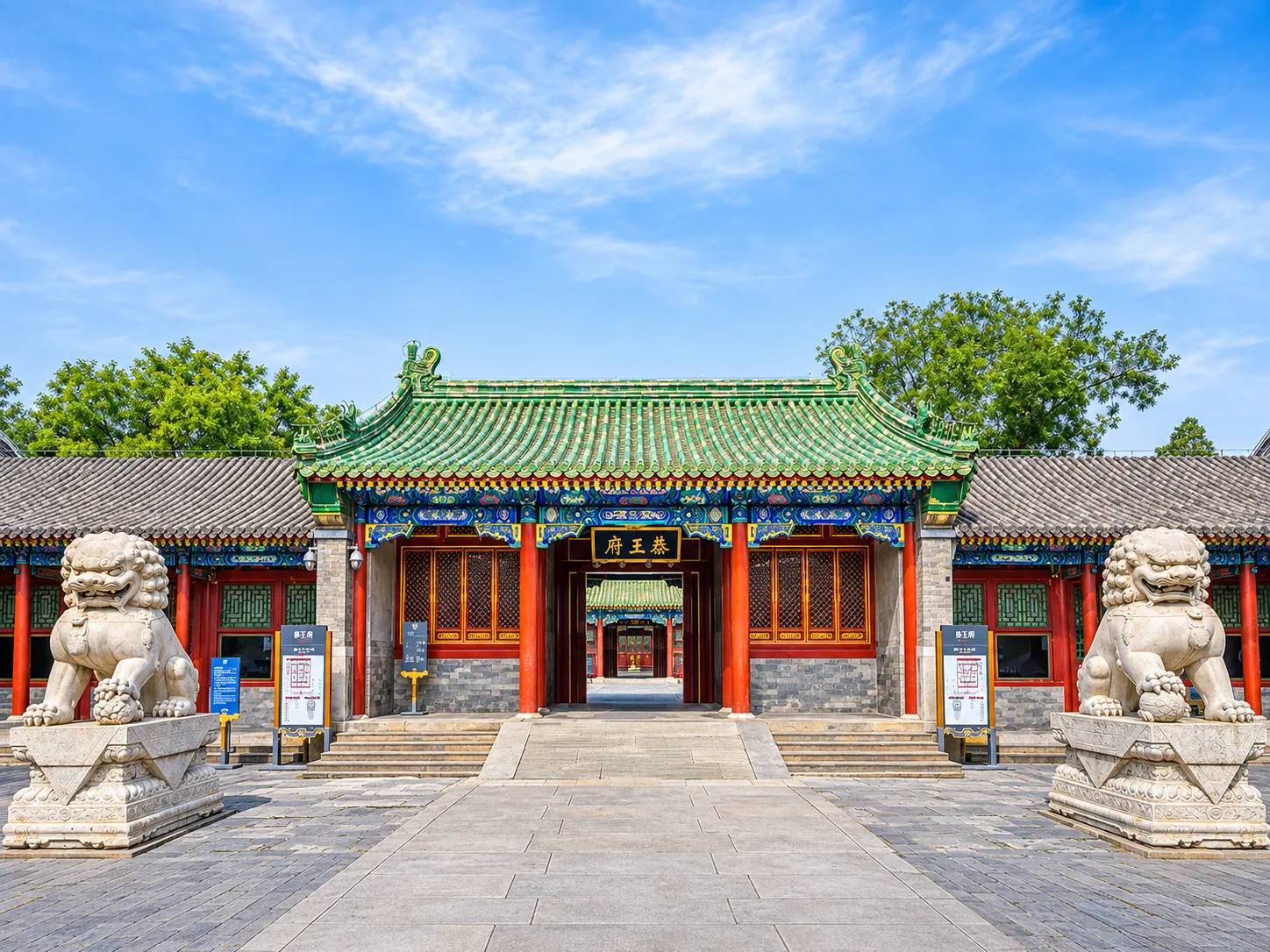
A Mansion That Tells Half the Story of the Qing Dynasty
- Chinese name: 恭王府 (Gōngwáng Fǔ)
- Also known as: Prince Kung's Mansion, Prince Gong's Mansion Museum
- Location: 17 Qianhai West Street, Xicheng District, Beijing
- Admission: RMB 40 per adult
- Opening hours: 08:30–17:00, closed Mondays except statutory holidays
- Suggested visit: 2–3 hours
- Best for: Qing-dynasty history, architecture, classical gardens, photography, and cultural exploration
Hidden among the traditional hutongs southwest of Shichahai lies one of Beijing's most remarkable historic residences.
Behind its imposing gates, Prince Gong's Mansion (恭王府) unfolds through an extraordinary sequence of courtyards, ceremonial halls, private chambers, covered corridors, and landscaped gardens.
Unlike the Forbidden City, which represented the ceremonial and political center of imperial China, Prince Gong's Mansion reveals another world: the lives of powerful individuals who served the imperial court.
Its history spans the height of Qing prosperity, the corruption and political struggles of the late eighteenth century, and the difficult reforms and diplomatic encounters of nineteenth-century China.
The mansion's first famous owner was Heshen, one of the most powerful and controversial officials of the Qianlong Emperor's reign.
Later, it became the residence of Prince Gong, an influential imperial statesman who helped shape China's response to foreign powers and the challenges of modernization.
A popular saying describes the mansion as a place where one can discover half the history of the Qing dynasty.
Although this is a literary expression rather than a literal historical measure, it captures the extraordinary concentration of political, architectural, and cultural history within the estate.
Today, Prince Gong's Mansion is one of Beijing's finest surviving examples of Qing aristocratic residential architecture.
For visitors interested in understanding imperial Beijing beyond its palaces and temples, it is an essential destination.
1. The History of Prince Gong's Mansion
Heshen: The Rise of an Imperial Favorite
The mansion's story begins in the late eighteenth century during the reign of the Qianlong Emperor.
Heshen (和珅, 1750–1799) rose from relatively modest beginnings to become one of the most influential officials at the Qing court.
His intelligence, administrative abilities, and close relationship with Qianlong helped him accumulate extraordinary political influence.
He held numerous senior positions and controlled important aspects of government administration.
At the height of his career, Heshen was also associated with immense personal wealth.
His residence reflected that status.
Constructed during the late Qianlong period, the estate incorporated elaborate residential courtyards, expensive materials, and architectural features appropriate to an exceptionally powerful court official.
The Fall of Heshen
Heshen's fortunes changed dramatically after Qianlong's death in 1799.
The new Jiaqing Emperor moved against him, accusing him of corruption and abuse of power.
Heshen was arrested, his property was confiscated, and he was ordered to take his own life.
His downfall became one of the most famous political episodes of the Qing dynasty.
The mansion survived, but its ownership changed.
From Heshen's Residence to a Princely Estate
The property subsequently became associated with members of the imperial family, including Prince Qing.
In 1851, the Xianfeng Emperor granted the mansion to his younger half-brother Yixin, who held the title Prince Gong.
It is from this later owner that the estate takes its present name.
Prince Gong: Diplomacy and Reform
Prince Gong (恭亲王奕訢, 1833–1898) played a major role in the political history of late Qing China.
He was involved in negotiations with foreign powers following the Second Opium War and became an important figure in the Qing government's attempts to respond to military, diplomatic, and technological challenges.
He was closely associated with the establishment of the Zongli Yamen, an institution responsible for managing foreign affairs.
Prince Gong also supported aspects of the Self-Strengthening Movement, which sought to introduce modern military technology, industrial capabilities, and selected foreign knowledge while preserving the Qing political system.
His career reflects the tensions of nineteenth-century China: maintaining imperial authority while confronting a rapidly changing international environment.
The mansion therefore connects two very different chapters of Qing history.
Heshen represents the wealth and court politics of the eighteenth-century empire.
Prince Gong represents the diplomatic struggles and reform efforts of its final decades.
2. Understanding the Mansion's Architecture
Prince Gong's Mansion is one of the most complete surviving examples of a Qing-dynasty princely residence.
The complex covers approximately 60,000 square meters, divided between residential buildings and a large landscaped garden.
Its architecture follows the traditional Chinese courtyard system, but on a scale far greater than that of an ordinary Beijing home.
The Three Residential Axes
The residential section is organized into three principal north–south sequences: eastern, central, and western.
Each contains a succession of courtyards and buildings.
This arrangement reflects the hierarchical organization of elite Qing households.
The central axis accommodated formal ceremonial and reception functions.
The eastern and western sections included additional residential, social, and private spaces.
The separation of spaces was important.
An elite household was not simply a collection of rooms. It was a carefully organized social environment in which architecture expressed rank, family relationships, and patterns of public and private life.
Courtyards and Siheyuan Architecture
Like traditional Beijing *siheyuan* courtyard houses, the mansion's buildings are arranged around enclosed outdoor spaces.
However, the scale, decoration, and architectural complexity distinguish it from ordinary residential compounds.
Visitors can observe traditional timber construction, grey-brick walls, carved stone details, ornamental windows, and richly decorated interiors.
These architectural elements illustrate both the aesthetic preferences and social hierarchy of Qing aristocratic society.
The Rear Screen Building
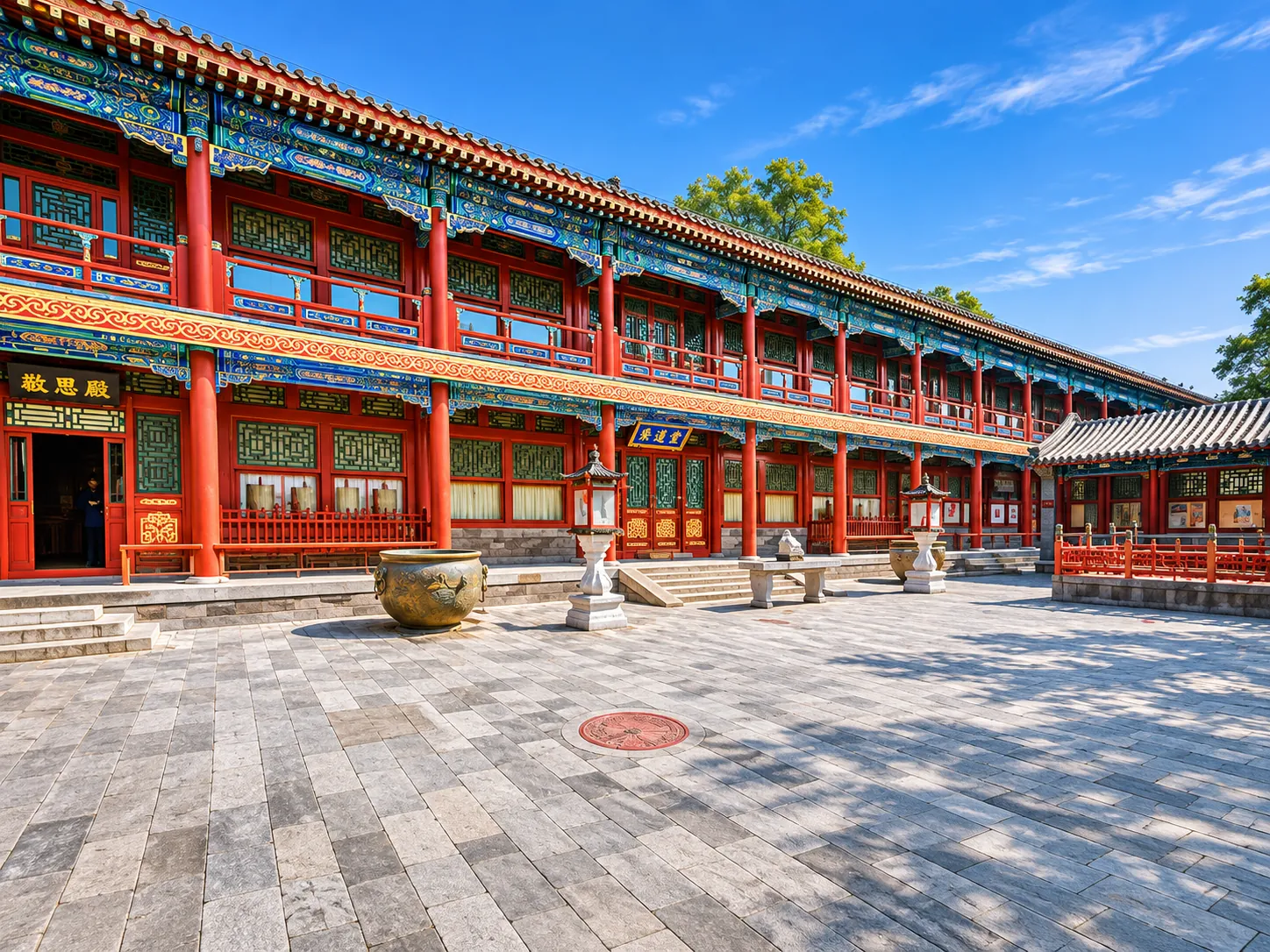
Separating the residential courtyards from the northern garden is an unusually long two-story structure, often called the Rear Screen Building or Houzhaolou (后罩楼).
Extending approximately 165 meters, it forms one of the estate's most distinctive architectural features.
The building provided additional rooms while creating a substantial boundary between the formal residence and the private garden.
Its long facade and repeated windows are particularly striking.
For visitors, it marks the transition from the ordered residential courtyards to the more imaginative landscape of the garden.
 Click to enlarge
3. The Main Residential Halls
The mansion's principal buildings reveal the ceremonial and domestic functions of a high-ranking Qing household.
Yin'an Hall
Yin'an Hall (银安殿) occupies an important position on the central axis.
It served as a principal ceremonial building associated with the mansion's princely status.
The hall's formal arrangement reflects the architectural conventions governing residences of imperial nobles.
Its significance lies in how it translates political hierarchy into architectural space.
Jiale Hall
Jiale Hall (嘉乐堂) is another important building within the central residential sequence.
Its architectural details and position help illustrate the relationship between ceremonial halls and the private courtyards beyond.
Xijin Studio
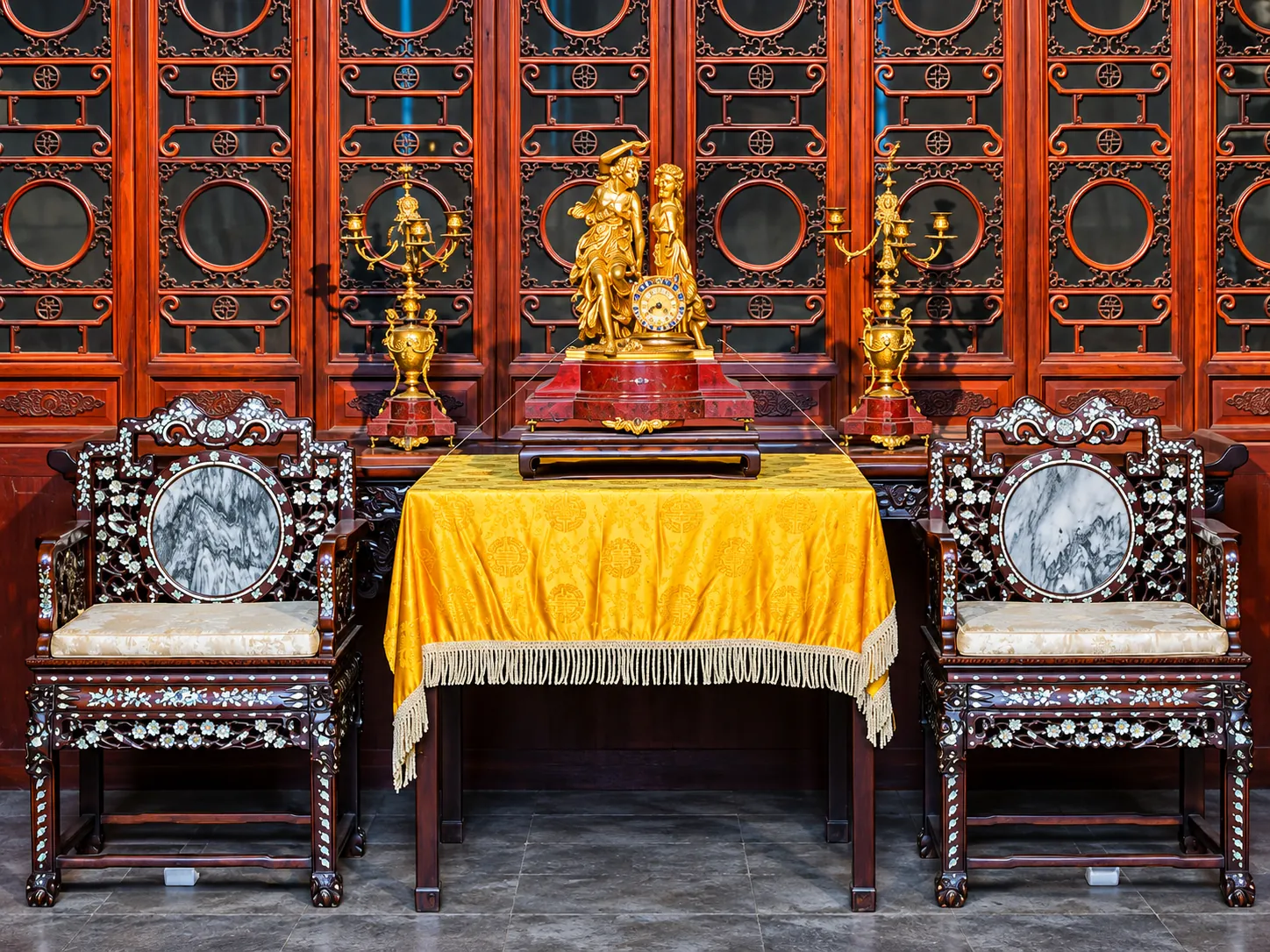
Xijin Studio (锡晋斋), located in the western residential section, is particularly celebrated for its elegant construction and interior decoration.
The building is associated with fine nanmu timber and elaborate craftsmanship.
Its architectural refinement demonstrates the extraordinary resources devoted to elite residences during the Qing dynasty.
Visitors interested in traditional Chinese timber architecture should pay particular attention to this section.
 Click to enlarge
Ledao Hall
Ledao Hall (乐道堂) is associated with Prince Gong's residential life.
It provides another perspective on the domestic functions of the complex.
Rather than viewing the mansion solely as a sequence of grand halls, it is worth remembering that these spaces formed part of a functioning household.
They accommodated private life, family relationships, administrative activity, and social obligations.
4. Cuijin Garden: A Classical Landscape Behind the Mansion
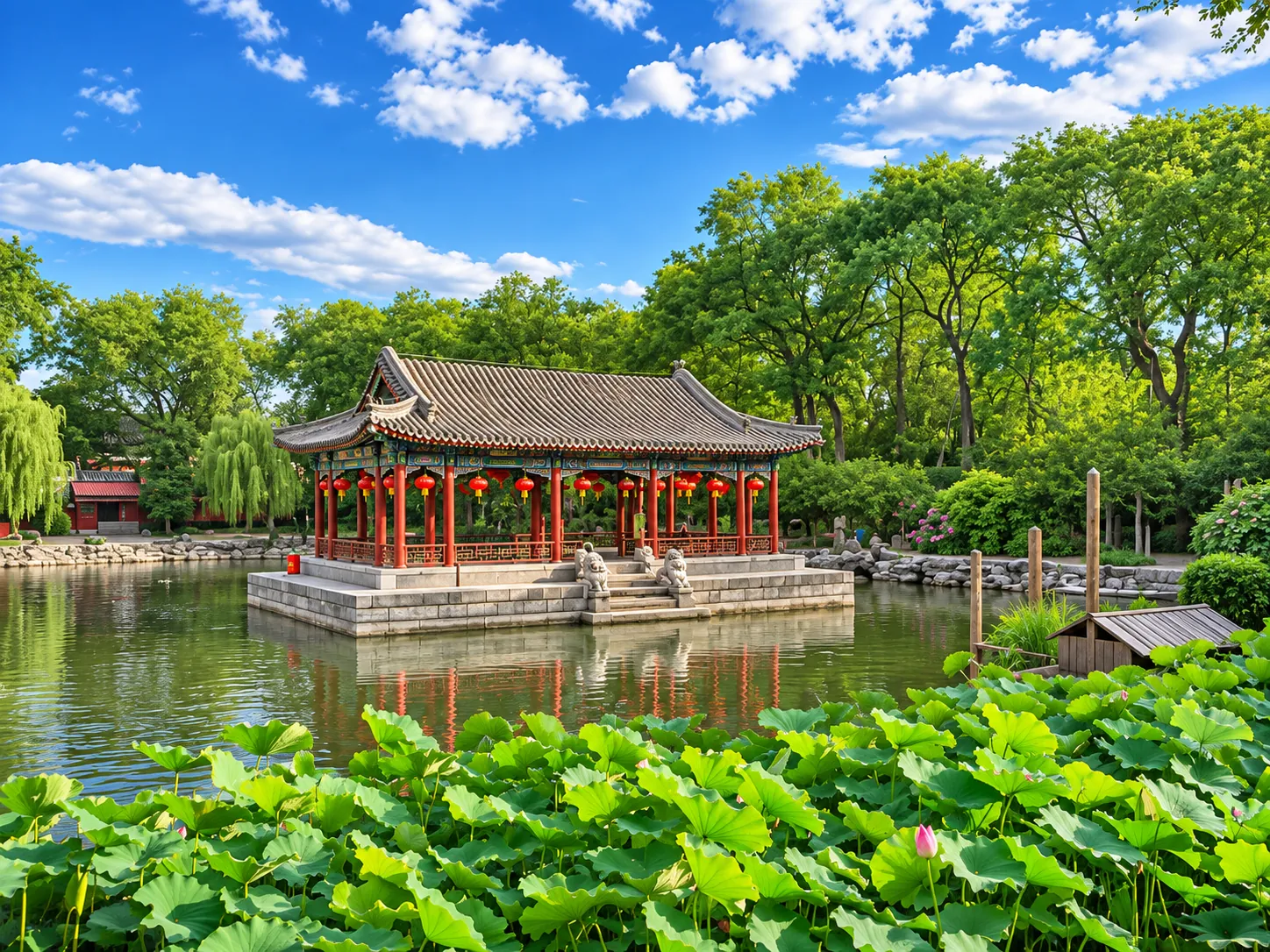
The northern section of the estate contains Cuijin Garden (萃锦园), one of Beijing's most celebrated historic residential gardens.
Covering approximately 28,000 square meters, the garden creates a striking contrast with the formal architecture of the mansion.
Where the residential courtyards emphasize order and hierarchy, the garden offers winding paths, ornamental rockeries, ponds, pavilions, and carefully composed views.
 Click to enlarge
A Landscape Designed for Leisure
Classical Chinese gardens were intended to create miniature landscapes within enclosed spaces.
Rocks could represent mountains.
Ponds suggested rivers and lakes.
Pavilions provided places for rest, conversation, poetry, and contemplation.
Paths were often arranged to reveal different scenes gradually rather than presenting the entire garden at once.
Cuijin Garden follows many of these principles.
Its design combines naturalistic landscape elements with highly deliberate architectural composition.
Taihu Rocks and Artificial Mountains
The garden contains rock formations associated with the classical tradition of using Taihu stones.
These limestone rocks are prized for their unusual shapes, perforations, and weathered surfaces.
Arranged into artificial hills, they create miniature mountain landscapes.
Their irregular forms contrast with the straight lines and formal proportions of the residential buildings.
A Garden Full of Symbolism
Like many traditional Chinese gardens, Cuijin Garden incorporates symbolic imagery.
Bats, auspicious characters, decorative stones, and carefully named buildings express wishes for happiness, prosperity, longevity, and good fortune.
Understanding these symbols adds another dimension to the visit.
The garden is not simply decorative.
It is a landscape filled with cultural meaning.
5. The Fu Stele: Beijing's Famous Symbol of Good Fortune
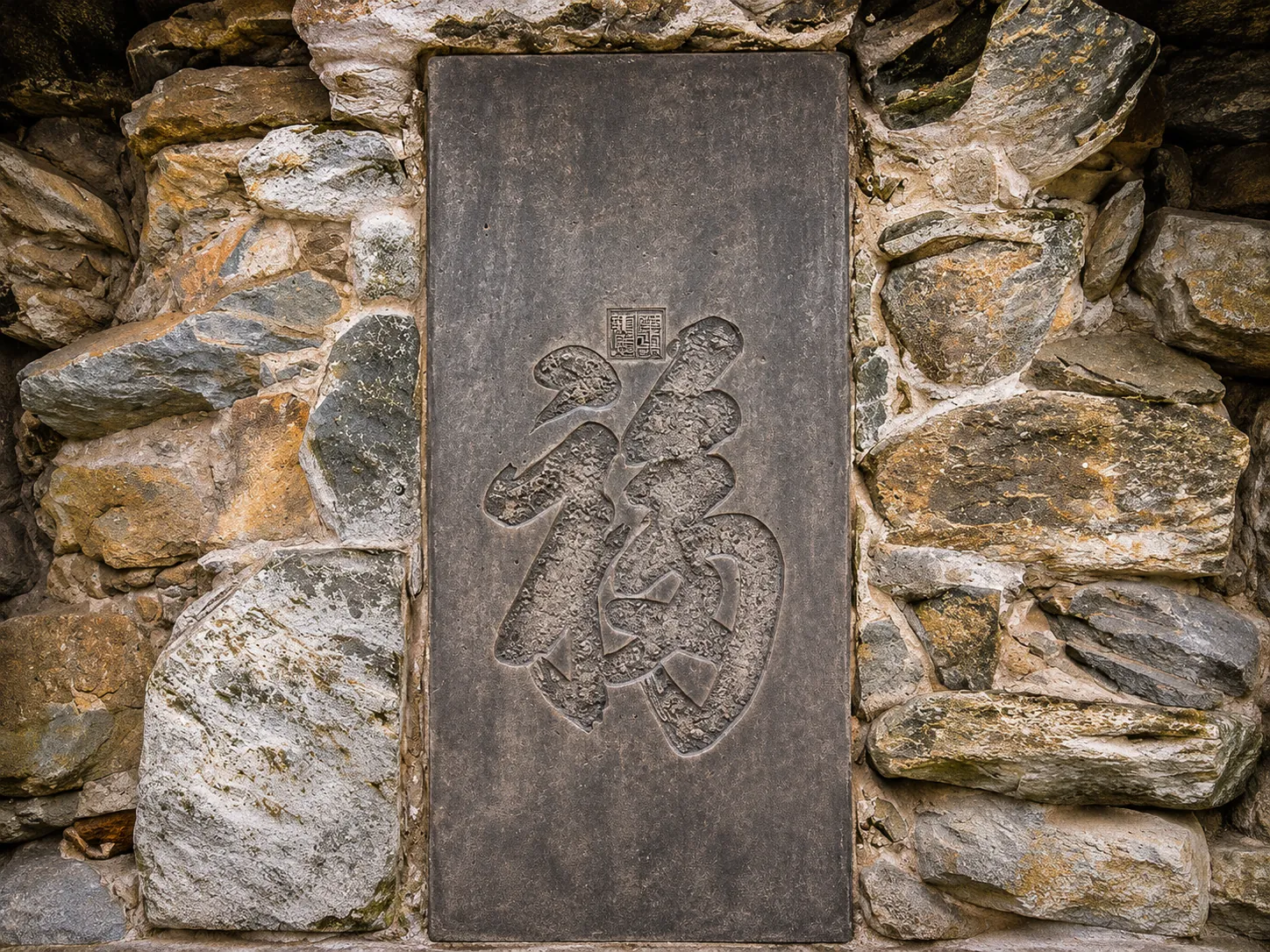
One of the mansion's most popular attractions is the Fu Stele (福字碑).
The stone bears the Chinese character 福 (*fu*), meaning good fortune, blessing, or happiness.
The calligraphy is traditionally attributed to the Kangxi Emperor.
 Click to enlarge
The Meaning of Fu
The character 福 is one of the most recognizable auspicious symbols in Chinese culture.
It frequently appears on doors, decorations, paintings, and festive objects, especially during the Chinese New Year.
At Prince Gong's Mansion, the Fu Stele has become a focal point for visitors interested in traditional symbolism.
A Hidden Stone in the Garden
The stele is situated within a rockery setting, where the character is displayed in a distinctive architectural environment.
Its location gives the visit a sense of discovery.
The surrounding landscape reinforces the idea that good fortune is embedded throughout the garden's design.
Legend and History
Traditional accounts associate the inscription with Emperor Kangxi and describe it as a blessing connected with the imperial family.
These stories form part of the site's cultural interpretation.
Visitors should distinguish the traditional legends surrounding the stele from independently documented historical events.
Regardless of the details of its origin, the inscription remains an important example of how calligraphy, symbolism, and landscape design interact in Chinese cultural heritage.
6. The Western-Style Gate: An Unexpected Architectural Detail
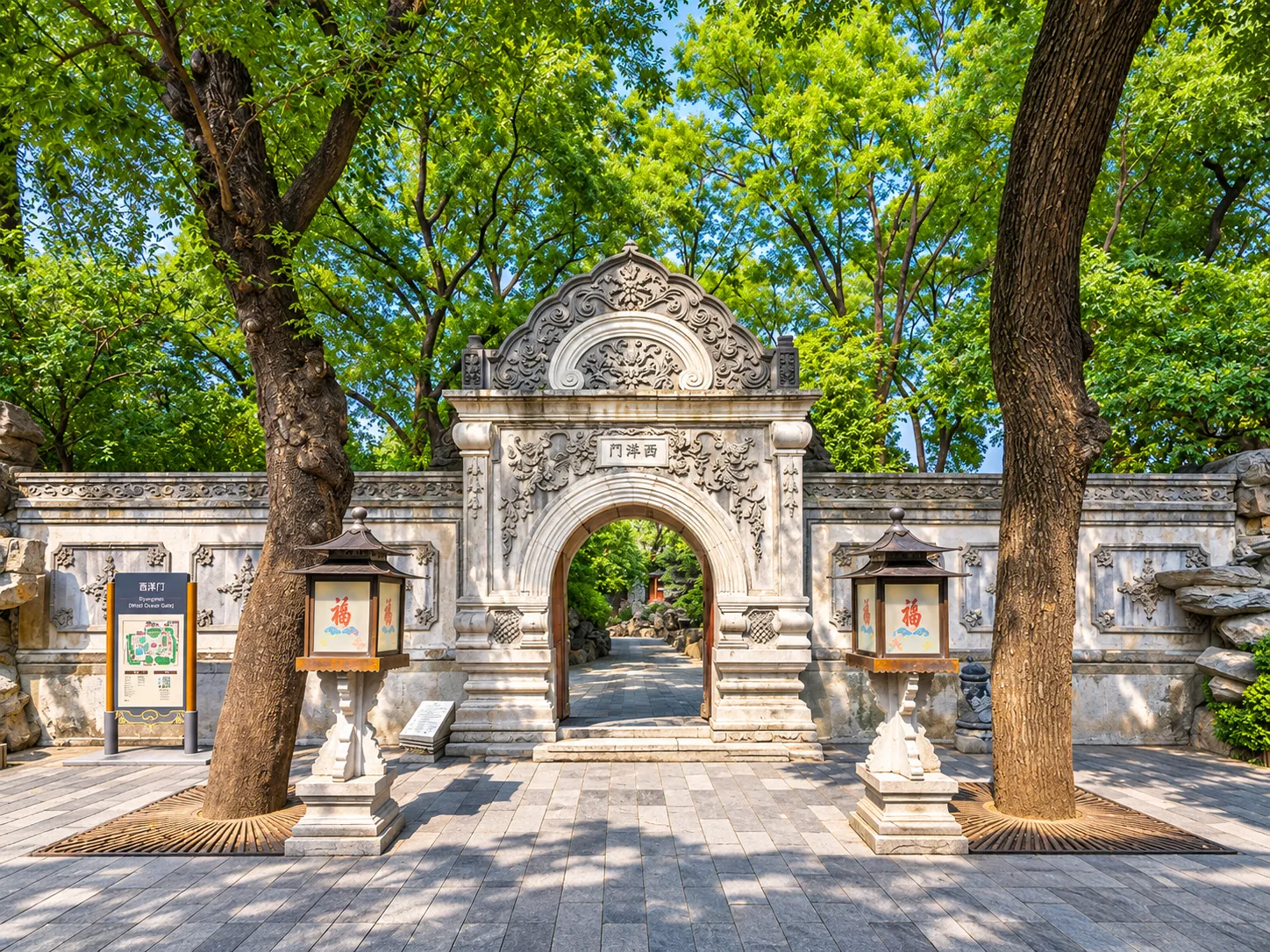
One of Cuijin Garden's most distinctive features is its Western-style stone gate, commonly called Xiyangmen (西洋门).
Its arched form differs noticeably from the timber gateways typical of traditional Chinese courtyard architecture.
The contrast is striking.
 Click to enlarge
Chinese Gardens and Foreign Influences
The gate illustrates how Chinese elite architecture could incorporate foreign-inspired decorative elements.
During the Qing dynasty, selected Western architectural forms appeared in imperial and aristocratic settings.
The most famous examples include the European-style buildings once found at Yuanmingyuan, the Old Summer Palace.
At Prince Gong's Mansion, the Western-style gate creates a similar visual contrast on a smaller scale.
It is an important reminder that Qing architectural culture was not entirely isolated from external influences.
A Popular Photography Location
The gate's pale stonework, curved opening, and surrounding greenery make it one of the garden's most recognizable landmarks.
It is particularly attractive when framed against the contrasting traditional architecture beyond.
7. The Grand Theatre: Entertainment in an Aristocratic Household
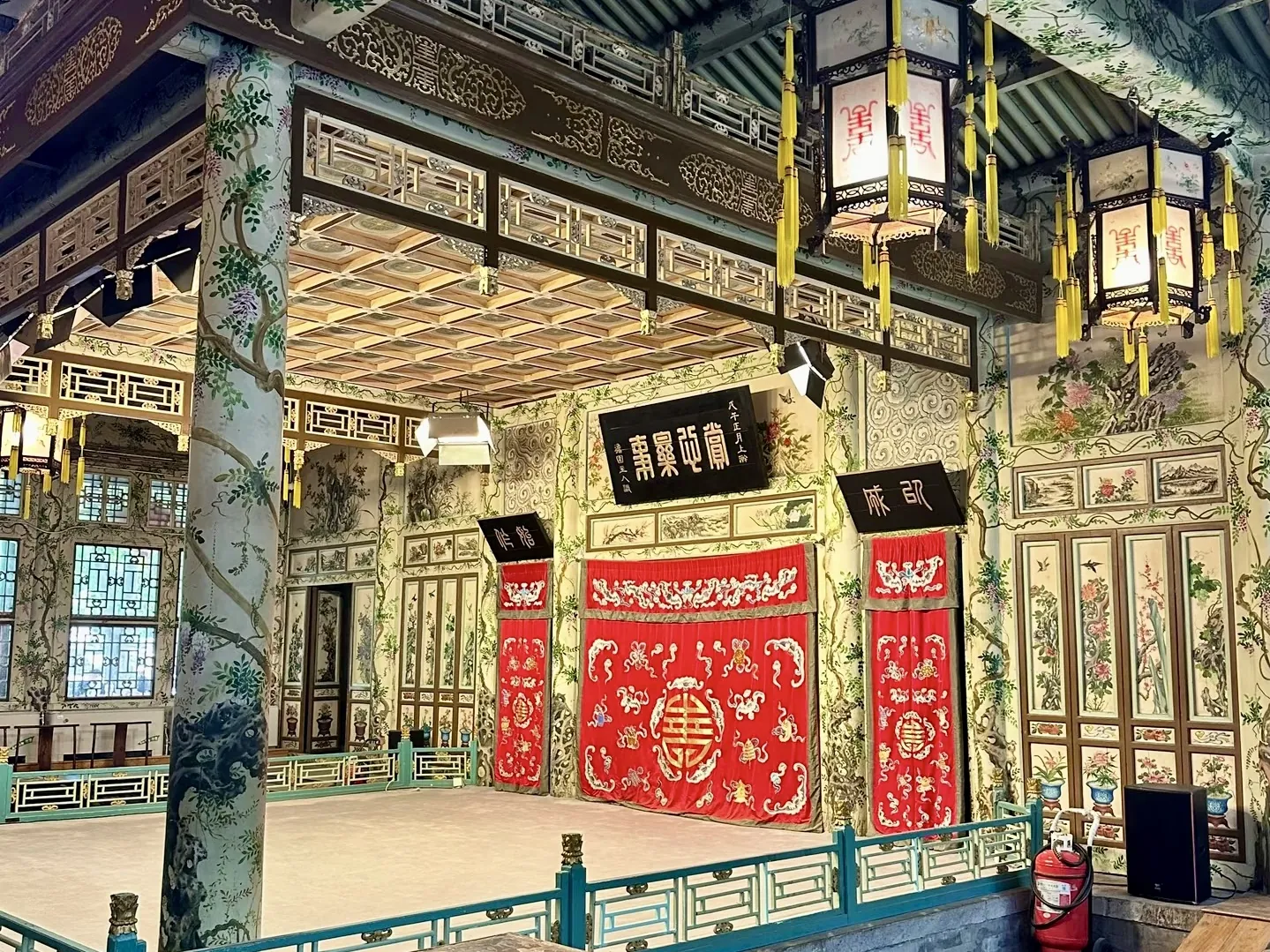
The mansion's Grand Theatre (大戏楼) is among its most remarkable surviving structures.
Located within the garden, the theater reflects the importance of performing arts in elite Qing social life.
 Click to enlarge
Private Theater Culture
Opera and theatrical entertainment occupied an important place in Qing-dynasty society.
Members of the imperial family and wealthy households sometimes maintained private performance spaces.
These theaters provided entertainment for family members, invited guests, and important social gatherings.
The Grand Theatre at Prince Gong's Mansion represents this tradition.
Architecture and Acoustics
The theater is a substantial indoor performance space with a traditional stage and audience seating.
Its decorative interior includes painted floral and plant motifs, creating the impression of an elegant garden setting.
The building is also admired for its acoustic design, which allowed performers to project their voices within the enclosed space.
Is the Theatre Still Used?
The theater is preserved as an important architectural attraction.
Cultural performances and special events may be organized, but visitors should not assume that a live opera performance is included with ordinary admission.
Check the museum's current program if attending a performance is a priority.
8. Bats, Blessings, and the Symbolism of Happiness
One of the most distinctive cultural themes at Prince Gong's Mansion is the repeated use of the bat motif.
In Chinese, the word for bat, 蝠 (*fú*), sounds the same as 福 (*fú*), meaning good fortune.
This linguistic connection made bats a popular decorative symbol in traditional Chinese art.
Where to Look for Bat Motifs
Bat imagery appears in traditional architectural decoration, including carvings, painted details, and ornamental patterns.
At Prince Gong's Mansion, the symbolism of good fortune is especially prominent.
The garden also contains a pond traditionally associated with the shape of a bat.
Why the Symbol Matters
In many Western cultural traditions, bats are associated with darkness or mystery.
In traditional Chinese decorative art, however, they frequently represent blessings and happiness.
Five bats together can symbolize the Five Blessings, a traditional collection of desirable qualities in life.
Recognizing this symbolism helps visitors understand architectural decoration that might otherwise appear purely ornamental.
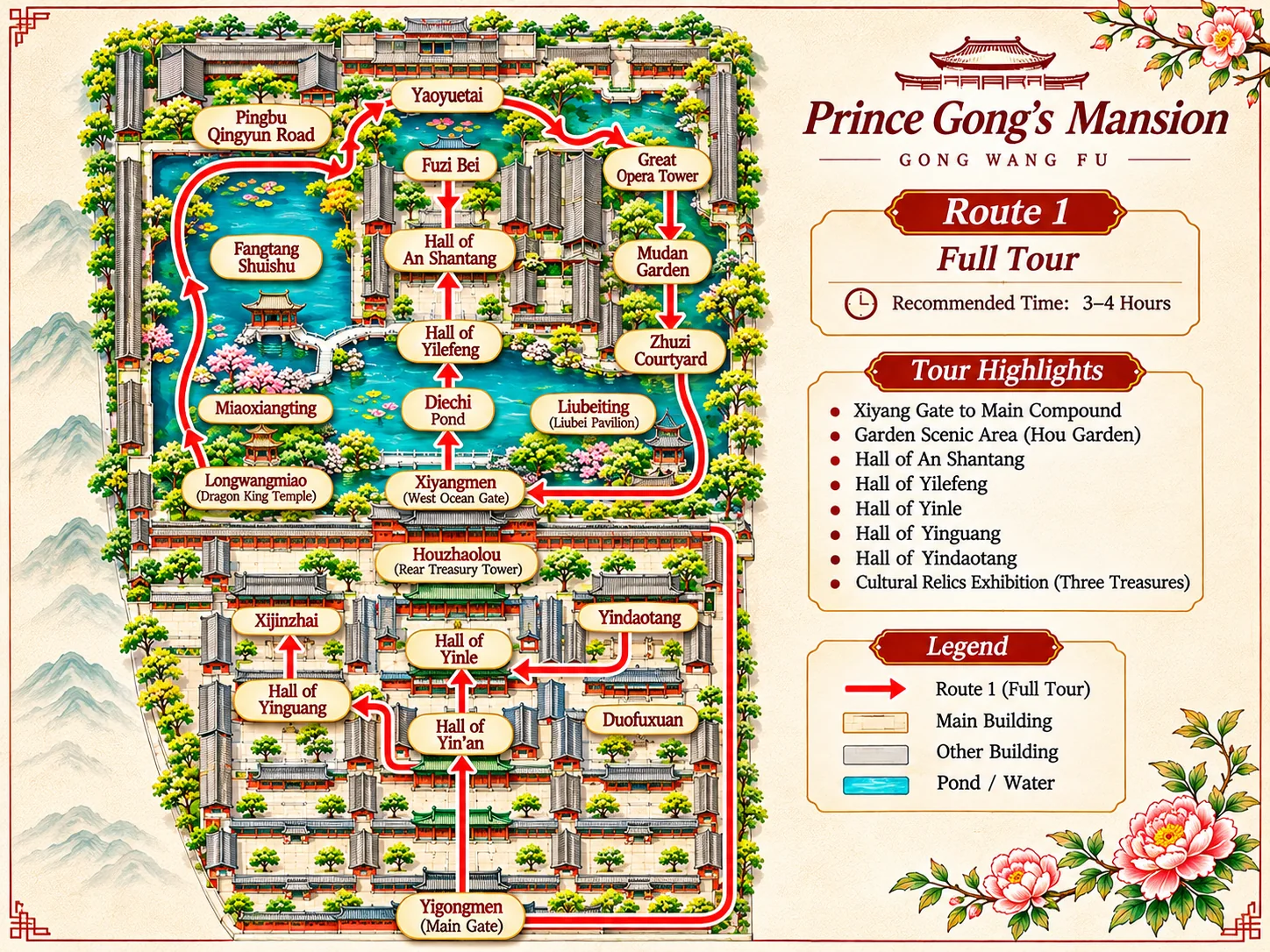
9. A Self-Guided Prince Gong's Mansion Walking Route
Suggested duration: 2–3 hours Starting point: Main entrance on Qianhai West Street Route: Residential courtyards → Rear Screen Building → Cuijin Garden
 Click to enlarge
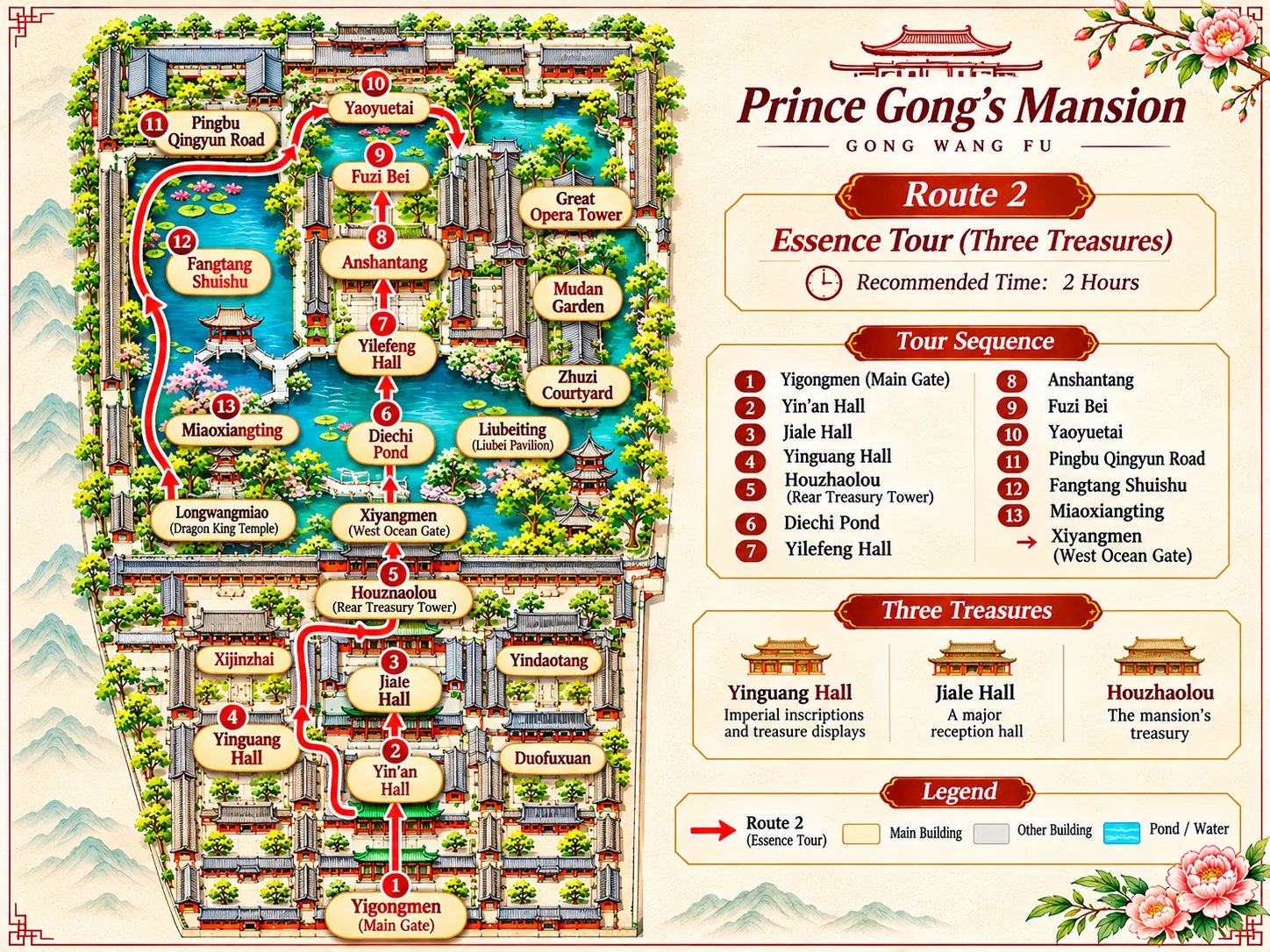 Click to enlarge
Stop 1 — Main Gate and Central Courtyards
*20–30 minutes*
Begin at the main entrance.
Observe the stone lions, formal gateway, and architectural organization of the residential section.
Continue through the principal courtyards and ceremonial halls.
Stop 2 — Eastern and Western Residential Sections
*30–40 minutes*
Explore the side courtyards and surviving residential buildings.
Pay particular attention to Xijin Studio and the architectural details that distinguish the mansion from ordinary courtyard houses.
Stop 3 — Rear Screen Building
*10–15 minutes*
Walk toward the long two-story building separating the residence from the garden.
Its scale and repeated architectural features make it one of the estate's most memorable structures.
Stop 4 — Western-Style Gate and Garden Rockeries
*20–30 minutes*
Enter Cuijin Garden.
Explore the Western-style stone gate, artificial hills, and carefully arranged landscape scenes.
Stop 5 — Fu Stele
*15–25 minutes*
Find the famous Fu Stele and observe the relationship between the inscription, rockery, and surrounding garden.
This area can attract queues during busy periods.
Stop 6 — Grand Theatre and Garden Pavilions
*25–40 minutes*
Finish by exploring the Grand Theatre and the surrounding garden architecture.
Allow time to enjoy the quieter corners of the landscape before leaving the estate.
Individual buildings or garden areas may occasionally be closed for conservation, exhibitions, or maintenance.
10. Tickets, Opening Hours, and Reservations
Prince Gong's Mansion is managed as a public museum under China's Ministry of Culture and Tourism.
Admission
Standard adult ticket: RMB 40
Discounted or free admission may apply to eligible children, students, seniors, and other visitor categories.
Check the official ticket policy for the documents required to claim concessions.
Opening Hours
Tuesday–Sunday: 08:30–17:00
Ticket sales end: 16:00
Last admission: 16:10
Closed: Mondays, except statutory public holidays.
Special exhibitions, maintenance, and public holidays may affect access.
Booking Tickets
The museum provides an official online ticket service through its website.
Advance booking is recommended, particularly during weekends and Chinese public holidays.
International visitors should bring their original passports and confirm the current identity-document requirements when booking.
Use the museum's official ticket service rather than relying on unverified third-party sellers.
Official website: https://www.pgm.org.cn/
See the museum’s official visitor information for current hours and admission cutoffs.
Current Conservation Notices
Some buildings and garden features may be temporarily inaccessible due to maintenance or conservation.
The museum publishes notices about these changes.
Before visiting, check its latest announcements, especially if you are interested in a particular pavilion or garden feature.
11. How to Get to Prince Gong's Mansion
Address
17 Qianhai West Street, Xicheng District, Beijing
Chinese: 北京市西城区前海西街17号
By Subway
Beihai North Station on Beijing Subway Line 6 is a convenient access point.
From the station, continue on foot through the historic streets toward the mansion.
The walk generally takes around 10–15 minutes, depending on the exit and route.
By Taxi or DiDi
Search for:
恭王府博物馆 — Prince Gong's Mansion Museum
The surrounding historic streets can be narrow and subject to traffic restrictions.
Vehicles may need to stop at a nearby permitted location.
By Private Vehicle
A private vehicle is useful when combining the mansion with attractions farther across Beijing.
However, the mansion itself and nearby Shichahai hutongs are best explored on foot.
12. Best Time to Visit Prince Gong's Mansion
Spring
Spring is particularly attractive when the garden's trees and flowering plants begin to bloom.
The courtyards and ornamental landscape become increasingly colorful.
Summer
Summer brings lush greenery and shaded garden paths.
However, the site can become crowded and hot, particularly during weekends and school holidays.
Autumn
Autumn is one of the most rewarding seasons.
The changing foliage complements the red walls, grey roofs, and traditional garden architecture.
Cooler temperatures also make walking more comfortable.
Winter
Winter reveals the structural qualities of the buildings and garden.
Without dense foliage, the relationship between architecture, rockeries, and pathways becomes easier to appreciate.
Best Time of Day
Arriving near the 08:30 opening time is a sensible choice for visitors hoping to explore the courtyards before the busiest periods.
Weekdays are generally preferable to weekends and public holidays.
13. Prince Gong's Mansion and Shichahai: A Half-Day Historical Walk
Prince Gong's Mansion is located beside one of Beijing's most atmospheric historic neighborhoods.
A visit can be combined naturally with the lakes, bridges, and hutongs of Shichahai.
Suggested duration: 4–5 hours
See the Shichahai walking guide for more around the lakes.
8:30 AM — Prince Gong's Mansion
Begin with the mansion's residential courtyards, gardens, Fu Stele, and Grand Theatre.
Allow approximately two hours.
10:45 AM — Historic Hutongs
Walk through the surrounding lanes toward Qianhai.
Observe traditional courtyard entrances, old brickwork, and the residential character of the neighborhood.
11:15 AM — Qianhai Lakeside
Continue along the shores of Qianhai.
The lake offers a scenic contrast to the enclosed courtyards of the mansion.
11:45 AM — Silver Ingot Bridge
Visit Silver Ingot Bridge, the historic stone crossing between Qianhai and Houhai.
The bridge is associated with a celebrated traditional view toward Beijing's Western Hills.
12:15 PM — Houhai and Lunch
Finish with a relaxed walk along Houhai.
Stop at a lakeside restaurant or continue into the nearby hutongs for lunch.
Visitors with more time can extend the walk toward Yandai Xiejie and the Drum and Bell Towers.
14. Combining Prince Gong's Mansion With Other Beijing Attractions
Shichahai and Houhai
The most natural combination.
Explore the lakes, traditional hutongs, historic bridges, and waterfront streets surrounding the mansion.
Drum and Bell Towers
The Drum and Bell Towers provide an introduction to Beijing's historic timekeeping system.
Together with the mansion, they reveal different aspects of Qing-era urban life.
Beihai Park
Beihai Park is one of Beijing's most important historic imperial gardens.
Its expansive lake, White Pagoda, and landscaped grounds provide an interesting contrast with the smaller, more intimate garden of Prince Gong's Mansion.
Forbidden City
The Forbidden City and Prince Gong's Mansion offer complementary perspectives on Qing architecture.
The Forbidden City represents the imperial court at its most ceremonial and monumental.
Prince Gong's Mansion reveals how members of the ruling elite lived outside the palace.
Nanluoguxiang
Nanluoguxiang is another historic hutong district, known for its traditional street layout and contemporary commercial atmosphere.
It can be combined with Shichahai for a longer neighborhood walk.
15. Is Prince Gong's Mansion Worth Visiting?
Yes, particularly for visitors interested in Qing-dynasty history, traditional architecture, classical gardens, and the social life of imperial Beijing.
The mansion offers several experiences that distinguish it from other major attractions.
First, it preserves the organization of an elite residential compound rather than a purely ceremonial palace.
Second, its history connects directly with important political figures from two very different periods of the Qing dynasty.
Third, the rear garden provides an intimate example of Chinese landscape design, filled with symbolic imagery and architectural surprises.
Finally, its location beside Shichahai makes it easy to combine with a scenic walk through one of Beijing's most historic neighborhoods.
For travelers who have already visited the Forbidden City, Prince Gong's Mansion offers a deeper understanding of how power, wealth, and everyday life operated beyond the imperial palace walls.
16. Why Prince Gong's Mansion Matters
Prince Gong's Mansion is more than a preserved residence.
It is a physical record of Qing China's political and social structure.
Its ceremonial halls express the hierarchy of imperial nobility.
Its residential courtyards reveal the organization of an elite household.
Its gardens reflect the aesthetic ideals of classical Chinese landscape design.
Its theatrical spaces illustrate the importance of performing arts in aristocratic culture.
And its successive owners connect the estate with both the prosperity and political instability of the Qing dynasty.
Heshen's rise and fall reveal the dangers of concentrated court power.
Prince Gong's career reflects the challenges of diplomacy, reform, and imperial survival in the nineteenth century.
Together, these histories make the mansion one of Beijing's most revealing places for understanding the world beyond the Forbidden City.
17. Explore Historic Beijing With DragonTrail
Prince Gong's Mansion can be visited independently and is particularly convenient to combine with Shichahai and the surrounding hutongs.
For travelers planning a broader Beijing itinerary, DragonTrail can help arrange private sightseeing days that connect the mansion with the Forbidden City, Beihai Park, Drum and Bell Towers, and other historic landmarks.
A multi-day Beijing journey can also include the Temple of Heaven, Summer Palace, Great Wall, and traditional neighborhoods across the city.
Explore private Beijing day tours and multi-day itineraries:
https://dragontrail.cc/tours/beijing/private-tour-quote
Explore private multi-city China tours:
Frequently Asked Questions
- Prince Gong's Mansion is famous for its Qing-dynasty princely architecture, its association with Heshen and Prince Gong, its classical garden, the Fu Stele, and its historic Grand Theatre.
- The mansion was originally associated with Heshen, a powerful official during the reign of the Qianlong Emperor. It later became a princely residence and was granted to Prince Gong in 1851.
- Prince Gong, also known as Yixin, was an influential Qing imperial prince and statesman. He played an important role in foreign diplomacy and supported aspects of the Self-Strengthening Movement.
- Standard adult admission is RMB 40. Discounted and free admission may be available to eligible visitors.
- The museum normally opens from 08:30 to 17:00, with last admission at 16:10. It is closed on Mondays except statutory public holidays.
- Advance booking is recommended, especially during weekends and holidays. Use the museum's official ticketing service and bring the required identification.
- Most visitors should allow two to three hours to explore the residential buildings and gardens comfortably.
- The Fu Stele is a stone inscription bearing the Chinese character 福, meaning good fortune. Its calligraphy is traditionally attributed to the Kangxi Emperor.
- Cuijin Garden contains classical Chinese landscaping, artificial mountains, ponds, pavilions, a Western-style stone gate, symbolic decorations, and a historic theater.
- No. The Forbidden City was the imperial palace complex. Prince Gong's Mansion was a residence for powerful officials and imperial princes.
- Beihai North Station on Line 6 is one of the most convenient subway stations for reaching the mansion.
- Yes. The mansion is located close to Qianhai and Houhai, making it an excellent starting point for a Shichahai walking tour.
- Yes. The gardens and historic buildings can be interesting for families, although visitors should supervise children around ponds, stone steps, and uneven surfaces.
- The Grand Theatre is an important historic attraction, but performances are not guaranteed with standard admission. Check the museum's current events schedule.