
At a glance
| Detail | Plan |
|---|---|
| Core walk | Courtyards, then Pagoda Forest |
| Show | Posted times, not continuous |
| Schools | A separate hour if you book one |
| Time | Most of a morning |
| Ticket | Passport, real-name, price changes |
| Same day | Not the town circuit or Longmen |
Shaolin Temple is a working monastery at the foot of Shaoshi Mountain, not a stage set that happens to sell tickets. The visit that satisfies most people is the courtyard sequence plus the Pagoda Forest, with the kung fu show if a posted time still fits. The schools along the approach road, the gift street, and a summit hike are different outings. This page is the walking order. The Dengfeng guide decides whether you sleep in town or drive back to Zhengzhou. Martial history, separate from the gate plan, sits on Shaolin kung fu.
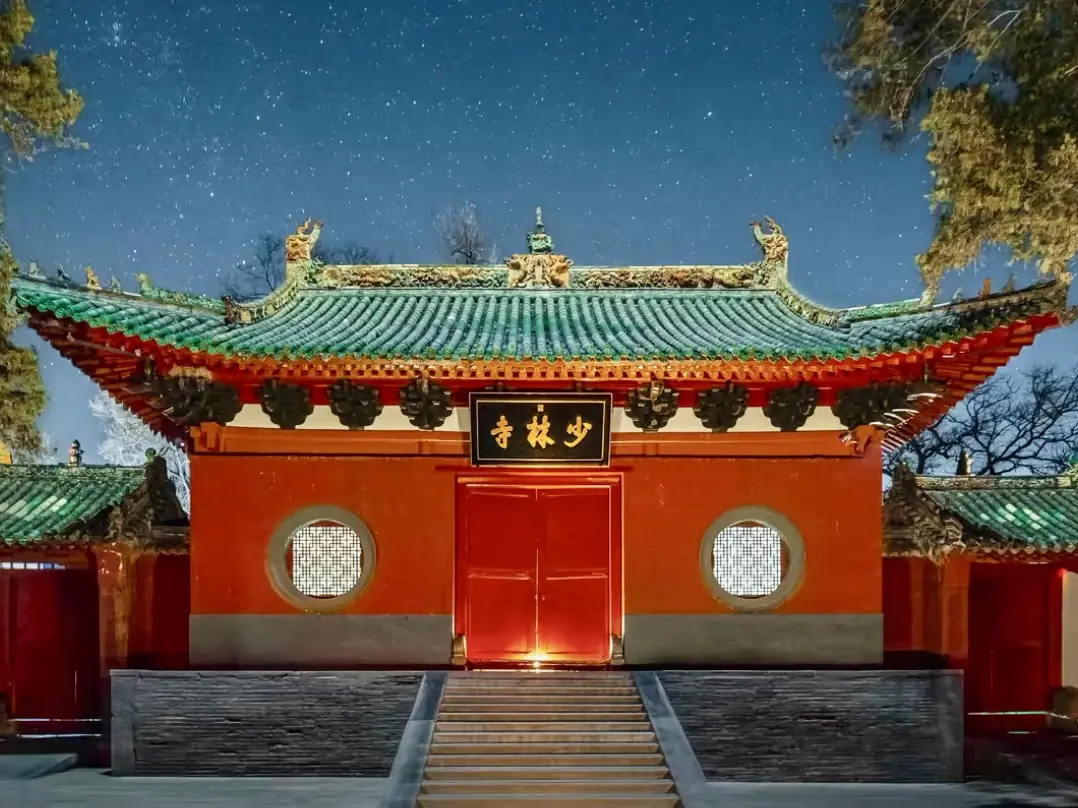
What you walk, in order
The mountain gate is the start that photographs well and the start that bottlenecks. Once you are through, the complex unfolds as a series of courtyards and halls rather than as a single shrine. Give yourself time in the main halls and in the stele corridors. Rushing to a back wall for one picture is how the visit shrinks to twenty minutes and a queue.
The Pagoda Forest stands in the same scenic visit, a short walk from the temple courtyards, not in Dengfeng town. More than two hundred brick pagodas commemorate abbots and eminent monks. The ground is uneven. The light is better when the coaches have not yet filled the paths. Treat it as part of the same morning, not as an optional extra you will “do if there is time” after lunch and a show and a school visit. There will not be time.
A Dharma cave and other uphill paths exist on the mountain behind the temple. They are not the default loop. Add one only when the courtyards and the pagodas are already done, your ticket actually covers the path you intend, and nobody in the group is finished for the day. Turning around halfway up because the show starts in twenty minutes is a bad hour.
The show, the schools, and the monastery
Kung fu demonstrations run at posted times in a performance space linked to the scenic area. They are not continuous in the courtyards. Ask which showing still has room when you enter, and plan backward from that clock if the show matters to you. If it does not, skip it without guilt. The halls do not require the show to make sense.
The road into the scenic area is lined with martial-arts schools. Many are large, loud, and happy to sell a short class or a photo session. A class can be a good hour for teenagers who came for the training story. Book it as its own block, before or after the temple, not as a surprise inserted between the gate and the Pagoda Forest. The school is not the monastery. Monks’ living quarters are not a tour route.
Traditional dating puts the temple’s founding in 495, under the Northern Wei, for the Indian monk Batuo. The Bodhidharma legend, Damo in the Chinese telling, is what signs and guides attach to Chan and to the origin of Shaolin martial training. You can enjoy the story and still notice that a walking visit does not prove a sixth-century biography. Let the buildings be buildings. Let the legend be the legend the mountain tells.
How long, and when to arrive
A focused morning covers the gate, the main courtyards, the Pagoda Forest, and one show. Call it most of a morning through early afternoon once you include security, ticket checks, and a meal. Travelers who read every stele, or who add an uphill path, use a longer day and should not also schedule the academy.
Opening and last entry move with the season and with maintenance. Do not assume a Monday closure, and do not assume a Monday opening. Confirm the day you will actually stand at the gate. Real-name ticketing is the norm at a site of this fame. The passport you travel on is the document that matches the ticket. A photo of a passport on a phone fails often enough that it should not be the plan.
The first hour after opening is the calm version of Shaolin. Mid-morning is when Zhengzhou and Luoyang coaches overlap. If you sleep in Dengfeng, this early start is easy. If you sleep in central Zhengzhou, the car has to leave early enough that the road does not spend your quiet hour. The distance is about 80 to 100 kilometers. One and a half to two hours is the planning band from a city hotel, longer from the airport at a bad time.
Weekend mornings and the May Day and National Day holiday weeks are the crowded version even if you are early. The best time page is the season read. The gate advice stays the same: be there at opening, not at ten.
Etiquette that keeps the visit pleasant
Shoulders covered, hats off in halls when asked, and no climbing on platforms or on pagoda bases. Step aside when someone is praying. Photography rules change by hall. A ban in one building is not a suggestion. The show is where cameras are expected. The shrine is where they may not be.
Drones are a common confiscation story at Chinese scenic mountains. Assume you cannot fly unless staff at the gate say otherwise for that day. The aerial shot is not worth the argument.
Speak quietly in the courtyard even when the coach group ahead of you does not. You are a guest in a monastery that also sells tickets. Both facts are true. The commercial energy is obvious, and the religious use has not left.
Vendors inside and outside the gate are persistent at famous temples. A short no is enough. Buying incense from the first stall is optional. If you do offer incense, follow the attendants rather than inventing a ritual from a film.
What to skip on the same day
Songyang Academy, Zhongyue Temple, and the observatory are the town circuit. They deserve a fresh morning. A “quick look” after the pagodas usually means arriving as a site is thinking about last entry, then resenting the drive.
Longmen Grottoes are in Luoyang, on the Yi River, not on Songshan. The Luoyang Shaolin page exists for people whose hotel is already in Luoyang and who are spending a road day here. It is not permission to do grottoes after the monastery. White Horse Temple is also Luoyang. None of these are Dengfeng add-ons.
Sanhuangzhai’s cableway is a mountain outing. Put it on a day that does not already include the full temple walk. Children who are done after the show will not thank you for a second ticket.
Henan Museum is in Zhengzhou. It is a good use of a city half-day. It is a bad use of the hour you still have after the drive back from Shaolin, unless you have already checked the museum clock and you are honest about fatigue.
Food, feet, and the way back
Eat near the scenic area if you are returning to Zhengzhou the same day. A long lunch is part of the recovery, not a delay. Scenic restaurants are set up for groups. The food is ordinary and the timing is predictable, which is what you want before a ninety-minute road. If you sleep in Dengfeng, keep lunch lighter and save a better meal for town.
Wear shoes you can walk on brick and gravel. The courtyards look flat in photographs and are not. Rolling suitcases do not belong on this visit. Leave large luggage in the car or at the hotel. A monastery morning with a suitcase is how people miss the pagodas.
Water in summer, a layer in the halls in winter. Midday brick reflects heat. Winter wind on the pagoda ground is colder than the hotel courtyard suggested. The itinerary puts this visit on the first Dengfeng morning for that reason.
Who this visit is for
First-time visitors who want the famous gate, the halls, and the pagodas should stop there and call the day a success. Families with school-age children often find the show is the memory and the stele corridors are the part to shorten. Photographers who want empty brick should be at the gate at opening on a weekday outside holiday weeks, and they should protect that hour from a late hotel departure.
Travelers who want to study forms, history, and lineage should not expect the ticketed show to be a seminar. Read the kung fu guide, take a class only if you want a physical hour, and let the monastery be the historic ground rather than a training camp you can join for an afternoon.
Travelers who mainly want Songshan’s Taoist and scholarly monuments can spend less time here than the brochures suggest. Still see the temple if you are in Dengfeng. Just do not let it consume the morning you needed for Zhongyue Temple. Say that when you ask for a plan. A quote that assumes everyone wants the full martial day will mis-schedule the town.
A note on guides and groups
An on-site guide helps when your group mixes adults and children, or when you want the hall sequence explained once instead of reconstructed from signs. You do not need a guide to enjoy the pagodas. You do need someone watching the clock if a show time is the hinge of the day.
Independent travelers do this visit well. The usual mistake is not traveling without a guide. It is the second destination added in the car because it looked close. Agree the exit time before you pass the mountain gate. The getting there page is how you arrive in time to keep that agreement. The tour shapes page is for when the car, the hotel, and the second morning should be one quoted plan instead of three separate hopes.
A morning clock that survives contact with the gate
Think in blocks, not in a minute-by-minute script. Block one is the road and the ticket line. From a Dengfeng town hotel this can be short. From Zhengzhou it is the long block, and it has to finish before opening if you want the quiet hour. Block two is the courtyards, unhurried, before you look at a show clock. Block three is the Pagoda Forest while your legs are still willing. Block four is the show if a time remains, or lunch if it does not. Block five is the road home or back to town, with no new ticket inside it.
If block one runs long, delete block four before you delete the pagodas. The show is repeatable in spirit on a later trip. The forest is the thing people are sorry they skipped when they spent the margin in a gift shop. Shops sit where the visit leaks time. Decide in advance that you will not browse until the pagodas are done. A souvenir bought on the way out is the same souvenir.
Rain changes the texture, not the order. Brick gets slick. Halls become the shelter, and the forest becomes a shorter loop. A light rain is still a good monastery day. A thunderstorm is a reason to wait in a hall or in the car, then resume, rather than to drive to a second city. Songshan storms pass. Luoyang will still be there tomorrow.
Tickets, names, and what not to buy in the lobby
Expect a scenic ticket that may bundle the temple ground and the Pagoda Forest, and a show that is either inside that bundle or sold beside it, depending on the year and the window you stand at. Mountain paths and cableways are often separate. The town monuments are separate again. Because those lines move, this guide does not print a yuan figure. A printed price is how a page goes stale and how a traveler argues with a gate.
Buy at the official window or the official channel for the day. A hotel lobby bundle that you cannot map to gates is how people pay for a school visit they did not want. Ask which entrances the ticket opens, in plain language: temple courtyards, pagodas, show, and anything uphill. Write it down. The person who bought it may not be the person at the gate with the group.
The name on the ticket must match the passport. If you are booking for parents, use their passport names before you pay, not after the car is waiting. Children need their own documents too. A group photo at the hotel desk is not a credential.
Accessibility is partial. The main courtyards are walkable for many travelers who use a cane and impossible to promise for every wheelchair once thresholds and crowd pressure appear. Say what you need when you request a plan. The honest answer may be a shorter courtyard loop with a car at a named exit, not a full forest circuit. Strollers handle some courtyards and fail on the pagoda ground. A carrier for a small child works better than a large stroller you will park and worry about.
How the visit feels, so expectations stay fair
Shaolin is famous, commercial, and still a monastery. You will see tour flags, loudspeakers near the show, and shops. You will also see halls with weight, old trees, and a forest of pagodas that no amount of coaching quite flattens. Travelers who arrive expecting silence are angry by the second courtyard. Travelers who arrive expecting only a theme park miss the halls. Arrive expecting a busy sacred place and use the opening hour. That is the visit this page is for.
If you have already been, a second trip is justified when you want the town circuit more than another gate photo, or when the first visit was a holiday crush and you want the weekday version. It is less justified when you hope the courtyards will have become a private retreat. They will not. The mountain’s fame is stable.
Use the rest of the Dengfeng stay for what the monastery does not give you: a Taoist axis, an academy, an observatory, and a town dinner. That division of labor is the whole Songshan plan. The monastery morning is complete when you leave on time.
How to choose
| Choice | Fit | Skip when |
|---|---|---|
| Courtyards and pagodas | First visit | You are already out of time |
| Add the show | Children or a posted seat | The courtyards already ran long |
| Add a class | Teenagers who asked | It would delete the Pagoda Forest |
Ways to plan the days
These shapes match a Dengfeng quote. They are starting points, not fixed departures.
Songshan day
Time fit: 1 day
Shaolin Temple and the Pagoda Forest, then back to a Zhengzhou hotel.
- Zhengzhou
- Shaolin Temple
Why choose it: One monastery morning when the town circuit is not required.
Dengfeng overnight
Time fit: 2 days
Monastery on the first morning, academy and Zhongyue Temple on the second.
- Zhengzhou
- Dengfeng
Why choose it: The length that lets both sides of Songshan breathe.
Henan spine
Time fit: 5–7 days
Shaolin as its own day beside Luoyang and Kaifeng.
- Zhengzhou
- Dengfeng
- Luoyang
- Kaifeng
Why choose it: A province loop that does not stack the monastery and Longmen.
Want help shaping the Dengfeng days?
Tell us if you need the academy morning or only the monastery. We will not stack Shaolin and Longmen Grottoes on the same day.
Keep planning
Dengfeng on the south side of Songshan, with the monastery as one morning and the town monuments as another.
Zhongyue Temple, Songyang Academy, and the observatory: a town morning, not a walk from the monastery gate.
April, May, late September, and October outside the holiday weeks, with an early gate on Saturdays.
A Zhengzhou day for the monastery, or one night in Dengfeng when the town circuit matters.
Zhengzhou East or Luoyang Longmen, then the road. Dengfeng has no high-speed station.
A Zhengzhou day, a Dengfeng overnight, or a Shaolin day inside a longer Henan loop.
Questions people ask
- Yes. It is a short walk from the temple courtyards, not a site in Dengfeng town. Do it the same morning.
- No. It runs at posted times. Ask which showing still has seats when you enter.
- No. They are a commercial strip. A class can be fun. It is not the monastery.
- At opening, especially on weekends and holiday weeks. Mid-morning is when Zhengzhou and Luoyang coaches overlap.
- Only after the courtyards and pagodas, and only if the ticket covers that path. It is not the default loop.
- The passport that matches the ticket, water in summer, and shoes you can walk on brick. Leave large luggage in the car.
Plan a Shaolin / Dengfeng visit
Share your dates, whether you sleep in Zhengzhou or Dengfeng, and if the town monuments are required. We reply with a monastery morning and a clear list of what does not fit that day.