
At a glance
| Detail | Plan |
|---|---|
| Mountain | Songshan, the central sacred peak |
| Shaoshi side | Shaolin Temple |
| Town trio | Academy, Zhongyue, observatory |
| Optional | Songyue Pagoda if energy remains |
| Hike | Only with a free half-day |
| Base | Dengfeng town, not the temple road |
Songshan is the central peak of China’s Five Sacred Mountains, and Dengfeng is the city at its south foot. Shaolin Temple made the mountain famous. The mountain is older than that fame, and the town holds a second set of monuments that a monastery morning never reaches. This page is that second geography: Taishi and the town circuit, plus the question of whether you hike at all.
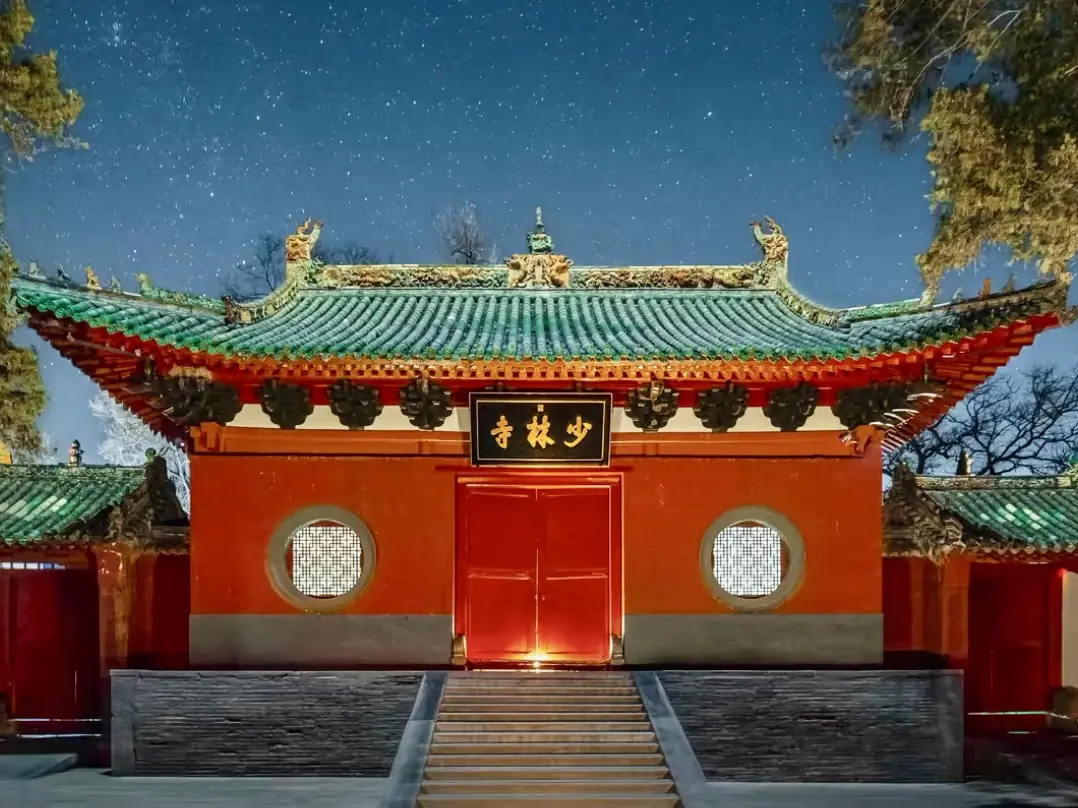
Two sides of one mountain
Songshan is not a single cone with a temple on top. Travelers meet it as two massifs. Shaoshi, the higher summit, a little over 1,500 meters, rises behind Shaolin Temple. Taishi stands to the east, and Zhongyue Temple faces that side from Dengfeng. You can see both stories in one stay. You cannot walk them as one loop from a single gate.
The Shaolin Monastery page is the Shaoshi morning: courtyards, Pagoda Forest, and the show if you want it. This page starts when that visit is finished or deliberately postponed. The Dengfeng hub chooses how many nights make both sides possible.
UNESCO inscribed the Historic Monuments of Dengfeng in “The Centre of Heaven and Earth” as one property because medieval China treated this mountain as the axis, not because a visitor can stroll between the stones. The gates you will actually use are separate, ticketed, and connected by road.
The town circuit that rewards a second morning
Songyang Academy is one of the historic academies of imperial China, a Confucian compound rather than a temple spectacle. Old cypresses are the living celebrities. The courtyards are quieter than Shaolin on the same weekday, which is the point. Give it an unhurried hour. It disappoints people who arrive in the last thirty minutes before closing and expect Shaolin-scale drama.
Zhongyue Temple is the Taoist house of the central peak, a long axial complex of gates, courtyards, and halls. The walk from the outer gate to the inner halls is the visit. A photograph of the first gate is not the visit. Plan the better part of a morning if Zhongyue is your priority, or a solid hour and a half if it shares the day with the academy and the observatory.
The Gaocheng Observatory is the Yuan-dynasty brick tower and measuring scale associated with Guo Shoujing’s calendar work. It is smaller than the temple and more specific. You are looking at an instrument: a tall gnomon built to read the sun’s noon shadow, on a site with a longer history of sky-watching. It pairs naturally with the academy. It does not pair naturally with a summit hike. Read the labels, look at the scale, and leave while you are still interested. That is a successful stop.
Songyue Pagoda is the twelve-sided brick pagoda of the Northern Wei, often called the oldest brick pagoda still standing in China. It belongs to the Dengfeng monumental set and it is not beside the academy door. Budget a short drive and a short walk. Add it when the town morning still has energy. Drop it first when someone is tired or when you still have a train to Zhengzhou. Missing Songyue Pagoda is a smaller loss than rushing Zhongyue Temple.
How to order the town day
Start with whichever site you care about most, at its opening. For many travelers that is Zhongyue Temple, because the axis takes the most steps and the most attention. Others start at the academy because they want the quiet before any coach that does come has arrived. The observatory fits in the middle or at the end. It is the stop that survives a slightly later arrival.
Eat in Dengfeng town. This is the day you are already there. A hotel lunch is fine. A scenic-area canteen back at Shaolin is a wasted drive. If you are departing for Zhengzhou in the afternoon, finish the observatory or the pagoda before the meal, not after, so a slow kitchen does not collide with a fixed train.
Do not open this day at Shaolin “for an hour.” An hour at Shaolin becomes three, and the town circuit becomes a drive-by. If the monastery is still undone, swap the days. The itinerary already puts the temple first and the town second for that reason.
Hiking, cableways, and the hours they consume
Sanhuangzhai and the other developed paths on Songshan are scenic-area outings with their own tickets and, in places, a cableway. They suit travelers who want a ridge hour and who have already protected the monument mornings. They do not suit the afternoon of a monastery day, and they do not suit the afternoon of a Zhongyue morning unless you started very early and everyone still wants stairs.
Shaoshi’s summit is a hike, not a viewpoint you collect from the temple parking lot. The height is real, the paths are stepped, and weather closes sections. If a summit is the dream, give it a day of its own and tell the Henan tour request that the monastery is secondary. Most first visits should not make that trade. The courtyards and the town axis are the part people are glad they did. A foggy summit on a rushed clock is the part they describe as a mistake.
Winter ice and summer thunderstorms both argue for courtyards. Spring wind can haze the ridge while the town is perfectly walkable. Check the morning you have, not the forecast you liked a week earlier. The best time page covers seasons. The mountain decision is simpler: if the ridge is in cloud, stay with halls and brick.
What the sacred mountain means on a walking day
You do not need a theology lesson to be polite. Songshan’s “center” is a historical claim about cosmology and imperial geography. Emperors sacrificed here. Taoist and Buddhist institutions both put down roots. The academy is the Confucian third. That three-way neighborhood is the intellectual reason to stay a second night. It is also a practical map: Buddhist monastery on the Shaoshi approach, Taoist temple toward Taishi, academy and observatory in the town orbit.
Guides who flatten all of this into “kung fu mountain” are describing the commercial approach road, not the inscription. If someone in your group wants only the martial story, the monastery page is enough and this circuit can shrink to Zhongyue Temple alone. If someone wants the older China of academies and sky-watching, protect this morning from the show schedule.
Dress the same way you would for any working temple. Zhongyue is an active Taoist site. The academy is a historic compound with its own quiet. Photography follows the posted signs. Drones are a poor idea over both the ridge and the temple roofs.
Distance, again, because the map lies
From the Shaolin gate to Zhongyue Temple is a drive across Dengfeng, not a shuttle between two doors of one museum. Ask the driver for times on the day, and expect the town sites to sit together more tightly than any of them sits with the monastery. That is why one base in Dengfeng town makes the second morning easy, and a base on the temple road makes the second morning a backtrack.
From Zhengzhou the whole mountain is a day trip only in the monastery version. Trying to add the town circuit onto a Zhengzhou return is how last entry slips away. Sleep in Dengfeng, or cut the town circuit, or come back. There is no fourth option that feels good.
Luoyang is the other direction. A Luoyang hotel can reach Shaolin as a road day, which is what the Luoyang Shaolin page describes. It is an even worse hotel for the Dengfeng town morning, because you would cross the mountain’s tourist hour twice. If the academy matters, sleep in Dengfeng. If Longmen matters more, sleep in Luoyang and keep Songshan to the monastery.
A realistic half-day versus a full town day
A half-day in town, after a monastery morning that ended at lunch, can hold one of the three: usually Zhongyue Temple or the academy, not both, and not the pagoda as well. Be explicit. “We will walk Zhongyue and then sit down” is a plan. “We’ll see the town sites” is a wish.
A full town morning without the monastery holds the academy, Zhongyue Temple, and the observatory in that or the reverse order, with Songyue Pagoda only if the first three finished early. That is a complete Dengfeng day. Travelers who collect sites for a list should still leave a gap between them. Gates, tickets, and short drives consume the margin that a map does not draw.
Tickets are separate from the Shaolin scenic ticket unless a current combined product says otherwise for your date. Do not buy a bundle you do not understand in the hotel lobby the night before. Confirm what each gate requires, bring the passport, and keep the afternoon train out of the plan until the last courtyard is done.
How this sits in a Henan week
On the Henan guide, Dengfeng is one chapter between a Zhengzhou arrival and a Luoyang stay. That is correct for a first province trip. It becomes wrong when Songshan is the reason you booked the flight. Then the town circuit is not a footnote to a kung fu show. Give it a morning, and let Luoyang and Kaifeng take the nights they need on either side.
The getting there page keeps the arrival honest: no high-speed station in Dengfeng, road from Zhengzhou East or from Luoyang Longmen. The tour packages page turns a two-morning stay into a quoted shape so the car is waiting at the right gate, not at a school on the approach road that shares the Shaolin name.
What you are looking at, without a lecture
At the academy, look at the layout of a place that trained scholars: gates, lecture courtyards, and trees old enough to have their own folklore. You are not behind on the trip if you cannot name every hall. You are behind if you cross it in ten minutes between two temple tickets and remember only the exit.
At Zhongyue Temple, follow the axis. Chinese temple complexes reward the person who walks through gates in order and notices the courtyards getting quieter, or at least more focused, as the outer market noise drops. Incense, attendants, and worshippers belong here. You can decline to participate and still be welcome if you are unhurried and unobtrusive.
At the observatory, look up the scale and along the shadow path. The point of the monument is measurement. Noon is when the instrument’s idea is easiest to grasp, and noon is also when you may be ready to sit down. You do not need a cloudless zenith to justify the stop. The brick tower is the exhibit even under haze.
At Songyue Pagoda, look at the shape: a dense brick tower on a polygonal plan, from a period when brick pagodas were still a new solution. It is a short visit by design. Do not inflate it into a second Shaolin. Do not skip it from a mistaken belief that it stands inside Zhongyue Temple. Ask the driver for the pagoda by its Chinese name if the English “Songyue” gets you a blank look. Saving the characters offline is part of the arrival plan.
Que gates and other stones you might be offered
Some of the oldest carved gate-towers in the Dengfeng inscription are small, easy to miss, and easy to be driven past by a plan that only knows three names. If a local guide proposes a que gate and you still have energy, take the short stop. If the group is done, decline. These stones matter to the World Heritage story and they are poor compensation for a rushed Zhongyue Temple. Priority stays on the academy, the Taoist axis, and the observatory. The gates are garnish for a second hour, not the spine.
The same rule covers minor temples that share the Songshan name on a map. A pin is not a recommendation. Three good courtyards beat six gates.
Food, streets, and the evening you stayed for
Dengfeng town is an ordinary county city with a mountain economy attached. That is a compliment. You can eat noodles, simple Henan dishes, and a normal breakfast without returning to a scenic canteen. The night market, if it is running, is for a stroll after the monuments, not for a performance. Do not expect Fenghuang’s river lights or Luoyang’s peony-season bustle. Expect a working town that sleeps at a reasonable hour.
Stay near a dinner street if you can say so in the booking, and keep the monastery road for travelers whose only morning is Shaolin. The hub makes that hotel choice the main fork. This page assumes you chose town, or that your car can reach town without a sulk.
Evening is also when you confirm tomorrow’s gate. Hours change. A pleasant dinner is the right moment to check Zhongyue’s opening, not six the next morning in the lobby. If a site is closed for maintenance, slide Songyue Pagoda or a single extra courtyard into the gap. Do not invent a hike to fill a closed temple. The ridge is not a backup plan you attempt on an impulse.
Walking pace for mixed groups
A town morning with teenagers and grandparents works when the car does the links and each courtyard has a sit-down point. It fails when someone tries to add Sanhuangzhai because the weather turned nice at noon. Agree the cutoff at breakfast. The observatory is the usual last stop because it is small. The axis of Zhongyue is the stop you do not start at one o’clock.
Strollers and wheelchairs meet thresholds here as they do at Shaolin. The long axis at Zhongyue is a distance question as much as a step question. A traveler who can walk forty minutes with rests can do the temple. A traveler who cannot should see the outer gates and one inner courtyard and then sit. That shorter visit is still a real visit. Write it into the plan without apology.
Children who were patient at the monastery yesterday may be done with courtyards today. Trade the academy’s trees and a snack for a third hall. The observatory’s “giant sundial” idea lands better with school-age children than another stele corridor. Use that, and let the adults linger one extra courtyard while the children sit in sight.
Rain turns the town day into an advantage. Halls and academy rooms shelter you. The pagoda forest at Shaolin is the exposed walk. If the forecast is wet, put the town circuit on the wet morning and keep the monastery for the clearer one when you can swap. If you cannot swap, shorten the forest and keep the halls. Songshan in rain is still the center of the old map. It does not require a blue summit to count.
How to choose
| Choice | Fit | Skip when |
|---|---|---|
| Town morning | Academy and temples | You only have a Zhengzhou day |
| Zhongyue only | One town site after a tired monastery day | You wanted the full circuit |
| Ridge or cableway | A cleared half-day | The same date as the monastery |
Ways to plan the days
These shapes match a Dengfeng quote. They are starting points, not fixed departures.
Songshan day
Time fit: 1 day
Shaolin Temple and the Pagoda Forest, then back to a Zhengzhou hotel.
- Zhengzhou
- Shaolin Temple
Why choose it: One monastery morning when the town circuit is not required.
Dengfeng overnight
Time fit: 2 days
Monastery on the first morning, academy and Zhongyue Temple on the second.
- Zhengzhou
- Dengfeng
Why choose it: The length that lets both sides of Songshan breathe.
Henan spine
Time fit: 5–7 days
Shaolin as its own day beside Luoyang and Kaifeng.
- Zhengzhou
- Dengfeng
- Luoyang
- Kaifeng
Why choose it: A province loop that does not stack the monastery and Longmen.
Want help shaping the Dengfeng days?
Tell us if you need the academy morning or only the monastery. We will not stack Shaolin and Longmen Grottoes on the same day.
Keep planning
Dengfeng on the south side of Songshan, with the monastery as one morning and the town monuments as another.
Courtyards, the Pagoda Forest, and a kung fu show only when a posted time still fits.
April, May, late September, and October outside the holiday weeks, with an early gate on Saturdays.
A Zhengzhou day for the monastery, or one night in Dengfeng when the town circuit matters.
Zhengzhou East or Luoyang Longmen, then the road. Dengfeng has no high-speed station.
A Zhengzhou day, a Dengfeng overnight, or a Shaolin day inside a longer Henan loop.
Questions people ask
- No. It faces the Taishi side and sits with Dengfeng town. Plan a drive from the monastery, not a shuttle between two doors.
- A Yuan-dynasty brick tower and gnomon used to measure the sun’s noon shadow. It is a small, specific stop beside the academy.
- Only if a monument morning is already protected. Most first visits should keep the courtyards and skip the summit.
- No. It is a short drive. Add it when the town morning still has energy. Drop it first when someone is tired.
- Do not assume that. Confirm which gates a ticket opens. The UNESCO listing is one inscription, not one walking precinct.
- In Dengfeng town on this day. A scenic canteen back at Shaolin spends a drive you do not have.
Plan a Shaolin / Dengfeng visit
Share your dates, whether you sleep in Zhengzhou or Dengfeng, and if the town monuments are required. We reply with a monastery morning and a clear list of what does not fit that day.