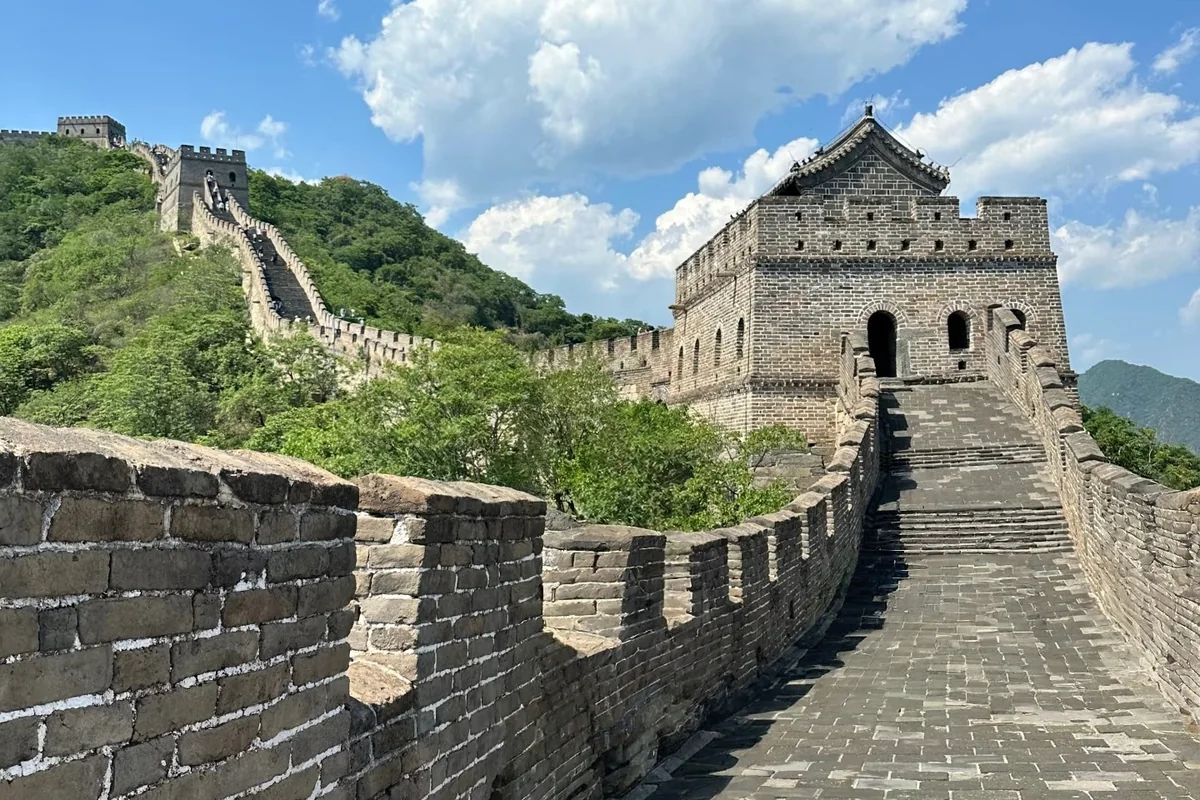
The 200 RMB adult package — what is inside
The cable car on its own
The cable car itself is 100 RMB one-way or 140 RMB round trip. Admission (45 RMB) and the shuttle bus (15 RMB round trip) are sold separately. The 200 RMB package combines all three into the cleanest path from gate to wall and back.
| Component | Price |
|---|---|
| Adult admission ticket | 45 RMB |
| Shuttle bus round trip | 15 RMB |
| Cable car round trip (west route) | 140 RMB |
| Total | 200 RMB |
What is the Mutianyu Great Wall cable car?
Two different systems — not interchangeable
The west-route cable car and the east-route chairlift + toboggan are not the same system. They have different ticket windows, different operators, and reach different parts of the wall. Buying one does not let you ride the other.
| System | Route | Arrival area | Experience |
|---|---|---|---|
| Cable car (north cable car / west-line cableway) | West route | Around Tower 14 | Enclosed cabin, stable, scenic, family-friendly |
| Chairlift + toboggan (east route) | East route | Around Tower 6 | Open chairlift up, optional toboggan down |
Mutianyu cable car price 2026
The normal visitor flow
The 200 RMB package matches what most guests actually do at Mutianyu: enter the scenic area, take the internal shuttle bus, ride the west-route cable car up, visit the wall from Tower 14, take the cable car back down, then the shuttle bus back to the visitor area.
Why third-party prices differ
Third-party booking platforms bundle Mutianyu differently — some include only ride tickets, others add admission, shuttle, guide service, transport, or booking support. Always compare what is inside, not the headline price.
| Ticket type | Price |
|---|---|
| Cable car one-way | 100 RMB |
| Cable car round trip | 140 RMB |
| Adult admission + shuttle + cable car round trip | 200 RMB |
Which tower does the cable car reach?
Our default recommendation
Cable car up to Tower 14, walk west toward Tower 20, return to Tower 14, cable car down. This gives the best balance of scenery, time control, and physical effort.
| Route | Pattern | Best for |
|---|---|---|
| Easy route | Tower 14 → Tower 15 or 16 → return to Tower 14 | Families, seniors, short visits |
| Classic west route | Tower 14 → Tower 20 → return to Tower 14 | First-time visitors, photographers |
| Longer mixed route | Tower 14 → east toward Tower 6 or west toward Tower 20 | Stronger walkers with more time |
Why the cable car is the best default choice
At Mutianyu the real visitor problem is not just "how do I get up the mountain." It is how to avoid wasting energy before reaching the wall, control timing, reduce route confusion, look after family or senior travellers, and stay flexible during peak periods. The cable car solves most of that by sending you directly to the west-route core area around Tower 14.
Best for
First-time visitors, families with children, senior travellers, guests with limited time, Beijing layover visitors, photographers who want the west-line ridge views, and anyone who prefers a stable enclosed cabin.
Less ideal for
Visitors whose main goal is the toboggan, budget travellers who want to walk up, visitors who specifically want the east route, and highly active hikers who want a bottom-to-top approach.
- Saves energy for the wall itself
- Direct control over arrival time at the upper area
- No operator switching between rides
- Easy to manage with mixed-age groups
- Less fragile during peak crowd waves
- Sends you to the best scenery on the west line
Cable car vs toboggan — which fits the group
Our framing
The chairlift and toboggan are open-air and more recreational. For older travellers or anyone with health considerations, the enclosed cable car is the safer ride.
Simple rule
Choose the cable car if your priority is comfort, scenery, timing, and lower risk. Choose the toboggan only if the slide-down experience is the main reason you came to Mutianyu.
| Question | Choose cable car | Choose toboggan / chairlift |
|---|---|---|
| Travelling with seniors? | Yes | Usually no |
| Travelling with young children? | Usually yes | Depends on age and on-site rules |
| Want the easiest route? | Yes | No |
| Want an enclosed cabin? | Yes | No |
| Want the slide experience? | No | Yes |
| Want west-route Towers 14–20? | Yes | No |
| Want the east-route Tower 6 area? | No | Yes |
| Concerned about weather? | Better choice | More exposed |
| Short layover? | Better choice | Riskier if queues are long |
West route: Tower 14 to Tower 20
Tower 20 is the natural stopping point
Tower 20 is still the natural turnaround for most visitors. Towers 21–23 beyond Hero Platform lie outside the current open daytime visitor section. Do not plan beyond Tower 20 without a new official notice.
| Tower | What it is | How it walks |
|---|---|---|
| Tower 14 | Cable car arrival zone and the practical "control point" of the day | Walk out from here in either direction and return for the cable car down |
| Tower 15 | Recognisable photo spot — the filming location sign for If You Are the One 2 | Easy 5–10 minute walk from Tower 14 |
| Towers 17–18 | Stronger sense of the wall's defensive structure and mountain-ridge design | Moderate climb; more immersive than the lower flatter sections |
| Towers 19–20 | Upper scenic climax of the west route — the steepest and most spectacular section | Hardest stretch; turn around at Tower 20 |
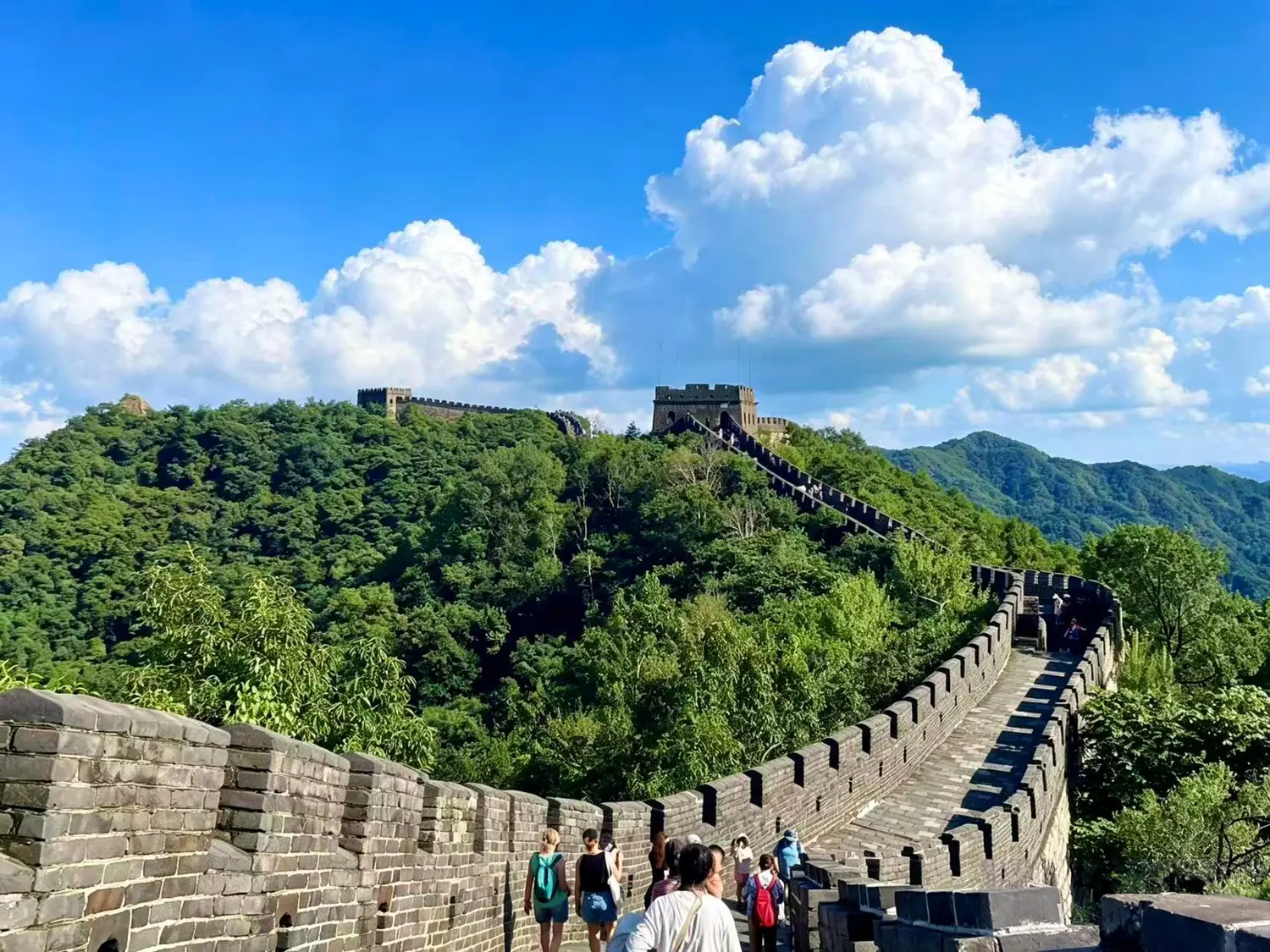
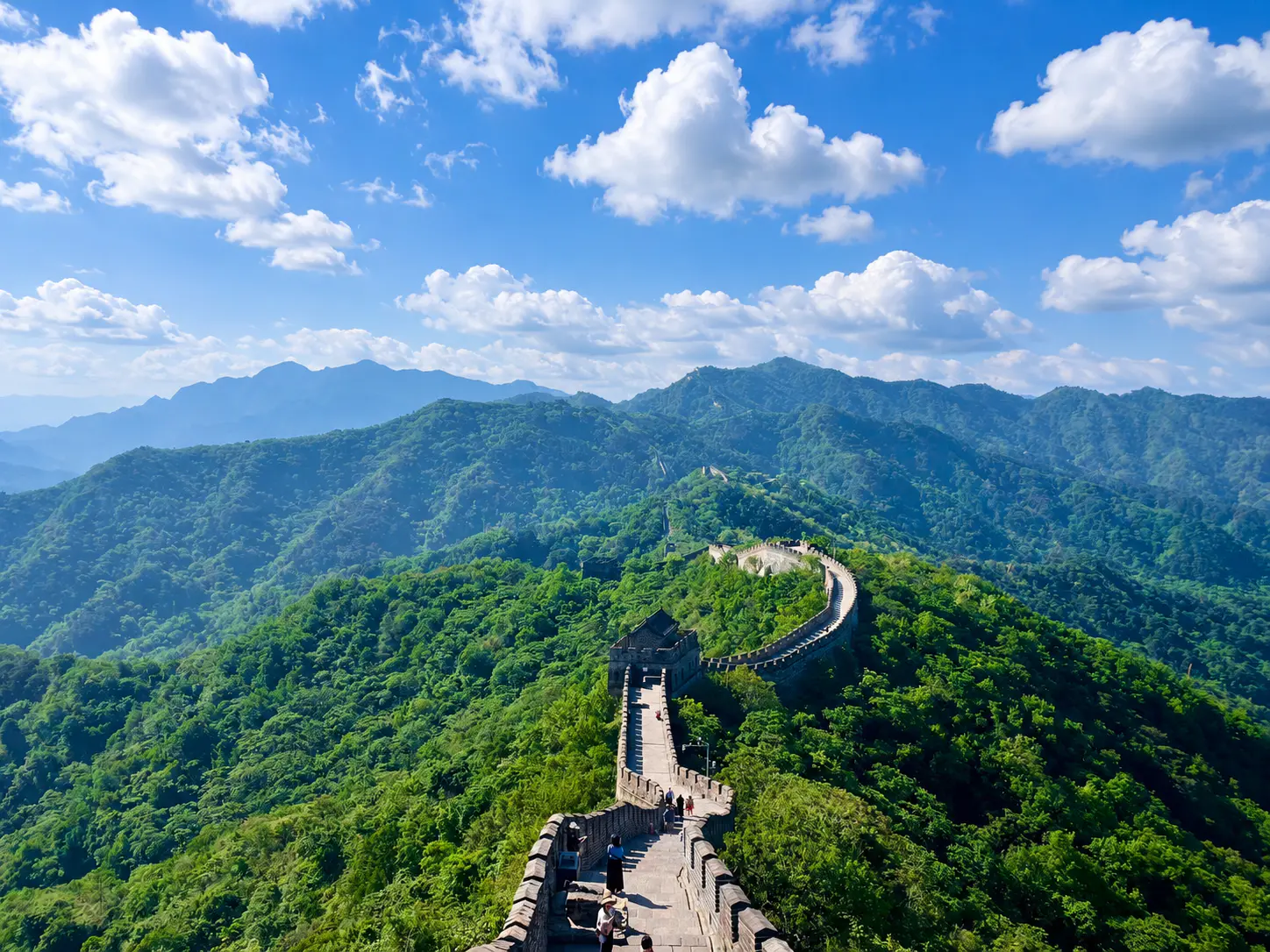
Field views along the standard west cable-car route from Tower 14 toward Tower 20:
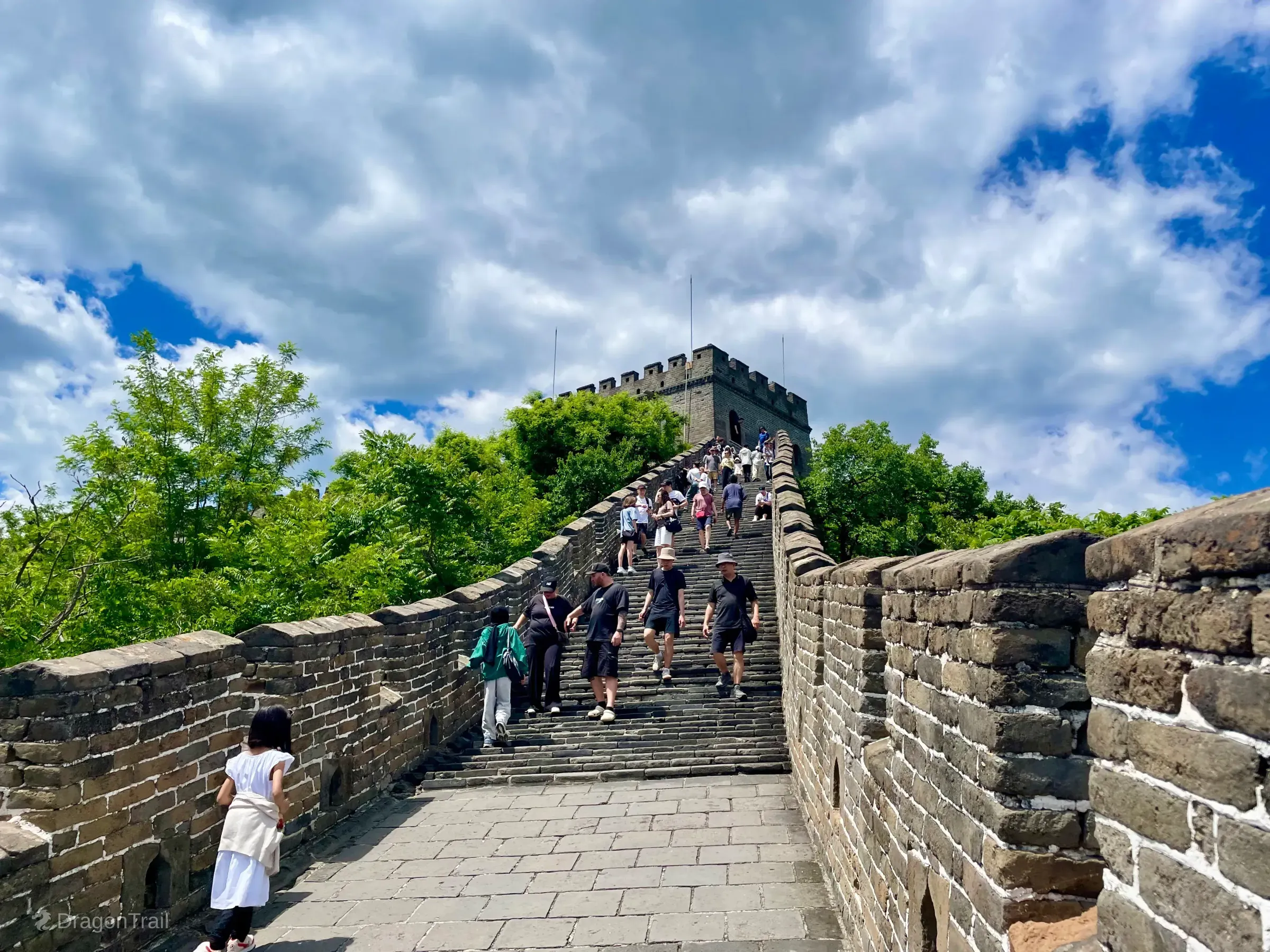 Click to enlarge
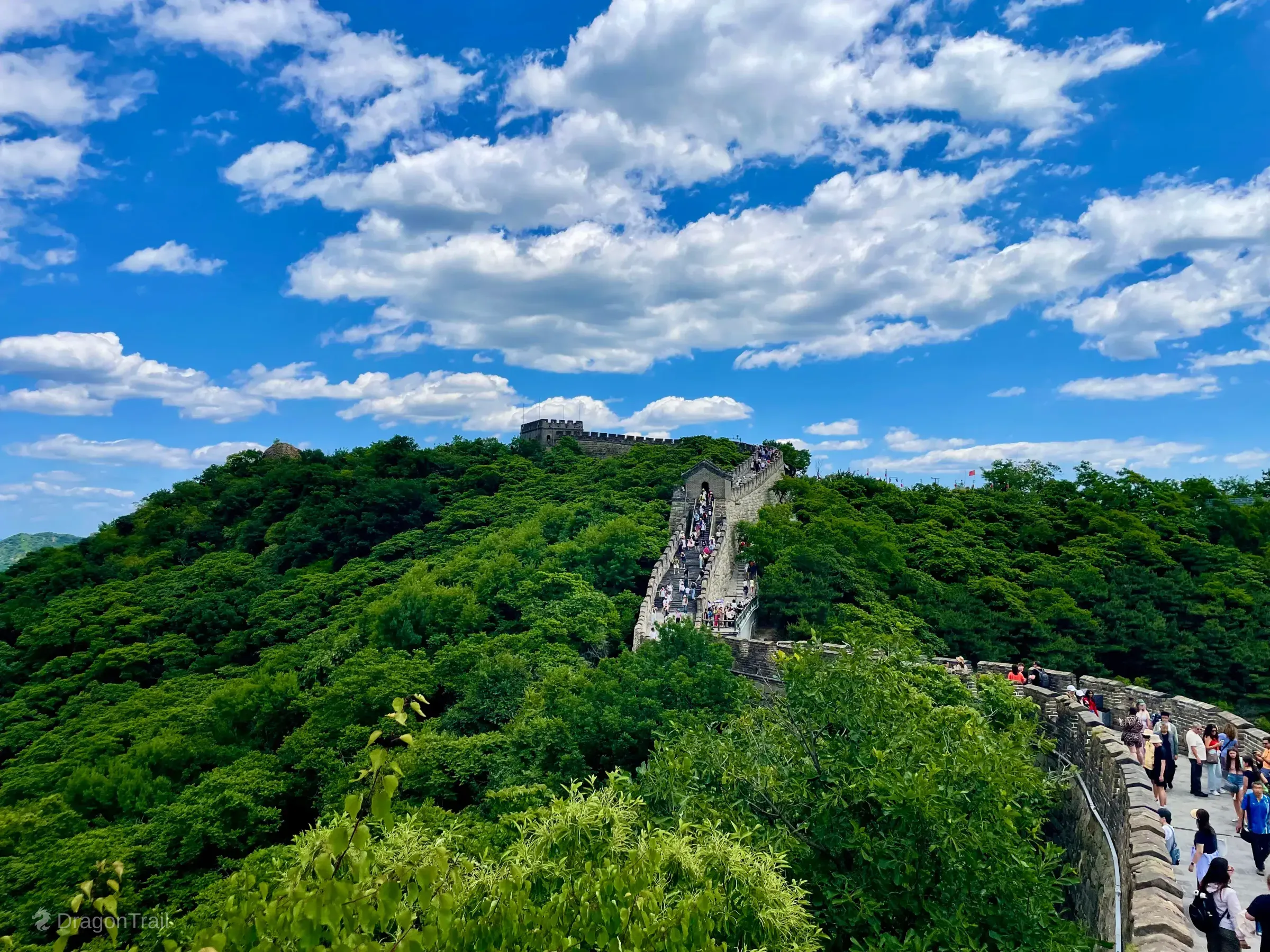 Click to enlarge
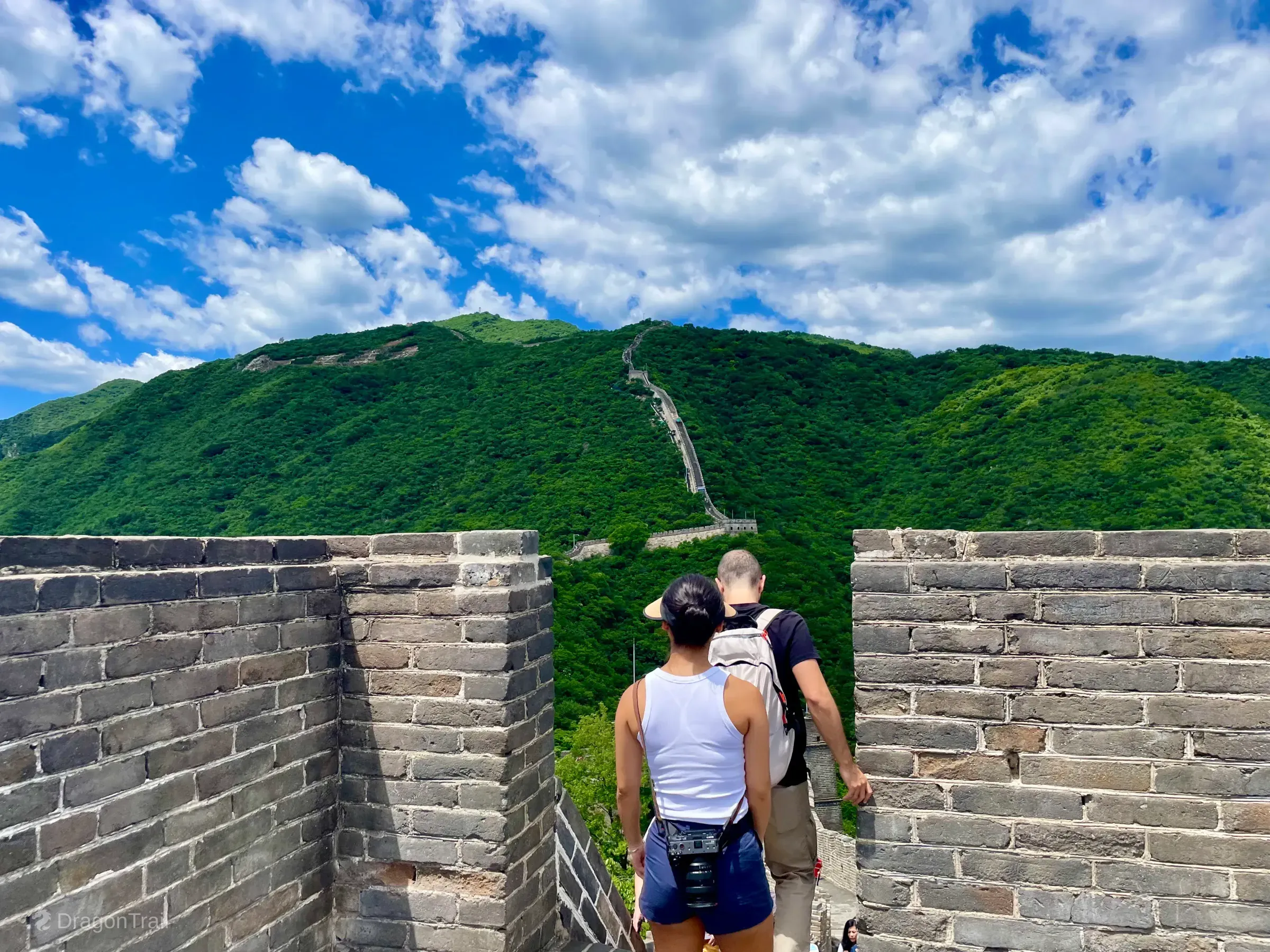 Click to enlarge
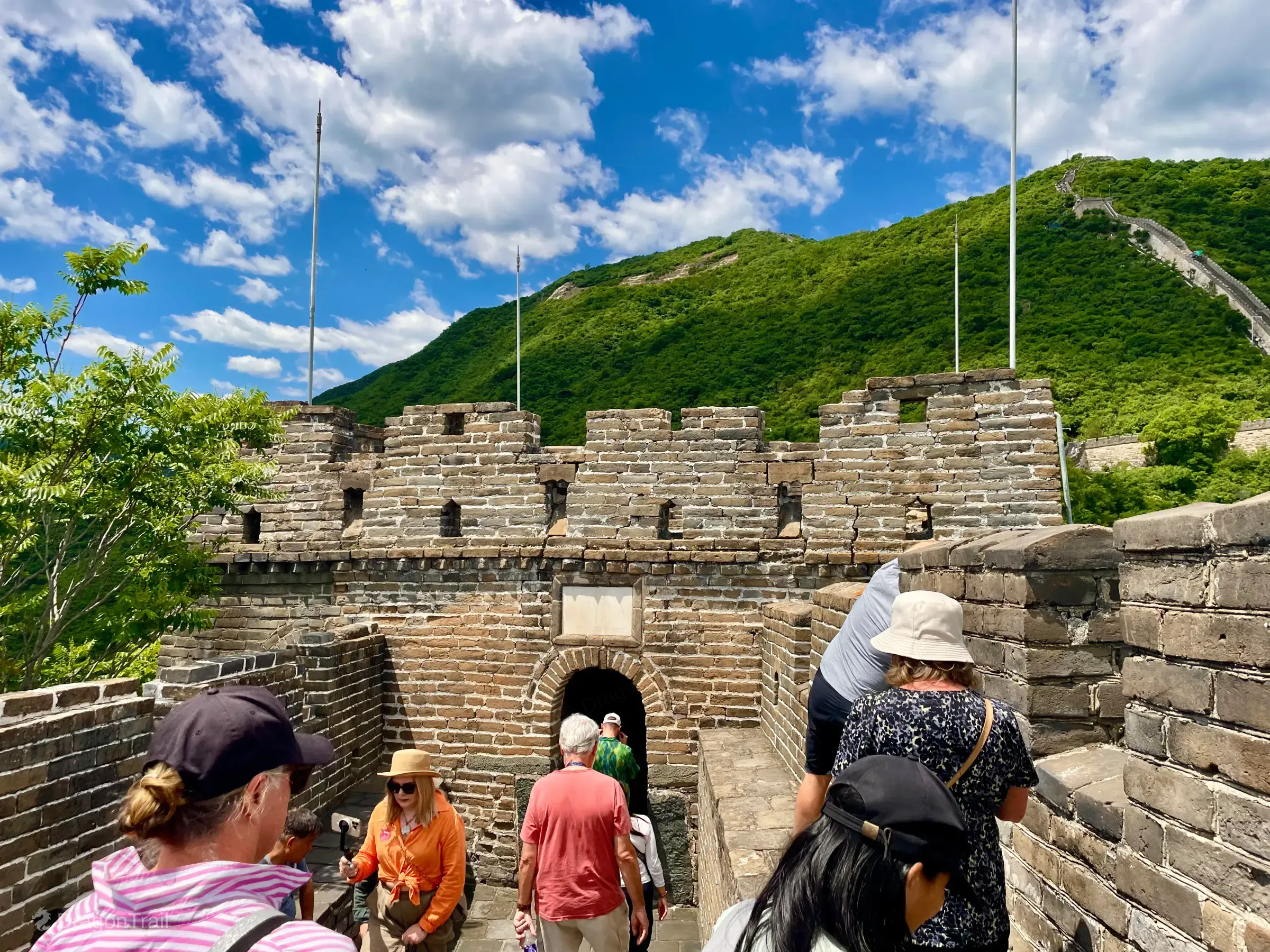 Click to enlarge
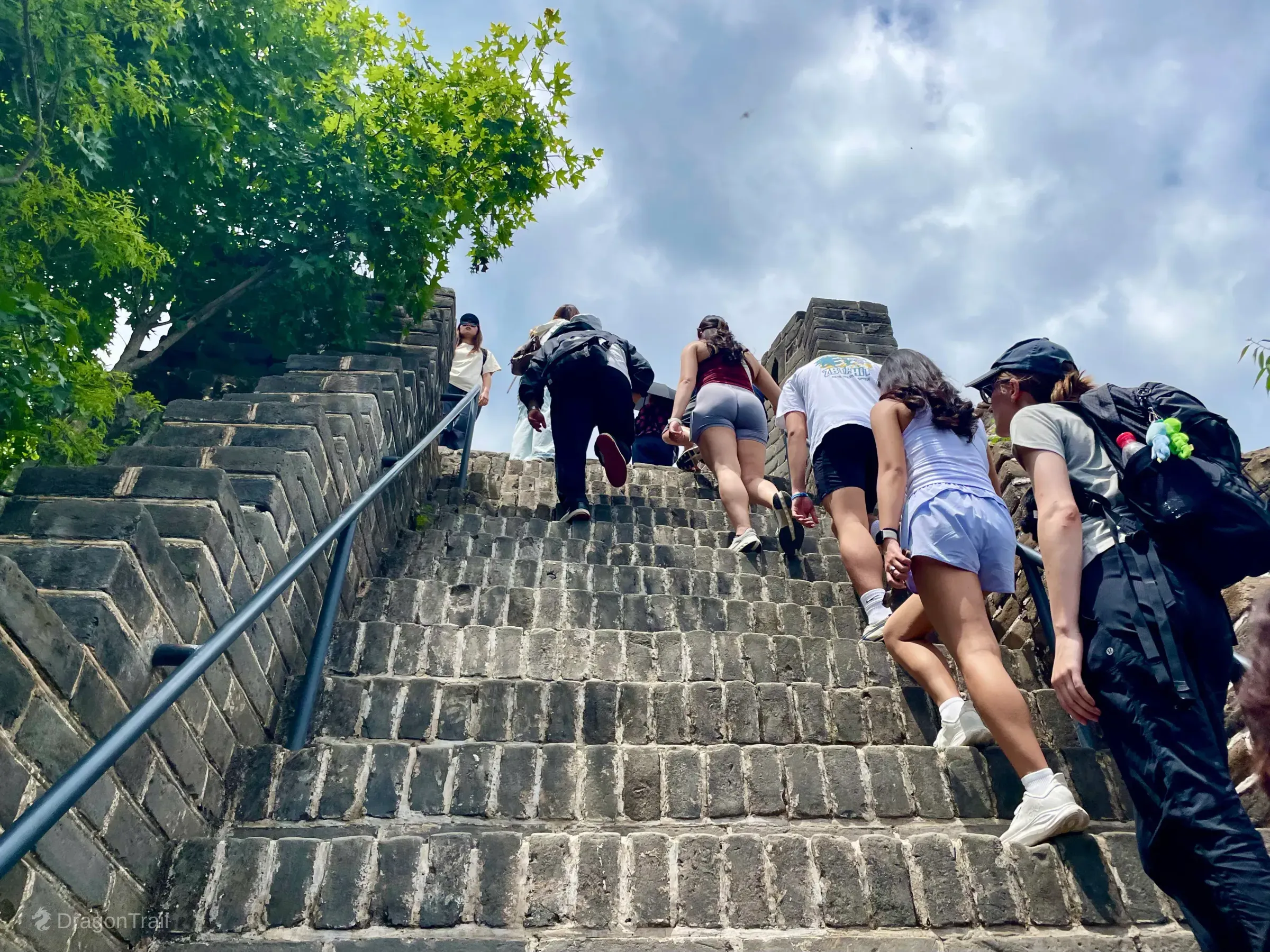 Click to enlarge
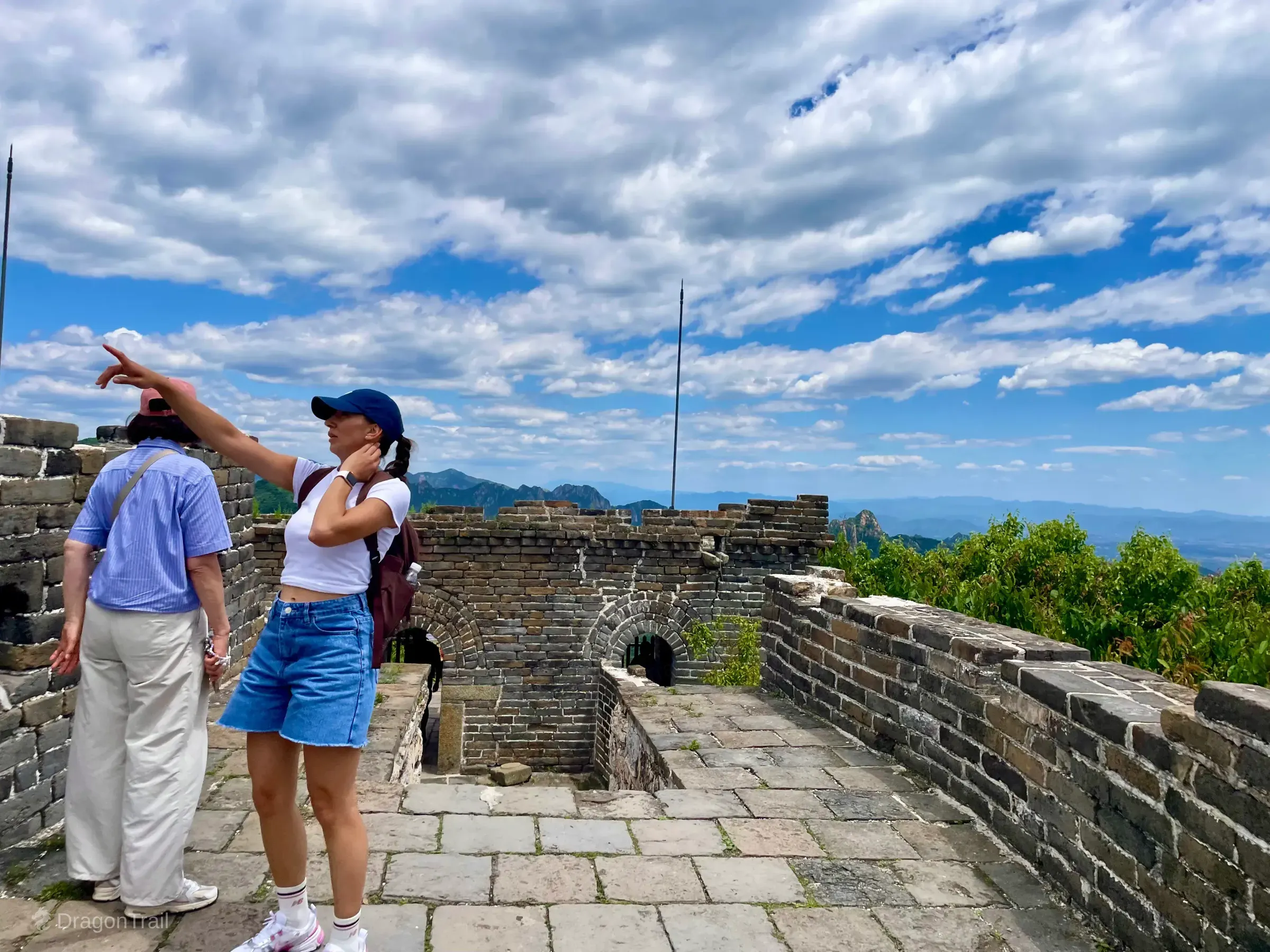 Click to enlarge
How long the Mutianyu cable car actually takes
Plan a 30–90 minute access window
The cable car ride is short — the rebuilt line runs at around 6 m/s and carries up to 2,400 people per hour, which helps move people quickly. Even with that, do not budget only "6 minutes" for the cable car. Treat it as a 30–90 minute access system, depending on crowd level.
| Step | Estimated time |
|---|---|
| Walk through the visitor area | 10–20 min |
| Shuttle bus ride and access | 5–15 min |
| Walk to the cable car lower station | 5–10 min |
| Queue for the cable car | 0–60+ min depending on season and time of day |
| Cable car ride itself | Around 6 minutes |
| Walk from the upper station to the wall | A few minutes |
Suggested time plans
| Plan | Time on site | Route | Best for |
|---|---|---|---|
| Fast visit | 2–2.5 hours | Shuttle bus → cable car to Tower 14 → walk to Tower 15 or 16 → return to Tower 14 → cable car down | Layovers, tight schedules — efficient but not deep |
| Standard visit | 3–4 hours | Shuttle bus → cable car to Tower 14 → walk west toward Tower 18 or 20 → return to Tower 14 → cable car down | Most visitors — the best balance of scenery and effort |
| Deeper west route | 4–5 hours | Cable car to Tower 14 → walk slowly toward Tower 20 with photo stops → return to Tower 14 → cable car down | Strong walkers and photographers — more time for changing light |
Cable car for seniors, families, and children
The cable car is usually the best Mutianyu access option for seniors and families because it reduces three real risks at once.
Accessible boarding
The rebuilt cable car uses an accessible boarding design that helps older visitors, children, and visitors with mobility limits step in and out more easily.
Families with young children
The cable car is simpler than the chairlift + toboggan option — no open rides, no slide decision, fewer rules to read at the gate.
Senior travellers
The cable car gives the most stable route: up by enclosed cabin, walk as far as comfortable, then return the same way.
- Physical fatigue before reaching the wall
- Route uncertainty on arrival
- Weather exposure on open rides
Is the Mutianyu cable car wheelchair-friendly?
The rebuilt cable car has an accessible boarding design, which improves convenience for older visitors and people with disabilities. The wall itself is a different question.
Honest framing
The cable car can help wheelchair users or mobility-limited visitors reach the upper platform area, but the wall walking surface itself is not fully barrier-free. Confirm the latest accessible route before arrival — operations vary by season and by which sections are open.
- Stone surfaces along the wall walking path
- Uneven steps and steep gradient changes
- Slopes between towers
- Narrow sections at some watchtowers
- Crowd pressure during holiday periods
Engineering and upgrade background
The Mutianyu cable car has more engineering value than most visitor guides explain. It is one of the core transport systems that lets Mutianyu function as a high-capacity scenic area — not just a tourist ride.
Build history
The line was originally built in 1986 and rebuilt before reopening in June 2022. The upgraded system uses transparent cabins, orange cabin frames, an 8-person capacity, faster operation, and an accessible boarding design.
- Core scenic transport system
- West-route access channel
- Crowd distribution mechanism
- Senior- and family-friendly access path
- Heritage-sensitive infrastructure
Cable car technical data
| Detail | Value |
|---|---|
| Line length | 723 m |
| Elevation gain | 250 m |
| Upper station altitude | 640 m |
| Cabins | 58 enclosed panoramic cabins |
| Capacity per cabin | 8 passengers |
| Line speed | 6 m/s |
| Hourly capacity | Up to 2,400 people per hour |
| Equipment | Doppelmayr / Garaventa cableway system |
| Safety rating | 5S cableway safety rating |
| Safe operating hours | 100,000+ hours |
| Passengers carried | 15 million+ |
Why the cable car helps protect the wall
The cable car is also a heritage-pressure reducer. Without mechanical access, more visitors would crowd the lower approach paths, climb the wrong sections, or push unevenly along the most fragile areas of the wall.
How the line is routed
The west-line cableway runs through a mountain valley rather than across the wall itself — that keeps the core heritage structure clear of the cable infrastructure. The cable car is not only a convenience facility; it is controlled-access infrastructure designed to move visitors efficiently while reducing unmanaged pressure on the wall.
- Moves visitors directly to a managed access point near Tower 14
- Smooths out the late-morning crowd surge at the gate
- Reduces pressure on the lower approach paths
- Concentrates foot traffic on the routed wall section, not the wild edges
Safety and reliability
For most visitors the cable car feels simple — buy ticket, enter cabin, ride up, walk the wall. Operationally, it is a regulated passenger cableway with three layers of safety control.
Maintenance windows are normal
The official Mutianyu site published a March 2026 notice that cable car services would be suspended from 10 to 14 March for inspection, maintenance, and servicing. Maintenance windows are part of normal operation rather than an abnormal problem.
If weather is unstable
Check the official Mutianyu channel before departure and keep a fallback plan — chairlift/toboggan as a backup, or simply more time on the wall walking route.
- Equipment: enclosed cabin, automatic doors, controlled boarding, stable cableway movement, modernised upgraded equipment
- Operations: daily checks, scheduled maintenance, annual inspection, temporary suspensions during maintenance windows
- Weather control: cable cars may pause during high winds, storms, lightning, or extreme conditions — this is risk control, not poor service
Operating hours
Hours can shift
Operating hours change with weather, maintenance, crowd control, or official events. Confirm the official Mutianyu channel on the morning of your visit — temporary suspensions do happen and the cable car may close earlier on a difficult weather day.
| Season | Day type | Cable car operating time |
|---|---|---|
| Peak season: March 16 – November 15 | Monday–Friday | 07:30–18:00 |
| Peak season: March 16 – November 15 | Saturday–Sunday | 07:30–18:30 |
| Off-peak season: November 16 – March 15 | Daily | 08:00–17:30 |
How to buy Mutianyu cable car tickets
Tickets are sold by the scenic area through several channels — pick the one that matches how prepared you want to be on the day.
If we arrange it for you
When you take a Mutianyu private transfer or tour with us, ticket guidance is included at no additional service fee — especially useful when you do not want to handle passport-based booking, WeChat payment, route selection, or the cable car vs toboggan decision yourself.
- Official Mutianyu website — online reservation centre with every ticket category
- Official Mutianyu WeChat account or mini-programme
- On-site ticket window at the entrance
- Self-service kiosk near the visitor area
- Third-party booking platforms — bundles and inclusions vary
- A tour or private transfer provider who handles the layered tickets for you
Does the cable car ticket include admission?
Usually, no
The cable car ticket is a ride ticket only. You still need the scenic-area admission ticket and the shuttle bus ticket as part of the full access chain. The numbers above are the complete adult cost for the standard west-route day.
Why different prices appear online
"Mutianyu ticket is 45 RMB" describes admission only. "Mutianyu cable car is 140 RMB" describes the cable car round trip only. "Mutianyu is 200 RMB" describes the full admission + shuttle + cable car bundle. All three numbers are correct — they describe different parts of the same visit.
| Required item | Price |
|---|---|
| Admission | 45 RMB |
| Shuttle bus round trip | 15 RMB |
| Cable car round trip | 140 RMB |
| Total adult cost | 200 RMB |
Best route using the cable car
Our recommendation
Cable car up to Tower 14, walk west toward Tower 20, return to Tower 14, cable car down. Simple start and end point, no operator switching, best west-route scenery, easy to shorten if energy is limited.
If energy is limited
Do not force Tower 20. A partial route from Tower 14 to Tower 16 or 17 is still a good Mutianyu visit and an easier return on the cable car.
| Segment | Difficulty | Notes |
|---|---|---|
| Tower 14 → 15 | Easy to moderate | Good first photo area |
| Tower 15 → 17 | Moderate | Better mountain-ridge views |
| Tower 17 → 19 | Moderate to hard | More immersive wall structure |
| Tower 19 → 20 | Hardest part | Steepest but most dramatic section |
How to choose
| Visitor situation | Best choice | Reason |
|---|---|---|
| First time at Mutianyu | Cable car round trip | Simplest, most scenic default |
| Senior traveller | Cable car round trip | Enclosed, stable, less physical strain |
| Family with children | Cable car round trip | Easier control and lower uncertainty |
| Layover traveller | Cable car round trip | Best timing control |
| Wants the toboggan | Chairlift up + toboggan down (east route) | The toboggan only lives on the east route |
| Strong hiker | Cable car one-way or hike up | More physical route flexibility |
| Budget traveller | Admission + shuttle only | Lower cost, more walking |
| Photographer | Cable car to Tower 14, walk west | Strong ridge-line compositions |
| Mobility-limited visitor | Cable car, confirm accessible route first | Better upper access; the wall surface remains uneven |
Common mistakes when planning the cable car
Buying the cable car when you wanted the toboggan
The cable car is the west route. The toboggan is connected to the east route. They are different systems with different ticket windows, different operators, and different parts of the wall.
Comparing prices without checking inclusions
Admission, shuttle bus, cable car, chairlift, toboggan, transport, guide, and booking service are often bundled differently across channels. Always compare component lines, not headline prices.
Assuming the ride time equals the total access time
The cable car ride is around 6 minutes, but the full process includes walking, the shuttle bus, queueing, boarding, and exiting. Budget a 30–90 minute access window, not 6 minutes.
Planning Tower 20 without considering return energy
Tower 19–20 is the steepest stretch on the west route. If you are using the round-trip cable car you still need to walk back to Tower 14 — leave enough energy for the return.
Ignoring maintenance and weather closures
Cable cars pause for scheduled maintenance and for weather safety. Official notices show temporary suspensions can happen — for example, a March 2026 notice closed the cable car from 10 to 14 March for inspection and servicing. Always check before you leave the hotel.
FAQ: Mutianyu Great Wall cable car
- Yes, for most visitors. It saves time and energy, gives direct access to the west route near Tower 14, and is especially useful for families, seniors, layover travellers, and first-time visitors.
- 100 RMB one-way or 140 RMB round trip for the west-route cable car. The practical adult package with admission, shuttle bus, and round-trip cable car is 200 RMB.
- The west-route cable car reaches the wall near Watchtower 14. From there most visitors walk west toward Tower 20.
- No. The cable car is the west-route enclosed gondola. The toboggan is part of the east-route chairlift + toboggan system around Tower 6.
- Choose the cable car for comfort, timing, families, seniors, and scenery. Choose the toboggan only if the slide-down experience is your main goal.
- Technically yes, but it requires walking from the west route near Tower 14 across to the east route near Tower 6. It is not the simplest plan and uses two separate ticket systems. For most first-time visitors, a round-trip cable car is the easier choice.
- The ride itself is around 6 minutes. The full access process (walk, shuttle, queue, boarding, exit) can take 30–90 minutes depending on crowd level.
- Yes. It is usually the best option for seniors because the cabin is enclosed and stable, and it removes the climb between the entrance and the wall.
- The rebuilt cable car has an accessible boarding design, which helps. The wall walking surface itself is uneven in places — confirm the latest accessible route before the visit.
- Yes — through the official Mutianyu website, the official WeChat account, third-party booking platforms, or with help from a tour or private transfer provider.
Plan a Mutianyu visit
For most visitors, the best Mutianyu cable car plan is the 200 RMB adult package — admission + shuttle + west-route cable car round trip — with a walk from Tower 14 west toward Tower 20 as far as energy allows, then a return to Tower 14 and the cable car back down. Use the chairlift + toboggan only if the slide experience is the priority. Use admission + shuttle only if you are physically ready for more walking and less convenience.